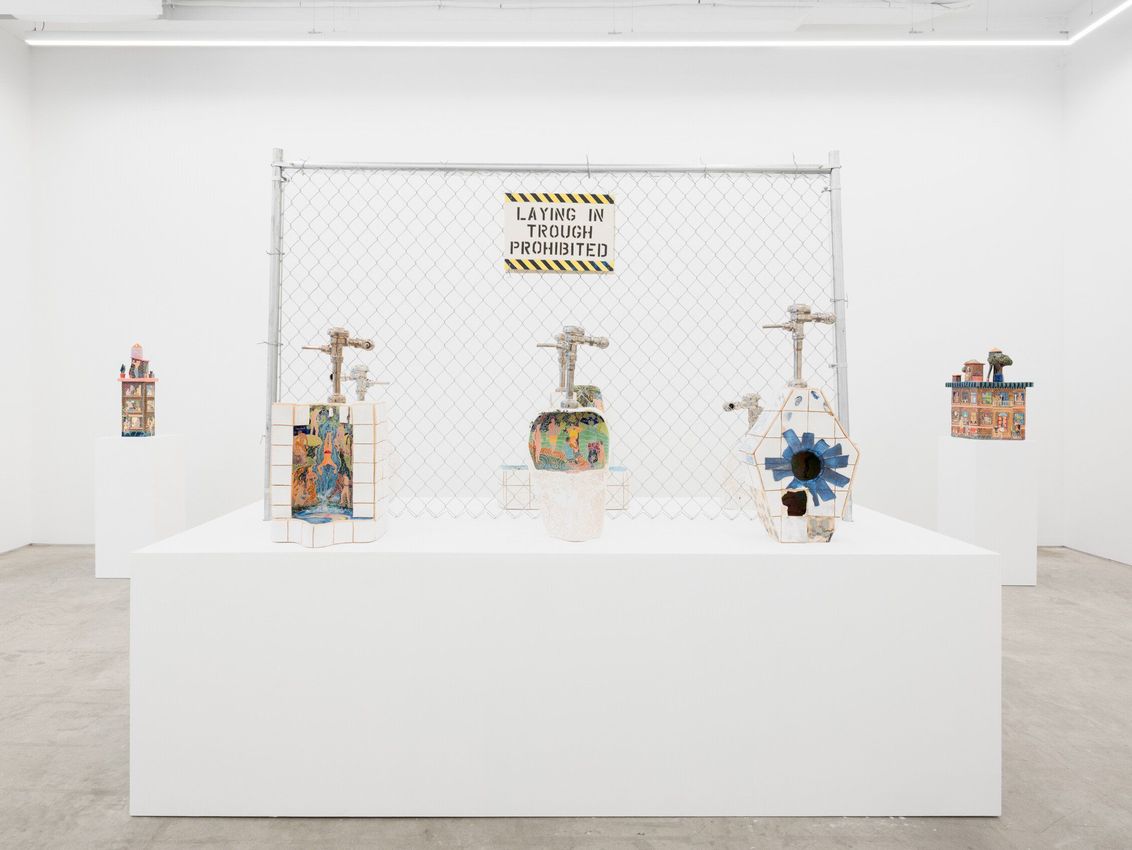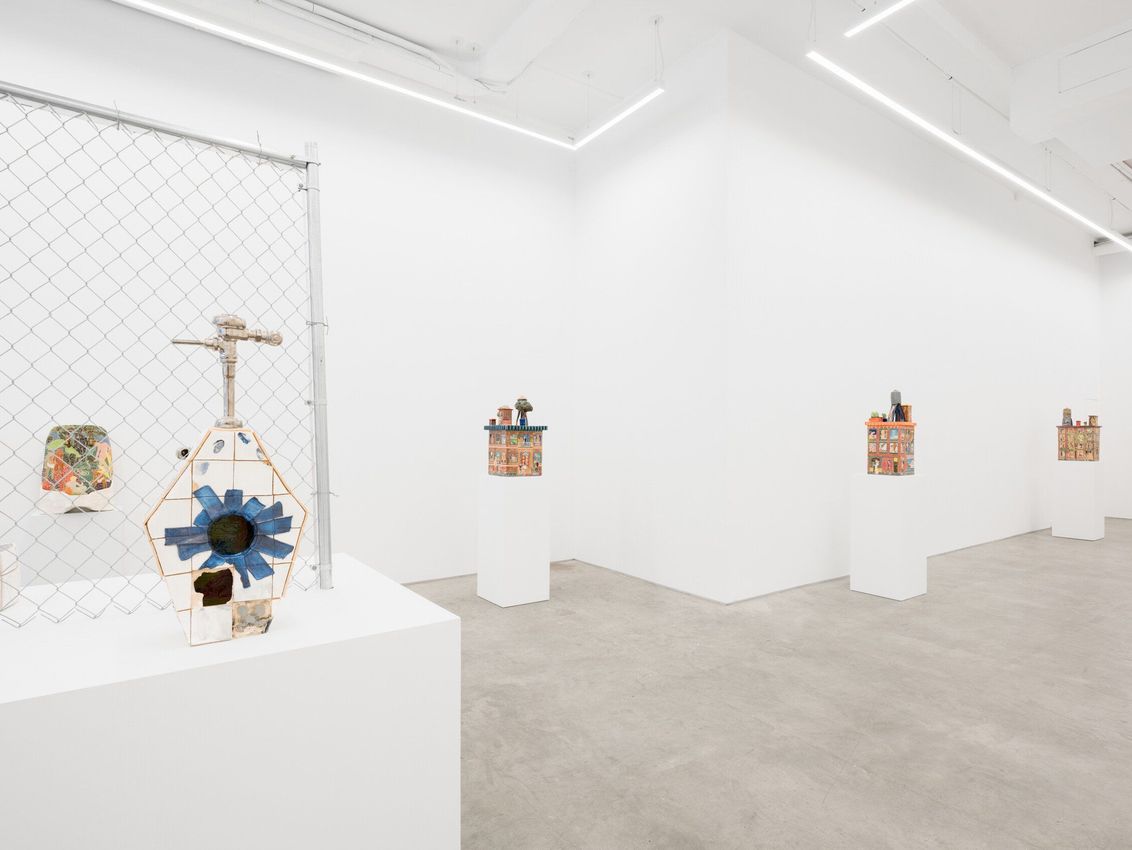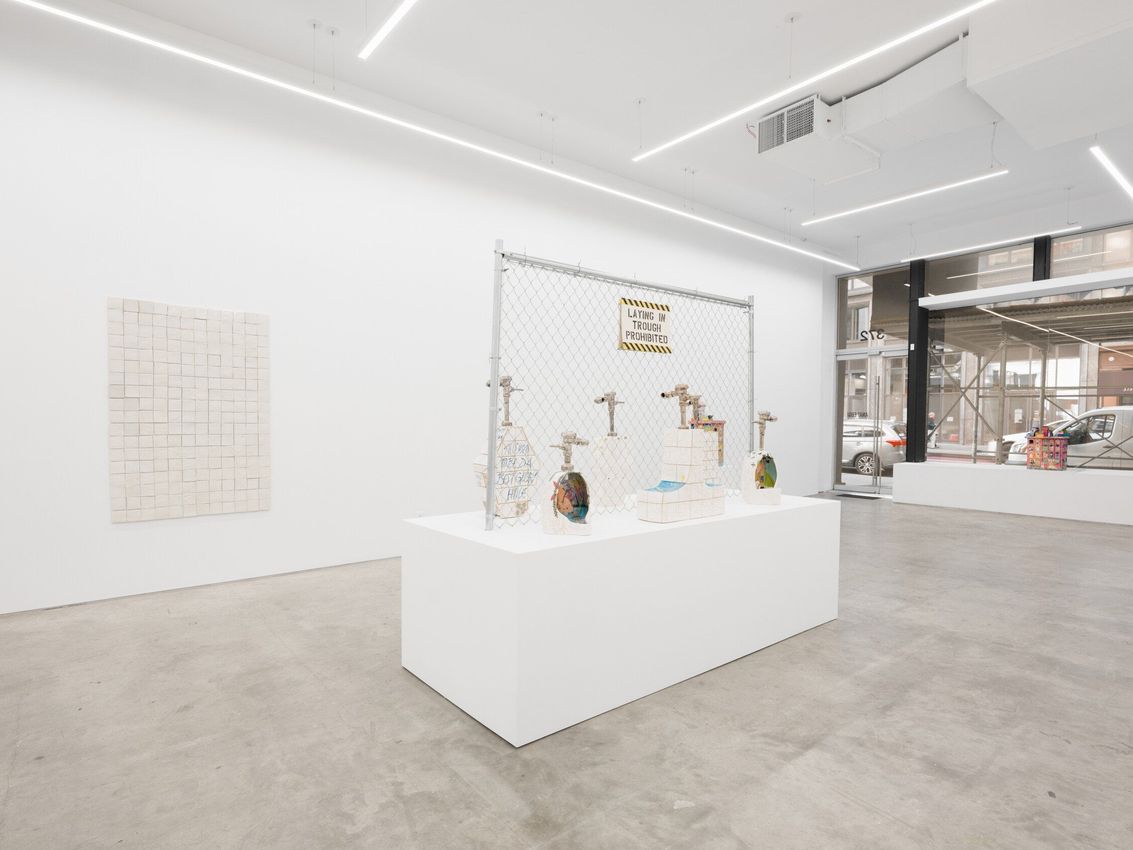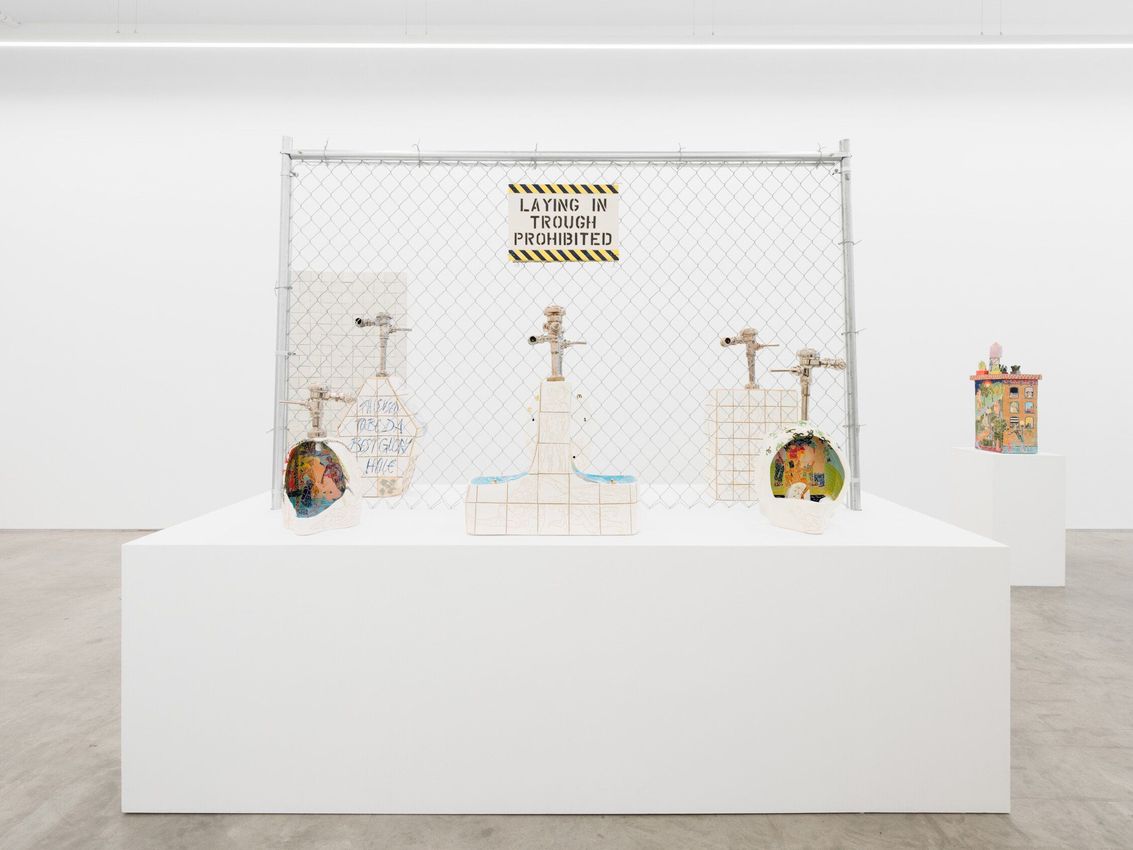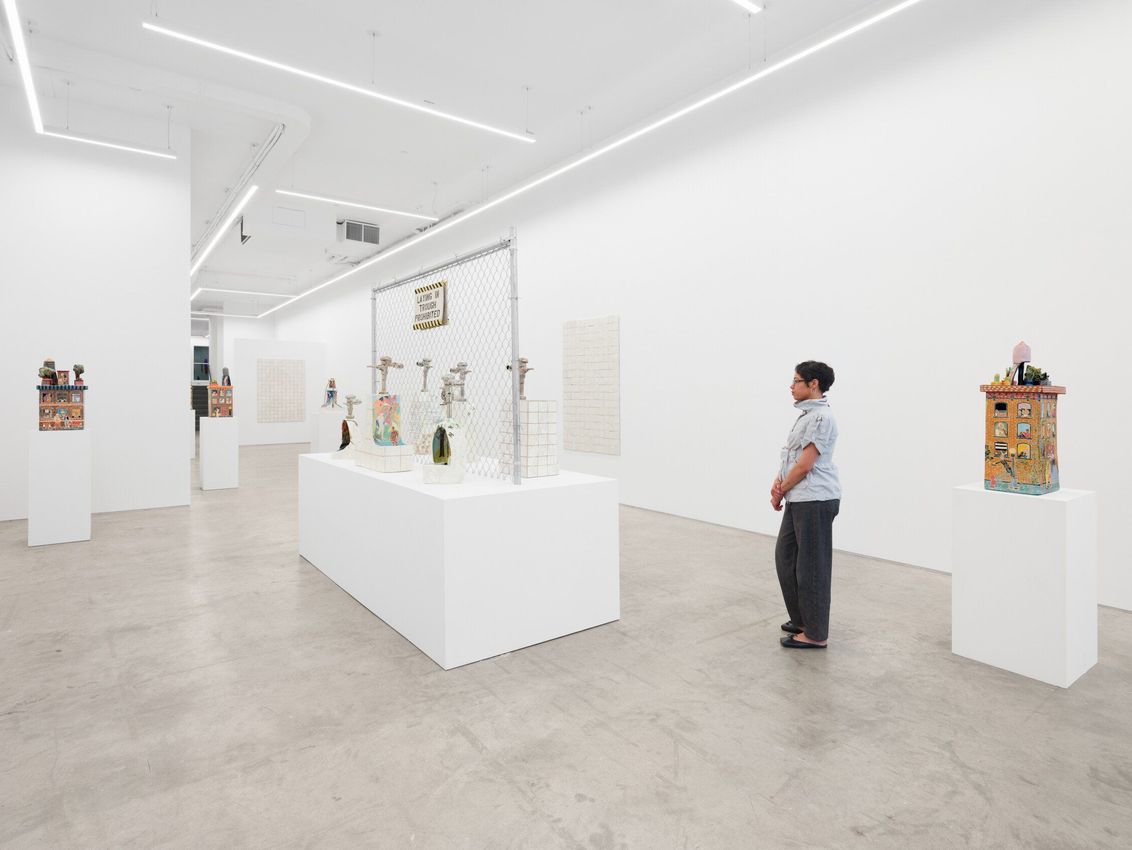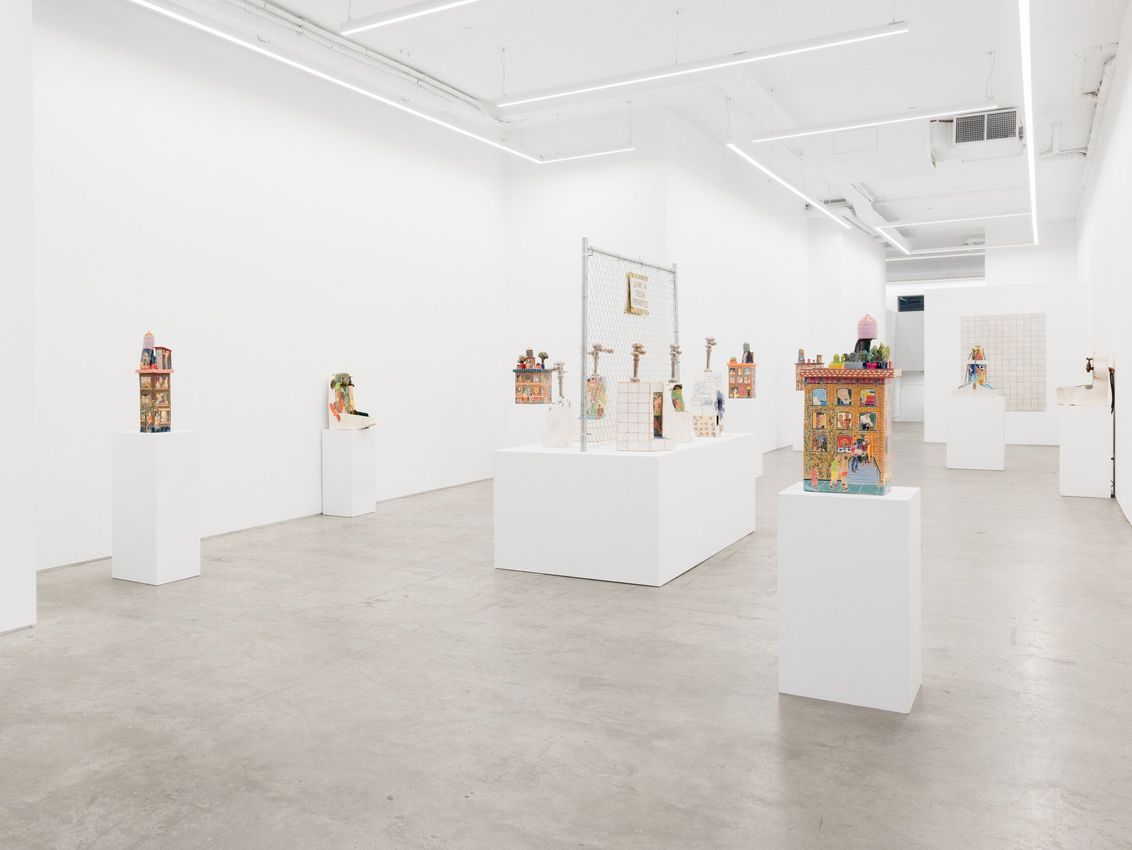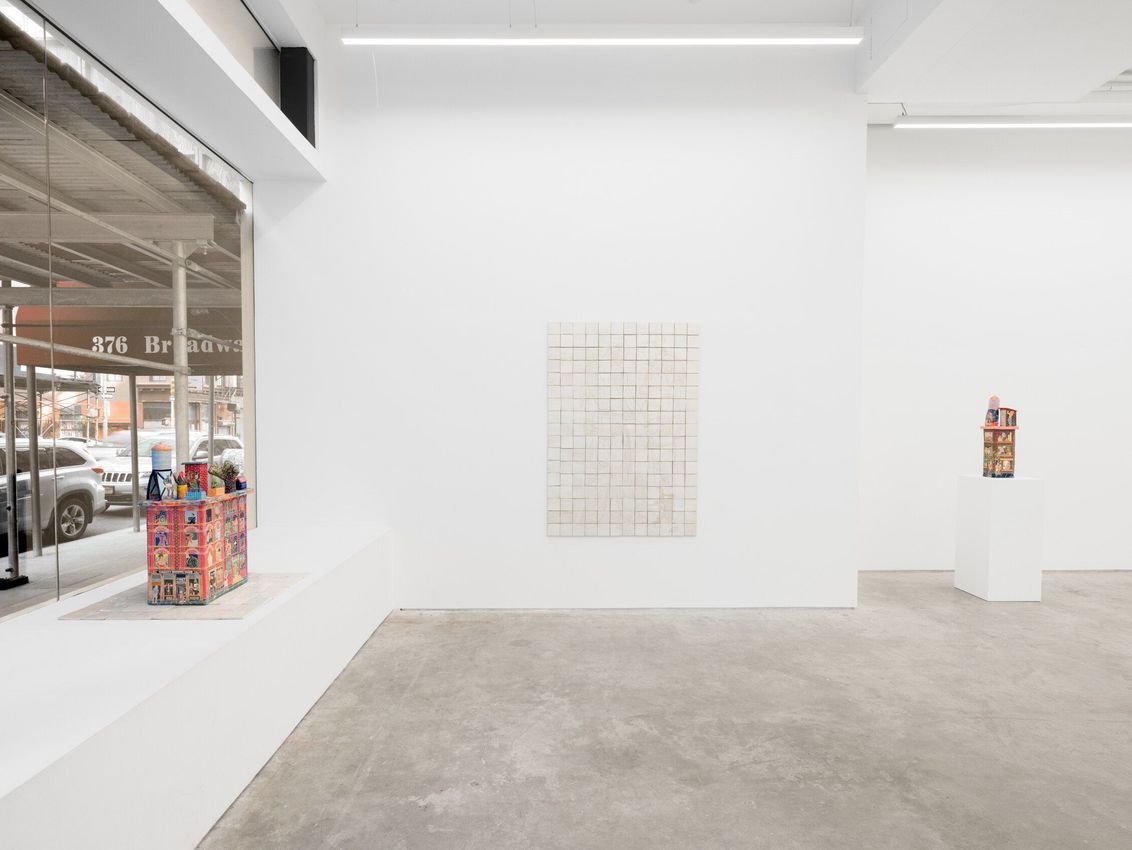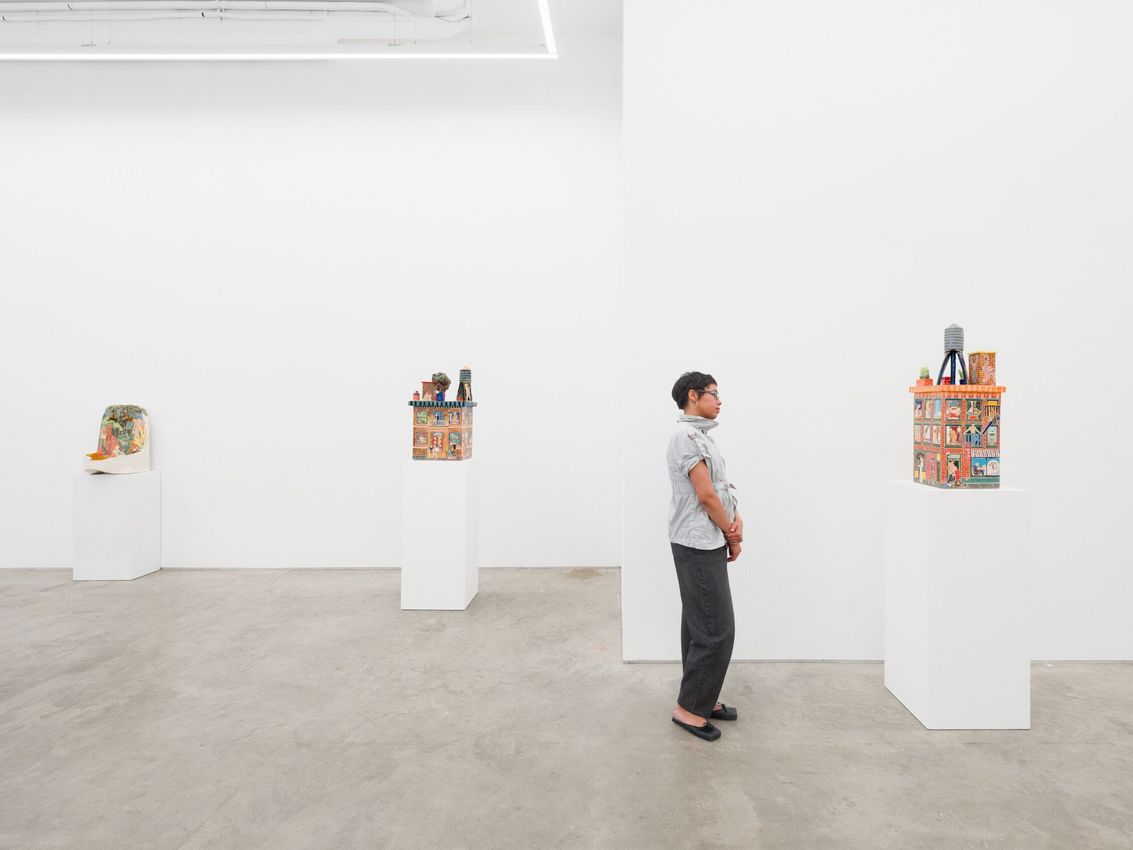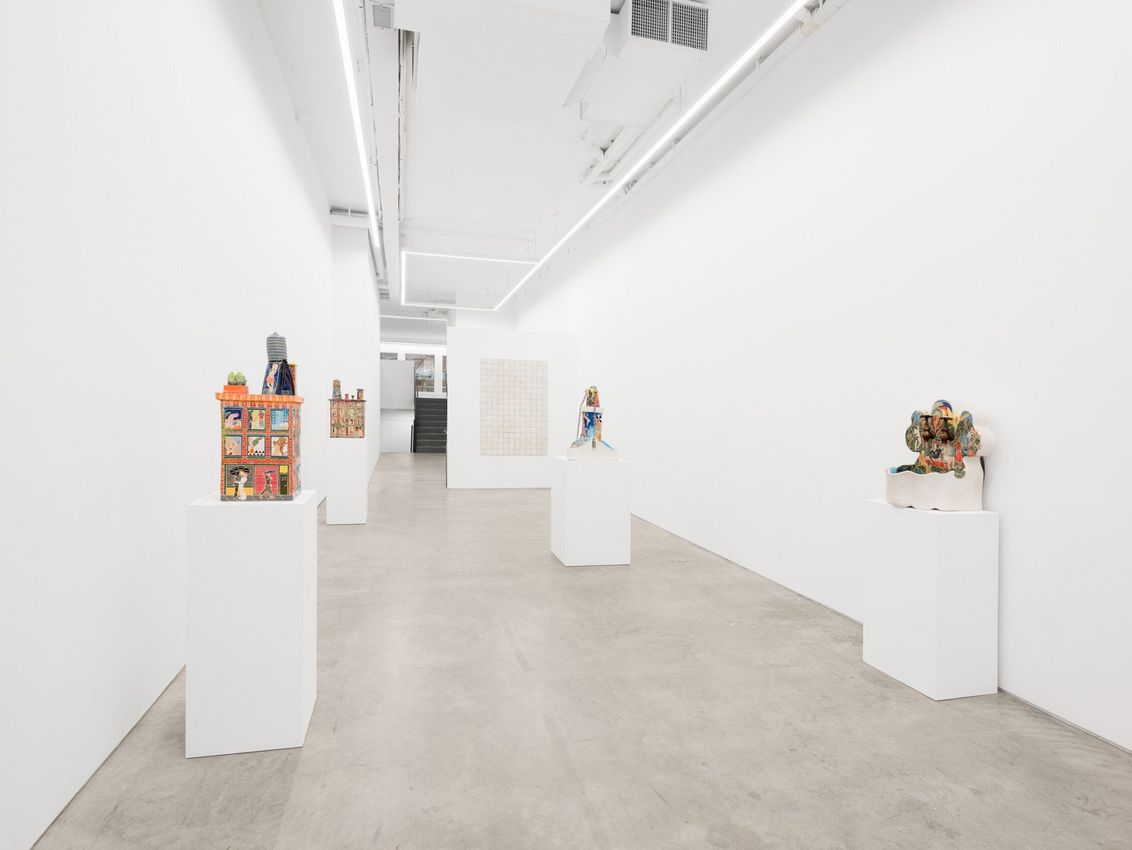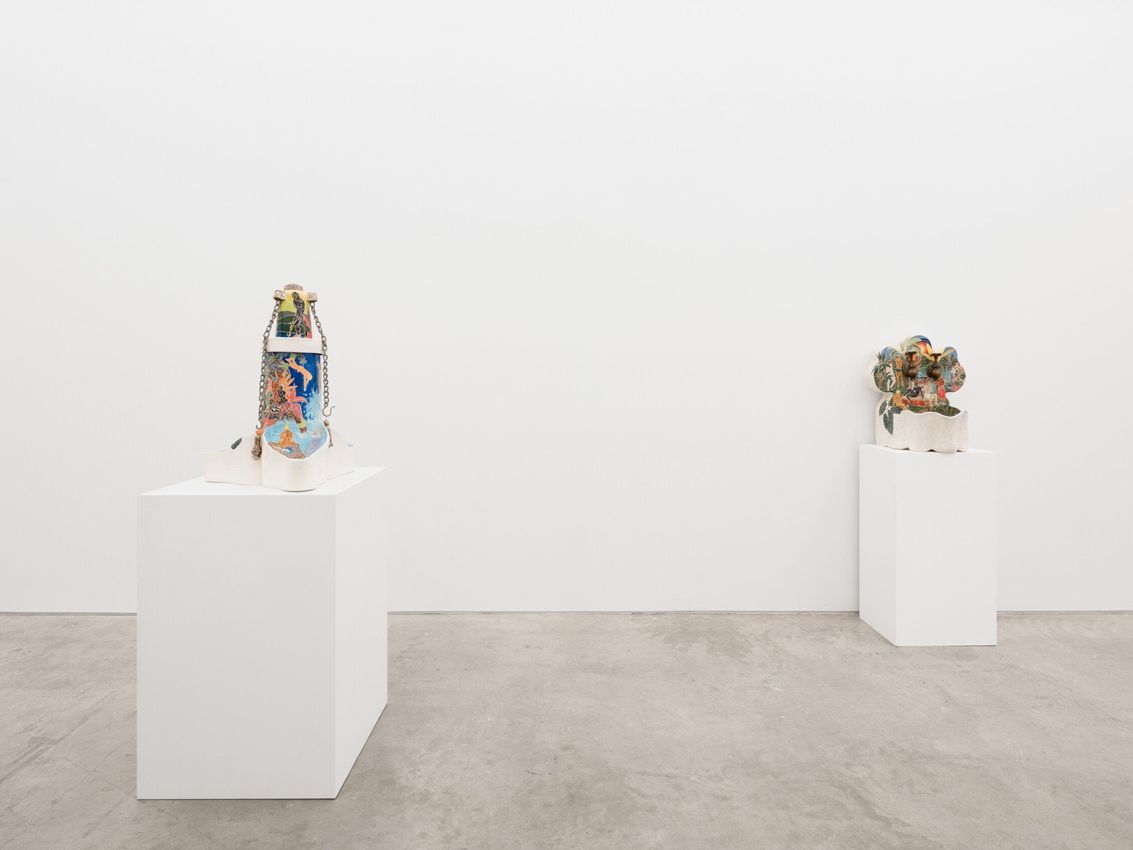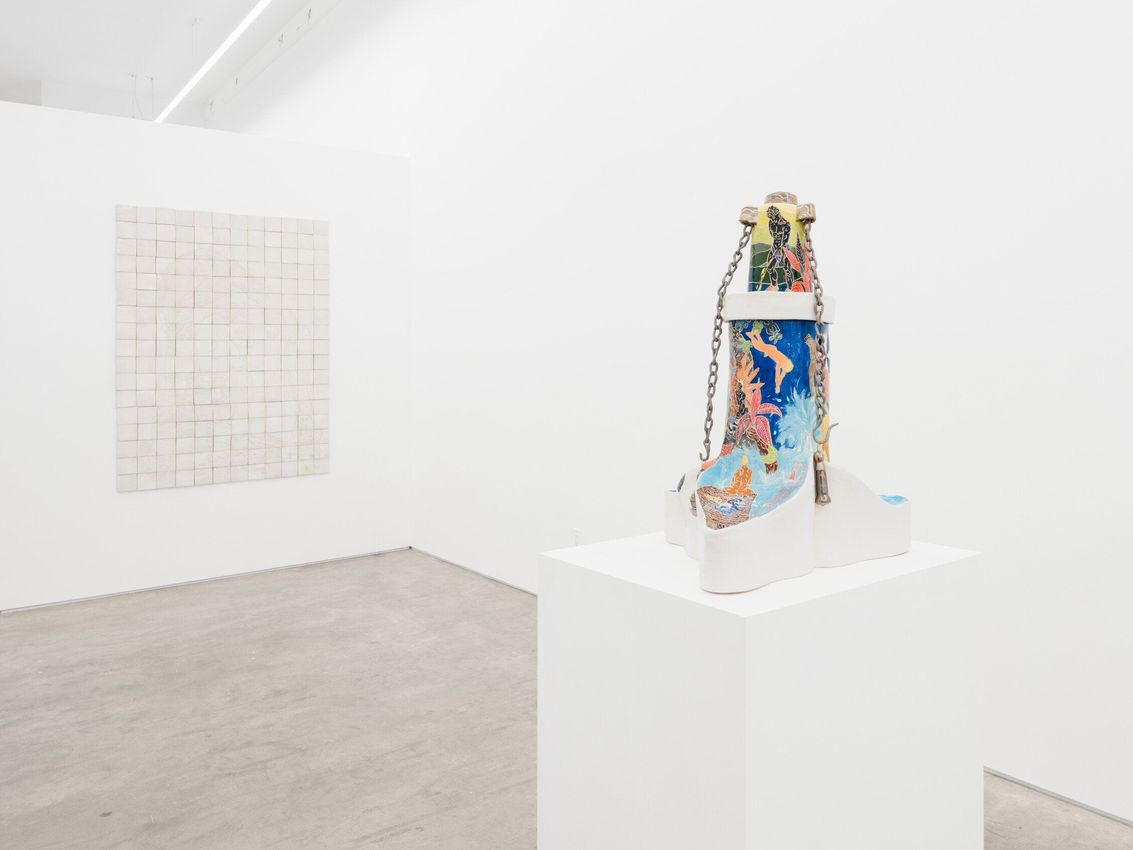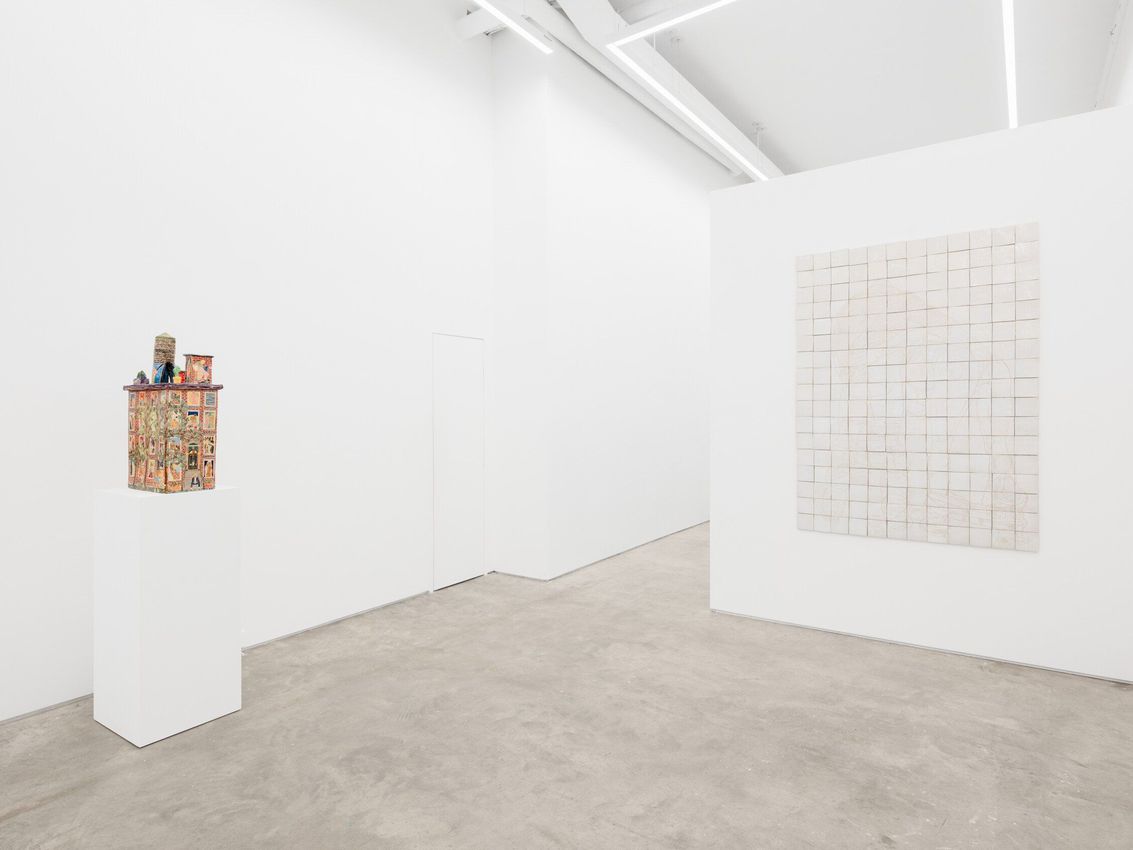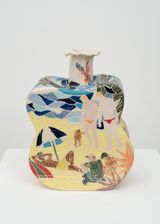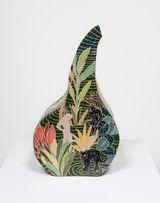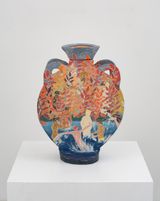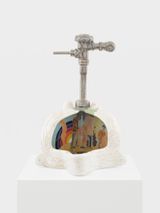




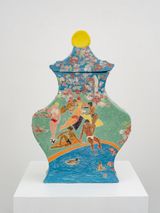
Anat Ebgi is delighted to announce Rendezvous, an exhibition by Polish artist Krzysztof Strzelecki. This is the artist’s second solo exhibition with the gallery and debuts a major installation of ceramic sinks, fountains, and urinals. On view at 372 Broadway in Tribeca from April 18 through June 14. An opening reception will take place on Friday, April 18 from 6-8 pm.
In his new exhibition Rendezvous, Krzysztof Strzelecki’s etched ceramics continue his cruising fantasies, shifting the settings from gardens, forests, and beaches, to spaces of urban life such as bars, parks, bathrooms, and apartment blocks. This move from more secluded landscape scenes to the public and semi-public realm opens conversations in Strzelecki’s work about anonymity, exhibitionism, codes, and euphemistic language used (historically and in present day) to hide-in-plain sight. These works explore clandestine thrills and survival tactics at the intersection of fetish and BDSM practices within urban architecture—focusing on the urinal as a vessel and site of desire.
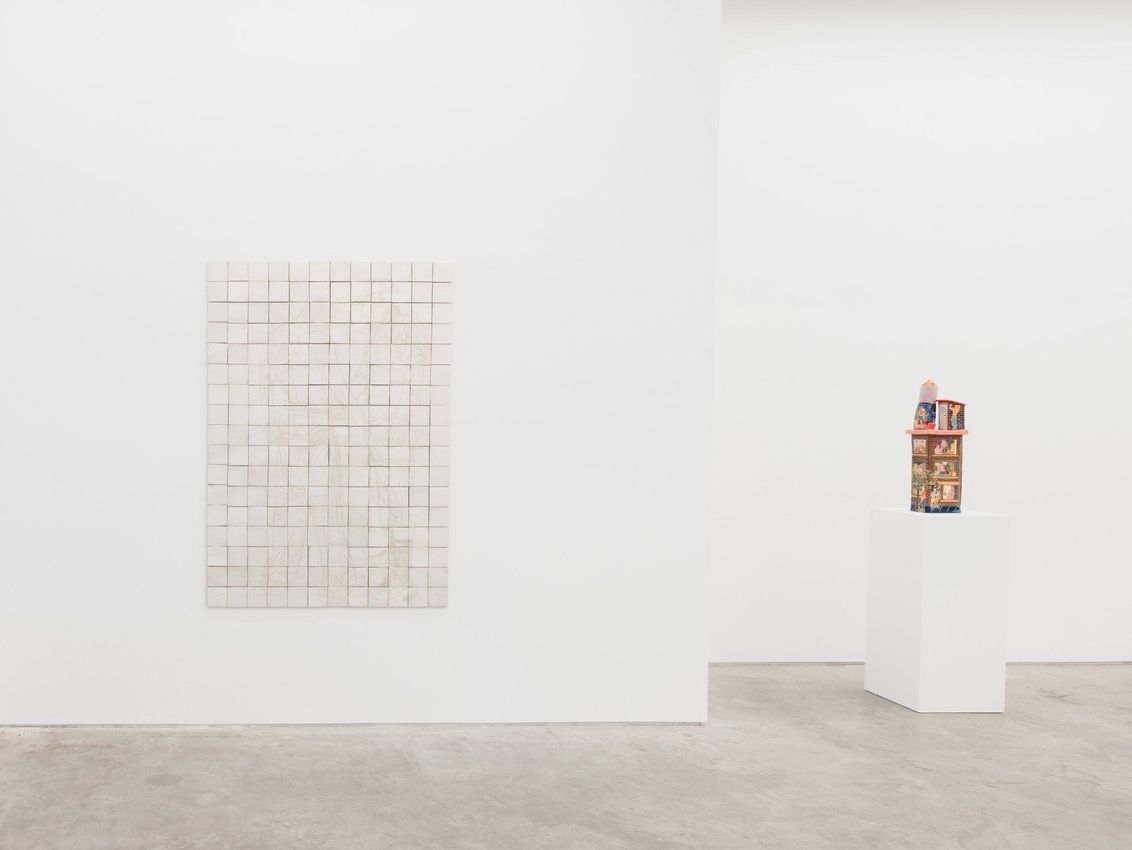
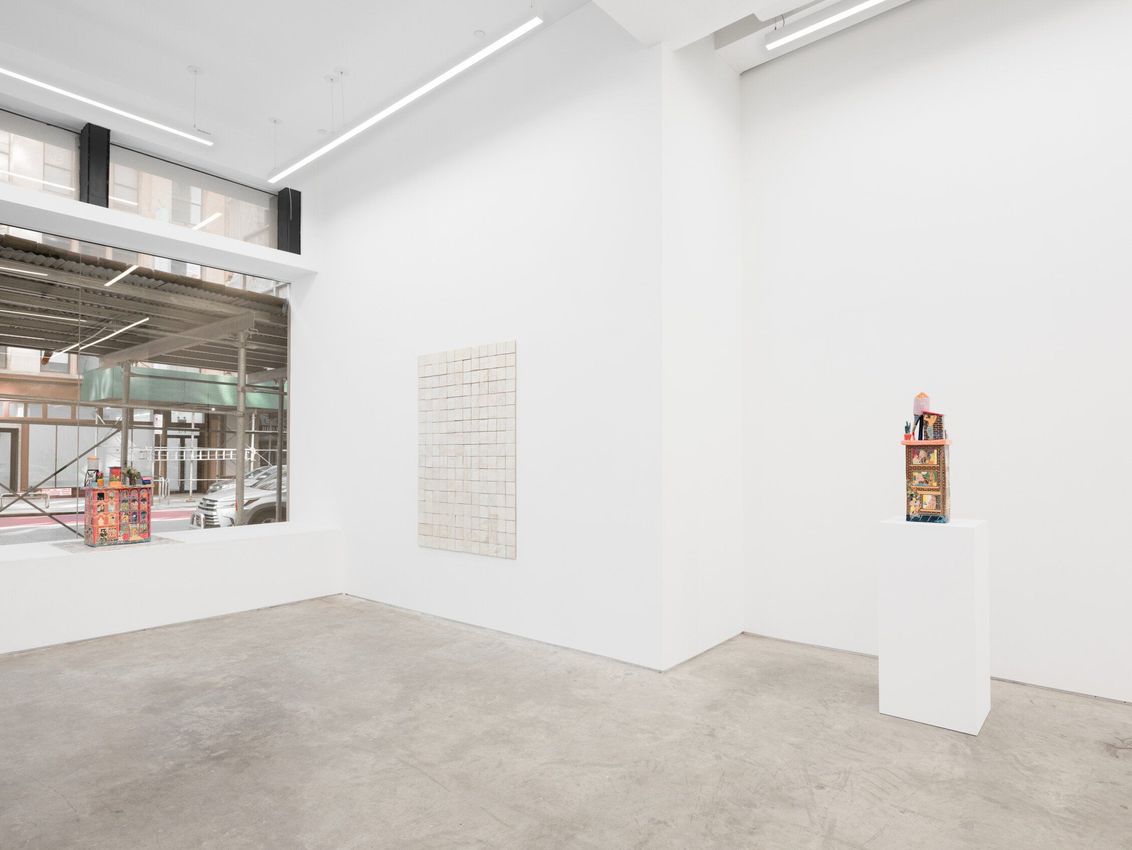
Upon entering the gallery, visitors encounter a gleaming wall of white square tiles found in many public places from subway stations to public restrooms. Carving into these porcelain-coated tiles, Strzelecki sets the stage for the exhibition with depictions of fleeting moments. You step into a public restroom, sensing something illicit, catching a glimpse of flesh before looking away. A figure turns back to the urinal and a stall door closes, everything appears as it should be—yet lingering tensions are palpable. Rendezvous plays with ideas about the observer and the participant, unpacking queer desire through an array of public expressions.
Central to the exhibition is the motif of public restrooms, with an installation of fountain-like sinks evoking ritual cleansing, and reinterpreting biblical themes through the lens of sexuality and taboo. Water, often associated with purification, becomes both literal and symbolic. The utilitarian purpose and white-tiled design of public restrooms contrast with the layers of secrecy and erotic situations exposed by Strzelecki. His sinks and urinals (some functioning as fountains) transform the mundane and orderly into transgressive sites of convenience. The act of urination, historically associated with humiliation and fetishism, is reimagined as both a private indulgence and communal gesture, echoing the relationship between shame and liberation that defines many queer spaces.
Strzelecki, who lives in London, also drew inspiration from Victorian and Edwardian-era urinals, integrating their decorative floral patterns into these new works. Ornamental motifs—once symbols of refinement and civility—become unexpected canvases for contemporary queer narratives and recontextualise historical aesthetics. The floral elements recall an era when queerness was encoded in subtle gestures and symbols, much like the masked dynamics of cruising itself. Covert meaning and euphemism are also explored in Strzelecki’s titles and forms. Water sports, WS, or golden showers emphasise the coded ways in which particular fetishes manifest.
Engaging with ideas about voyeurism, several works in the exhibition take the form of historic New York buildings; we glimpse scenes of private life through open windows. These works reflect on ways in which cruising has moved from public spaces into private interiors, a shift accelerated by the rise of digital cruising via the internet and so-called hook-up apps. These technological changes reshaped queer encounters, trading the risk and spontaneity of physical cruising yet, the desire for tension, secrecy, and transgression remains even in these private settings.
Strzelecki’s research for the exhibition extends into New York’s nightlife and queer coded spaces, particularly gay clubs like The Eagle, where a chain-link fence divides the urinals. The fence serves as a barrier and an invitation; bold deviants relieving themselves can lock eyes and admire each other, but the metal openings prevent direct touch. The installed works in Rendezvous mirrors this division of space, underscoring the push and pull between concealment and exposure, distance and intimacy. He invokes ‘glory holes’ as carved apertures, openings for viewers to peer into without knowing who or what scenes unfold just out of view.
Krzysztof Strzelecki (b. 1993, Świdnica, Poland) earned his BFA in photography from the University of the Arts London (UAL), Camberwell. Recent solo exhibitions include Forbidden Fruit, Anat Ebgi, Los Angeles, CA and Summer Scenes, Taymour Grahne Projects, London, UK. He has exhibited in group exhibitions including the British Ceramics Biennial, Stoke on Trent, UK; Anat Ebgi, Los Angeles / New York; Kasmin, New York, NY; Gaa Gallery, Provincetown, MA; BEERS, London, UK; JPS Gallery, Tokyo, Japan; and Taymour Grahne Projects, London, UK. His sculpture Olympia (2020), was recently acquired by the Dallas Museum of Art (DMA) permanent collection. Strzelecki lives and works between Poland and London, UK.
Krzysztof Strzelecki works in a variety of media including ceramics and photography. His practice explores themes of erotic desire, the relationship between sex and nature, and fantasies of a ‘gay paradise.’ Drawing from a range of influences including Christian iconography, the canon of Western art, personal experiences and gay pornography, Strzelecki creates his own world where his subjects inhabit their environments freely.


A respected voice in contemporary art discourse.
Focusing on ambitious storytelling and insightful art-world commentary. Ocula Magazine publishes in-depth interviews, critical essays and timely analysis on the artists, exhibitions and ideas driving the global art world.
Learn more about Ocula Magazine
Showcasing the best of the art world.
Ocula partners with galleries from around the world to highlight their artists, artworks and exhibitions. Gallery membership is by application and invitation, with each member vetted by an independent panel.
Learn more about Ocula Membership

Specialises in the sale of major artworks.
Led by a team with deep ties to the world’s leading auction houses, galleries and collectors. Ocula’s advisory team offers bespoke services to high-net-worth clients from around the world who are looking to acquire the best of contemporary and modern art.
Learn more about our team and services