



LARRY BELL
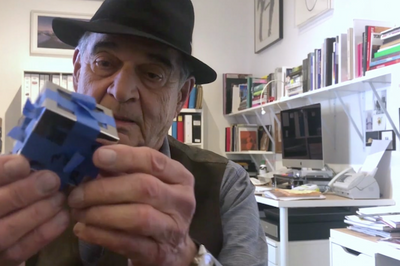
b. 1939, United StatesLarry Bell (born 1939, Chicago) is an American artist known for glass sculptures and perceptual works developed between studios in Taos, New Mexico, and Venice, California. His practice, often linked to the 1960s Los Angeles Light and Space movement, explores how light, reflection, and transparency shape our experience of objects and space. In an interview with Ocula, Bell described his long career as a series of “studies” made visible in glass, paper, and light.
Bell’s work has been exhibited widely and is held in major collections including the Whitney Museum of American Art, the Museum of Modern Art (New York), Tate, and the Solomon R. Guggenheim Museum.
Early Life and Career
Raised in Los Angeles, Bell studied at the Chouinard Art Institute from 1957 to 1959, where he encountered figures such as Robert Irwin and fellow students Ed Ruscha and Kenny Price. His early paintings drew on Abstract Expressionism, using monochrome and geometric forms that increasingly suggested three‑dimensional structures. Around 1959 he began incorporating glass fragments into his canvases, a shift that soon led him away from painting toward freestanding glass constructions and, ultimately, sculpture.
Works and Methods
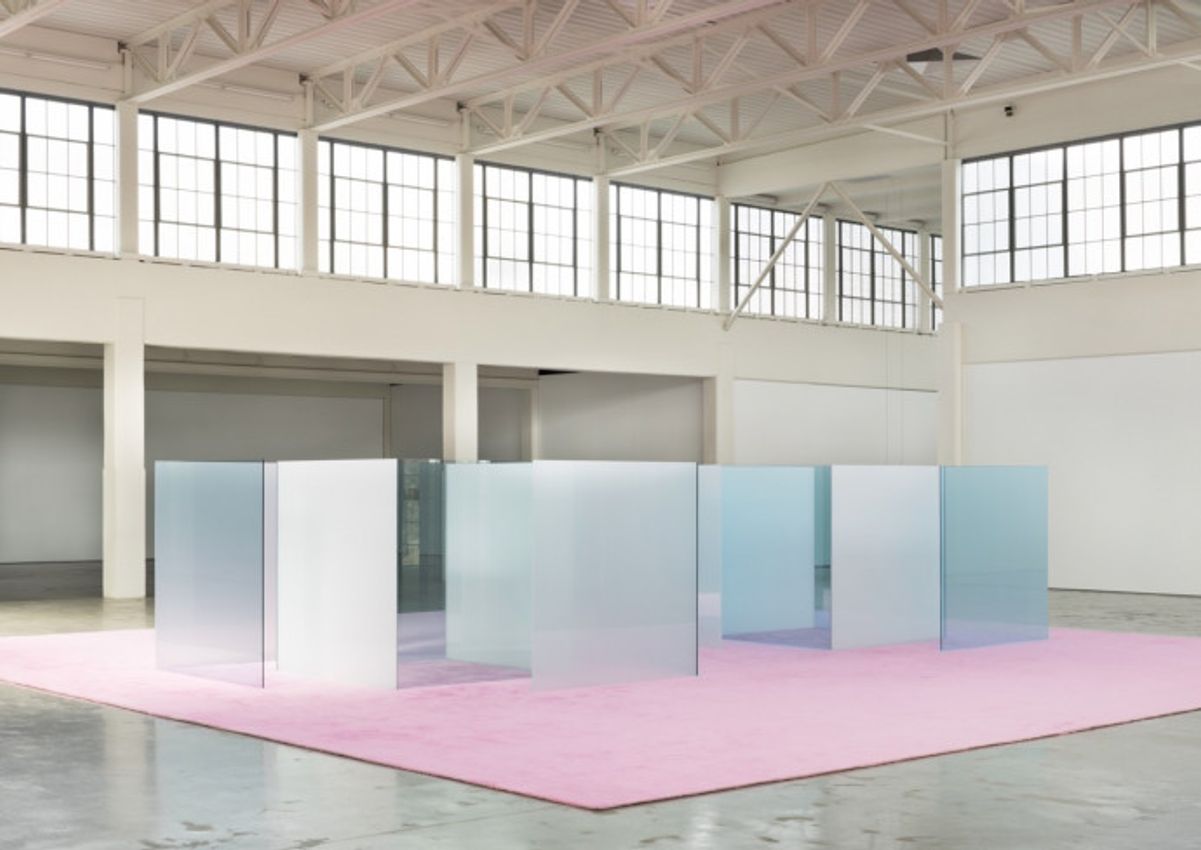
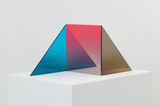
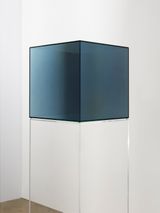
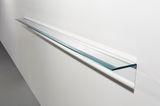
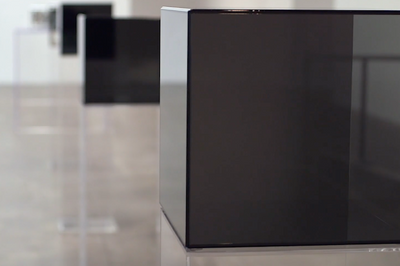
Bell’s glass cubes, developed from the early 1960s, use vacuum‑deposited metallic films on glass to create objects that simultaneously reflect, transmit, and absorb light. Works such as Pacific Red (2016) and Pacific Red II (2017) extend this language into larger, highly saturated configurations, while the Standard Walls series (1968–1969) uses body‑scaled glass panels to choreograph viewers’ movement through space. Across these pieces, the viewer’s shifting reflection and the surrounding environment become active components of the work.
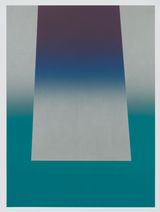
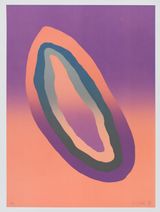
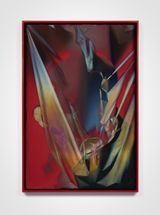
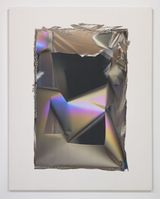
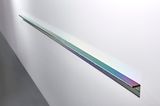
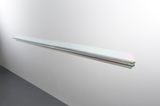
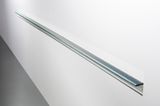
From 1978, Bell expanded his investigations into works on paper and film‑based pieces. The ongoing Vapor Drawings (from 1978) translate his glass‑coating processes into vaporised metal on paper, producing luminous, often geometric fields. The Mirage works (early 1980s) apply thin films and pigments to Mylar and laminate to generate iridescent colour, while the small‑format Fractions series (mid‑1980s onwards) reworks offcuts from these pieces using heat and pressure to compress residual coatings into dense, gestural images. Bell has described his practice as “evidence of my studies and the externalisation of a current thought... about intuition, improvisation and spontaneity,” a formulation that underscores the experimental core of his work.
Recent projects have continued to stage large‑scale encounters between glass, light, and landscape, including long‑term installations in museum contexts and outdoor commissions such as Larry Bell: Improvisations in the Park (Madison Square Park, New York, 2025–2026). Across media, Bell’s work asks viewers to register how perception is conditioned by movement, angle, and environment rather than treating sculpture as a fixed, self‑contained object.
Exhibitions, Collections and Recognition
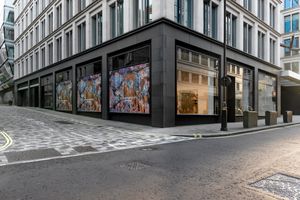
Since the 1960s, Bell has been included in pivotal exhibitions of minimal and perceptual art and has presented solo shows across North America and Europe. Key moments include early visibility in ”Primary Structures” (Jewish Museum, New York, 1966), a major mid‑career survey Larry Bell: Seeing Through (Gemeentemuseum Den Haag, 2013), and Larry Bell: Smoke on the Bottom (White Cube Bermondsey, London, 2017), which brought together large‑scale glass works and Vapor Drawings. His work appeared in the Whitney Biennial (Whitney Museum of American Art, New York, 2017) with Pacific Red II (2017), and he has since realised long‑term installations at Dia Beacon (from 2022) and the outdoor project Larry Bell: Improvisations in the Park (Madison Square Park, New York, 2025–2026).
Bell’s work is represented in public collections such as the Museum of Modern Art and the Whitney Museum of American Art in New York; Tate, London; Centre Pompidou, Paris; the Solomon R. Guggenheim Museum, New York; the Museum of Contemporary Art, Los Angeles; and the Stedelijk Museum, Amsterdam. He has received major grants, including support from the National Endowment for the Arts and the Solomon R. Guggenheim Foundation, and is widely regarded as a central figure in the development of postwar Californian art.
Larry Bell FAQs
What is Larry Bell best known for?
Larry Bell is best known for his glass cubes and large‑scale glass installations, developed from the early 1960s onwards, which manipulate light and reflection and place the viewer’s perception at the core of the work.
What themes does Larry Bell explore?
Larry Bell explores how light interacts with surfaces, how objects structure space, and how perception shifts as viewers move. Process, improvisation, and material experimentation are ongoing concerns, from the early glass cubes and Standard Walls (1968–1969) to series like Vapor Drawings (from 1978), Mirage (early 1980s), and Fractions (mid‑1980s onwards).
Where does Larry Bell live and work?
Larry Bell lives and works in Taos, New Mexico, and maintains a long‑established studio in Venice, California, reflecting his ties to both the Los Angeles art scene and the landscape and light of the American Southwest.
What are the Vapor Drawings, Mirage works, and Fractions?
Larry Bell’s_Vapor Drawings_ (from 1978) are works on paper made with vaporised metal; Mirage works (early 1980s) use coated Mylar and laminate to create iridescent colour fields; Fractions (mid‑1980s onwards) are small images produced by reworking offcuts from the Mirage series under heat and pressure.
Where can I see Larry Bell’s work now?
Larry Bell’s works are regularly shown in the collections of major museums such as MoMA, the Whitney, Tate, Centre Pompidou, and the Guggenheim, and in institutional projects including installations at Dia Beacon (from 2022) and Larry Bell: Improvisations in the Park (Madison Square Park, New York, 2025–2026).
Anna Dickie | Ocula | 2026



















Explore and Follow Artists Shaping Contemporary Art
A respected voice in contemporary art discourse.
Focusing on ambitious storytelling and insightful art-world commentary. Ocula Magazine publishes in-depth interviews, critical essays and timely analysis on the artists, exhibitions and ideas driving the global art world.
Learn more about Ocula Magazine
Showcasing the best of the art world.
Ocula partners with galleries from around the world to highlight their artists, artworks and exhibitions. Gallery membership is by application and invitation, with each member vetted by an independent panel.
Learn more about Ocula Membership
Specialises in the sale of major artworks.
Led by a team with deep ties to the world’s leading auction houses, galleries and collectors. Ocula’s advisory team offers bespoke services to high-net-worth clients from around the world who are looking to acquire the best of contemporary and modern art.
Learn more about our team and services