

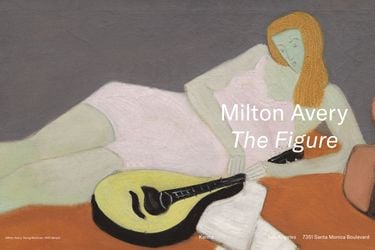



LUCIAN FREUD
1922-2011, GermanyLucian Freud was a British painter internationally known for his uncompromising portraits. Typically depicting the artist’s friends, family, colleagues, and acquaintances, as well as himself, Freud’s paintings are recognised as some of the most significant figurative work of the 20th century.
Early Life and Education
Freud was born in Berlin to Ernst L. Freud, the fourth child of psychoanalyst Sigmund Freud, and Lucie Brach. The family moved to London in 1933, where young artist grew up and went on to study at Central Saint Martins and Goldsmiths, University of London.
Lucian Freud Artworks
Freud’s main subject and fascination lay with the human face and body, which he explored through portraits of those close to him.
Always painted from life, and from a pose that the models felt comfortable with, Freud’s paintings and drawings reflect his exploration of the human body through its curves and concaves, excesses and recesses, and planes and substances with weight.
Development
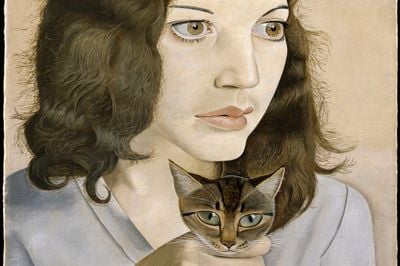
Freud was first influenced by surrealism, then later expressionism. He initially painted while seated, studying his subjects from a short distance, and favoured muted colours and sharply delineated forms as seen in Girl with a Kitten (1947).
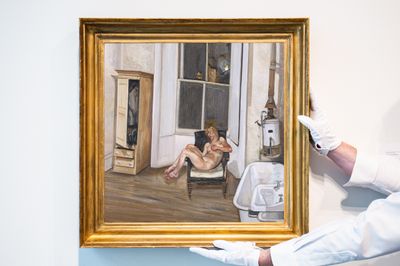
By the 1950s, the artist had shifted towards a stark realism that would come to define his work, adopting a looser brushwork and a wider range of colours. It was also during this period that he began to paint standing, which allowed him to pay closer attention to the physicality of the human body.
Portraits
Among his first subjects were the artist himself and early paintings such as Man with a Feather (Self-Portrait) (1943) and Man with a Thistle (Self-Portrait) (1946) show Freud’s interest in capturing various details and textures. When painting other people, the artist spent prolonged periods of time observing them, even requiring them to hold a pose for hours in a single session.
Nudes
Freud is also recognised for his nude portraits and studies that he began to paint frequently from the mid-1960s.
In 1993, Freud painted his seminal self-portrait Painter Working, Reflection, which shows the artist standing, nude but for unlaced boots, and holding the tools of his trade in his hands.
Francis Bacon
Freud was close friends with the Irish-born painter Francis Bacon for more than four decades, until they fell out in 1985. Now regarded as two representative figures of contemporary British figurative painting, the two artists shared a commitment to the human figure while diverging in Bacon’s preference to work from photographic images and Freud’s practice working with live models. They also painted each other, including Bacon’s Three Studies of Lucian Freud (1969), a triptych of oil paintings that show Freud sitting on a wooden chair in a cage from three slightly different vantage points.
Legacy
Freud’s influence on contemporary portraiture is profound, and his works are held in major museums worldwide, including:
- The Art Institute of Chicago
- Metropolitan Museum of Art, New York
- The Museum of Modern Art, New York
- National Gallery of Australia, Canberra
- National Portrait Gallery, London
- Centre Pompidou, Paris
- Tate Modern, London
- Thyssen-Bornemisza National Museum Madrid
- Victoria and Albert Museum, London
Accolads
- Order of Merit (1993)
- Companion of Honour (1983)
Exhibitions
Lucian Freud has been the subject of both solo exhibitions and group exhibitions at important institutions.
Solo Exhibitions
London’s Hayward Gallery presented the first retrospective exhibition of Freud’s work in 1974, which led to a greater international acclaim, including his solo presentation at the Metropolitan Museum of Art in 1994. More recent solo exhibitions include:
- The National Gallery, London (2022)
- Tate Liverpool (2021)
- Museum of Fine Arts, Boston (2020)
- Royal Academy of Arts, London (2019)
Group Exhibitions
Freud represented Britain at the Venice Biennale alongside Francis Bacon and Ben Nicholson in 1954. Selected group exhibitions including at the following institutions:
- Tate Modern, London (2023)
- Art Gallery of Western Australia (2021)
- Irish Museum of Modern Art, Dublin (2019)
Lucian Freud FAQs
Who was Lucian Freud?
Lucian Freud (1922–2011) was a British painter known for his intense and unflinching portraits.
Was Lucian Freud related to Sigmund Freud?
Yes, Lucian Freud was the grandson of Sigmund Freud, the founder of psychoanalysis.
What made Freud’s approach to portraiture unique?
Freud’s portraits are noted for their psychological insight, often revealing vulnerability or discomfort, and for his insistence on painting from life over many sittings.
Who were some of his most famous sitters?
Freud painted many friends and family, including the performance artist and club promoter Leigh Bowery, painter Celia Paul, and model Sue Tilley, and public figures such as Queen Elizabeth II.
Regular sitters from the 1940s and 50s include Charlie Lumley, a teenage boy and Freud’s neighbour in Delamere Terrace, Paddington, and artist Kitty Garman, who was Freud’s first wife and sculptor Jacob Epstein’s daughter.
Did Lucian Freud paint self-portraits?
Yes, Freud created numerous self-portraits throughout his career.
Ocula | 2025


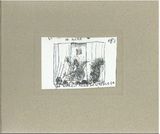

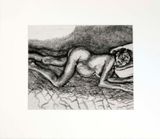

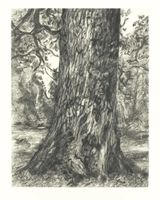


Explore Lucian Freud's Exhibitions




Lucian Freud in Ocula Magazine









Explore and Follow Artists Shaping Contemporary Art
A respected voice in contemporary art discourse.
Focusing on ambitious storytelling and insightful art-world commentary. Ocula Magazine publishes in-depth interviews, critical essays and timely analysis on the artists, exhibitions and ideas driving the global art world.
Learn more about Ocula Magazine
Showcasing the best of the art world.
Ocula partners with galleries from around the world to highlight their artists, artworks and exhibitions. Gallery membership is by application and invitation, with each member vetted by an independent panel.
Learn more about Ocula Membership
Specialises in the sale of major artworks.
Led by a team with deep ties to the world’s leading auction houses, galleries and collectors. Ocula’s advisory team offers bespoke services to high-net-worth clients from around the world who are looking to acquire the best of contemporary and modern art.
Learn more about our team and services