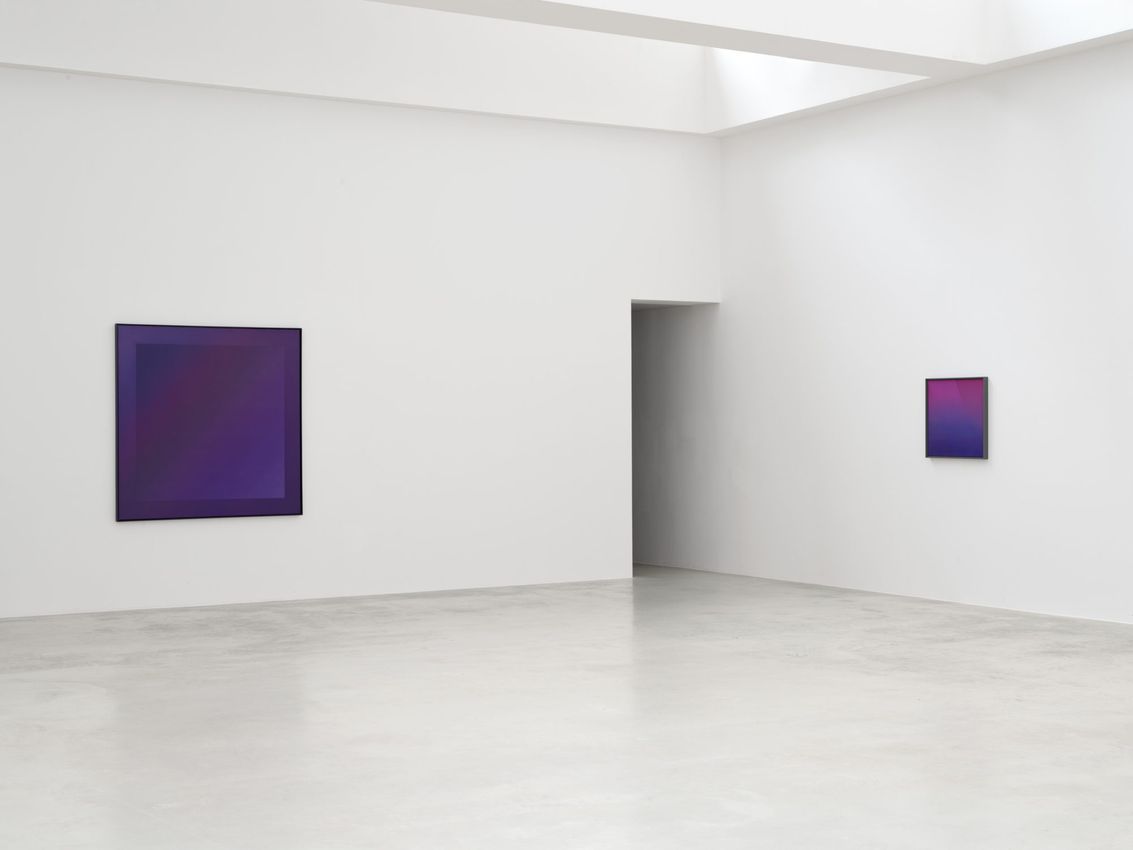
Axel Vervoordt Gallery is pleased to present a solo exhibition by the pioneering, visionary, and influential artist, the late Günther Uecker (1930–2025). This focussed presentation in Kanaal’s Escher Gallery brings together works from several periods of Uecker’s oeuvre, creating a tension between the artist’s early material investigations and his later meditations on nature, memory, and the spiritual dimensions of form.
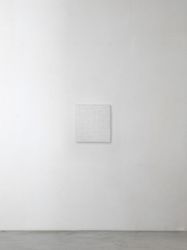
Untitled (Weißes Bild, 1959) marks a formative moment in Uecker’s artistic development. Created just before his involvement with Group Zero, the work features a white-painted surface embedded with monochrome nails. The composition exemplifies Uecker’s initial investigations into rhythm, relief, and light as structuring principles. The uniformity of the white palette and the raised nail heads produce shifting shadows, activating the surface and inviting the viewer into a dynamic perceptual experience. This work signals Uecker’s transition from illusionistic representation toward a direct, phenomenological language rooted in gesture and repetition.
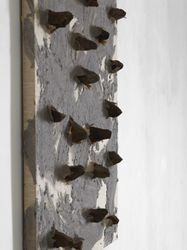
In the late 1980s, Uecker began incorporating ashes and stones alongside his signature nail works. Aschegarten (Ash Garden, 1991) presents an interesting paradox, evoking both destruction and renewal. The violently embedded rocks suggest trauma and rupture, yet the ashen field also gestures toward regeneration. The work speaks to the cyclical nature of existence and the roles we play within that cycle if we have any choice at all. As Uecker once put it: “Man hurts, man heals.”
From the same period, Weißer Schrei (White Scream, 1990), is a more chaotic and violent work in which Uecker uses nails and paint in a disordered manner as a reaction to the global crisis. With these works, Uecker also tried to cure both his existential trauma and the trauma of the world. Uecker considers his nail fields as self-portraits and self-reflections. They are his meditations. Like the other works, they are open and vulnerable, but in a different way.
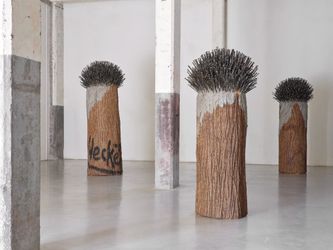
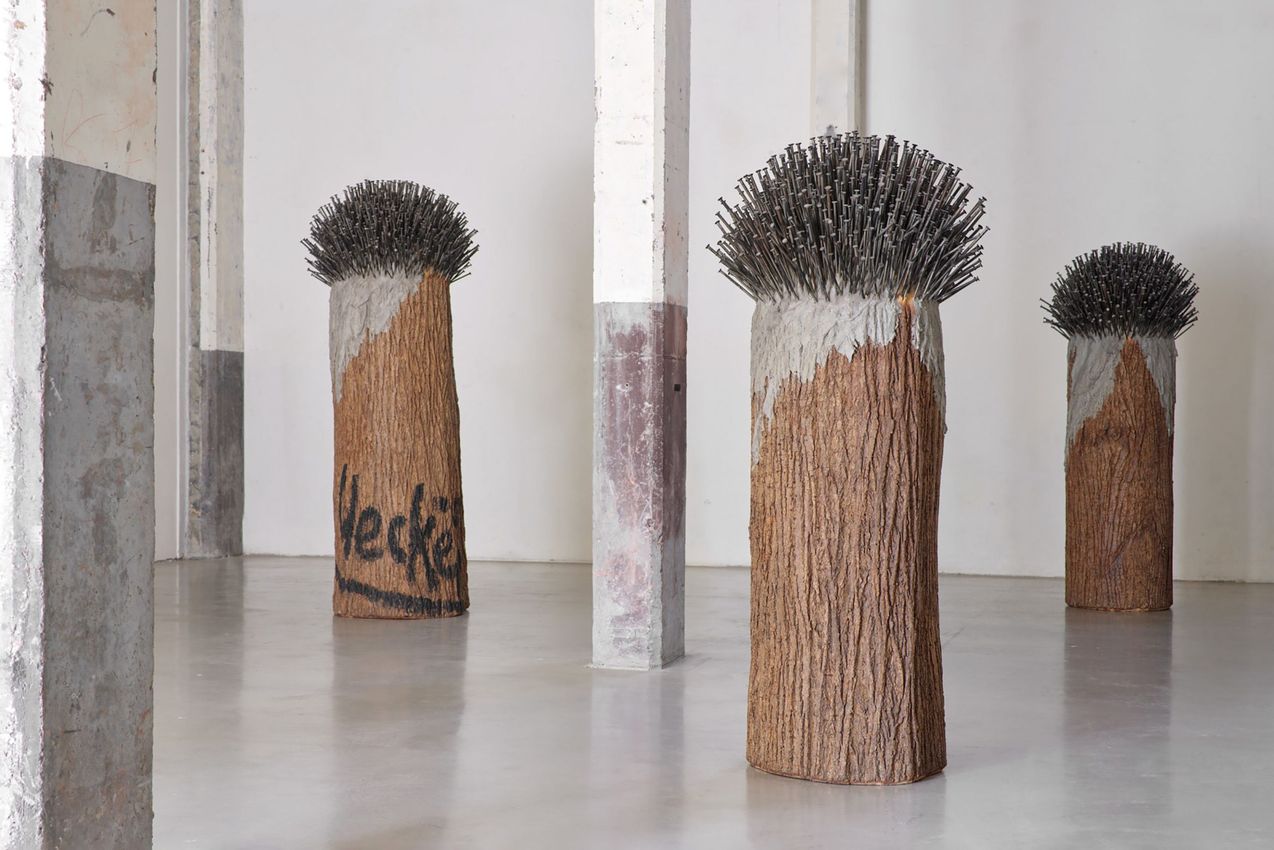
Waldgarten (Forest Garden, 2008) presents three vertical tree trunks, their crowns densely embedded with nails and partially encrusted with concrete. These upright, weathered forms evoke the memory of felled forests, yet their resilience endures. The surfaces recall scars, crowns, or vegetative growths, balancing violence and protection, ritual and renewal. As with other works from the Wald series, it channels a deep ecological awareness and offers a reflection on time, loss, and endurance.
Together, these works frame Uecker’s constant concern with the elemental and the existential. From the beginning of his career, emerging from the devastation of postwar Germany, Uecker sought new forms of artistic language through the body, through light, and the resistance of material. His embrace of unconventional media, such as nails, wood, ash, sand, and light, was not an aesthetic choice but a philosophical one. To Uecker, art is not merely an object; it is a condition, an act of resistance, and a site of spiritual renewal.
Born in 1930 in Wendorf, Germany, Uecker began making finger and earth paintings in the 1950s, rejecting conventional painterly traditions. His earliest work echoed the emotional urgency of Abstract Expressionism, but he soon distanced himself from gestural mark-making for a more elemental visual language. In 1961, he joined the Group Zero group alongside Otto Piene and Heinz Mack, sharing their desire to begin anew, zero as a point of origin.As Uecker wrote, Zero was ”...an open domain of possibilities... we speculated with visionary forms of purity, beauty, and stillness.”
This exhibition had been in preparation for some time. Just days before its opening, Günther Uecker passed away on June 10, 2025, at the age of 95. With his passing, the art world lost a pioneering and deeply influential voice. His legacy endures in the clarity of his vision, the material depth of his work, and his lifelong belief in art as a space for reflection, resilience, and hope.


Although it is an everyday object that is usually kept hidden, the nail became an important element in the work of German artist Günther Uecker. Through nails, he evoked a play with light and shadow, creating an optical illusion of movement.


The Axel Vervoordt Company and Axel Vervoordt Gallery are located at a site known as Kanaal–a converted industrial distillery that has become a cultural and residential community.

A respected voice in contemporary art discourse.
Focusing on ambitious storytelling and insightful art-world commentary. Ocula Magazine publishes in-depth interviews, critical essays and timely analysis on the artists, exhibitions and ideas driving the global art world.
Learn more about Ocula Magazine
Showcasing the best of the art world.
Ocula partners with galleries from around the world to highlight their artists, artworks and exhibitions. Gallery membership is by application and invitation, with each member vetted by an independent panel.
Learn more about Ocula Membership

Specialises in the sale of major artworks.
Led by a team with deep ties to the world’s leading auction houses, galleries and collectors. Ocula’s advisory team offers bespoke services to high-net-worth clients from around the world who are looking to acquire the best of contemporary and modern art.
Learn more about our team and services