Beijing Commune is pleased to announce the opening of Ma Qiusha’s fifth solo exhibition “Wonderland” at the gallery on June 15th, 2016. The exhibition will continue until Auguest 6th, 2016.
The exhibition title “Wonderland” derives from a mega-scale amusement park extravagantly built in the 1990s in Changping district, the fringe of Beijing city. Like the Chinese exhibtion title “沃德兰”, the park’s Chinese name was a phoneic transliteration from the English word. Eagerly anticipated at the time, this giant town of spectacles and ambition claimed to be the “world’s largest amusement park”, only to find itself delayed for complex reasons and was eventually quietly demolished after decades of abandonment.
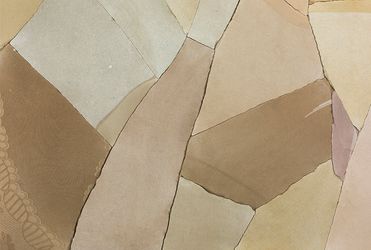
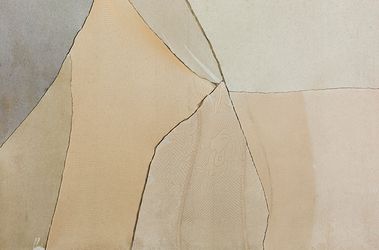
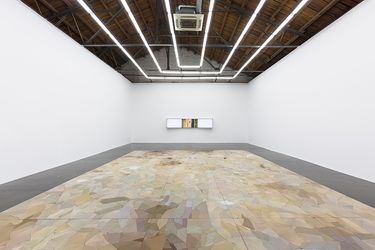
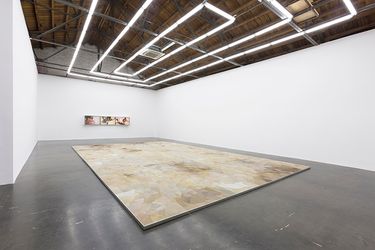
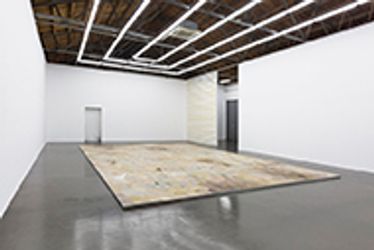
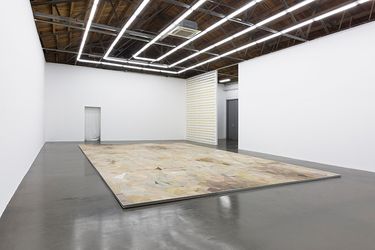
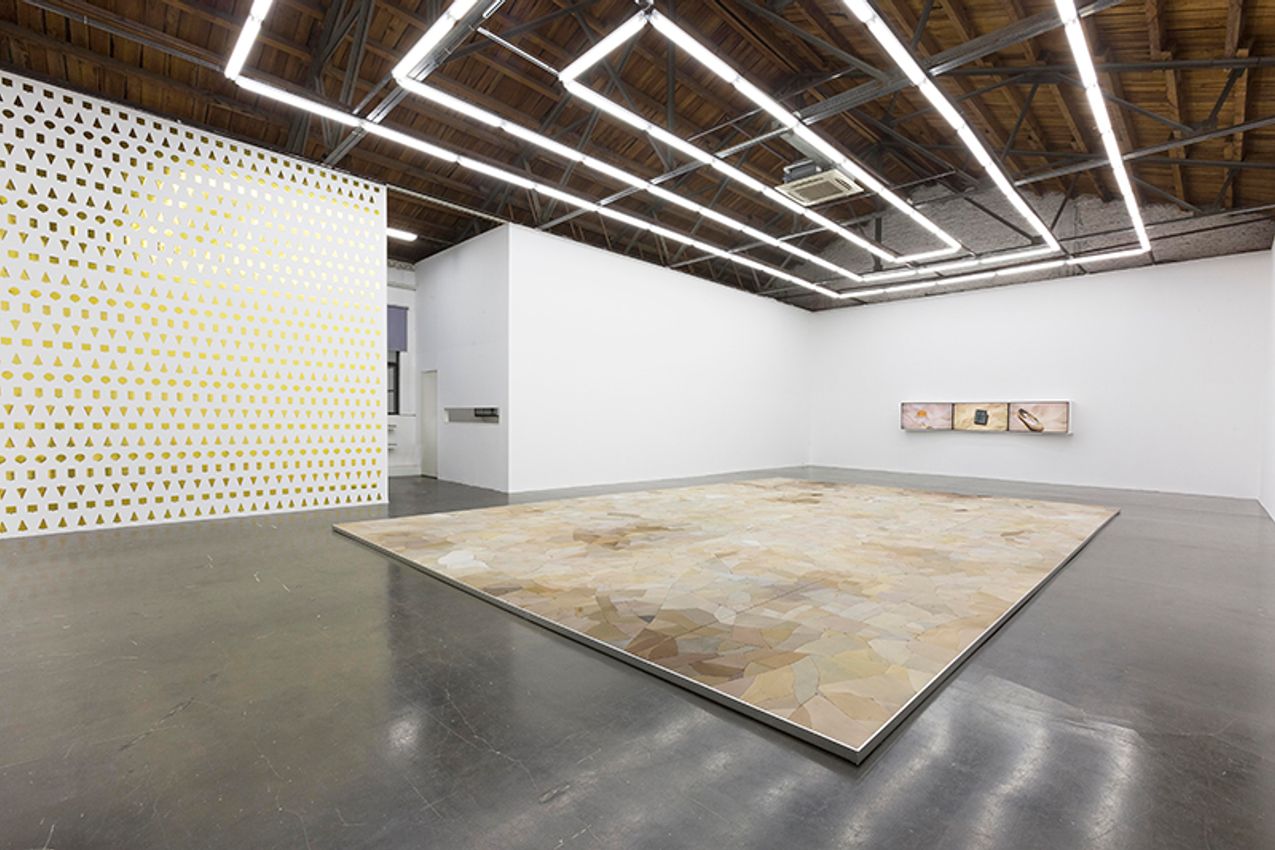
Exhibited in the main hall, the eponymous work Wonderland is a new installation that Ma began working on since last year. Smashed cement slabs of the same model are wrapped in nylon stockings in different shades of nude, then reattached into new blocks. Nude nylon stockings have certainly gone out of fashion today for their poor elasticity and artificial colors, but were once trendy items among Chinese women in 80s and 90s. In the artist’s retrospection of her childhood, nude nylon stockings do not signify idiosyncrasies, but the masking of bodies and their inherent differences. While preparing and producing the work, Ma used clear nail polish to patch the snags and tears on the stockings—the precise way in which Ma’s mother used to fix her stockings in a time far before the ubiquity of overproduction. The body as a both private and collective entity, the memory and texture of an intimate object worn next to the skin, and the aesthetics of a bygone era interweave and meet in this Wonderland that enclothes a large proportion of the exhibition floor.
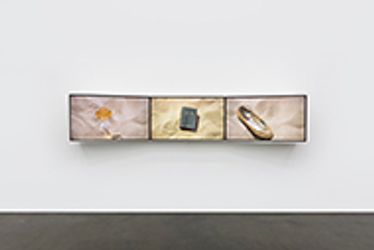
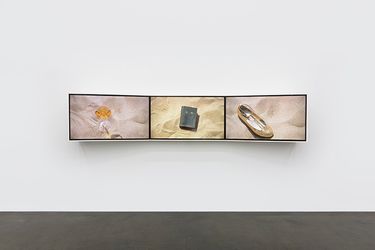
In the same exhibition hall, the three-channel video Avatar seems to resemble an exquisitely crafted TV commercial: young girls, extricated from old-style nylon stockings, bathe their bikini bodies shimmering with gold powderunder the lens. With the Bible, the prayer beads, and sunglasses within reach, everything in this perfect sunny dayappears resplendent, lethargic, carefree. As the three synchronized screens come to an end, images on the screen at center continue to play: the lens rotating at high speedpresents a scene which brings the audience from a meticulously wrought illusion back to reality. In the dark space next to the main hall, a video is projected onto an entire wall.
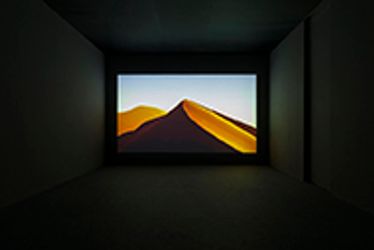
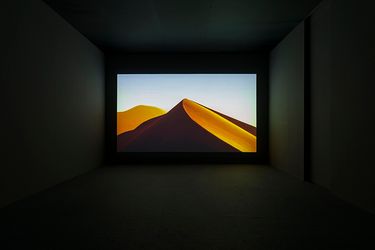
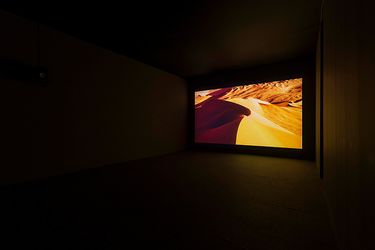
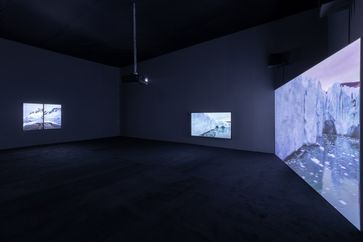
Mars presents the audience with an expanse of fine red sand. A macro lens shows the astonishing texture of red sand particles while aerial shots display sand dunes that show no trace of human activity. This perspective transcends individual experience by depicting the mysterious surface of a celestial body. The huge waves of red sand rolls endlessly like the infinite expanding of the universe. While the exhibition’s Chinese title—a transliteration of the english word “Wonderland”—seems devoid of meaning, it provides a fertile ground for the imagination to roam free.It takes the body’s corporeal existence as the starting point and casts the audience into the midst of a desert which echoes the sound of the universe.
Ma Qiusha was born in 1982. She received her BA in Digital Media Art from China Central Academy of Fine Arts in 2005 and MFA in Electronic Integrated Arts from Alfred University in U.S. in 2008. She currently lives and works in Beijing. As one of the most dynamic figures of the emerging generation in China’s contemporary art community, Ma Qiusha’s art have been widely exhibited across the international art scene. Her works have been shown at Tate Modern, UK; Groninger Museum, the Netherlands;Kunsthalle Düsseldorf , Germany; ZKM(Center for Art and Media Karlsruhe), Germany; Borusan Contemporary, Turkey; Contemporary Arts Museum Houston, U.S.; International Contemporary Art Foundation, Bergen; the Chinese Arts Centre, UK; Stavanger Art Museum, Norway; Ullens Center for Contemporary Art, Beijing; Minsheng Art Museum, Shanghai; OCAT, Shanghai; National Art Museum of China; and Art Museum of Central Academy of Fine Arts, Beijing, etc. Her recent exhibitions include “Moscow International Biennale for Young Art”at Museum of Moscow; group show at Daimler Art Collection and Wesleyan University, etc. She was nominated for the Pierre Huber Prize (2014) and “Young Artist of the Year” by Award of Art China (AAC) in 2013.


Ma Qiusha’s work is often explicitly biographical and hyper-specific in its context. Her diversified art practice encompasses video, photography, painting and installation. Linking interestingly and cautiously with the conflicts and dilemmas that are encountered in daily experience, her works reveal strange imagination concealed beneath the surface of the mundane. These subtle experiences of daily life conveyed by the body, or by parts of the body, arise repeatedly in several of her works, mostly expressed as metaphorical postures of a more ambiguous nature. Another overarching theme in Ma Qiusha’s works is the intergenerational gaps, as she often demonstrates particular flair for injecting her art with subtle but unmistakable signs and symbols of the sociocultural transformations during the several recent high-speed decades that are deeply complex in their mining of personal and collective memories, offering audiences insights into lived, human experiences. In one sense, all of her work is imagistic, the often-used “window”, “cars” and “road” employed as rhetorical vehicles in various scenes to present the various perspectives for viewing conceived by the artist. Bringing together relationships, objects, structures and stories as a way to subvert dominant readings of their histories, her works stand out as increasingly crucial documents of the country’s tensions and its political and social shifts.

Founded in 2004, Beijing Commune is now located in 798 Art Factory, Beijing. Its initial programs were mainly group shows exploring various currents in contemporary art while now it primarily focuses on solo shows to carry on the in-depth research.

A respected voice in contemporary art discourse.
Focusing on ambitious storytelling and insightful art-world commentary. Ocula Magazine publishes in-depth interviews, critical essays and timely analysis on the artists, exhibitions and ideas driving the global art world.
Learn more about Ocula Magazine
Showcasing the best of the art world.
Ocula partners with galleries from around the world to highlight their artists, artworks and exhibitions. Gallery membership is by application and invitation, with each member vetted by an independent panel.
Learn more about Ocula Membership

Specialises in the sale of major artworks.
Led by a team with deep ties to the world’s leading auction houses, galleries and collectors. Ocula’s advisory team offers bespoke services to high-net-worth clients from around the world who are looking to acquire the best of contemporary and modern art.
Learn more about our team and services