




GAVIN TURK
b. 1967, United KingdomGavin Turk is a contemporary British Pop artist and conceptually aware self-promoter. Mixing irony with art careerism and product sales, Turk looks at his own processes of myth-building and idea appropriation, extending the readymade.
Many of his sculptures are painted bronzes, others are life-size wax and fibreglass figures of himself posing as celebrities and historical figures such as Sid Vicious, Jean-Paul Marat, Che Guevara, and Elvis Presley. He makes sculpture, paintings, photographs and prints. He is considered by some to be a member of the Young British Artists (YBAs), though he is slightly younger and did not attend Goldsmiths, where many of the group’s first generation graduated from.
Early Life
Turk studied at the Chelsea School of Art in London (1986–1989) and then the Royal College of Art (1989—1991). He did not graduate; according to the artist, this was because of his submitted exhibition, Cave, which featured a whitewashed room with a circular blue heritage plaque that stated: ‘Borough of Kensington, Gavin Turk, Sculptor, worked here 1989 —1991’.
Gavin Turk Artworks
Gavin Turk likes to present work that makes viewers question his seemingly inflated ego, originality, truthfulness, or perhaps even his mental stability. He uses his public persona to look at art career strategies, the seeming desire for celebrity, and the apparent cultivation of notoriety.
Turk’s cockiness, cavalier recycling of art history, and incessant attention seeking might really get up your nose, even if he is spotlighting the highly competitive but standard marketing processes at work in the international art world. The question arises whether this typically postmodern brazen cheekiness is sufficiently interesting a fulcrum on which to balance a career. Is institutional reflexivity enough to sustain its audience’s enthusiasm? However, as a career strategy, for this artist it seems to be working.
Note however that this sort of practice is a genre in itself, Turk being grouped with other similar sensibilities like Elaine Sturtevant, early Mike Glier, and Imants Tillers. While Tillers might have, say, his grids of canvas boards as a trademark means of mixing his multiple sources, with Turk it is his own face that constantly reoccurs in almost all of his quotational projects. That visage is the point. It is a loaded comment on artist personality cults. He rubs it in, never avoiding media attention—but seeking it. He likes to elucidate on himself, counting on charm to hold his audience to the world of Turkian art history.
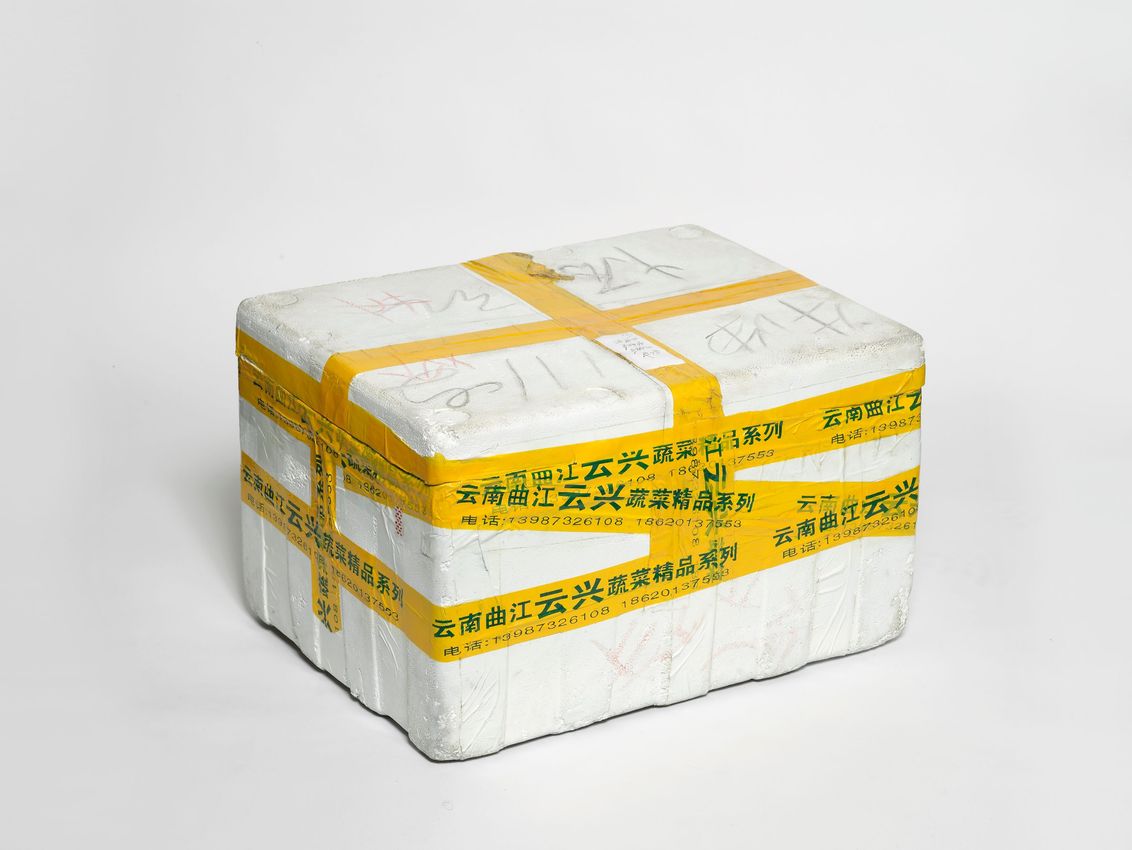
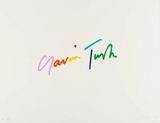
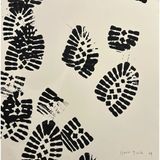
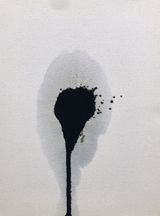
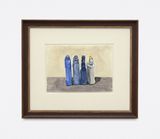
Significant works by Gavin Turk include Artist’s Piss (2021), Font (2006), Camouflage silver and fright wig silver and orange on taupe (2007), Rotten to the Core (2006), Double Beuys (2005), and Self Portrait (Fountain) (2005).
Awards and Accolades
Gavin Turk is a recipient of the Charles Wollaston Award (2007) and the Jack Goldhill Sculpture Prize (2001).
Collections
Gavin Turk’s work is held in collections around the world, including Saatchi Collection, London; British Council, London; Tate Modern, London; Museum of Modern Art, New York; Caldic Collection, Rotterdam.
Exhibitions
Gavin Turk has participated in numerous significant institutional and commericial solo and group exhibitions.
Solo exhibitions include En Oeuf, Maruani Mercier Gallery, Brussels (2019); God is Gone, Galerie Krinzinger, Vienna (2018); Who What When Where How and Why, Newport Street Gallery, London (2016); Gav, Library Bar, Bruchium-Al Forno, Venice (2015); L’Amour Fou, David Nolan Gallery, New York (2013); Gavin & Turk, Ben Brown Gallery, London (2013); Jack Shit!, Aeroplastics, Brussels (2011); Before The World Was Round, Galerie Krinzinger, Vienna (2011).
Significant group exhibitions include Street, The New Art Gallery, Walsall (2012); Made in Britain: Contemporary Art from the British Council Collection, Sichuan (2012); Deja-vu? The Art of Copying from Dürer to YouTube, Staatliche Kunsthalle, Karlsruhe (2012); Twenty, Aurel Scheibler, Berlin (2012); Identity Theft, Mimmo Scognamiglio Arte Contemporanea, Milan (2010); Sensation, Royal Academy of Arts, London (1997).
Website and Instagram
Gavin Turk’s website can be found here, and his Instagram here.
John Hurrell | Ocula | 2021

View Gavin Turk's Artworks













Explore Gavin Turk's Exhibitions








Explore and Follow Artists Shaping Contemporary Art
A respected voice in contemporary art discourse.
Focusing on ambitious storytelling and insightful art-world commentary. Ocula Magazine publishes in-depth interviews, critical essays and timely analysis on the artists, exhibitions and ideas driving the global art world.
Learn more about Ocula Magazine
Showcasing the best of the art world.
Ocula partners with galleries from around the world to highlight their artists, artworks and exhibitions. Gallery membership is by application and invitation, with each member vetted by an independent panel.
Learn more about Ocula Membership
Specialises in the sale of major artworks.
Led by a team with deep ties to the world’s leading auction houses, galleries and collectors. Ocula’s advisory team offers bespoke services to high-net-worth clients from around the world who are looking to acquire the best of contemporary and modern art.
Learn more about our team and services