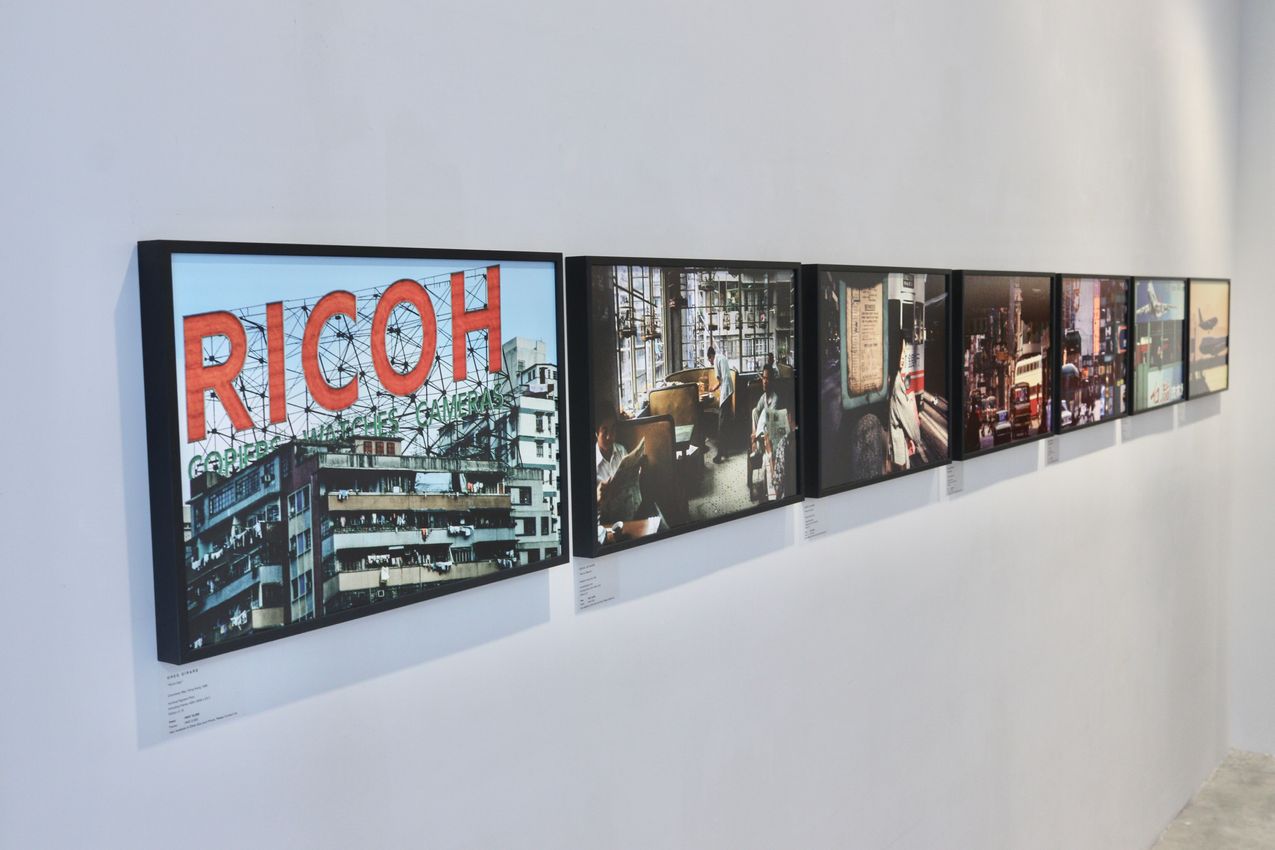
The story of Hong Kong is one of constant change, but as they say, memories last forever. People remember the 1980s as the golden era: square-looking cars steeped in the smell of diesel and fumes shared the streets with jam-packed trams (only costing 30 cents) ... and the odd bicycle. The streets were busy with an endless stream of people: labourers carrying bulky luggage on their shoulders, dapper men sporting hats with matching ties, and an increasing amount of professional office ladies. Many are nostalgic for these simpler days where men were men, women were women and youth still had its innocence.
There are key moments in the life of every great city that come to define it. The 80s marked a period where the city was establishing itself as an international player on the world stage. Significant steps were taken, such as the Stock Exchange of Hong Kong being incorporated in 1980 culminating in creating the financial hub it is today. This was the era before the internet when phones were still bulky things with dial numbers and with the only wireless device being a pager only used by people involved with emergencies. Rags-to-riches success stories had long been embedded in the city’s DNA but the opening of China created business opportunities that turned the ‘Hong Kong Dream’ into a reality for many.
At night, the city was lit up by an ocean of neon signs, and large passenger jets skimmed low over Kowloon rooftops, heading into Kai Tak Airport. Bars in Wan Chai were packed with visiting and locally based sailors, as well as business people of all genders and walks of life. Cantonese music was at its peak when the songs of legends such as Leslie Cheung and Anita Mui came blaring from every transistor radio. Hong Kong cinema, starring upcoming young talent like Chow Yun-fat, put local popular culture on the map. The Hong Kong film industry was in overdrive, producing films that connected Chinese communities worldwide, and also reaching a new and increasingly global audience.
All this happened under the yellow haze of a simple yet playful atmosphere, captured by Greg Girard’s lens. At his 18, when arriving here on a freighter from San Francisco, he spent a year working and trying to save a little money after high school for this trip, ‘I first visited Hong Kong in 1974, and made several subsequent visits before moving to the city in 1982, and based until 1998. Most of the photographs were made before I became a professional photographer, and they show the Hong Kong I explored without any thought to how the pictures might be seen or where they might end up.’
Girard’s photographs are a reaction to the visual feast exploding in front of him, feeling excited by the opportunities Hong Kong had to offer, ‘Like any “golden age” you don’t realise you were living in it until much later. Perhaps the 1980s were special because popular culture, particularly the films but also the music, played such a huge role in defining what Hong Kong was at the time.’ Greg Girard’s photographs were made during a time when Hong Kong was too busy working and playing to reflect much on itself, and they offer us a view of both the extraordinary and the ordinary that formed the backdrop to this period.
Blue Lotus Gallery is honoured to present the solo exhibition - HK UNSEEN, exclusively showcasing Greg Girard’s never previously exhibited photographs of Hong Kong. Girard transports us back to the 80’s reliving the memories of times now long gone.
HK UNSEEN is part of HKIPF Satellite Exhibition 2021 as a collaborator.
Greg Girard (born 1955) is a Canadian photographer living in Shanghai since 1998. His work looks at the physical and social transformations taking place in China and Asia. He divides his time between photographing on assignment for publications such as National Geographic, Time, Fortune, The New York Times Magazine, and others, and pursuing his personal work. While living in Hong Kong between 1983 and 1998 he published “City of Darkness”, co-authored by Ian Lambot, a document of the final years of the Kowloon Walled City. His second book, “Phantom Shanghai” (Magenta, 2007), with an introduction by novelist William Gibson, looks at the homes, streets, shops, buildings and neighborhoods that will not survive the vision that city has for itself. The Independent Newspaper (U.K.) cited Greg Girard’s “Phantom Shanghai” as one of the top ten photography books. Included in the list is Robert Frank’s “The Americans”, “The Devil’s Playground” by Nan Goldin, and “Beneath the Roses” by Gregory Crewdson. His work was recently acquired in a major purchase by the Canadian Museum of Contemporary Photography.
Located on the quiet historic Pound Lane in Sheung Wan, Hong Kong, Blue Lotus Gallery specialises in contemporary photography with a focus on exploring the culture and identity of Hong Kong.

A respected voice in contemporary art discourse.
Focusing on ambitious storytelling and insightful art-world commentary. Ocula Magazine publishes in-depth interviews, critical essays and timely analysis on the artists, exhibitions and ideas driving the global art world.
Learn more about Ocula Magazine
Showcasing the best of the art world.
Ocula partners with galleries from around the world to highlight their artists, artworks and exhibitions. Gallery membership is by application and invitation, with each member vetted by an independent panel.
Learn more about Ocula Membership

Specialises in the sale of major artworks.
Led by a team with deep ties to the world’s leading auction houses, galleries and collectors. Ocula’s advisory team offers bespoke services to high-net-worth clients from around the world who are looking to acquire the best of contemporary and modern art.
Learn more about our team and services