




DAVID HAMMONS
b. 1943, United StatesDavid Hammons is an American conceptual artist best known for turning everyday and discarded materials into sharp commentaries on race, class, the art world, and the experience of being an outsider. Working across sculpture, installation, performance, and ephemeral public actions, he has developed a practice that is at once irreverent and rigorously conceptual.
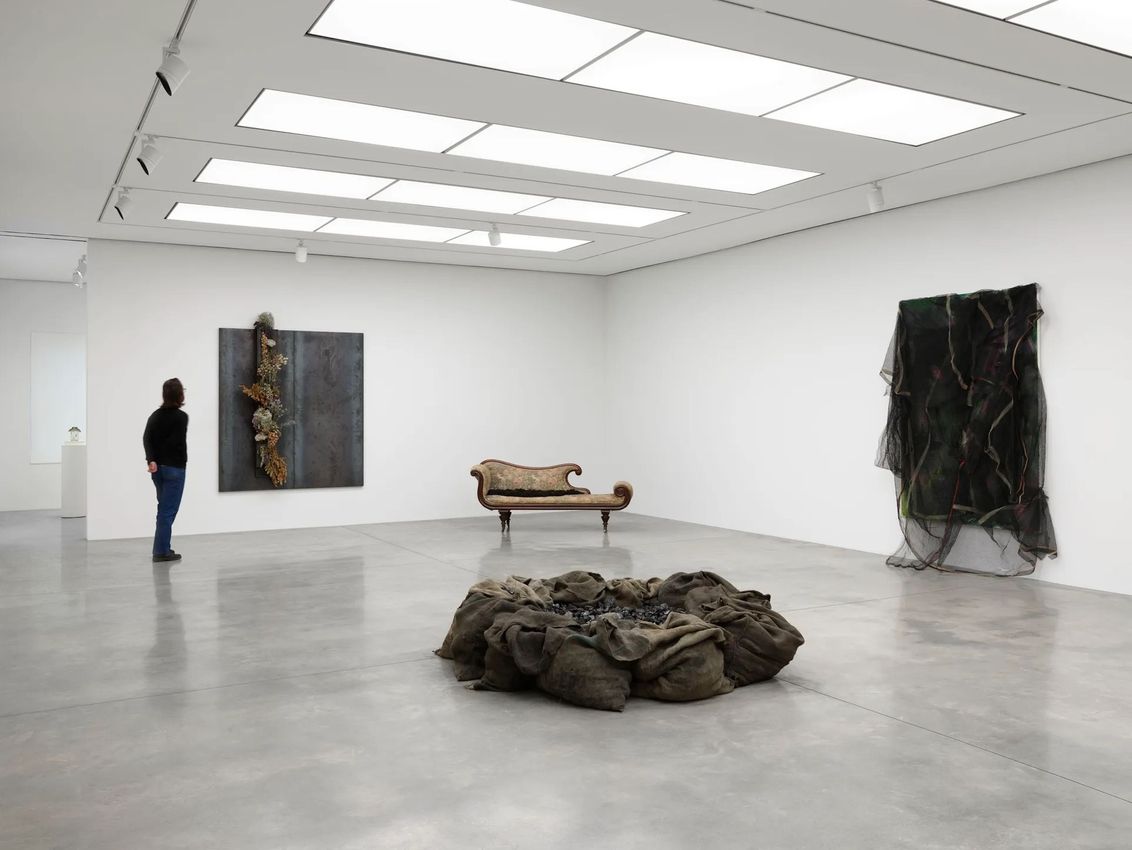
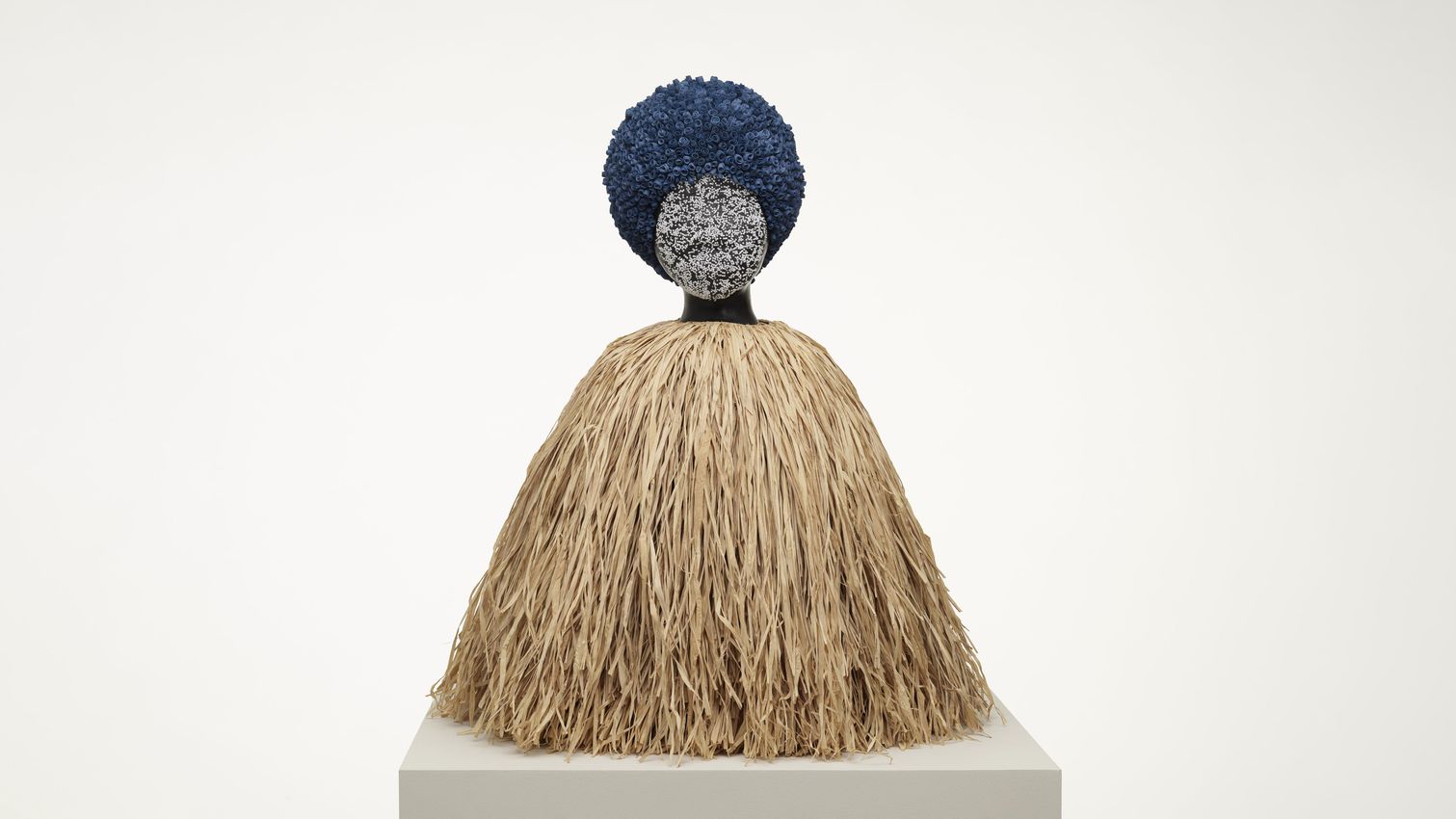
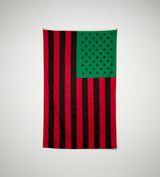
Emerging in Los Angeles in the late 1960s with his influential ‘Body Prints’, Hammons went on to create works such as The Door (Admissions Office) (1969), Injustice Case (1970), Bliz-aard Ball Sale (1983), How Ya Like Me Now? (1988), In the Hood (1993), and Untitled (hair) (1992), now widely recognised as key artworks addressing the Black experience and structural racism. His work has been presented at major institutions including MoMA PS1, the Whitney Museum of American Art, Tate Modern, Fondation Louis Vuitton, and the Studio Museum in Harlem, as well as at leading galleries such as Hauser & Wirth, Mnuchin Gallery, and White Cube.
In recent years Hammons’ practice has continued to draw international attention through the restaging of his immersive installation Concerto in Black and Blue at Hauser & Wirth Los Angeles in 2025, and his inclusion in high-profile group exhibitions including What It Becomes at the Whitney Museum of American Art (2025). In 2026 his work is scheduled to appear in the two-person exhibition David Hammons and Jannis Kounellis at White Cube, New York (30 April–13 June 2026), and in the group show Late at night, early in the morning, at noon across Hauser & Wirth’s New York and Los Angeles spaces (15 January–16 August 2026).
Early life and Career
Born in 1943 in Springfield, Illinois, Hammons grew up as the youngest of ten children in a working-class African American family, a background that sharpened his awareness of the daily realities of race and poverty in the United States. He moved to Los Angeles in the early 1960s, studying at Los Angeles Trade Technical College before enrolling at Chouinard Art Institute and Otis Art Institute, where he worked closely with socially engaged painter Charles White, known for dignified realist portraits of Black Americans; Hammons graduated from Chouinard (now CalArts) in 1968.
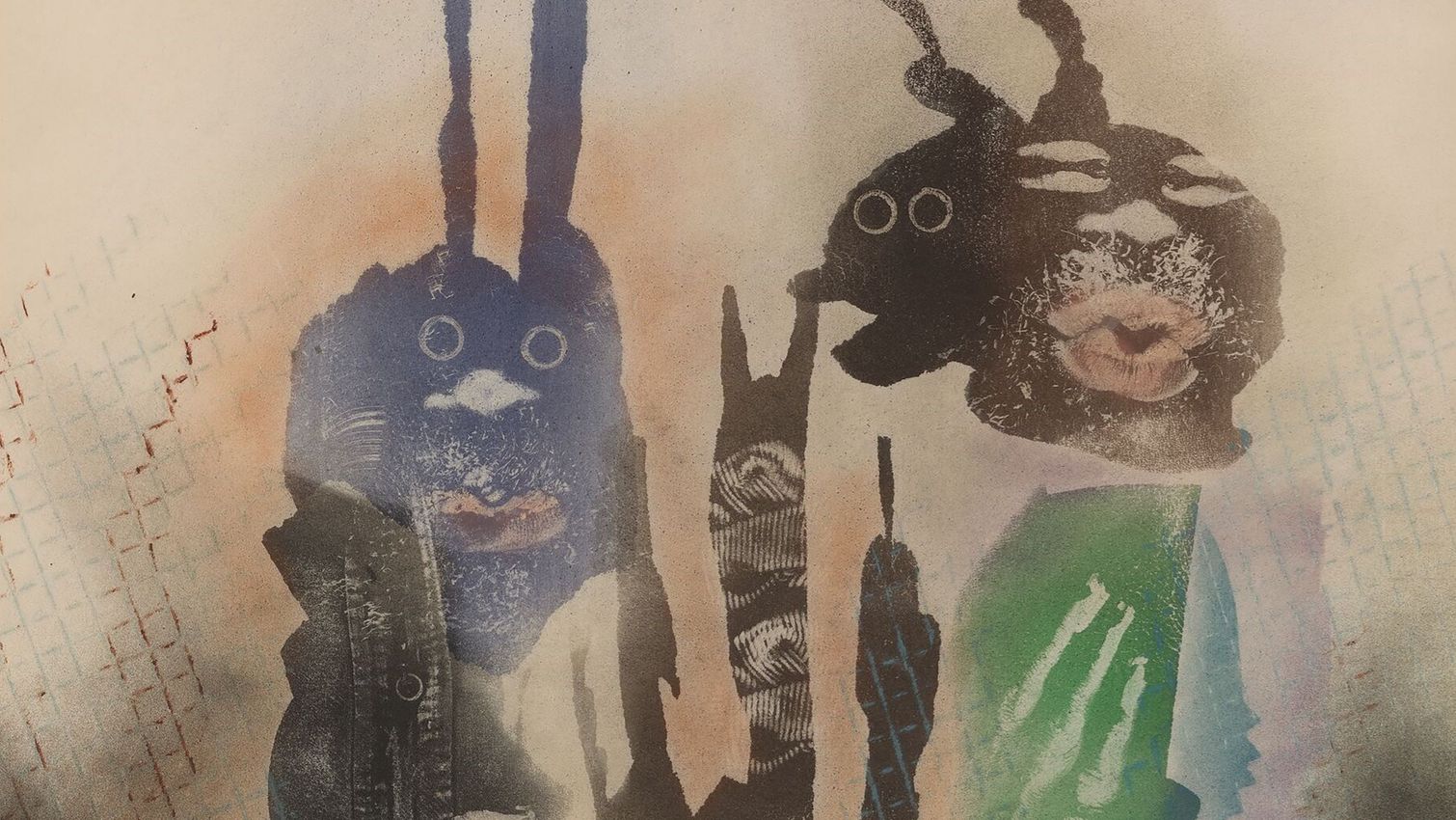
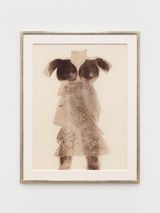
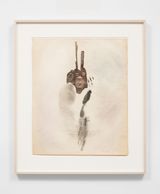
Los Angeles was then a centre of the Black Arts Movement and a flashpoint for the Black Power era, in the wake of events such as the assassination of Malcolm X and the Watts rebellion. Hammons’ peers included Senga Nengudi, John Outterbridge, Noah Purifoy, Betye Saar, and other artists committed to overtly political cultural work, and it was in this context that he began his celebrated Body Prints around 1968—coating his body with grease, pressing it onto paper, and sprinkling pigment to create ghostly, hyper-detailed silhouettes that often satirised racial stereotypes and responded to police and state violence.
In 1974 Hammons relocated to New York City, settling in Harlem and shifting his practice from studio-based printmaking to interventions in the street and other public spaces. New York’s sidewalks, vendors, and informal economies became an extended studio, and Hammons adopted a deliberate elusiveness—often skipping his own openings and avoiding interviews—that has become central to both his legend and his critique of art-world spectacle; in 2002 critic Peter Schjeldahl described him as possessing a “poetic compound of modesty, truculence, and wit.”
Works, Methods and Key series
Hammons works across media using strategies of refusal, humour, and provocation, often centring his own experience as a Black American while engaging questions of race, class, art history, and the legacy of slavery. The Body Prints remain foundational: The Door (Admissions Office) (1969) layers spectral hand and face prints around a door labelled “ADMISSIONS OFFICE”, aligning a physical threshold with institutional racism in higher education, while Injustice Case (1970) depicts a bound and gagged figure referencing Black Panther co-founder Bobby Seale’s courtroom treatment, turning the print technique into a form of political witness.
Through the late 1970s and 1980s Hammons developed sculptural and performative works that used cheap, marginal, or discarded materials to probe racial stereotypes and the circulation of value in art. His “Spade” works use shovels and the spade motif to twist racist imagery into sharp visual puns, while the elusive action Bliz-aard Ball Sale (1983)—selling snowballs of different sizes on a Manhattan sidewalk—satirised both the commodification of art and the precarious economies of Black street vendors. Other projects from this period include Higher Goals (1987), a set of towering bottle-cap-covered basketball hoops installed in Brooklyn’s Cadman Plaza Park, which comments on the widespread belief that professional sport is the primary route out of poverty for young Black men.
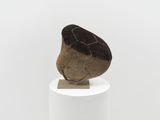
Hammons’ work of the 1980s also includes guerilla-style interventions that recalled Duchamp’s insolence, such as Pissed Off and Shoe Tree (both 1981), in which he urinated on and threw shoes over Richard Serra‘s sculpture TWU in TriBeCa, challenging monumental public sculpture and the hierarchies of the art world. He continued to use fragile, abject materials: in Untitled (1992), a small rock covered with hair swept from Harlem barbershops resembles a human head and reflects his interest in self-identification and Arte Povera, while Untitled (dung) (1983–85) uses dung as sculptural matter, unsettling viewers and extending his critique of value and taste.
From the 1990s onwards Hammons refined a minimalist yet symbolically dense language, often isolating a single charged object or gesture. In the Hood (1993)—a severed hood from a sweatshirt pinned to the wall—has become one of his most widely reproduced works; although made long before the killing of Trayvon Martin, it has been reread through the Black Lives Matter movement and the racialisation of the hoodie, showing how a simple garment can carry intertwined associations of threat and vulnerability. Works such as Basketball Chandelier, a hoop fitted with a crystal net and ornate glass backboard, extend his critique of aspirational glamour and the idea of professional sport as a pathway out of poverty.
Large-scale installations and environments remain central to Hammons’ practice. Concerto in Black and Blue (2002, restaged 2025) turns a darkened exhibition space into a field navigated only by visitors’ blue flashlights, making perception, disorientation, and mutual visibility the core of the work. His monumental public sculpture Day’s End (2014–21), realised with the Whitney Museum of American Art on Manhattan’s Hudson River, outlines in open steel the ghost of a demolished pier and pays homage to Gordon Matta-Clark‘s 1975 intervention of the same name, while also placing his work at the centre of debates about institutional expansion, waterfront redevelopment, and the politics of public art.
Themes, Strategies and Context
Hammons’ practice is best known for how it addresses the complexities of African American experience through strategies of humour, refusal, and misdirection. He frequently adopts a trickster stance—appearing to play along with expectations only to undermine them—whether selling snowballs as if they were luxury commodities, performing unsanctioned actions around major public sculptures, or disappearing from art-world events, thereby turning his own visibility into a key part of the work.
Exhibitions, Collections and Recent activity
Hammons’ work has been the subject of numerous solo exhibitions and influential surveys, including the landmark retrospective Rousing the Rubble 1969–1990 at MoMA PS1, New York (1990–91), which helped cement his reputation as one of the most important American artists of his generation. He has since presented significant solo shows at venues such as L&M Arts in New York, the Drawing Center, the Centre for Contemporary Art in Warsaw, and galleries now within the Hauser & Wirth network, while his works feature in major museum collections including the Whitney Museum of American Art, MoMA, Tate, SFMOMA, the Studio Museum in Harlem, and the Pinault Collection.
In the mid-2020s Hammons has remained prominent through high-visibility institutional projects and carefully chosen exhibitions. Concerto in Black and Blue was restaged at Hauser & Wirth’s Los Angeles Arts District complex from February to June 2025, bringing a new generation of viewers into one of his most immersive environments. Over 2024–25 he appeared in group exhibitions such as What It Becomes at the Whitney Museum of American Art, Pop Forever: Tom Wesselmann &... at Fondation Louis Vuitton, Flags: A Group Show at Paula Cooper Gallery, and Portrait Of a Collection: Selected Works from the Pinault Collection at SONGEUN Art and Cultural Foundation, underscoring the global reach of his work across New York, Paris, and Seoul.
David Hammons FAQs
What is David Hammons best known for?
David Hammons is best known for his conceptually driven works that use everyday and discarded materials to explore African American experience, racism, and the structures of the art world. Signature pieces such as the Body Prints series, Bliz-aard Ball Sale (1983), and In the Hood (1993) are frequently cited as key works in late 20th-century American art.
What themes does David Hammons explore in his art?
David Hammons’ work addresses race, class, and the politics of visibility, often focusing on how Black life is stereotyped, commodified, or rendered invisible in American culture. He also critiques institutional power and the art market, using humor, irony, and refusal to unsettle viewers’ expectations.
Why is David Hammons considered a “trickster” figure in contemporary art?
David Hammons is often described as a trickster because he uses playful, elusive, or obstructive tactics—such as selling snowballs, hiding works, or avoiding publicity—to expose underlying social and institutional dynamics. These strategies allow him to remain inside and outside the art world at once, turning his own career into a critique of artistic celebrity.
What is Concerto in Black and Blue by David Hammons about?
David Hammon’s Concerto in Black and Blue is a large-scale installation in which visitors navigate a darkened exhibition space using small blue flashlights, making their own movement and perception central to the experience. The work has been interpreted as a meditation on visibility, race, and the politics of looking, while also challenging conventional expectations of how art should be displayed and encountered in a gallery.
Has David Hammons been involved in other controversial artistic actions?
Yes; one of Hammons’ most cited early actions is Pissed Off (1981), in which he urinated on Richard Serra’s sculpture TWU in lower Manhattan, an unsanctioned gesture that challenged both public monumentality and established hierarchies in the art world. Works using charged materials such as dung, hair, and found detritus—like Untitled (dung) (1983–85) and Untitled (hair) (1992)—have also unsettled some viewers, but are now seen as central to his long-running engagement with abjection, race, and questions of cultural value.
Where can I see David Hammons’ work now and in the near future?
Hammons’ works are held in major museum collections including the Whitney Museum of American Art, MoMA, Tate, SFMOMA, and the Studio Museum in Harlem, and they regularly appear in international group exhibitions and gallery shows. Recent and upcoming presentations include Concerto in Black and Blue at Hauser & Wirth Los Angeles (2025), What It Becomes at the Whitney, Pop Forever: Tom Wesselmann &... at Fondation Louis Vuitton, Flags at Paula Cooper Gallery, Portrait Of a Collection at SONGEUN, and 2026 exhibitions at White Cube and Hauser & Wirth in New York and Los Angeles.
Why has David Hammons’ public sculpture Day’s End been controversial?
David Hammons’ sculpture Day’s End (2014–21), commissioned by the Whitney Museum of American Art for New York’s Hudson River waterfront, recreates in open steel the outline of a demolished pier and pays homage to Gordon Matta-Clark’s 1975 intervention of the same name. While widely praised for its poetic minimalism, the project has also drawn criticism for its multi-million-dollar cost and its perceived role in branding the museum’s expanded campus, prompting debate about how radical or institutional a Hammons work can be at this scale.
Has David Hammons been involved in controversial artistic actions?
Yes; one of Hammons’ most cited early actions is Pissed Off (1981), in which he urinated on a Richard Serra sculpture in lower Manhattan, an unsanctioned gesture that challenged both public monumentality and the hierarchies of the art world. More broadly, works that use charged materials—such as mud or dung, as in the mid-1980s sculpture Untitled (dung)—have sometimes unsettled viewers, but are now discussed as central to his long-running engagement with abjection, race, and value.
What are some of David Hammons’ influences?
David Hammons has described his work as sitting “between Marcel Duchamp, outsider art, and Arte Povera,” and critics often add jazz improvisation and street culture to this mix. His practice draws on Duchamp’s readymades and Dada-style wordplay, the Arte Povera use of “poor” materials, the example of socially engaged artists such as Charles White and Mel Edwards, the architecture and assemblage of environments like Watts Towers, and the improvisatory structures of jazz musicians including Ornette Coleman and Sun Ra, whose approach to “playing wrong” Hammons has cited as a model for his own rule-bending art.
How is Marcel Duchamp relevant to the work of David Hammons?
Marcel Duchamp is a crucial reference point for David Hammons because both artists use readymades and found objects to question what counts as art and who gets to define it. Hammons has engaged Duchamp directly in works such as The Holy Bible: Old Testament (2002), which repurposes a catalogue of Duchamp’s complete works as a leather-bound “Bible,” and in outdoor installations where he mounts urinals on trees—gestures that echo Fountain while sharpening its humour through the lens of race and contemporary street life. More broadly, Duchamp’s influence appears in Hammons’ puns, his use of everyday materials like snowballs and toilets, and his strategic elusiveness toward the art market, which Hammons once jokingly described by calling himself the “C.E.O. of the D.O.C.—the Duchamp Outpatient Clinic.
What is the connection between David Hammons and Jannis Kounellis?
David Hammons and Jannis Kounellis are linked by a shared interest in “poor” materials, site-specific installation, and a sceptical attitude toward the art market, which places Hammons’ work in close dialogue with the Arte Povera movement that Kounellis helped define. The two artists worked together in 1993 on a two-person project at the American Academy in Rome, installing works in and around the gardens of Villa Aurelia in a way that highlighted affinities between Hammons’ found-object sculptures and Kounellis’ raw-material assemblages while also foregrounding their different relationships to history, race, and place. Their connection is being revisited in the forthcoming exhibition David Hammons and Jannis Kounellis at White Cube New York (30 April–13 June 2026), which brings together works from the 1950s onward to trace how this Roman encounter and their long-standing dialogue shaped Hammons’ engagement with Arte Povera and European sculpture more broadly.
Ocula | 2026




















David Hammons in Ocula Magazine




Explore and Follow Artists Shaping Contemporary Art
A respected voice in contemporary art discourse.
Focusing on ambitious storytelling and insightful art-world commentary. Ocula Magazine publishes in-depth interviews, critical essays and timely analysis on the artists, exhibitions and ideas driving the global art world.
Learn more about Ocula Magazine
Showcasing the best of the art world.
Ocula partners with galleries from around the world to highlight their artists, artworks and exhibitions. Gallery membership is by application and invitation, with each member vetted by an independent panel.
Learn more about Ocula Membership
Specialises in the sale of major artworks.
Led by a team with deep ties to the world’s leading auction houses, galleries and collectors. Ocula’s advisory team offers bespoke services to high-net-worth clients from around the world who are looking to acquire the best of contemporary and modern art.
Learn more about our team and services