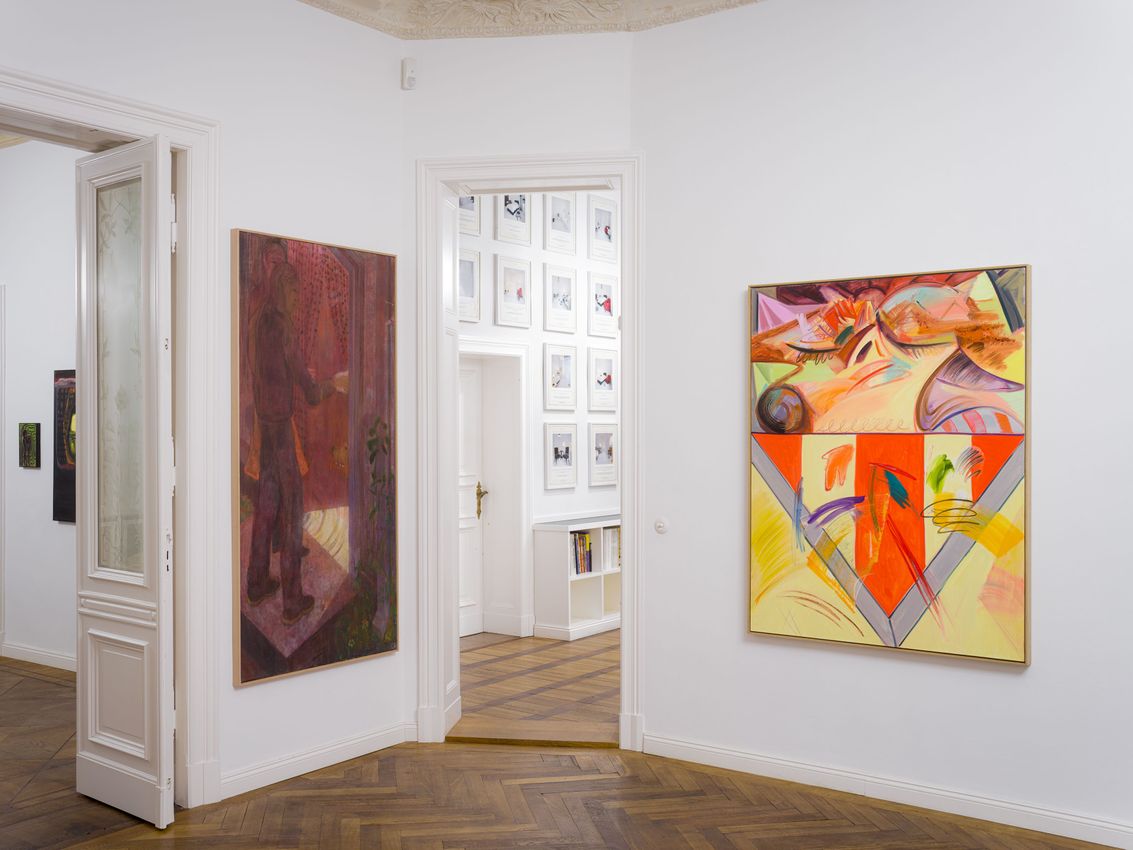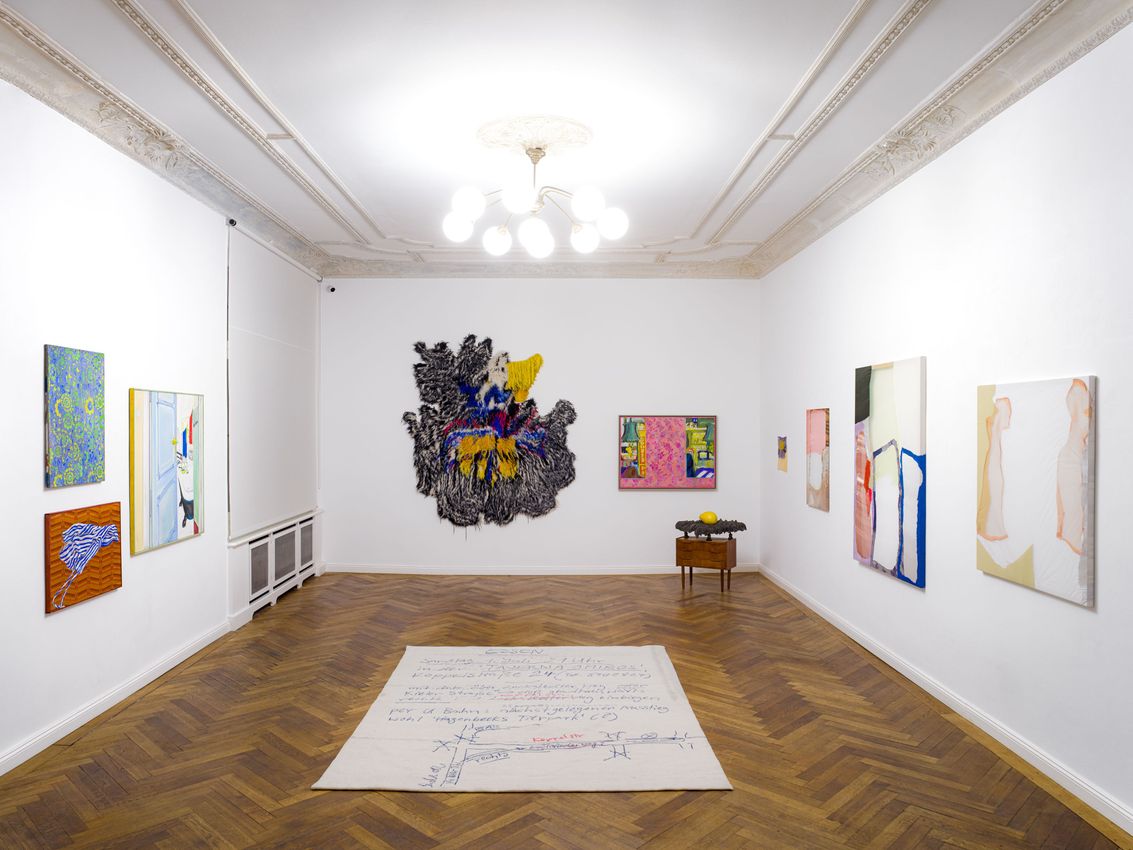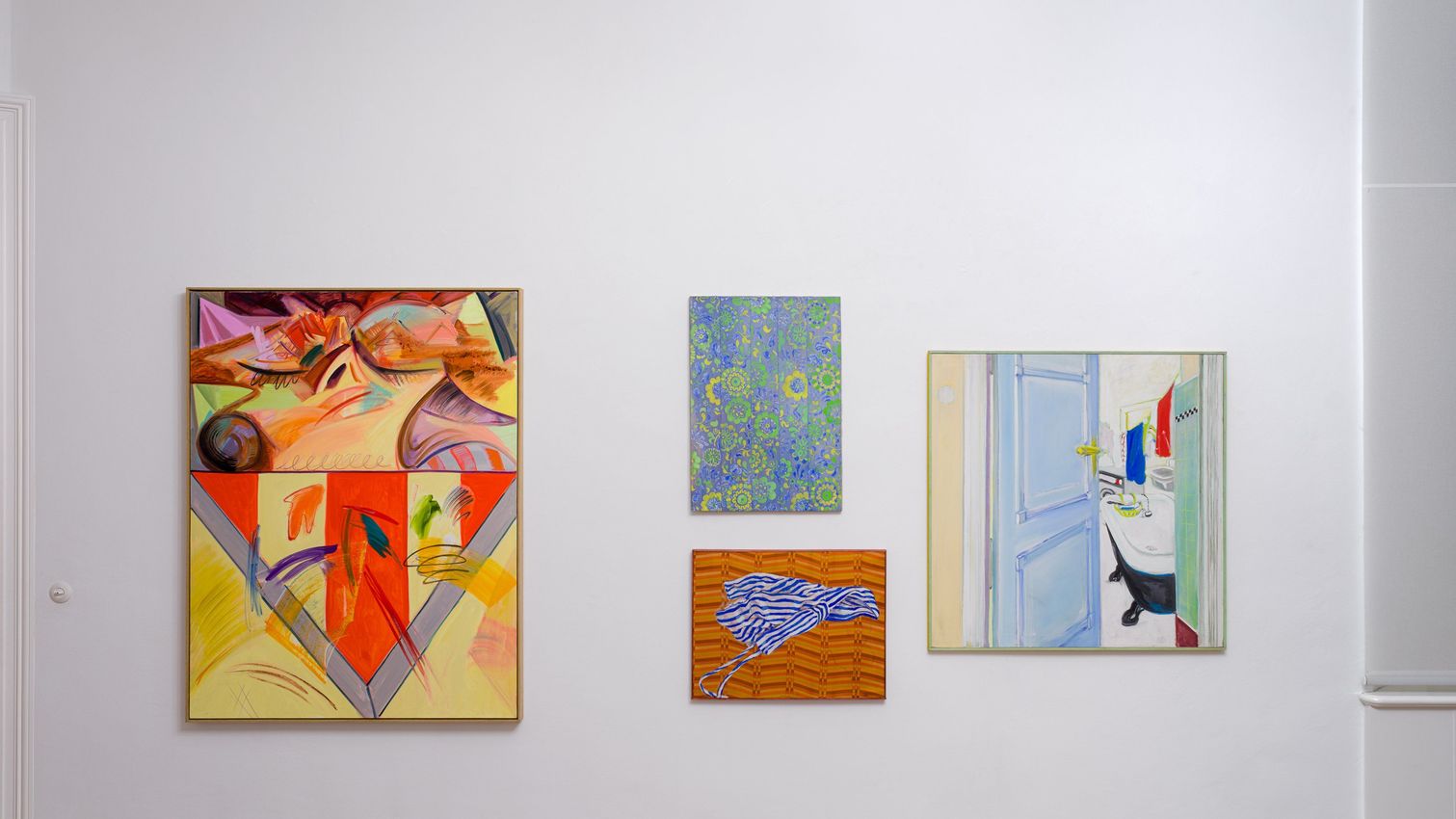
Imagine stepping into this hallway and immediately being greeted by an elderly couple, Golditza and Otto Menge, who invite you to stay and offer you a room. The room is plain: a bed, a small table, a chair, a wardrobe, and a sink in the corner. Light wallpaper, perhaps a small rug near the bed. The large room at the front has been repurposed as a breakfast room, where you can have a Brötchen to start the day. Welcome to Pension ABC.
Occupying the entire Bel Étage of Grolmanstraße 32, Pension ABC opened in the fall of 1957 and was run by the Menges until their deaths in the late 1970s. Their son, journalist Wolfgang Menge bought it for them after the father’s business in Hamburg ran into difficulties. Impoverished by the war, many West Berliners relied on rental income for stability,and subdivided bigger apartments into small rooms which operated as a Pension—a modest guesthouse for traveling salesmen, artists, students, nurses, and other temporary residents. As the city was full of such places, Menge named it Pension ABC so it would appear first in the business directory, with the exhibition title resonating with the datedness of such an ambition.
Located just off Kurfürstendamm, the boulevard of West Berlin, its visitors could stroll, go shopping, have a coffee in Kranzler, catch a show at Institut Français or go to a disco. We don’t know exactly what Pension ABC looked like, but a glimpse of such interiors appears in Nan Goldin’s photograph taken at a nearby Pension Nürnberger Eck in 1994. Hers and other works in the exhibition offer a collage of memory and imagination; ways of thinking about how such spaces are built, inhabited, and remembered, directly or less so.
Such rooms—hotel rooms, temporary lodgings—can be understood as liminal spaces: spaces of transition, states of being between where one has come from and where one is going. While the Menges and other similar family-run Pension owners probably hoped to create a warm atmosphere for their guests, a temporary room is never one’s own. Christian Jankowski plays with this architectural matter-of-factness in_Der kleine Entscheidungsraum,_ a project that offers hotel visitors an empty room they may furnish as they wish. The attempt to personalize the hotel room highlights its transience even more as it transforms anew with each occupant.
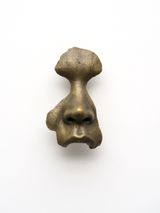
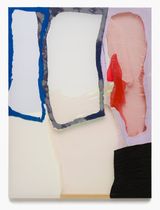
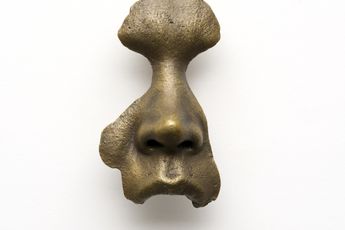
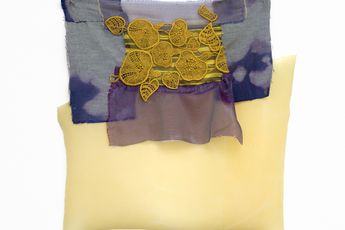
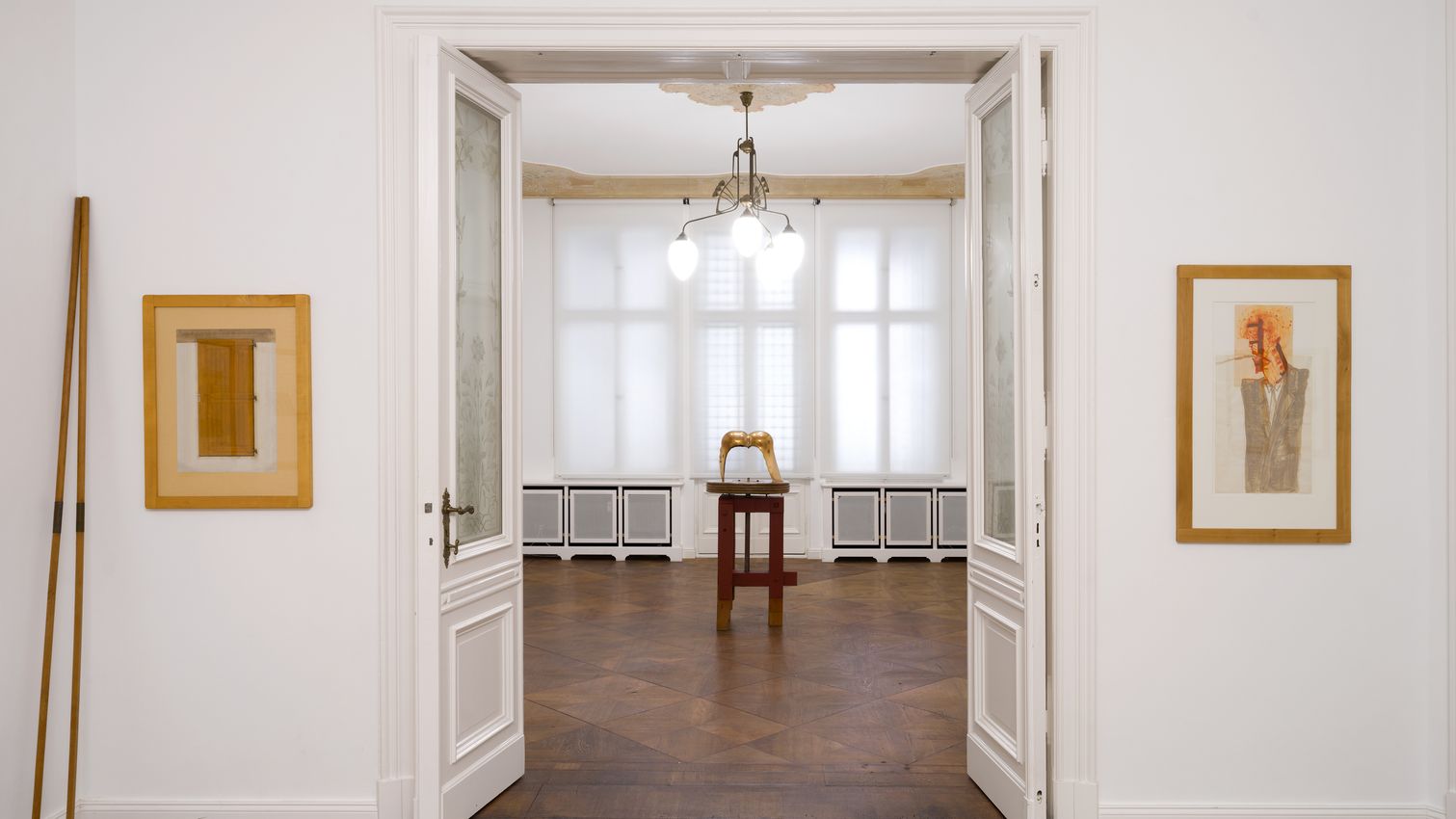
They function as membranes between outside and inside: porous surfaces between the unknowable city and the self, between one’s smallness and the vastness of metropolitan life. Similarly, Anna Virnich’s translucent surfaces act as membranes between what is and what is possible. In Gauge Your Fears, Virnich interlaces the thin surface with a nostalgic, bouquet-like structure, reminiscent of the decorative objects once crafted by grandmothers and placed atop televisions or wooden cupboards without any clear purpose; a decisive yet oddly unfunctional interior-design intervention. Similarly, Angelika Loderer’s work is more concerned with the threshold, with giving expression to the relation between rather than to that which relates. Her small sculptures of doorknobs are simple interventions that reveal how architecture is fundamentally centered on the human body and its needs.
Architectural elements have long served as compositional frameworks in artworks: altars merging seamlessly with pictorial space, lampposts structuring post-impressionist compositions, tiled floors demonstrating mastery of perspective. In his De Pictura, Leon Battista Alberti went so far as to describe painting in architectural terms, dubbing it aperta finestra, an open window.
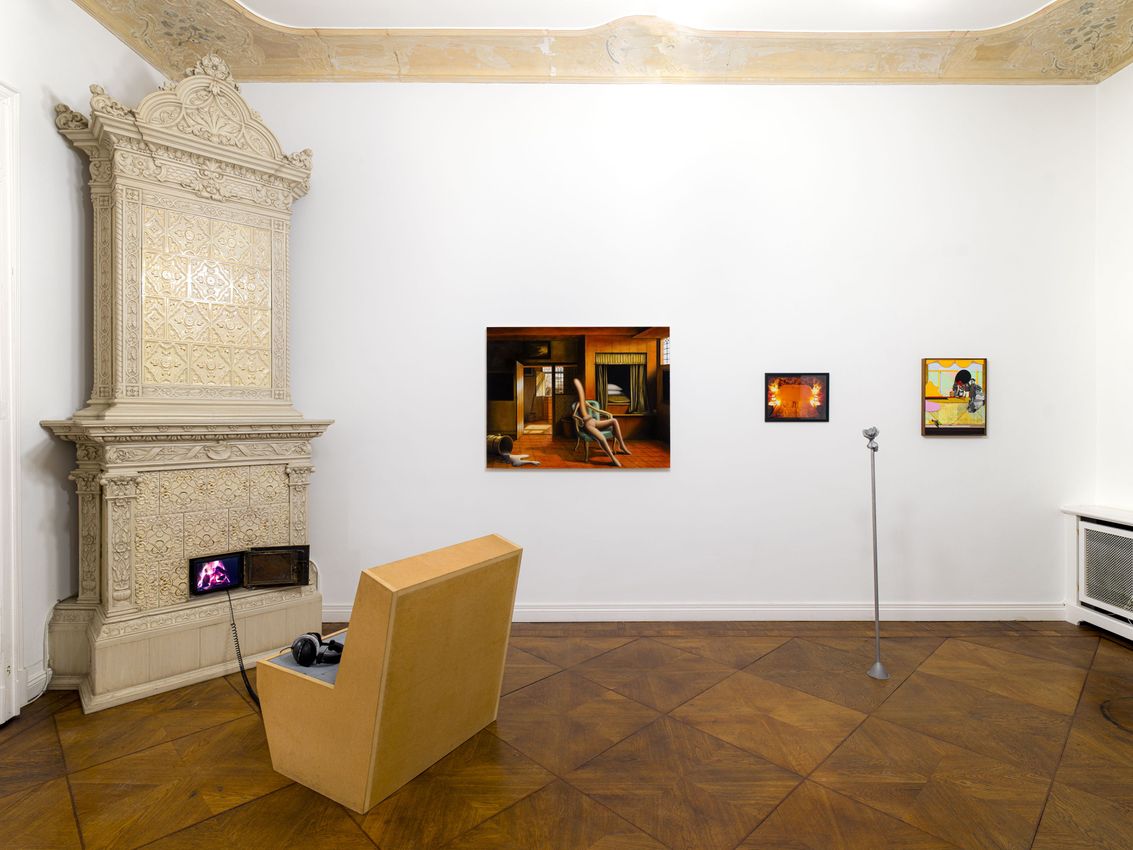
Such thresholds, temporary spaces, however, are not homes; they are places we pass through on the way to where we want to go. But when someone wants to make you right feel at home, the fireplace is turned on, if there is one. Failing that, a video of it may be looped on YouTube. This cliché of domestic warmth—the glowing hearth, crackling wood, and flickering light animating a cosy interior—is the mythic imagery Christian Jankowski takes up in his video work Welcome Home. Made after his return to Berlin following five years in New York, the work knowingly embraces the artificiality of such gestures.

In her painting_Inventing Leisure,_ Emily Mae Smith places her characteristic broom within a warmly lit interior based on a painting by Pieter de Hooch, while incorporating the windows of the space in which the work is currently shown. The historical ideal of domestic order is thus folded into the present exhibition space, collapsing painted, architectural, and lived interiors into one another. By contrast, Sarah Lucas’s bench is constructed from concrete breeze blocks and MDF. It functions as a spiritual counterpoint to Jankowski’s staged homeliness. Uncanny, and uninviting, it evokes the language of Minimalist sculpture rather than furniture. It resists comfort and refuses use; one would never sit down, take off one’s shoes, or turn on the TV here.
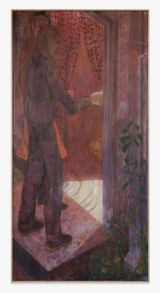
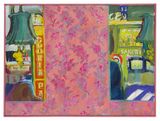
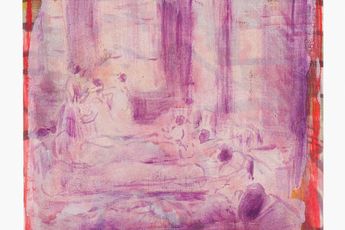
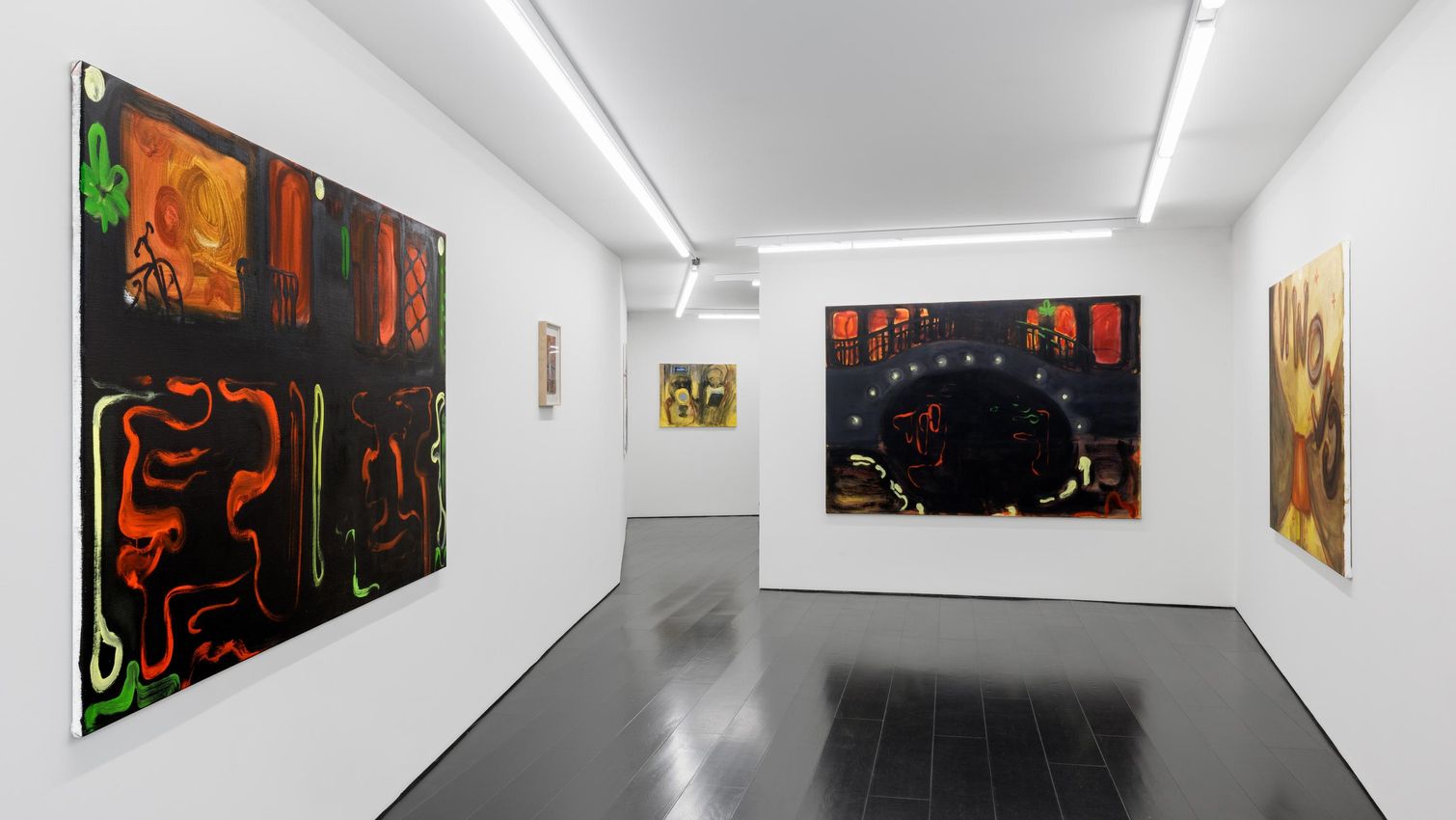
A home, however, is not simply the sum of its parts. Living close by at the time, in the Fasanenstraße, Christa Dichgans was painting the intimate space of her home which functions both as a compositional structure and a miniature reality of her own life. While the basic elements of a livable interior are easy to list—a bed, a desk, a wardrobe, drawers, walls, windows—their meaning emerges only through use. In the collages of Gert & Uwe Tobias, the bed is not only the centerpiece of a lived space but also the foundation of the composition itself. Historically, the bed occupies a privileged place in art: a site of rest and intimacy, love and vulnerability, illness and death. In Dana Schutz’s REM, a two-part composition shows, in one panel, a face rubbing its eyes, and in the other, what those eyes see. Whereas it is usually mirrors in painting that allow us to see the protagonist’s field of vision, Schutz places us directly inside the subject’s mind. We observe from the outside, yet are granted access to an interior state, as if witnessing a private therapy session.
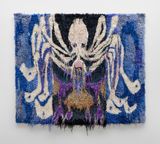
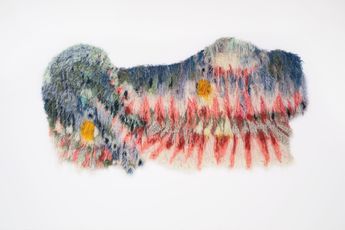
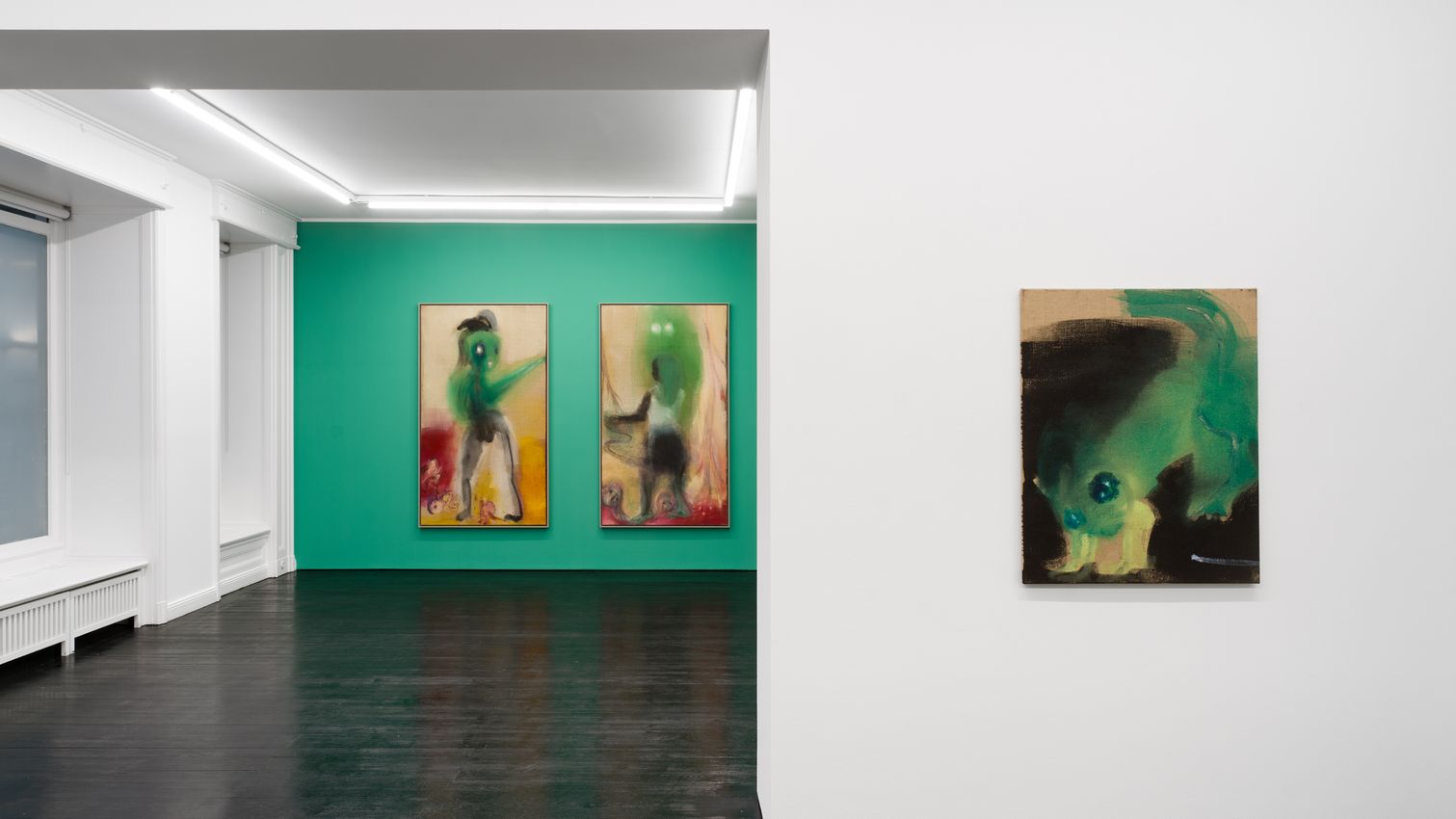
In Cosima zu Knyphausen’s small works, a scene from the 1931 film_Mädchen in Uniform,_ which depicts one of the first lesbian kisses in film history, is the context of a temporary lodging for young girls, whereby adolescence is understood as a liminal state as well. The boarding school echoes the ambiguity of institutional interiors. Elsewhere, Caroline Achaintre’s grotesque, colorful tapestries demonstrate precisely why we can speak of a psychology of space: how profoundly the self may permeate its surroundings.
The Hospital Room by Zuzanna Bartoszek shows another, temporary space. Narrow beds flank a compressed space lit only by candlelight, evoking the anxiety inherent to such environments. Here it becomes clear that the difference between the psychology of space and the architecture of the self, one might argue, is largely terminological. Just as a portrait painter inevitably paints themselves, so too does a painter of interiors depict its current inhabitant, or at least how fast they might want to get out of it.
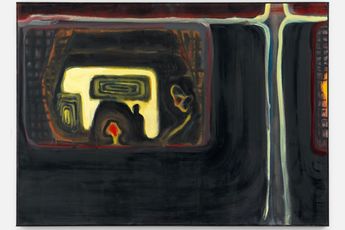
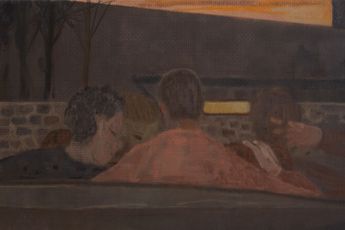
As we encounter a man in Travis MacDonald’s Behold, he is exiting a bus in a scruffy white shirt, its top button undone, lazily tucked into his trousers. Rendered through thin layers of oil, his figure blurs into the background. He presents us with a second, neatly ironed, buttoned, and orderly; a more palpable, muscular even, version of himself. The gesture suggests how, caught in cycles of representation, we are never entirely ourselves when appearing in the service of others. Now, we don’t know why this person is leaving the bus, but we might assume for the purposes of this exhibition, that he arrived at his final destination.
Text by Dana Žaja


A respected voice in contemporary art discourse.
Focusing on ambitious storytelling and insightful art-world commentary. Ocula Magazine publishes in-depth interviews, critical essays and timely analysis on the artists, exhibitions and ideas driving the global art world.
Learn more about Ocula Magazine
Showcasing the best of the art world.
Ocula partners with galleries from around the world to highlight their artists, artworks and exhibitions. Gallery membership is by application and invitation, with each member vetted by an independent panel.
Learn more about Ocula Membership

Specialises in the sale of major artworks.
Led by a team with deep ties to the world’s leading auction houses, galleries and collectors. Ocula’s advisory team offers bespoke services to high-net-worth clients from around the world who are looking to acquire the best of contemporary and modern art.
Learn more about our team and services