



Press Release

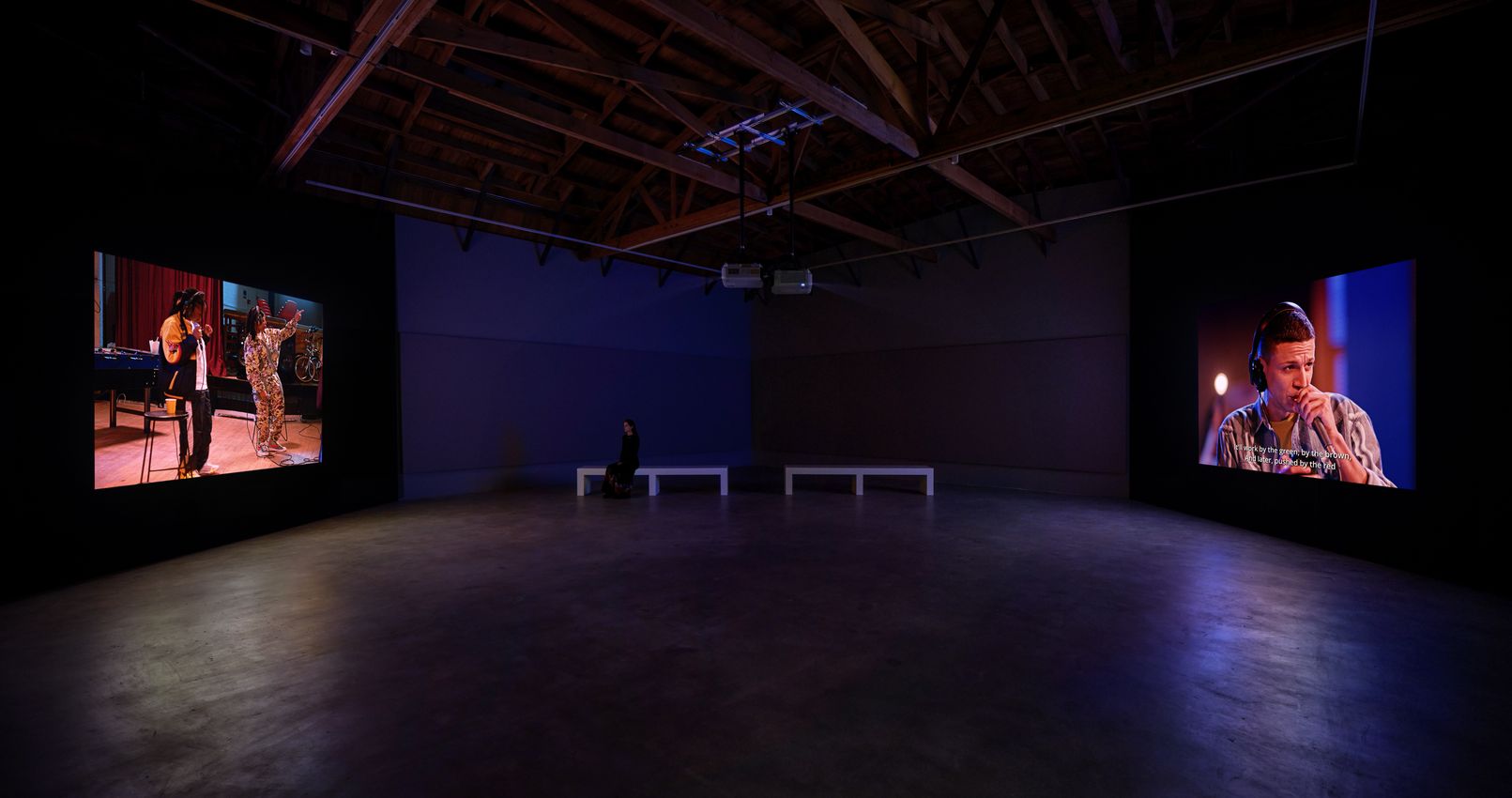
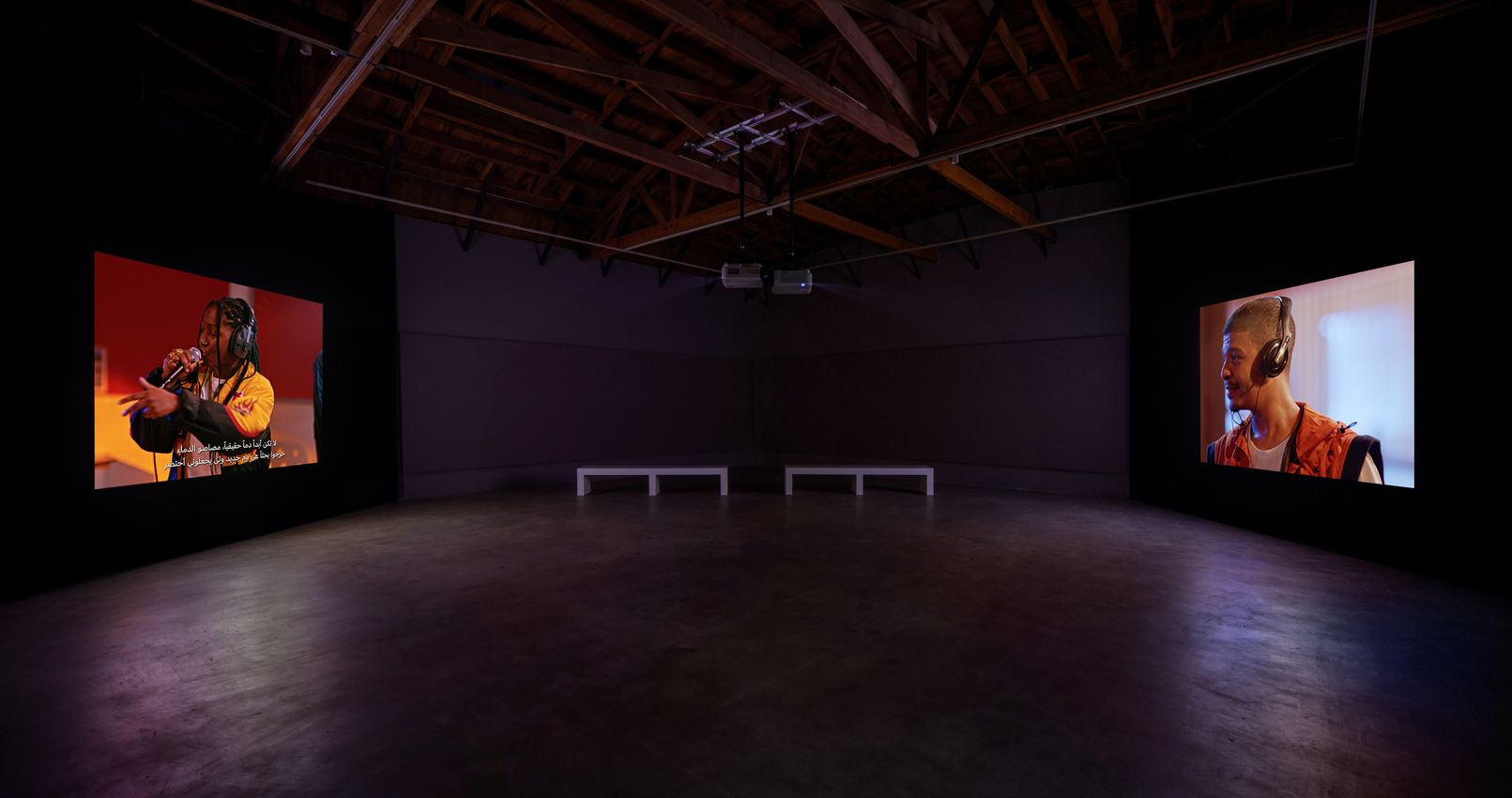
David Zwirner is pleased to announce an exhibition of Stan Douglas’s major two-channel videoinstallation ISDN (2022), along with a group of related photographs, which will together inaugurate thegallery’s 612 North Western Avenue location in Los Angeles.

This will be Douglas’s first solo presentation in more than twenty years in Los Angeles, where he lives (inaddition to Vancouver) and serves as the Chair of the Graduate Art program at ArtCenter College ofDesign in Pasadena. Douglas was one of the first artists to be represented by David Zwirner. He had hisfirst American solo exhibition at the gallery in 1993—the second show after David Zwirner opened itsdoors in New York’s SoHo neighbourhood earlier that year—and this will be his sixteenth exhibition at thegallery overall.

Since the late 1980s, Douglas has created films and photographs—and more recently theatre productions and other multidisciplinary projects—that investigate the parameters of their respectivemediums. His ongoing inquiry into technology’s role in image-making, and how those mediationsinfiltrate and shape collective memory, has resulted in works that are at once specific in their historicaland cultural references and broadly accessible. Multichannel video installations have been an integralpart of Douglas’s practice since the early 1990s, allowing for the simultaneous presentation ofoverlapping narratives or vantage points.

For his solo presentation at the 2022 Venice Biennale representing Canada, Douglas created ISDN andfour photographs that collectively consider the reverberations of the events of 2011—a year that sawpervasive global unrest, including Occupy Wall Street, the Arab Spring, and uprisings in numerous othercities, including London and Douglas’s native Vancouver. Presented across two venues—ISDN was on view at the Magazzini del Sale No. 5, a sixteenth-century salt warehouse on Dorsoduro, and thephotographs were exhibited at the Canada Pavilion in the Giardini—this exhibition subtly pointed to theways in which these events informed what came after them and how we are still feeling their impact overa decade on. This project reflects Douglas’s broader interest in capturing the interpersonal dynamics thatarise in such moments of societal fracture—moments, as he notes, ‘when history could have gone oneway or another.’1

In the two-channel video installation ISDN, the viewer finds themselves in the middle of acall-and-response jam session that unfolds across continents, literally positioned between the twoscreens. Set in 2011, the work pairs MCs in improvised studios, one in London and the other in Cairo,who trade free-styled verses, transmitted between them on ISDN (Integrated Service Digital Network)lines, a technology that has become largely disused as it has been replaced by faster broadband andfiber optic connections. In placing rappers in these two cities in dialogue, Douglas juxtaposes twomusical styles that emerged nearly simultaneously in the early 2000s—UK Grime and Mahraganat (or, ‘festivals’) in Egypt—which, as the artist notes, in 2011, ‘would literally become the soundtrack foryouthful revolt.’2 While these genres do share sonic resemblances, both emerging from hip-hop andmaking use of a range of nontraditional sampled effects, it is primarily their status as a form of socialcritique that began on the margins and eventually gained wider attention that inspired Douglas to bringthem together.

While the London rappers, TrueMendous and Lady Sanity, drop their verses in English, Yousef Joker andRaptor in Cairo respond in Arabic, with subtitles in the opposite language appearing below each.Though their sound is upbeat, both pairs foreground systemic social ills in their verses, directly raisingquestions of race and class as related to their own particular situations. Layers of sound underneath thevocals rotate in an ever-changing configuration, the permutations of which would take several days tofully experience. Ultimately, as Douglas notes, though the lyrics may cover weighty themes, this form ofartistic expression holds ‘total optimism and joy.’ He continues, ‘the idea of having this endless music isto say that when you do have this cross-fertilization between cultures, the possibilities are endless.’3

Following its debut at the Venice Biennale, the exhibition Stan Douglas: 2011 ≠ 1848 is currentlytraveling around Canada with stops at The Polygon Gallery, Vancouver (Fall 2022); Remai Modern,Saskatoon (February–April 2023); and the National Gallery of Canada, Ottawa (September 2023–August2024). An edition of ISDN is jointly held in the collections of Remai Modern and the National Gallery ofCanada.

Stan Douglas was born in 1960 in Vancouver. He studied at Emily Carr College of Art in Vancouver in theearly 1980s.

In 2021, the artist’s permanent public commission, Penn Station’s Half Century was unveiled in theMoynihan Train Hall, Penn Station, New York. This body of work, commissioned by Empire StateDevelopment in partnership with Public Art Fund on the occasion of the dedication of New York City’snew Moynihan Train Hall, is composed of nine vignettes arranged into four thematic panels whichexplore the rich history of Penn Station.

At the DAS MINSK Kunsthaus in Potsdam, Germany, Stan Douglas: Potsdamer Schrebergärten iscurrently on view. The solo presentation Stan Douglas: Revealing Narratives was on view at the PhiFoundation, Montreal, in 2022, and later traveled to the Art Gallery of Nova Scotia, Halifax. Douglas’swork has been the subject of solo exhibitions at prominent institutions worldwide since the 1980s,including the Julia Stoschek Collection, Berlin (2019-2020); Pérez Art Museum Miami (PAMM) (2016);Salzburger Kunstverein, Salzburg (2016); WIELS Centre d’Art Contemporain, Brussels (2015); and MuseuColeção Berardo, Lisbon (2015). In 2013, a major survey of the artist’s work, Stan Douglas: Photographs2008–2013, was presented at Carré d’Art – Musée d’Art Contemporain in Nîmes, France. It traveled asStan Douglas: Mise en scène through 2015 to Haus der Kunst, Munich, followed by Nikolaj Kunsthal,Copenhagen, and the Irish Museum of Modern Art, Dublin.

Other major solo presentations of the artist’s work include those held at The Fruitmarket Gallery,Edinburgh (2014); Minneapolis Institute of Arts (2012); Staatsgalerie Stuttgart and WürttembergischerKunstverein, Stuttgart (2007); The Studio Museum in Harlem, New York (2005); Serpentine Gallery,London (2002); Centre Georges Pompidou, Paris (1994); and Art Gallery of Ontario, Toronto (1987).

The artist’s work was featured in the Venice Biennale in 1990, 2001, 2005, and 2019, and in documentain 1992, 1997, and 2002. At the 58th Venice Biennale in 2019, Douglas debuted his video installationDoppelgänger and also presented a selection of photographs from his 2017 series Blackout. The artistwas selected to represent Canada at the 59th Venice Biennale in 2022.

Douglas’s first multimedia theatre production, Helen Lawrence, debuted at The Arts Club TheatreCompany, Vancouver, in March 2014 and has subsequently been hosted by the MünchnerKammerspiele, Munich; Edinburgh International Festival; Canadian Stage, Toronto; Brooklyn Academy ofMusic, New York; deSingel, Antwerp; and Center for the Art of Performance, University of California, LosAngeles (co-organized by Los Angeles County Museum of Art).

Douglas has been the recipient of notable awards, including the Audain Prize for Visual Art (2019); theHasselblad Foundation International Award in Photography (2016); the third annual ScotiabankPhotography Award (2013); and the Infinity Award from the International Center of Photography, New

York (2012). In 2021 Douglas was knighted a Chevalier of the Ordre des Arts et des Lettres by the FrenchMinister of Culture.

Work by the artist is held in major museum collections, including the Art Gallery of Ontario, Toronto;Centre Georges Pompidou, Paris; The Israel Museum, Jerusalem; Los Angeles County Museum of Art;Museum of Contemporary Art Chicago; The Museum of Modern Art, New York; National Gallery ofCanada, Ottawa; Pérez Art Museum Miami (PAMM); San Francisco Museum of Modern Art; Solomon R.Guggenheim Museum, New York; Tate, London; Vancouver Art Gallery; and the Walker Art Center,Minneapolis. Douglas lives and works in Vancouver and Los Angeles.

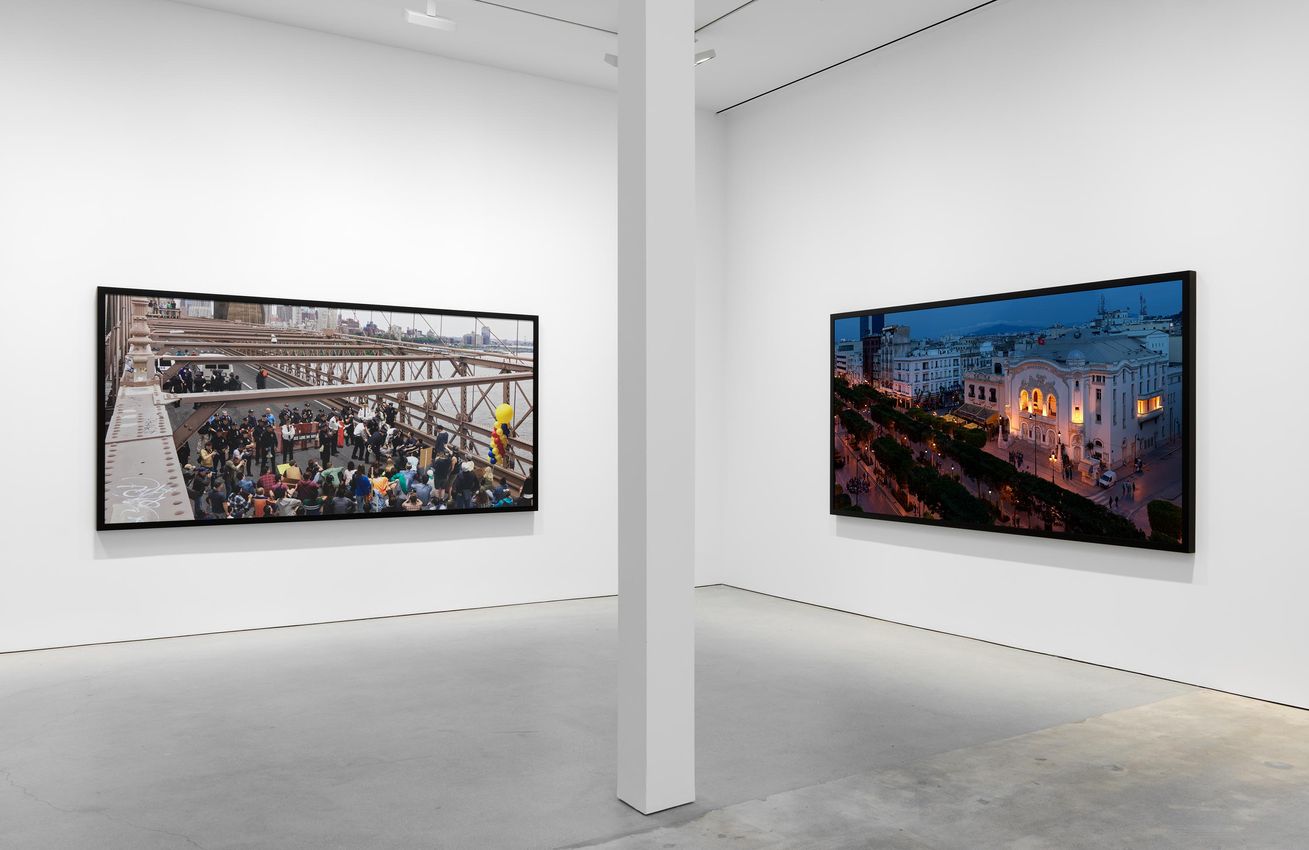
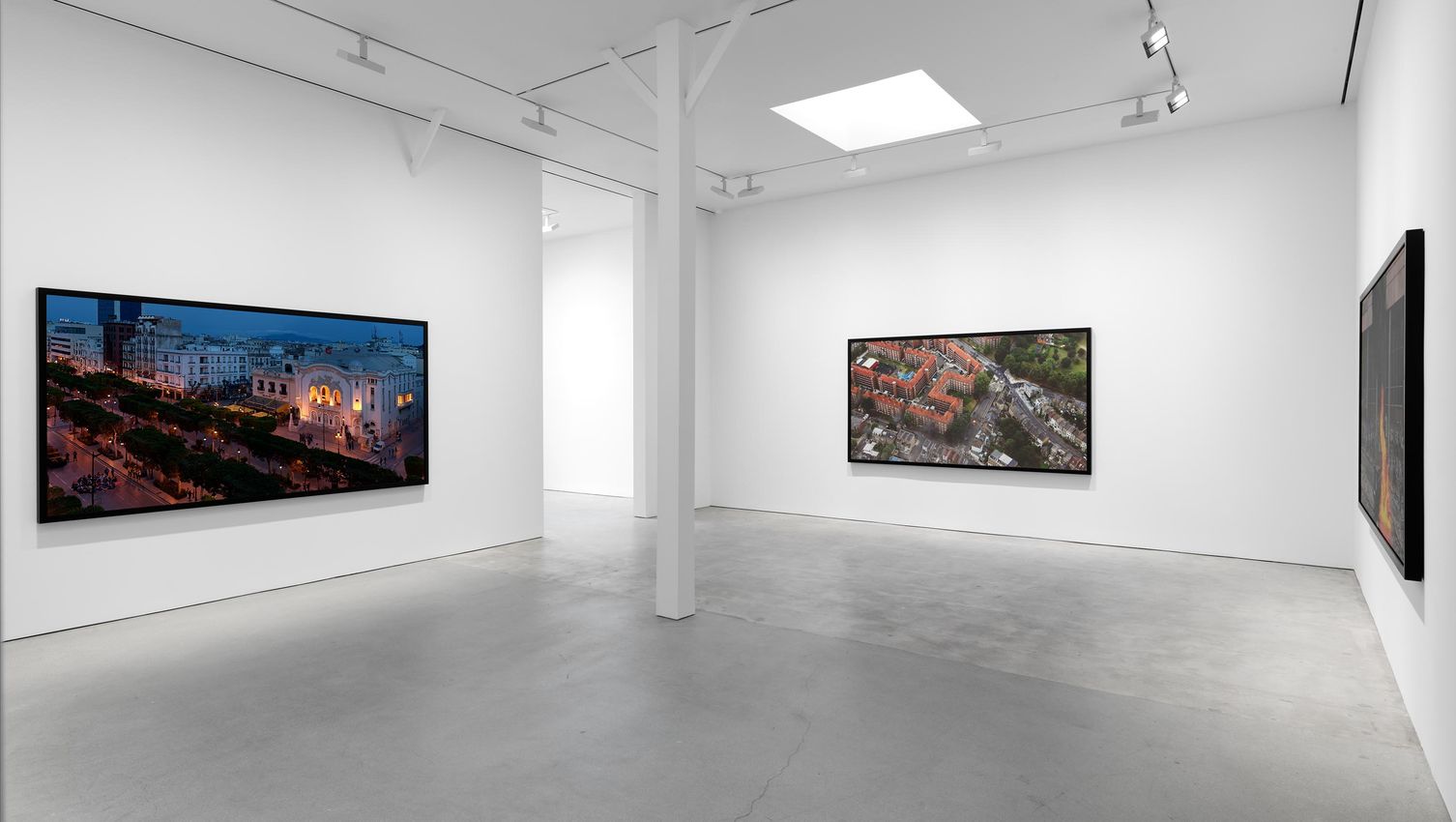
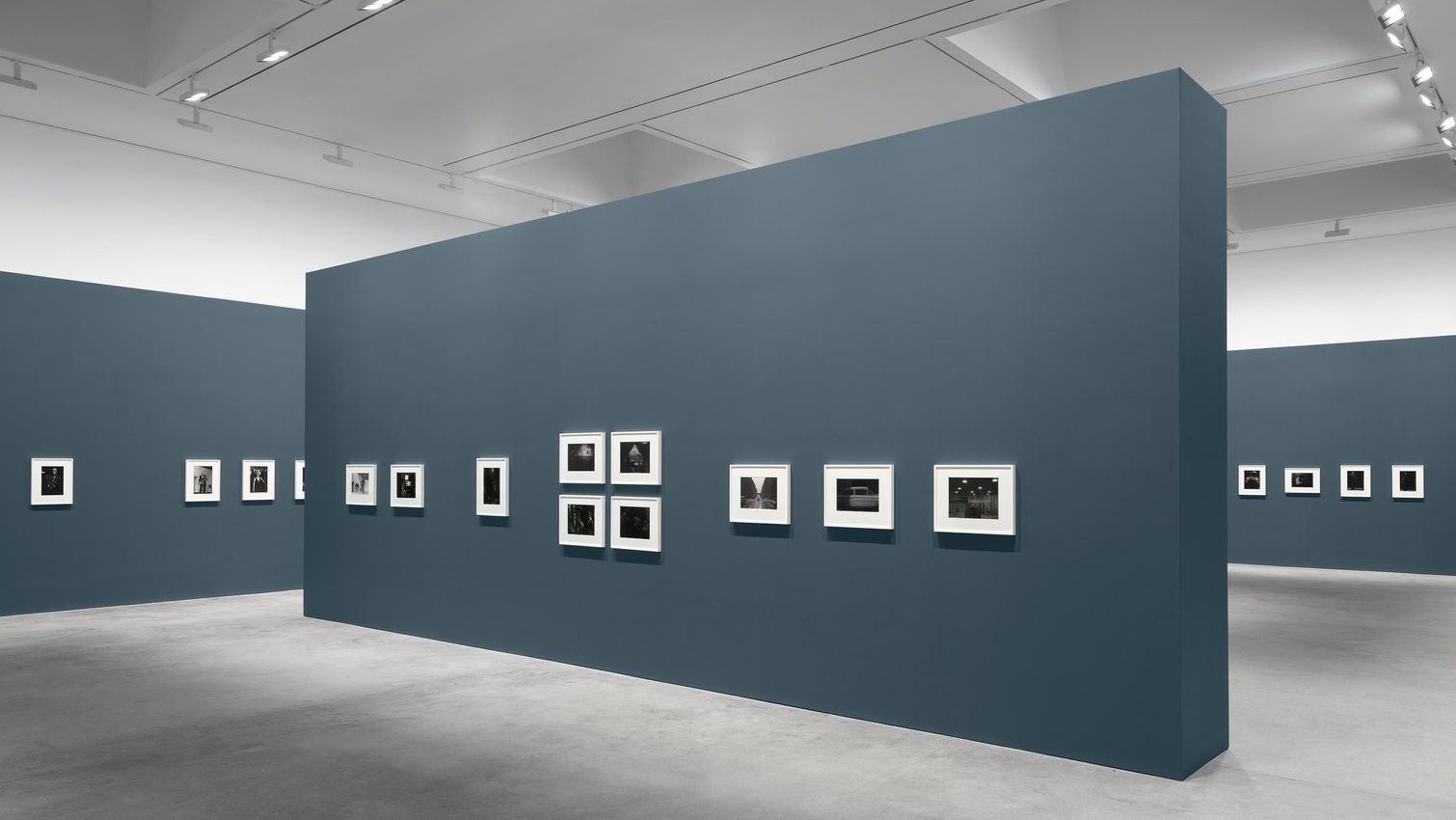
The video presentation is complemented by five photographs (the four exhibited in Venice plus anadditional, previously realised related work) that recreate specific moments from 2011 in four globalcities: London, New York, Tunis, and Vancouver. To create these panoramic mises-en-scènes, Douglasdigitally stitched together imagery, utilising a variety of sources to reconstruct the events as accurately aspossible. Though the COVID-19 pandemic prohibited him from traveling, he hired photographers totake location shots from a wide variety of angles and vantage points, from which he painstakinglyremoved the traces of any elements that did not exist in 2011, such as graffiti or even buildingsconstructed in the interim. Douglas then staged these scenes locally, using an empty hockey arena as aset, where he photographed dozens of actors in period dress in small groups, and then assiduouslyinserted them into the image using digital editing technologies. Paradoxically, despite his fealty to thespecific circumstances, the resulting images are inherently synthetic, conveying an uncanny sense of thehyperreal while evincing too much information for the naked eye to accommodate.

1 Scott Watson, Diana Thater, Carol J. Clover, and Stan Douglas, eds., Stan Douglas (London: Phaidon, 1998), p. 29.

2 Stan Douglas, cited in Reid Shier, ‘Introduction,’ in ibid., p. 48.

3 Stan Douglas in conversation with the gallery, March 15, 2022.

Read More

Installation Views

About the Artist

Since the late 1980s, Stan Douglas has created films, photographs, and installations that reexamine particular locations or past events. His works often take their points of departure in local settings, from which broader issues can be identified. Making frequent use of both analog and digital technologies, Douglas appropriates existing Hollywood genres (including murder mysteries and the Western) and borrows from classic literary works (notably, Samuel Beckett, Herman Melville, and Franz Kafka) to create ready-made contextual frameworks for his complex, reimagined narratives that pertain to particular locations or past events.

View Artist Profile

Also Exhibiting at David Zwirner

Address
612 North Western Avenue
Los Angeles
United States
Opening Hours
Tuesday – Saturday
10am – 6pm
(1)
Los Angeles 612 North Western Avenue
David Zwirner
612 North Western Avenue, Los Angeles, United States
+1 310 777 1993
http://www.davidzwirner.com

Opening hours
Tuesday – Saturday
10am – 6pm
The art world in focus
