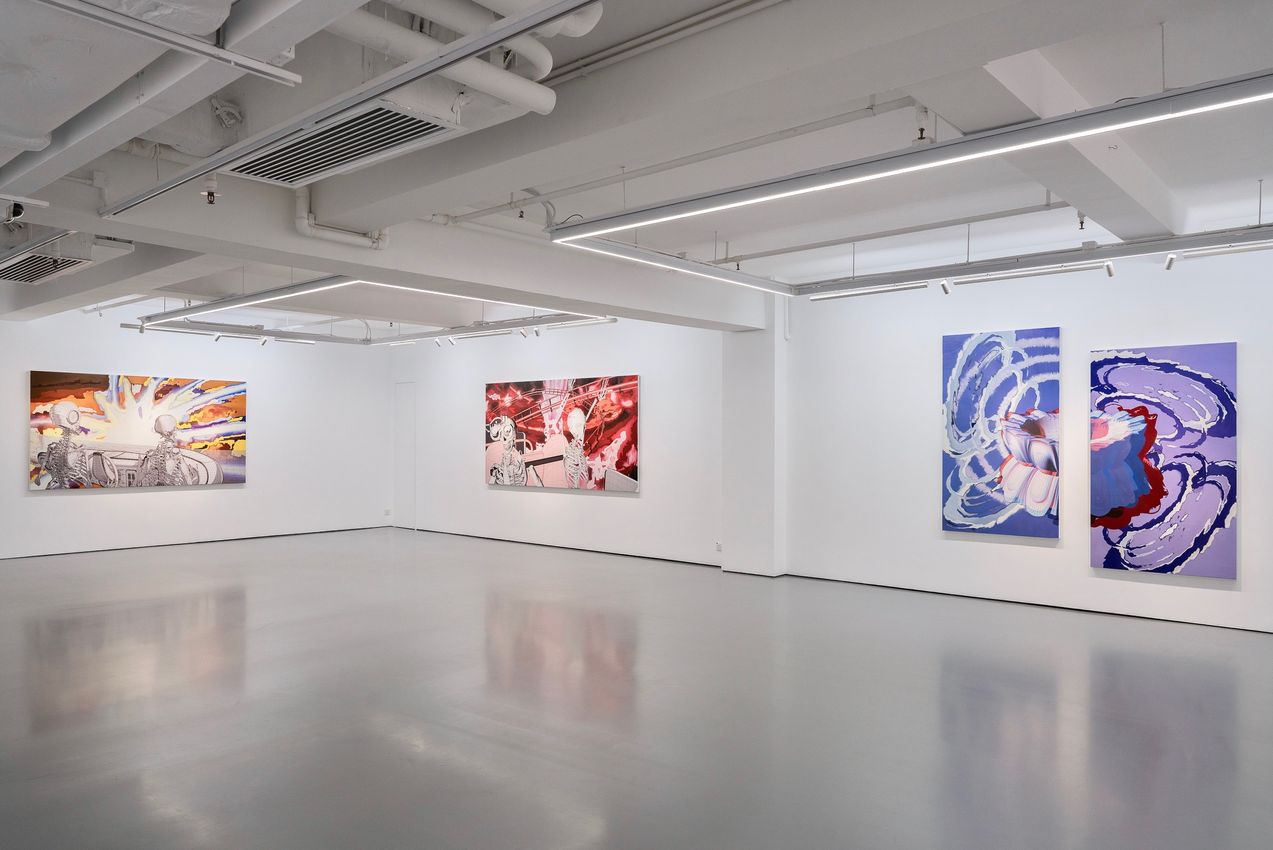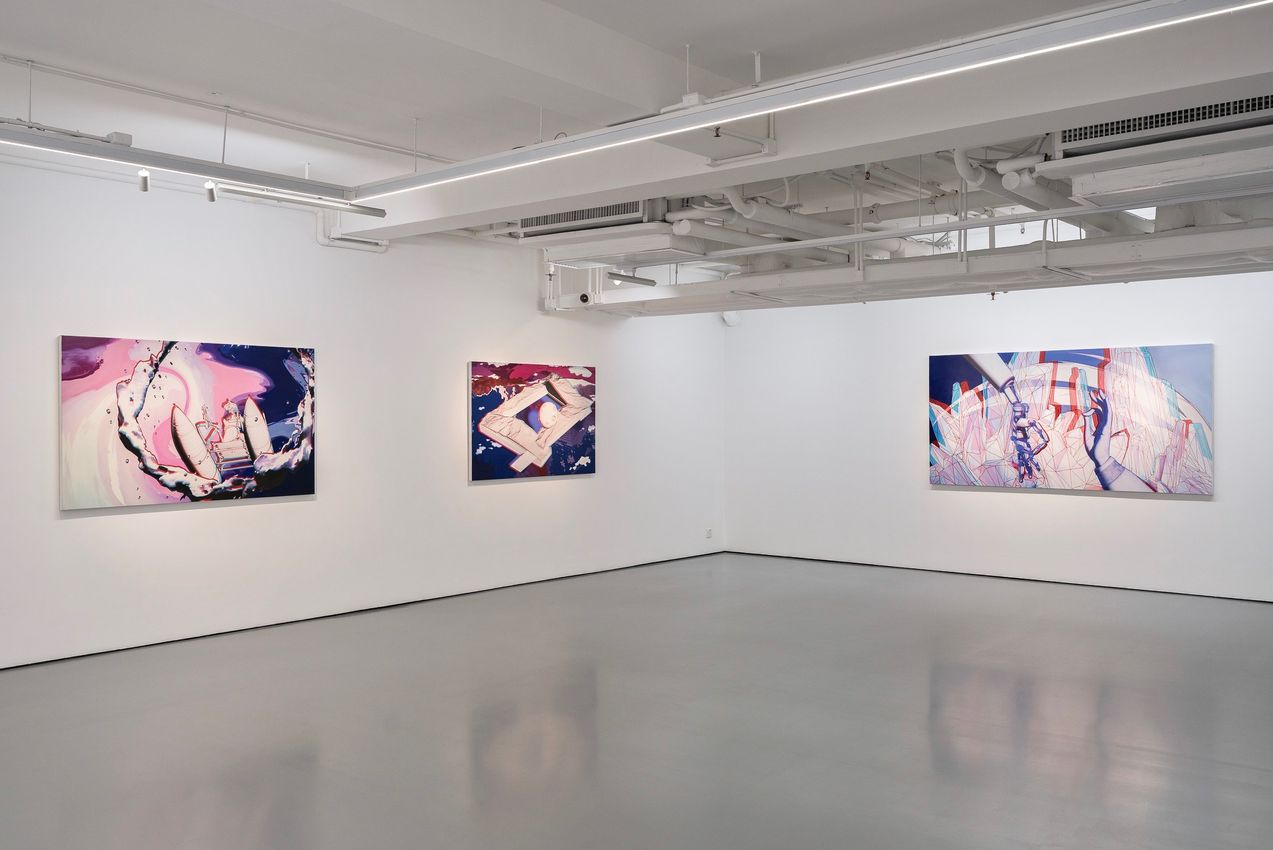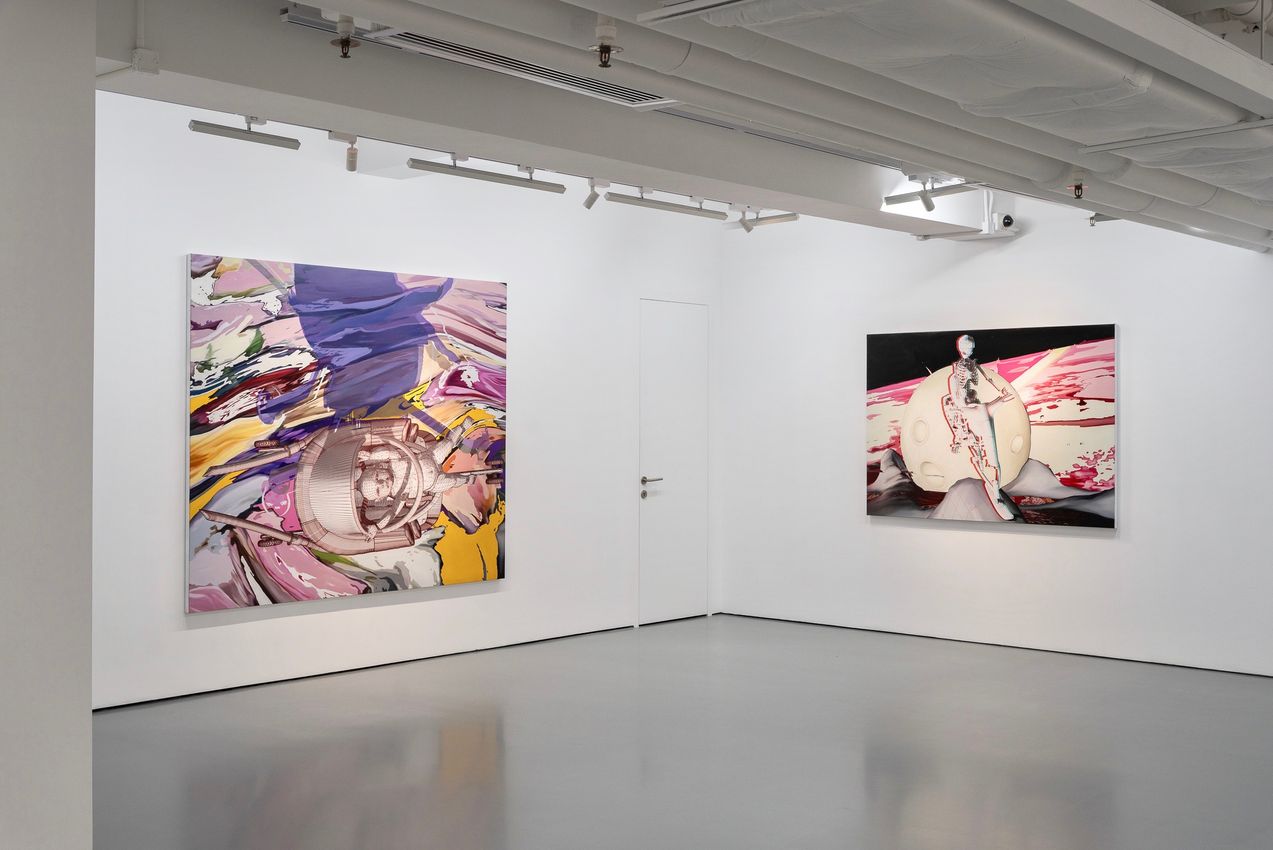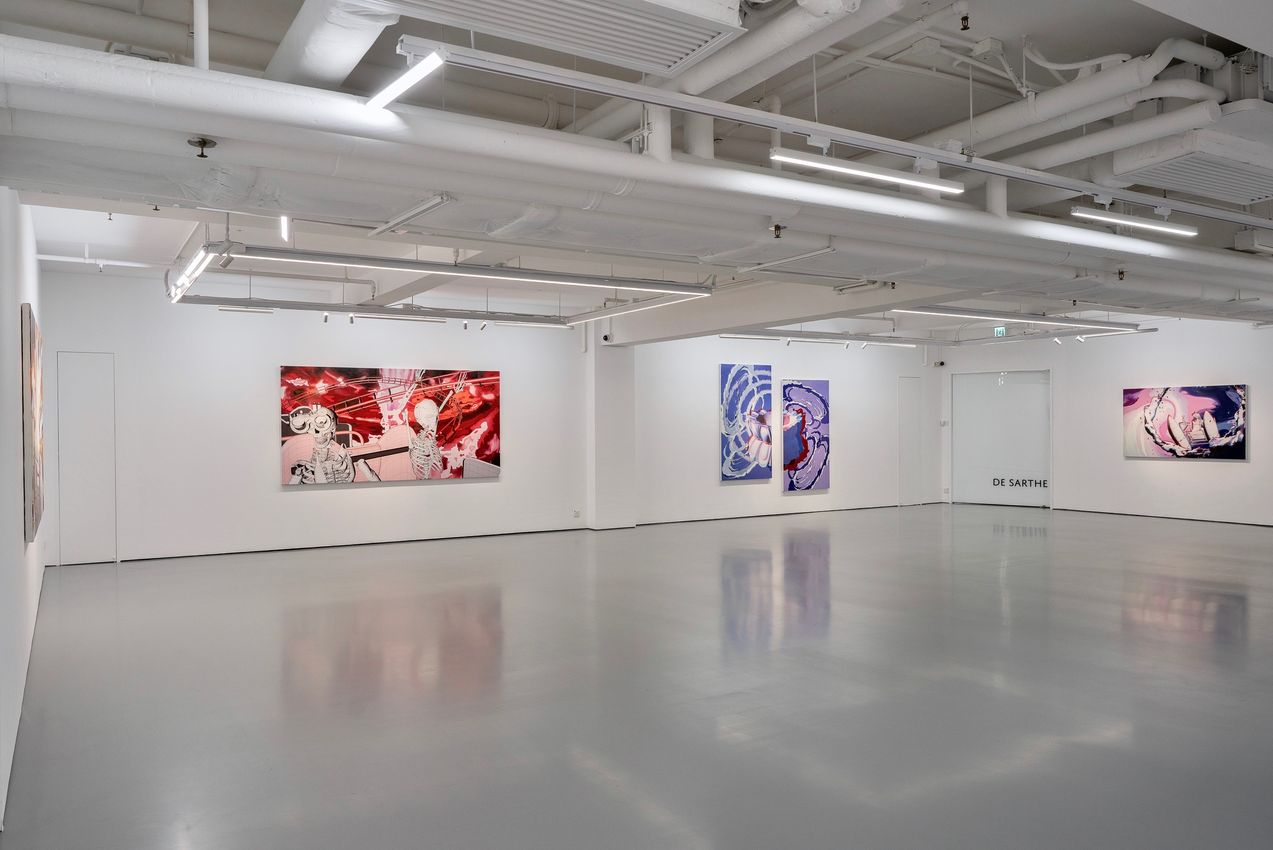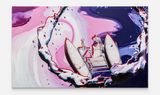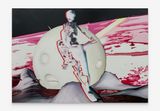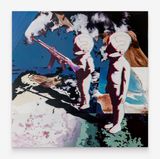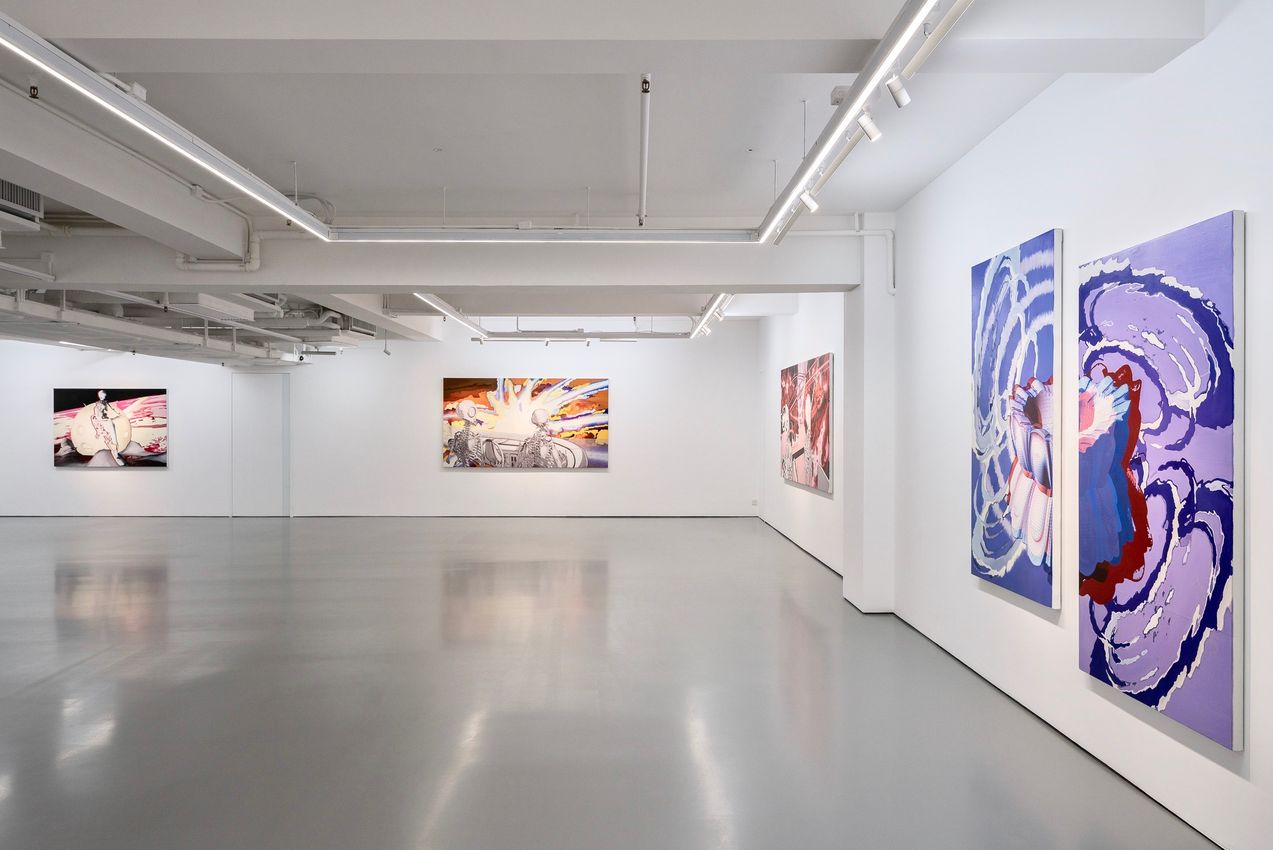
DE SARTHEis pleased to present the first solo exhibition for its newly represented artist Caison Wang, titled Hyperland. Featuring a body of large-scale works on canvas, the exhibition combines whimsical yet ghoulish imagery with deconstructed references to humanity and religious deities. Contemplating the binary notions of morality and more, the artworks depict a liminal world in which Wang reinterprets heaven and hell as a psychological experience as part of the empirical human condition. Hyperland opens May 6thand runs through June 24th.
Titled after Hyperion, referring to the “one who passes through the sky or looks down from the sky” in Greek mythology, Hyperland observes fictional characters Jack and Mary through the lens of an omniscient narrator. Illustrated as two skeletal figures, Jack and Mary are neutral representations of human beings. As if the protagonists to one continuous story, the figures are seen acting out different scenarios in each artwork while immersed in surrealist landscapes that the artist built via 3-D modeling software. Combining digital lattices with near-psychedelic colors evocative of either enlightenment or hell, Caison Wang’s artworks allude to the idea that pain or transcendence under the context of morality is but an artificial construct generated by and for the human psyche. A perplexing amalgamation of idyllic and dystopic imagery, Hyperland proposes more than a rejection of the pre-existing definitions of good versus evil but issues a challenge toward all dichotomies set forth by dogmatic philosophies.
Caison Wang’s practice interweaves the physical, virtual, and spiritual. Crafting new visual symbols, patterns, and characters via a range of tangible and digital media, her works explore the new-found fluidity of religion, materialism, and morality in contemporary society. As exemplified in Hyperland, her construction of imagined topographies using 3-D modeling addresses the notion of an omniscient and omnipotent creator in the post-technology era. In the dawn of humanity’s acquired ability to build, fabricate, but also destroy and annihilate new realities, Wang elucidates a philosophical conundrum in which she asks: Do gods still exist and if so, what differs them and us?
Caison Wang (b. 1991, Guangdong) graduated from Hubei Institute of Fine Arts with a B.F.A. in 2015 and received her M.F.A. from Savannah College of Art and Design in 2019. Her practice explores globalization, cultural hierarchies, Asian identity, as well as the social and philosophical geneses of contemporary beliefs. Using a vast range of materials including painting, sculpture, and 3D modeling, Wang navigates the physical and virtual as a visual explorer and conveys a grand narrative via her works.


DE SARTHE is a pioneering platform for boundary-pushing contemporary art from Asia. It has also contained an influential international presence in modern and post-war art since 1977.

A respected voice in contemporary art discourse.
Focusing on ambitious storytelling and insightful art-world commentary. Ocula Magazine publishes in-depth interviews, critical essays and timely analysis on the artists, exhibitions and ideas driving the global art world.
Learn more about Ocula Magazine
Showcasing the best of the art world.
Ocula partners with galleries from around the world to highlight their artists, artworks and exhibitions. Gallery membership is by application and invitation, with each member vetted by an independent panel.
Learn more about Ocula Membership

Specialises in the sale of major artworks.
Led by a team with deep ties to the world’s leading auction houses, galleries and collectors. Ocula’s advisory team offers bespoke services to high-net-worth clients from around the world who are looking to acquire the best of contemporary and modern art.
Learn more about our team and services