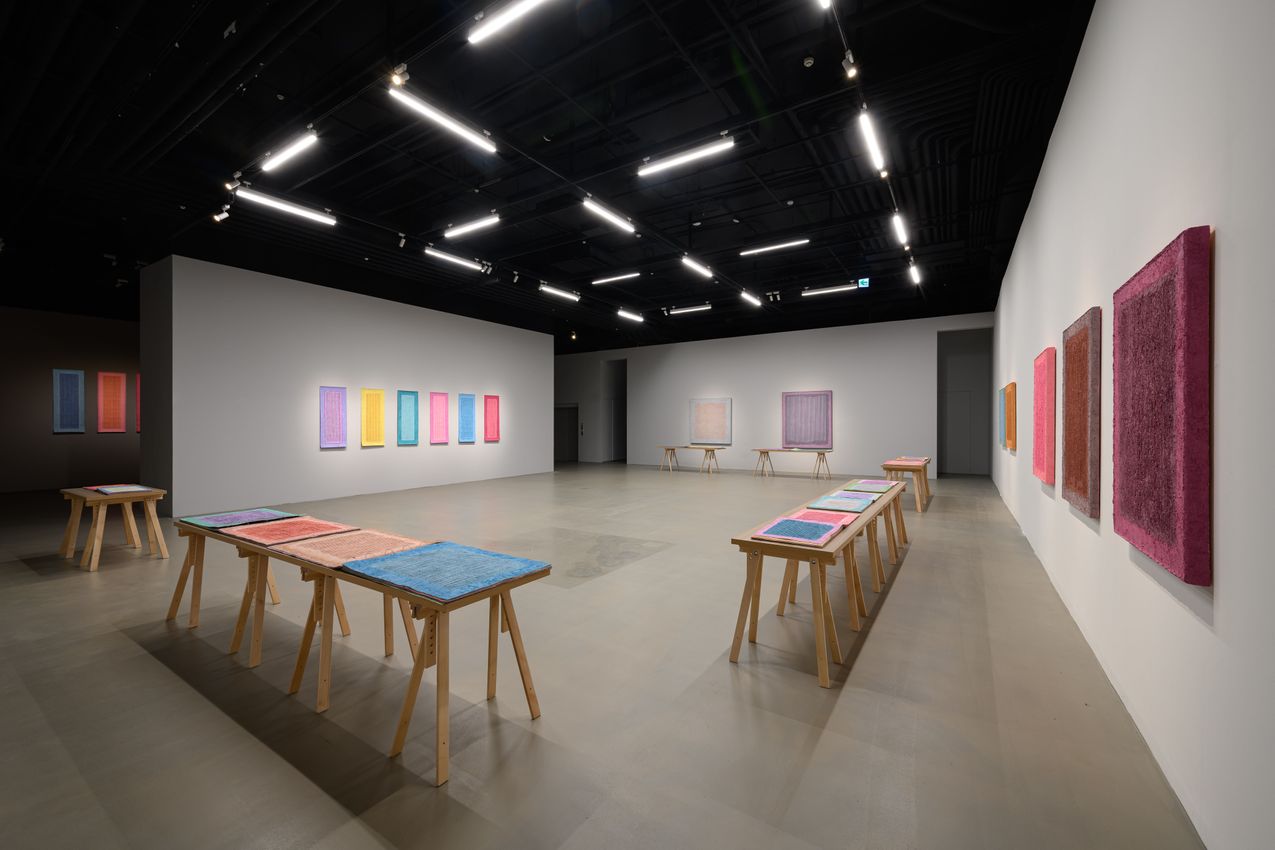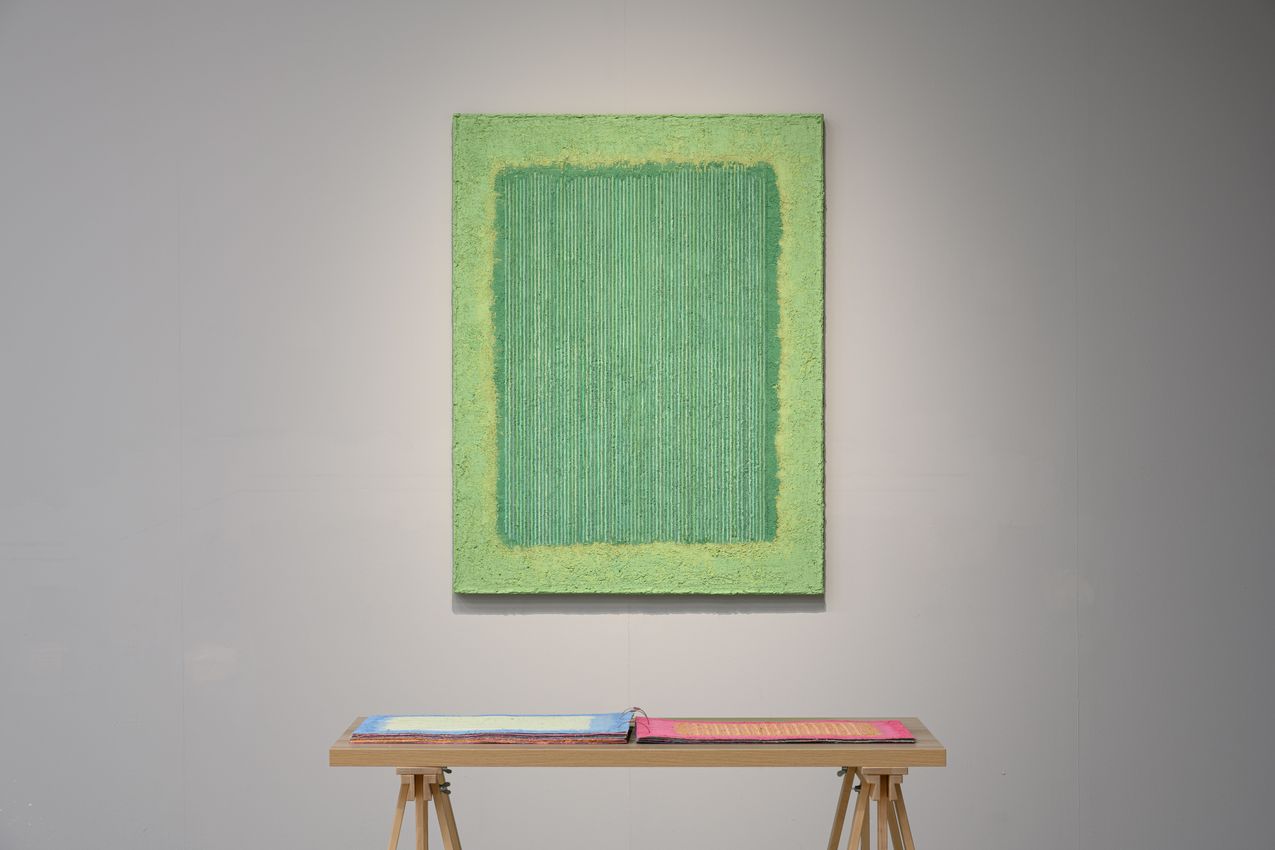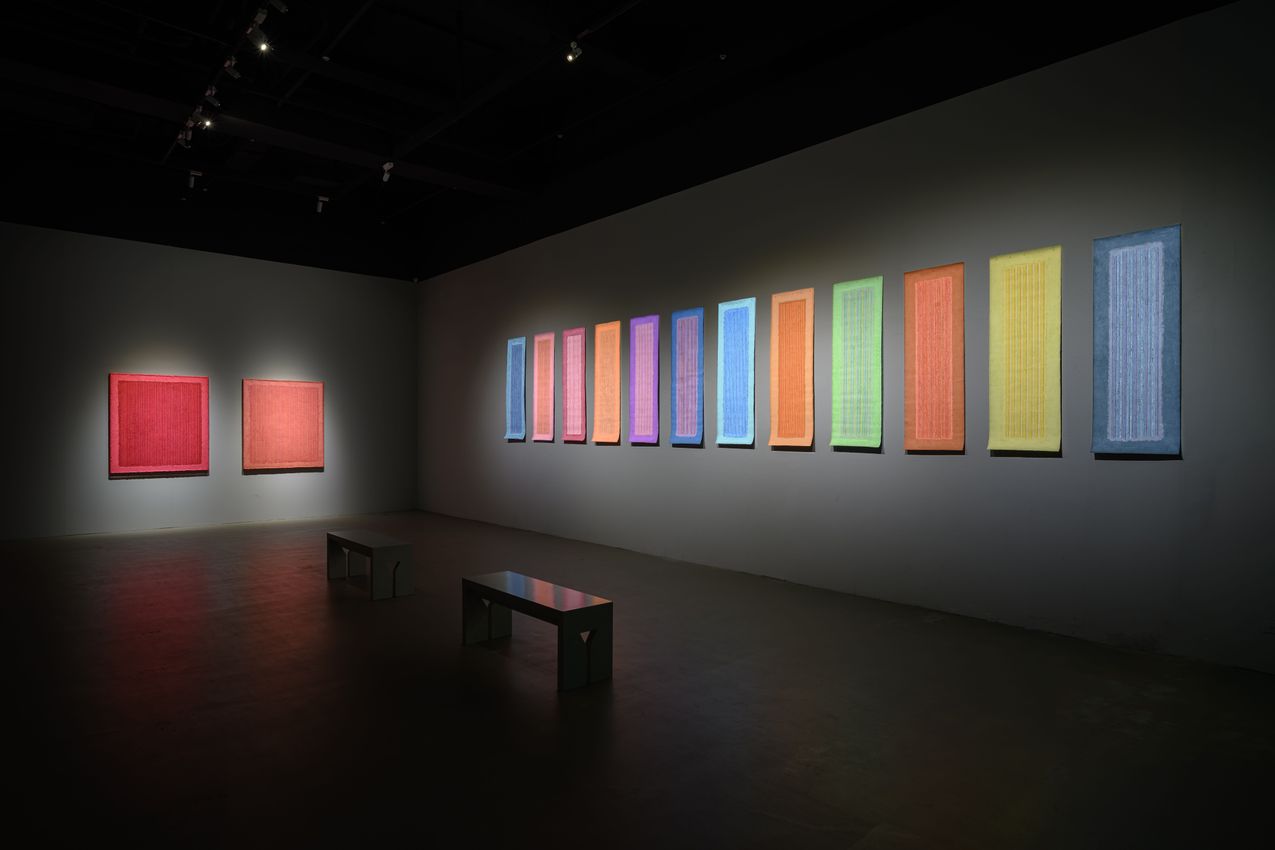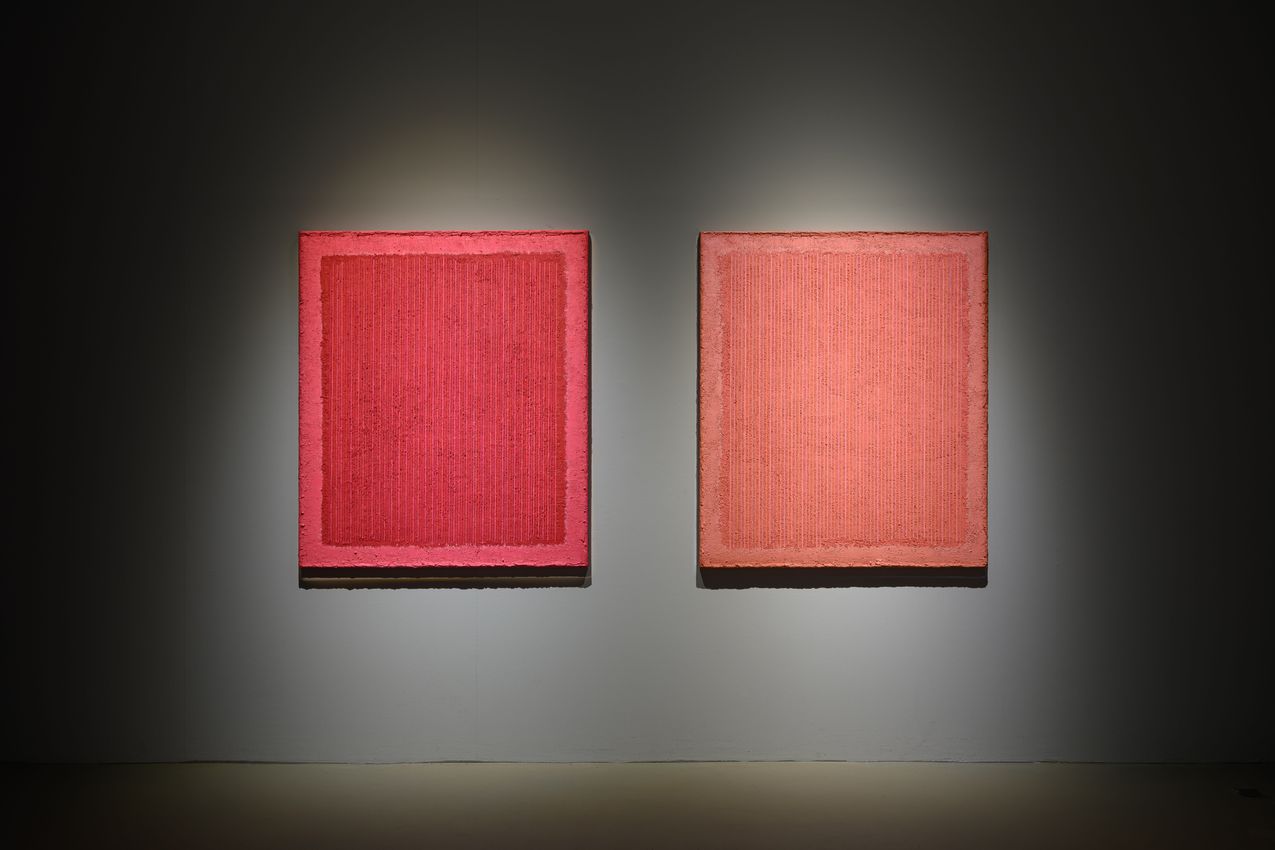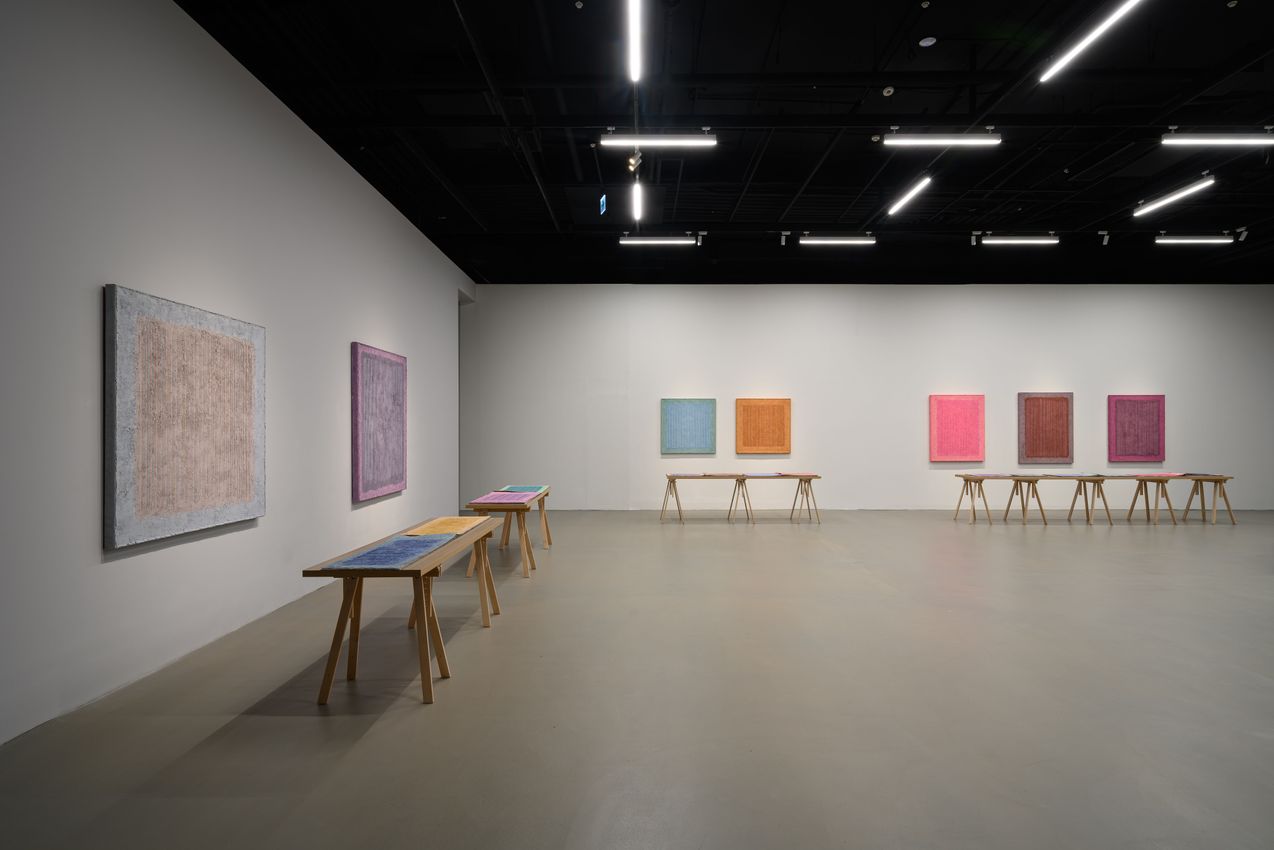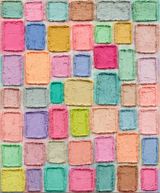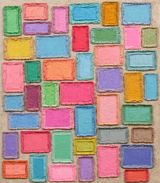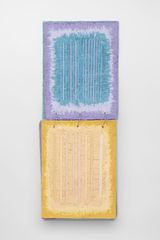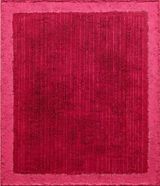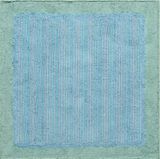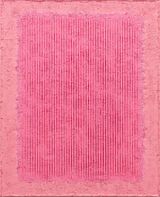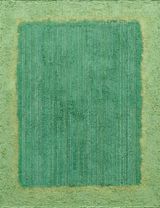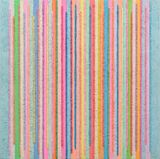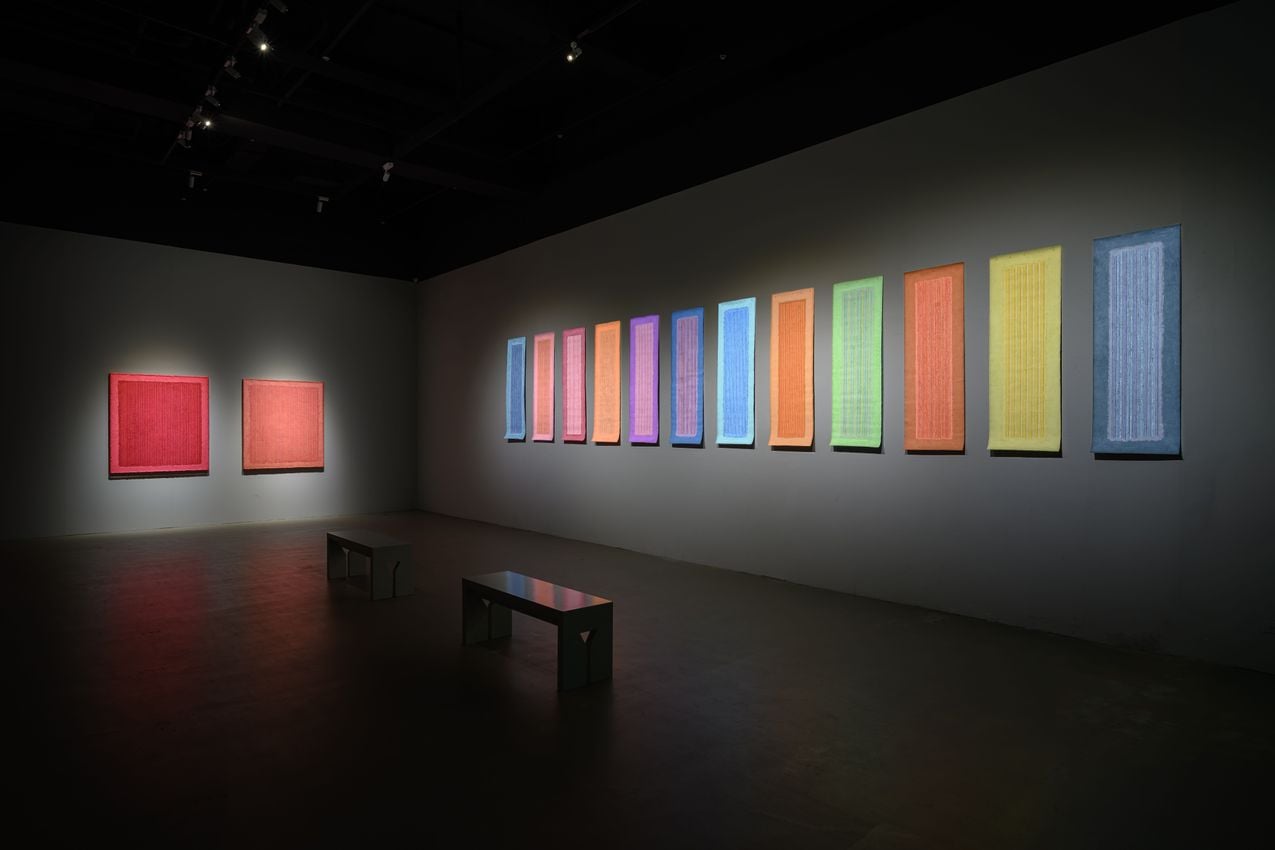
Born in culturally intersecting Southeast Asia and raised under the geopolitical conditions of the ColdWar, Mit Jai Inn’s artistic language has consistently emerged from the tensions between region, history,and ideology. His abstract paintings often unfold through bright, saturated colours charged with atropical sensibility, with rough and densely layered oil pigment condensed upon large, untrimmed linencanvases. These fields of colour, varied in scale and format, may be suspended in midair within theexhibition space, allowing the movement of viewers to be drawn into a spatial narrative; they may behung on the wall, continuing the tradition of viewing painting on a vertical plane; or they may be laid flaton the ground, challenging the formal distance and modes of encounter between viewer and work.Through this transformation in the use of painting media, Mit creates a mode of viewing that isinterwoven with a cultural consciousness of colour, extending the language of the plane into the realmof space.
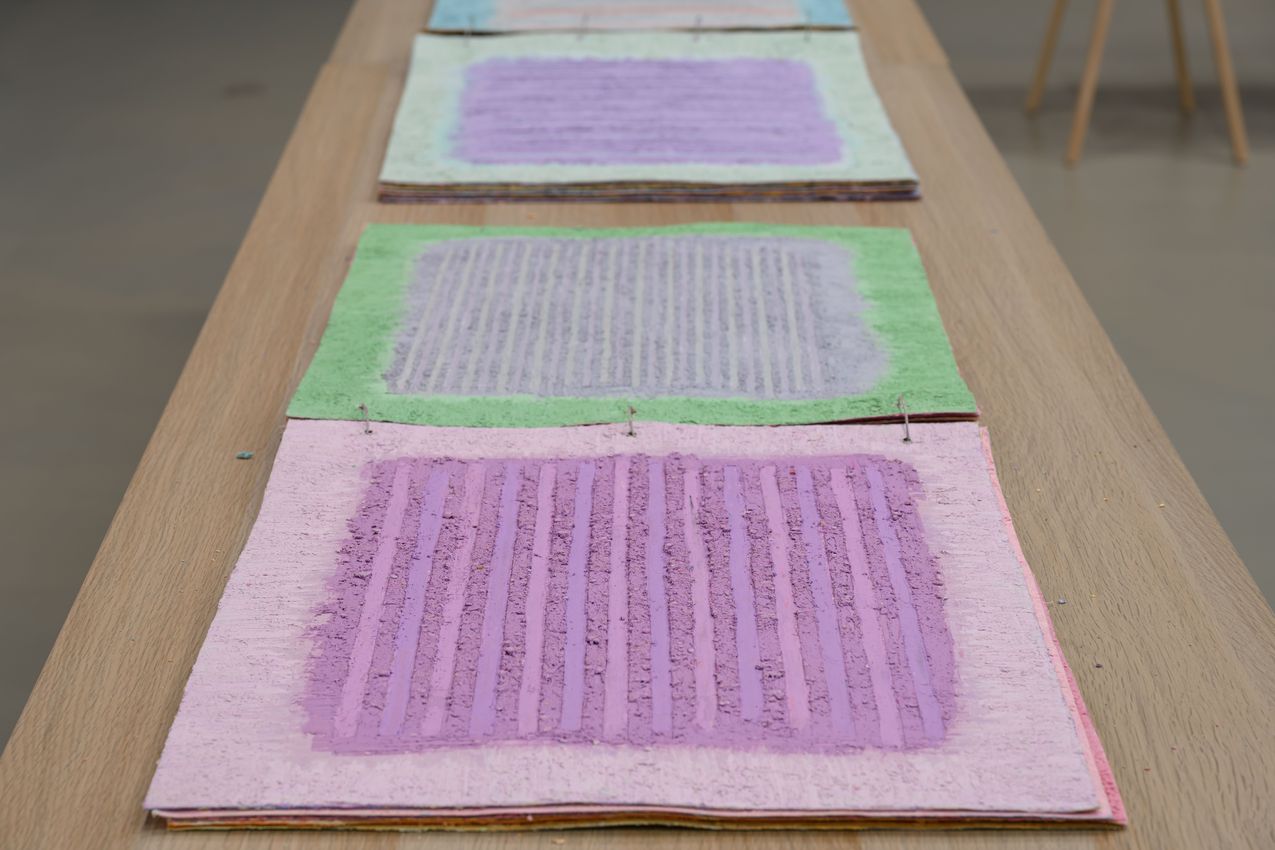
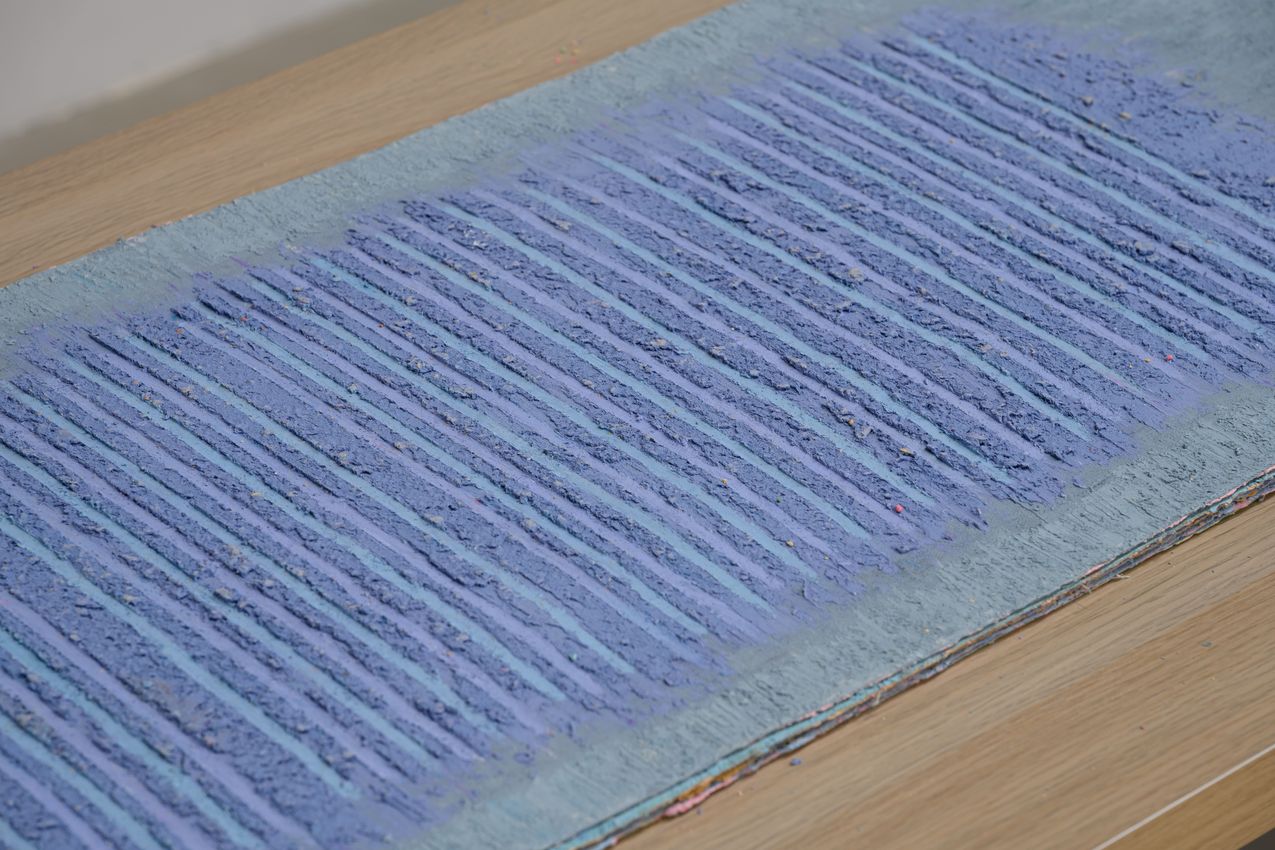
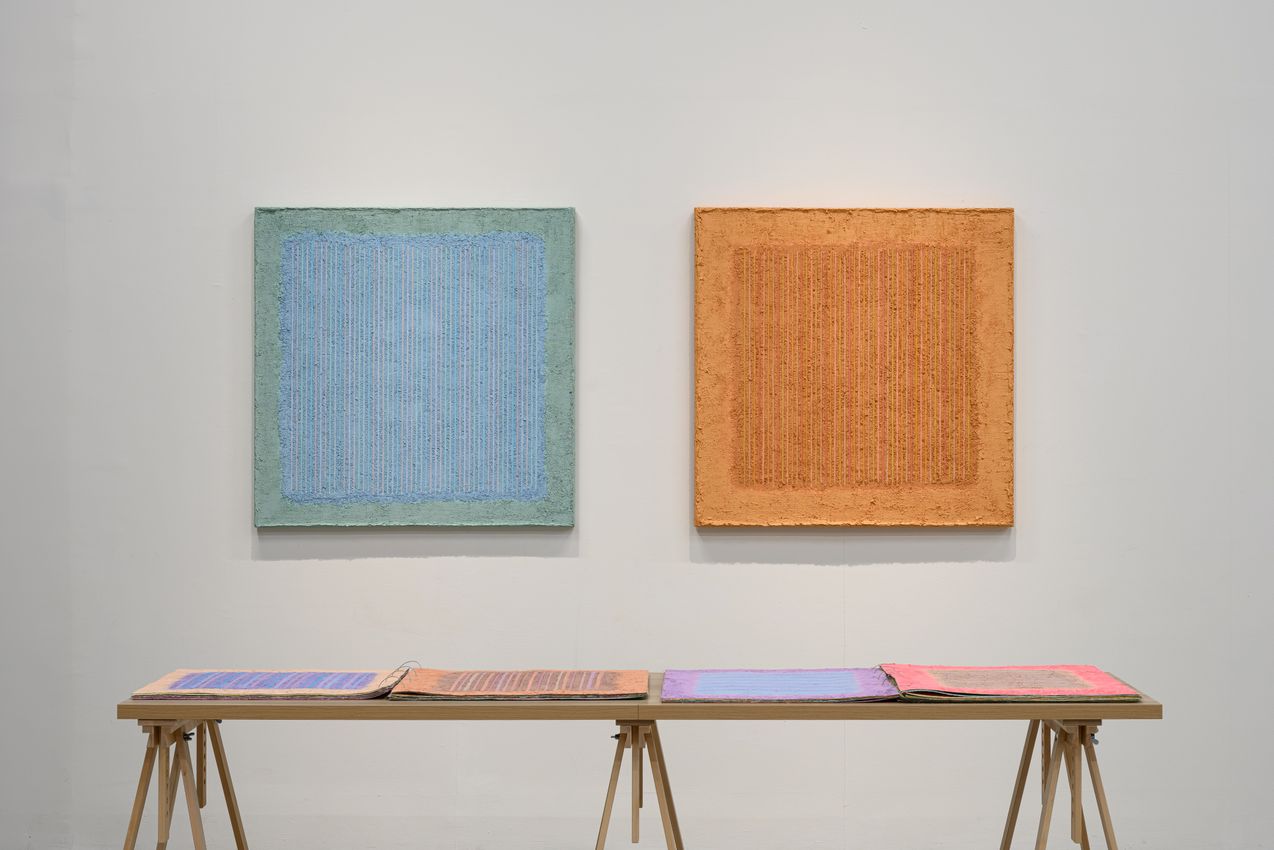
In practice, he first takes toner, pigment, and canvas as the fundamental elements of painting. Throughthe blending of colour, the accumulation of material texture, and their mutual permeation, he embedscultural codes within the fabric of sociopolitical experience. In doing so, painting moves beyond themere production of images and becomes a practice through which abstract language enters space,responds to site, and is re-identified through viewing. At the same time, through the repeated mixing,rubbing, covering, and eroding of pigment, Mit pushes creation toward a cycle of near-laborious process.These seemingly simple gestures respond to the rigorous and repetitive rhythms of everyday life, whilealso revealing the layers and transformations accumulated by the material over time. The traces left bybodily action register the temporal density of the creative process.
The solo exhibition CYCLES departs precisely from this long-standing practice, extending the artist’sconcern with space, colour, and bodily action toward an inquiry into time. The “cycle” invoked by theexhibition originates in the artist’s reflection on lunar phases, yet it does not stop at the repetition ofnatural law, nor is it merely the periodic order symbolised by the waxing and waning of the moon.Rather, it concerns how time acts upon the relations between individuals, objects, and perception. Themoon’s phases move natural rhythms, while also reflecting the fluctuations of the human body onphysiological and emotional levels. Yet regularity itself does not necessarily produce meaning. Withoutbodily intervention and perceptual participation, cycle can easily recede into empty repetition. Whatconcerns Mit is how difference is reactivated within each seemingly similar return. When viewersparticipate in the work through movement, touch, browsing, or looking, time is no longer merely thepassive background of passing, but becomes an experience given form through action. Just as thelunar cycle continually moves toward its next fullness, the repeated gestures, rhythms, andtemporalities of everyday life acquire active value and meaning only through human participation.
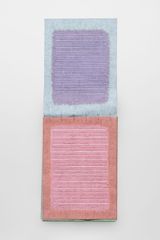
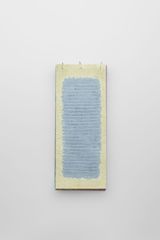
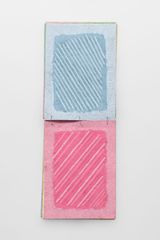
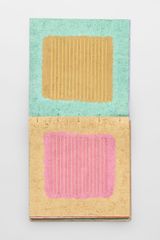
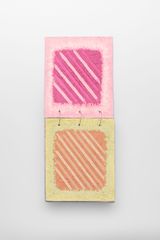
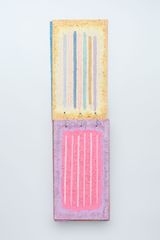
Time in CYCLES is therefore embodied rather than abstract. Formally, the series is composed of twelvepages and twenty-four sides, echoing calendars and ephemerides as systems historically associatedwith recording temporal and astronomical cycles. The artist binds thickly layered canvases togetherwith metal rings. For Mit, this binding moves beyond functional necessity; conceptually, it introduces a constrained mobility, a structure in which movement is possible but never entirely free from reality. Thework occupies the interval between painting and sculpture, requiring viewers to enter it through holding,turning pages, and shifting their gaze. The act of turning may appear modest, yet it is an irreversiblegesture. It alters the relations between images, as well as the temporal sequence shared by viewer andwork, thereby enabling active participation. At the same time, the work suggests that time cannot beseparated from space. Temporal change becomes perceptible only through spatial relations: throughdistance, displacement, position, and interval. In this sense, time is not an autonomous substancemoving behind the world. It emerges through spatial configuration and transformation, through bodiesoccupying, moving through, and altering positions. What we call duration is ultimately registered withinthese relations.
For Mit, time and duration do not simply manifest the linear qualities of abstract time. They areexperiences formed through the accumulation of a succession of small decisions. Time, therefore, isnot an invisible thing that passes before us, but a process continually made and remade throughperception itself.


A forerunner of Taiwanese modern art, the Tina Keng Gallery hinges upon the philosophy that art is a reflection of the times. The Tina Keng Gallery has its roots in the Lin & Keng Gallery (1992–2009) based in Taipei, Taiwan and Beijing, China. Delving into Western painting and Chinese art history, Lin & Keng tirelessly promoted the work of Asian classical masters, cultivating a critical thought on Greater Chinese modern art. The Tina Keng Gallery has continued this tradition by centering its focus on Asia, further excavating art history and rediscovering modern aesthetics. Upon this foundation, the Tina Keng Gallery is steadfast in nurturing Taiwanese modern and contemporary art, with hopes to capture the changing states of art through writings of history, in so doing highlighting the cultural underpinnings of its worldview. Art arises from culture, and culture mirrors the times. The Tina Keng Gallery endeavors not only to support Greater Chinese modern and contemporary art, but to shape a perspective that is elementally Asian.

A respected voice in contemporary art discourse.
Focusing on ambitious storytelling and insightful art-world commentary. Ocula Magazine publishes in-depth interviews, critical essays and timely analysis on the artists, exhibitions and ideas driving the global art world.
Learn more about Ocula Magazine
Showcasing the best of the art world.
Ocula partners with galleries from around the world to highlight their artists, artworks and exhibitions. Gallery membership is by application and invitation, with each member vetted by an independent panel.
Learn more about Ocula Membership

Specialises in the sale of major artworks.
Led by a team with deep ties to the world’s leading auction houses, galleries and collectors. Ocula’s advisory team offers bespoke services to high-net-worth clients from around the world who are looking to acquire the best of contemporary and modern art.
Learn more about our team and services