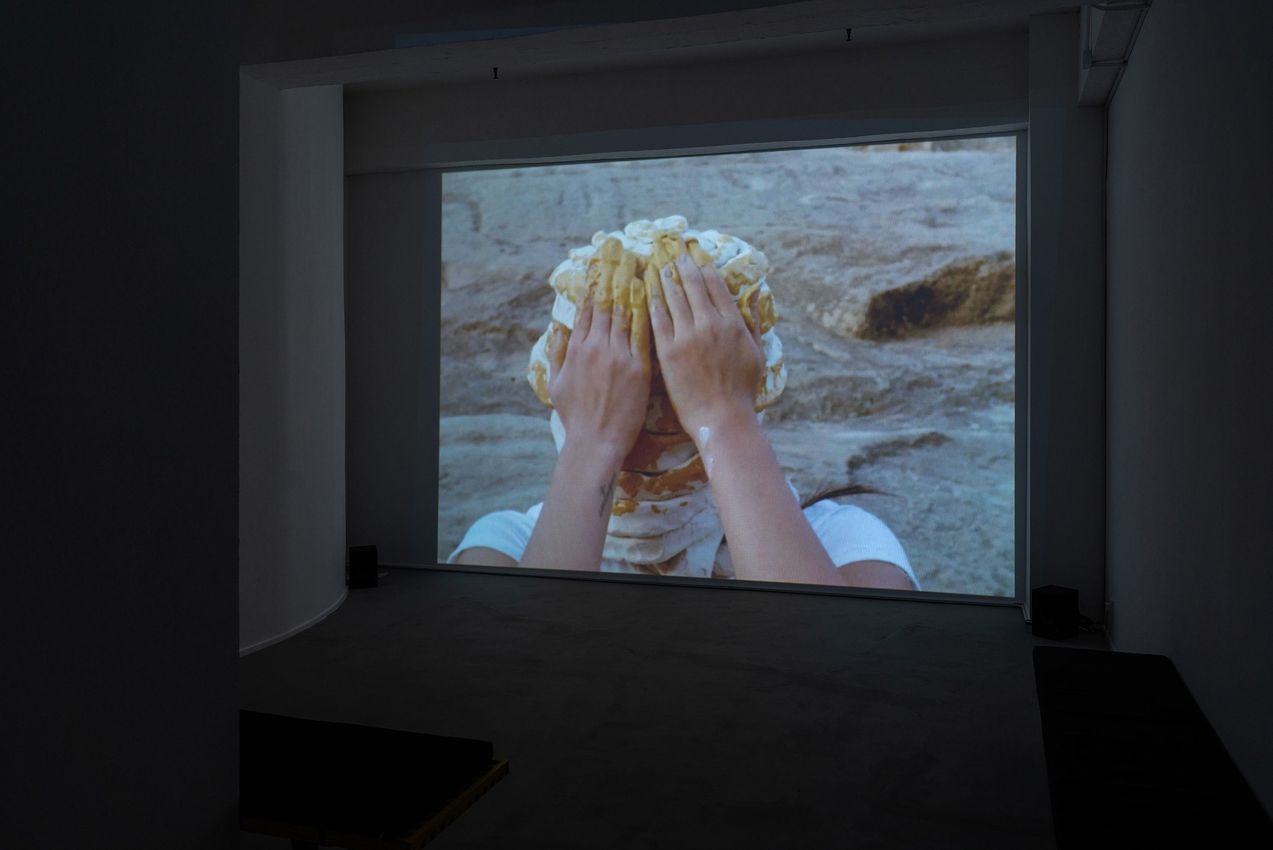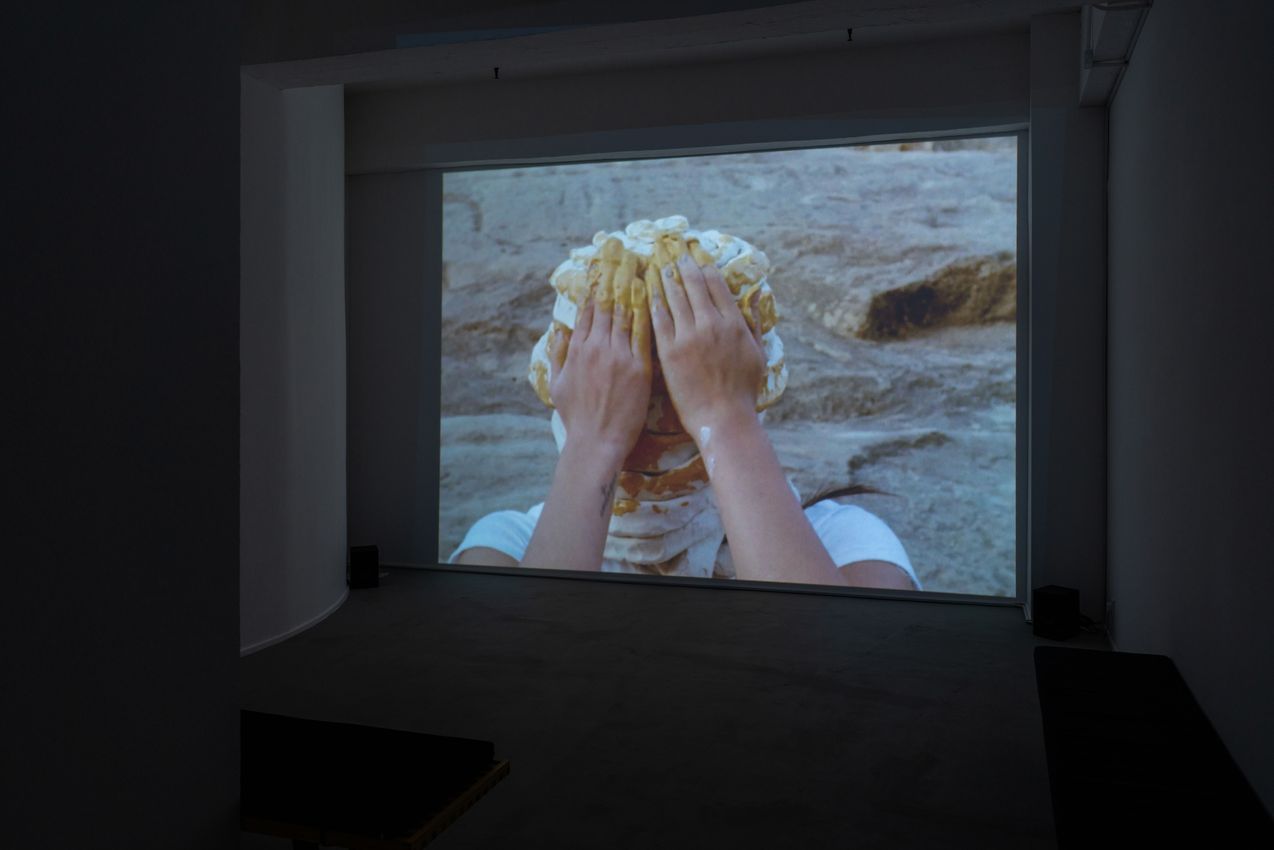
DE SARTHE is pleased to present yellow porcelain ii (outside the Los Angeles Police Academy), an independent program of video work by stephanie mei huang in the new media room, in conjunction with the gallery’s contemporary photo exhibition.
“It’s not gazing but grazing.” - Mike Hoolboom“
To give flesh to the multisensory cinema I theorized and to emphasize the mutuality of perceiving and being perceived, I also drew from...embodied empathy, or bodily mimesis, as one of the ways we feel along with the beings on the screen.” - Laura U. Marks
yellow porcelain ii is a hybrid film/performance/sculpture and ritualized demonstration of self-arming through the materiality of the tactile apparatus/medium of 16mm film and clay. For huang, film is memory; film gains scratches, digital media corrupts, and analog videos demagnetize. 16mm, in this sense, is a skin that retains the memory of being alive. huang’s 16mm films utilize moving image film as a membrane of memory, enacting, quite literally, that only light may expose these intimate social performances to reveal what the film (memory) holds.
The work is a part of a series titled self-armature, which combines 16mm film from and outside the Los Angeles Police academyand different bodies of clay. With yellow porcelain ii, it is specifically 10 kilograms of porcelain, a haptic and delicate material knownfor its east-west migration. Yellow ochre in the form of mineral pigment arrives, one of the most ancient and stable pigments used by humankind, historically used to signify a return to the earth, or a rebirth. In the durational performance that ensues, huang becomes an earthly vessel. The vessel, as a metaphor, is a porcelain barrier, but also oft-used to describe the messenger. In using clay armor and camera to initiate spectatorship, yellow porcelain ii challenges surveillance dynamics to look at violence as a performative structure, rooted in the very important question of whether or not self-protection and autonomy are futile during an era of mass data surveillance and state monopoly of violence.

Stephanie Mei Huang 黄丹妮 is an (inter)disciplinary artist. They use a diverse range of media and strategies including sound, film/video, installation, social interventions, sculpture, writing, and painting. They see slippery, chameleonic identity as a form of mimetic infiltration: a soft power reversal within hard architectures of power. Born and raised by a family of mechanical engineers, an auto-industry baby, Huang is particularly dedicated to analog forms of mechanics, refusing haptic loss, vision, and supervision, and stressing the intimacy, imperfection, tactility, and functionality of objects, vehicles, and machination.

DE SARTHE is a pioneering platform for boundary-pushing contemporary art from Asia. It has also contained an influential international presence in modern and post-war art since 1977.

A respected voice in contemporary art discourse.
Focusing on ambitious storytelling and insightful art-world commentary. Ocula Magazine publishes in-depth interviews, critical essays and timely analysis on the artists, exhibitions and ideas driving the global art world.
Learn more about Ocula Magazine
Showcasing the best of the art world.
Ocula partners with galleries from around the world to highlight their artists, artworks and exhibitions. Gallery membership is by application and invitation, with each member vetted by an independent panel.
Learn more about Ocula Membership

Specialises in the sale of major artworks.
Led by a team with deep ties to the world’s leading auction houses, galleries and collectors. Ocula’s advisory team offers bespoke services to high-net-worth clients from around the world who are looking to acquire the best of contemporary and modern art.
Learn more about our team and services