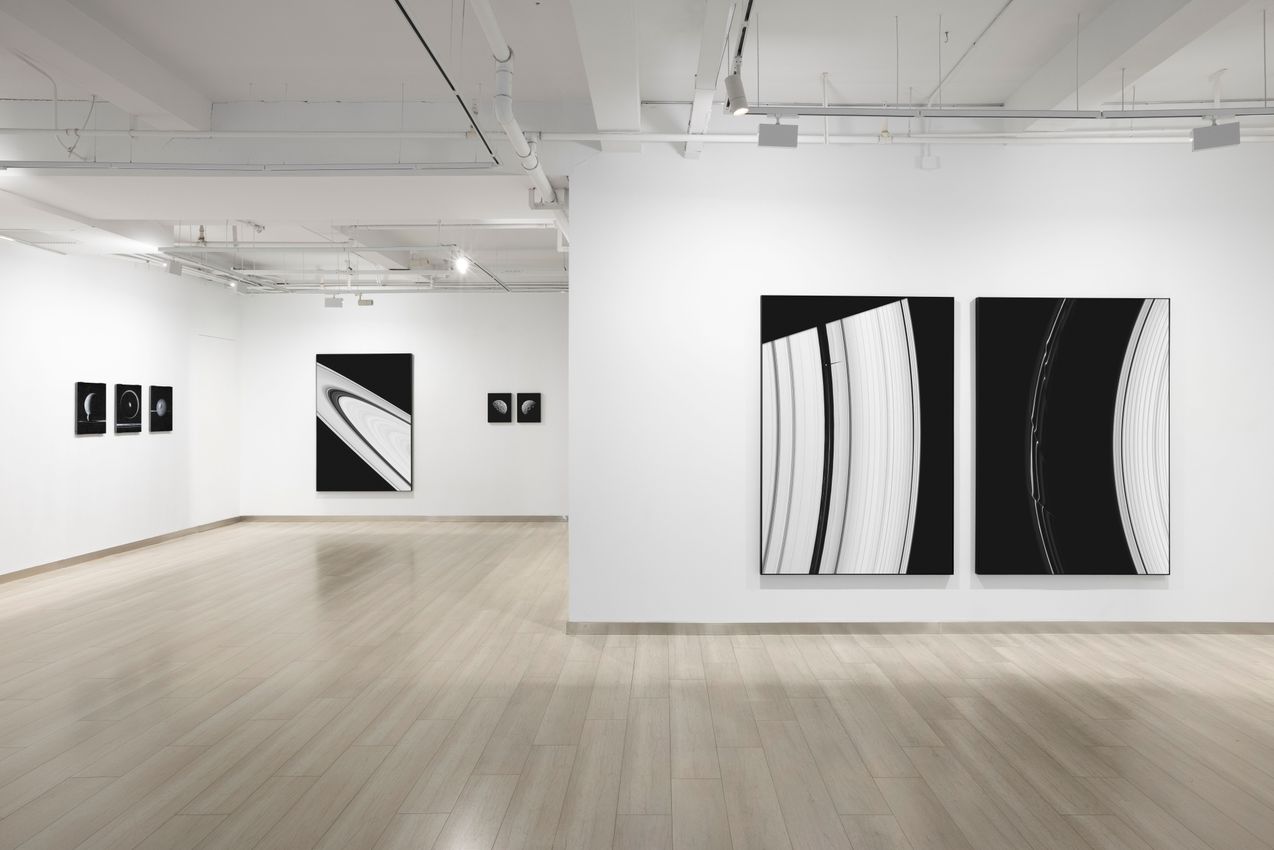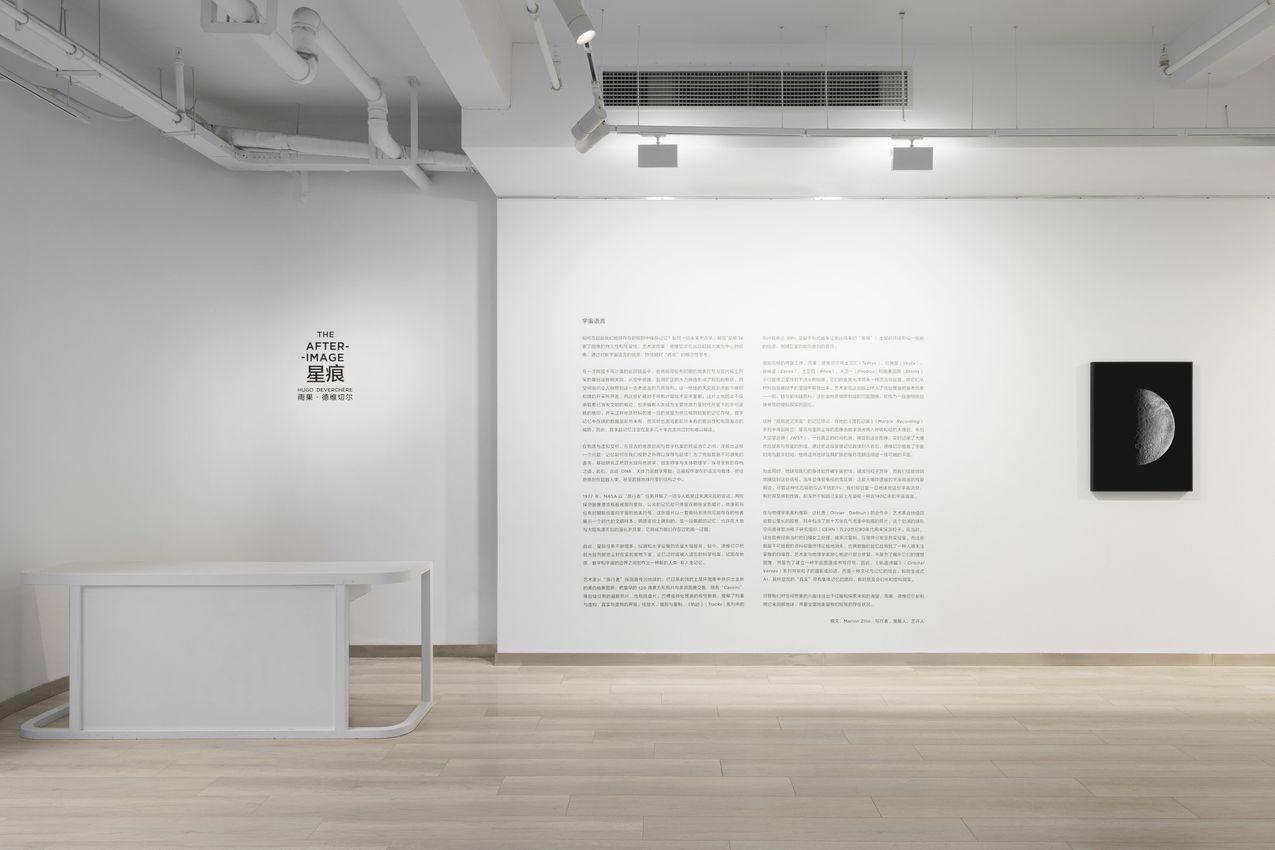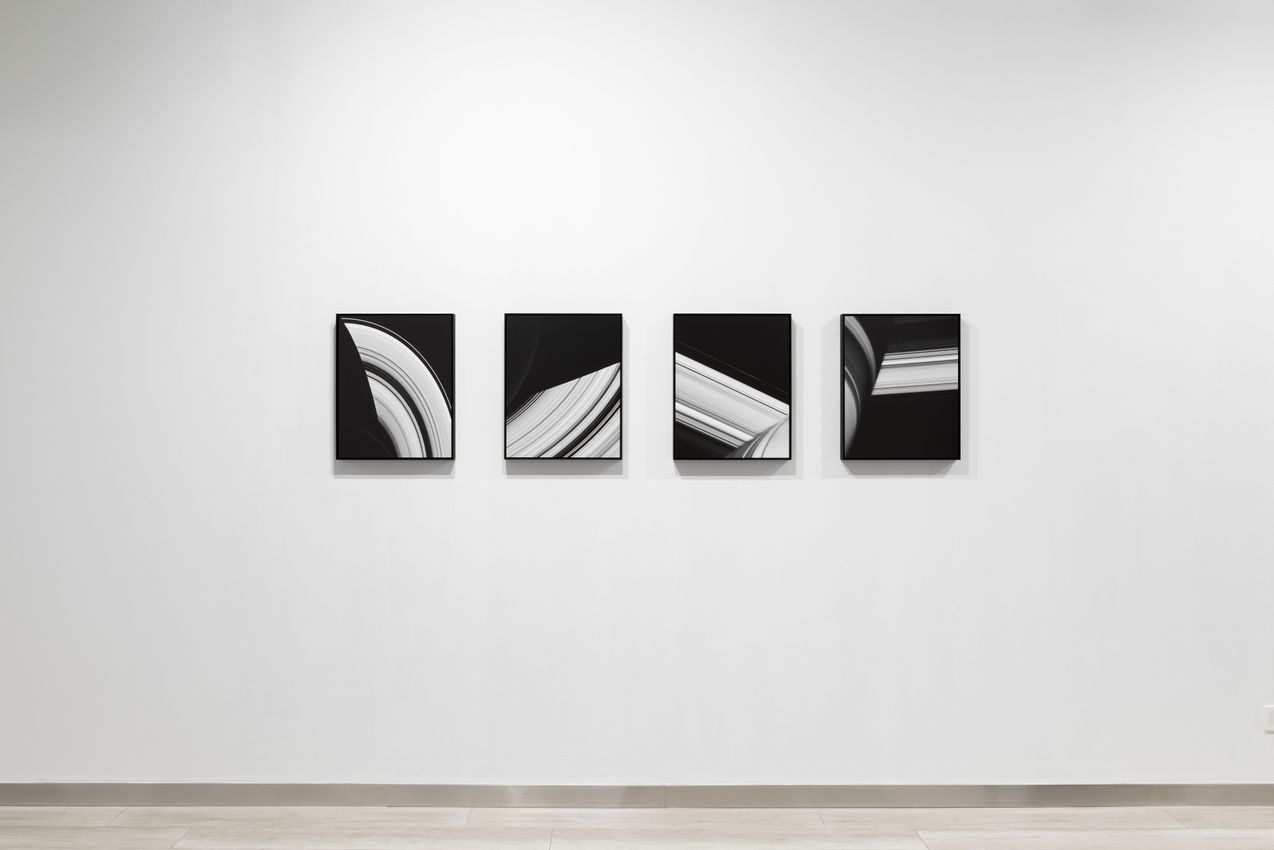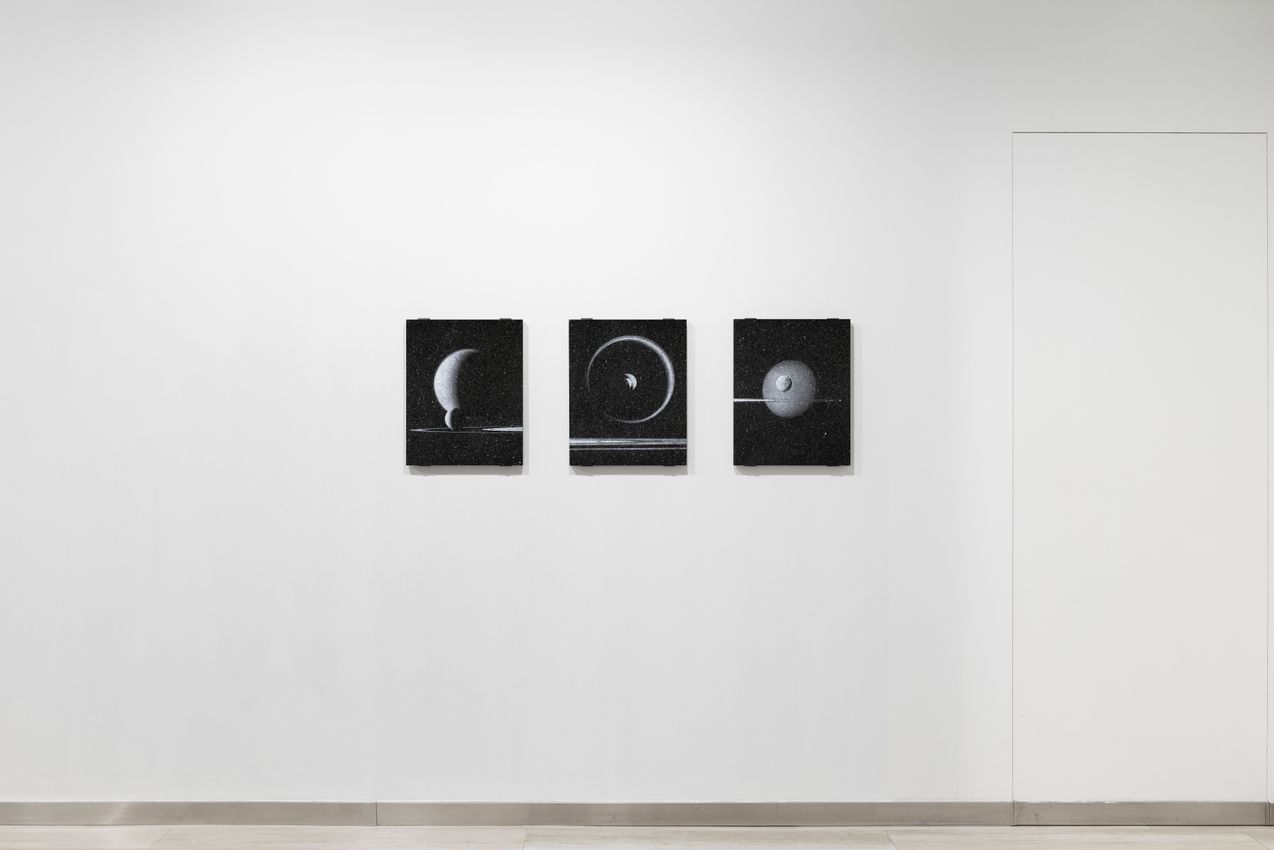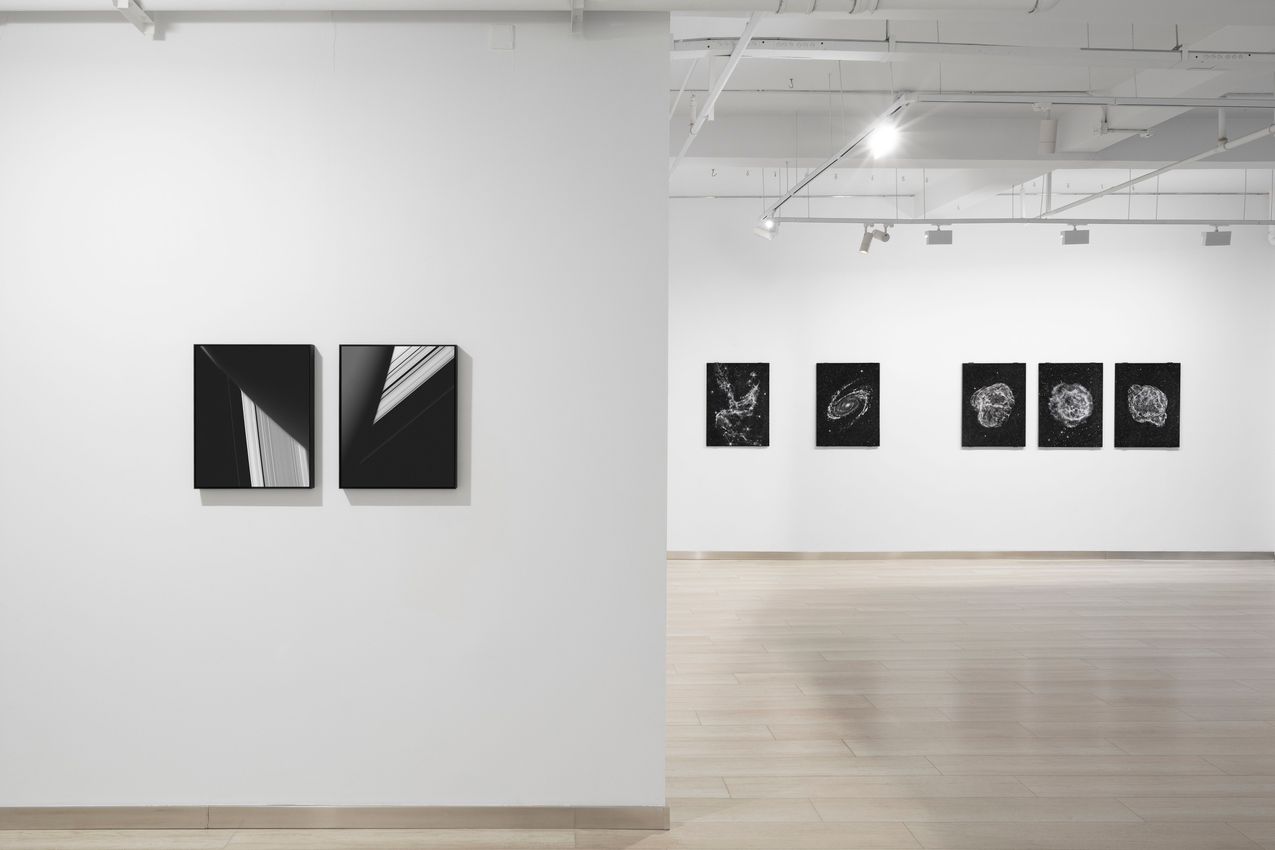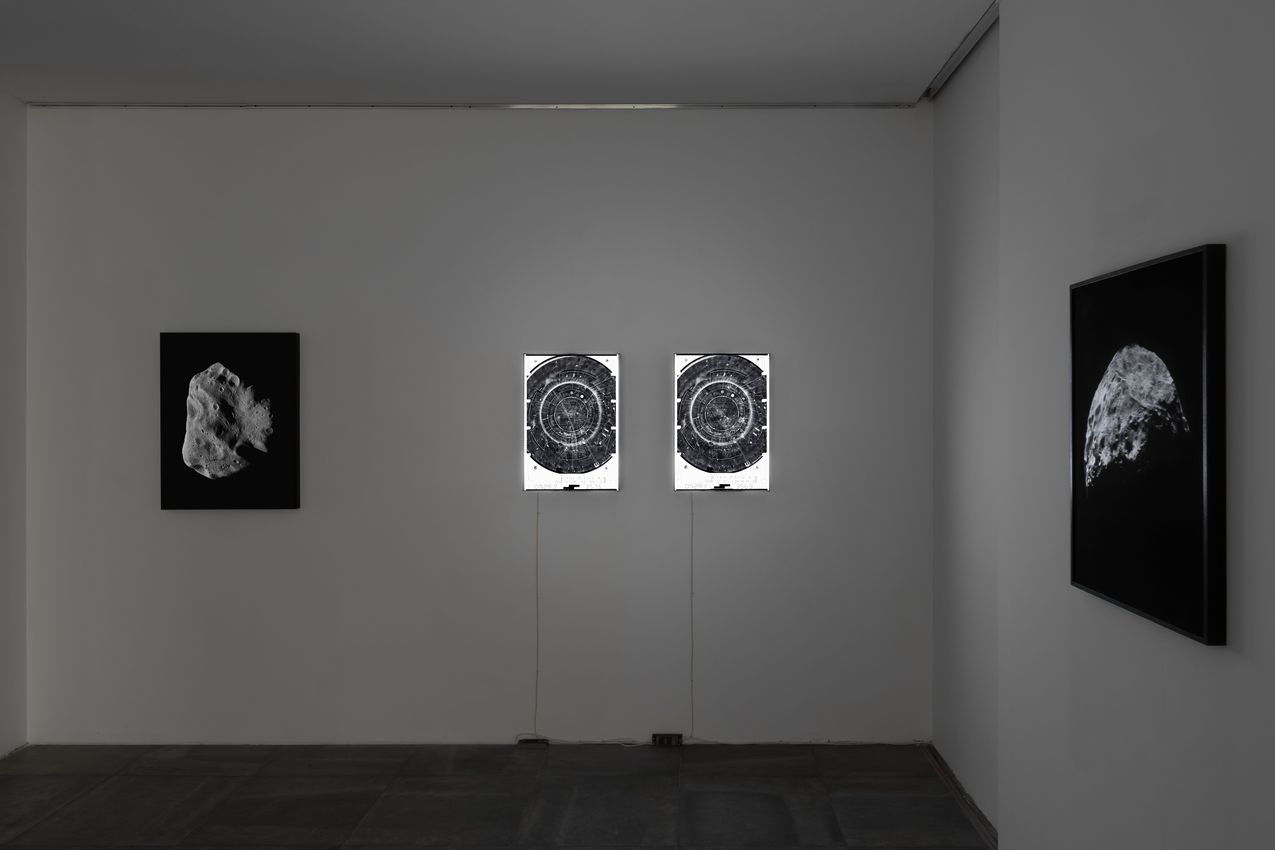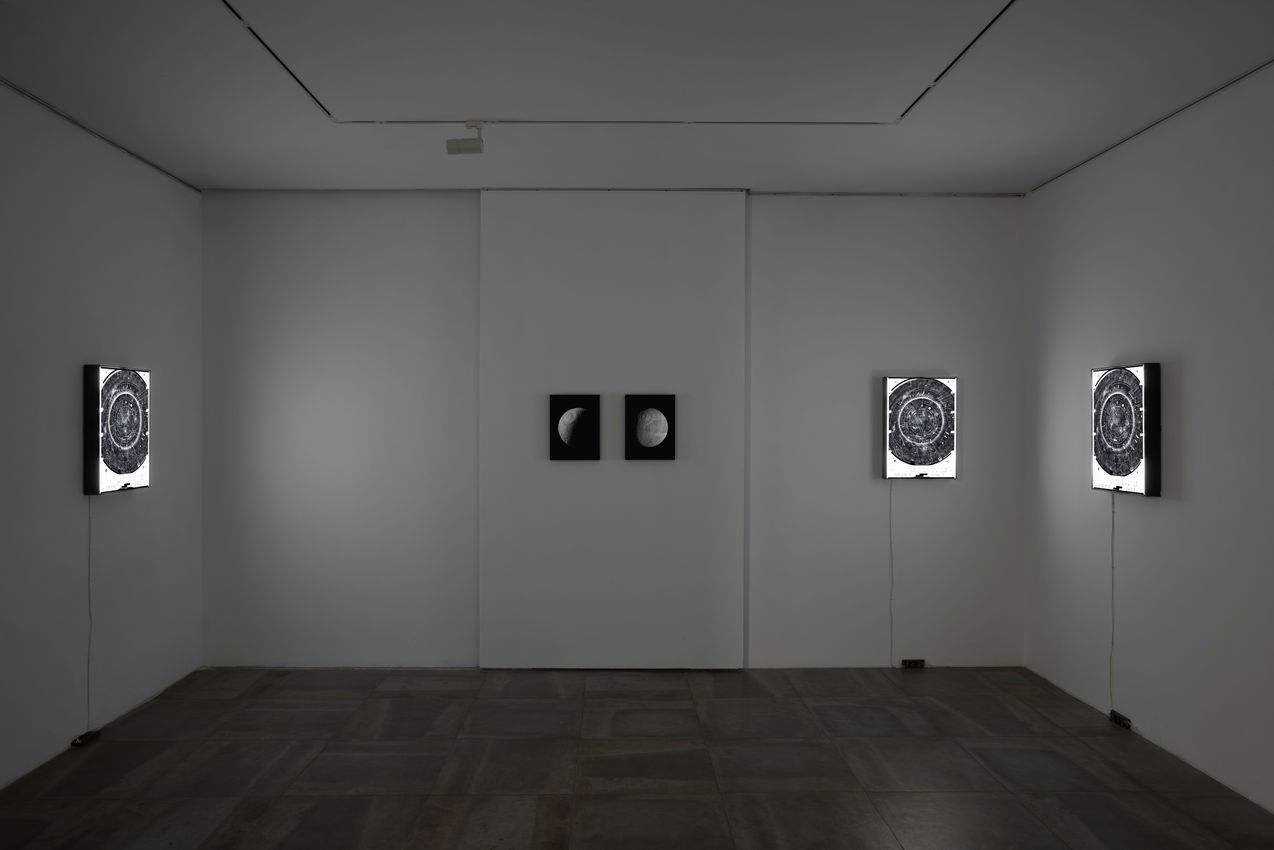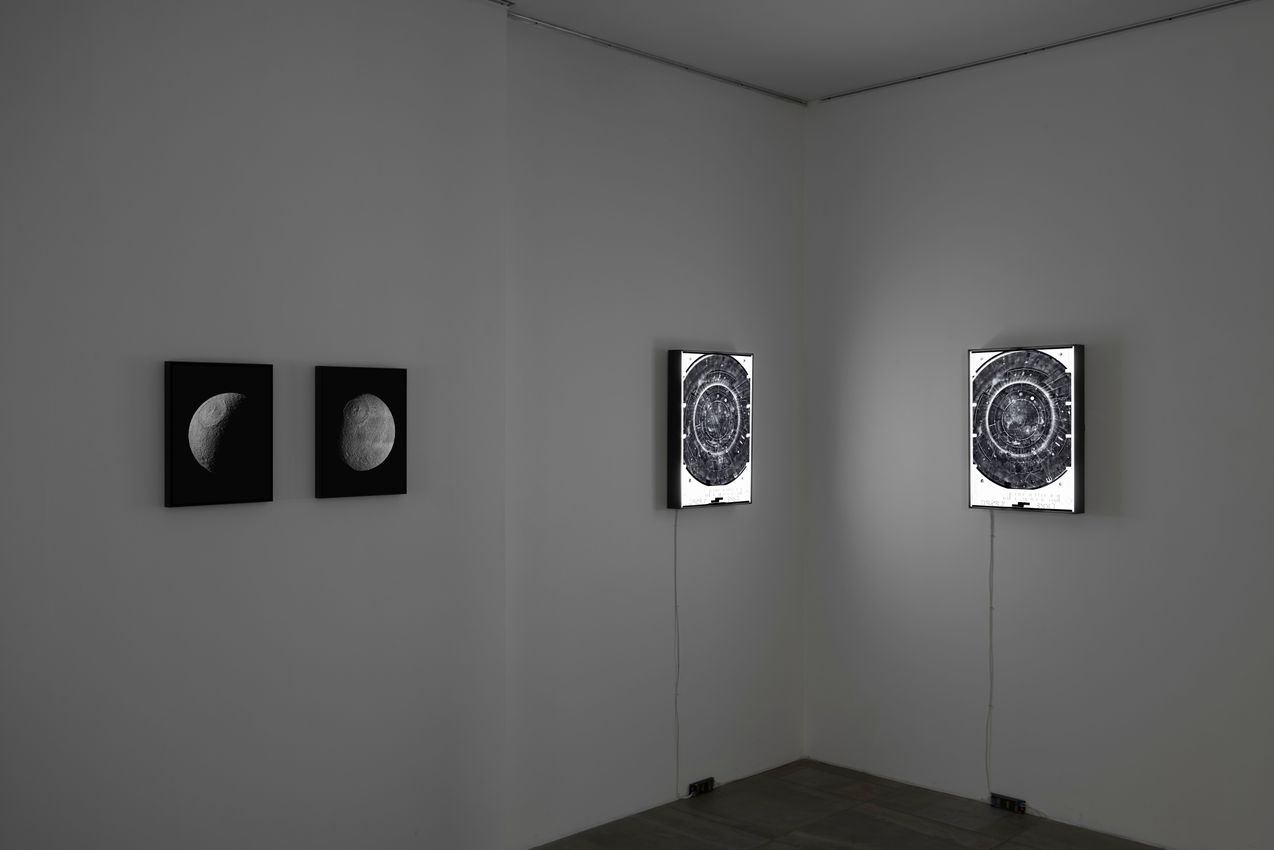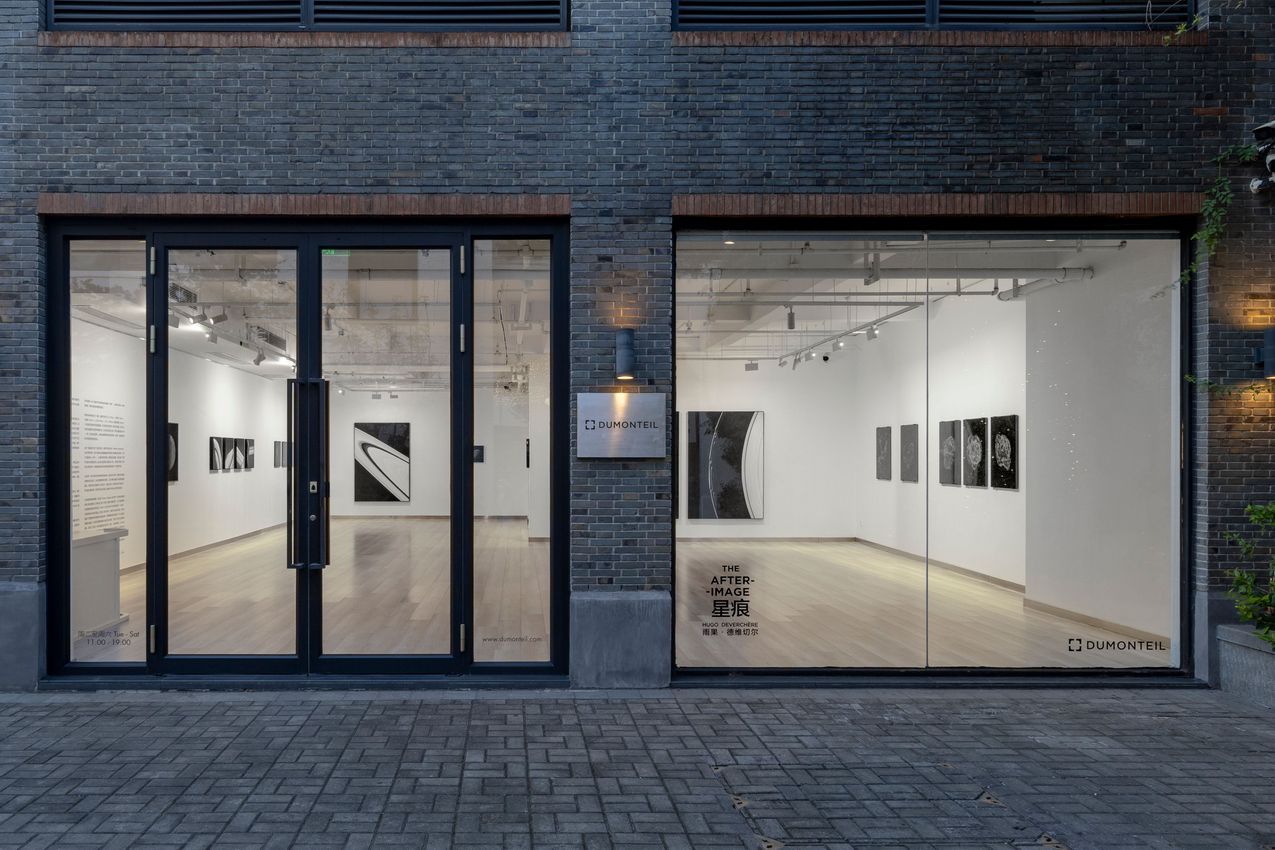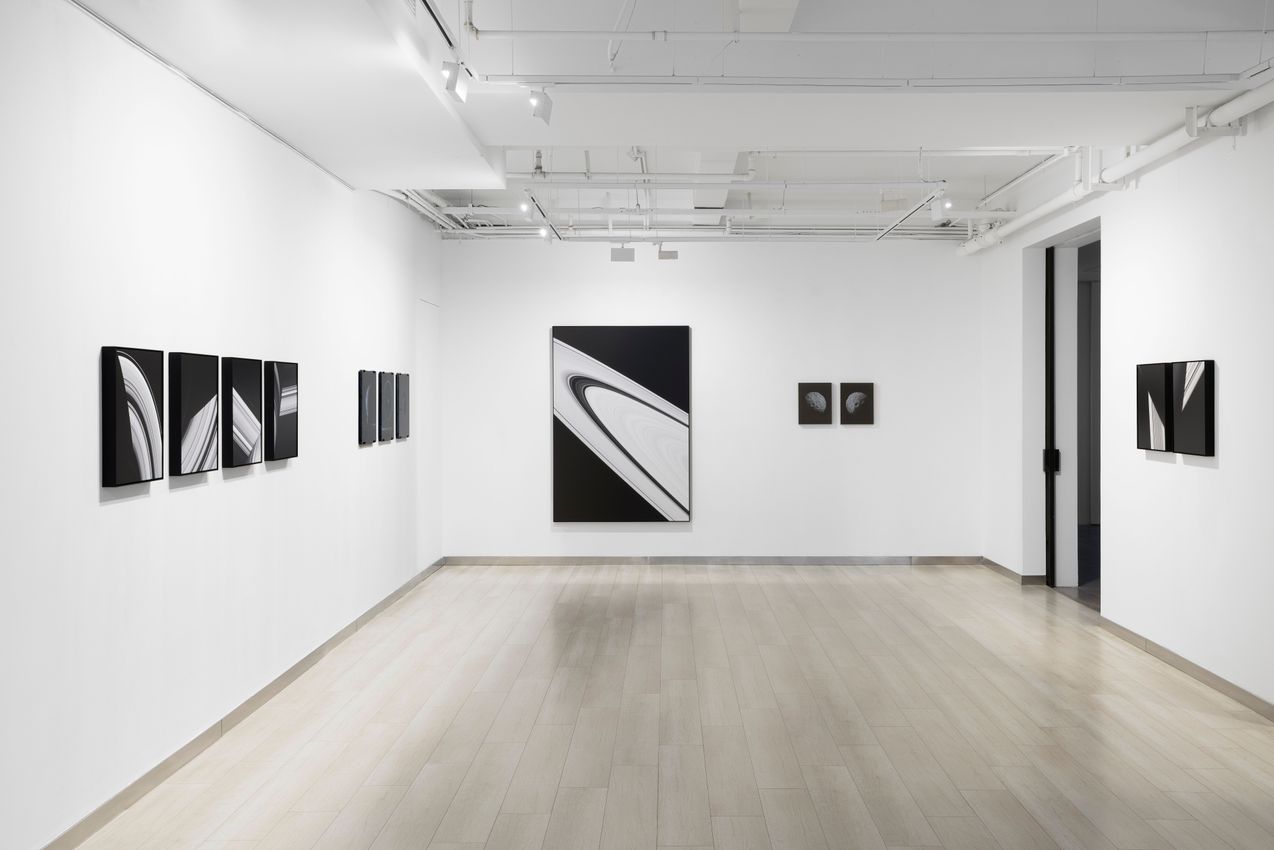
DUMONTEIL is delighted to present AfterImage, the second solo exhibition of French artist Hugo Deverchère in China. Following his acclaimed debut, The Far Side, this visionary artist returns with a compelling collection of new works, integrating geological materials, digital images, and cosmic archives through a cross-disciplinary approach. Presented in diverse forms such as photo etching, laser engraving, and light installations, Deverchère’s creations explore the fragility of digital hypermemory while seeking potential permanent carriers for documenting the present, illuminating the interplay between material, virtual, and cosmic realms.
Lingua cosmica
How can we preserve our memories in the face of a horizon that goes beyond our presence on Earth? Like a futuristic archaeology, The AfterImage exhibition probes the persistence and remanence of images. Here, artist Hugo Deverchère pursues his reflections on notions of representation beyond an anthropocentric vision, through the speculation of new cosmic languages.
As a result of an itinerant residency in the Atacama Desert, he established a link between pre-Columbian geoglyphs and contemporary infrastructures for the extraction of rare earths. From the sky, the hydraulic networks of the Salar’s mines form regular shapes whose spatial organisation is reminiscent of the geometric alignments of this ancient language. This exceptional site for astronomical observation has now seen its landscape excavated by copper and lithium mining, which is now essential for all computing technology. The land thus bears not only the traces of an extinct civilisation, but also the irreversible stigma of an era in which humans became the primary geological force. The only purpose of extracting this telluric material is to feed a very short-term memory. Never before has a technology stored so much data as digital memory, and never before has it been so threatened by its fragility and limited lifespan. As a result, digital hypermemory is doomed to obsolescence and indecipherability within a few decades at most.
In this interplay between the material and the virtual, immemorial geological time and the programmed disappearance of digital archives, the question of the preservation and conservation of memories beyond our horizon arises. To overcome the inevitable loss of data, fundamental research is exploring new archiving methods based on geology, microbiology and astrophysics. Rocks, synthetic DNA, astrophysical or mathematical constants are becoming as potential languages and storage media, embedding information in structures that go beyond the human or even terrestrial scale.
It was this dizzying and perilous exercise that NASA embarked upon with its Voyager program in 1977. Of the two probes sent out like messages in a bottle to the interstellar space, the only thing the public remembered was the golden disk. Like the pre-Columbian geoglyphs that addressed the cosmos, the Golden Record uses an encoding system intended to communicate to potential extraterrestrials a sample of the culture of an era. Engraved on a copper vinyl, this biased memory could be the only trace of our existence, long after the extinction of the Earth and the solar system.
Since then, interstellar missions have multiplied, and the quality of instruments and optics has improved considerably. Hugo Deverchère is now turning his attention to scientific archives that are sometimes obsolete or forgotten in the basements of laboratories, in order to produce a new human-non-human memory, at the frontier between the geological, the digital and the cosmic.
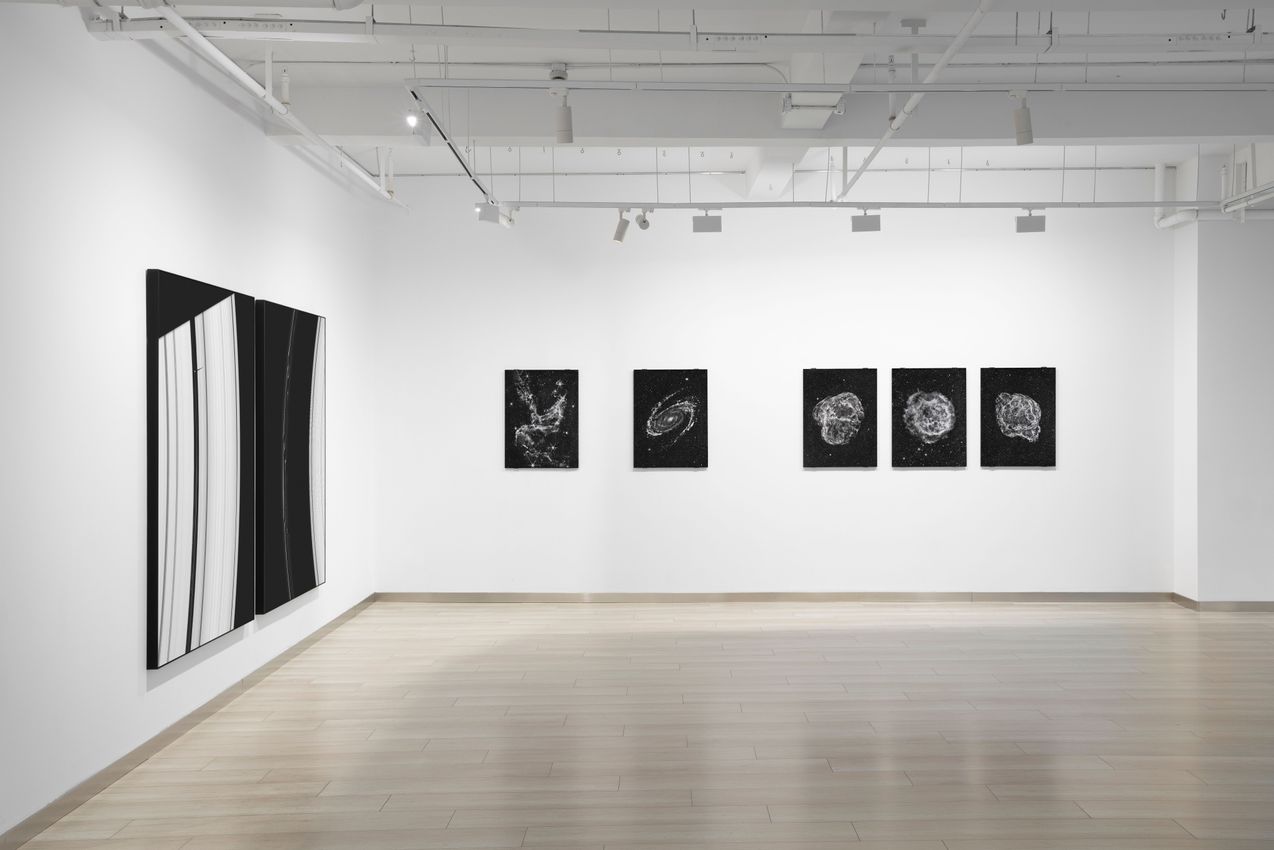
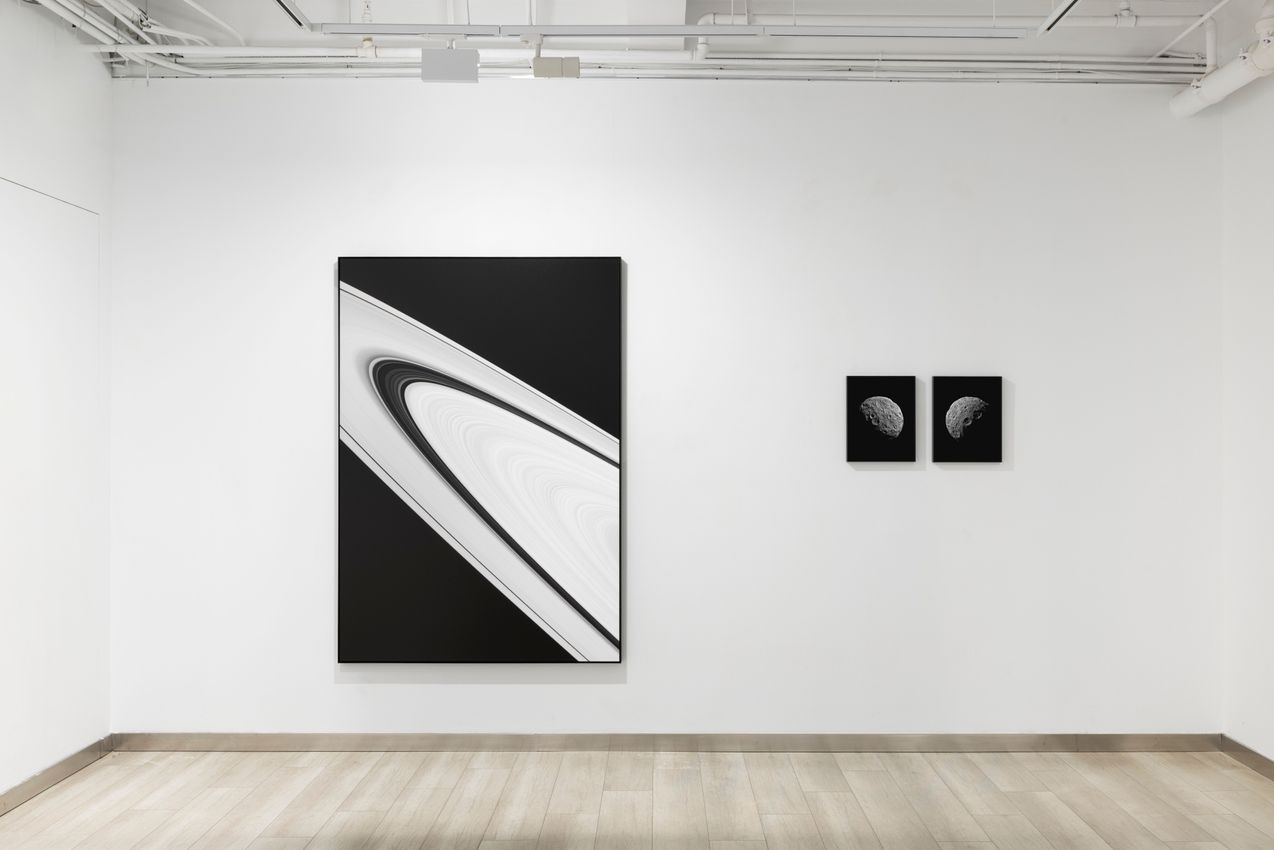
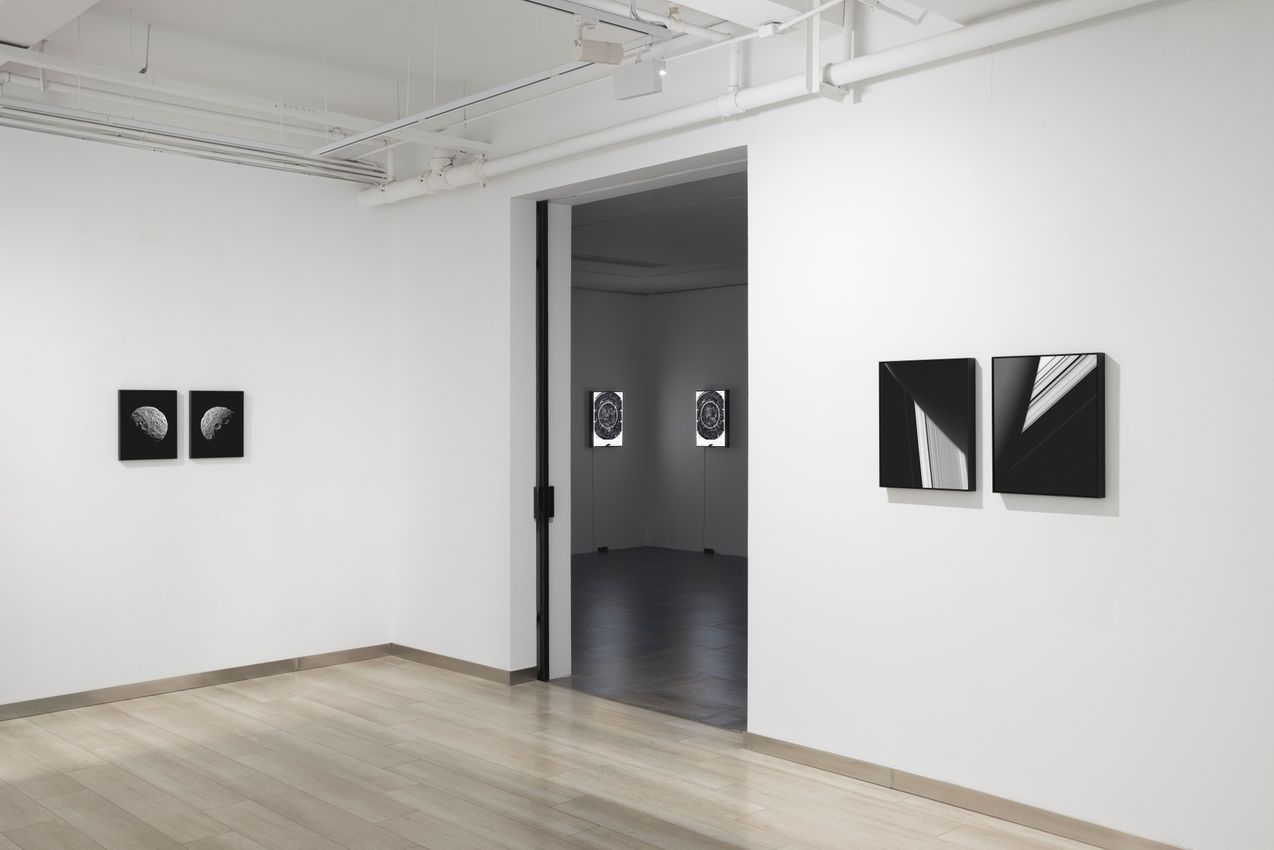
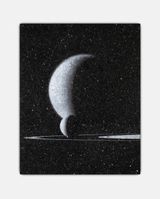
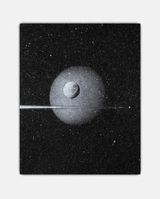
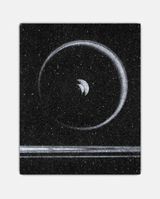
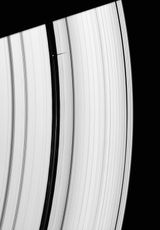
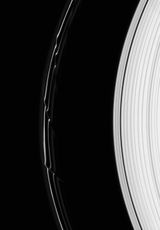
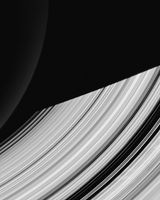
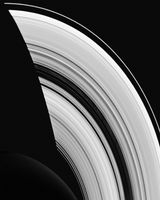
From the deteriorating images of Saturn’s rings sent back to Earth by the Voyager probes, he creates new black-and-white abstractions. To do this, he combines the original 128-pixel square photographs with images from a variety of sources, borrowing from more recent missions such as Cassini, but also from visuals of disks, grooves or microprocessors, blurring the line between archive and fiction, true and false. Magnified, cropped and remastered, the photographs in the Tracks series contain almost 99% of inventions based on formal or symbolic analogies. The rings evoke the lines of a new score, of which Saturn’s moons appear to be the musical notes.
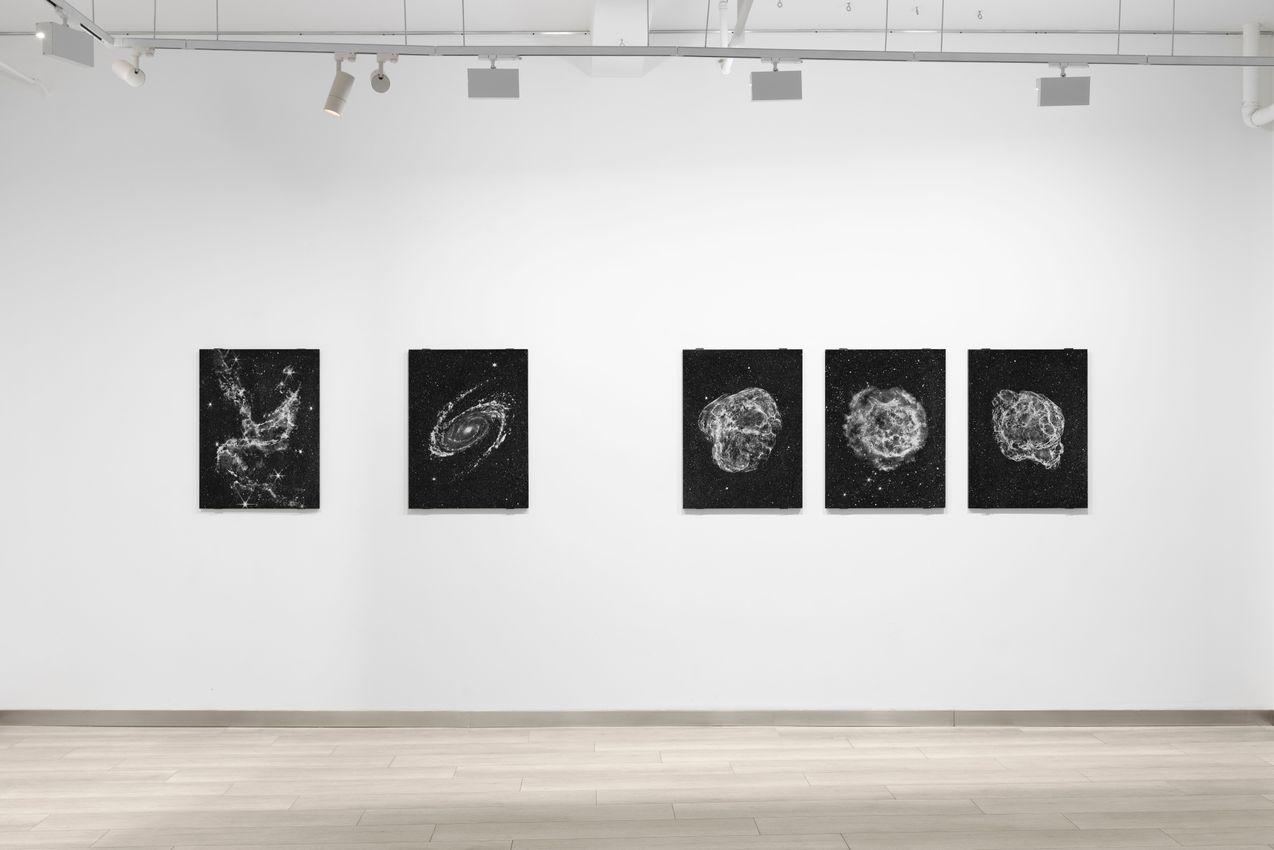
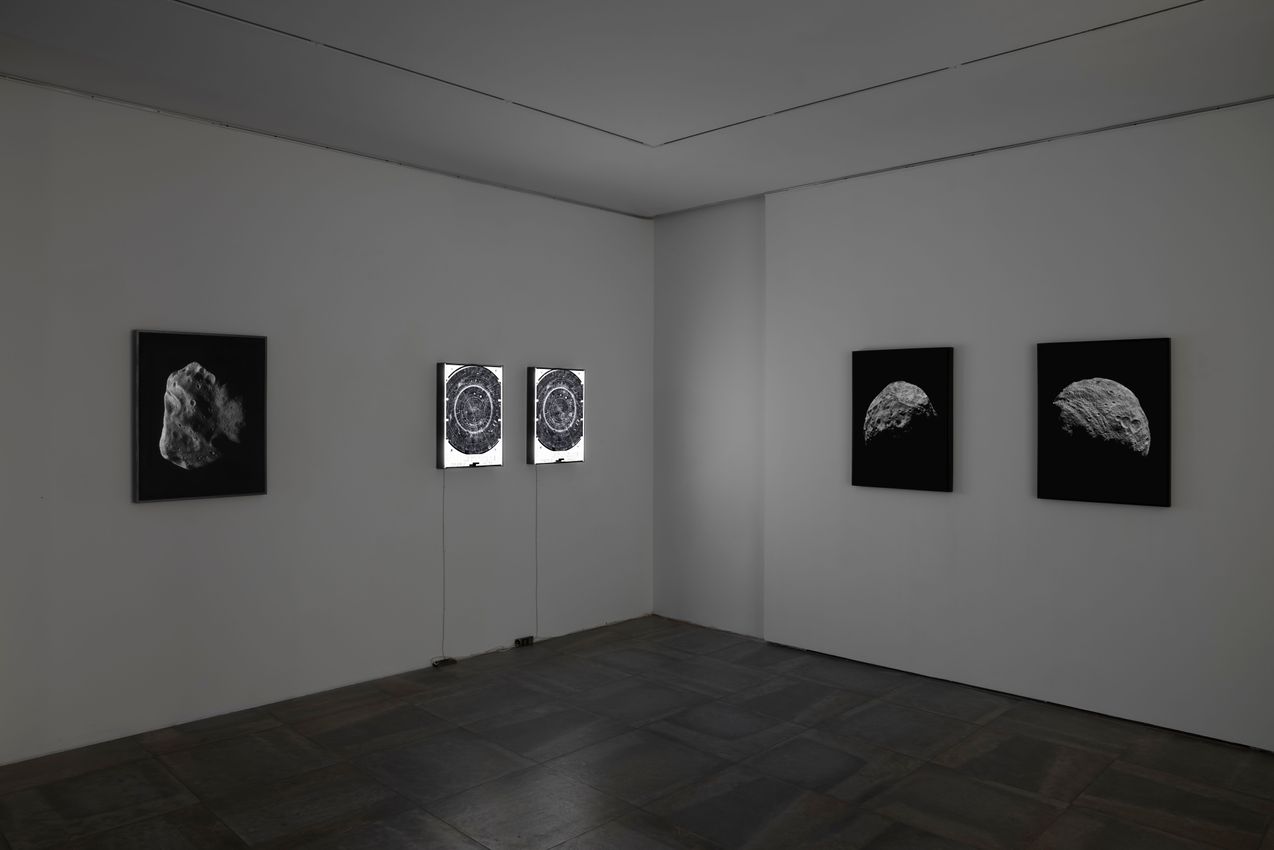
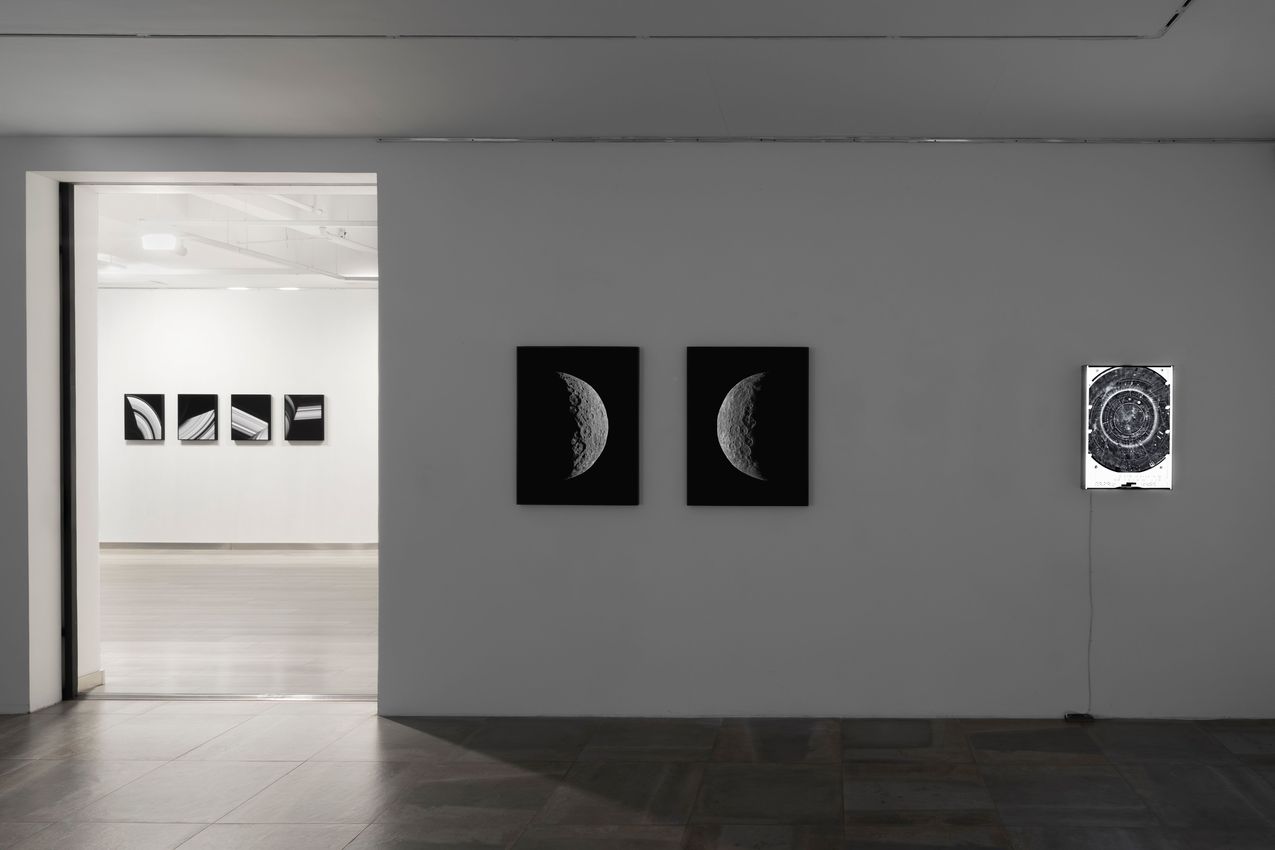
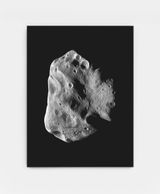
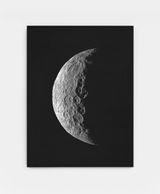
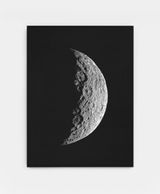
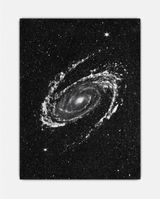
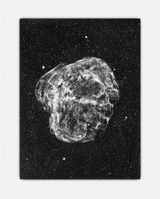
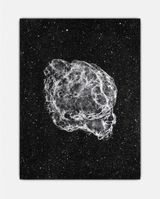
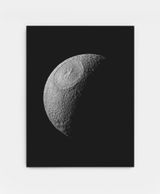
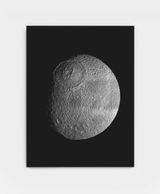
Using a similar restoration process, the moons Tethys, Vesta, Ceres, Rhea, Phobos and Steins are etched on photopolymer plates. Their shiny appearance lends them a form of movement and lightness that tends to extricate them from the presumed fixity and hardness of the material. To these metal matrices, he adds copper, cobalt and silicon oxide pigments, the basic elements of microprocessors. These hollowed-out images, made of geological matter, become reminiscences of a simulated reality written by matter itself. This paradox between volatile and cosmic memory is echoed in his Marble Recording series, in which images of nebulae and interstellar dust are digitally laser-engraved onto marble enhanced with copper and cobalt. The James Webb Telescope (JWST), a veritable time machine, is the source of these images, capturing live the formation of galaxies and stars after the Big Bang. By literally engraving this sidereal memory into marble, Hugo Deverchère bends the cosmic and the digital time. In this way, he compresses the cycle of explosions that gave origin to the Earth and the ores that enable its appearance today.
Meanwhile, the Earth and our bodies are constantly traversed by cosmic rays, magnetic waves and particles whose signals we barely manage to detect. Thus, the snow on our cathode-ray television sets revealed the residual trace of the Cosmic Microwave Background left by the Big Bang. Although this fossil radiation represents only 1% of interference, we have collectively experienced this cosmic experience on a daily basis, sometimes with frustration, unaware that we were in fact contemplating a cosmic language that is almost 14 billion years old.
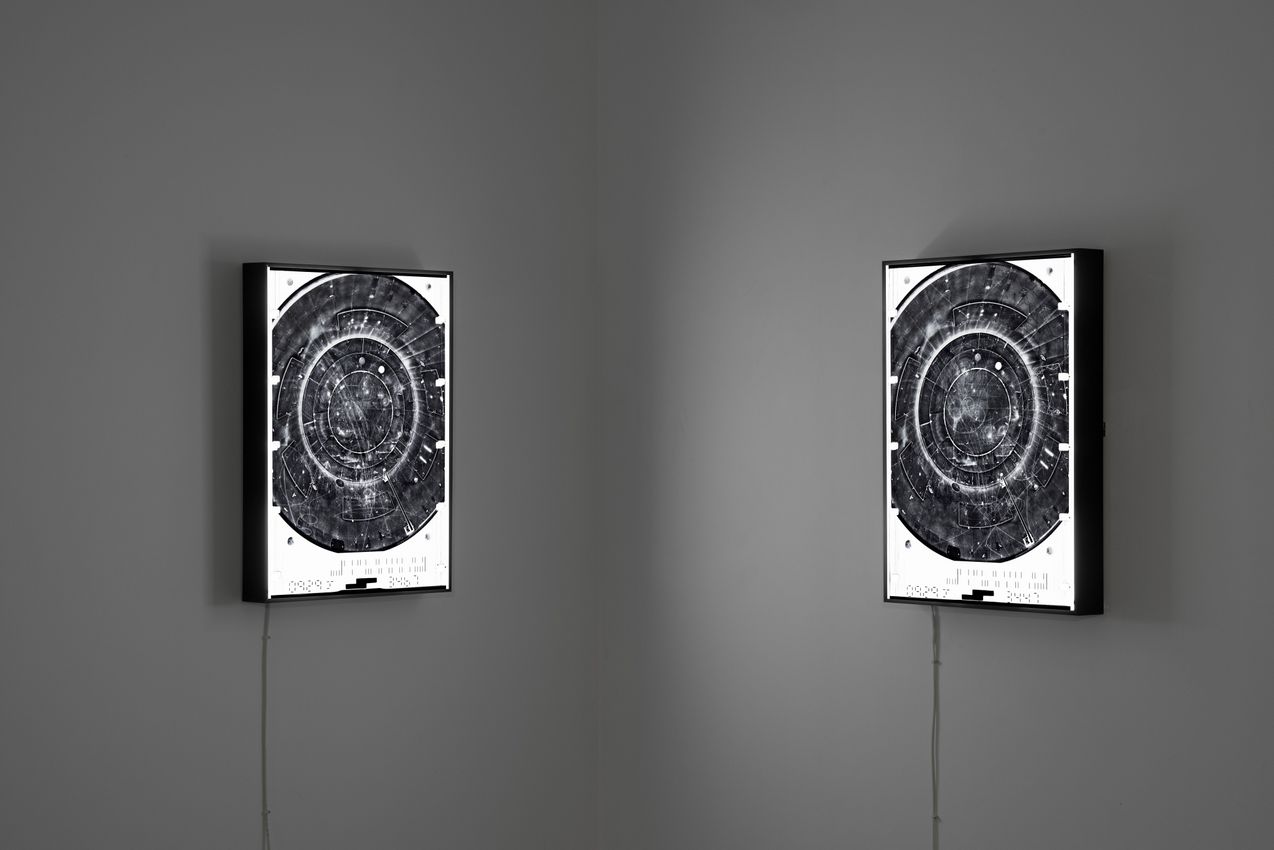
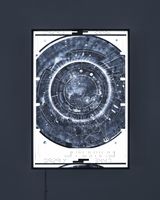
In collaboration with physicist Olivier Dadoun1, the artist will recover kilometres of film rolls containing hundreds of thousands of shots taken in a bubble chamber. This closed sphere-shaped space was used by CERN in the 1980s to detect particles. Processed by scanning girls, repeatedly copied, compressed and distributed to various laboratories, these films in innumerable quantities will paradoxically end up disappearing; as if the hypermnesia of data resulted in a kind of white noise that no human eye is capable of subsuming. Patiently, the artist and physicist will carry out a partial restoration, not to reveal their ideal image, but to establish a kind of cosmic map or grapheme. The Orbital Verses series is therefore not a photograph or direct imprint of particles, but a cultural and memorial synthesis. Like generative AIs, the realism that emerges bears the imprint of a collective memory that sometimes hallucinates and fantasises reality.
Although our interest in the imagination of space is often justified by a desire to conquer and explore the unknown, Hugo Deverchère uses it to reflect back on Earth and to better take the full measure of our ephemeral condition.
——Marion Zilio, writer, curator, art critic


Born in 1988 in Lyon, France, Hugo Deverchère graduated from ENSAD Paris (École Nationale Supérieure des Arts Décoratifs) and from Le Fresnoy - National studio for contemporary arts. His work has recently been exhibited and screened in Palais de Tokyo (Paris FR), FRAC Grand Large (Dunkirk), Pearl Art Museum (Shanghai), the International Film Festival Rotterdam, CPH:DOX (Copenhagen), Ars Electronica (Linz) and the Festival du nouveau cinéma (Montreal).


A respected voice in contemporary art discourse.
Focusing on ambitious storytelling and insightful art-world commentary. Ocula Magazine publishes in-depth interviews, critical essays and timely analysis on the artists, exhibitions and ideas driving the global art world.
Learn more about Ocula Magazine
Showcasing the best of the art world.
Ocula partners with galleries from around the world to highlight their artists, artworks and exhibitions. Gallery membership is by application and invitation, with each member vetted by an independent panel.
Learn more about Ocula Membership

Specialises in the sale of major artworks.
Led by a team with deep ties to the world’s leading auction houses, galleries and collectors. Ocula’s advisory team offers bespoke services to high-net-worth clients from around the world who are looking to acquire the best of contemporary and modern art.
Learn more about our team and services