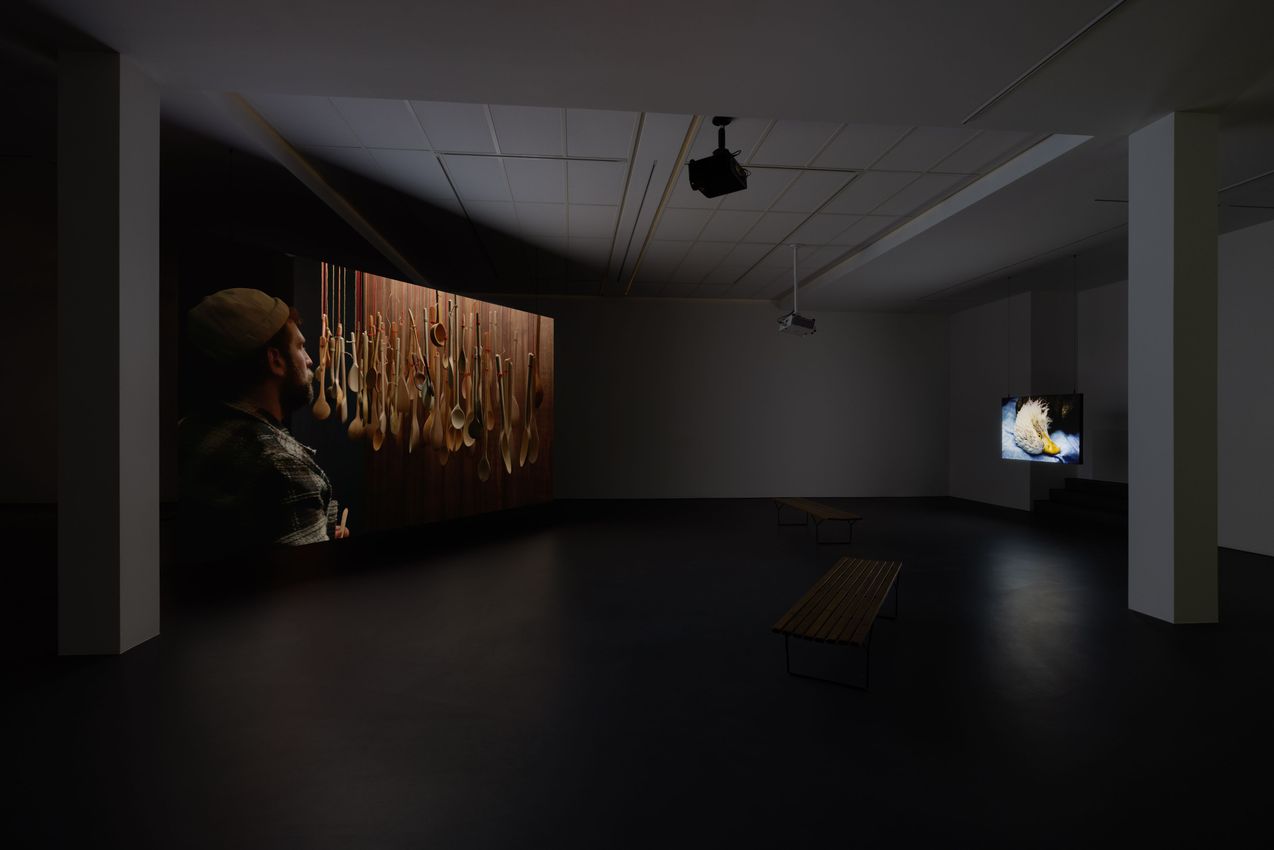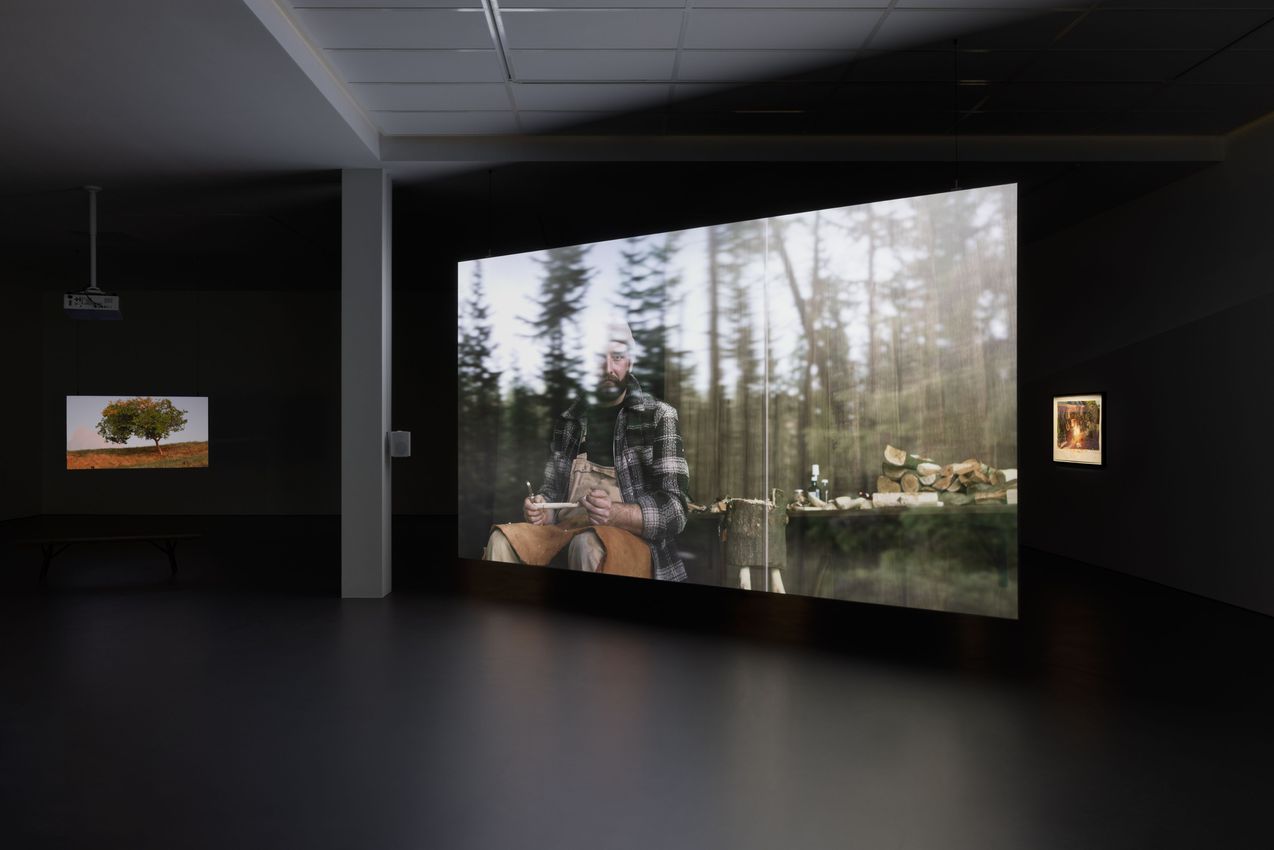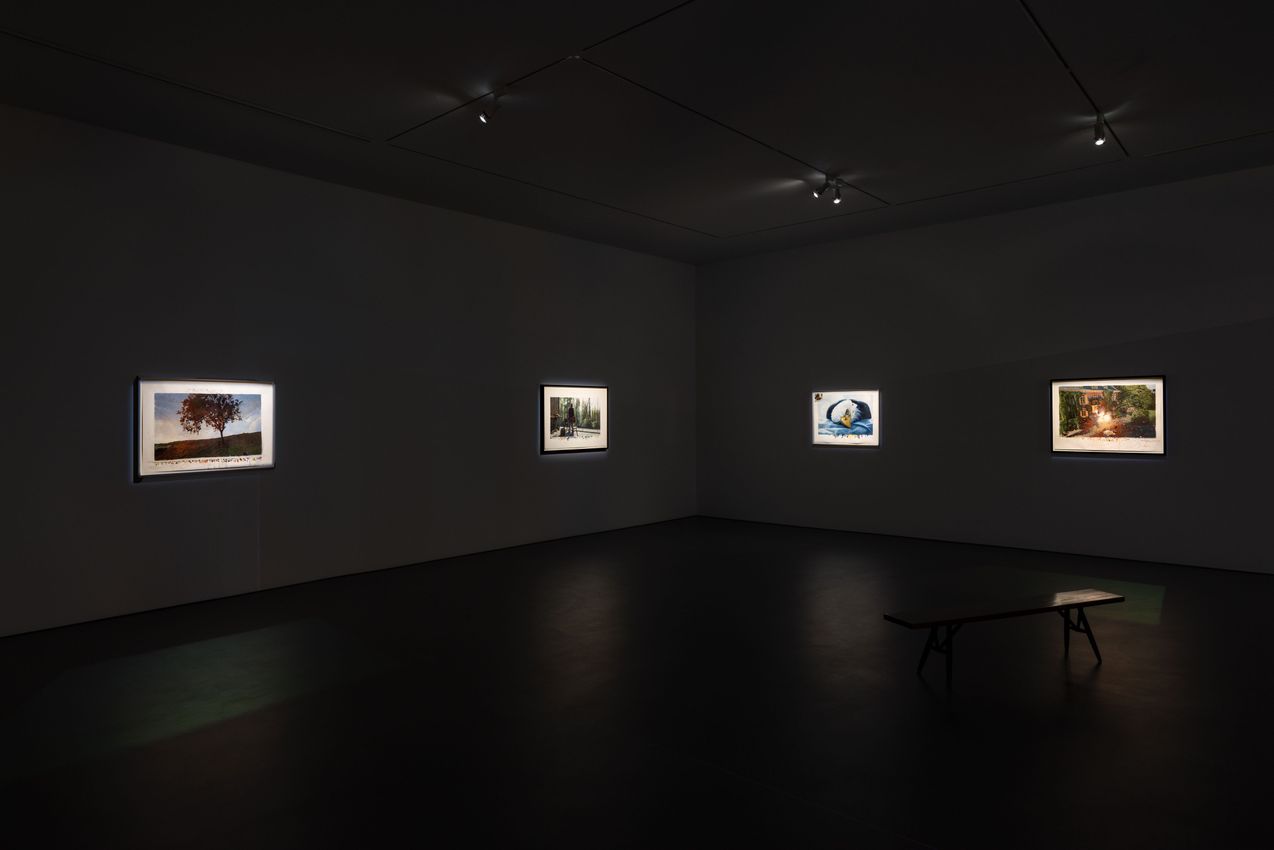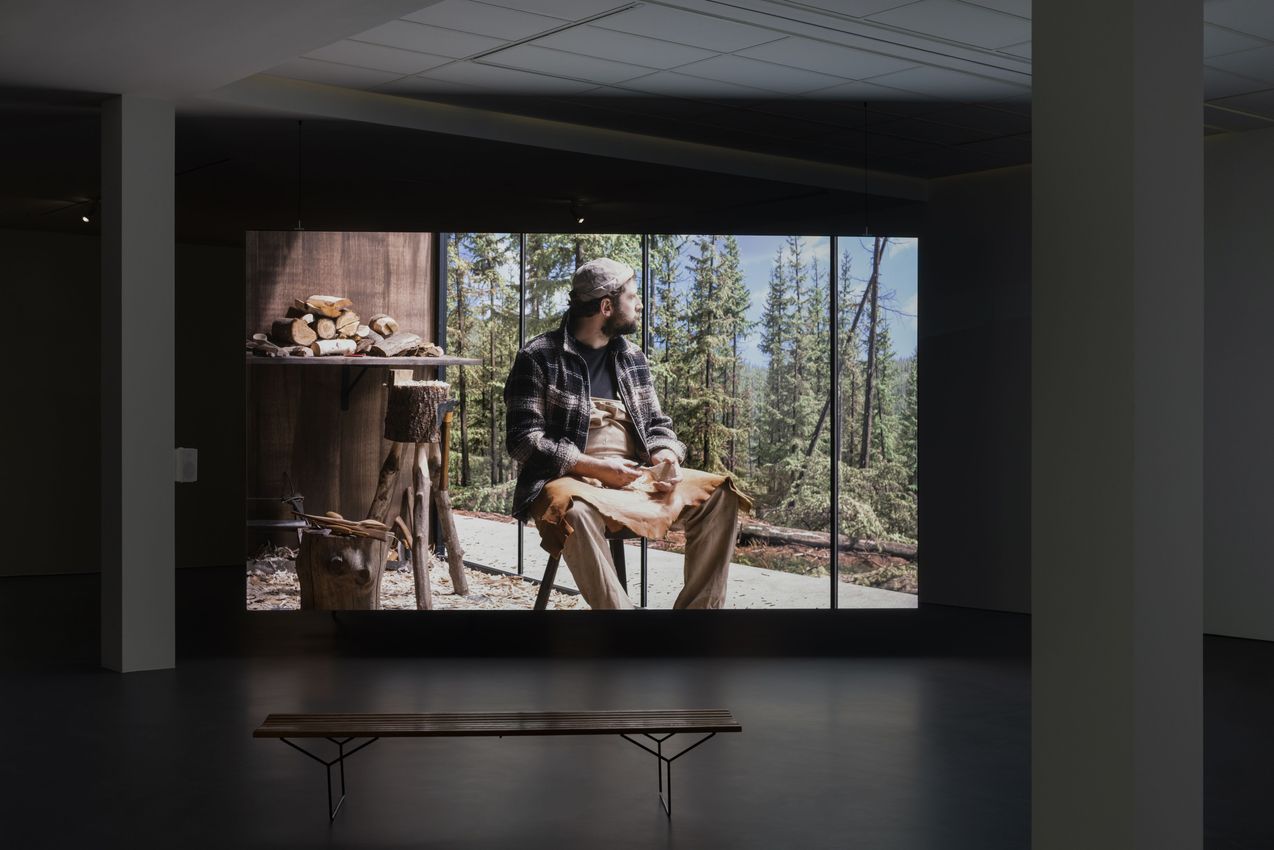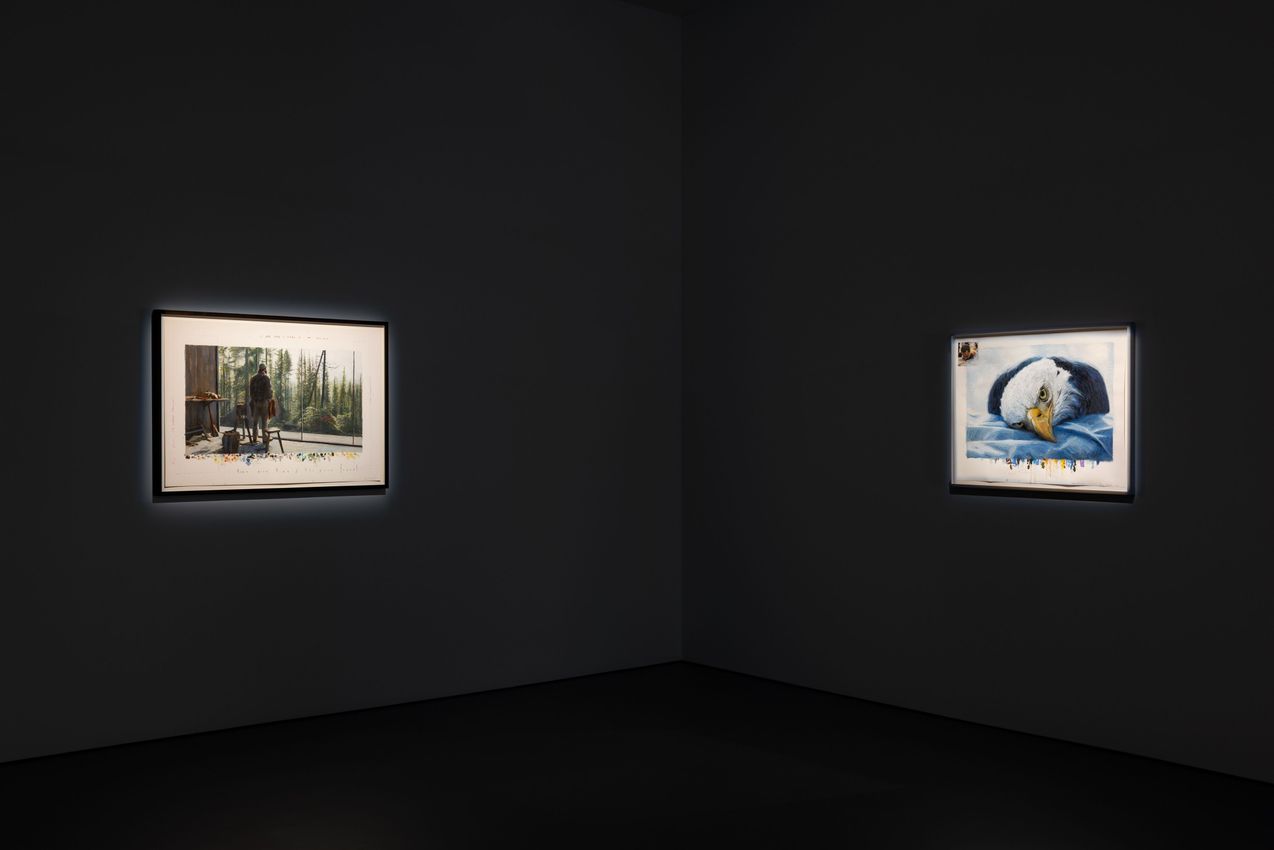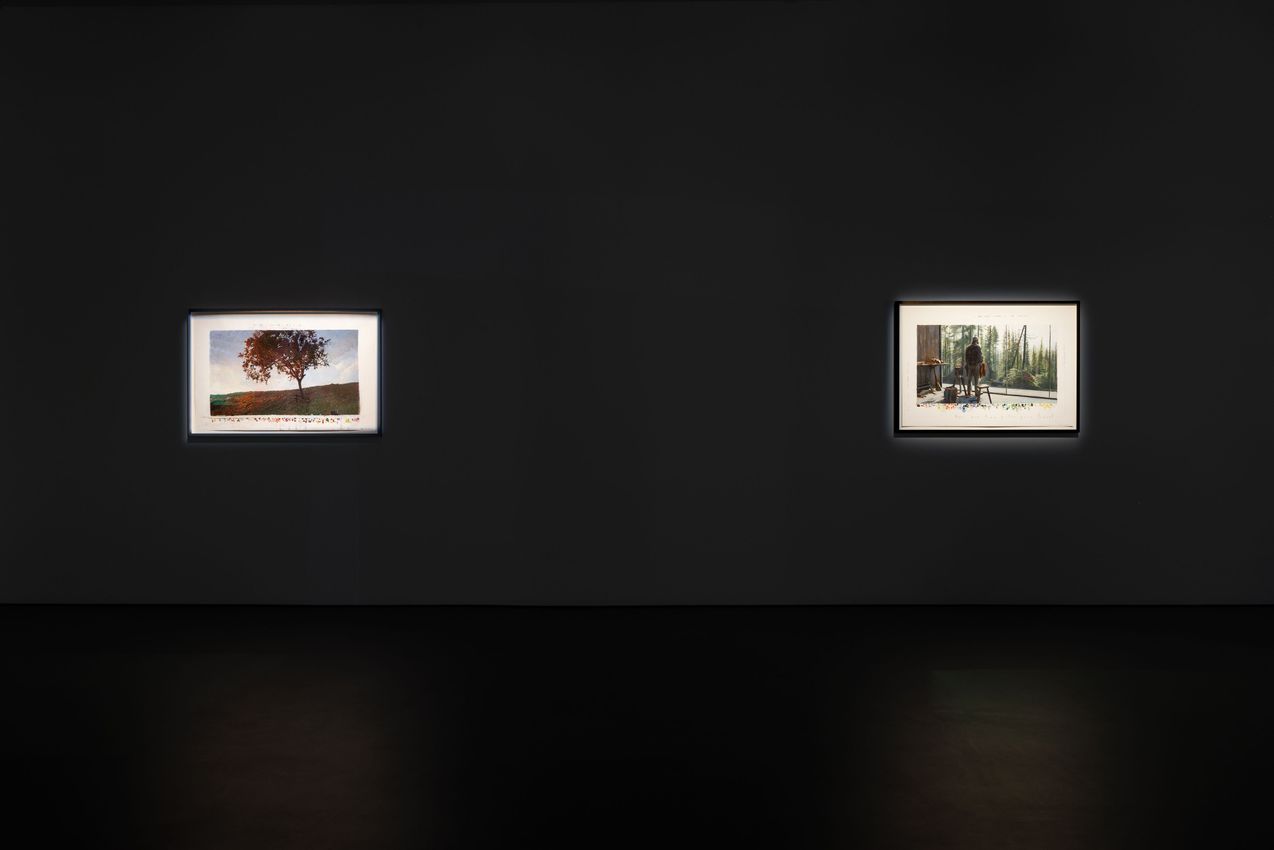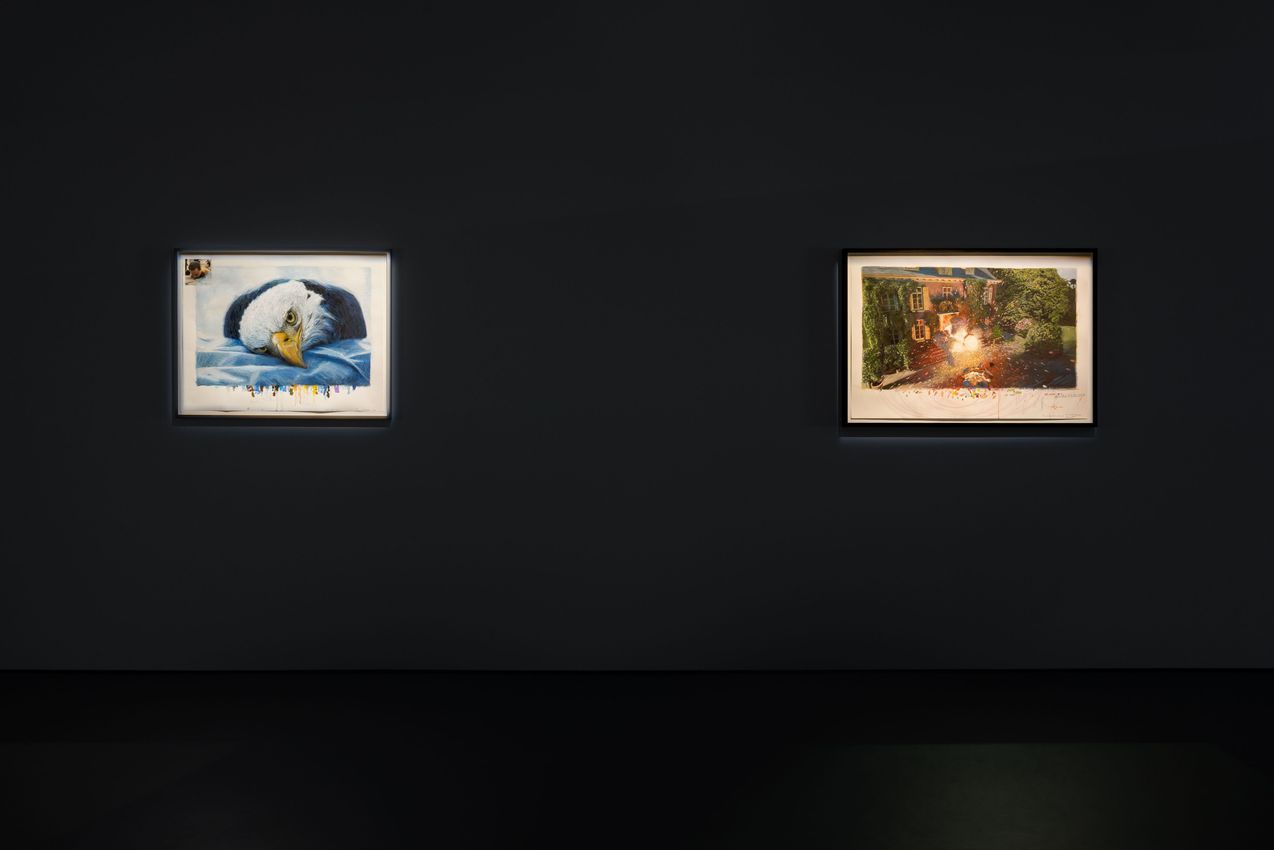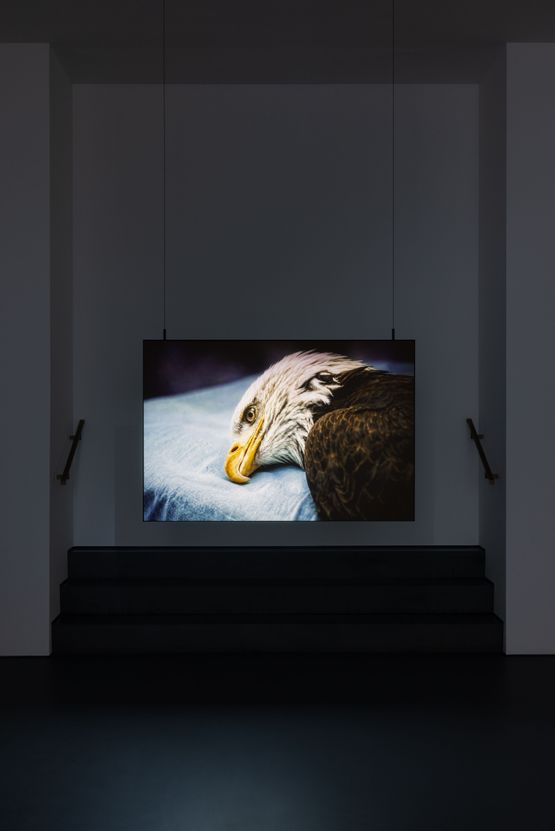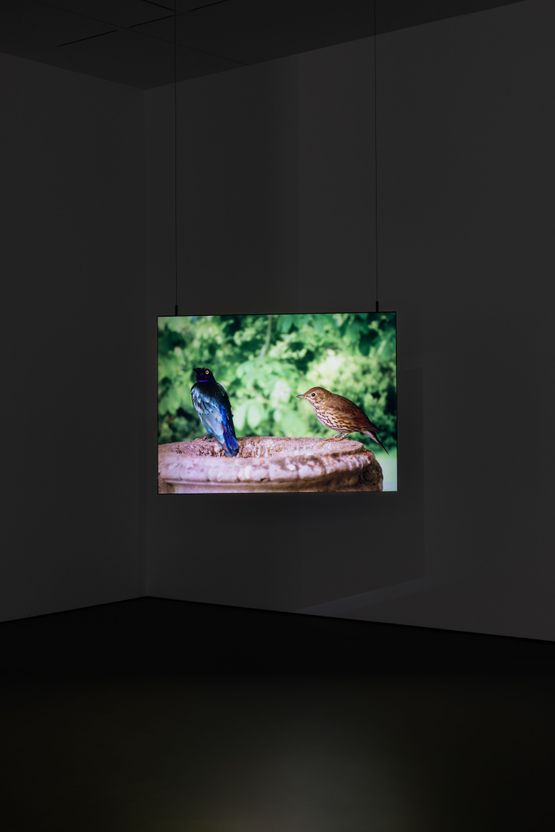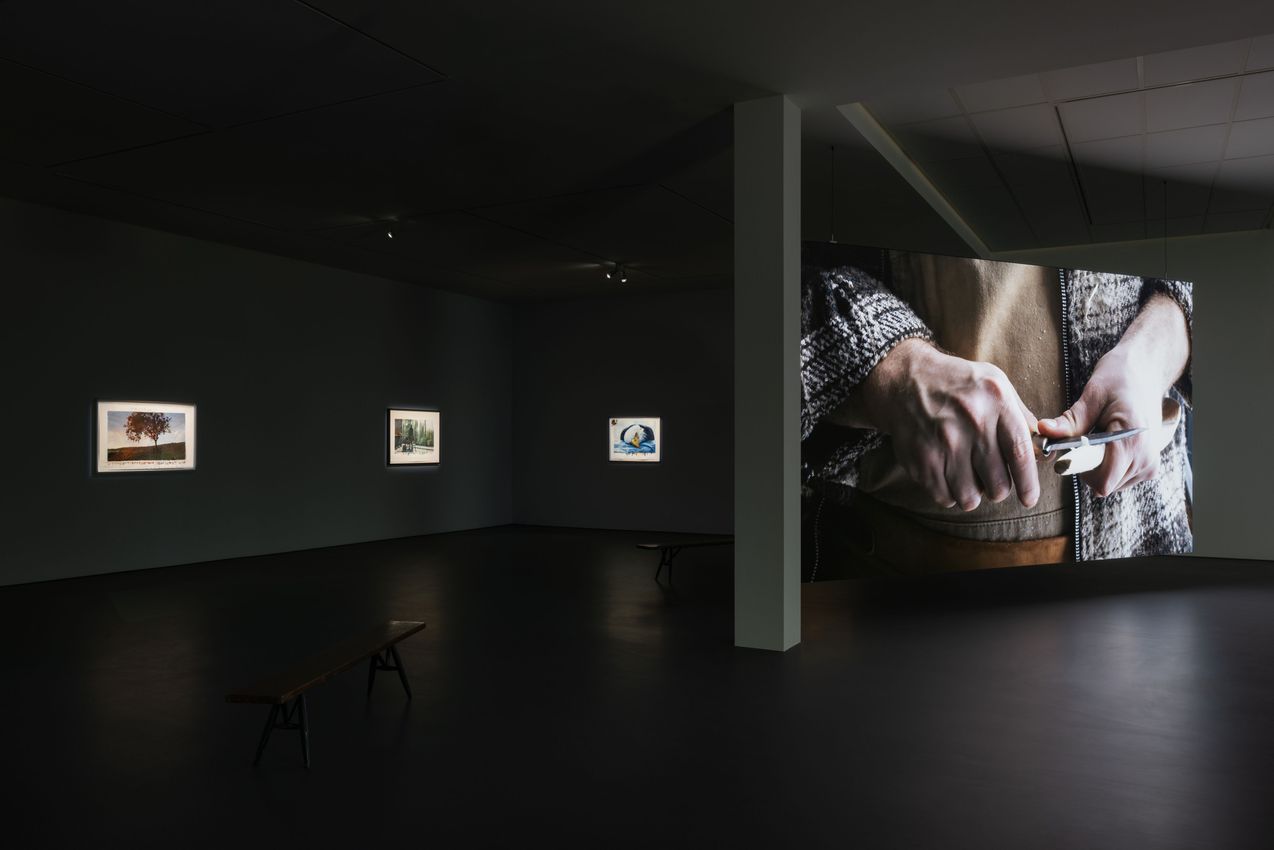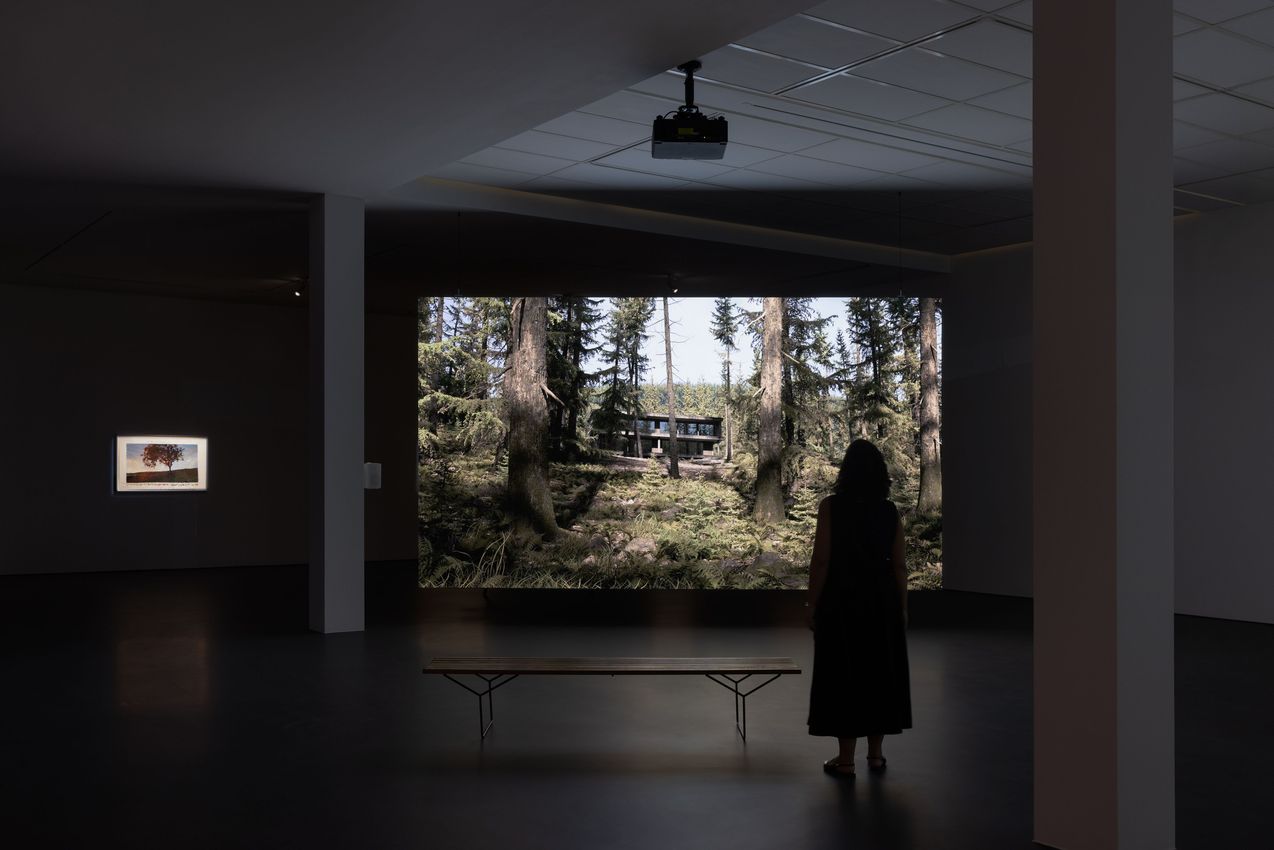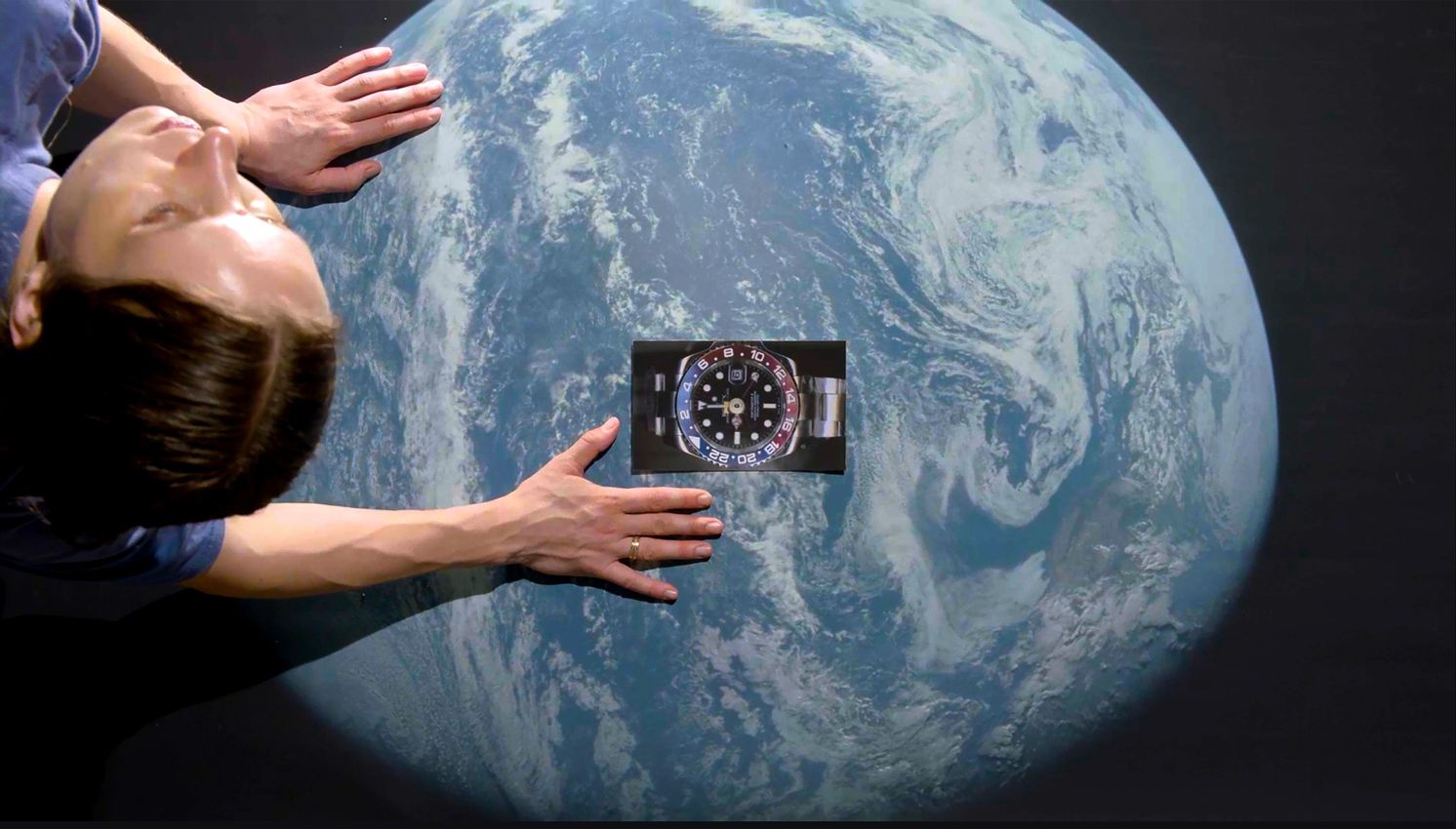


Esther Schipper Berlin is pleased to present a solo exhibition by David Claerbout, the artist’s second with the gallery. Under the title Repose, the exhibition presents four works shown for the first time in Berlin: The woodcarver and the forest, 2025, Birdcage, 2023, Backwards Growing Tree, 2023, and Eagle Eye, 2026. Alongside the videos, a number of works on paper will be exhibited.
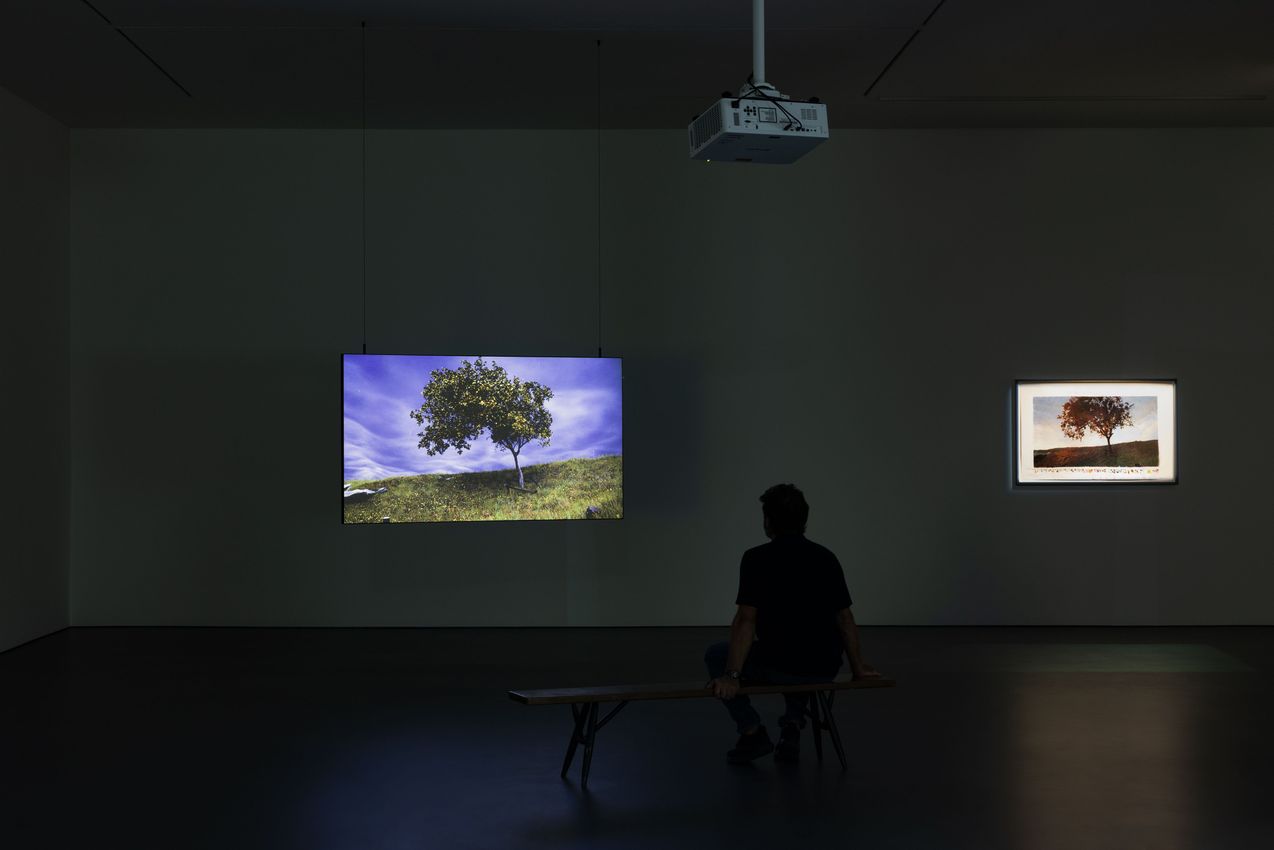
All films on view explore our relationship to nature and the way we have learned to see the world around us. In The woodcarver and the forest we watch a woodcarver whittling down wooden blocks to create one spoon after another; the act appears almost meditative, until we realise every gesture comes at a cost: outside his window, the forest is slowly being reduced to the objects he creates. The lush gardens of a stately home portrayed in Birdcage become the site of a violent eruption, shifting the scene (and viewer) from apparent peace to a state of tension and fear. In Eagle Eye, a bald eagle lies awake but immobilised on an operating table, reversing our familiar association of the eagle as a symbol of strength. Backwards Growing Tree portrays a solitary tree in the Italian countryside, digitally reconstructed and observed over five years. By reversing its natural growth, Claerbout disrupts our sense of time. Repose continues the artist’s long-standing engagement with time and duration. Three of the works – Eagle eye, The woodcarver and the forest and Backwards Growing Tree – unfold over several hours or even several years. These extreme durations introduce a real-time component, aligning the passage of film time with that of the visitor. In doing so, Claerbout brings film time closer to biological time: time that unfolds at the pace of living processes and largely escapes our notice. It is an uneventful, psychologically inefficient film time, one that offers little for the eye to grasp and runs counter to our visual culture, which conditions us to seek constant stimulation and reward.
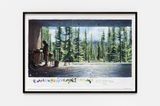
The drawings on view all relate to the video works. An integral part of Claerbout’s practice, each of the artist’s projects is accompanied by a small number of drawings that function as a mix of preparatory studies, notes from the production process, and more conceptual reflections. They are not simply sketches for the films but a way of thinking through them, translating the complexity and temporality of the video works onto paper through light and colour studies and techniques of sequencing and montage.
Rather than partaking in a romanticised idea of nature, the exhibition questions our way of seeing the world around us. Inverting the standard order of what catches our attention and what is considered background, the artist has us focus on what usually remains peripheral or tuned out in human vision. Instead of concentrating on a single event, the viewer experiences multiple processes at once. Thus, Claerbout’s works challenge the single, fixed gaze of the camera and approximate a way of seeing that is more attuned to our being in the world and our physiology: human perception is never singular but emerges through contesting sensations perceived by two eyes, two ears, and two hemispheres, resulting in countless impressions which together offer multiple ways of encountering the world.
Brought into conversation in a darkened space, Repose invites us to contemplate scenes of both destruction and regeneration, potential danger and enduring beauty. Claerbout’s works draw on new technologies to create the effect of hyperreality, a theme that has characterised the artist’s oeuvre long before digital and AI-generated images became ubiquitous. His images suggest an awareness of their status as representations, alerting viewers to the uncertain boundaries between the technical and the organic, between artifice and nature. Our perception, to Claerbout, lives at the intersection of these realms, in the constant negotiation of what we see and what we believe.
Courtesy Esther Schipper.


Originally trained in painting and drawing, David Claerbout is known for his works using photography, video, digital technology and sound. His practice revolves around the concepts of temporality and duration, images suspended in a tension between stillness and movement, as well as the experience of dilated time and memory. David Claerbout says that he ‘sculpts in duration. The definition of duration is different from that of time: duration is not an independent state-like time, but an in-between state.’ With his large-scale video-based installations, the artist makes the viewer a part of the work: whether by establishing a connection between the projected images on the screen and the audience, or by creating a spatial relationship between the screen itself and the exhibition space, or simply, by allowing a process by which ‘a single scene can develop into another by the presence of the spectator and a bit of time.’


Esther Schipper founded the gallery in 1989 in Cologne. In 1997 the gallery relocated to Berlin. Through more than three decades of continuous exhibition practice, the gallery has established itself as a major force not only in Germany but in an international context, with offices in Paris and Seoul and representatives in France, Spain, the United States, Latin America, South Korea, Taiwan and China. The gallery holds up to ten gallery exhibitions as well as multiple off-site projects each year and participates in leading art fairs across the globe.

A respected voice in contemporary art discourse.
Focusing on ambitious storytelling and insightful art-world commentary. Ocula Magazine publishes in-depth interviews, critical essays and timely analysis on the artists, exhibitions and ideas driving the global art world.
Learn more about Ocula Magazine
Showcasing the best of the art world.
Ocula partners with galleries from around the world to highlight their artists, artworks and exhibitions. Gallery membership is by application and invitation, with each member vetted by an independent panel.
Learn more about Ocula Membership

Specialises in the sale of major artworks.
Led by a team with deep ties to the world’s leading auction houses, galleries and collectors. Ocula’s advisory team offers bespoke services to high-net-worth clients from around the world who are looking to acquire the best of contemporary and modern art.
Learn more about our team and services