Press Release

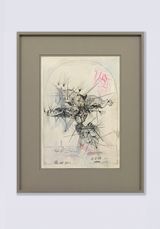
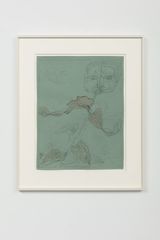
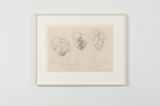
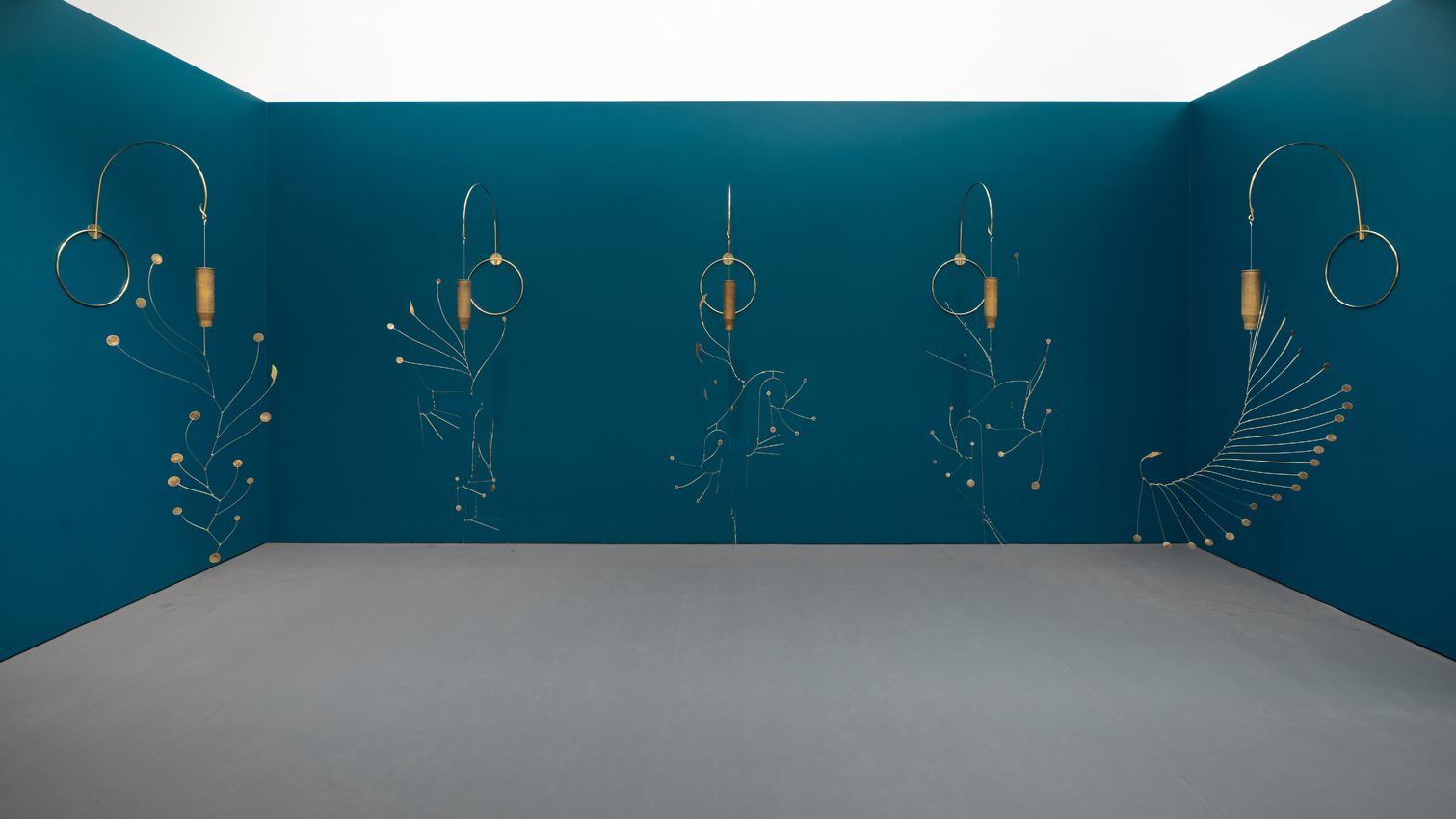
Stefan Bertalan was a pivotal figure in the history of post-war Romanian art. His activities in the 1960s and 1970s—as founder of the influential avant-garde groups 111 (1966-1969) and Sigma (1970-1978)—gained international recognition. Yet, despite a surge of interest in the years preceding his death in 2014, fueled by a small number of artists and art historians Bertalan had allowed entry to his studio, his remarkable later bodies of work remain largely unknown.

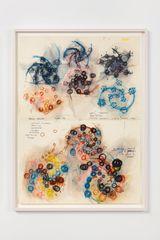
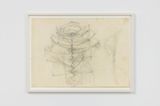
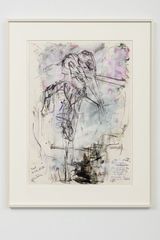
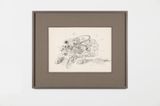
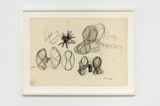
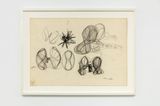
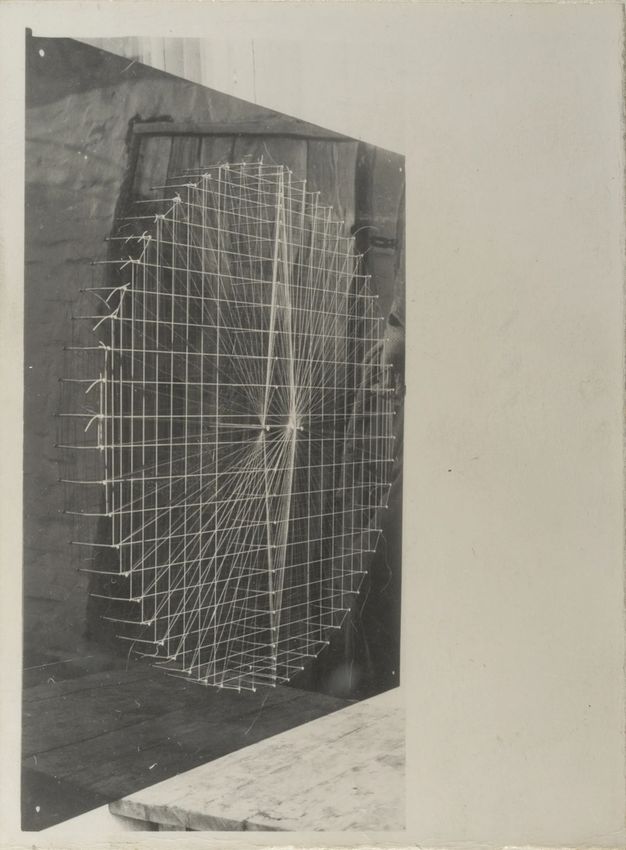
A driving force of the Romanian neo-constructivist avant-garde, Stefan Bertalan’s research into cybernetics and system theory informed his search for overarching patterns and systems in natural forms. Close observation of organic processes and systematic studies of shapes found in organic, vegetal, and mineral forms eventually led to the artist’s development of an interconnected cosmology of all things, constituting Bertalan’s search for a “total science” in which knowledge would be integrated into an ensemble of ethical and spiritual principles.

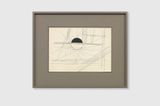
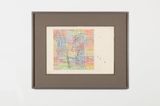
Bertalan’s early geometric drawings, realised in thin light lines on black cardboard, are influenced by the artist group 111’s research of constructivist and Bauhaus artists, as well as the work and writings of Wassily Kandinsky, Paul Klee and Victor Vasarely. The contrast creates the impression of three-dimensionality which also suggests the increasing influence of kinetic art.

111 (or 1+1+1) was a kinetic constructivist artist group active in 1966 - 1969 in Timişoara. Its members-Bertalan, Roman Cotoşman, and Constantin Flondor-engaged in an intense exchange of ideas but produced work individually as well. Based on their engagement with the art and the writings of artists such as Paul Klee and Wassily Kandinsky whose approach included formal and somewhat mystical ideas, and influenced by the formation of other neo-avant-garde groups throughout Europe, the group continuously engaged in an intense research process.

When, after their participation at the Nürnberg Biennial in 1969, Cotoşman remained in Germany, the group dissolved and shortly after Bertalan and Flondor founded a new experimental group, called Sigma. Drawing on the example of the German Bauhaus school, Sigma focused on interdisciplinary research and team work, collectively producing large-scale experimental installations. First to exhibit a multi-media installation, Sigma also first introduced the notion of process-based art into the Romanian context.

After an innovative teaching experience at the Fine Art High School in Timişoara, where, together with the group called Sigma, Bertalan applied a teaching method somewhat lnspired by Bauhaus, in 1971, Bertalan was transferred to the Polytechnical Institute of Timişoara, the location of the School of Architecture, part of the Faculty of Civil Engineering. In this new context, he taught a course on the “Study and Structure of Form”, which also included designing classes focused on an experimental design. (Ileana Pintilie)

Read More

Selected Works

Loading...

Also Exhibiting at Esther Schipper

Address
16 place Vendôme
Paris
France
Opening Hours
Tues - Fri, 11 am - 6 pm
Saturday by appointment
(1)
Paris Esther Schipper Paris, 16 place Vendôme
Esther Schipper Paris
16 place Vendôme, Paris, France
+33 142331767

Opening hours
Tues - Fri, 11 am - 6 pm
Saturday by appointment
The art world in focus