Press Release

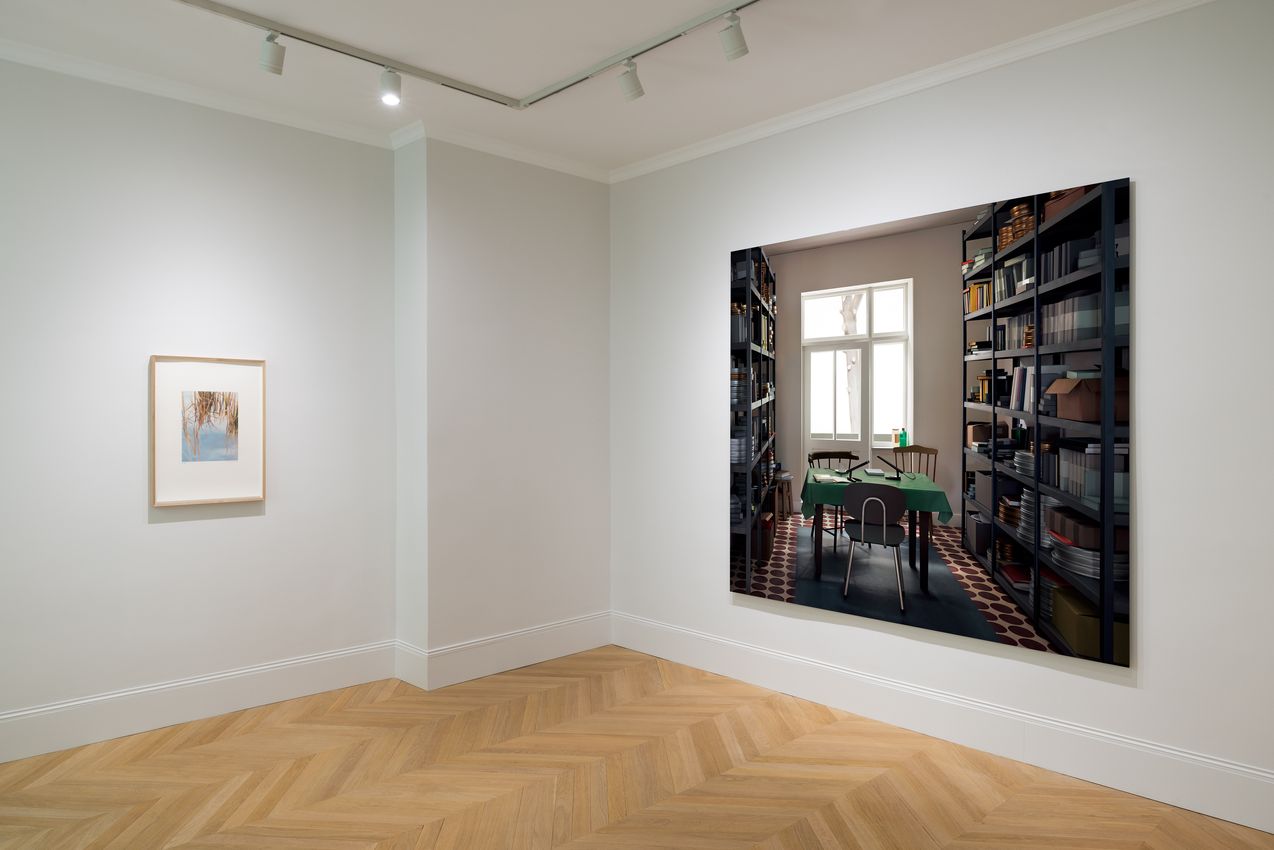
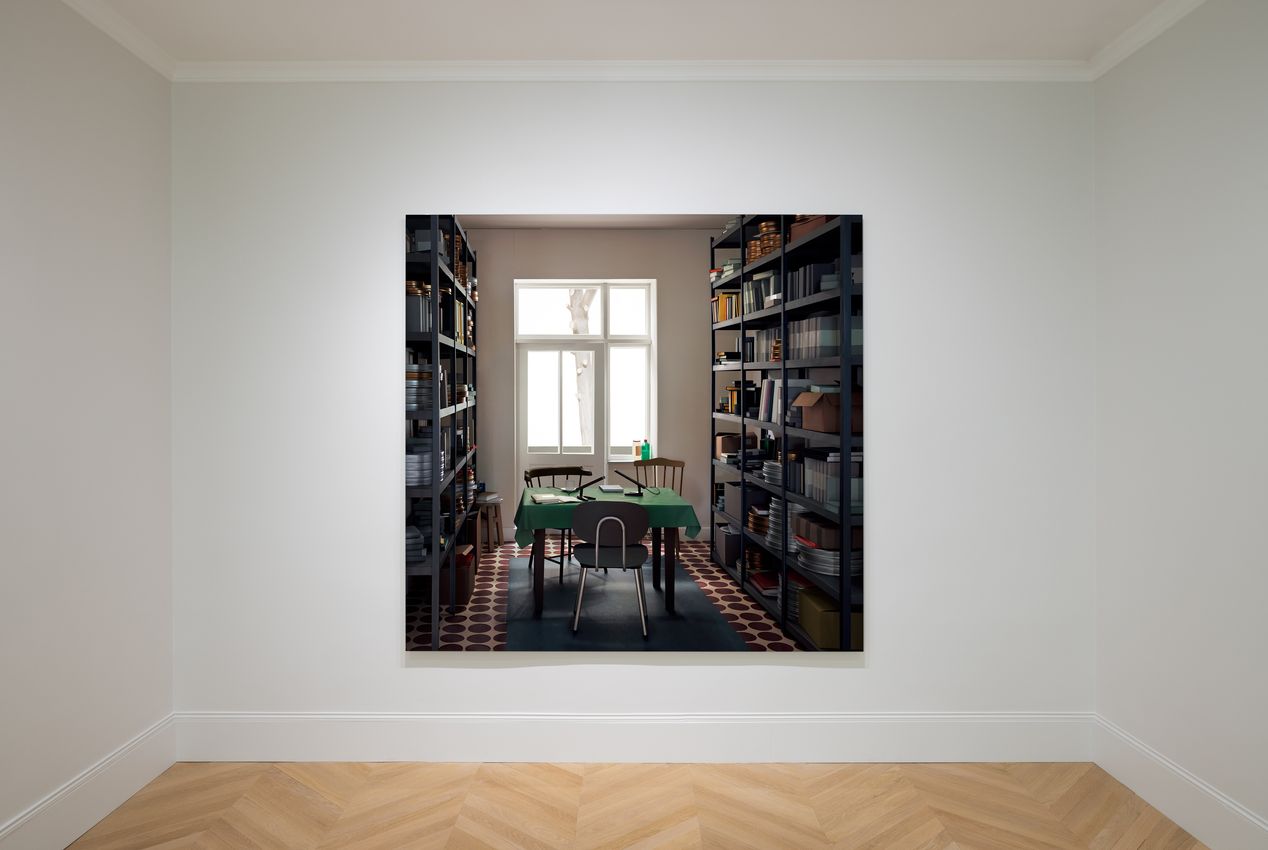
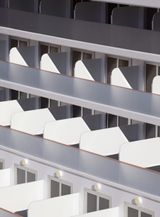
In one room the large-scale C-print Repository is flanked by two works from the artist’s series ‘The Dailies’. Repository, 2018, imagines a small room which Alexander Kluge used as study in the 1980s. An homage to the senior German film director, tv producer and philosopher who has been a frequent interlocutor and collaborator of Demand’s for many years, Repository reconstructs Kluge’s longtime studio in Munich. Recreating a place that no longer exists, Demand constitutes a living memory of a life work: both as site of activity, for example, Kluge’s extensive interview practice, and as repository of this work stored in multiple media, tape recordings, video cassettes, reels of film, and of course books.

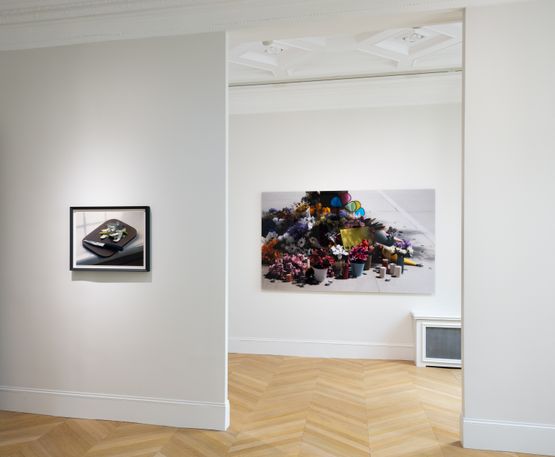
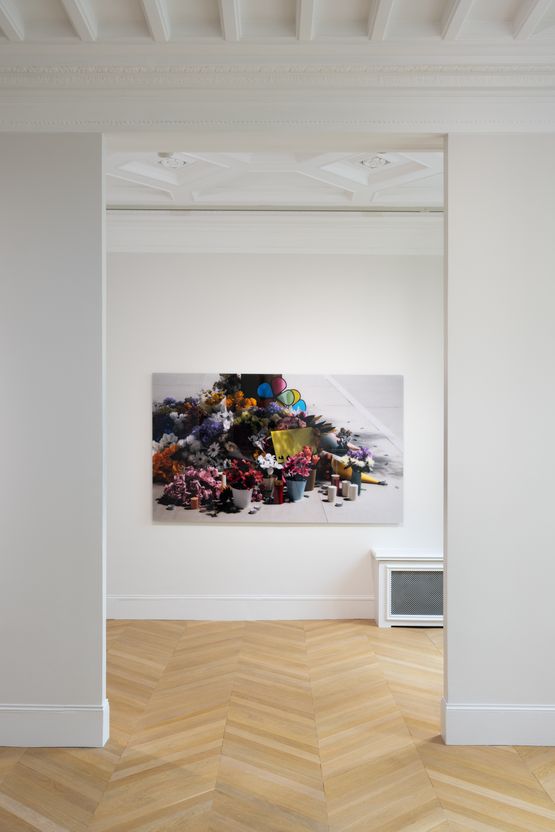
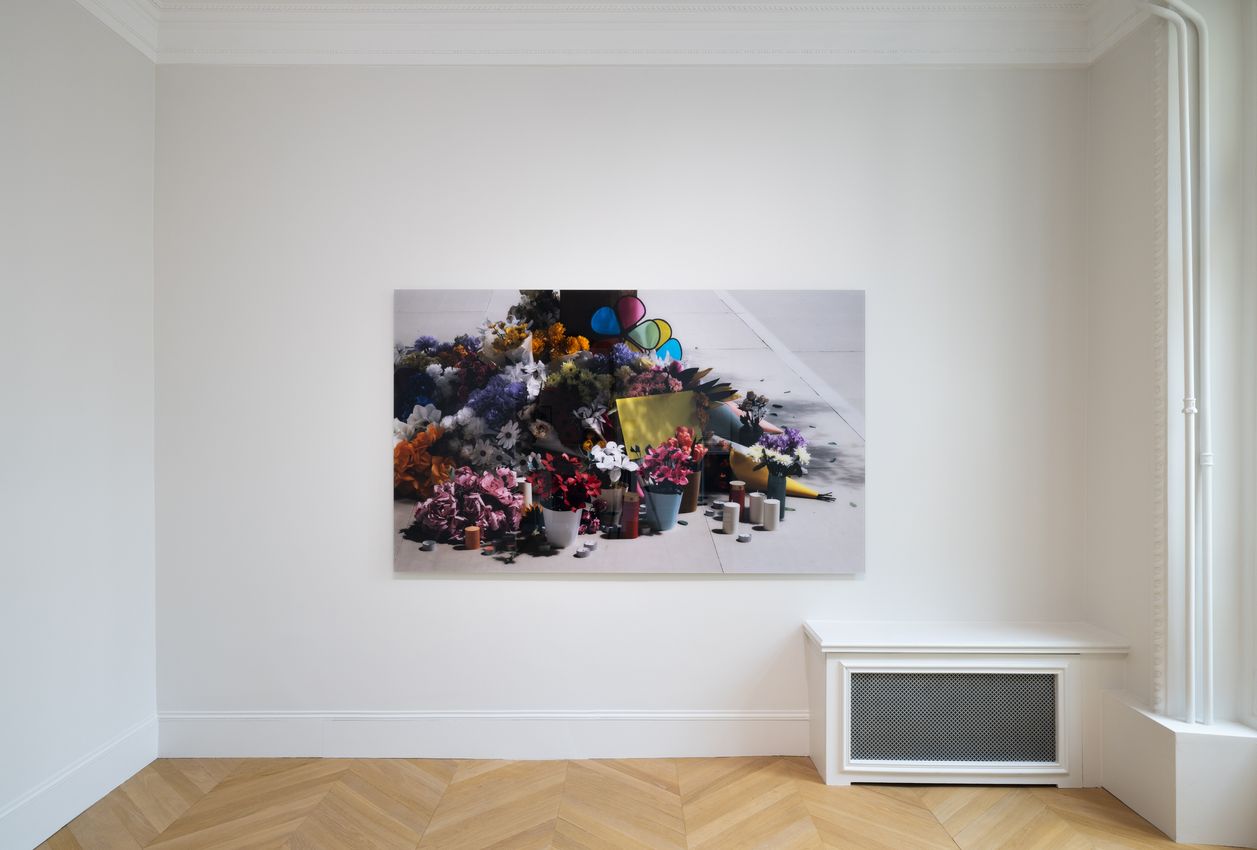
A new work, Memorial, depicts a make-shift shrine with various bunches of flowers, candles and small placards, heaped together around a tree on a sidewalk. At first sight bright and colourful, the scene has a somber subtext. A reminder of the frequent gun violence in the United States for which such ad-hoc commemorations often quickly form, it draws on images from Buffalo, NY—although the specific reference may be less relevant than the lamentable ubiquity of the imagery.

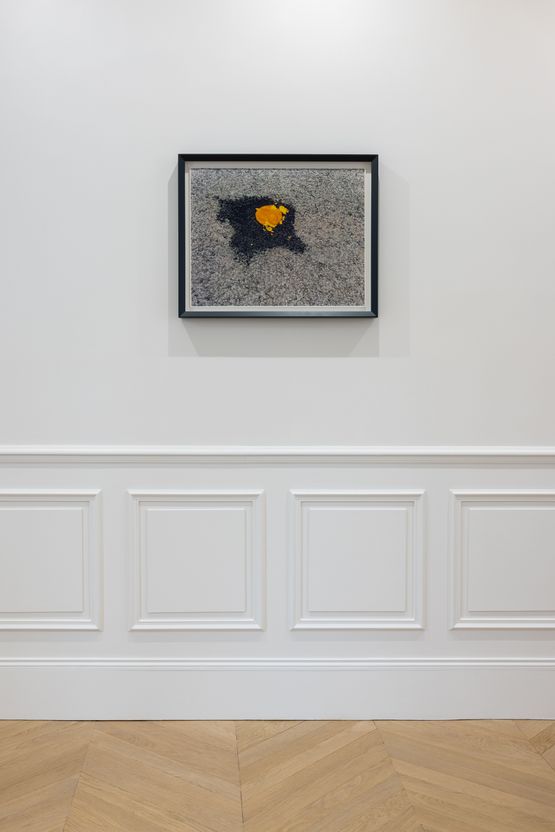
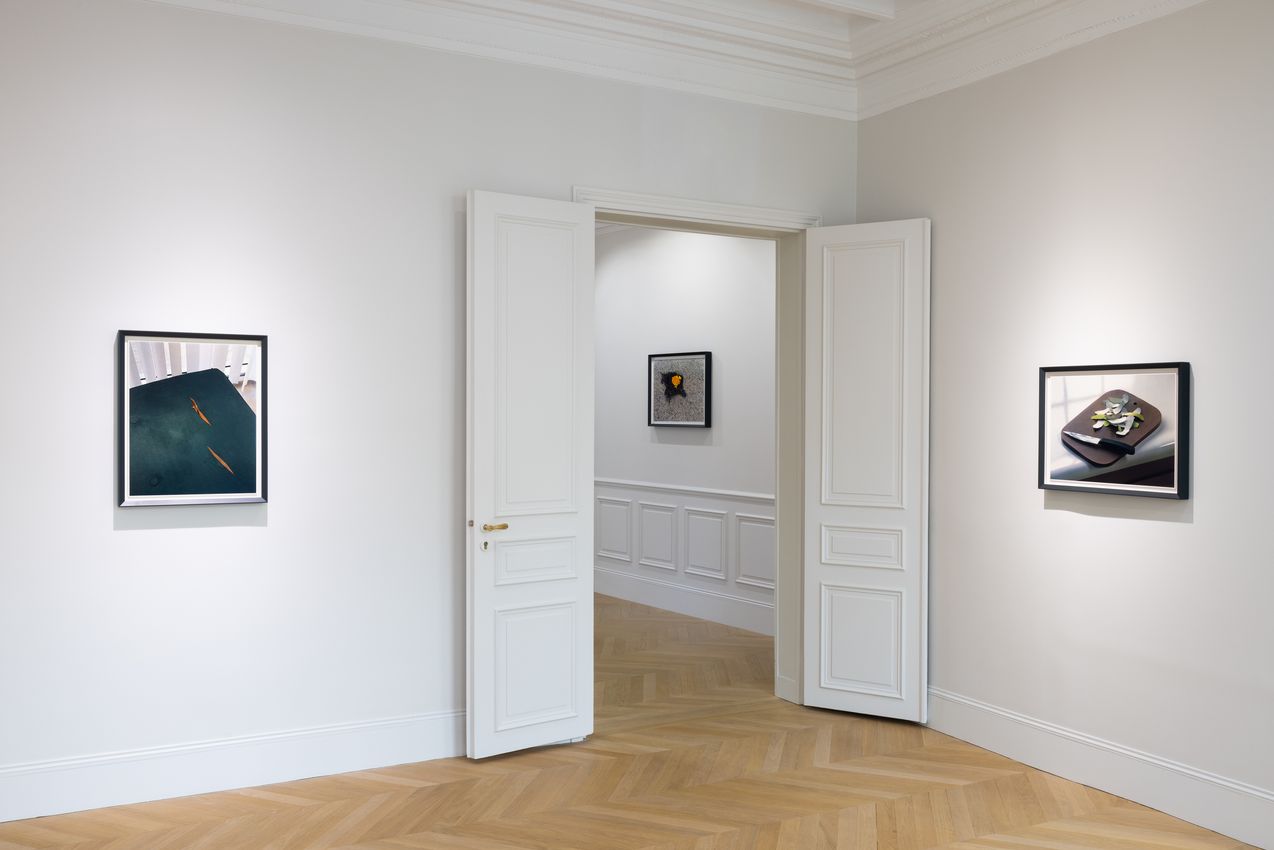
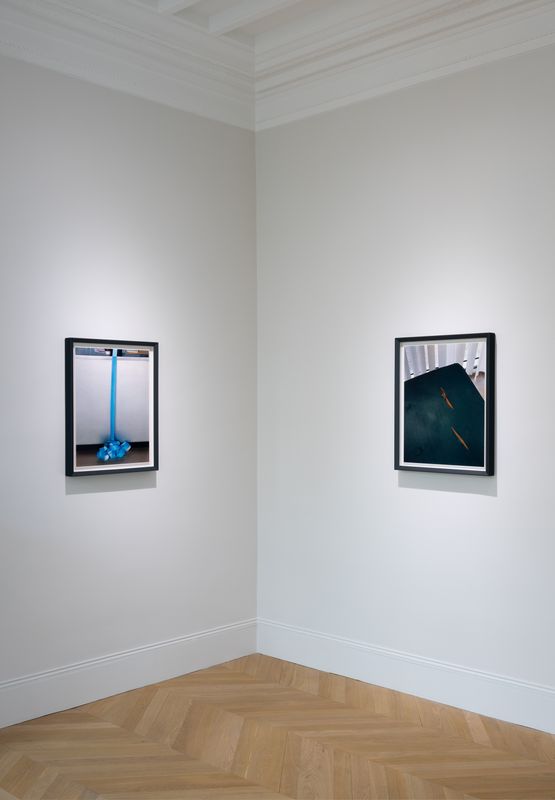
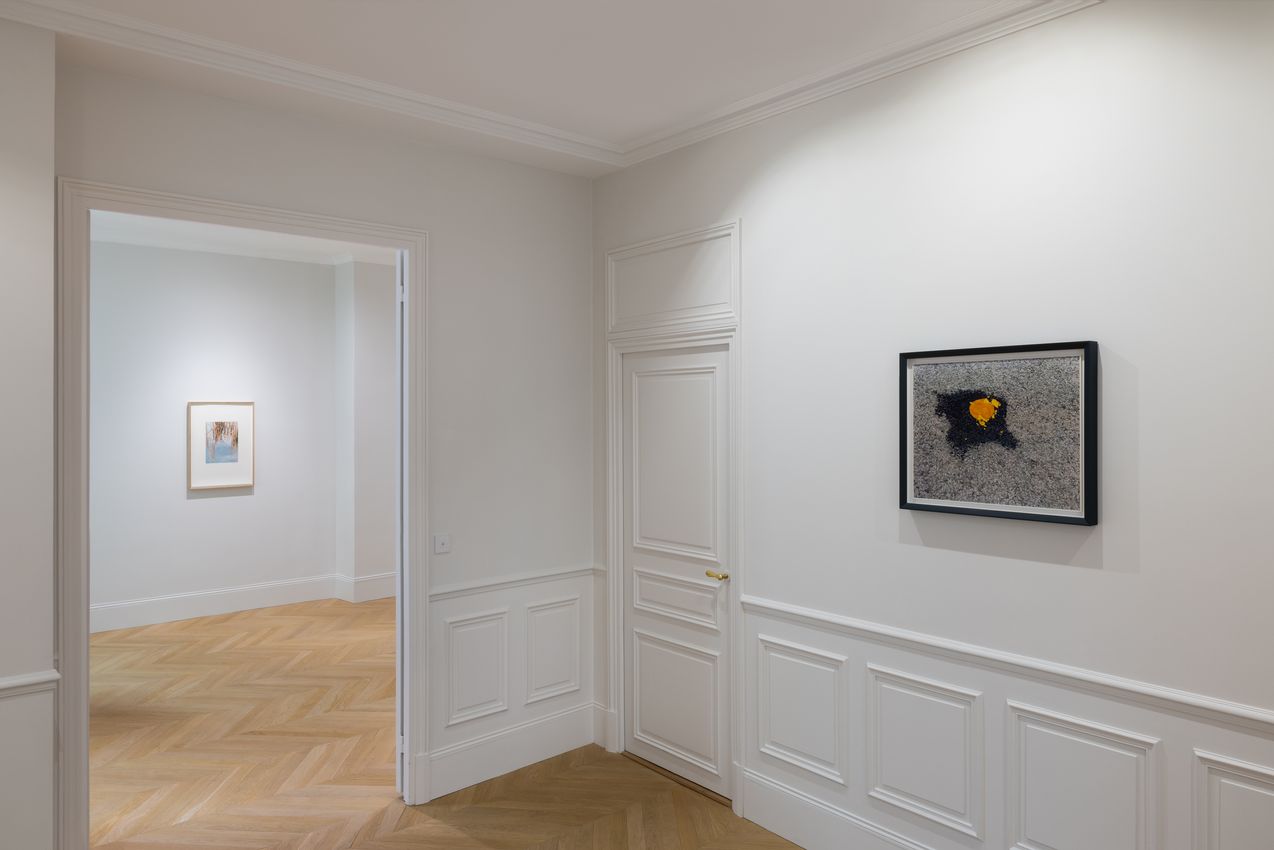
The exhibition includes four works from The Dailies. As do all the works from this series, begun in 2008 and printed using the nearly extinct process of dye transfer, they picture small incidents of everyday life, based on images the artist caught on his cell phone. They recall moments of drifting attention in which our gaze is briefly arrested by an object that now catches our eye. Even with little visual information—all details carefully chosen by the artist—our imagination begins to construct a scenario for these vignettes. What looks like classic photography still-life also marks Demand’s attention to the proliferation of amateur pictures shared in social media channels, or, as the eminent art historian Hal Foster puts it: ‘Certainly our shared media memory is a deep subject of Demand’s work, and The Dailies also point to a mnemonic dimension buried in the trivia of our lives.’

At the same time, ‘The Dailies’ series evokes a rich legacy of art historical iconography. Thus Daily #31 is dominated by a green surface with two deep slashes that reveal orange padding. A scene of slight dilapidation, the image can be read as an oblique reference to the work of Lucio Fontana and his “cuts,” first produced in the late 1950s. The flattened orange of Daily #33, on the other hand, can register as abstraction, while the long paper trail depicted in Daily #35 alludes both to an absent human who might have removed the excess, and an activity. Daily #36, finally, is indebted to the tradition of still-life painting. Depicting a cutting board with a knife and leftover peel from an apple, the shimmering metal blade and the soft glow of the white windowsill recall the virtuosity of competing polished surfaces in Netherlandish vanitas paintings. Incidentally, the ‘consumed’ or ‘spent’ apple also represents the final work in the series of ‘The Dailies.’

The collotype Schilf also has no apparent narrative content: tufts of reeds rising (?) from the water are a familiar sight. Yet, the image can be read as water or sky, as plants or their reflection. In a self-referential gesture, then, the work alludes to Demand’s general practice of creating works at the threshold of two-dimensional image and three-dimensional object, but also to his monumental Pond, 2020, a work in reference to Claude Monet’s gardens of waterlilies at Giverny.

Read More

Installation Views

About the Artist

Thomas Demand trained as sculptor. His photographs are generally based on found press photographs. He builds elaborate models using coloured paper and cardboard which he then photographs. Often the depicted images include oblique references to historically important sites or events. No writing appears in the recreated images. The life-sized mock-ups are then destroyed.

View Artist Profile

Also Exhibiting at Esther Schipper

Address
16 place Vendôme
Paris
France
Opening Hours
Tues - Fri, 11 am - 6 pm
Saturday by appointment
(1)
Paris Esther Schipper Paris, 16 place Vendôme
Esther Schipper Paris
16 place Vendôme, Paris, France
+33 142331767

Opening hours
Tues - Fri, 11 am - 6 pm
Saturday by appointment
The art world in focus