When you work with any material, the material is leading. It is the artist’s mission to coax out the vitality and show it. I want to make you understand what creation is, the chain of thoughts and actions. —Giuseppe Penone
Gagosian is pleased to present Impronte di corpi nell’aria / Bodies Imprinted in the Air, an exhibition of works by Giuseppe Penone made between the early 1970s and 2021.
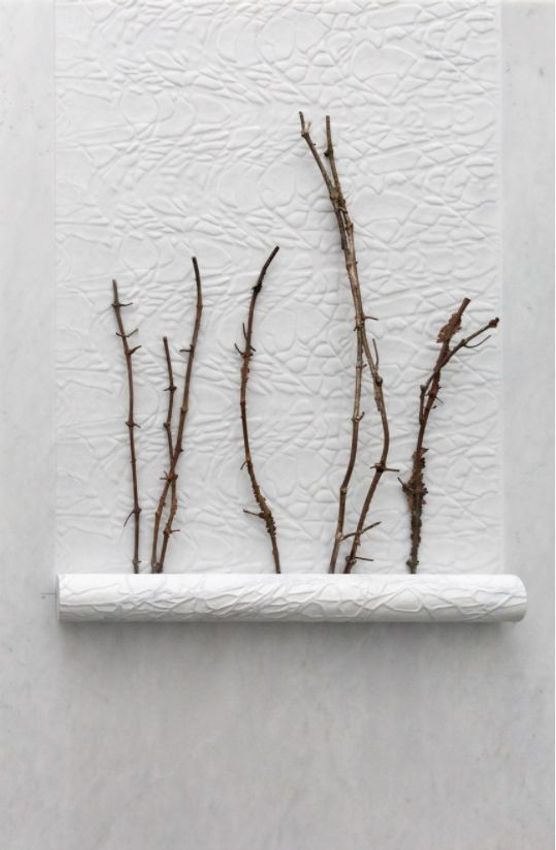
In an oeuvre spanning more than fifty years, Penone has continually expanded the parameters of art through a close examination of the interplay between the human body and nature. Since the beginning of his career in the late 1960s, as a proponent of the Arte Povera movement, he has employed and juxtaposed materials both ancient and modern, ‘raw’ and manufactured—including bronze, leather, wood, stone, and acacia thorns. The exhibition’s title comes from a series of new sculptures in bronze and marble that evoke the growth of plant life out of stone, as though from earth.
Penone’s early work is marked by an elemental simplicity. Investigating primary materials in his immediate surroundings, he often staged interventions in the forests around his Piedmont hometown. Arte Povera, distinguished by the use of ‘poor’ and unconventional materials such as plant and vegetable matter, questioned cultural assumptions through the evocation of a preindustrial age. In critiquing the dehumanizing effects of mechanisation, the movement countered other art genres, both earlier and contemporaneous, such as Surrealism, Pop, and Minimalism.
Penone frequently incorporates his own body and gestures into his work: the photographs Libro / polvere trappola / mano (Book / Dust Trap / Hand) and Guanti (Gloves) (both 1972)—the earliest in the exhibition—show the artist’s hand. The motif recurs in more recent works such as Rotazione (Rotation, 2020), which depicts a hand in the act of making multiple imprints. In later works, the artist alludes to his bodily form less directly; in wall-mounted marble slabs such as Pelle di marmo – oro (Skin of Marble – Gold, 2006), veinlike networks blur the divide between animal and mineral, and emphasizing the transformative natural processes of birth and growth, death and decay.
‘The veins of water that pour from the earth flow in trickles that merge, like the branches in the trunk, like the fingers in the palm of a hand, like the bronze in the matrix of a tree.’—Giuseppe Penone


A respected voice in contemporary art discourse.
Focusing on ambitious storytelling and insightful art-world commentary. Ocula Magazine publishes in-depth interviews, critical essays and timely analysis on the artists, exhibitions and ideas driving the global art world.
Learn more about Ocula Magazine
Showcasing the best of the art world.
Ocula partners with galleries from around the world to highlight their artists, artworks and exhibitions. Gallery membership is by application and invitation, with each member vetted by an independent panel.
Learn more about Ocula Membership

Specialises in the sale of major artworks.
Led by a team with deep ties to the world’s leading auction houses, galleries and collectors. Ocula’s advisory team offers bespoke services to high-net-worth clients from around the world who are looking to acquire the best of contemporary and modern art.
Learn more about our team and services