‘I have always thought everything important is right in front of you.’–Michael Craig-Martin
Gagosian is pleased to present new works by Michael Craig-Martin. This is the first time his sculptures have been shown indoors, and the first time they have been exhibited as a group in London.
Among the leading generation of British Conceptual artists, Craig-Martin probes the relationship between objects and images, perception and reality, harnessing the unique human capacity to conjure ideas through symbols and signs.
Since his time at Yale University in the 1960s–where he studied alongside artists such as Chuck Close, Brice Marden, and Richard Serra–Craig-Martin has been building on a specific vocabulary of imagery based on common, everyday items. His early work used real objects to explore the nature of art and representation, illusion and belief. In the late 1970s he turned to making images of objects, beginning with simple and precise line drawings that have remained the foundation of his work. In the ‘90s, he began a series of large, site-specific painted installations that explored the physical and imaginary relationships between viewer, object, and space. Subsequently, he turned to painting, developing his hallmark style of bold black outlines surrounded by flat planes of bright, vivid colours.
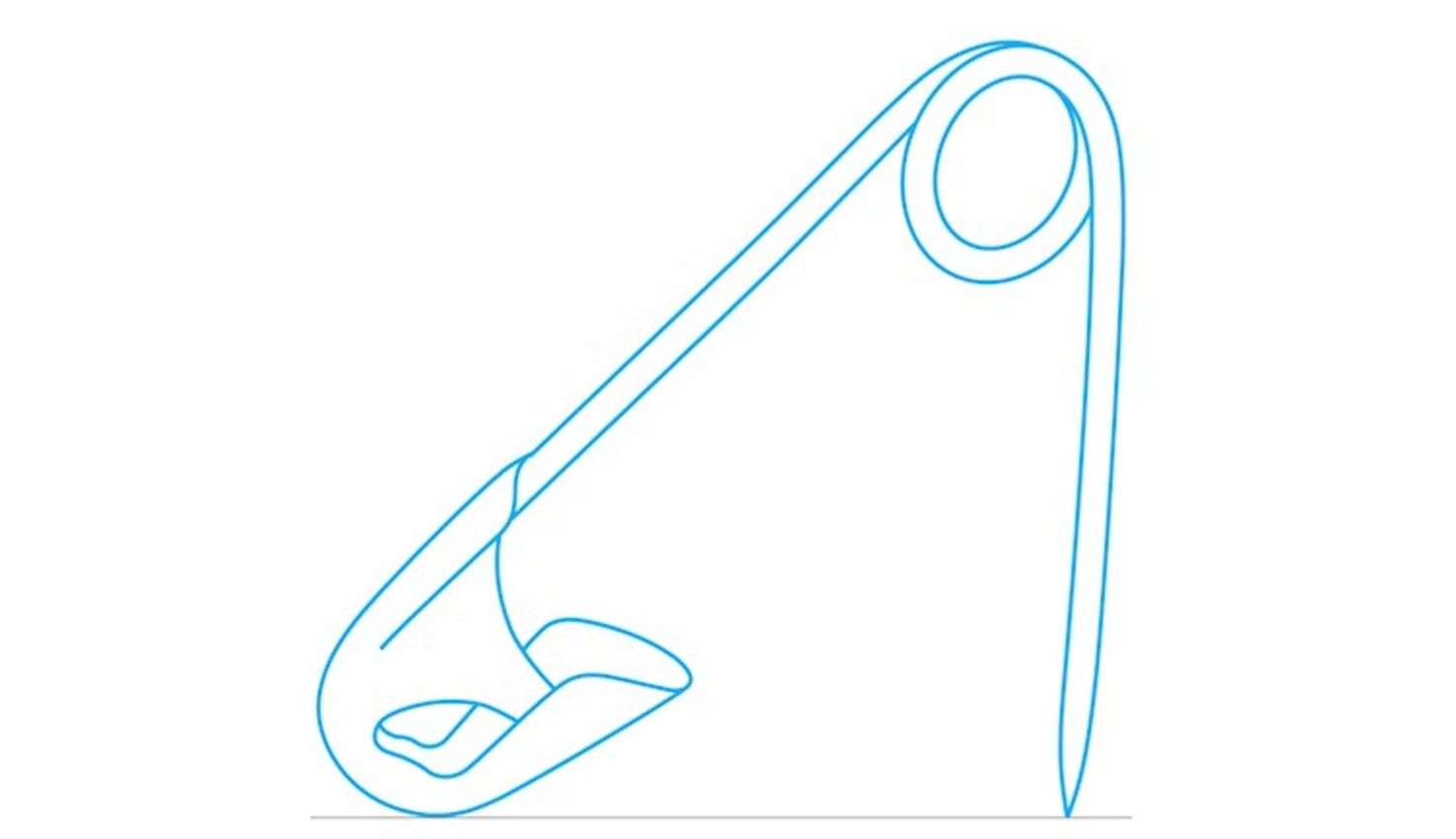
This exhibition includes six new monumental sculptures in a medium that Craig-Martin has been exploring since 2011: powder-coated steel forms that describe everyday objects and appear like line drawings in the air. The first series was shown in the gardens of Chatsworth House in Derbyshire, England, in 2014, where the sculptures were sunk into the soil of the grounds. The new works in this exhibition depict various items both timeless—as in Fork and Knife (green and purple) (2019)–and distinctly contemporary, as in Headphones (magenta) (2019). These elegant, large sculptures leave it up to viewers to attach their own personal narrative histories to the objects portrayed.
Standing between three and four meters high, the installation allows visitors to walk under and around the structures, which are discreetly sunk into the concrete floor of the gallery. The sculptures’ lines are suspended in the air at a grand scale that is both implausible with respect to the objects they signify and unexpected within the serene context of the gallery. The forms have an instant sensory, intellectual, and emotional impact; produced with exacting draftsmanship, they are placed so as to explore spatial relationships through the juxtaposition of colour. Their colours–vibrant shades denoted in the works’ titles–have a synthetic, man-made quality like that of Pop art and of the objects themselves. Slyly evocative in their simplicity, Craig-Martin’s sculptures evoke the tangible experiences of everyday life while speaking to the symbolic potency and conceptual power that the represented objects hold.
A principal figure of British conceptual art, Michael Craig-Martin probes the relationship between objects and images, harnessing the human capacity to imagine absent forms through symbols and pictures. The perceptual tension between object, representation, and language has been his central concern over the past four decades. In his early work Craig-Martin often incorporated readymades into sculpture and made knowing reference to American Minimalism. His elegant restraint and conceptual clarity is exemplified by An Oak Tree (1973), comprising a glass of water on a shelf and a text written by him asserting that the glass of water is, in fact, an oak tree. This interest in semantics, the play between rhetoric and object, continues to be a core theme in his work. In the 1990s Craig-Martin made a decisive shift to painting and developed his hallmark style of precise, bold outlines demarcating flat planes of intensely vibrant colours. Through exacting draftsmanship, he uses composition to explore spatial relationships by juxtaposing and layering colour.


A respected voice in contemporary art discourse.
Focusing on ambitious storytelling and insightful art-world commentary. Ocula Magazine publishes in-depth interviews, critical essays and timely analysis on the artists, exhibitions and ideas driving the global art world.
Learn more about Ocula Magazine
Showcasing the best of the art world.
Ocula partners with galleries from around the world to highlight their artists, artworks and exhibitions. Gallery membership is by application and invitation, with each member vetted by an independent panel.
Learn more about Ocula Membership

Specialises in the sale of major artworks.
Led by a team with deep ties to the world’s leading auction houses, galleries and collectors. Ocula’s advisory team offers bespoke services to high-net-worth clients from around the world who are looking to acquire the best of contemporary and modern art.
Learn more about our team and services