





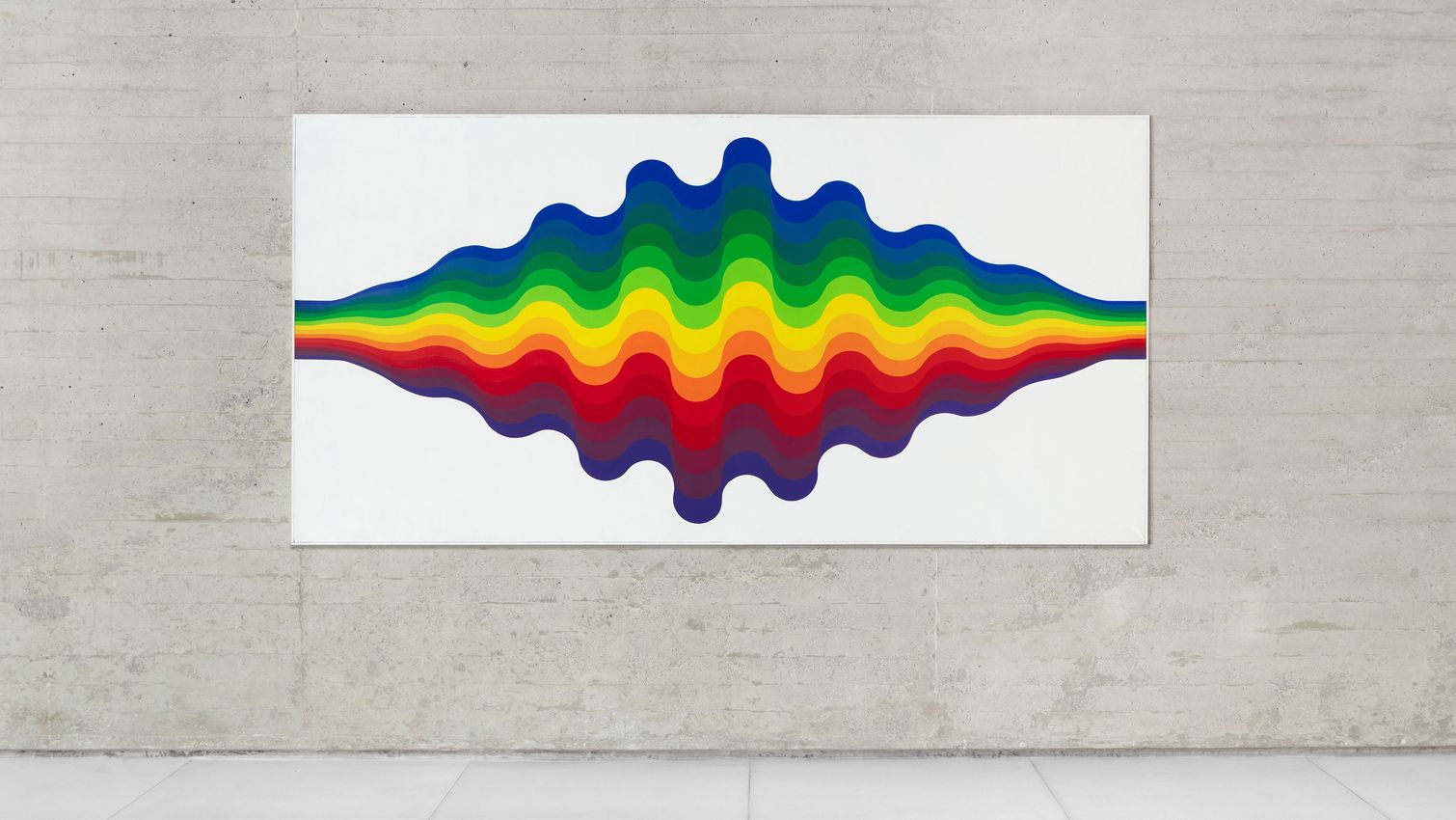
JULIO LE PARC
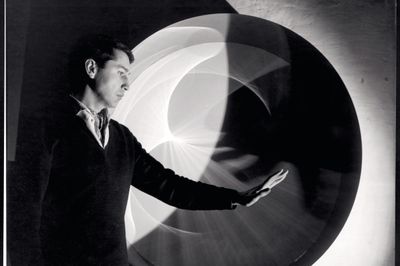
1928-2026, ArgentinaJulio Le Parc wanted to democratise artwork—the Op Art (Kinetic Art) pioneer produced immersive installations and illusory sculptures and paintings in order to break down the barriers between viewer and art. He used a famously limited colour palette, alongside movement, line, shadow and light to create the appearance of movement or disappearing objects.
Early Years
Born in 1928 in Mendoza, Argentina, Julio Le Parc was raised in Palmira, where a teacher noticed his talent for drawing. The local landscape also influenced his later work—he noticed the colour variations in the Mendoza River and the way sunset changed the colours on the Andes. In 1942, he moved to Buenos Aires to advance his artistic career, working various jobs by day and attending the Escuela de Bellas Artes night school, where he became interested in avant-garde movements such as Arte Concreto-Invención and Spazialismo. However, by 1947 he was disillusioned with college and travelled Argentina until 1955, when he returned to college and became involved in student politics. Winning a scholarship, he moved to Paris in 1958 and in 1960 became a founding member of the Groupe de Recherche d’Art Visuel (GRAV), promoting of collective artistic research and experimentation. Le Parc was briefly expelled from France in 1968 after supporting the occupation of a Renault factory. Although readmitted to the country (he lived just outside Paris for the rest of his life), Le Parc remained highly political, while also maintaining strong links with Argentina.
Julio Le Parc: Artworks
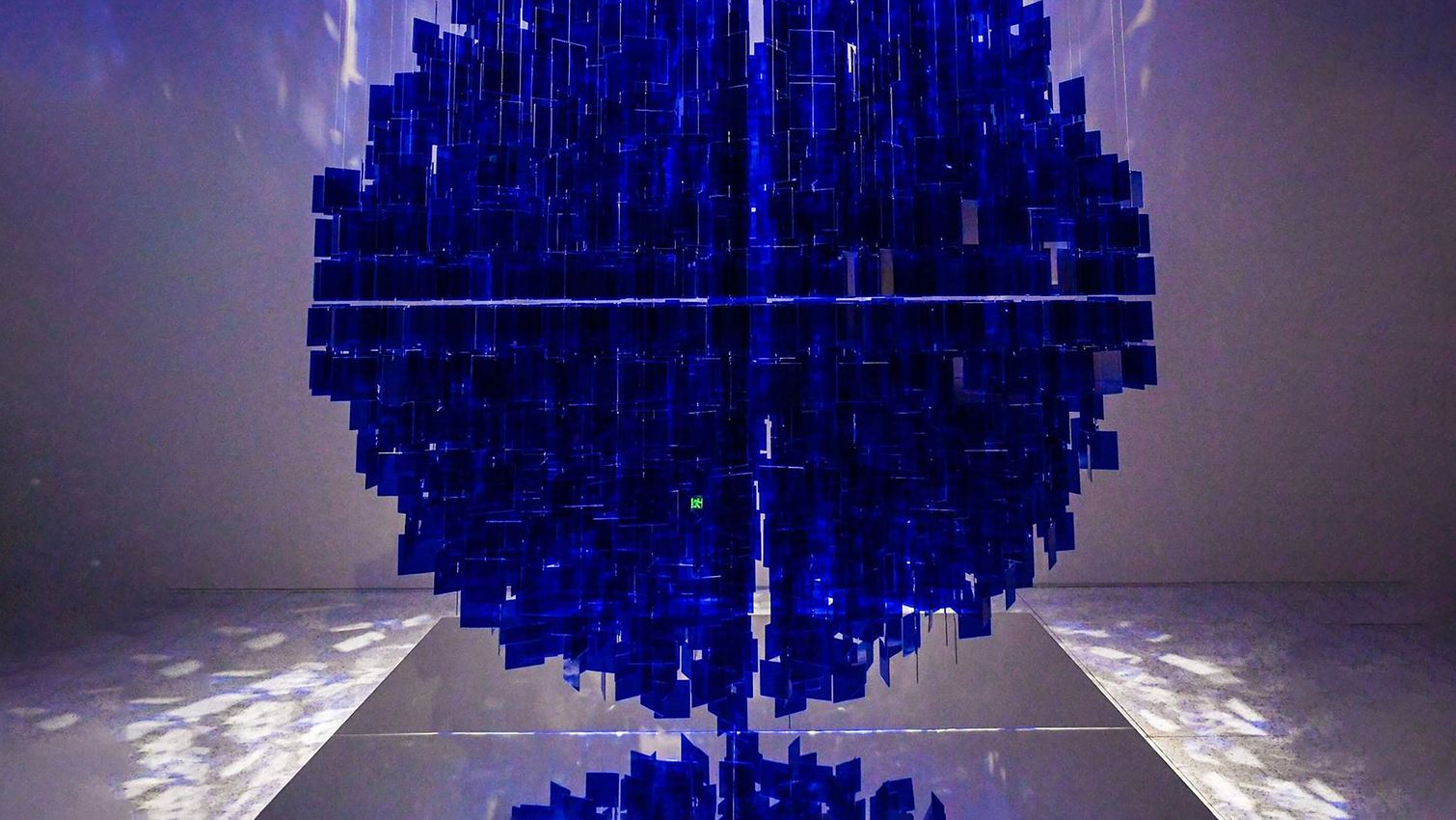
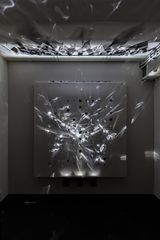
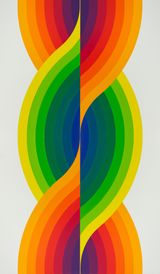
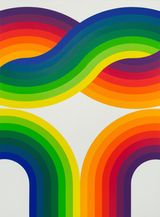
Julio Le Parc’s artworks appear to be in a state of constant flux—he uses light in various forms to create visual instability. Beginning with geometric abstract paintings, his work evolved into complex kinetic installations, using mirrors and Plexiglas as well as light in order to create moving environments. Bridling against the idea of the artist as solitary genius, Le Parc wanted to create pieces where the viewer could involve themselves with the work. In later years, he used emerging cloud technologies—notably for his installation at the Obelisk in Buenos Aires in 2019.
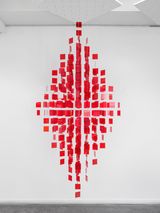
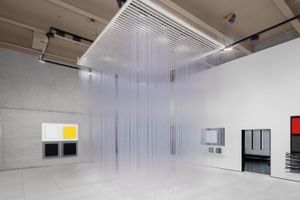
- The first of the Continual Light Mobiles, perhaps Le Parc’s most significant body of work, appeared in 1960. The 1963 edition of the series included suspended pieces that moved in response to air flows generated by viewers’ movements. For Le Parc’s 2026–2027 exhibition at Tate Modern, Continual Mobile (Tate) (2026) partially recreated a large mobile originally installed at the entrance of the 1963 Paris Biennial exhibition.
- 1967’s Ensemble of Eleven Surprise Elements gives the viewer the chance to play with the artwork: shelves and cubby-holes display elements ranging from geometric shapes to a fan belt. By pressing buttons, the viewer can make each element move around and make a noise.
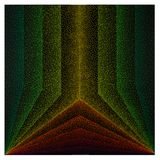
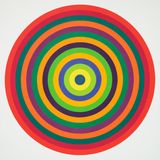
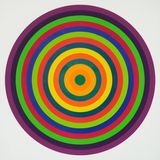
- He began Modulations in 1974, which used airbrush and paint-spraying techniques to create shades and gradients. Speaking in 1976, he said: “The techniques I used enabled me to obtain shades from dark to light and precise modulation of the surface... And so a new field of research opened up for me.”
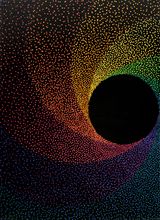
- Le Parc started the Alchemies series in 1988, adding colour flows and dots to the Modulations series.
Julio Le Parc: Select Awards
- International Grand Prize for Painting, 33rd Venice Biennale (1966)
- French Ministry of Culture Award (1967)
- Diamond Conex Award, Argentina (1982 and 2022)
- Légion d’honneur, France (2014)
Julio Le Parc: Select Exhibitions
Select Solo Exhibitions
- Julio Le Parc: Light. Colour. Action, Tate Modern, London (2026)
- Julio Le Parc. In motion, Albarrán Bourdais, Madrid (2025)
- The Discovery of Perception: Works from 1958 to the Present, Palazzo delle Papesse, Siena (2024), Italy
- The Colours at Play, Maison Hermès, Tokyo (2021)
- Julio Le Parc. Transition Paris-Buenos Aires 1955–1959, MNBA, Buenos Aires (2019)
- Julio Le Parc: Form into Action, Pérez Art Museum, Miami (2017)
- Julio Le Parc, Serpentine Gallery, London (2014)
- Otra mirada, Centro Cultural Borges, Buenos Aires (2010)
- The Light Park, Laboratorio de arte Alameda, Mexico City (2006)
- Julio Le Parc celebrates light, La Galerie Villa des Tourelles, Nanterre (2000)
- Games Room, School of Fine Arts, Cherbourg (1997)
- Experiences. Retrospectiva, Pontificia Universidad Católica de Chile, Santiago (1989)
- The modulation of light, Pinacoteca e Musei Communali, Macerata (1980)
- Recent paintings, Museo de Arte Moderno, Bogotá (1976)
- Colour 1959, Denise René Gallery, Paris (Right Bank) (1970)
- The Park, Howard Wise Gallery, New York City (1966)
Selected Group Exhibitions
- Colour Light, Galleria Continua/Matignon (2024)
- Virtual Contemporary, Istanbul (2021)
- The Other Trans-Atlantic. Kinetic and Op Art in Eastern Europe and Latin America 1950s–1970s exhibition, Garage Museum of Contemporary Art, Moscow (2018)
- White Night Melbourne (2014)
- Flash! Light and Movement, Tampere (2009)
- The Eye as Motor. Optical and Kinetic Art, 1950-1975, Museum of Modern and Contemporary Art (MAMCS), Strasbourg (2005)
- 50 años de pintura geométrica latino-americana, La Plata (2002)
- Art Against Apartheid, 78 Artists from the 1980s, National Assembly, Cape Town (1996)
- New Cachan Biennial (1992)
- Arte Programmata e Cinetica 1953–1963, Palazzo Reale, Milan (1983)
- Aspects of Art in France, International Art Fair, Basel (1978)
- International Brigade of Anti-Fascist Painters , Athens (1975)
- Kinetics, Hayward Gallery, London (1970)
- Light in Orbit, Howard Wise Gallery, New York City, (1967)
- 3rd Paris Biennial (1963)
- 4th São Paulo Biennial (1957)
Further Reading
- Official website
- Official Instagram
- Obituary in Ocula (2026)
- 2025 article about Le Parc’s early life from Time Out
- 2020 interview in Apollo
Julio Le Parc FAQs
Did Julio Le Parc toss a coin to decide whether to accept a big exhibition?
Yes, in 1972 Le Parc was offered a significant retrospective at Musée d’Art Moderne de la Ville de Paris. He decided to toss a coin to see whether to say “yes”—and the show never happened.
Did Julio Le Parc use a limited colour palette?
Yes, as part of his determination to build a relationship between artworks and viewers, Julio Le Parc’s first Parisian works were ordered arrangements of shapes in black, white and grey. However, he gently expanded this to include 14 additional colours: “I used a complete range like the rainbow, which starts with a colour, goes around and comes back to the same colour: yellow, green, blue, purple, red, orange and then yellow again.”. Since 1959, Le Parc’s works only contained these 14 colours (plus black, white and grey).
What was GRAV?
The Groupe de Recherche d’Art Visuel (GRAV) was formed in 1961 by Julio Le Parc, García Rossi, Francisco Sobrino, Hugo Demarco, François Morellet, Joël Stein and Jean-Pierre Yvaral. The group’s 1963 manifesto encouraged active public participation, questioning the passive role traditionally assigned to museum audiences. At that year’s Paris Biennale, GRAV presented L’instabilité: Le labyrinth, an installation containing kaleidoscopes, mirrors and interactive elements. Trying to move art away from traditional audiences and arbiters of taste, in 1966 GRAV staged the day-long Une Journée dans la Rue, where passers-by could experience works including distorting glasses. The group dissolved in 1968.
Ocula


View Julio Le Parc's Artworks

























Explore and Follow Artists Shaping Contemporary Art
A respected voice in contemporary art discourse.
Focusing on ambitious storytelling and insightful art-world commentary. Ocula Magazine publishes in-depth interviews, critical essays and timely analysis on the artists, exhibitions and ideas driving the global art world.
Learn more about Ocula Magazine
Showcasing the best of the art world.
Ocula partners with galleries from around the world to highlight their artists, artworks and exhibitions. Gallery membership is by application and invitation, with each member vetted by an independent panel.
Learn more about Ocula Membership
Specialises in the sale of major artworks.
Led by a team with deep ties to the world’s leading auction houses, galleries and collectors. Ocula’s advisory team offers bespoke services to high-net-worth clients from around the world who are looking to acquire the best of contemporary and modern art.
Learn more about our team and services