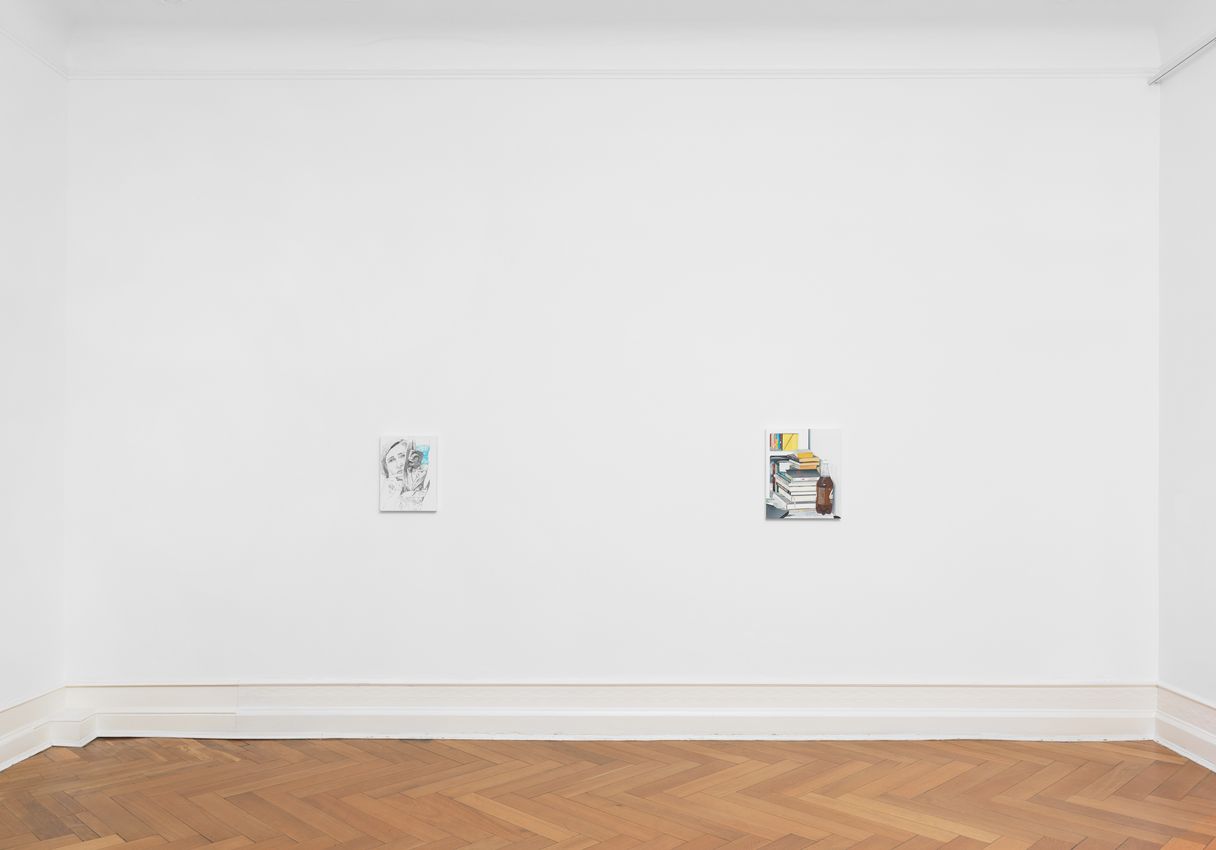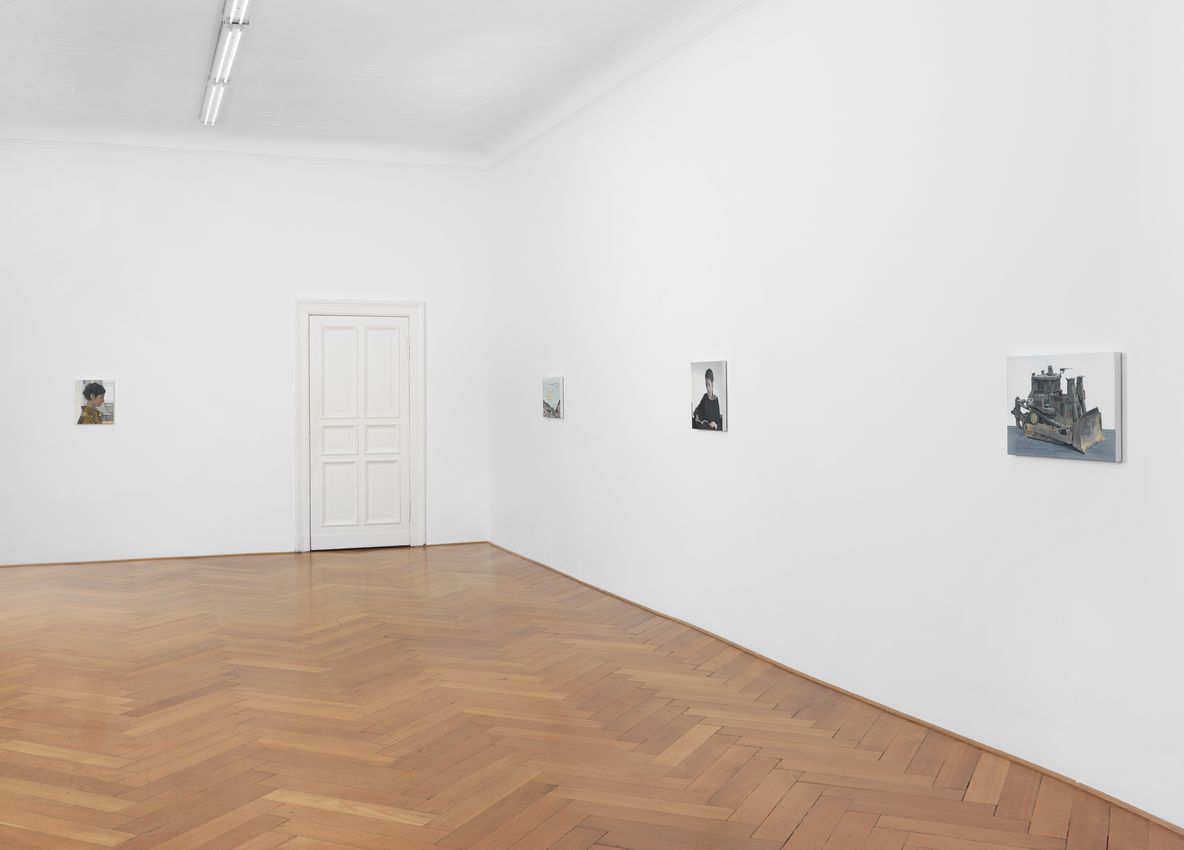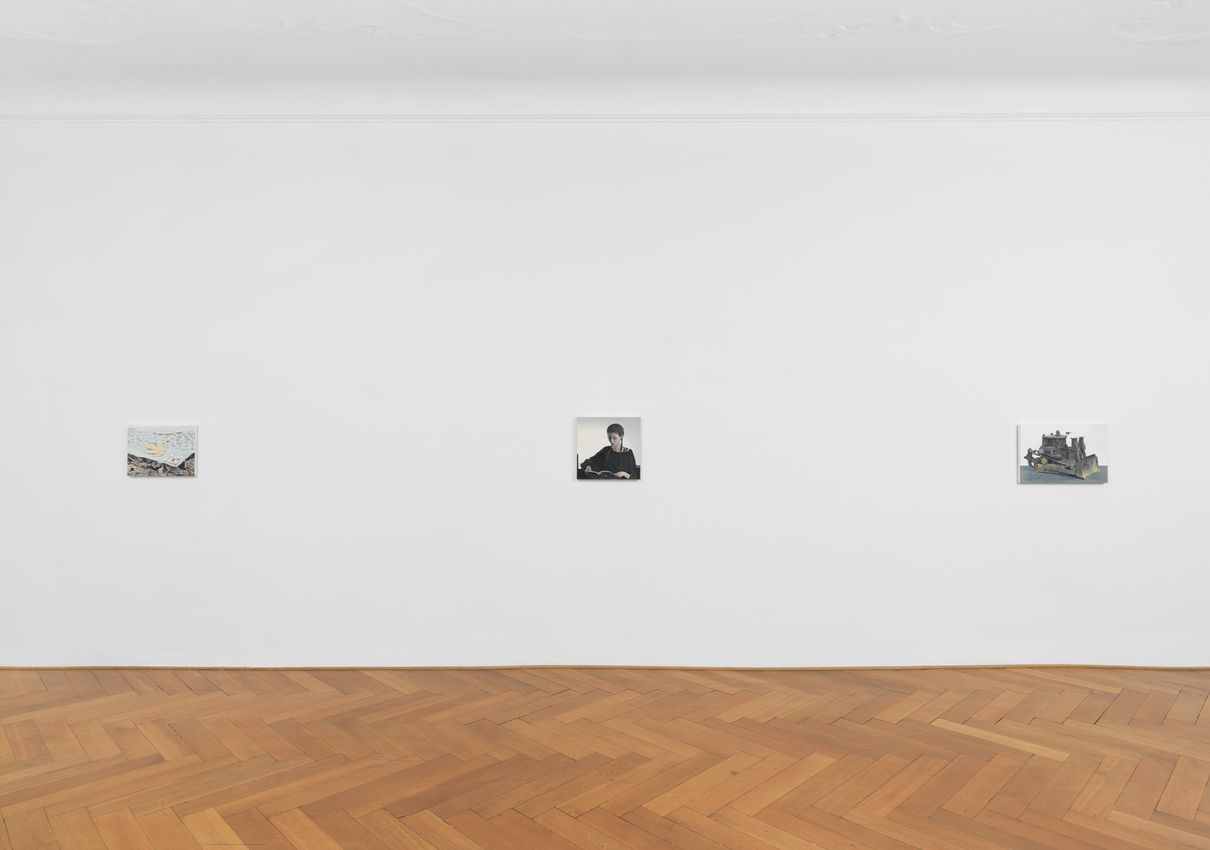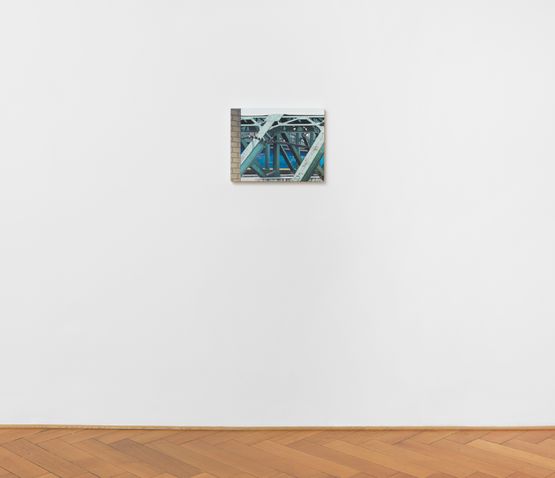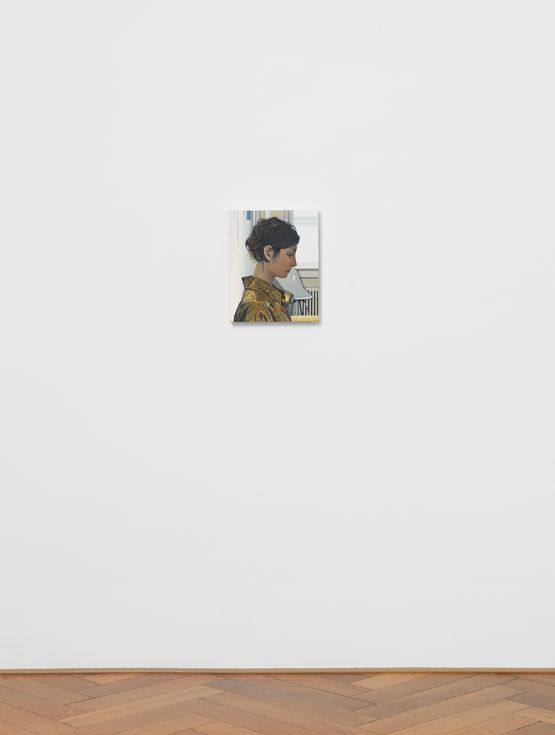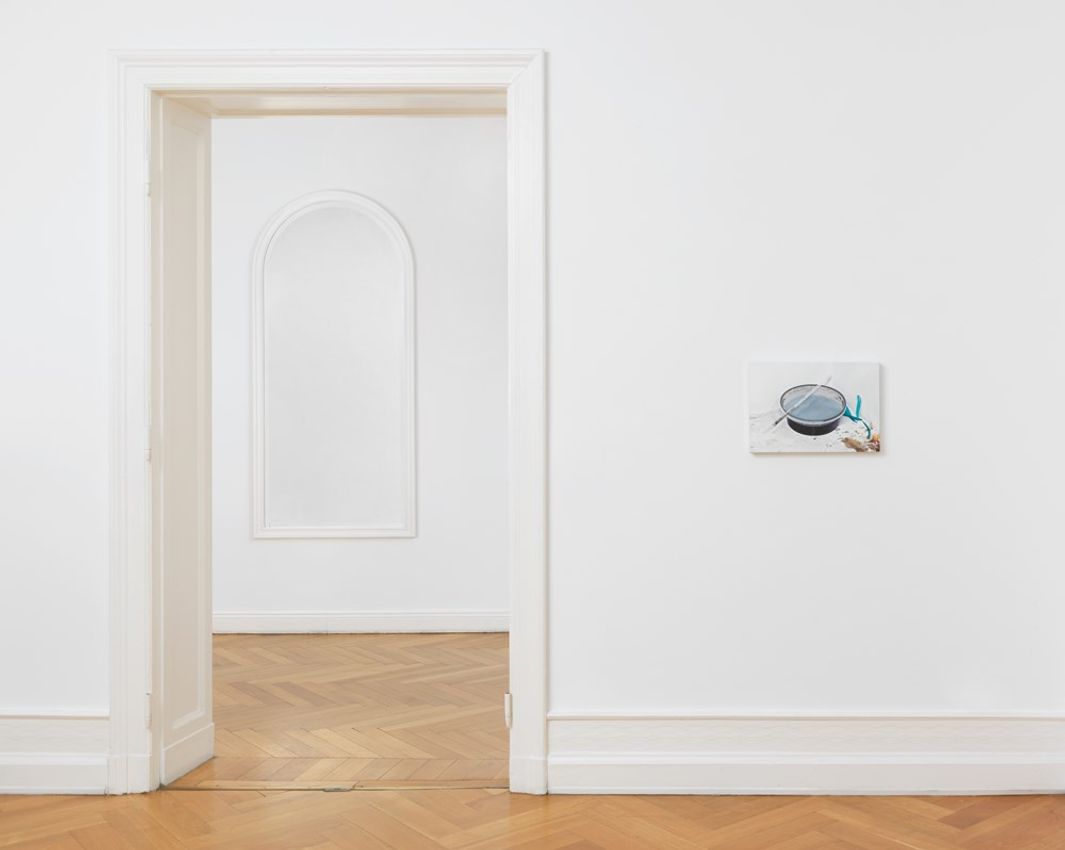
In a couple of older paintings by Caleb Considine, we see an object directly referencing a passage from a novel—an accordion stretching out the word ‘pessimism’; or a foam cannonball etched with a specific phrase—shown sitting among studio clutter. The object is stranded between realms; it is a deposit from a series of transfers or insertions, from narrative description on the page, to materialising on a studio couch in Brooklyn, then again to a flat rendering on the canvas. Along the way, its meaning has been dislocated. And this suspense of subject matter seems to hold true with the other things the artist paints, whether from fiction or fragments of reality. There is an absence to the images as they are painted—the vacant face of a best friend, a subway platform sucked of people, an object that already is substituting for something else—that suggests they are not where the content lies. But then these are not images simply made in the service of observational realist painting, either; they are too clearly singled out for that. This sense of content being astray has to do also with the process’ vying for significance. The paintings’ rendering is daily and insistently on the surface, though still not expressive enough to overtake the subject. The things are faithfully reconstituted.
The actual object used to make the weaponised bulldozer piece is, like the paintings, a detailed, scaled-down replica. It is a collectible model, less than five inches tall, assembled in an undisclosed distant location, sold on eBay, and shipped to the studio, where it sat still on an overturned plastic storage bin draped with a black trash bag for the last ten months, while news and podcasts ran in the background, the dust of the studio gradually mingling with the signs of desert wear sprayed onto its sides.
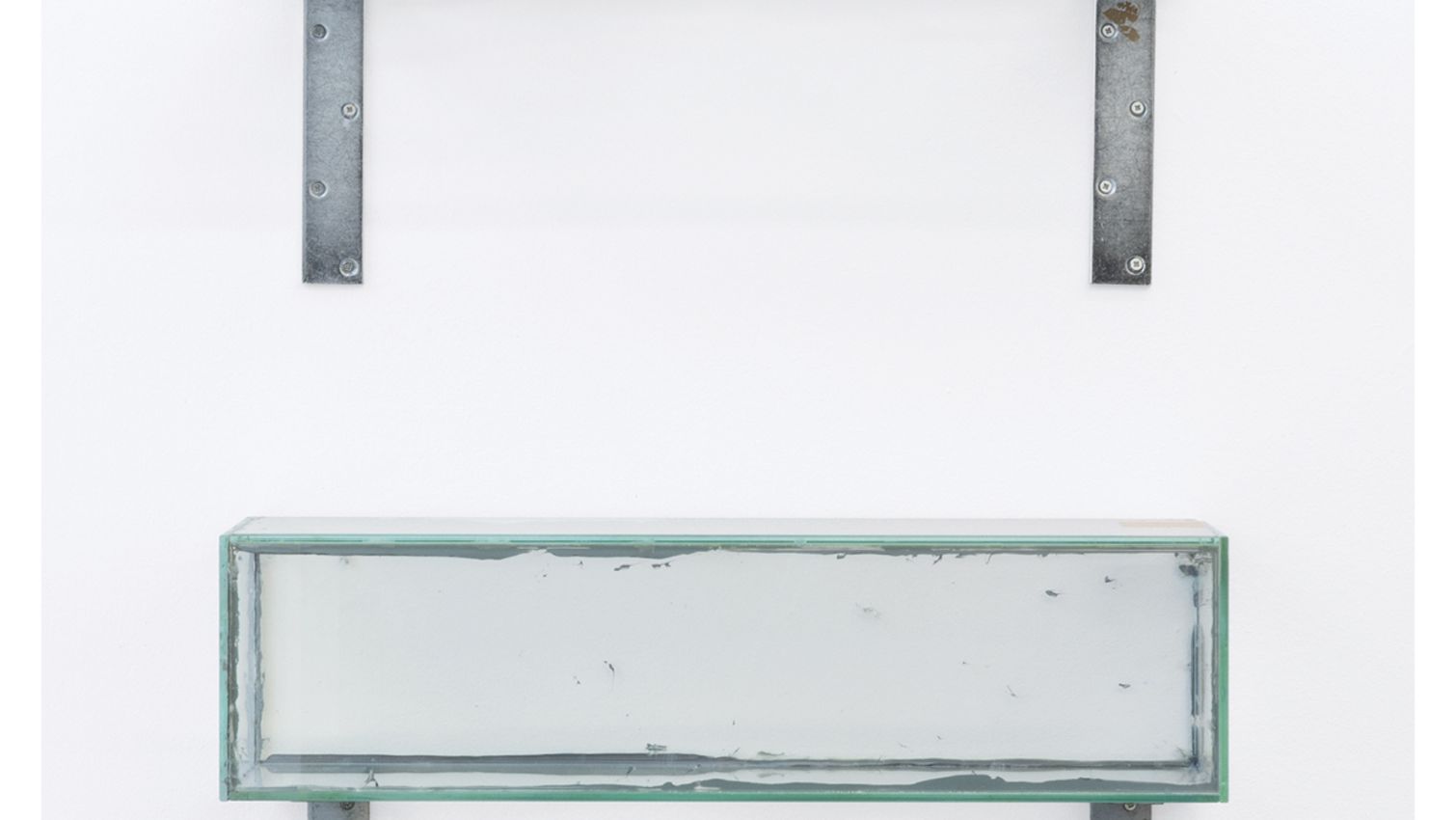
The pool of blood in the take-out container was sourced from the meat shop downstairs, initially for some idea involving a ceramic figurine taking after a Salvador Dalí painting about the ascendance of U.S. geopolitical power after WWII that was going to include some blood. That did not work out, but the Tupperware looked nice in its hot-sauce-stained corner of the fridge and had a waxy texture similar to the face of the canvases. The teeth are the artist’s, the books are the artist’s, the subway platform is how the 4th Ave and 9th Street stop looked every afternoon this year, or an aggregate thereof. Through these images also emerges a larger picture of persistent devotion to task.
Cancelled is Caleb Considine’s first solo exhibition with Galerie Buchholz.


Galerie Buchholz is an art gallery specializing in international contemporary art, with exhibition spaces in Cologne, Berlin and New York City. The gallery was founded in Cologne in 1986 by Daniel Buchholz, and today is run jointly with Christopher Müller.

A respected voice in contemporary art discourse.
Focusing on ambitious storytelling and insightful art-world commentary. Ocula Magazine publishes in-depth interviews, critical essays and timely analysis on the artists, exhibitions and ideas driving the global art world.
Learn more about Ocula Magazine
Showcasing the best of the art world.
Ocula partners with galleries from around the world to highlight their artists, artworks and exhibitions. Gallery membership is by application and invitation, with each member vetted by an independent panel.
Learn more about Ocula Membership

Specialises in the sale of major artworks.
Led by a team with deep ties to the world’s leading auction houses, galleries and collectors. Ocula’s advisory team offers bespoke services to high-net-worth clients from around the world who are looking to acquire the best of contemporary and modern art.
Learn more about our team and services