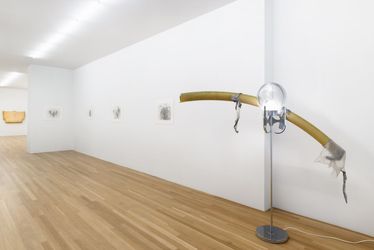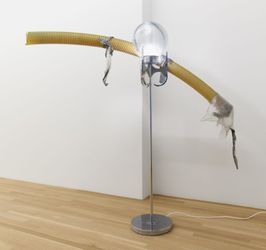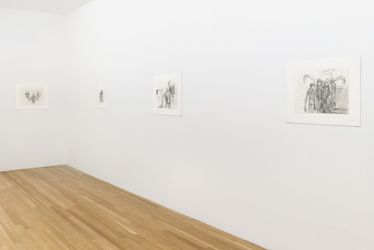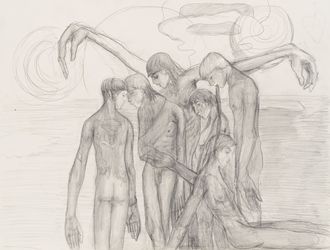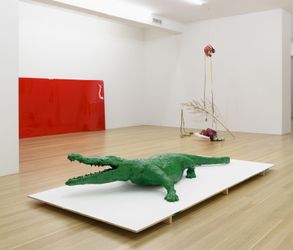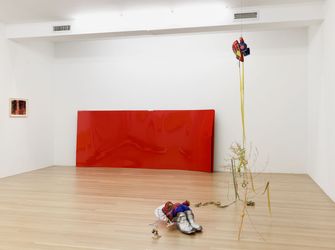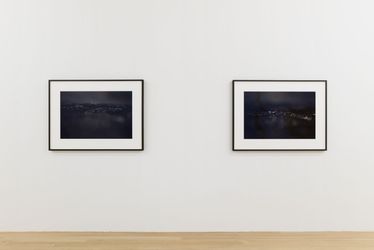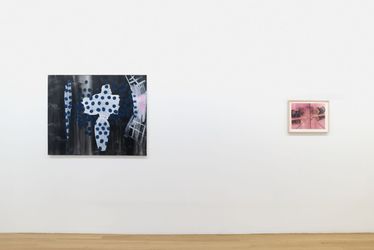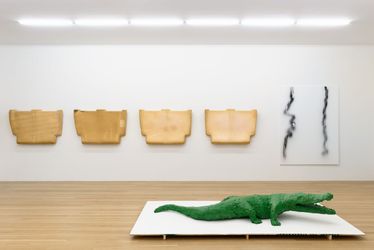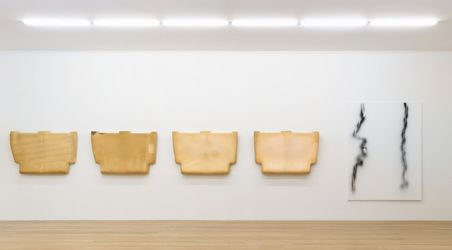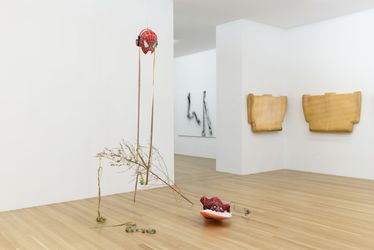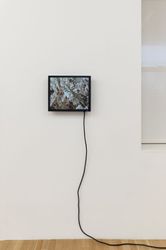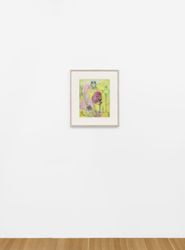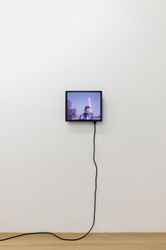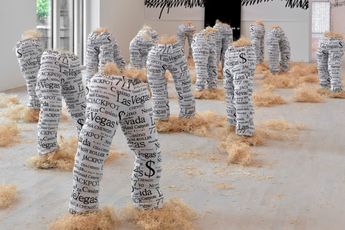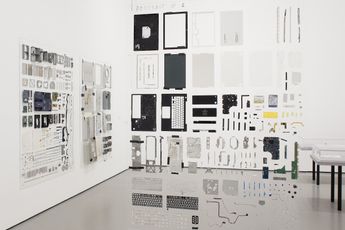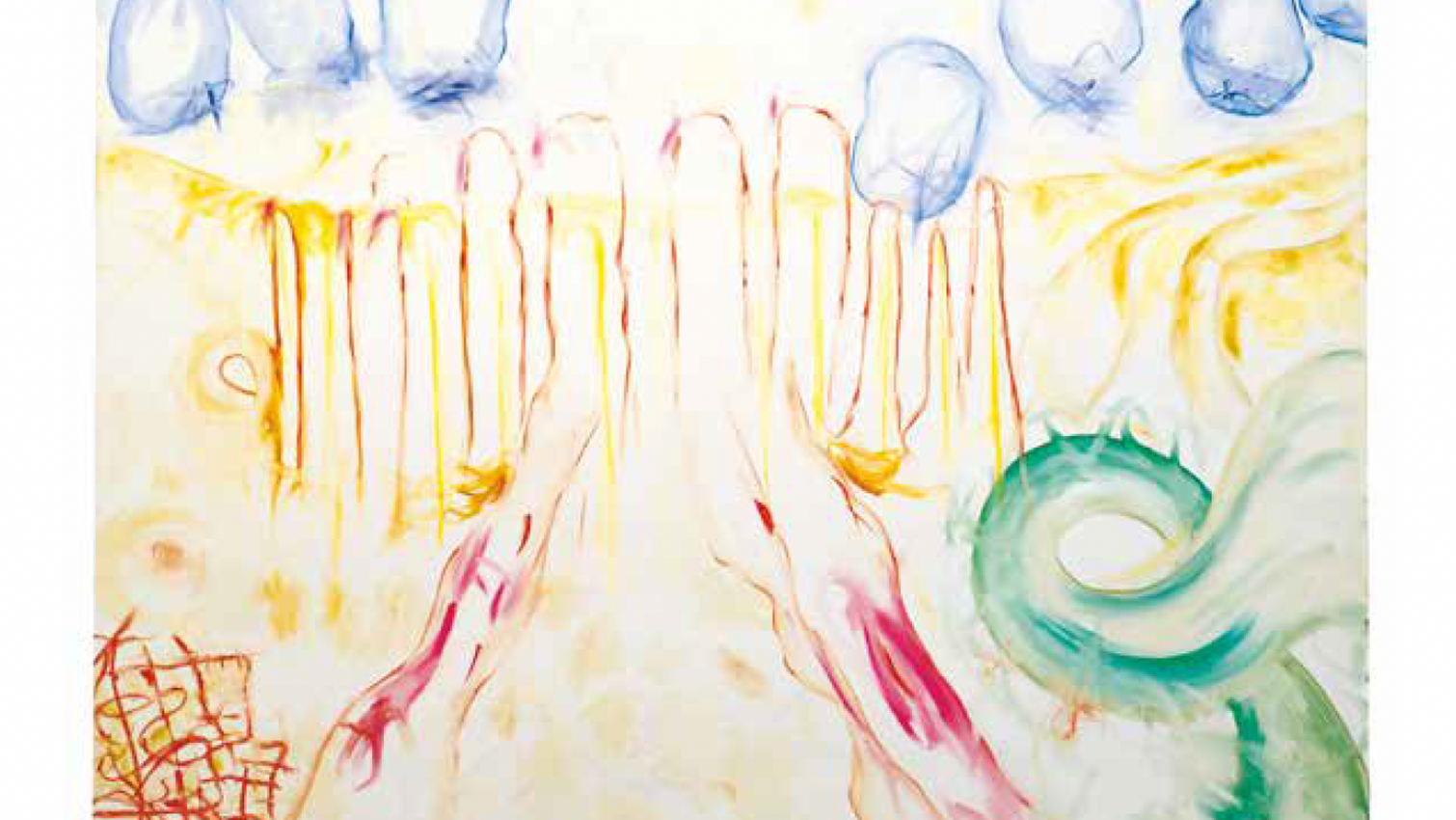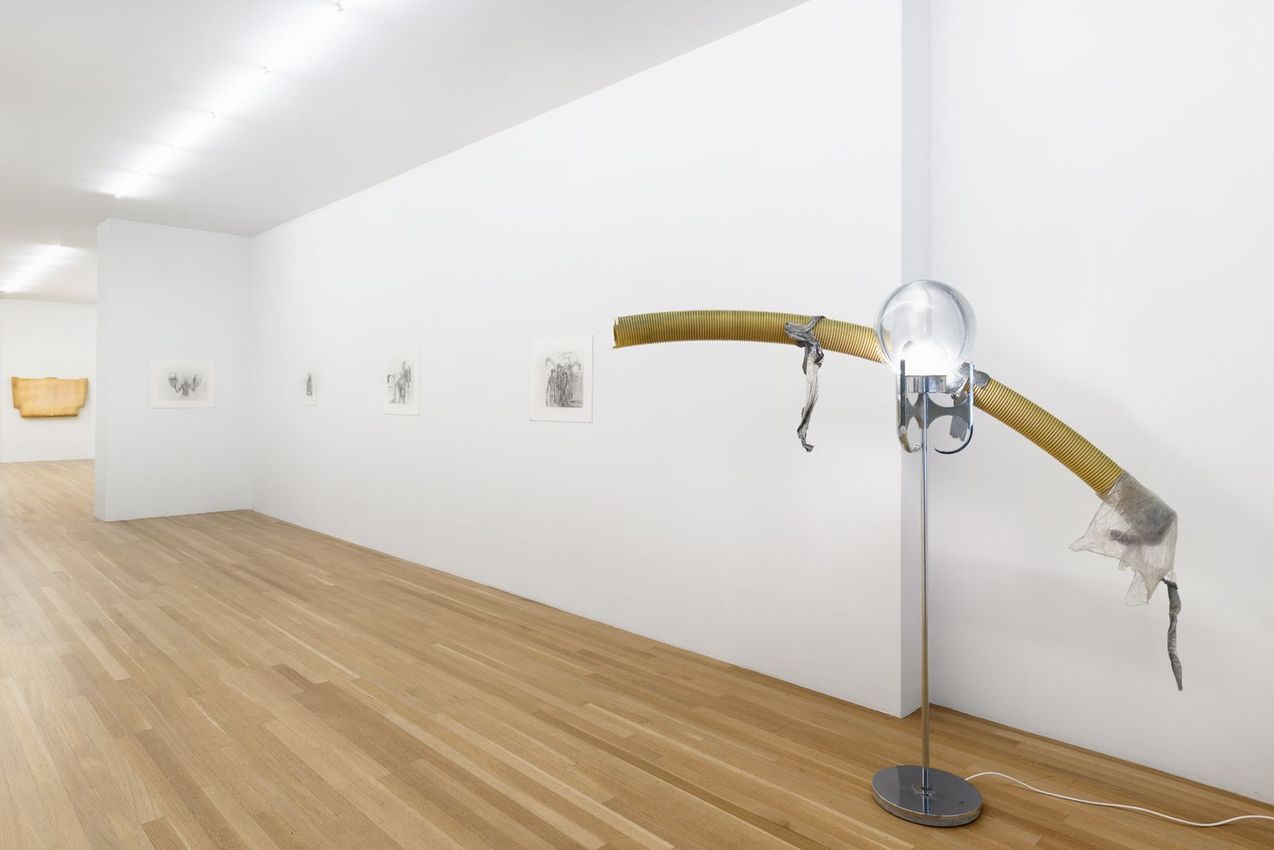
The exhibition has developed from conversations about a particular motif in critical theory. It involves thinking about the relationship between nature and history in a way that is complementary to many contemporary debates. Indeed, most discussions of recent critical theory emphasise the need to read nature in terms of history. From gender and queer studies to political ecology, the focus is on raising awareness that nature is not given to us independent of its respective social and historical constructions. The figure of thought that stands in the background of this exhibition, on the other hand, proceeds the other way around: it reads the constructions of history under the sign of their natural decay, that is, as transient.
Under the heading of ‘natural history,’ this figure of thought, largely forgotten today, had an important position in early critical theory, especially in the works of Walter Benjamin and Theodor W. Adorno. It was as much a part of the critical understanding of the relationship between nature and history as the other one was. Indeed, both perspectives—reading history in nature and nature in history— were dialectically intertwined. However, the idea of reading the constructions of history as ciphers of their own transience explains the alliance that early critical theory saw between melancholia and critique. This affinity of melancholia and critique also seems largely forgotten today. Wherever melancholia is currently being debated, it is mostly as a subject of critique. In the respective discourse, melancholia appears in close proximity to depression and is criticised as a pathology that is accompanied not only by a problematic internalisation of conflicts, but also by a narcissistic turning away from the world. In contrast, the critical melancholia whose recall stood at the beginning of this exhibition is emphatically oriented towards the world. The melancholic gaze to which the historical world presents itself in the light of its own transience dissolves the semblance of standstill in what is and opens it up to becoming. Yet the perspective of change implied here arises not in spite of, but precisely because of the insight into the finitude of all that exists.
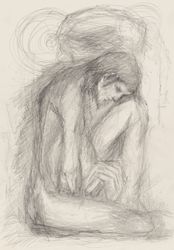
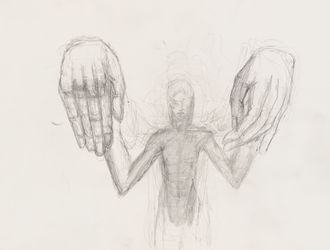
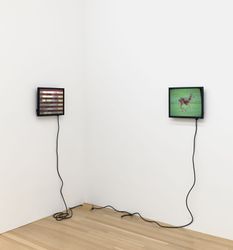
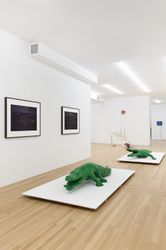
The works assembled in this exhibition respond to this idea of a critical melancholia. Some of them are selected older works, while others are new ones that were developed from the discussions that led to the exhibition as a whole. The result not only reveals resonances between critical theory and aesthetic sensibility, it also opens up a variety of dialogues between the works and between different dimensions of critical melancholia: The works keep faith with the world in presenting in ruins what has taken on the semblance of the unquestionably given. They undermine the dichotomy of nature and culture. They side with failure and decay. They tenderly inhabit the ripped backsides of progress. They seek the irreducibly human in the tattered and forgotten thing. They find dignity and strength in the insistent remnant or focus on the breathtaking beauty of the ephemeral. Yet it is precisely this sensitivity to the melancholic beauty of transience that lets the glamour of strict negativity—the promise of a different, better life—shine through. If you are willing to see it, there is glitter in a drainpipe...
The starting point for the idea of this exhibition was Juliane Rebentisch’s text on the motif of natural history in Jack Smith, which—including a new annex—was made accessible again in the book “Camp Materialism” published 2020 by Galerie Buchholz


Galerie Buchholz is an art gallery specializing in international contemporary art, with exhibition spaces in Cologne, Berlin and New York City. The gallery was founded in Cologne in 1986 by Daniel Buchholz, and today is run jointly with Christopher Müller.
A respected voice in contemporary art discourse.
Focusing on ambitious storytelling and insightful art-world commentary. Ocula Magazine publishes in-depth interviews, critical essays and timely analysis on the artists, exhibitions and ideas driving the global art world.
Learn more about Ocula Magazine
Showcasing the best of the art world.
Ocula partners with galleries from around the world to highlight their artists, artworks and exhibitions. Gallery membership is by application and invitation, with each member vetted by an independent panel.
Learn more about Ocula Membership

Specialises in the sale of major artworks.
Led by a team with deep ties to the world’s leading auction houses, galleries and collectors. Ocula’s advisory team offers bespoke services to high-net-worth clients from around the world who are looking to acquire the best of contemporary and modern art.
Learn more about our team and services