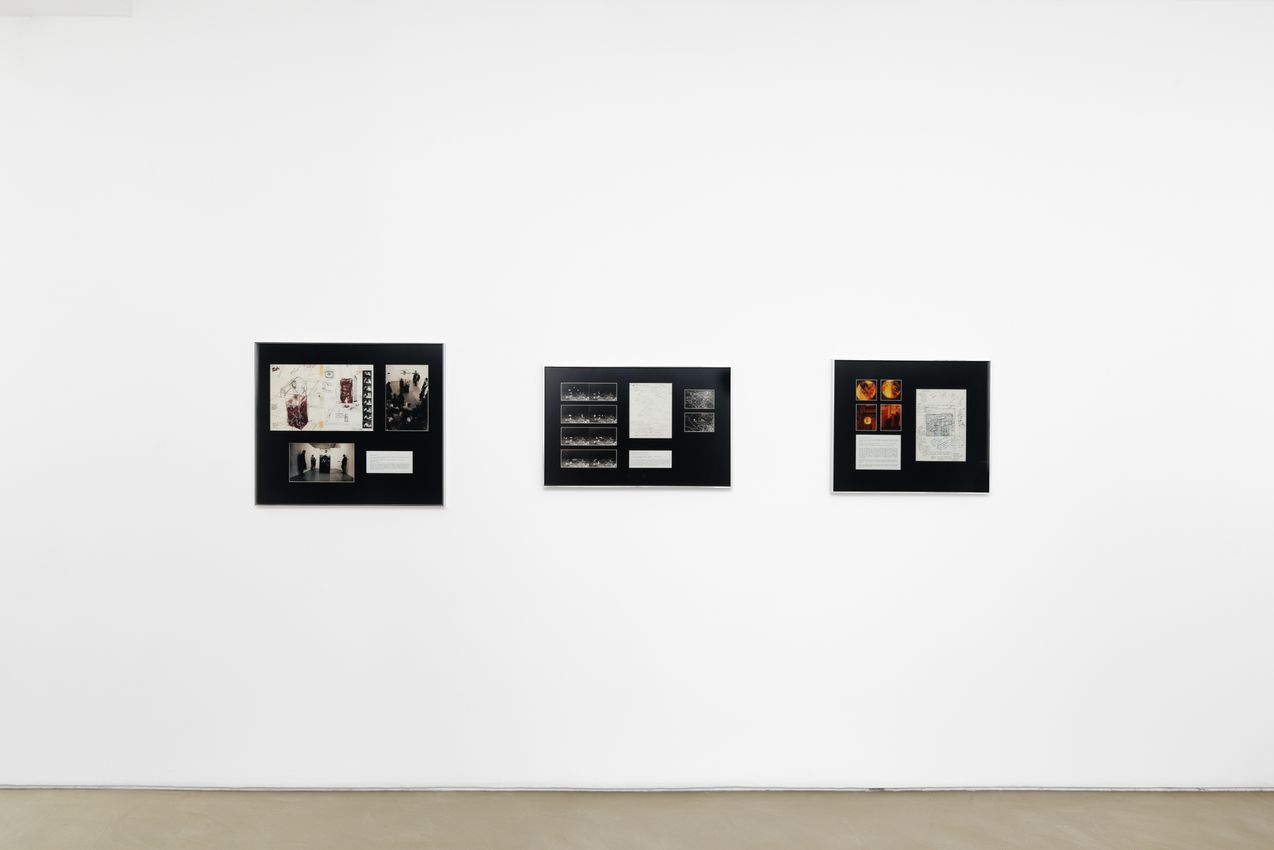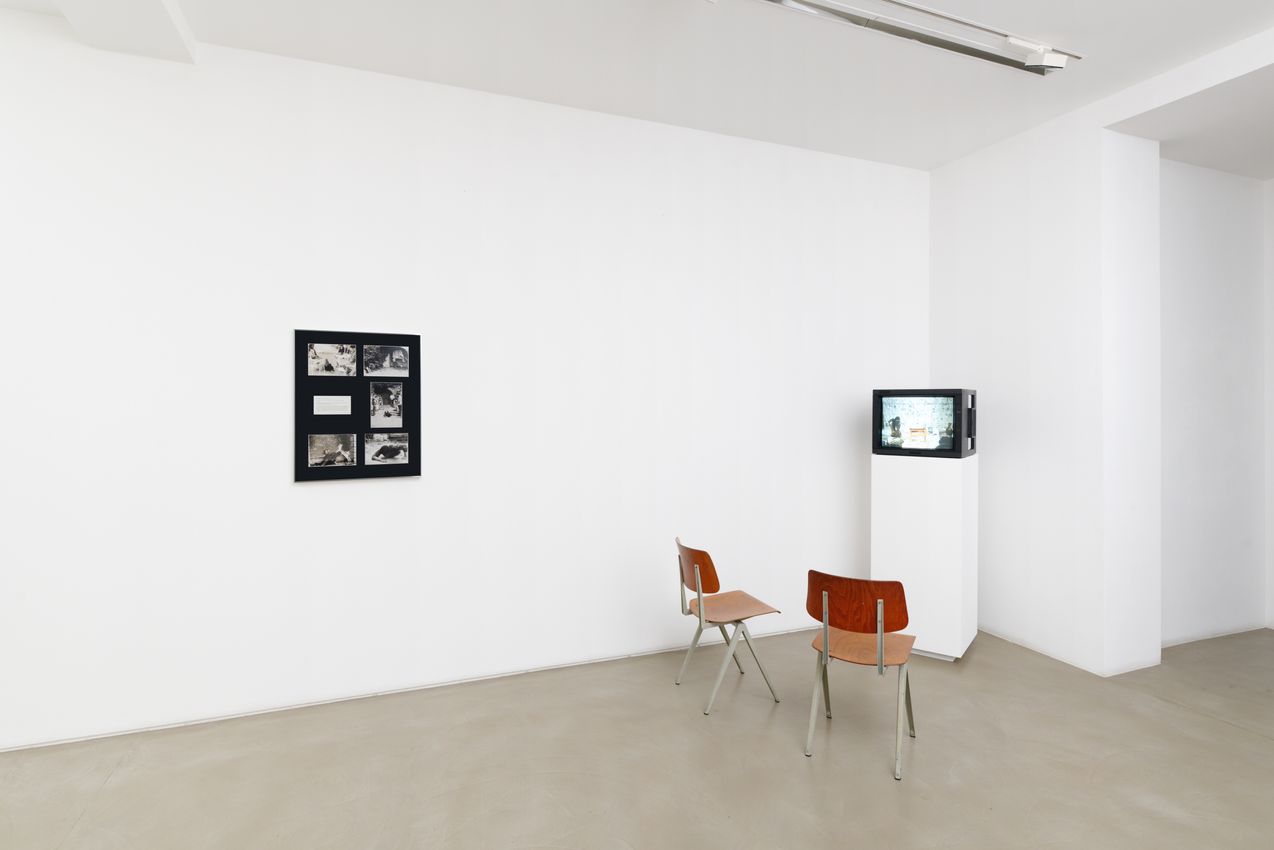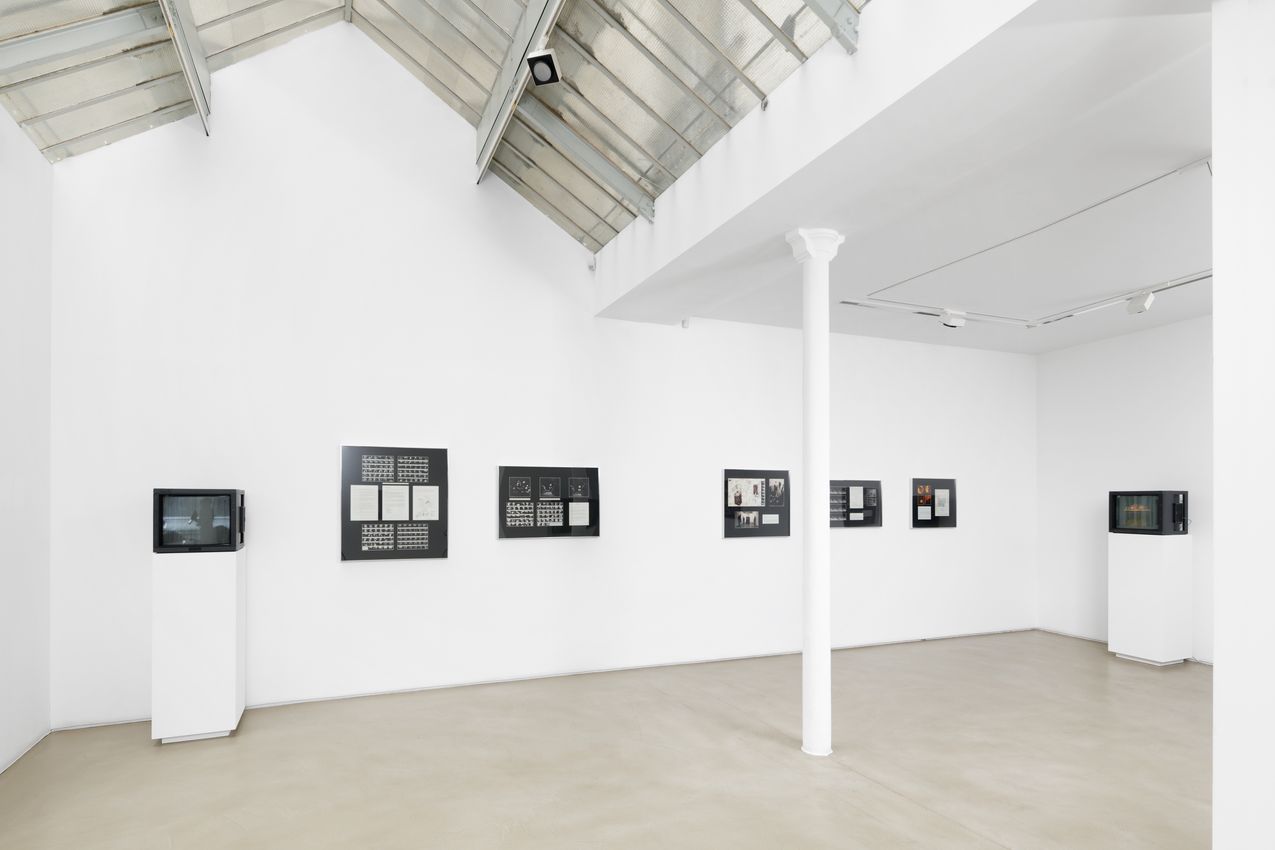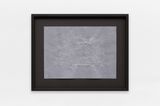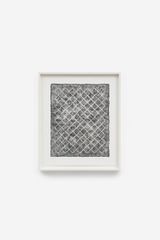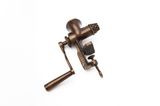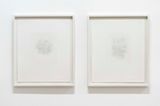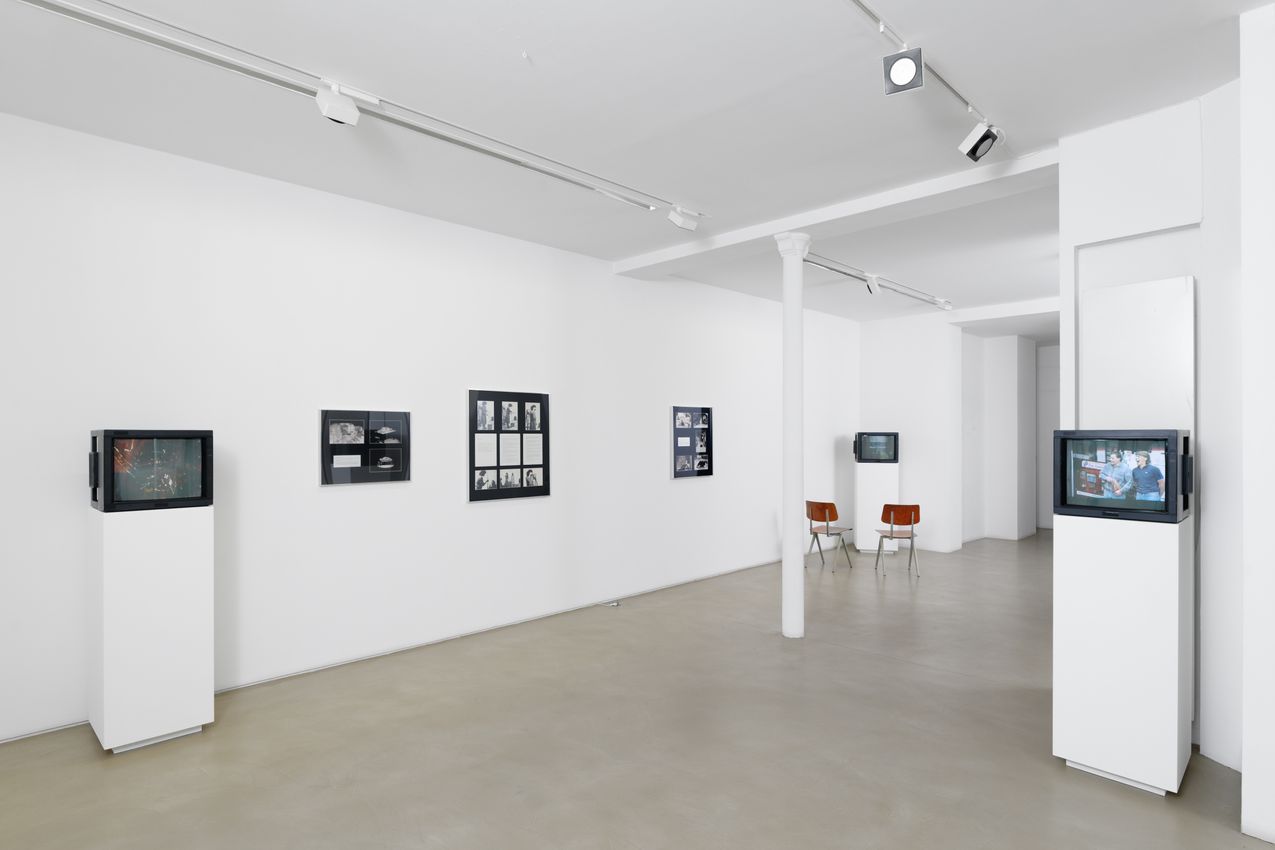
Galerie Chantal Crousel is delighted to host Mona Hatoum’s newest solo exhibition in its second space at 5 rue de Saintonge, with a presentation of the majorinstallation Performance Documents, 1980-1987/2013. This important work, comprisingphotographs, sketches, drawings, notes, descriptions, and videos, brings togetherrare archive material from a strategic and early point in Hatoum’s career when shecreated performance in both a gallery setting and outside, on the streets.
Hatoum’s performances are particularly striking since they are both dramatically visual and emotionally and politically engaged, characteristics which underpin allof her work thereafter. In these works we see themes that the artist returns to manytimes in her sculptures, installations and works on paper, with particular focuson the body, issues of gender and notions of conflict and displacement. Propssuch as furniture and domestic tools as well as confined, architectural structurescreate a textural background for actions that focused intensely on the body and, inparticular, on the experience of being a displaced person.
The sketches are also remarkable in that they evidence the emerging sculptor that Mona Hatoum would become as well giving vivid insight into the working mind ofan artist, showing both the initial ideas as well as the revisions and changes that arenecessary in order to create a successful artwork. Mona Hatoum’s decision to makeperformances at this time was partly due to necessity since she had limited funds,but also due to her active involvement in the fringe scenes of the London art worldat the time, having recently graduated from art school. Since these works were oftenperformed only once, this documentation provides the contemporary viewer witha unique, highly interactive engagement not just in an important period in MonaHatoum’s career but in 1980s art in general.
—
In 2020, Mona Hatoum has been awarded the Julio González Prize 2020 by the Valencia Institute of Modern Art, as well as the Praemium Imperiale prize forSculpture in 2019, submitted by Japan Art Association, the most historical culturalfoundation in Japan. She was presented with a number of additional prizes duringher career, such as the Hiroshima Art Prize by the Hiroshima City Museum ofContemporary Art (2017), the Joan Miró Prize of the Fundació Joan Miró (2011), andthe Roswitha Haftmann Stiftung Prize, Zurich (2004) among others.
In 2015, her major exhibition at the Musée National d’Art Moderne, Centre Georges Pompidou, Paris travelled to Tate Modern, London, and the Museum ofContemporary Art Kiasma in Helsinki (2016).
Mona Hatoum has since then, shown her work in numerous international institutions such as the Magasin III and Accelerator, Stockholm (2022); ValenciaInstitute of Modern Art (IVAM), Valencia (2021); Menil Collection, Houston, (2017)that toured to the Pulitzer Arts Foundation in St. Louis (2018); Hiroshima CityMuseum of Contemporary Art (2017). Previous solo exhibitions include: FundaciónPROA, Buenos Aires (2015); Pinacoteca do Estado, São Paulo (2014); Museum of FineArts, Ghent (2014); Arab Museum of Modern Art, Doha (2014); Kunstmuseum St-Gallen (2013); Arter, Istanbul (2012); Fundació Juan Miró, Barcelona (2012); UllensCenter for Contemporary Art, Beijing (2009); Fondazione Querini Stampalia,Venice (2009); Museum of Contemporary Art Australia, Sydney (2005); HamburgerKunsthalle, Hamburg (2004); Kunstmuseum Bonn (2004); Magasin III, Stockholm(2004); Museo de Arte Contemporáneo de Oaxaca (2003); Centro de Arte deSalamanca (2002).
Don’t smile, you’re on camera!, 1980
The artist points a live video camera directly at the audience, panning up and downthe rows, very slowly, sometimes stopping and focusing on parts of a person’s body.Faces, torsos, crotches appeared on the monitor facing the audience. A shirt slowlyfades away and a ghost image of bare breasts appears behind it, creating the illusionthat the camera could see through the person’s clothes. In the same way a shoedisappears and reveals a bare foot inside it. A man’s jacket turns transparent anda hairy chest or a woman’s naked torso is seen through. Another person’s chest isoverlapped with the ghost image of an X-ray of the same part of the body. This performance was made possible with the participation of three assistants whowere not visible to the audience. Two assistants used a second live camera to scantheir own naked bodies while a third assistant mixed the images fed in by the twolive cameras.
Video Performance, 1980
During the first part of the performance, the artist points a live video cameradirectly at the audience and scans up and down a couple of rows in detail. Whatthe camera sees is simultaneously shown on a large monitor facing the audience.The artist then puts the camera down and draws a white chalk circle on the floor.She sits cross-legged in the middle of the circle, with her back to the audience. Shepicks up the video camera again but this time, unsuspected by the audience, sheswitches on a pre-recorded tape. Pointing the video camera towards herself shesystematically scans her body from head to foot.
The monitor this time shows what the camera would see if the performer were unclothed. It is made to look as though the camera could see through the clothesbut not through buttons, buckles, items in pockets, etc. The artist’s movementswith the camera are synchronised with what is shown on the monitor to create theillusion that the action is taking place in real time.
Look No Body!, 1981
The artist repeatedly performs the task of filling a cup with water, drinking the waterand offering every other cup to a different member of the audience. Behind her avideo monitor is placed, showing a view from a high angle of the toilet just outsidethe performance space.
Throughout the performance a sound tape is played. It consists of a monologue by the artist talking about an obsessive dream, reading a scientific and detaileddescription of the activity of passing water, and other thoughts, fantasies andquestions related to it. Her voice is mixed with the amplified sounds of her heartbeat,breathing and loud stomach rumbles she had recorded using medical equipment.
Live work for the black room, 1981
The performance takes place in a room where all surfaces are painted black. It beginsin complete darkness and for the first few minutes the action of the performer isheard but not seen. The artist repeatedly falls on the floor and draws the outlineof her body in white chalk. She repeats this action several times until the floorbecomes criss-crossed with lines, intersecting in a tangled mess. Each time shefalls, the artist places a small, lit candle in the centre of the body-outline.
Under Siege, 1982
The artist’s figure, reduced to a form covered in clay, trapped, confined within asmall transparent structure, struggles to stand up, slipping and falling again andagain. The live action is continuously repeated over a period of 7 hours and isaccompanied by 3 different sound tapes (on loop) continuously blasting the spacefrom different directions, creating a collage of sounds: revolutionary songs, newsreports and conversations in English, French and Arabic.
The Negotiating Table, 1983
The room is dark, lit only by a light bulb lowered over a table on which the artist liesmotionless. Empty chairs surround the table. Her body is bloodstained, coveredwith entrails, wrapped in plastic, and her head is firmly covered in surgical gauze.On the sound track news reports can be heard about civil war and speeches ofWestern leaders talking about peace.
Them and Us...and Other Divisions, 1984
While people sit out on the terrace during lunch, the artist, hooded and in blackoveralls, crawls dragging herself on her belly between the chairs, underneath thetables for the entire length of the 300-foot terrace. As she finally reaches a recess in the garden wall, she begins dipping a brush into thebucket and scrubbing the stone step, but instead of getting it cleaner, it becomescovered with red paint. At the end, she sets fire to a screen of newspapers thatburns away to reveal a wall chalked with racist graffiti.
Variation on Discord and Divisions, 1984
The floor and walls of the performance space are lined with newspapers. Theperformance consists of a series of vignettes: the artist, dressed in black overalls, anopaque stocking masking her face, slithers with some difficulty on the floor alongthe aisle between the rows of spectators into the performing space; she tries toscrub the floor but smears it with red-stained water; she tries to unmask her face byslitting eye holes through the stretched out stocking with a long-bladed knife; shecircles a long table and chairs, and trying to sit down, she falls; she sets the tablewith plates, then, removing raw kidneys from under her clothes, cuts them up, putsthem on the plates, and serves them, one by one, to the audience.
Roadworks, 1985
This video documents a performance that Hatoum made in Brixton, South Londonin 1985, where she walked barefoot through the streets, dragging a pair of large bootsattached to her ankles by their laces. Brixton is an area of London that previously hadwitnessed violent race riots, therefore police presence was very prominent in thearea. The boots that Hatoum chose to use were very particular: ‘Dr. Martens’, whichhave been traditionally worn by the British police, but were also adopted, at thetime, by the skinhead movement that is commonly associated, with racist violence.Hatoum’s movement was encumbered by the boots of the ‘state’ that followed hervulnerable steps like a continual, threatening presence or heavy shadow.
Unemployed, 1986
The artist, dressed in black overalls with the words ‘ARTIST AT WORK’ stencilledin white on her back, walks from the Sheffield city centre to the unemploymentoffice, stopping every few steps to spray the word ‘UNEMPLOYED’ on thepavement, using a stencil in the shape of a foot and spray paint. A clearly visibletrail of ‘UNEMPLOYED’ footsteps is left on the pavement behind her.
Position: Suspended, 1986
The artist constructs a wedge-shaped structure obstructing the entrance betweentwo galleries. Two sides of the structure are built out of wood and corrugated steel,the third side is screened with chicken wire. Inside, a variety of rusty hand tools aresuspended. Covered in mud, the artist paces back and forth within the confinedspace brushing past the instruments. In doing so, a clanging metal sound can beheard and bits of mud get transferred into the instruments. The audience is forcedto walk very close to the structure along the chicken wire screen coming into closecontact with the artist trapped inside.
Matters of Gravity, 1987
For this performance, an alcove near the restaurant is blocked off with sheets ofcorrugated iron creating a shack or bomb-shelter. The artist can only been seenthrough a lens that not only makes her look remote, but also turns everythingupside down making her look as if she is defying gravity. The space appears to beeven more illogical because all the contents of the make shift shelter–folding bed,chairs, table, tray with coffee cups, et cetera–are attached to the opposite wall. Therefore,when the artist seems to lie on the bed, she is actually standing bent over againstit and when she appears to be standing, she is in reality lying on the floor and it isthough you are peeping through a hole in the ceiling.
When standing close to the structure you can hear a sound recording of the artist reading extracts from her father’s diaries describing a repetitive daily routine ofrestrictive movement between house and shelter. Eight small speaker cones hangabove the tables throughout the restaurant with the continuous sound of aeroplanesflying over head with intermittent air strikes and explosions.
Hatoum went through her art training in schools in London in themid-1970s. She has worked in a diverse range of media includingperformance, video, photography, sculpture, installation and works onpaper. Her work, which deals with issues of displacement,marginalisation and systems of social and political control, is oftenrealised through the use of unconventional materials such as householdobjects, glass marbles or even her own hair.


Located on rue Charlot in the 3rd arrondissement in Paris, Galerie Chantal Crousel presents a selection of artists highly diverse in their national and cultural origins and mediums who together contribute to a universal visual language.

A respected voice in contemporary art discourse.
Focusing on ambitious storytelling and insightful art-world commentary. Ocula Magazine publishes in-depth interviews, critical essays and timely analysis on the artists, exhibitions and ideas driving the global art world.
Learn more about Ocula Magazine
Showcasing the best of the art world.
Ocula partners with galleries from around the world to highlight their artists, artworks and exhibitions. Gallery membership is by application and invitation, with each member vetted by an independent panel.
Learn more about Ocula Membership

Specialises in the sale of major artworks.
Led by a team with deep ties to the world’s leading auction houses, galleries and collectors. Ocula’s advisory team offers bespoke services to high-net-worth clients from around the world who are looking to acquire the best of contemporary and modern art.
Learn more about our team and services