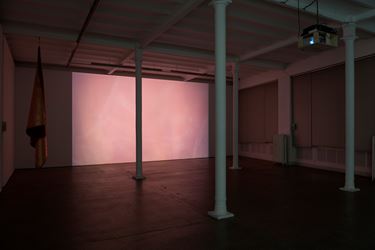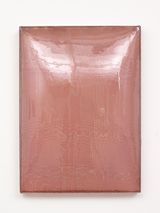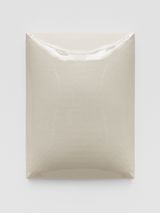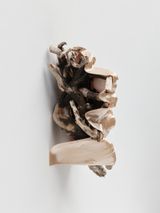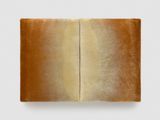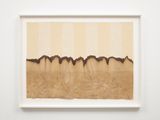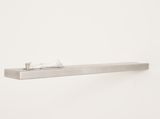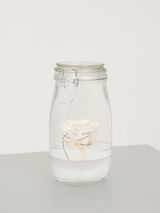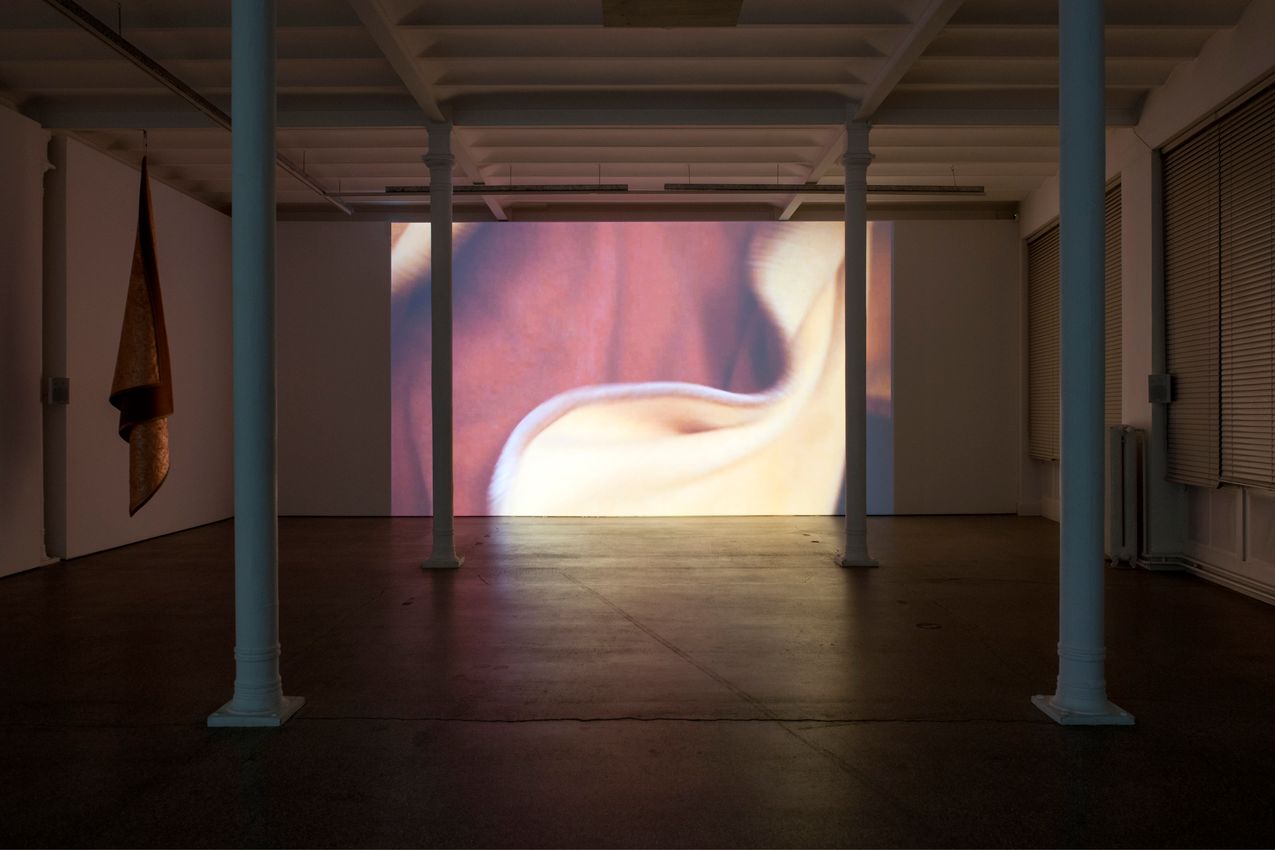
The origin of the exhibition Chronology of Tears lies in the experience of twilight and claire-obscure, a historical technique in painting and a certain intensity of light in winter, when the artist prepared this exhibition.
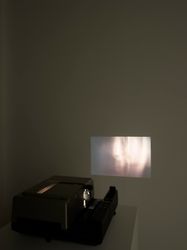
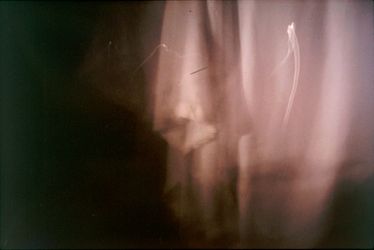
A first piece at the entrance of the space refers to two previous works. The slide series ‘Static Light’ (2004) reveals the electromagnetic light sparks that are set off during a swift manipulation and friction of a woollen blanket in a dark space. The sound of this static electricity is experienced when watching the Static Sound video (2004). Both recordings took place in a mountainous area at a temperature of -35°C.
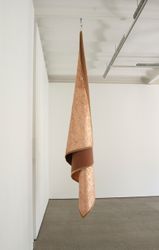
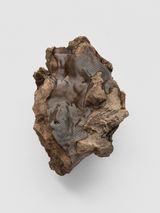
Exactly ten years later the artist decided to repeat the experiment under similar meteorological conditions, i.e. at a temperature of -15°C, in the Svalbard Archipelago in the Arctic Ocean. The blanket that was used in these recordings was subsequently covered on one side in small thin copper sheets.
The essence of this action is the charging, the activation of matter. This reflection frames the action in the materialist philosophical tradition, with footnotes of Spinoza’s animism, Deleuze and Guattari’s vitalism and the recent work by Jane Bennett. All matter has an active, process-determined action that presumes a continuous movement, a transformation, even it remains invisible.
Edith Dekyndt’s work also confronts us with the insufficiency of our visual perception and demands a wider experience that includes emotion, intuition and imagination. This imagination component in the structure of meaning may be related to certain conceptual strategies in which a work of art completes itself in the experience and the thoughts of the viewer.


Edith Dekyndt (b. 1960, Ypres, Belgium) works across video, sculpture, installation, drawing and sound to address timeless concerns of light, time and space in the most subtle ways. Throughout her work, she manifests a profound interest in physical phenomenons and ephemeral incidents by paying close attention to materials and their transient nature. She transforms her sensual perceptions to create a conceptually rich and materially engaged visual language. She lives and works in Berlin, Germany and Brussels, Belgium.
Over the past 30 years, Galerie Greta Meert established itself as one of Brussels’ leading contemporary art galleries. Founded in 1988 as Galerie Meert Rihoux, it was subsequently renamed after its founding director Greta Meert in 2006. Located in the center of Brussels, the gallery occupies a five-story Art Nouveau building designed by Louis Bral and renovated for the gallery by renowned Belgian architects Hilde Daem and Paul Robbrecht. Since 2012 three floors of the building are dedicated to exhibitions, making it possible to maintain an expanded exhibition schedule.

A respected voice in contemporary art discourse.
Focusing on ambitious storytelling and insightful art-world commentary. Ocula Magazine publishes in-depth interviews, critical essays and timely analysis on the artists, exhibitions and ideas driving the global art world.
Learn more about Ocula Magazine
Showcasing the best of the art world.
Ocula partners with galleries from around the world to highlight their artists, artworks and exhibitions. Gallery membership is by application and invitation, with each member vetted by an independent panel.
Learn more about Ocula Membership

Specialises in the sale of major artworks.
Led by a team with deep ties to the world’s leading auction houses, galleries and collectors. Ocula’s advisory team offers bespoke services to high-net-worth clients from around the world who are looking to acquire the best of contemporary and modern art.
Learn more about our team and services