




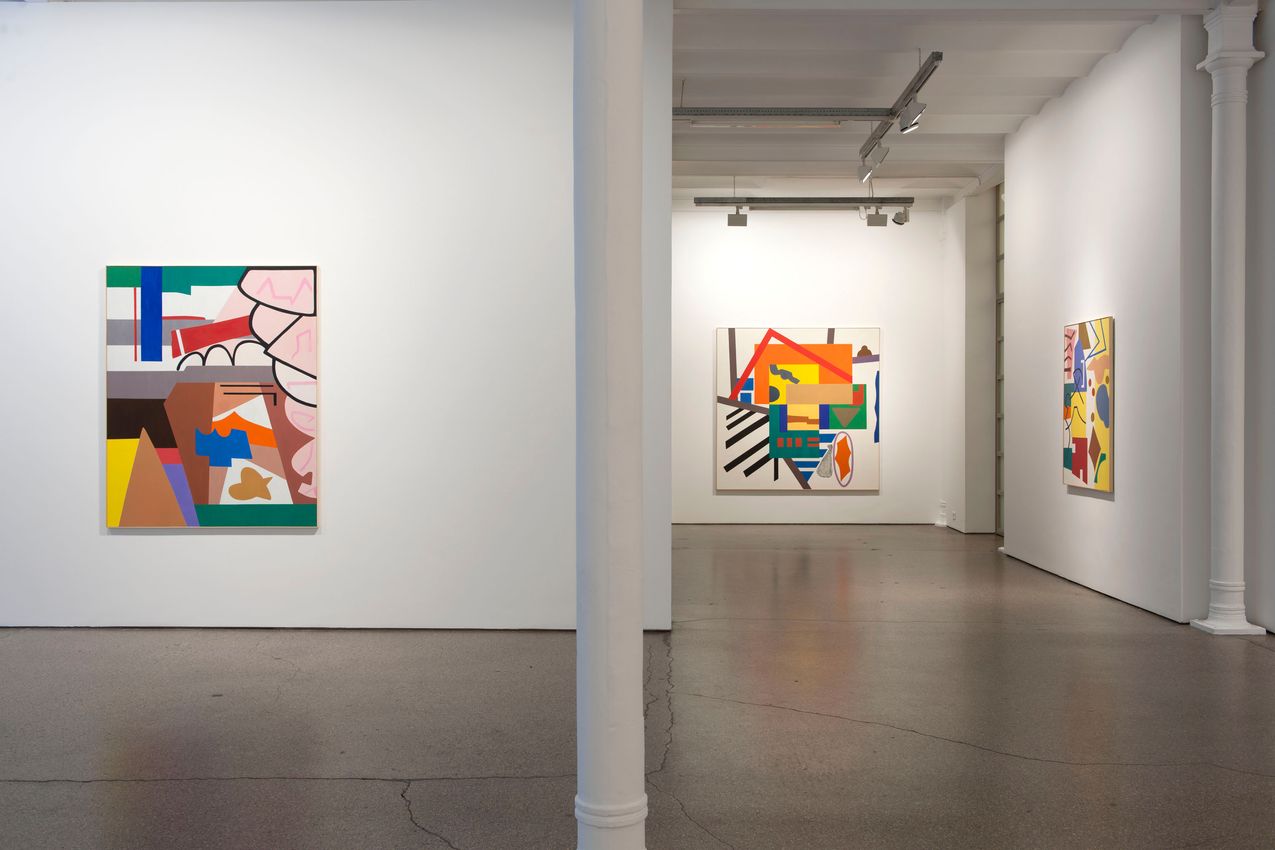
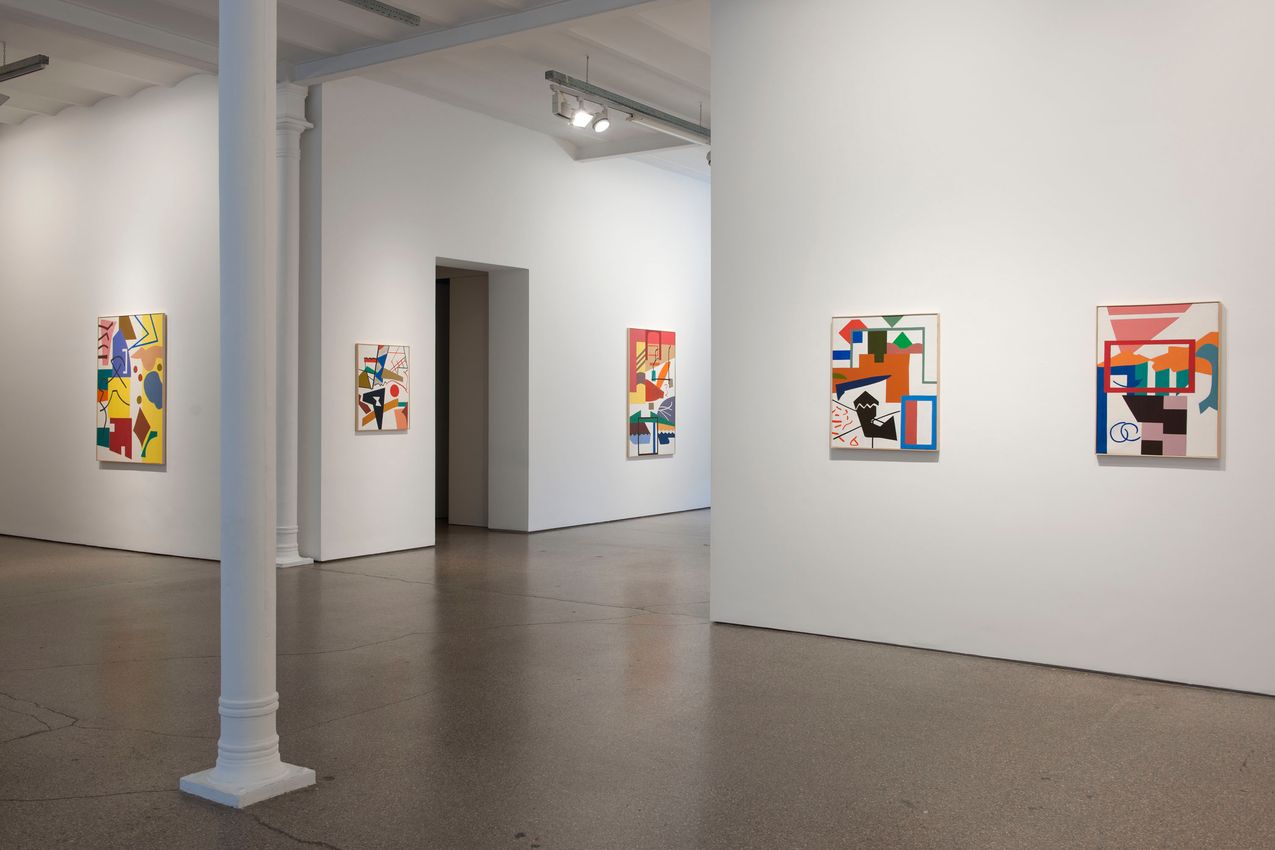
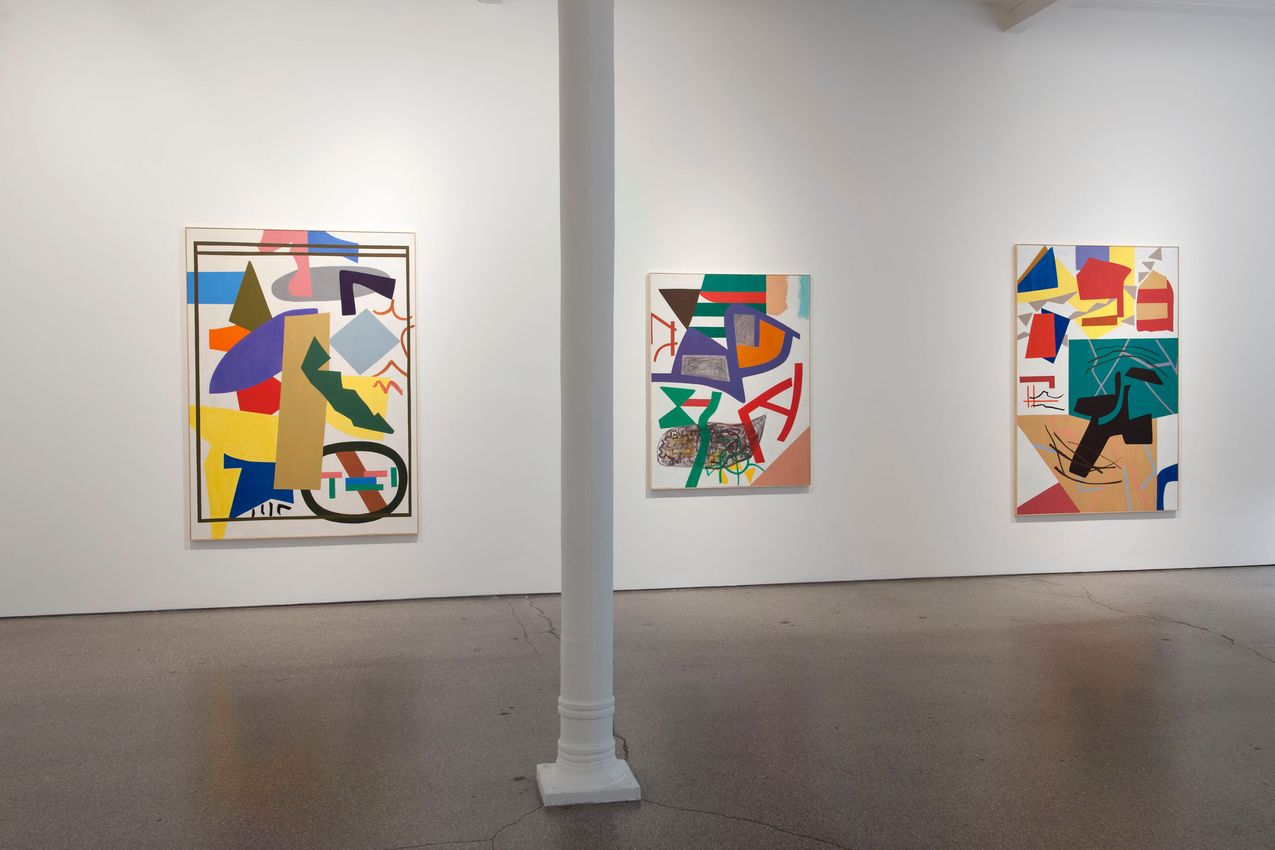
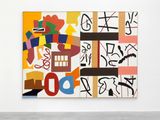
Greta Meert Gallery presents its second solo exhibition of American artist Shirley Jaffe (New Jersey, 1923).
A major historical perspective places Shirley Jaffe among a series of young American and Canadian artists who took up residence in Paris after the Second World War: Joan Mitchell, Jean-Paul Riopelle, James Bishop, Sam Francis and Ellsworth Kelly. They became known as the Second Generation Abstract Expressionists, as they were inspired by the innovative movements in American painting since the midforties.
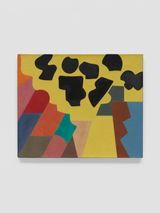
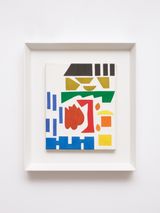
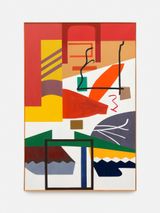
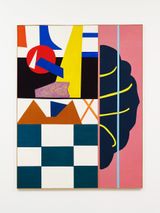
Within this tradition Shirley Jaffe’s work developed from gestural abstraction, with a rich texture and clotted and oil-caked surfaces, to flat geometrical pieces that come close to hard-edge painting. Matter and touch are reduced away in favour of a strong two-dimensionality, the ‘flatness’ that was famously praised by the influential American critic Clement Greenberg (1909-1994).
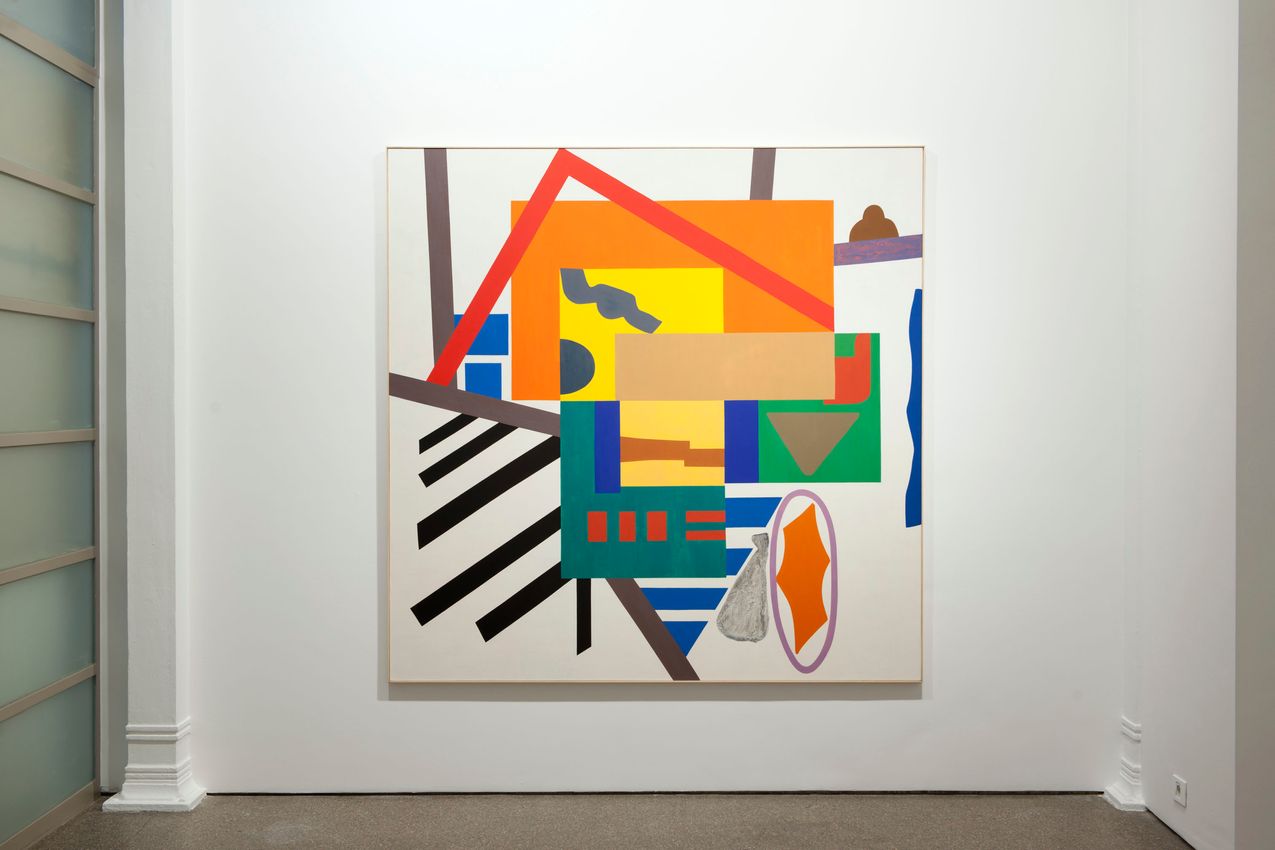
The action in Jaffe’s painting is reduced, but on the canvas the energy is regained, as it were, in the organisation of the strict colour arrangements. Shirley Jaffe is a colourist, above all. In her work colour determines composition and generates form. It constitutes a structural and formal power. It is a method that to some extent refers to the ‘papiers coupés’ by the late Henri Matisse (1869 - 1954).
Illustrative examples are Hawley, The Brown Frame and The Grey Phantom: sharply lined planes of colour are placed next to and on top of each other, without being mixed, in such a way that the pictorial plane is condensed. The white foundation has a nearly vibrating effect, it is not neutral at all.
In spite of the obvious precision and objectivity, a certain amount is spontaneity is also clearly present. Now and then the geometrical line becomes less strict and certain forms even evoke some recognisability, as in Shadows, Otherness or The City. However, by reminding us that the risk for association grows as soon as pure abstraction is abandoned, Shirley Jaffe emphasizes that her art is non-referential.
Once, when asked about her motivation, she replied that there was no need for a ‘nécessité intérieure”, for expression, for mimesis. The titles of her works therefore offer no explanation, but contain at most some intuitive thought. A knowing wink, also, at the often literary reading of her work, while it is precisely a plea for experiencing art by looking at it.
Shirley Jaffe’s work is in the collections of the MOMA and the Centre Pompidou, where this year it was included in the ‘Elles@pompidou’ exhibition.
Courtesy Galerie Greta Meert


Shirley Jaffe’s colourful geometric abstractions are full of associations inspired by her adopted hometown of Paris. Jaffe’s careful compositions recall the flat-yet fluid figure-ground relationships and stripped-down forms characteristic of Henri Matisse. With their flat geometric forms, lines, and amorphous shapes, her paintings have also invited comparisons to Fernand Léger’s circuses and Piet Mondrian’s Neoplasticism. Prior to the late 1960s, Jaffe painted in a gestural style, but abondoned it fearing that she was “destroying the essence of what we would call gesture” by reworking it until it was no longer pure.


Over the past 30 years, Galerie Greta Meert established itself as one of Brussels’ leading contemporary art galleries. Founded in 1988 as Galerie Meert Rihoux, it was subsequently renamed after its founding director Greta Meert in 2006. Located in the center of Brussels, the gallery occupies a five-story Art Nouveau building designed by Louis Bral and renovated for the gallery by renowned Belgian architects Hilde Daem and Paul Robbrecht. Since 2012 three floors of the building are dedicated to exhibitions, making it possible to maintain an expanded exhibition schedule.

A respected voice in contemporary art discourse.
Focusing on ambitious storytelling and insightful art-world commentary. Ocula Magazine publishes in-depth interviews, critical essays and timely analysis on the artists, exhibitions and ideas driving the global art world.
Learn more about Ocula Magazine
Showcasing the best of the art world.
Ocula partners with galleries from around the world to highlight their artists, artworks and exhibitions. Gallery membership is by application and invitation, with each member vetted by an independent panel.
Learn more about Ocula Membership

Specialises in the sale of major artworks.
Led by a team with deep ties to the world’s leading auction houses, galleries and collectors. Ocula’s advisory team offers bespoke services to high-net-worth clients from around the world who are looking to acquire the best of contemporary and modern art.
Learn more about our team and services
