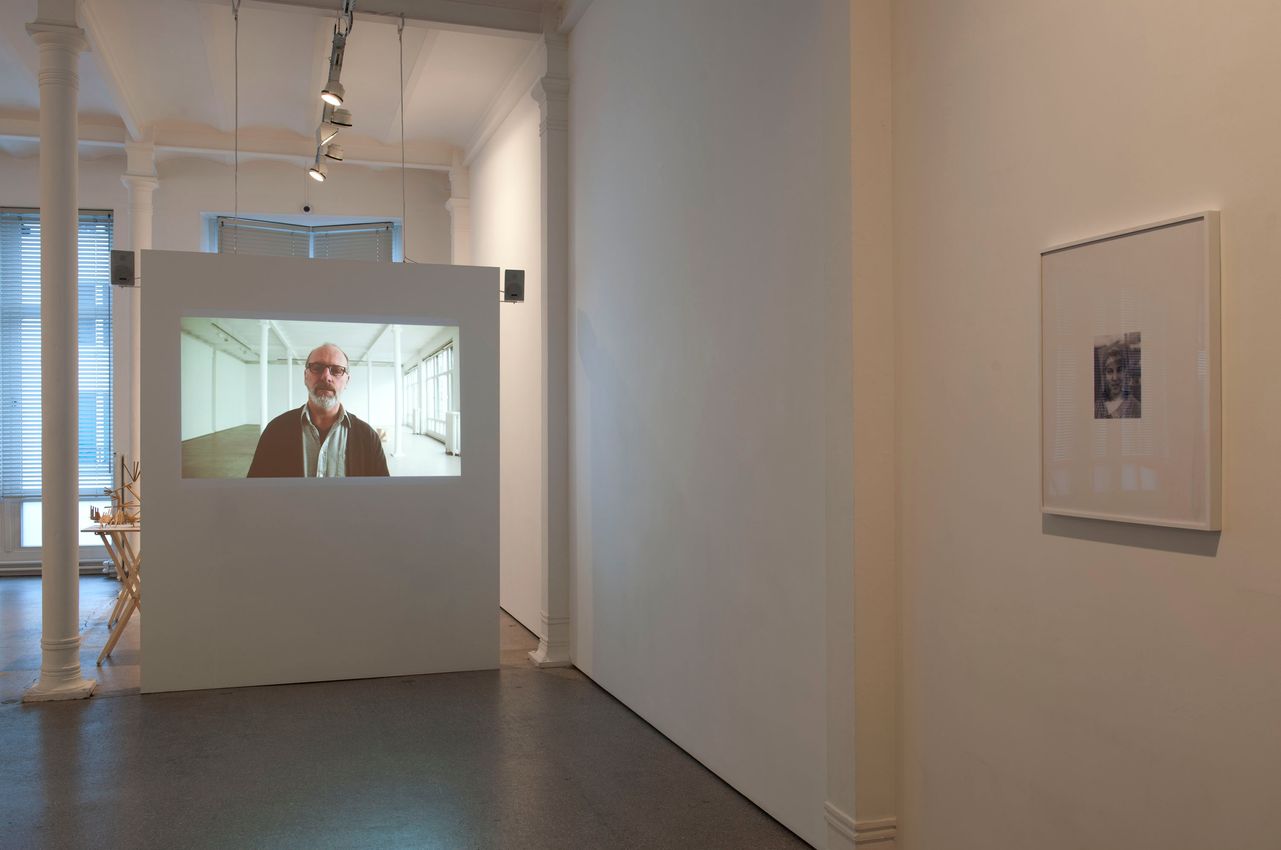
Greta Meert Gallery presents its first solo exhibition by Tobias Putrih (°1972, Kraj, Slovenia).
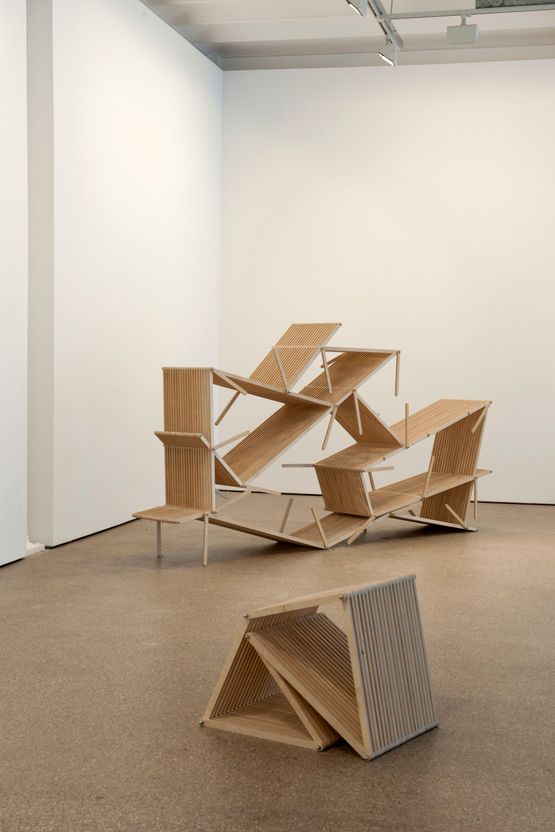
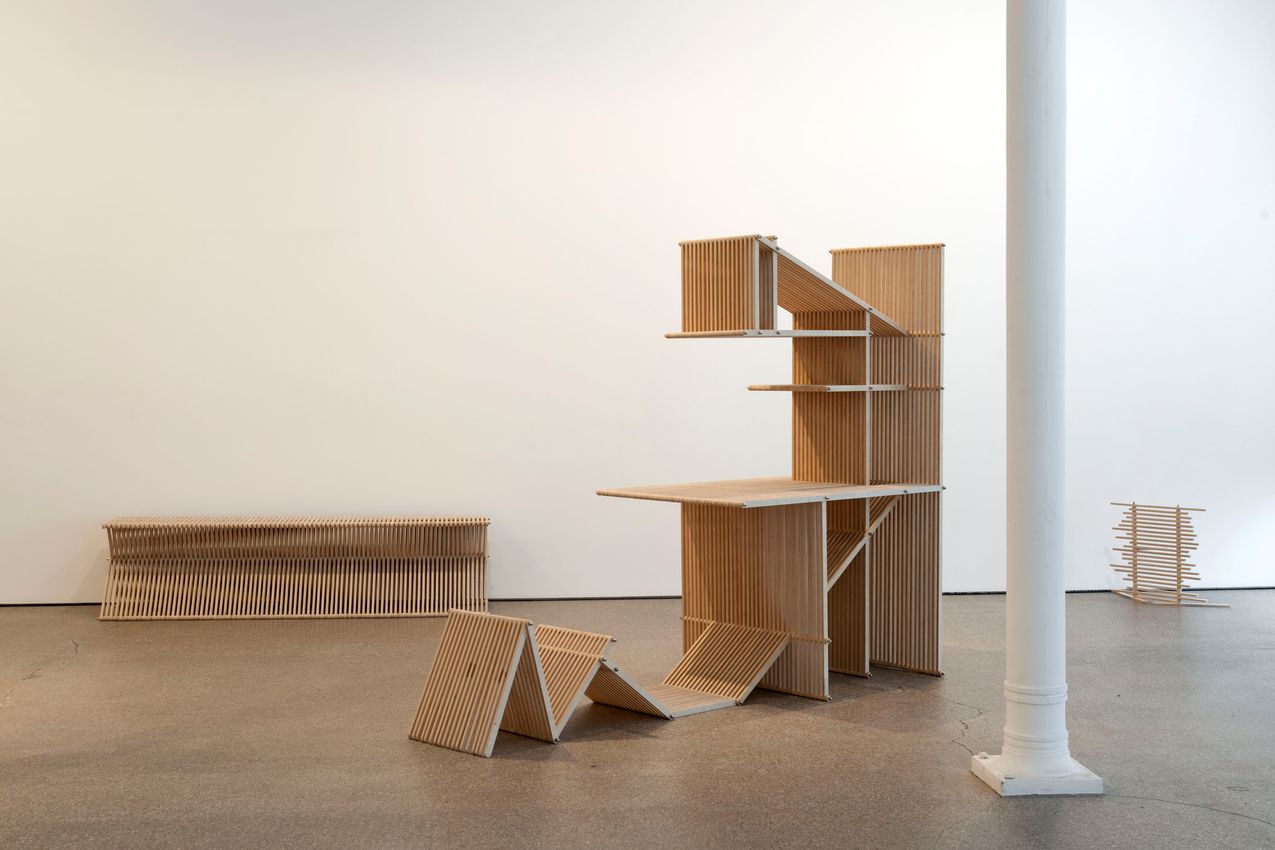
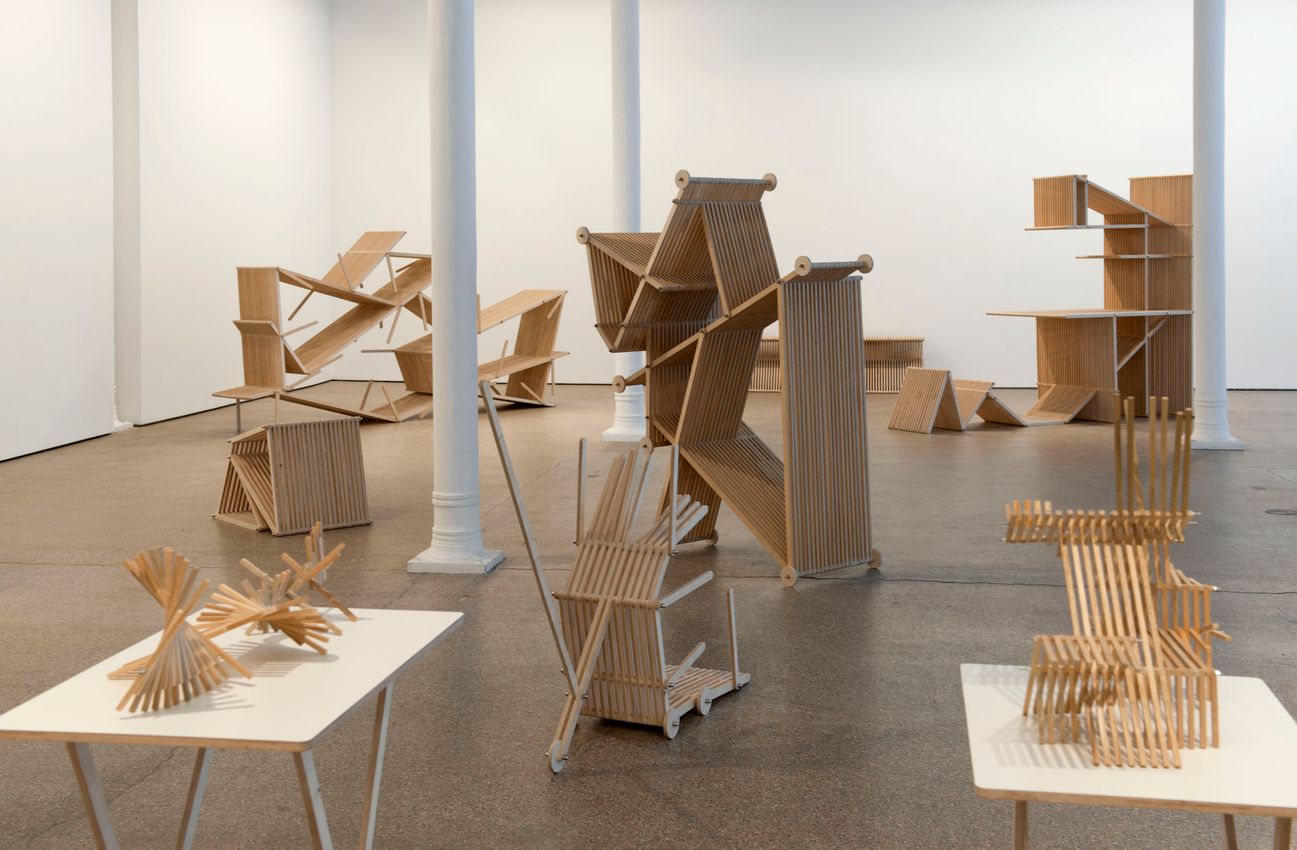
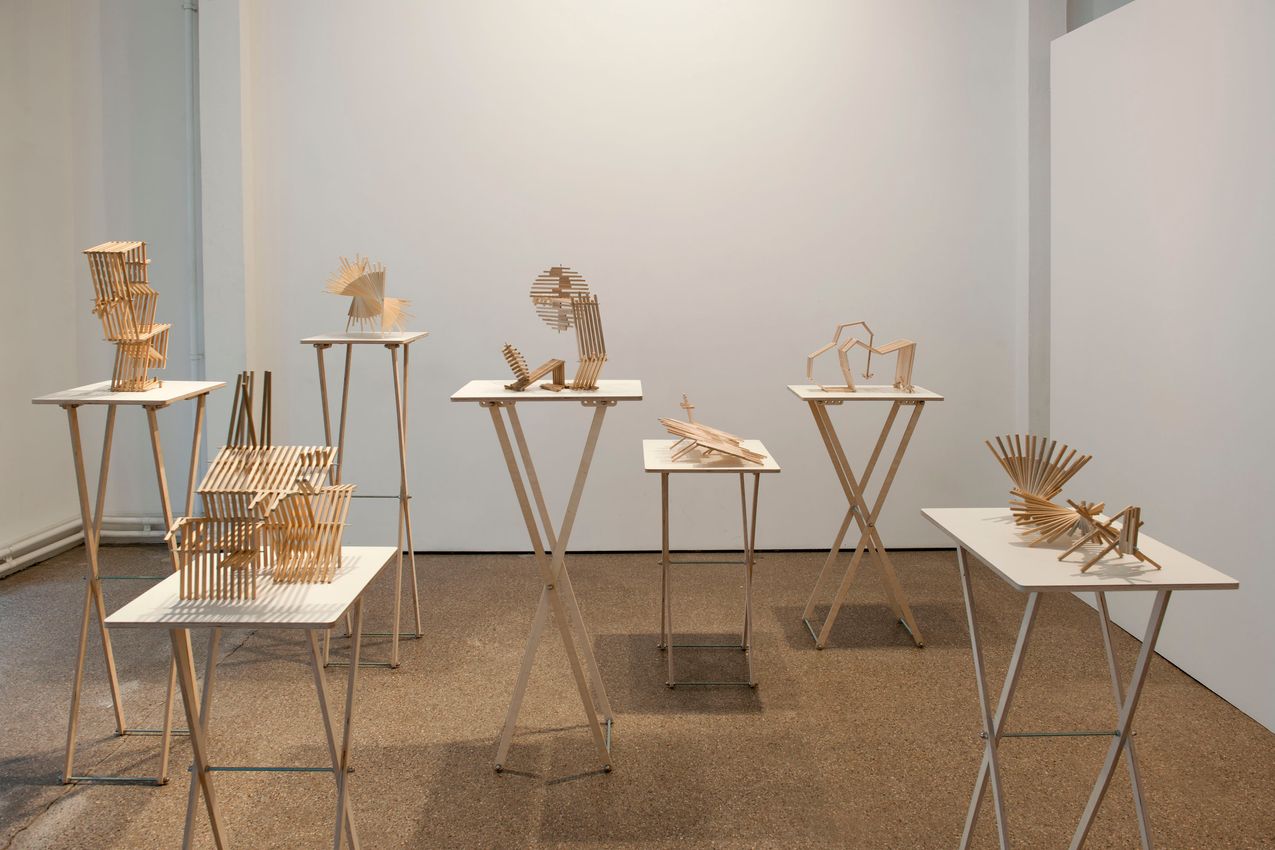
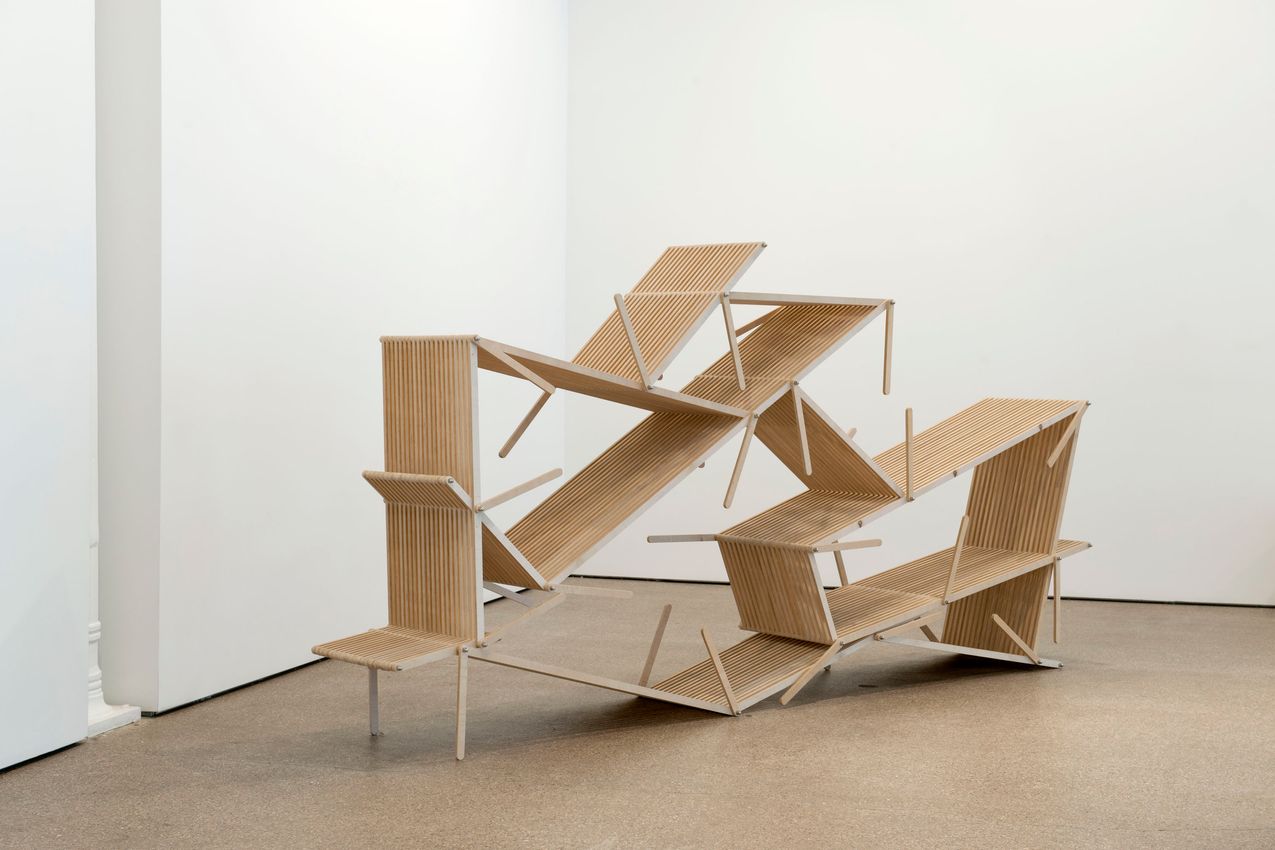
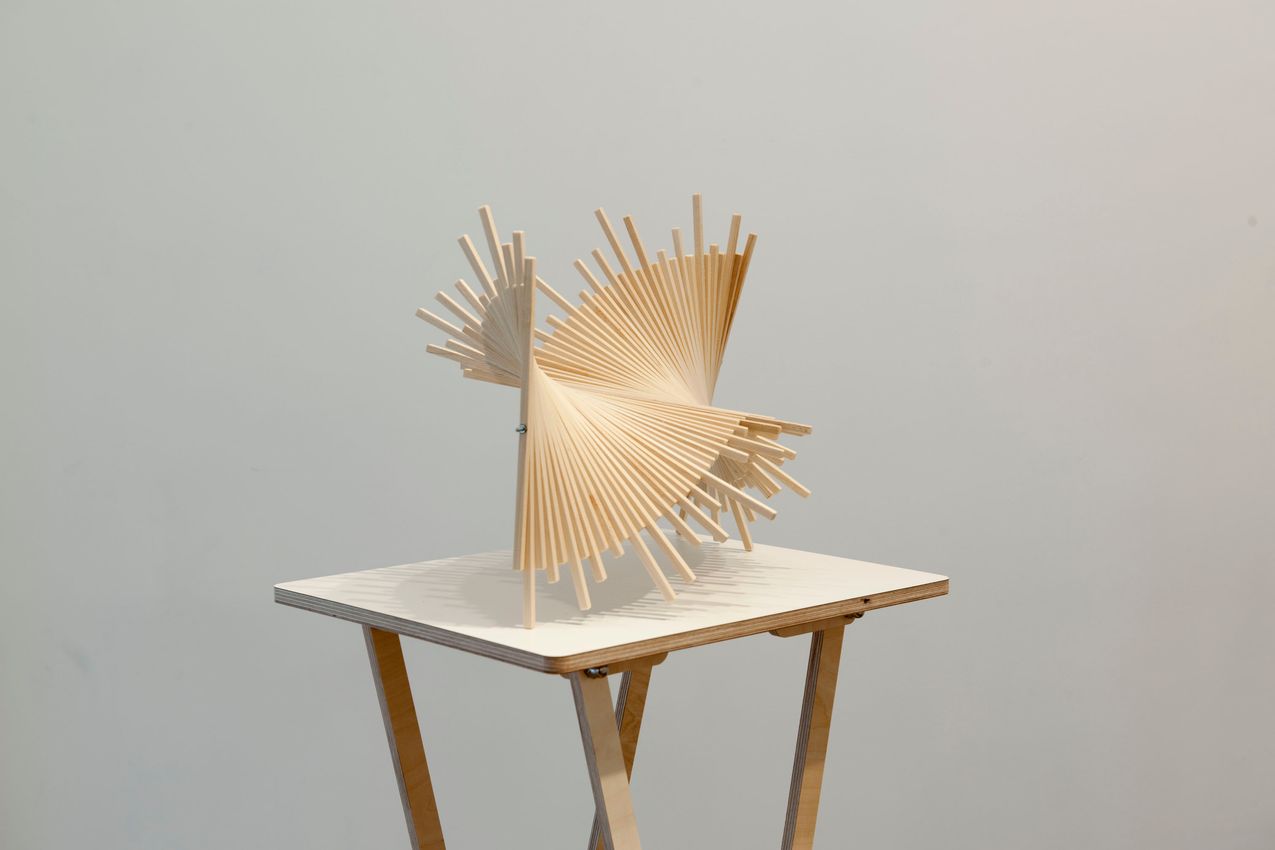
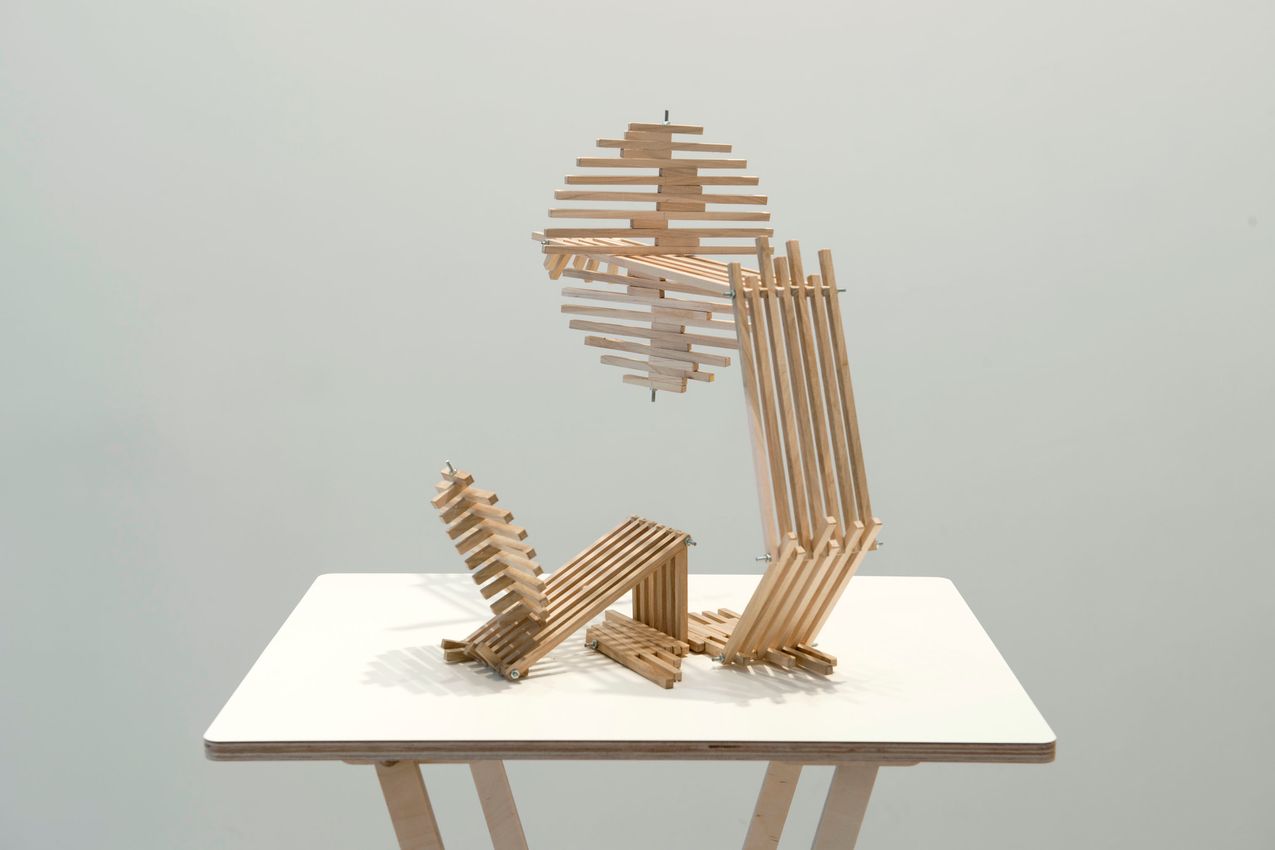
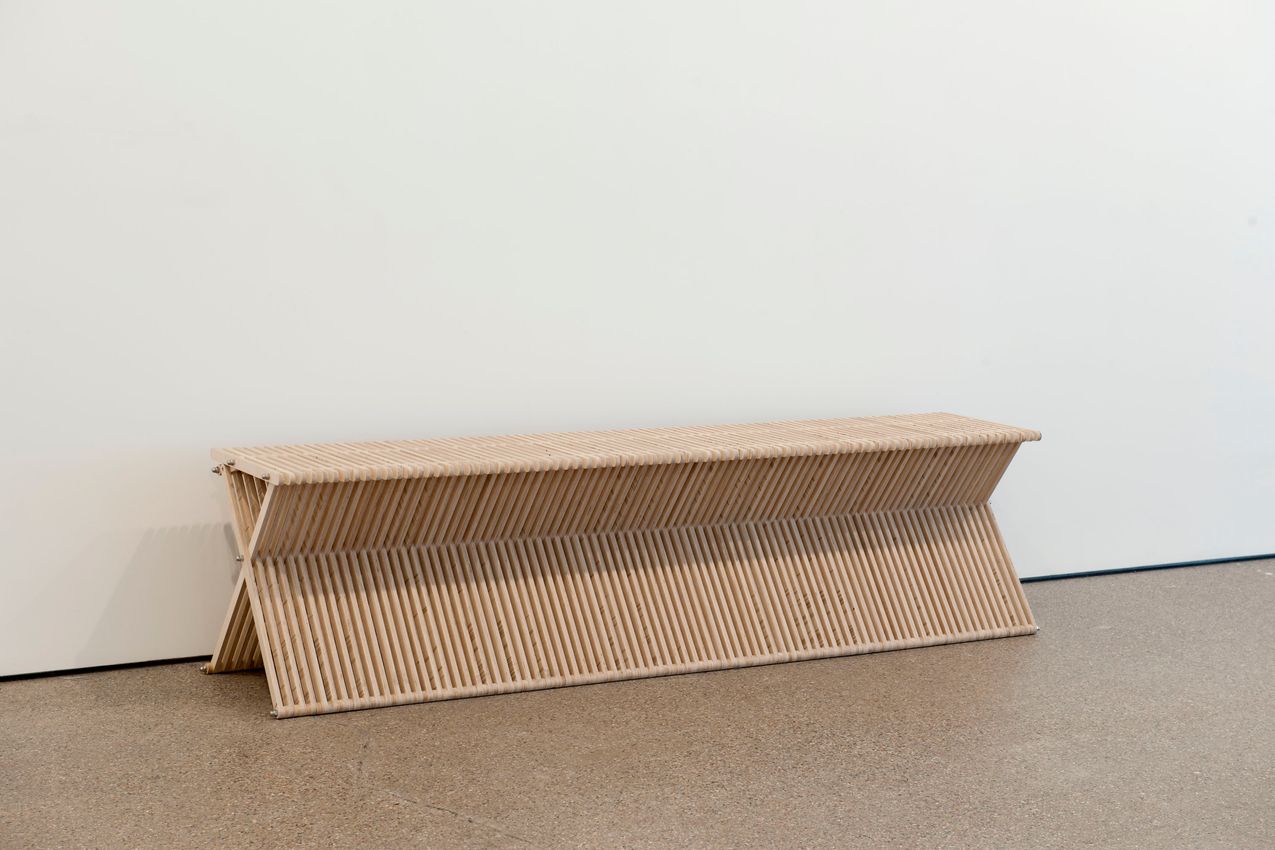
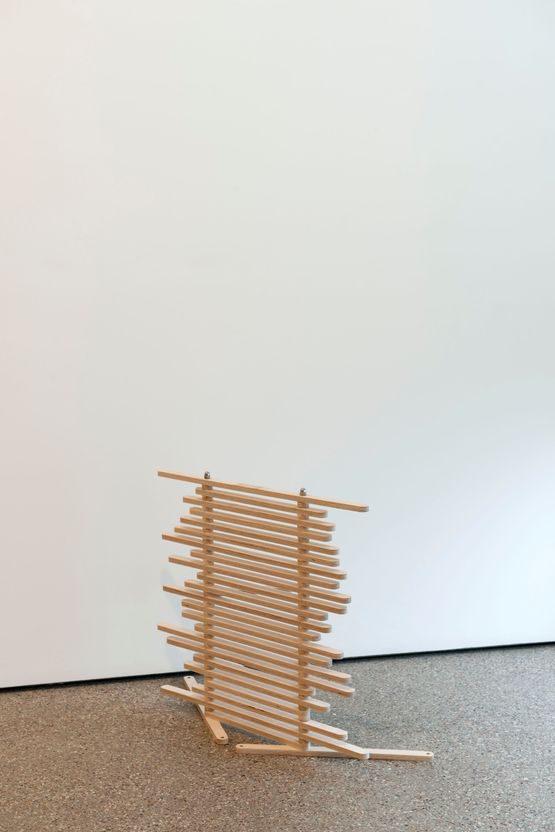
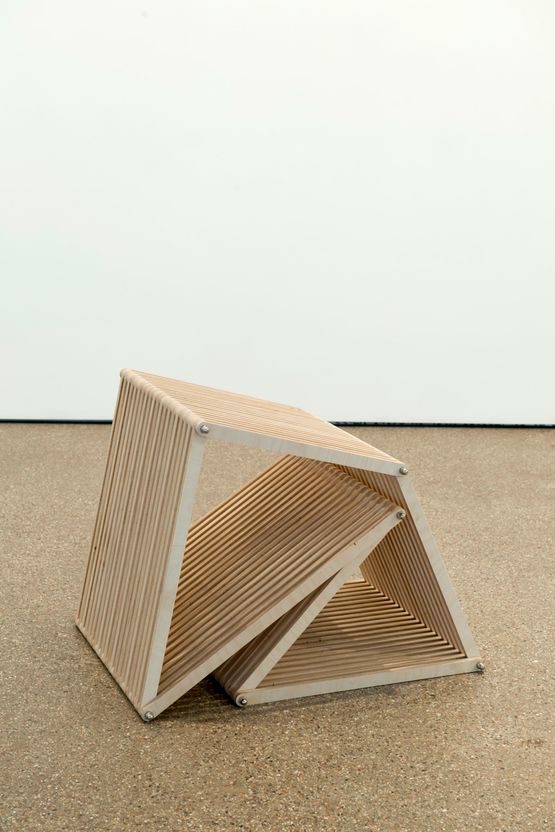
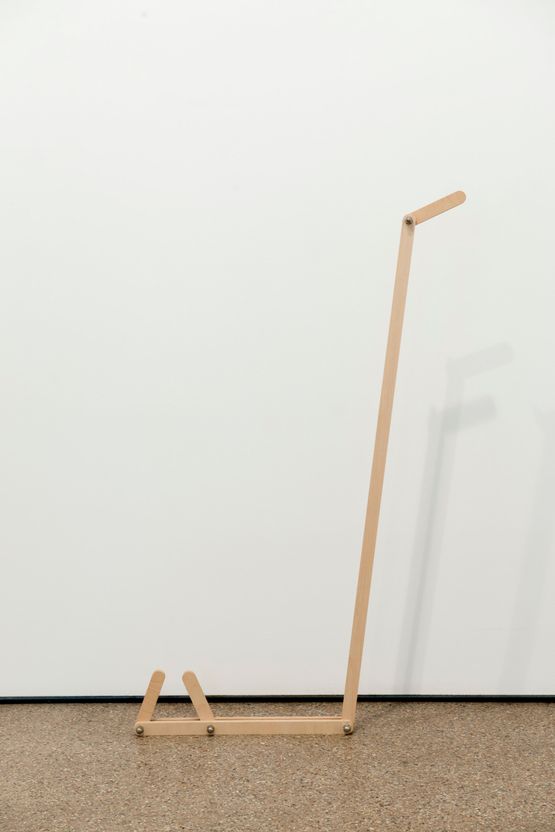
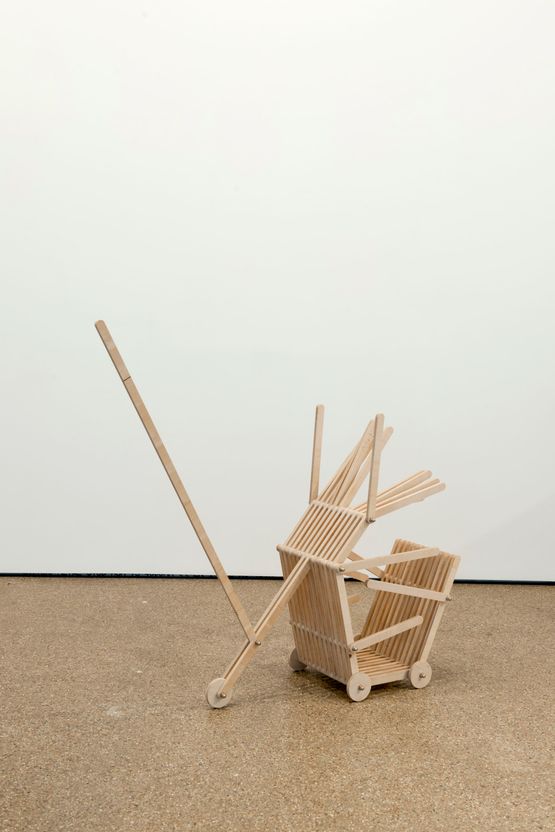
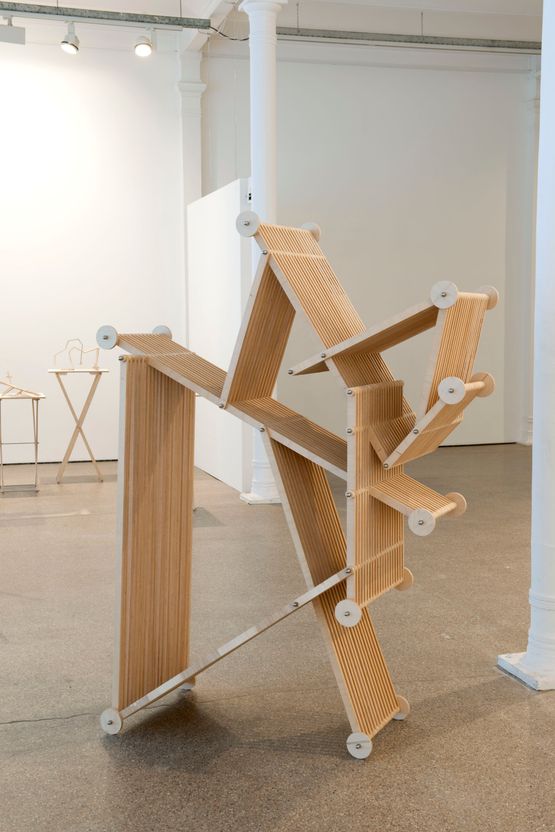
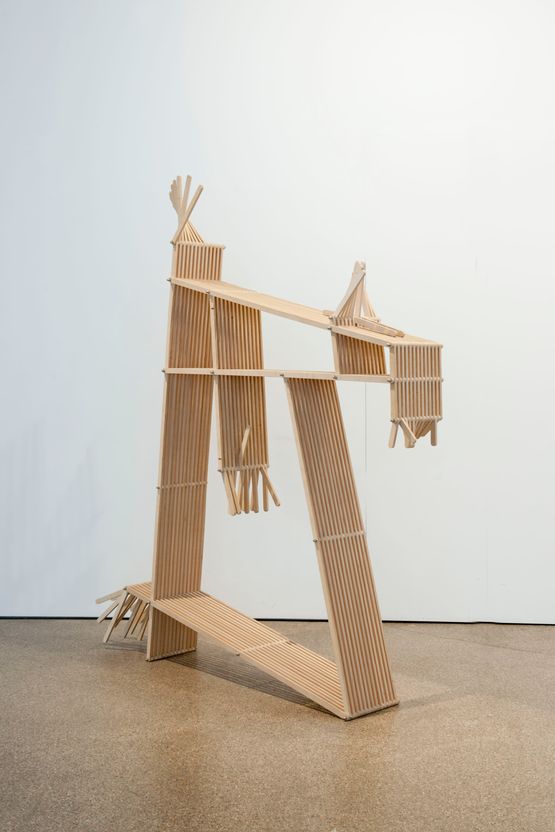
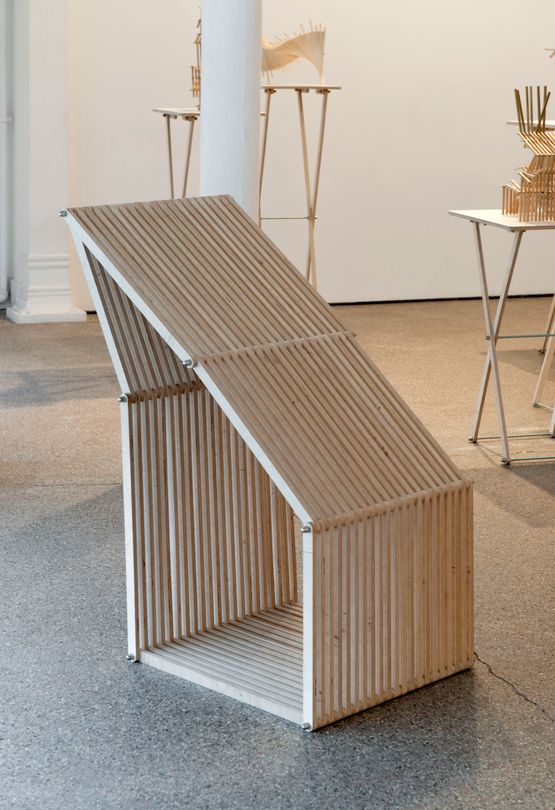
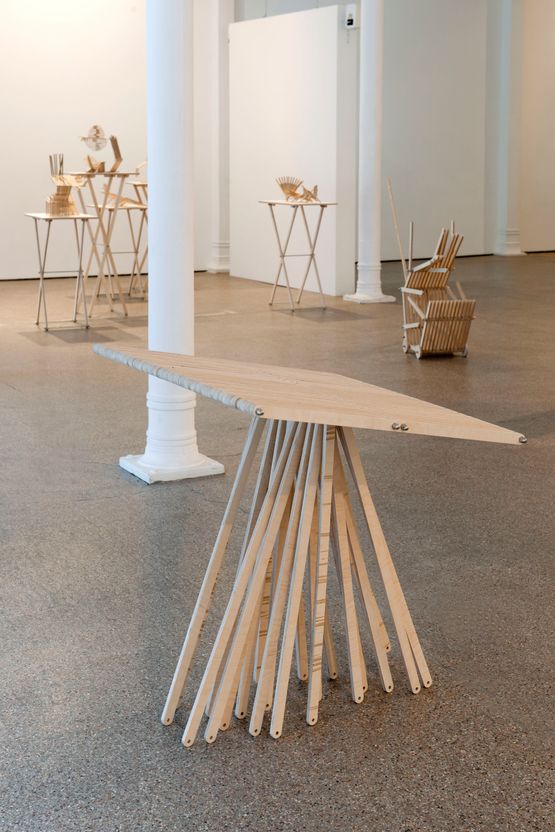
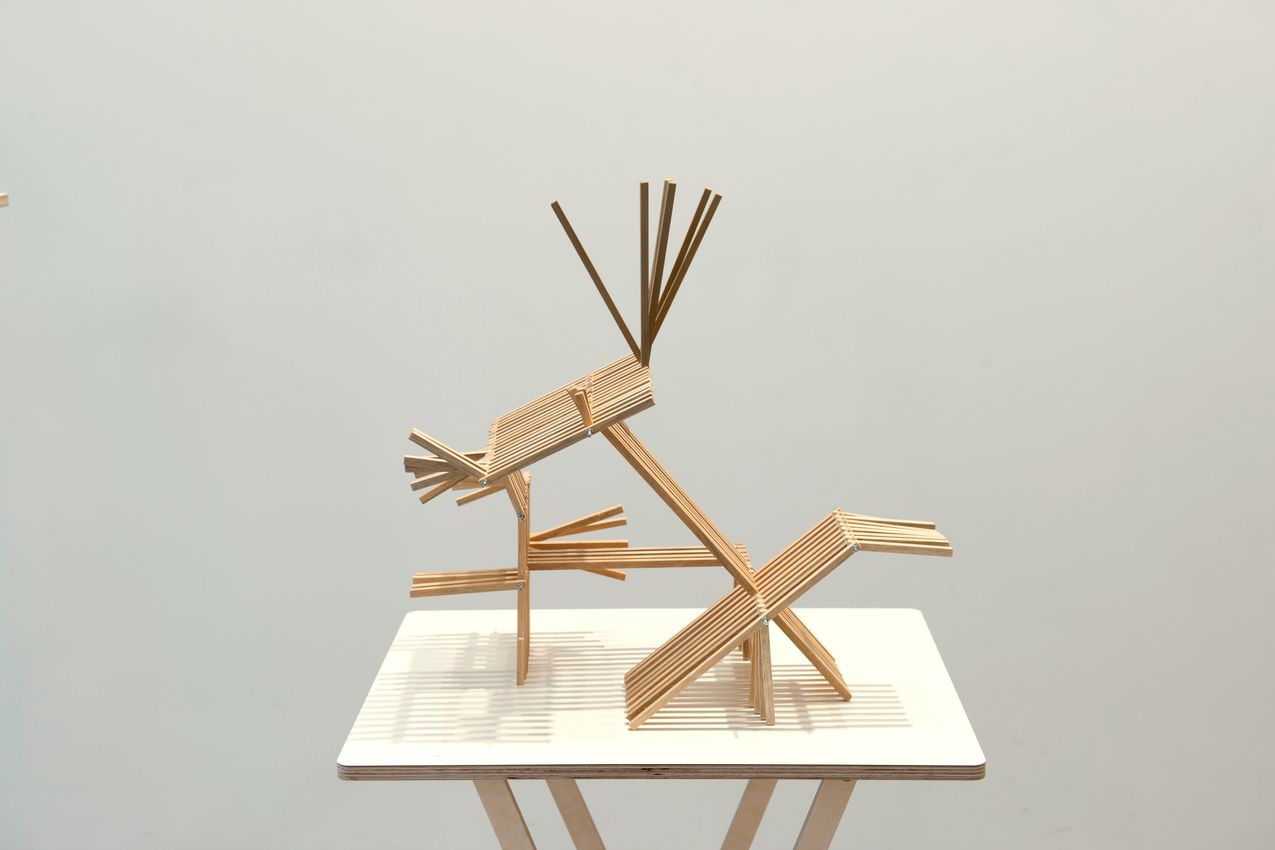
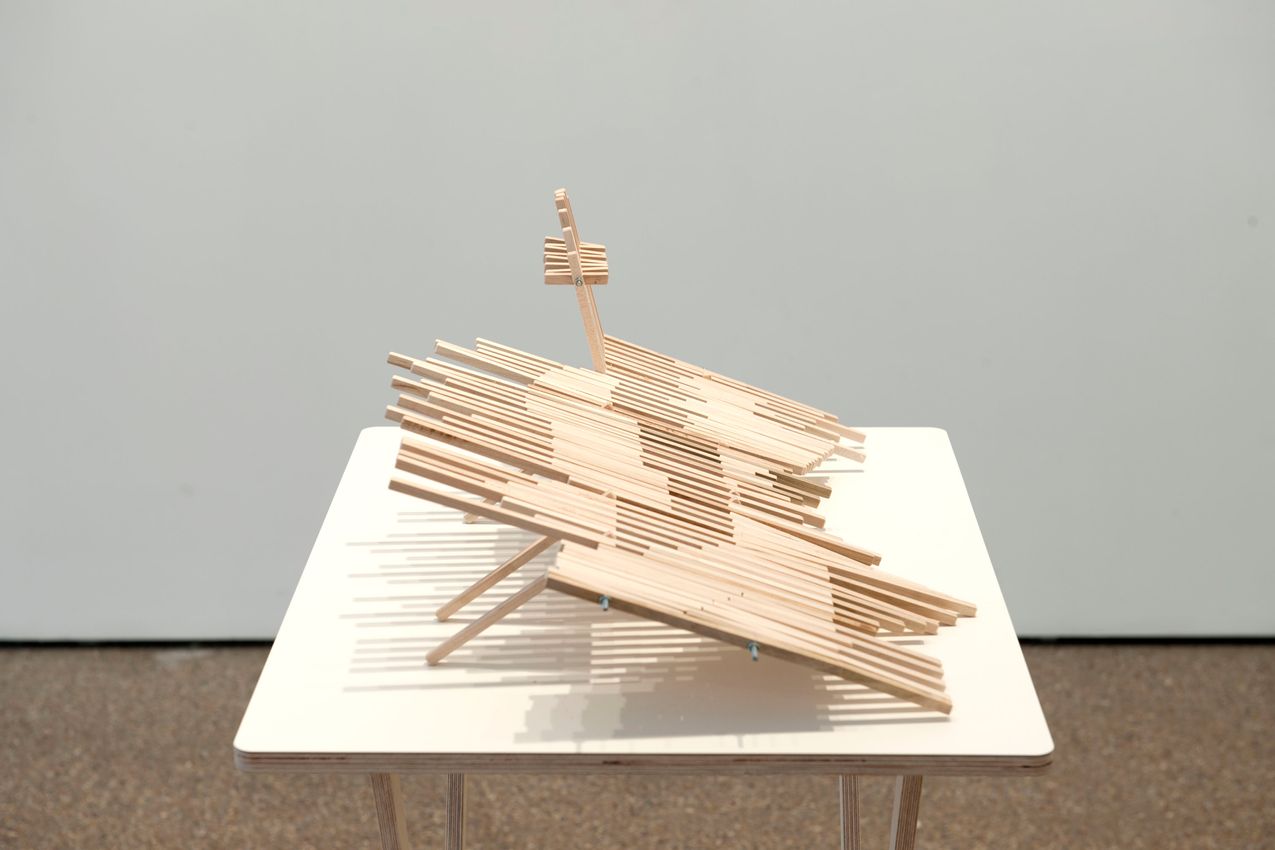
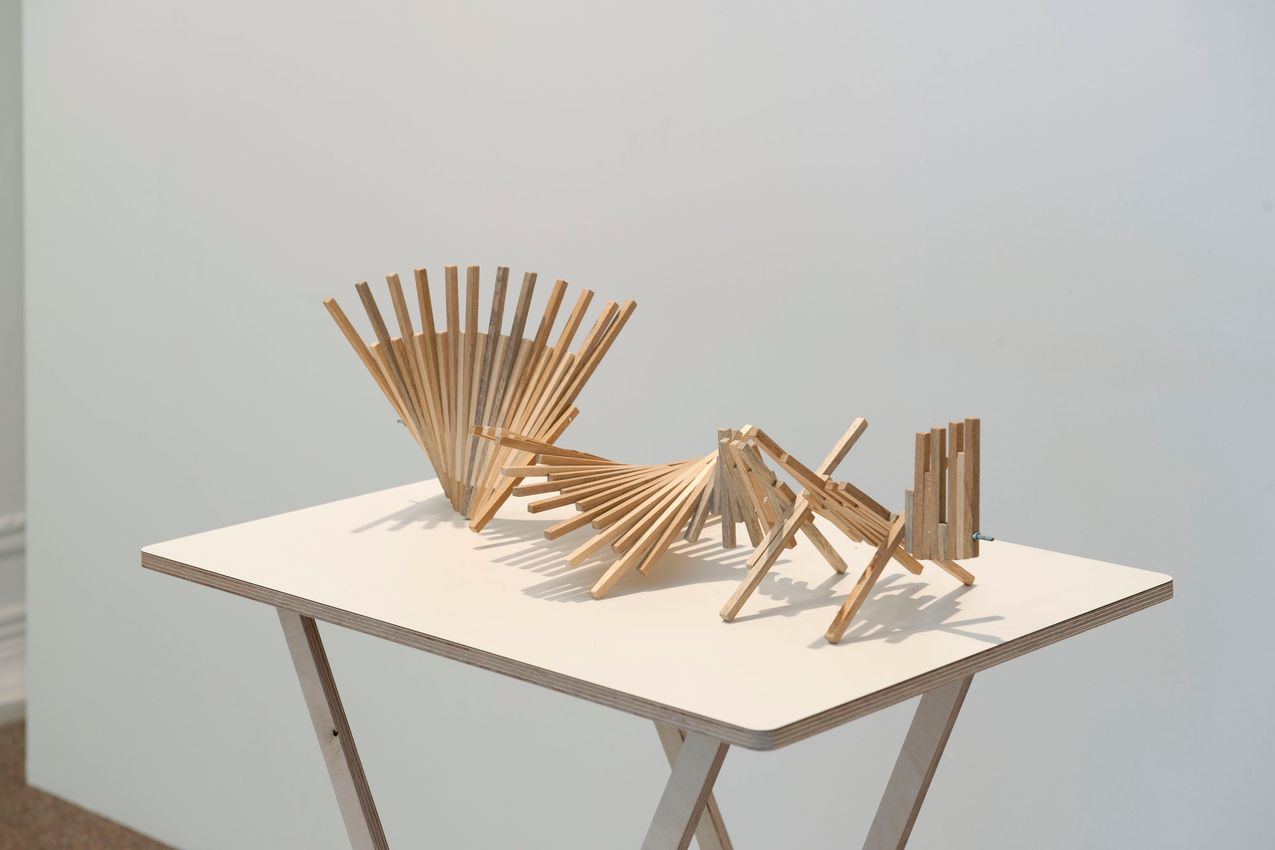
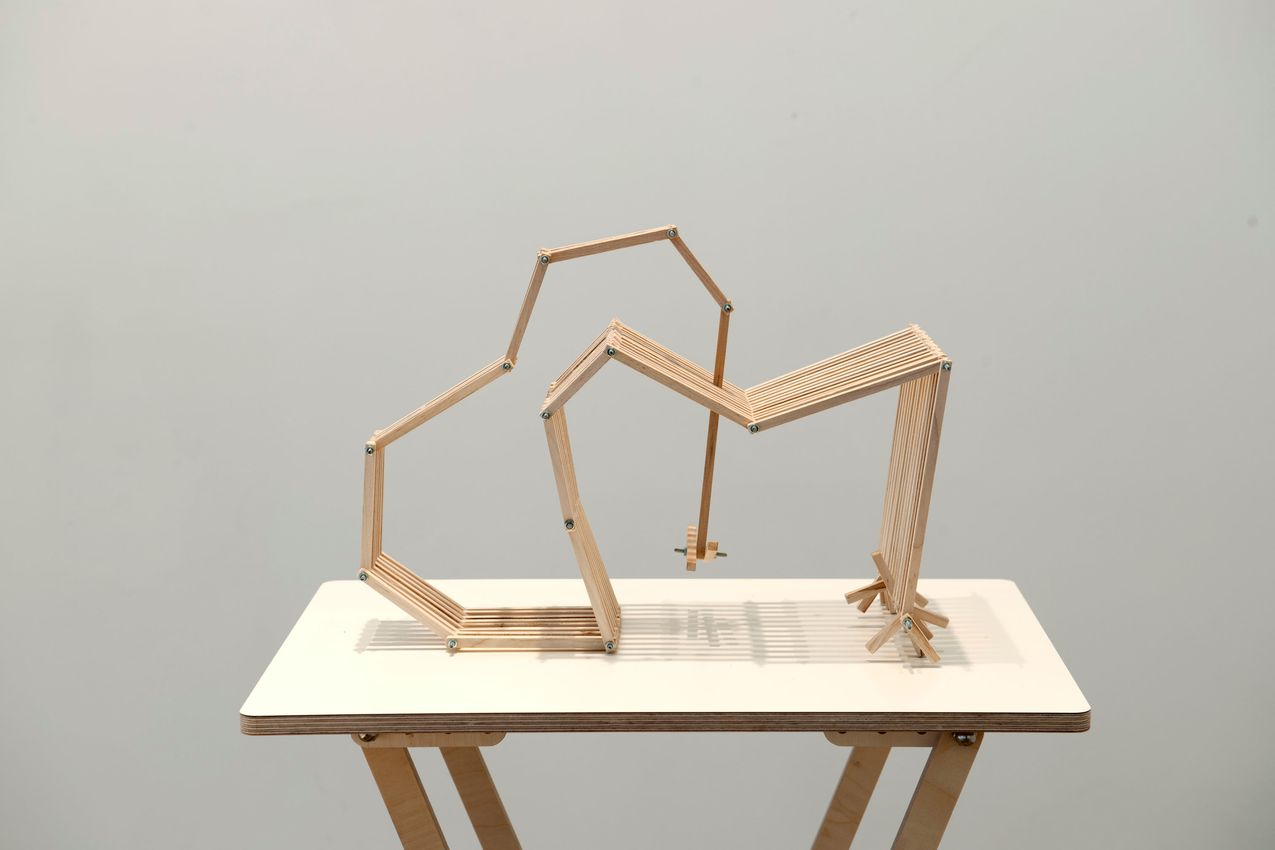
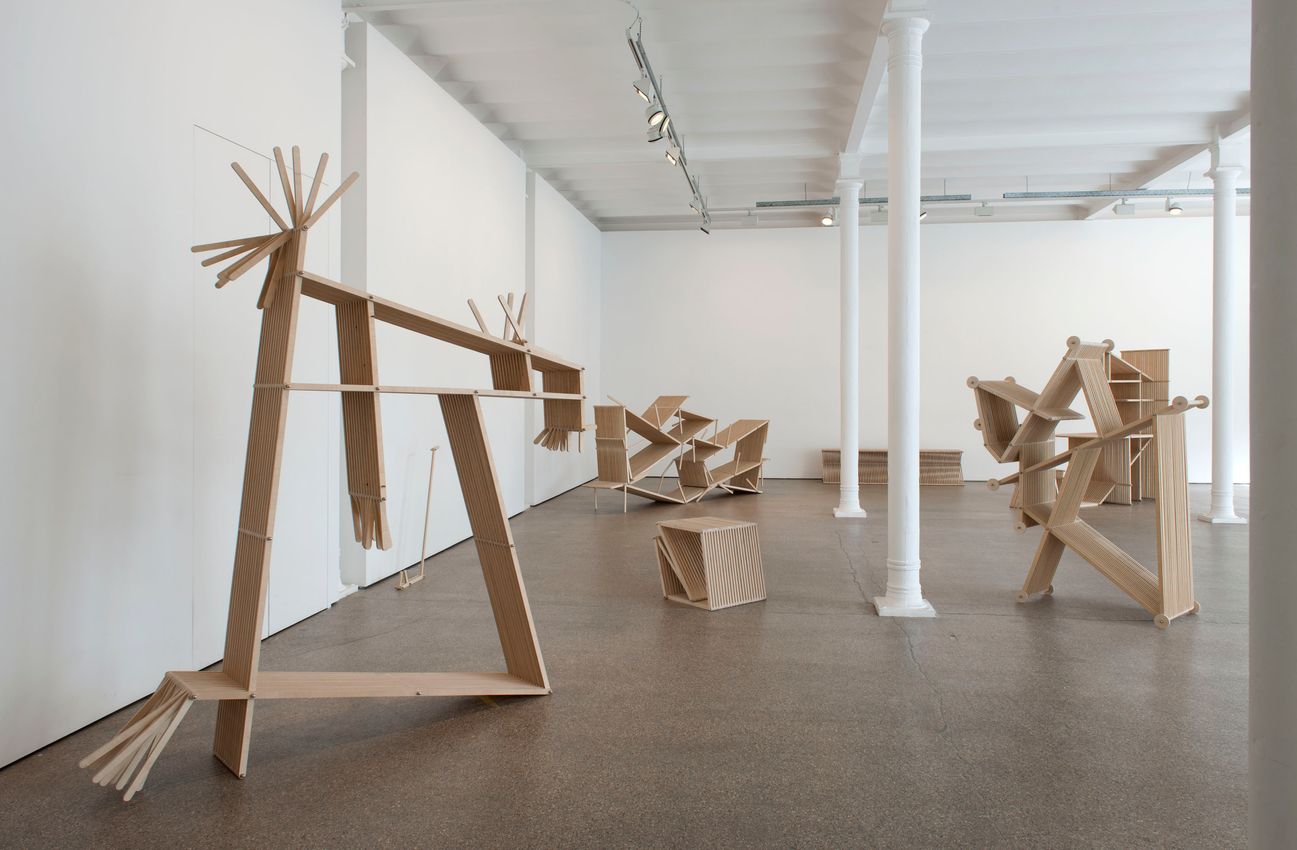
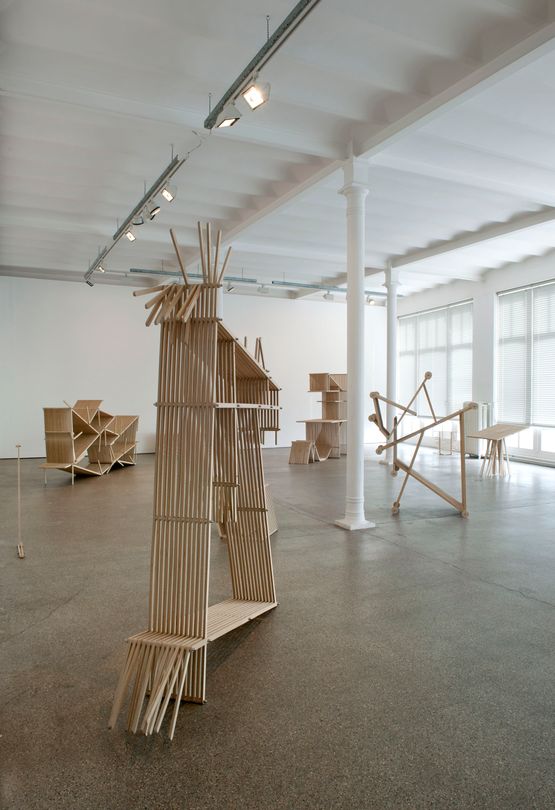
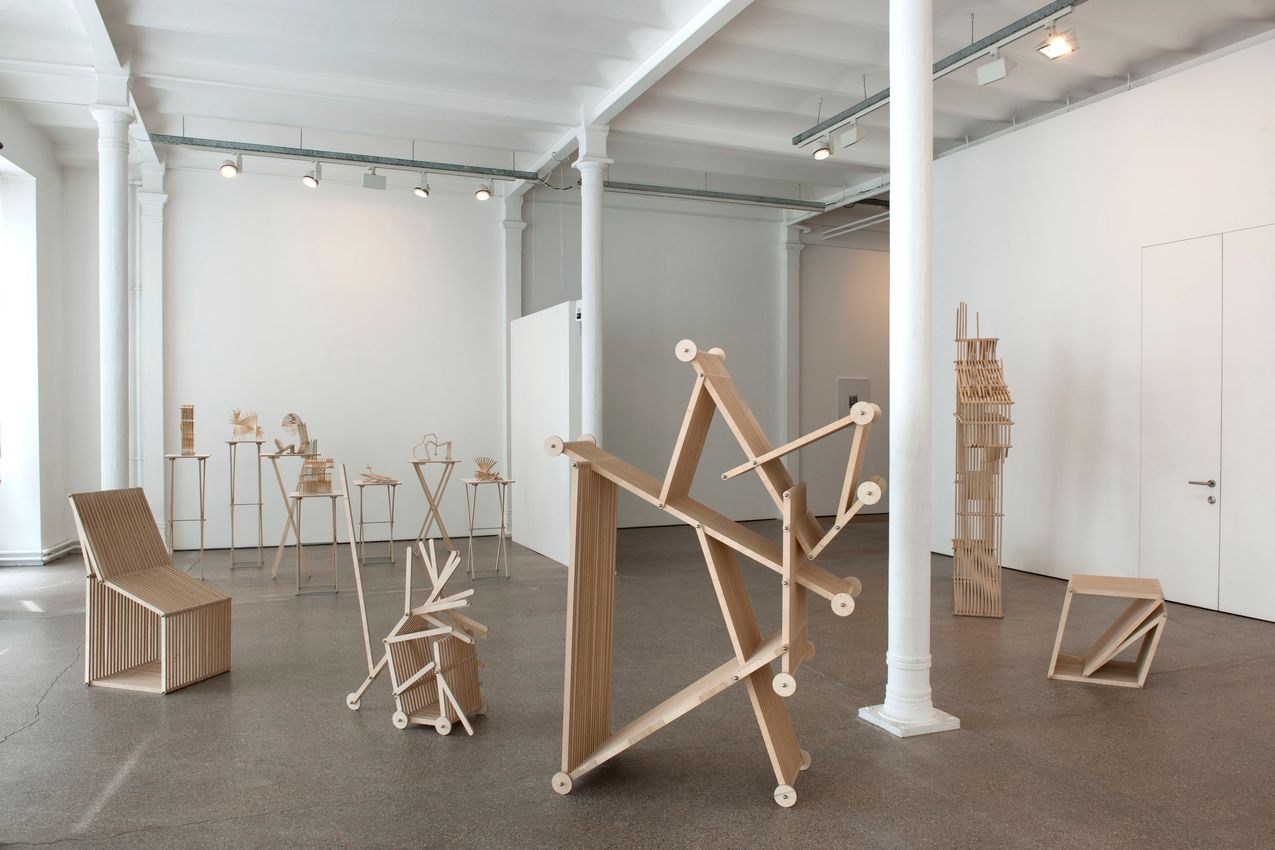
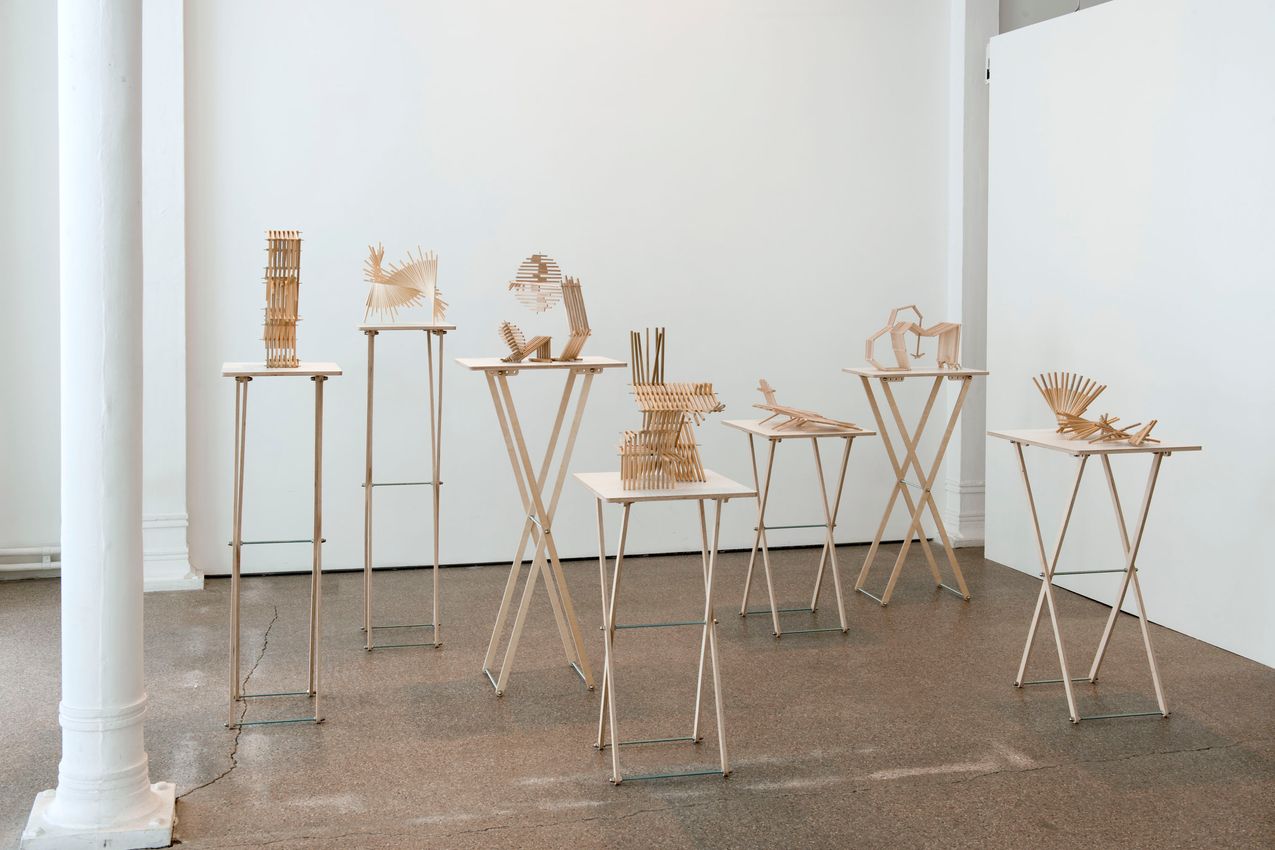
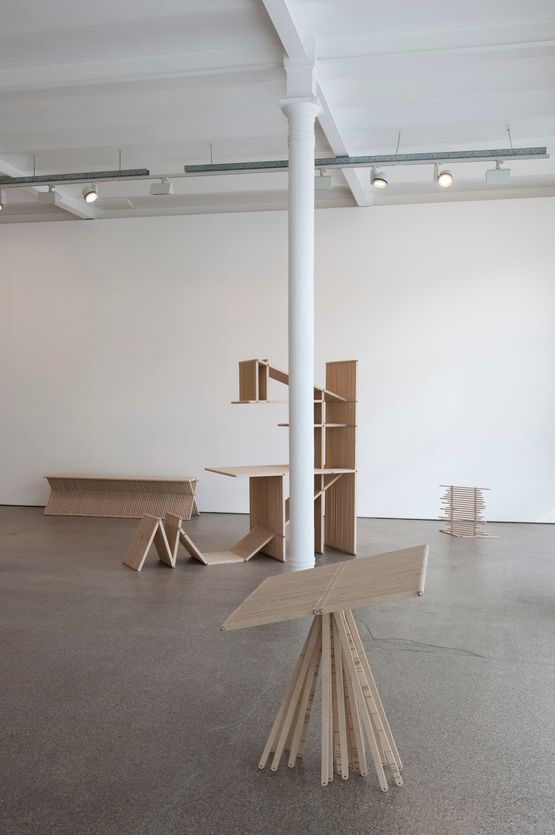
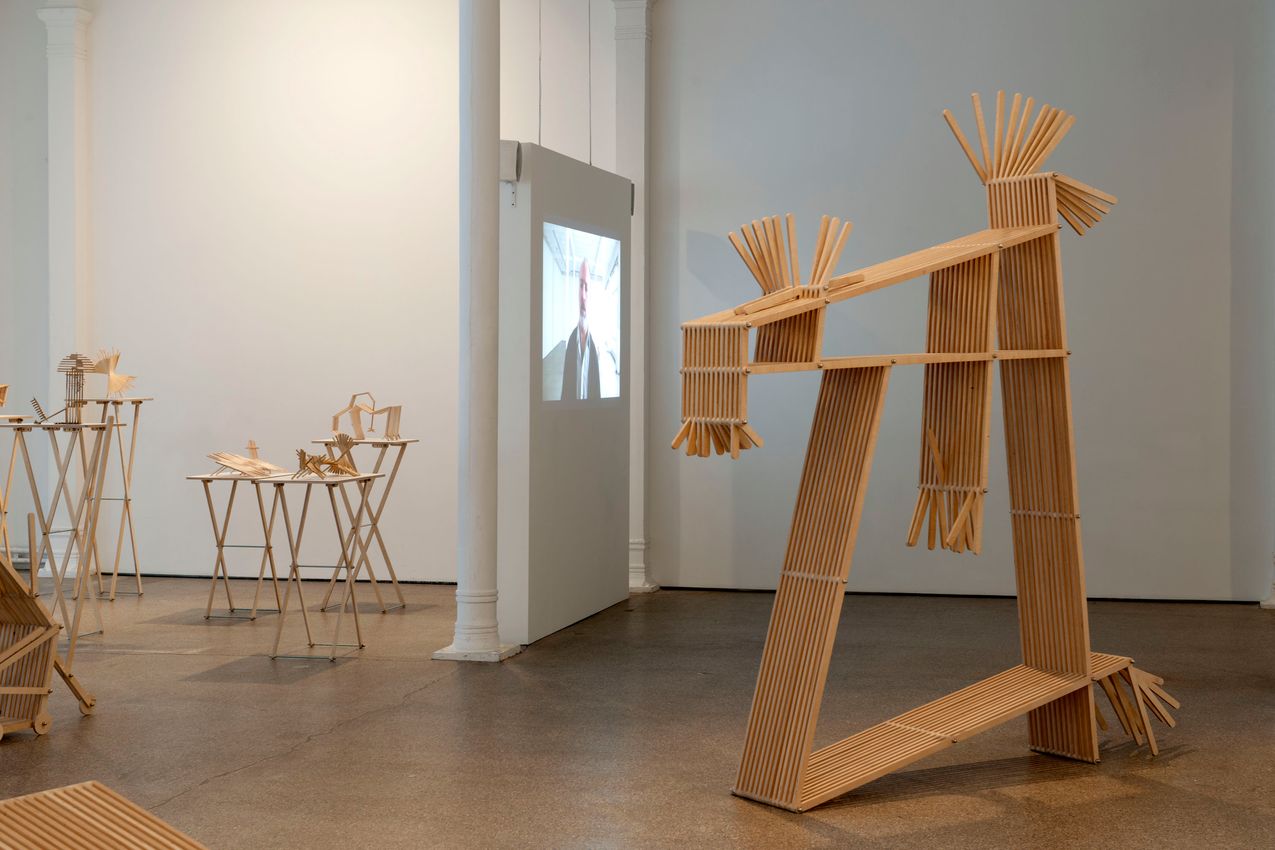
The installation for this exhibition has been inspired by Vsevolod Meyerhold’s 1922 production of the eponymous play The Death of Tarelkin. Meyerhold’s dynamic and revolutionary theory of theatre was translated into a constuctivist scenography by the Russian artist Varvara Stepanova: ‘performing furniture that can transform, fold, collapse, change its use’. Rather than approaching the designs as museal artefacts, Tobias Putrih reinstates them in a contemporary environment, proposing a series of modular objects that don’t conform to a conclusive definition, but are situated somewhere between sculpture, scenography and furniture.
The choice of fragile materials emphasises the experimental character of the artist’s method. Yet Putrih has often spoken out about the necessity to link his conceptual starting point with a functional aspect. In this case the utility function is carefully articulated, but the artist gratefuly makes use of Meyerhold’s experiments with commedia dell’arte and the circus, to inserts a degree of playfulness and humour into the designs.
‘Good design and sculpture always make fun of the spectators’ bodies–you always have to suffer a little before you can start enjoying sitting in a good chair, wearing good shoes, driving a good car. The body has to adapt itself, and it takes time before you feel comfortable. It is the same with sculpture–the best sculpture is always on the verge of failing, it is simply an object that does not fit anywhere, that is too strange to fit.’
The stop-motion video, creating an illusion of movement, ads to the multiple status of the objects. The images are mixed with the opening monologue of ‘The Death of Tarelkin’, performed by Willy Thomas, that contains a change of identity of the main character. This way all aspects of the exhibition merge together in the overriding principle of transformability.
Over the past 30 years, Galerie Greta Meert established itself as one of Brussels’ leading contemporary art galleries. Founded in 1988 as Galerie Meert Rihoux, it was subsequently renamed after its founding director Greta Meert in 2006. Located in the center of Brussels, the gallery occupies a five-story Art Nouveau building designed by Louis Bral and renovated for the gallery by renowned Belgian architects Hilde Daem and Paul Robbrecht. Since 2012 three floors of the building are dedicated to exhibitions, making it possible to maintain an expanded exhibition schedule.

A respected voice in contemporary art discourse.
Focusing on ambitious storytelling and insightful art-world commentary. Ocula Magazine publishes in-depth interviews, critical essays and timely analysis on the artists, exhibitions and ideas driving the global art world.
Learn more about Ocula Magazine
Showcasing the best of the art world.
Ocula partners with galleries from around the world to highlight their artists, artworks and exhibitions. Gallery membership is by application and invitation, with each member vetted by an independent panel.
Learn more about Ocula Membership

Specialises in the sale of major artworks.
Led by a team with deep ties to the world’s leading auction houses, galleries and collectors. Ocula’s advisory team offers bespoke services to high-net-worth clients from around the world who are looking to acquire the best of contemporary and modern art.
Learn more about our team and services