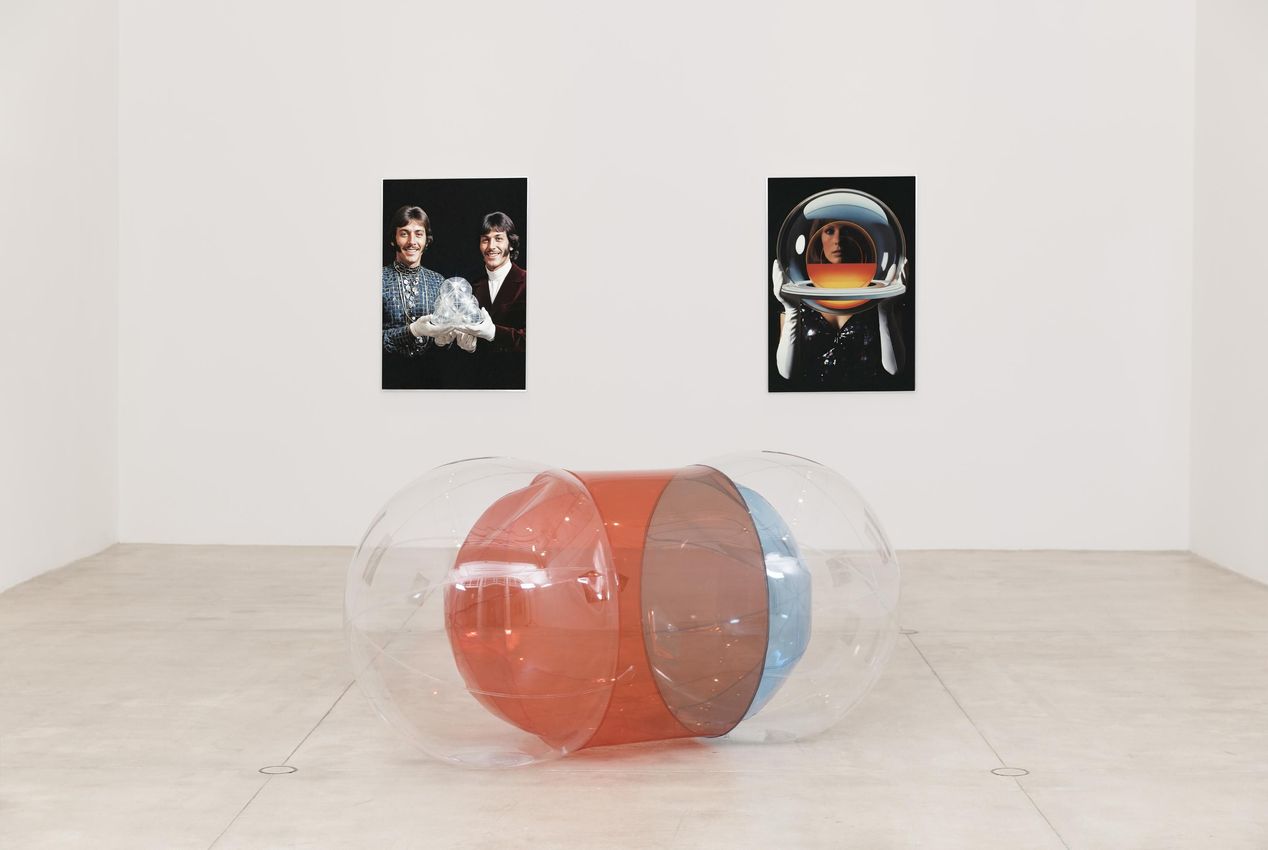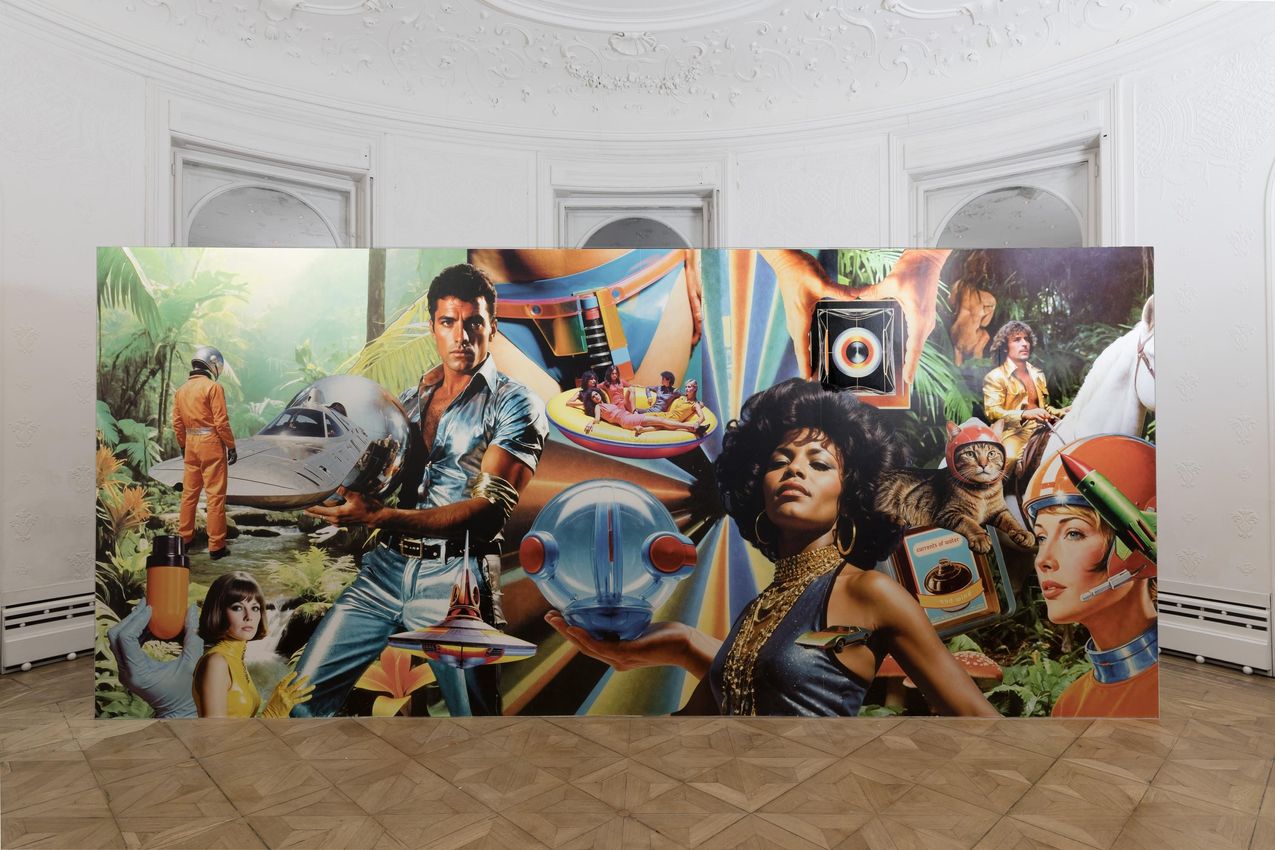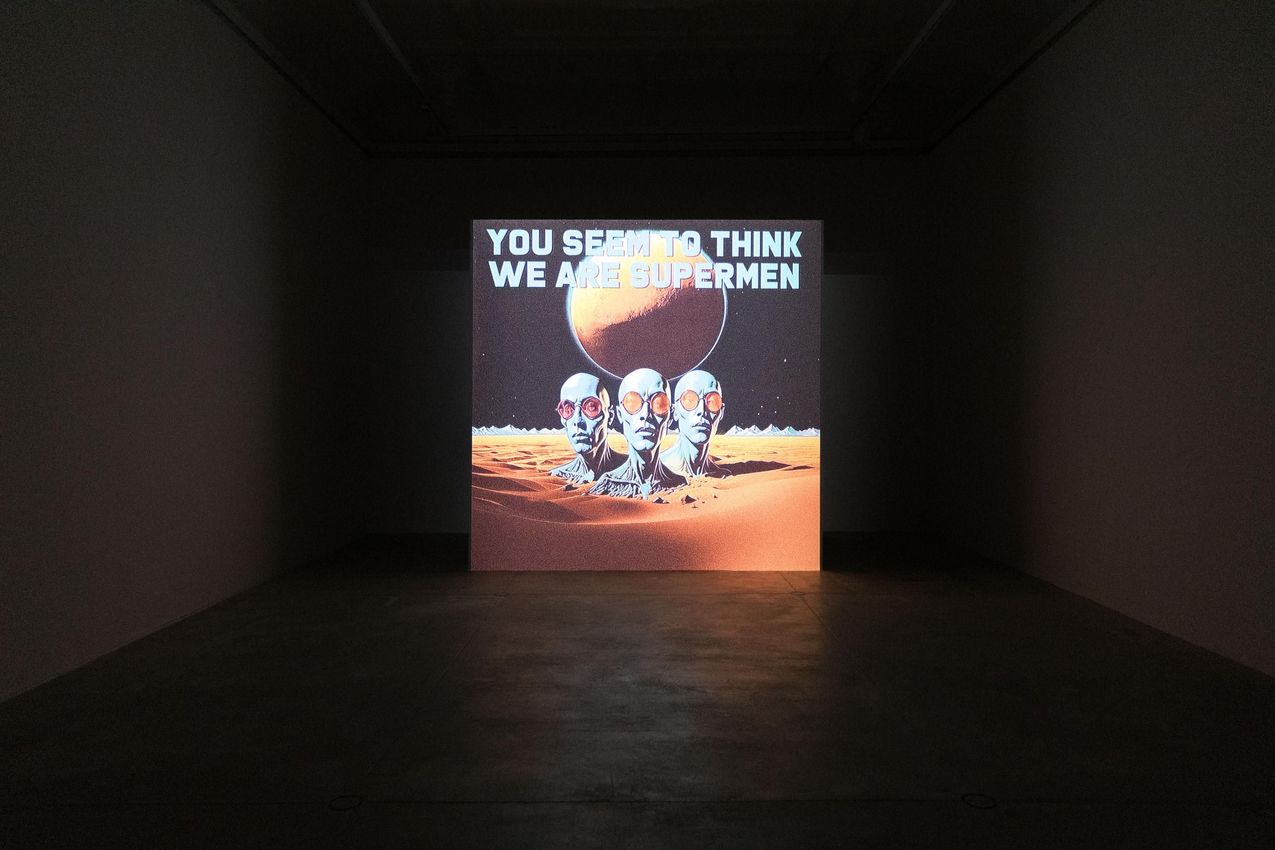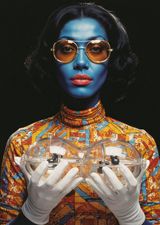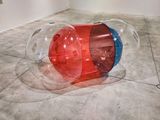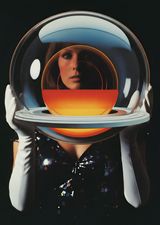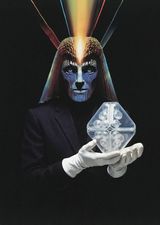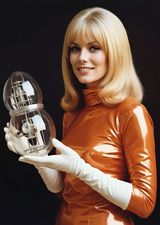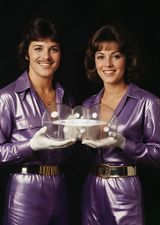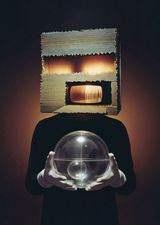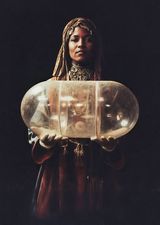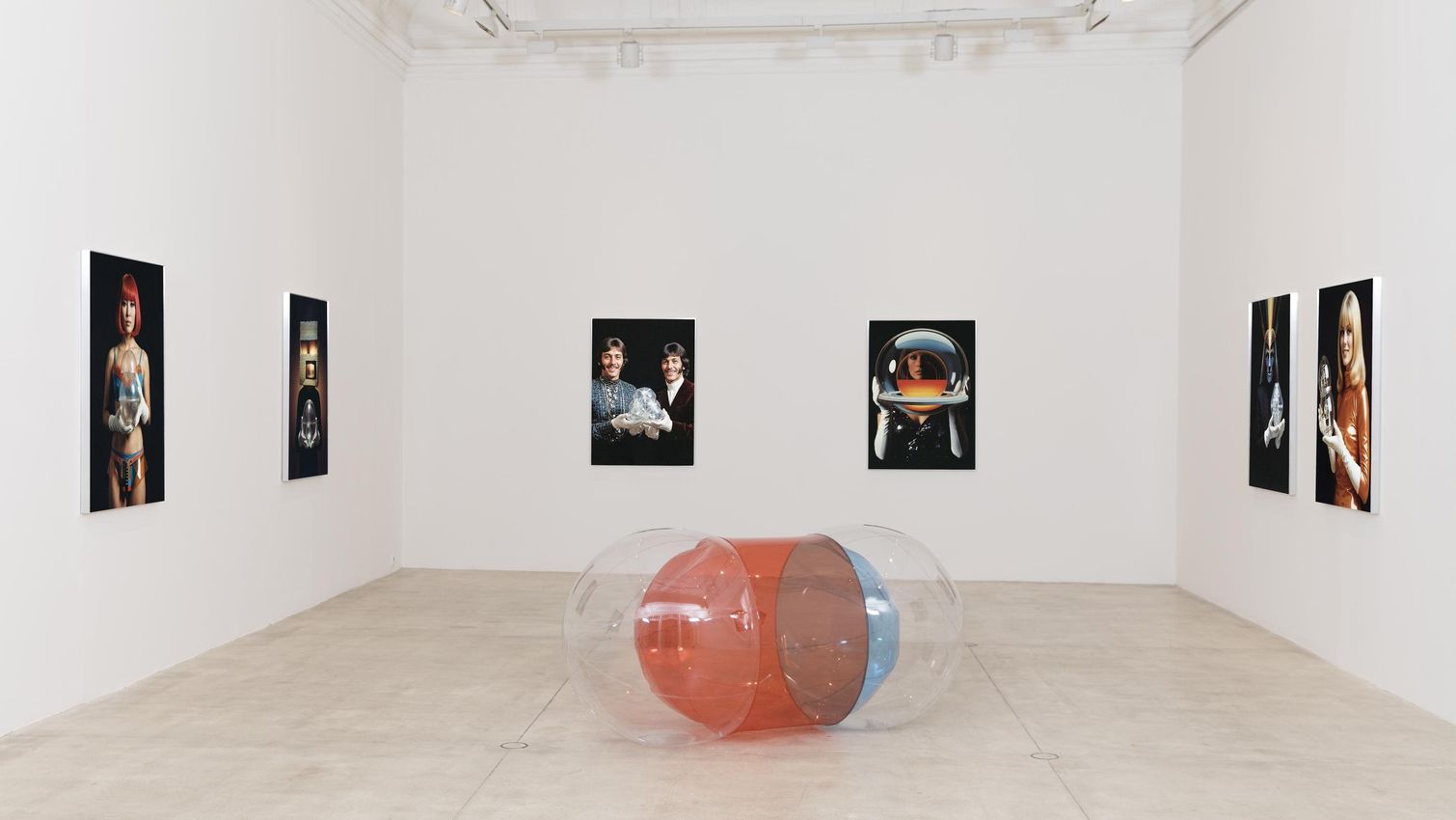
Hanakam and Schuller’s new animated work Cosmic Commissioner takes a satirical dive into the world of typical AI-generated styles such as new-age, comicesque and hyperrealism, which are based on creative commons and influenced by big tech, as well as their handling of diversity and material bases. The narrative character is the fictional Cosmic Commissioner – inspired by Victor Gruen, the exiled Austrian architect and urban planner – who reacts to burning environmental and security issues on Earth as a more-than-human being from the cosmos. In 1975 Gruen, godfather of the American suburban shopping mall, wrote his satirical book: Is Progress a Crime? Environmental planning instead of the End of the World. Gruen turned increasingly to environmental planning in the 1970s – under the influence of contemporary phenomena such as environmental destruction, the space race and nuclear armament. Scenes with architects, military personnel, urban planners and environmental activists are realised through short dialogues from Gruen’s texts on the level of lyrics and synthetic disco space sounds. The project links historical and current social challenges such as global security and environmental destruction. Cosmic Commissioner invites you to take a reflective, humorous look at the interfaces between AI, pop culture and social challenges – a visual and acoustic journey through time, space and digital realities.The Mise en Scène consists of a large scale square format projection (wall) carrying the animation work alongside an Expanded Dialogue in the medium of a collaged wallpaper. The video installation is complemented by collage- like wallpaper and a series of AI-generated portraits.
Markus Hanakam (b. 1979, Essen, Germany) began his academic training in 2000 at the University of Essen, Faculty of Art and Design (formerly the Folkwang School). He later continued his studies at the University of Applied Arts Vienna, completing a Magister degree in Art and Design Education (2002–2006), followed by a Magister degree in Sculpture and Multimedia (2006–2009). Together with Roswitha Schuller he held lectures, workshops, and symposias across Europe and the US, focusing on art, ecology and visual culture. They collaborate with institutions including Duke University, ISEA, Leuphana University Lüneburg, and the University of Applied Arts Vienna. Roswitha Schuller (b. 1984, Friesach, Austria) studied Art and Design Education at the University of Applied Arts Vienna from 2002 to 2007 and subsequently pursued studies in Sculpture and Multimedia (2006–2009). In 2012, she earned a Ph.D. in Art Sociology from the same institution with a dissertation entitled The Role of the Arcadian in Socio-Cultural Spaces. In addition to her artistic practice, Schuller is an active researcher in the field of Cultural Landscape Studies


Galerie Krinzinger was founded in 1971 by art-historian Dr. Ursula Krinzinger. Since then, she has organized at least 500 exhibitions of national and international artists, mounting solo, group and thematic shows.

A respected voice in contemporary art discourse.
Focusing on ambitious storytelling and insightful art-world commentary. Ocula Magazine publishes in-depth interviews, critical essays and timely analysis on the artists, exhibitions and ideas driving the global art world.
Learn more about Ocula Magazine
Showcasing the best of the art world.
Ocula partners with galleries from around the world to highlight their artists, artworks and exhibitions. Gallery membership is by application and invitation, with each member vetted by an independent panel.
Learn more about Ocula Membership

Specialises in the sale of major artworks.
Led by a team with deep ties to the world’s leading auction houses, galleries and collectors. Ocula’s advisory team offers bespoke services to high-net-worth clients from around the world who are looking to acquire the best of contemporary and modern art.
Learn more about our team and services