Press Release

Growing up in NYC i would go to stores before school buy albums likeJay z or Biggie go buy a brand new outfit. I would walk from 5th aveacross central park listening to Tupac or JayZ or Biggie with a brandnew pair of jordans on a prada outfit a coogi outfit a Sean John outfit.Everyday was exciting to come to school with a new outfit no matter ifi sleep on the street that night i came to school fresh. We would go tothe garden to watch the Knicks the bulls to see Jordan tell us we couldfly. I would spend most of my days listening to rappers hanging outwith friends on the block, meeting girls in soho etc. One day i pickedup breakfast at tiffanys at strand bookstore in union square and irealized the nyc i was experiencing in the 90/2000s was what trumancopete wrote about in Breakfast at Tiffanys. The soho lower east sidestreets my friends and I hung around in was the soho Andy Warhol andBasquiat and Madonna created and here i was in the legacy of newgeneration one formed by the soundtrack of hip hop.

If the Michealanglo and renaissance deposited the idea of theindividual as a god-given gift, Vemeer and the Dutch birth the promiseof global trade through capitalism and the French birth the idea of thearcade that gave way for the storefront.... NYC in that moment birththe reality that aspiration regardless of birth or nation meant one canchoose to participate in the culture . And culture was the new luxury.A reality that today feels very much alive in the streets of Paris and allover the world.

— Alvaro Barrington, October 2023

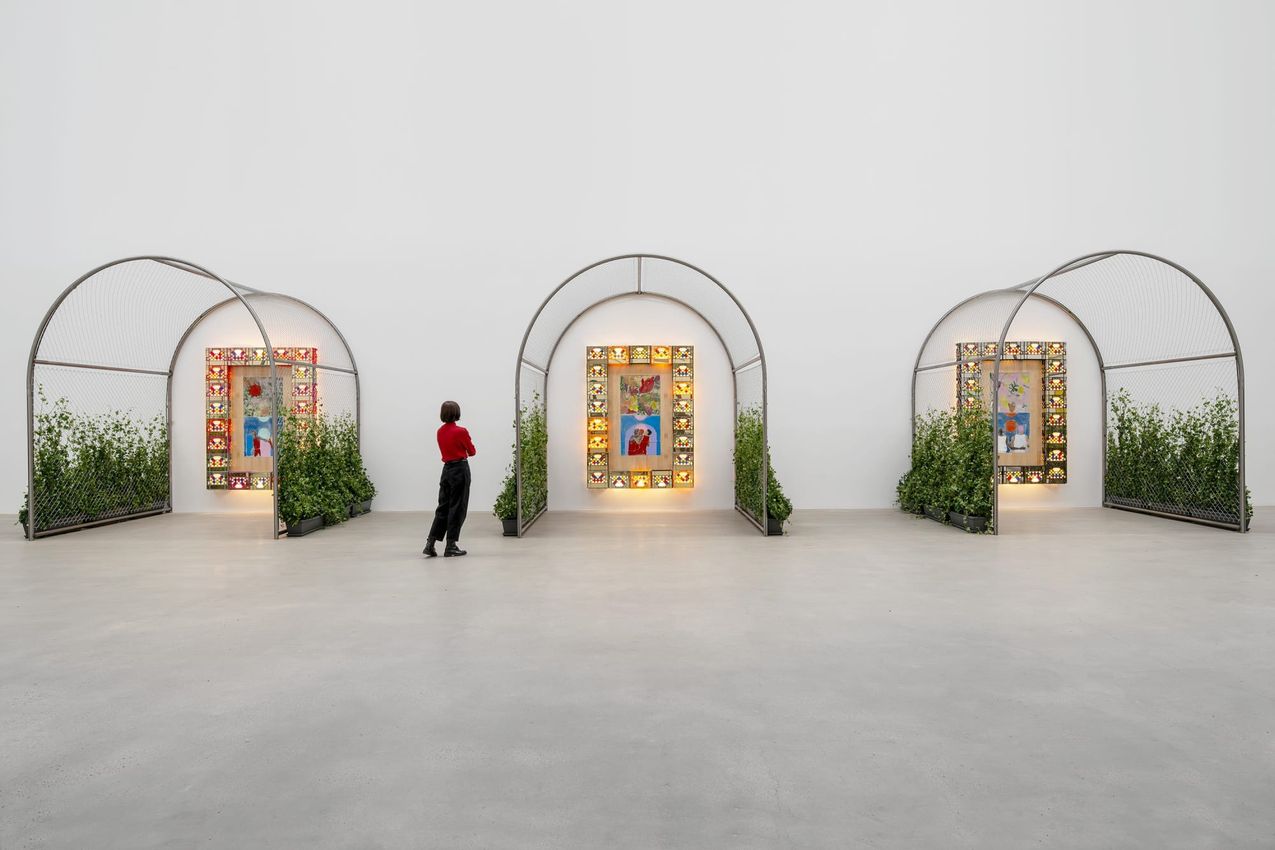
For They Got Time: YOU BELONG TO THE CITY, AlvaroBarrington takes over Thaddaeus Ropac Paris Pantin,transforming the luminous ex-factory building into athree-part installation. A monumental self-portrait of hisyears growing up in New York, the exhibition invites thevisitor into an exploration of the artist’s personal andcultural memory: what Barrington describes as ‘a loveletter to the nyc streetscape of my youth in the form of anart installation’.

Barrington fills the gallery with monumental handmadestorefronts, made up of shutters in various mediums withrooms tucked behind chainmail curtains in which he installshis new series of works. He relates the installation overallto the ‘magic’ arcades of 19th-century Paris, as describedby Walter Benjamin in his 1927–40 work of culturalcriticism The Arcades Project, which formed the prototypefor the modern storefront. Like in the memorable openingscene of the 1961 Blake Edwards-directed film Breakfastat Tiffany’s, in which Audrey Hepburn’s Holly Golightlylooks longingly at the Tiffany’s window displays as the sunrises on 5th Avenue, Barrington encourages visitors to theexhibition to experience this sense of anticipation andaspiration for themselves as they look at his new works.

Streets are the dwelling place of the collective. [...]More than anywhere else, the street reveals itself inthe arcade as the furnished and familiar interior of themasses.

— Walter Benjamin, The Arcades Project, 1927–40

The exhibition unfolds across three rooms or ‘chapters’.Each one represents different aspects of the artist’sexperiences growing up in New York as the son ofGrenadian and Haitian migrant workers, channelled throughboth the imagery of his own personal history and throughreferences that are part of the collective consciousness.The first, which he calls CHAINGING Room, relates to hismemories of being a teenager in New York City, standingin front of closed shop shutters at dawn waiting eagerlyfor them to open so he could change his clothes to reflecthow he wished to present himself to the world that day.The second chapter – THE BLOCK – meanwhile, stages awalk through Soho or along 5th Avenue, both through thebuildings that line either side of the streets and throughthe collision of characters that the artist paints. ‘I bouncebetween my own biography and those of people aroundme’, explains the artist.

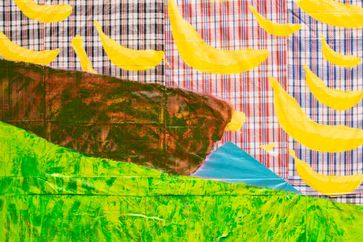
Barrington is continually expanding his constellation ofreferences, inspirations and communities, while alwaysacknowledging the formative role of art history in hispractice. The new works on view reflect a cross-polli-nation of many such influences. Barrington channels thebather, an enduring theme in art history which he connectsto Paul Cézanne, Pablo Picasso and Édouard Manet,among others, through hip-hop icons, basketball playersand film stars. His new paintings include reworkings ofDavid LaChapelle’s photograph of Tupac lying in the bathdraped in jewels, and of Holly Golightly in her bathrobe.This chorus of figures comes together to tell the story ofBarrington’s New York City, where sexuality, fashion andself-presentation meld with ideas of struggle and hope. Asthe artist says: ‘That’s what hip-hop is’.

Suddenly you’re afraid, and you don’t know whatyou’re afraid of. Don’t you ever get that feeling? [...]When I get it, the only thing that does any good is tojump into a cab and go to Tiffany’s. [...] Nothing verybad could happen to you there.

— Holly Golightly, Breakfast at Tiffany’s, 1961

The exhibition culminates in a chapter Barrington entitlesTHE GARDEN: a play on words that brings together theexcesses of the streets surrounding Madison SquareGarden and Hieronymus Bosch’s The Garden of Earthly Delights (1490–1510). Dedicated to Barrington’s celebratedBasketball Paintings, this final space taps into the socialsignificance of the sport, both to the artist during his ownBrooklyn upbringing, and more widely across marginalisedcommunities. Reflecting the memories and influences thatcome together in the exhibition, Barrington’s most recentworks introduce new media to his established materiallanguage, bringing together elements that evoke luxury,like intricately carved wood, patterned leather given tohim by the acclaimed luxury brand Alaïa and Tiffany-in-spired stained glass lights, with laundry bags, milk bottles,concrete, cardboard and yarn: non-traditional objects andmaterials that reference his personal and cultural history.

Aspiration and possibility, especially among Black andmarginalised communities, has always been at the heartof Barrington’s practice. Through recreating his ownexperiences of gazing into shop windows in New YorkCity before school, the artist encourages visitors to theexhibition to look at his works with the same sense oflonging and wonder he once felt. In doing so, the artistrelays a narrative about not having and wanting, but alsoabout the power of the objects we desire and consume togive us a sense of security, hope, or, as Barrington says,‘participation’.

Special thanks to Alaïa for providing the leather used inselected works.

Read More
About the Artist

Alvaro Barrington’s multidisciplinary practice seeks to engage with the cultural exchanges and socio-political context of growing up between the Caribbean and Brooklyn in the 1980s and 90s.

View Artist Profile Alvaro Barrington contemporary artist
About the Gallery

Founded in 1983, Galerie Thaddaeus Ropac has galleries across Europe, in London, Paris and Salzburg, and an expanding team in Asia. Specialising in contemporary art and representing over 60 artists, the gallery supports and showcases the careers of some of the most influential artists today with a wide-ranging programme of over 40 exhibitions each year across its five extensive and historic gallery spaces.

View Gallery Profile
Address
69 Avenue du Général Leclerc
Paris
France
Opening Hours
Tuesday – Saturday, 10am – 7pm
(1)
Paris 69 Avenue du Général Leclerc
Thaddaeus Ropac
69 Avenue du Général Leclerc, Paris, France
+33 155 890 110

Opening hours
Tuesday – Saturday, 10am – 7pm
The art world in focus