The art world in focus
Subscribe to our newsletter for news and insights on artists, galleries and exhibitions.

The new section will bring together 11 galleries, alongside Seoul’s Arumjigi Foundation. Shin Sang Ho, Structure and Force, 2026, installation view. Courtesy of the artist and Gallery Sklo
When the doors of Frieze Seoul opens in two days’ time, the fair will introduce Material Practice, a new section examining the spaces where contemporary art, design and craft converge.
Curated by Hyeyoung Cho, and rooted in Korea’s traditions of making, it will bring together 11 galleries alongside Seoul’s Arumjigi Foundation, with works spanning ceramics, textiles, glass, metal, wood and hanji, Korean handmade paper, while also extending into new material technologies.
The new addition was recently described by Frieze Magazine as a look beyond the fair’s established focus on fine art, and an attempt to incorporate a broader range of practices and histories. Cho told the magazine that she hopes the section will “foster new conversations between regional and global perspectives, encouraging deeper engagement among collectors, curators, institutions and the public”.
Seoul, with its extensive craft traditions and a unique position within a wider creative infrastructure across Korea, is a sensible choice of location to test such a venture. The city boasts craft departments at universities including Hongik, alongside the Seoul Museum of Craft Art, the state-backed Korea Craft and Design Foundation and its annual Craft Trend Fair and regional platforms including the Cheongju Craft Biennale and Gyeonggi Ceramics Biennale.
Yet there is still some risk in attempting to combine material-led practices with the contemporary market. As Cho told Ocula: “While disciplinary boundaries have become increasingly fluid within artistic practice, the market continues to rely upon more established categories.”
Material Practice, the curator explained, will respond to this lag, seeking to give such works “a distinct and credible place” in the art market. This proposition will be exemplified by Bienvenu Steinberg & C and Gallery Sklo’s presentation of works by Korean ceramicist Shin Sang-ho.
Shin’s ceramic Bird sculptures (2000–) will arrive at the fair following a 90-work retrospective at Korea’s National Museum of Modern and Contemporary Art. The show traced his movement from traditional vessels into sculpture, architecture, mixed media and “fired painting”, establishing him as a major figure in Korean ceramics who challenged the medium’s historical hierarchies.
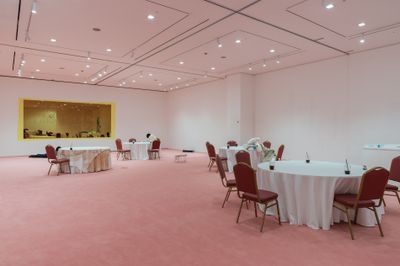
Other presentations range from Arumjigi Foundation’s hanok-inspired reception room, bringing ceramics and bamboo into a space of hospitality, to LA-based Marta gallery’s classroom-like pairing of Korean-born, US-based artist and designer Minjae Kim with his mother, Seoul-based painter Myoung-Ae Lee.
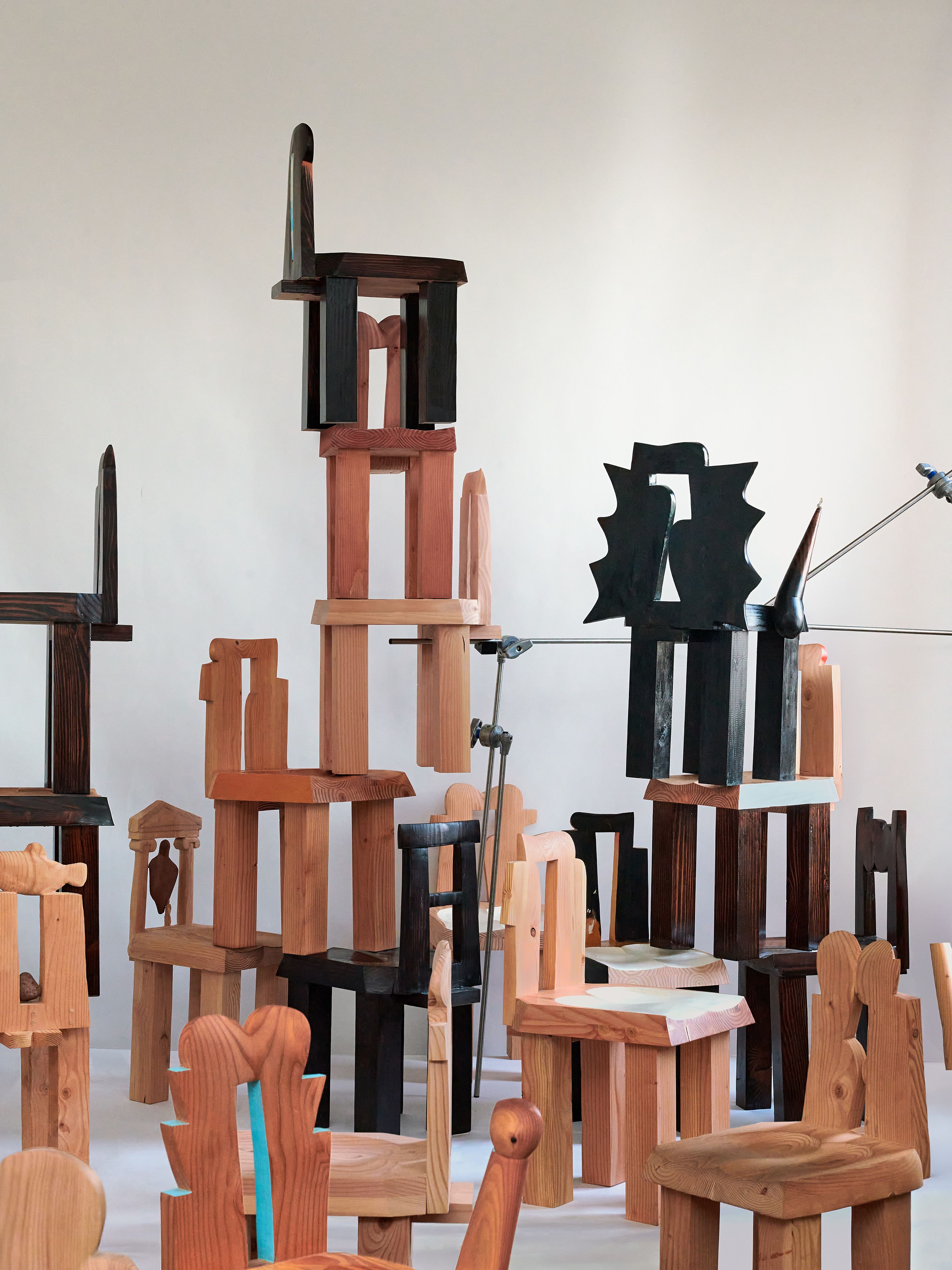
Kim—best known for idiosyncratic, hand-built furniture that blurs sculpture and design—will present carved Douglas fir chairs and a fibreglass moon jar face, while Lee will offer layered landscapes of Bukhansan, placing painting, furniture and familiar Korean forms in dialogue across generations.
The section will build on Illuminated: A Spotlight on Korean Design, which Cho curated for Design Miami’s inaugural In Situ exhibition in Seoul in 2025, with a focus on the local and global figures who have shaped the Korean collectible design landscape. Yet, this time, the curator has expanded her argument beyond Korean design.
Having grown up across Hong Kong, the Middle East and Britain alongside Korea, Cho approaches material culture as something carried and altered through migration, rather than sealed within national traditions—though she cautions against the suggestion of “a single, unified Asian aesthetic”. “Asian material cultures have always developed through the movement of people, objects, techniques and knowledge,” she explained.
The curator hopes that visitors will approach Material Practice with “the same curiosity, confidence and seriousness” that they bring to contemporary art, and to the rest of the fair. If she gets her wish, the irony in Frieze’s choice to separate these practices in an effort to show they should be considered together may prove to have been a constructive contradiction.
A respected voice in contemporary art discourse.
Focusing on ambitious storytelling and insightful art-world commentary. Ocula Magazine publishes in-depth interviews, critical essays and timely analysis on the artists, exhibitions and ideas driving the global art world.
Learn more about Ocula Magazine
Showcasing the best of the art world.
Ocula partners with galleries from around the world to highlight their artists, artworks and exhibitions. Gallery membership is by application and invitation, with each member vetted by an independent panel.
Learn more about Ocula Membership
Specialises in the sale of major artworks.
Led by a team with deep ties to the world’s leading auction houses, galleries and collectors. Ocula’s advisory team offers bespoke services to high-net-worth clients from around the world who are looking to acquire the best of contemporary and modern art.
Learn more about our team and services