Press Release

Galleria Continua is delighted to present Bestiary, the second solo show of Cuban artist, Carlos Garaicoa, in the Beijing space.

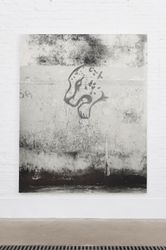
In the Middle Ages, bestiaries became popular as compendia of beasts and their illustrated volumes described various animals as well as elements of inanimate nature. The titular Bestiary is also the name for the series of big-format photographs displayed in the main hall of the gallery, depicting animals painted on the walls of Havana. With reference and homage to Jorge Luis Borges, Julio Cortázar and the medieval literature, the artist presents his own compendium of those creative city interventions showing strange creatures and monsters appearing among the urban ruins and propaganda signs. Garaicoa’s interest in graffiti is one aspect of his critical investigation of cities and architecture as living organisms that reflect political, social and ideological transformations.

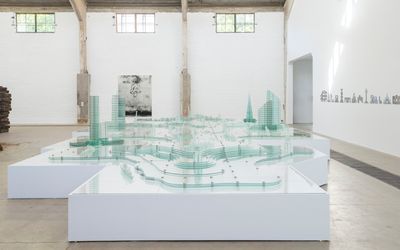
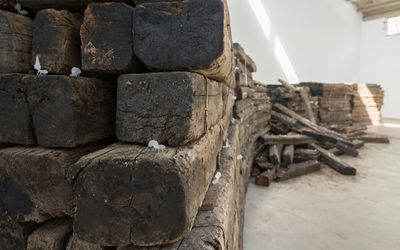
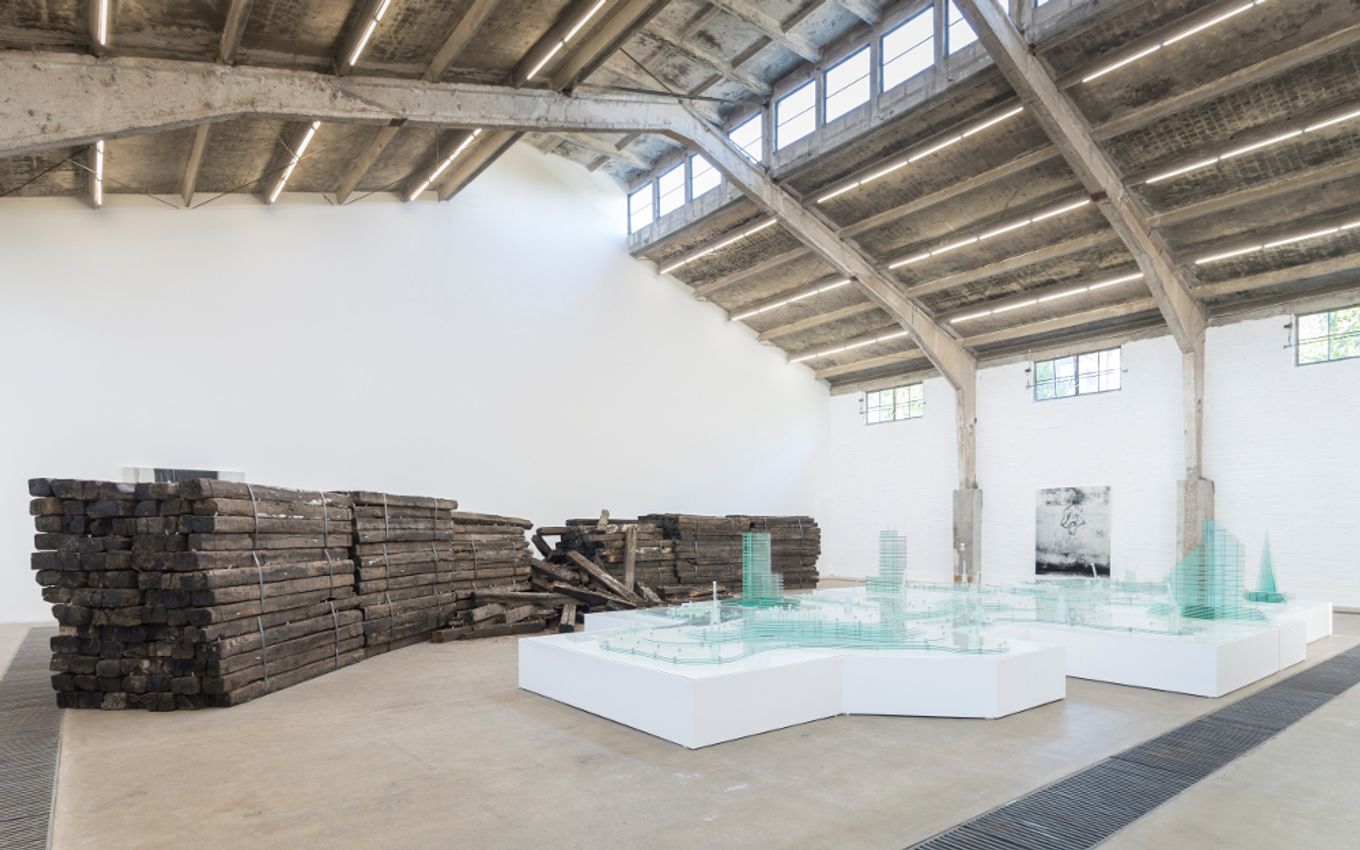
Two large-scale installations also occupy the main space. Together, they trace an imaginary line between two sides of the space: one is the organic and warm side with wood as the main material, and the other one is colder and industrial, where glass and metal conform a more pragmatic and rational environment.

And after, what we will do? puts the viewer in front of a wall of apparently simple old wood, but the closer we get – the more we discover. The main characters of the installation are small, semitransparent hybrid creatures, almost invisible from afar - little termites with organic bodies and architectural structures for heads. They are responsible for “destruction”, as they have eaten and chewed the rotten wood mass on which they now lay indifferently. They are devastating the world, but at the same time they are creating a new ecosystem, a new possibility. Therefore, the title can be interpreted as an open, possibly scary, question about our future, a metaphor of the perpetual cycle of destruction and construction.

The other installation, titled Project Fragile, is a developed continuation for a work produced in 2014 for Botin Foundation in Santander, Spain. For his solo show in Beijing, Garaicoa has designed four new buildings that surround the previous main structure giving a vertical impulse to the whole piece. It is an outcome of the artist’s experimentation with the construction technique, which overlaps and combines hundreds of tiny layers of glass held together by magnets. Project Fragile takes an intriguing form between an architectural model, a sculpture and a territory. The crucial position of the piece allows the viewers to circulate around it and view it from different angles, and, thus, notice the slight change depending on the perspective.

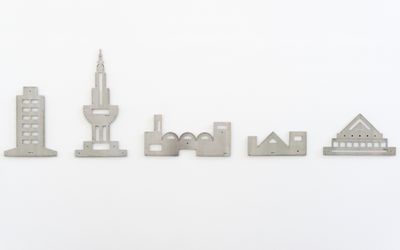
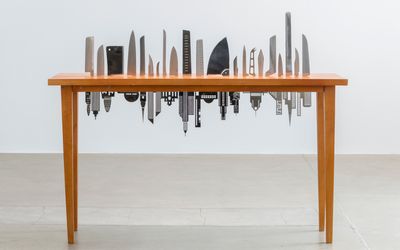
Apart from the titular artwork and two massive installations, a series Scale 1:1 draws attention on the East wall of the main space. It departs from the idea of incorporating the everyday materials Garaicoa uses to work and draw in his studio by giving them a second chance to become something else - buildings, imaginary forms of architecture. Then, the objects grow into a singular entities: not buildings per se, not rulers anymore, and open the possibility to dream of new realities.

On the way upstairs, an intriguing piece titled __The Roots of the World appears, revealing contained violence. It condenses the tension between the construction-destruction dualism, both being stages of renovation intrinsic to any crucial moment in history. Although being alien to progress, violence and power games seem to be the roots of development in modern civilization.

The second floor of the gallery makes room for three more sets of works. Witnesses comprises a series of drawings in which Garaicoa returns to the slow work of chiselling, creating small-scale wooden models. As a result, landscapes discuss with the geometric figures and the abstraction of textures, and the game of lines meets, almost by chance, the visual plot of the drawing. Architectural precision and graphic language persist in this new series as central elements of Garaicoa’s poetics.

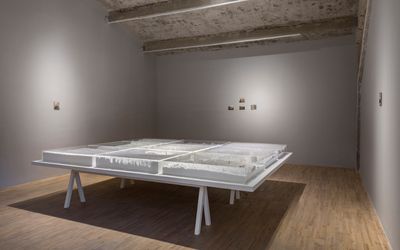
The installation Photo-topography is composed of nine polystyrene pieces and nine photographs that re-interpret the utility of photography as an archival medium. The use of the photographic support translates to the idea of the ruin, the fragility of the urban tissue and the impermanence of buildings in particularly complex social contexts.

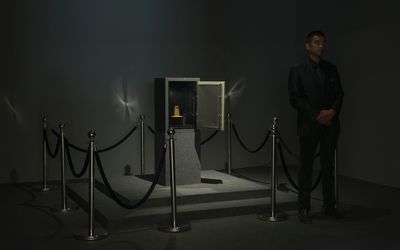
In the third room, one of the pieces from the series Saving the safe is displayed, showing a golden sculpture of the iconic building of HSBC Bank in Hong Kong placed in a safe box. This representation throws an ironic light on the false sense of security that the modern society tends to place on those financial symbols of power and mocks the value that we arbitrarily assign to them.

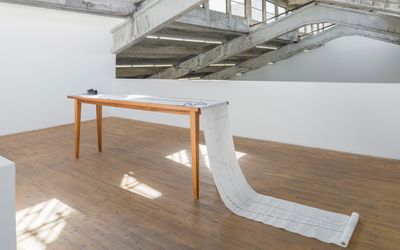
Finally, the top floor displays a single artwork, Sumitsubo. In 1998, at a flea market in New York, near Chinatown, Garaicoa bought an intriguing tool whose function he couldn’t initially guess. Only several years later did he discover that it was a sumitsubo - a traditional Chinese tool used by construction workers to draw straight lines. Traditionally, these objects accompanied the builders and masons, who often deposited them inside after the work was finished. They are the carriers of the soul and spirit of those who build. Sumitsubo evokes the avantgarde practice of objet trouvé that, at the beginning of XX century, transformed everyday objects into artistic medium, redefining the concept of an artwork. It also connects with the artist’s interest in the instruments as starting points to make art, metaphors for the construction of a new ecosystem.

Carlos Garaicoa was born in 1967 in Havana; he currently lives and works between Havana and Madrid. He studied thermodynamics and later painting at the Instituto Superior de Arte, Havana (1989-1994). He employs a multidisciplinary approach to address issues of culture and politics, particularly Cuban, through the study of architecture, urbanism and history. His chief subject has been the city of Havana, and his media include installation, video, photography, sculpture, pop-up books, and drawing.

Among his most important solo shows we can highlight those at MAAT, Lisbon; Azkuna Zentroa, Bilbao; Museum Villa Stuck, Munich; Nasjonalmuseet, Oslo; CA2M Centro de Arte Dos de Mayo, Móstoles, Madrid; Fundación Botín, Santander; NC-Arte and FLORA ars + natura, Bogotá; Kunsthaus Baselland Muttenz/Basel; Kunstverein Braunschweig, Brunswick; Contemporary Art Museum, Institute for Research in Art, Tampa; H.F. Johnson Museum of Art, Cornell University, Ithaca, New York; Stedelijk Museum Bureau Amsterdam (SMBA), Amsterdam; Centre d’Art la Panera, Lérida; Centro de Arte Contemporáneo de Caja de Burgos (CAB), Burgos; National Museum of Contemporary Art (EMST), Athens; Inhotim Instituto de Arte Contemporáneo, Brumadinho and Caixa Cultural, Río de Janeiro; Museo ICO and Matadero, Madrid; IMMA, Dublin; Palau de la Virreina, Barcelona; Museum of Contemporary Art (M.O.C.A), Los Angeles; Biblioteca Luis Ángel Arango, Bogotá and Palazzo delle Papesse, Siena. He has participated in prestigious international events such as: the Biennials of Havana, Shanghai, São Paulo, Venice, Johannesburg, Liverpool and Moscow Biennial, the Triennials of Auckland, San Juan, Yokohama and Echigo-Tsumari; Documenta 11 and 14 and PhotoEspaña 12.

Read More

Installation Views

About the Gallery

It was in the year 1990 that three friends, Lorenzo Fiaschi, Mario Cristiani and Maurizio Rigillo, decided to open a gallery in a quite unexpected location, far from the big cities and smoothly running art circuits – in San Gimignano, a town steeped in history and somehow out of time, in the heart of Tuscany. Over these 25 years of activity, generosity and altruism have formed the basis for numerous and multifaceted artistic collaborations.

View Gallery Profile
Address
Dashanzi Art District 798 #8503,
2 Jiuxianqiao Road
Chaoyang District
Beijing
China
Opening Hours
Tuesday – Sunday,
11am – 6pm
(1)
Beijing Dashanzi Art District 798 #8503,, 2 Jiuxianqiao Road
Galleria Continua
Dashanzi Art District 798 #8503,, 2 Jiuxianqiao Road, Chaoyang District, Beijing, China

Opening hours
Tuesday – Sunday,
11am – 6pm
The art world in focus