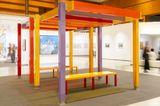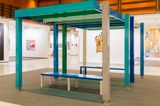
Gallery Baton is pleased to announce, The Knot of Which I Speak Cannot be Knotted, a solo exhibition by Liam Gillick (b.1964) from 1st October to 5th November in Hannam-dong, Seoul. As one of the significant figures in the contemporary art world, Gillick’s practice spans multi-disciplined fields producing artworks, public installations, journals and critiques about issues derived from the aesthetics of contemporary social phenomena and their influence upon society. He presents a large-scale installation project in Art Basel Unlimited section this year, and this exhibition is the second solo exhibition to be held after the first exhibition in Gallery Baton in 2018.
Since the beginning of 1990s, Gillick has explored structural notions of the built world and the dynamics of spaces. Especially when the neo-liberal consensus drew keen attention as a practical form of globalization, Gillick started having an interest in a phenomenon in which a modern aesthetic system collides and coexists with a new political and social agenda. Producing artworks, public installations, journals and critiques about a series of issues derived from the phenomenon and its influence upon members of society, he made significant contributions to establish the term Relational Aesthetic, one of the central theories of contemporary art.
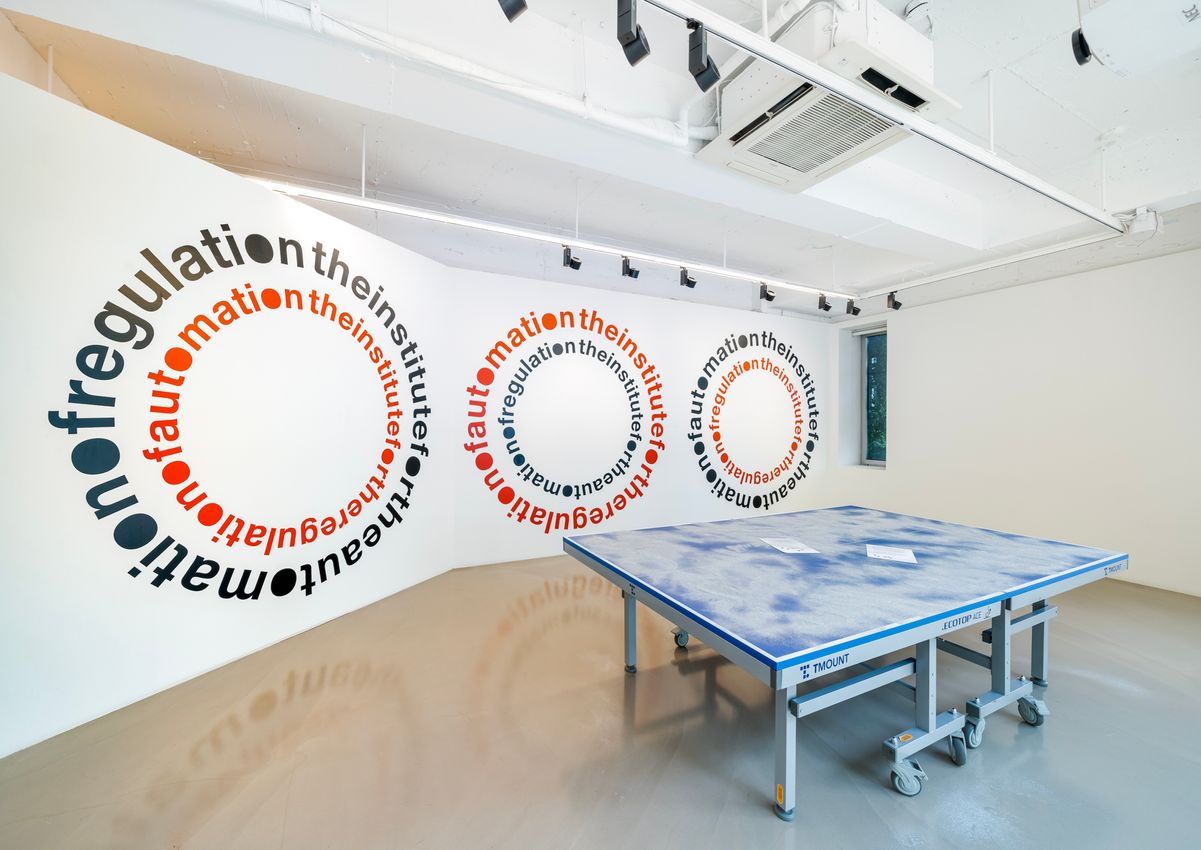
The exhibition, The Knot of Which I Speak Cannot be Knotted, continues reflecting Liam Gillick’s consistent investigation into ‘the aesthetics of production’ under the influence of the intricate contemporary social structure which governs life and work realms of every community member. Similar to how Gillick transformed several conditions suggested by postgraduate students to establish a hypothetical school into his work and an exhibition title at the past exhibition in 2018, There Should Be Fresh Springs..., this exhibition also deals with critical discourses and metaphoric approaches on the current phenomenon in which different organizations or establishments based on a variety of demands emerge and coexist. For instance, the three oval-shaped texts placed in a separate space of the gallery refer to names of fictional institutions—The Institute for the Regulation of Automation, The Institute for the Automation of Regulation and The Institute for the Automation of Automation. The different arrangements of simple words enable each institution to have an individual trait distinct from the others and the linguistic play of the work is even more pronounced by its symmetrical display on the two opposite walls of the exhibition space.
Above all, it is worth noticing that he recreates one of his early works shown in Traffic at the CAPC Musée d’Art Contemporain in Bordeaux in 1996, the exhibition curated by Nicolas Bourriaud in order to showcase the tendency that he identified as Relational Aesthetics. Along with the three circular texts, ’(The What if Scenario) Dining Table’ (1996) which consists of a blue table-tennis table without a net and texts projected on the table surface reappears in the space. This particular work reminds spectators of four central notions of production—compromise, development, projection and renovation—tightly maintaining a balance.
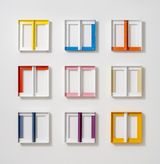
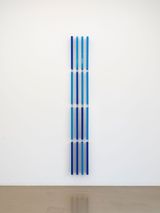
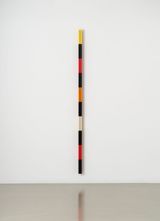
Liam Gillick’s texts and large-scale installations in the exhibition, Catastrophe and Recovery closed this August at National Museum Modern and Contemporary Art in Seoul followed by the major presentation at Gwangju Museum of Art, received positive responses. This exhibition will be another great opportunity to discover his new series fluently embracing extensive subjects from symptoms of the contemporary society where extreme automation is excessively sought for to British tales of the 17th century. His texts, steel constructions in diverse colors and arrays and illustrations whose motifs stem from the old tales not only organically occupy the space according to the given dynamics but will encourage the visitors to guess what the artist attempts to deliver in the enigmatic title of the exhibition.
Liam Gillick’s solo exhibitions have taken place at numerous leading international museums including Tate in London (2001), MoMA in New York (2003), Museum of Contemporary Art in Chicago (2009), Le Magasin in Grenoble (2014), Kunsthalle in Zürich (2008) and Centro de Arte Contemporáneo in Málaga (2005). Gillick has participated in major art exhibitions such as Documenta 10 in Kassel and the Venice Biennale; he was selected to represent Germany at the Venice Biennale in 2009; nominated for Turner Prize in 2002. This year, Gillick held a large-scale solo exhibition at the Gwangju Museum of Art and permanently installed his unique signage system, including installations at the LUMA Arles complex. His works are included in the collection of Centre Georges Pompidou in Paris, Solomon R. Guggenheim Museum, MoMA in New York, Tate London and Samsung Museum of Art among many other museums and public collections.

As an important and influential figure in the contemporary art world, Gillick’s practice spans multi-disciplined fields producing artworks, public installations, journals and critiques about a series of issues derived from the phenomenon and its influence upon members of society.
Since its founding in 2011, Gallery Baton has gained international recognition as a leading contemporary art gallery in Korea. Distinguishing itself with a dynamic and refined program, Baton consistently strives for an in-depth understanding of current paradigms within the complex and ever-changing landscape of contemporary art.

A respected voice in contemporary art discourse.
Focusing on ambitious storytelling and insightful art-world commentary. Ocula Magazine publishes in-depth interviews, critical essays and timely analysis on the artists, exhibitions and ideas driving the global art world.
Learn more about Ocula Magazine
Showcasing the best of the art world.
Ocula partners with galleries from around the world to highlight their artists, artworks and exhibitions. Gallery membership is by application and invitation, with each member vetted by an independent panel.
Learn more about Ocula Membership

Specialises in the sale of major artworks.
Led by a team with deep ties to the world’s leading auction houses, galleries and collectors. Ocula’s advisory team offers bespoke services to high-net-worth clients from around the world who are looking to acquire the best of contemporary and modern art.
Learn more about our team and services