After the Body: Traces, Space, and Shared Time
The exhibition begins with what remains after the body disappears—with fragments, residues, and echoes. This duo show by Yohan Hàn and Achraf Touloub draws upon images derived from their three collaborative performance works, realized in 2017, 2019, and 2023. Having spent nearly a decade developing an artistic relationship, the artists reunite in Seoul through the mediation of past imagery—not to relive the past, but to reexamine the structure and meaning of collaboration today, and to reflect on how the body is situated within the form of performance. In other words, the exhibition uses these prior images as a reflective surface through which to question how the self encounters the other, and to experiment with the spatial possibilities of such an encounter in the present moment.
Let us then speak of the ‘body of today.’ What does it mean to invoke the body of today? Does it imply that the bodies of yesterday, today, and tomorrow are fundamentally distinct? Both Hàn and Touloub have long been invested in themes such as corporeal sensation, digital environments, and the evolving relationship between technology and the human. Although their practices are not confined to a single medium, performance and painting often serve as key vehicles for image-making, leading the artists to explore how bodily gestures occupy both physical space and pictorial planes.In particular, the 2023 project Reflections (0 paths 0) for an open screen, held at the National Museum of Modern and Contemporary Art, Cheongju, exemplified their method of inviting multiple bodies—performers, participants—into a pre-structured environment. Within this framework, participants moved in accordance with choreographic scores, media devices, and spatial cues. Such orchestrated encounters of unfamiliar bodies, mediated by fixed rules and technological apparatuses, introduced variables that continually reactivated the work. These variables not only resisted closure but also opened up complex questions about embodiment, presence, and spatial negotiation in the context of contemporary technological systems. In this way, the two artists have been engaged in an ongoing inquiry into the coordinates and status of the body in a rapidly shifting technological landscape. The ‘body of today’ they reference is not static but one that has subtly shifted from yesterday—a body that continues to be shaped by external systems, internal rhythms, and encounters with others. This exhibition does not merely document past performances; it probes the evolving logic of collaboration and asks: in what ways do we meet each other now, and how do our bodies inhabit those in-between spaces.
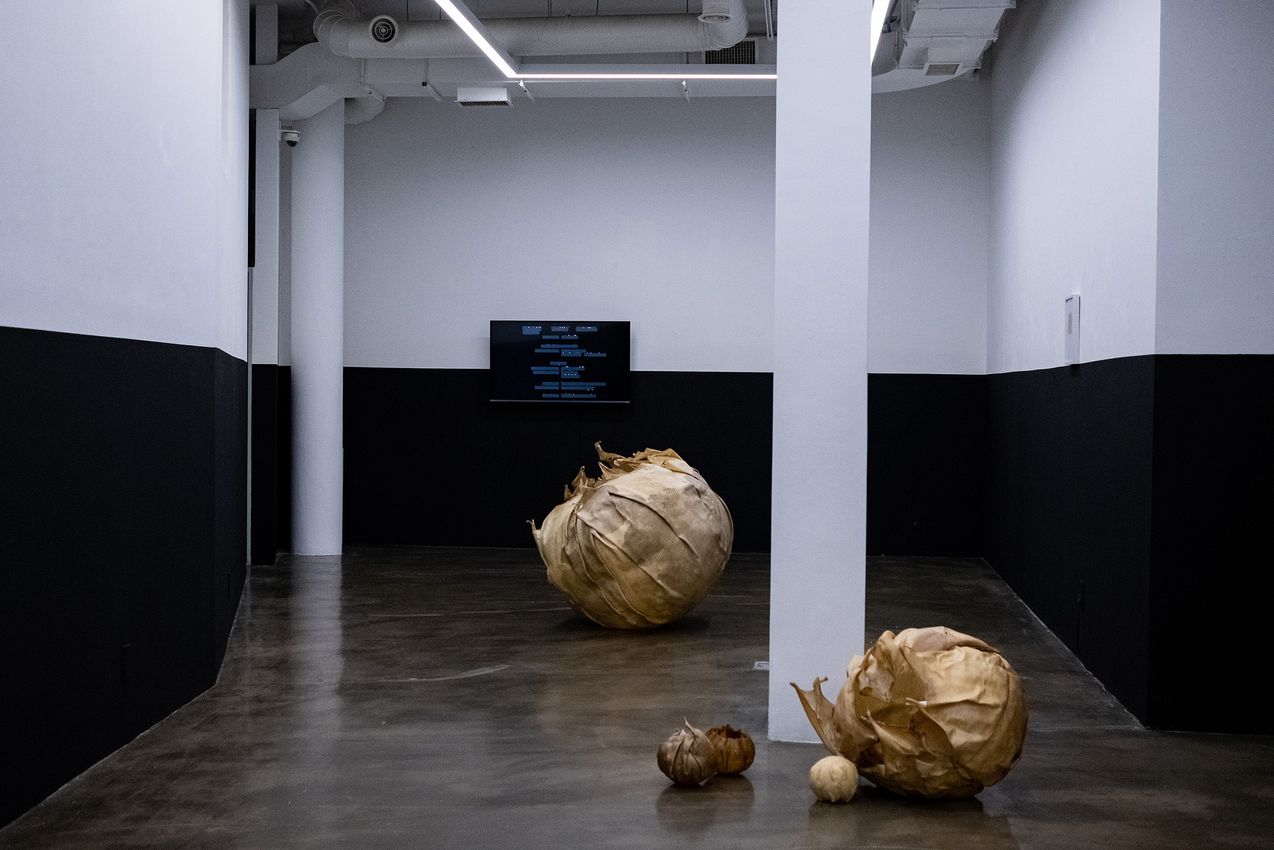
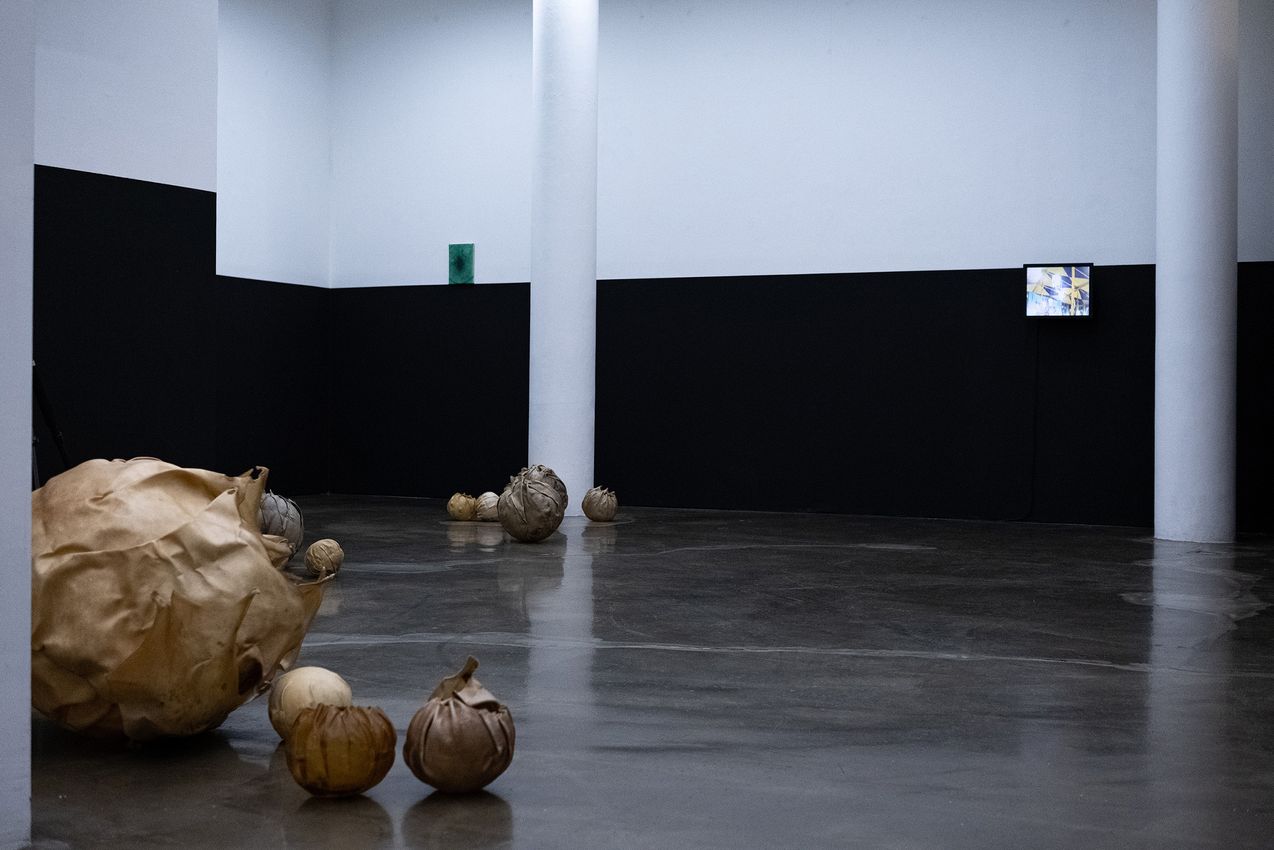
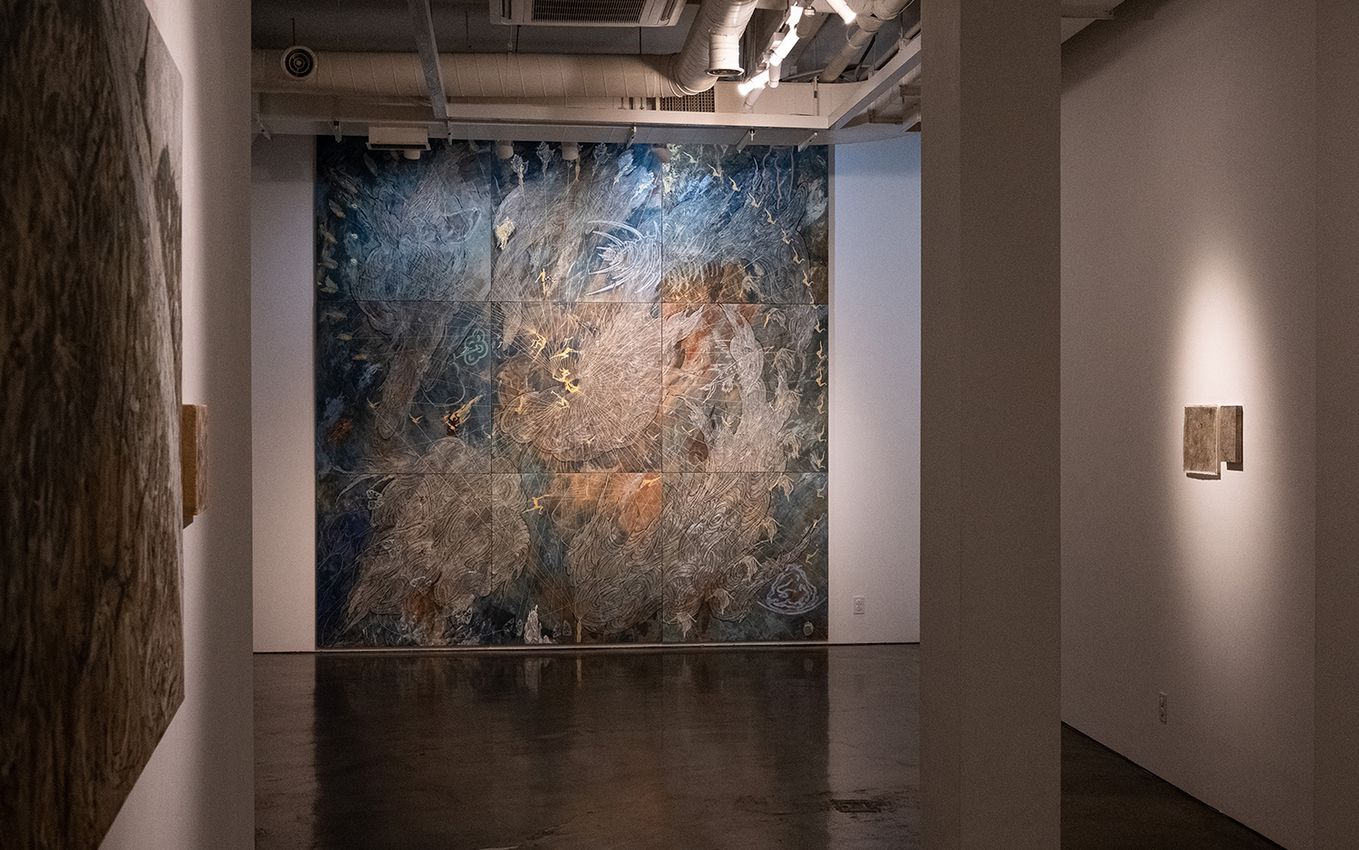
Spanning two levels—B1 and 2F—this exhibition eliminates the physical body once central to previous performances, instead tracing its lingering presence through objects, sculptures, video, drawing, and painting. The basement level presents newly interpreted works by each artist, developed in response to the questions left unresolved by their years-long collaboration. On the second floor, archival video documentation of past performance projects is presented alongside a ‘bed of ashes,’ a potent symbol of images born in the wake of loss.
This juxtaposition of archival material and the ashes—embodying the image of what remains—encapsulates the exhibition’s core inquiry. Scattered across the ash-covered floor are 3D-printed objects. To recognise their form, viewers must navigate through the dark residue, which functions like a score, guiding and restricting the movement of their bodies. As they approach the objects, they come to recognise them as miniature amphitheaters. Unlike the proscenium stage, which enforces a single frontal viewpoint, the amphitheater surrounds its central stage with viewers, encouraging intersecting lines of gaze across the performance space.
By constructing these theatrical forms atop a substance as unstable and impermanent as ash, Achraf Touloub disrupts fixed binaries: stage and audience, performer and viewer. He blurs the boundaries of spatial roles and temporal presence, transforming the floor itself into a performative surface charged with symbolic weight. Power, after all, is always enacted through the body. The symbolic image of the amphitheater—where power and corporeality intersect—placed in parallel with archival footage of performance, calls into question how power is exercised in the absence of the body. On the lower level, individual works by both artists are intricately entangled, not through direct interaction, but through a shared mode of erasure. What is most striking is how the exhibition, across both floors, continues to exhibit the body by systematically subtracting it.
Rather than approaching the body as material or physical matter, Hàn and Touloub invoke it as an image—a symbolic absence that gives shape to an unconscious subjectivity. The body emerges not as a present performer, but as a projected presence, conjured through the viewer’s own movement and perceptual engagement. There are no performers, no performances—yet the bodily subject is imagined into being through the act of looking, navigating, and being present.
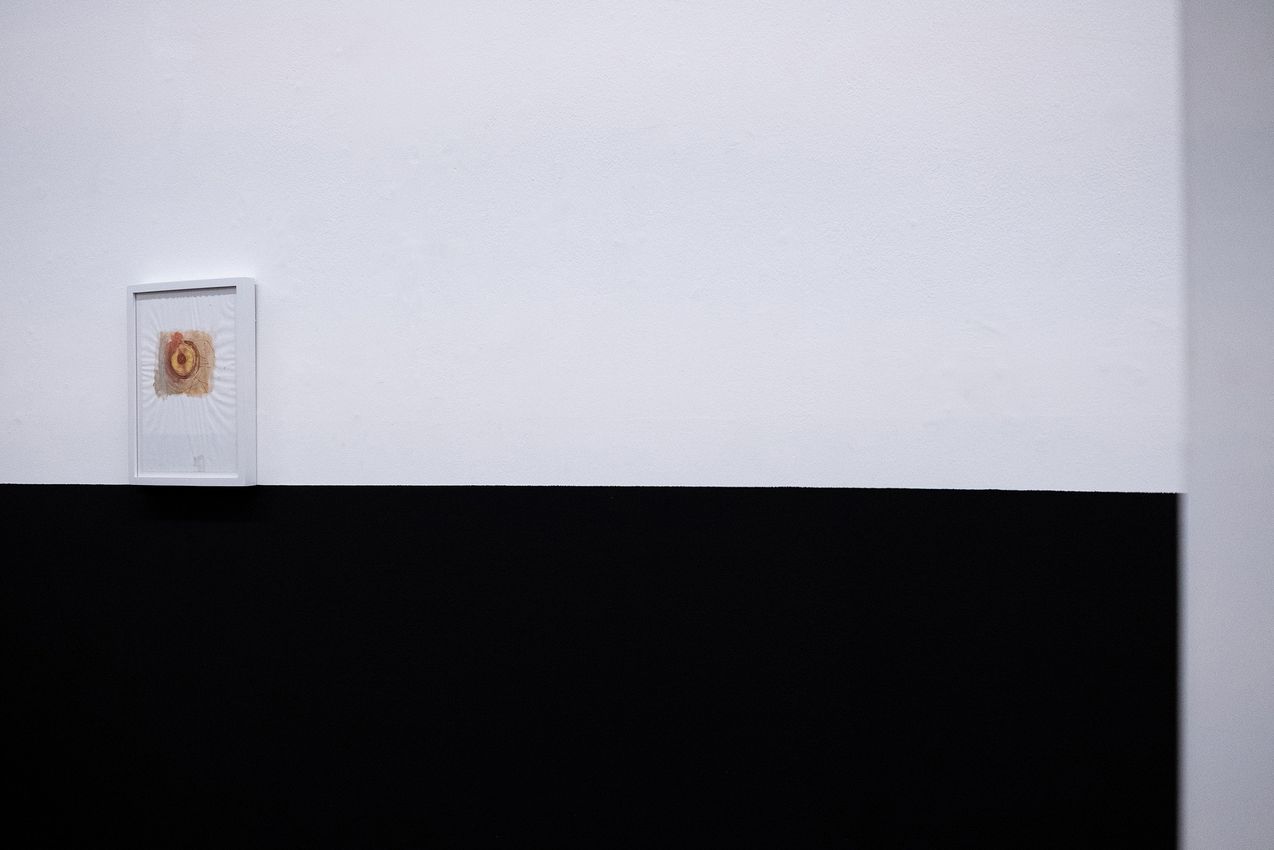
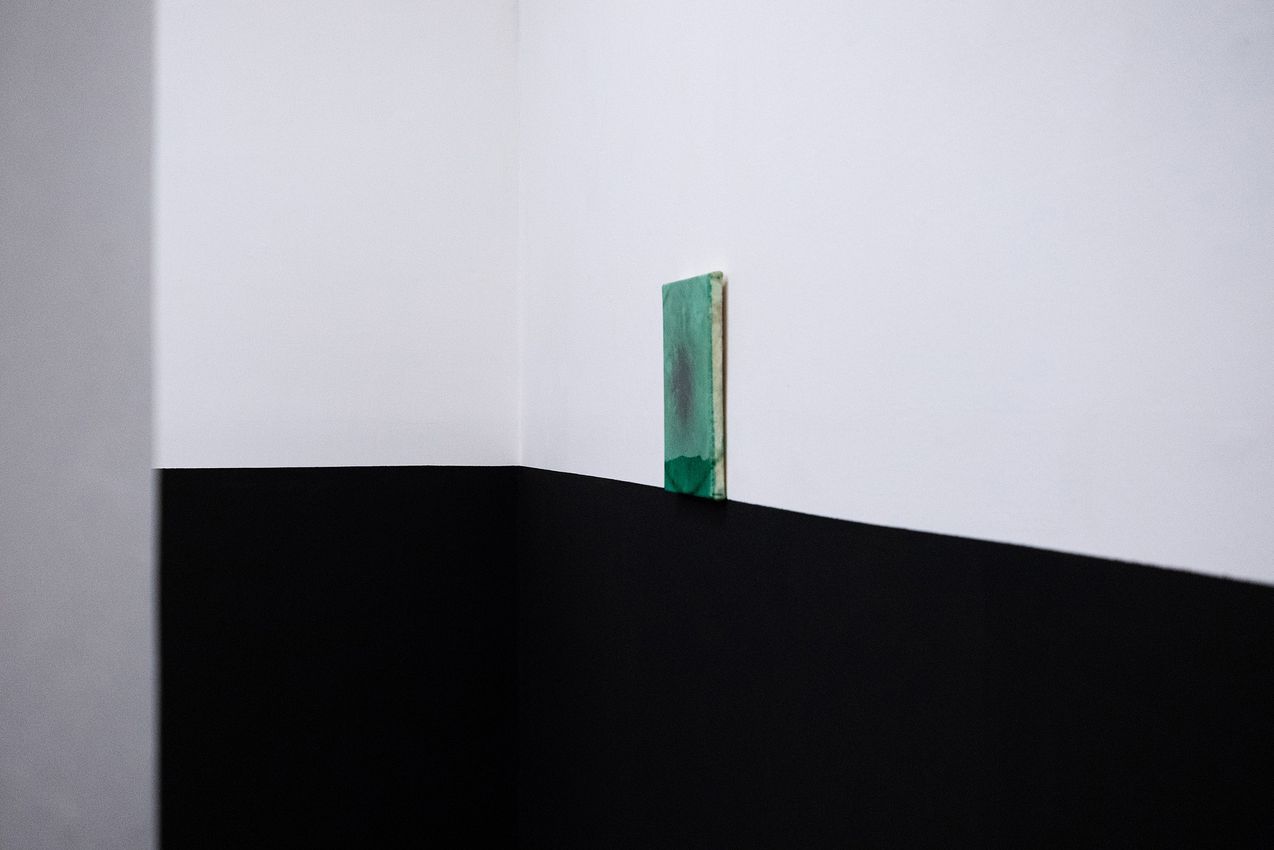
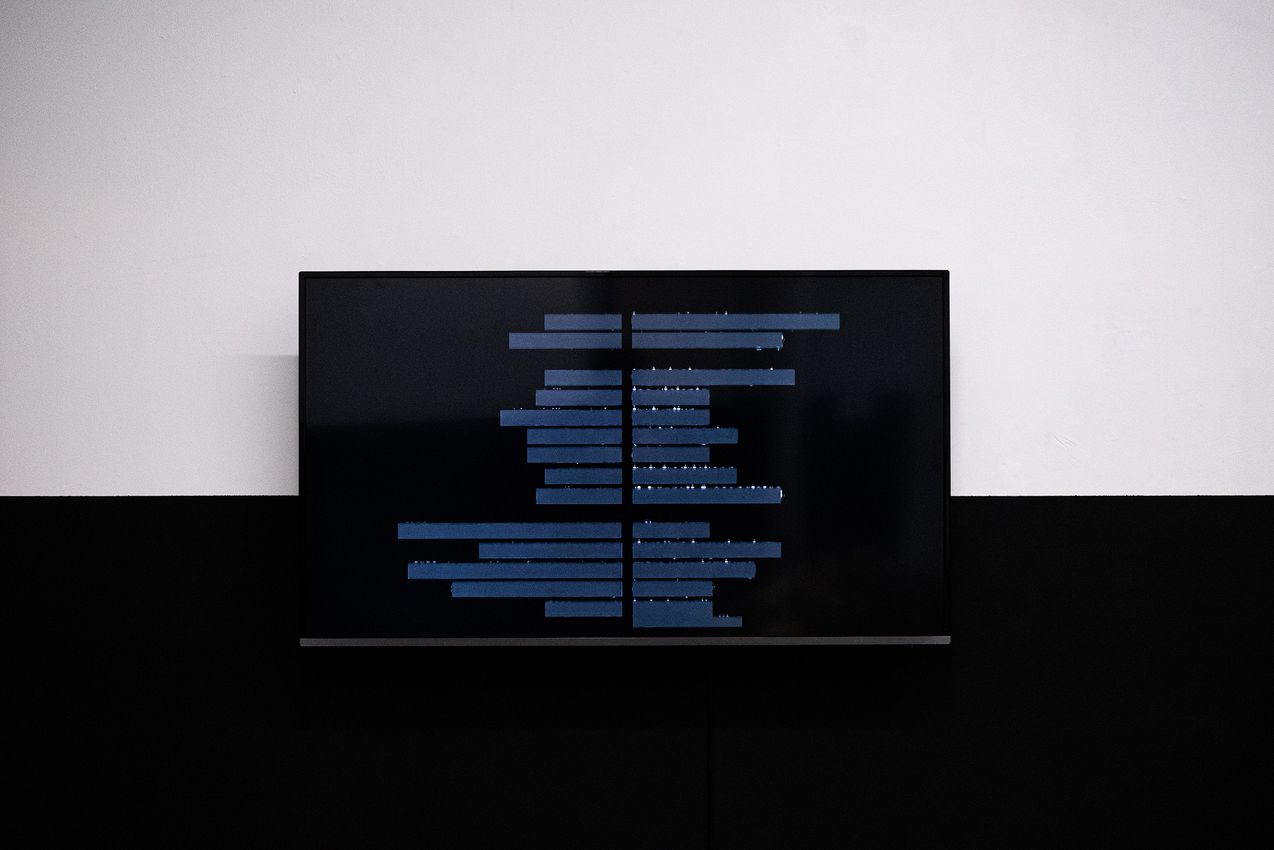
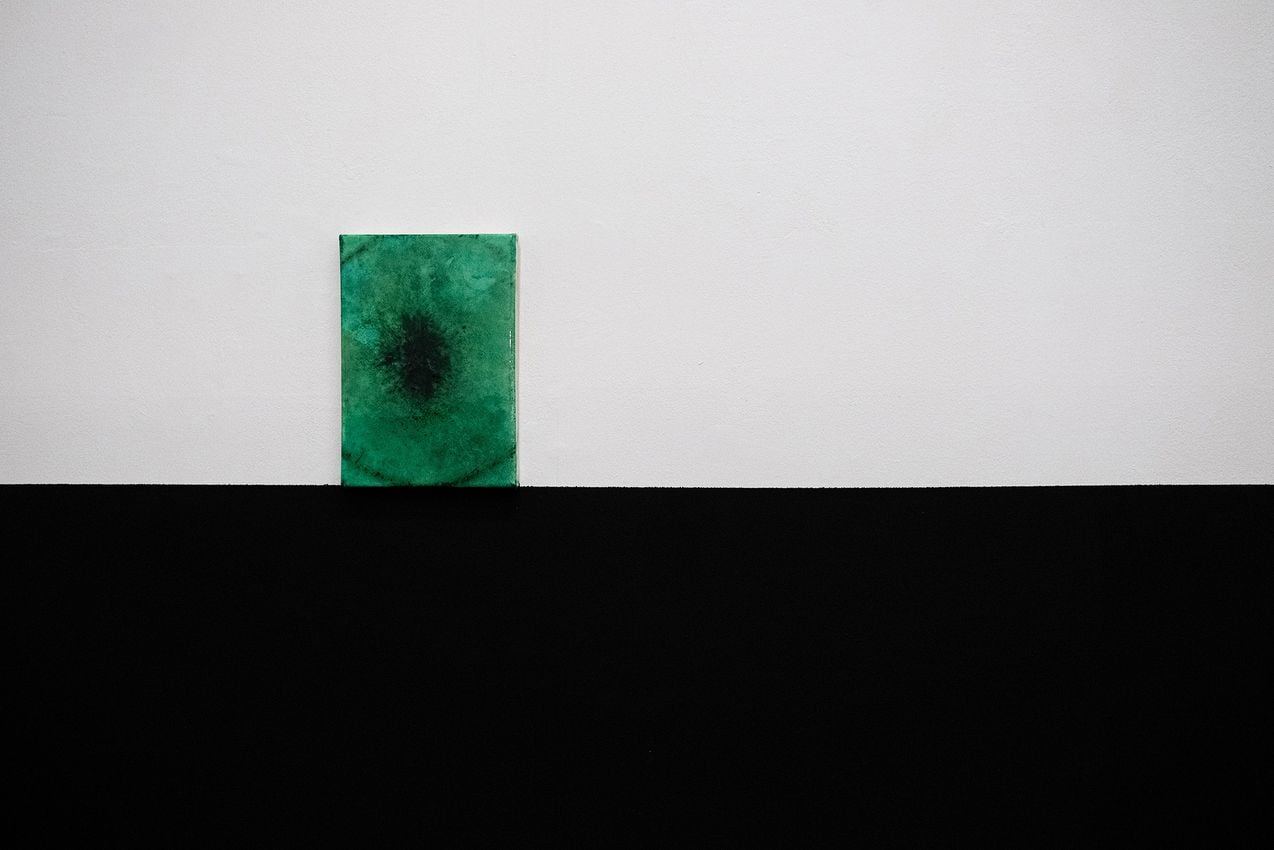
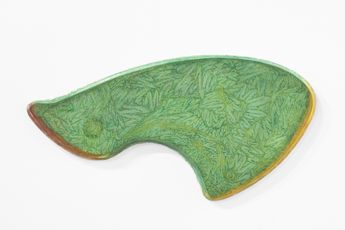
As seen in works such as Reflection and trace (2024) and Metamorphosis (2025), Yohan Hàn approaches the absent body by exhibiting its outer shells—remnants and residues that once encased it. Achraf Touloub, by contrast, renders the silhouette, contour, and surface of the body through delicate, fluid watercolour imagery in pieces like Horizon as a paradox (2024) and Egregor (III) (2024). Particularly notable is Hàn’s new work The Interpreter (From the Core of another World) (2025), in which an artificial intelligence is staged as a choreographer. Inputted as a performer, the AI generates textual descriptions based on the objects and movements visible on its (virtual) stage: LED lights, hazy vision, the sound of a fan, reflected silhouettes. Through a series of prompts, dialogues, and missions between the artist and the AI, a speculative stage is constructed—not visualized through images, but rendered in language. Hàn sketches the landscape of a world where the body has vanished and only words remain.
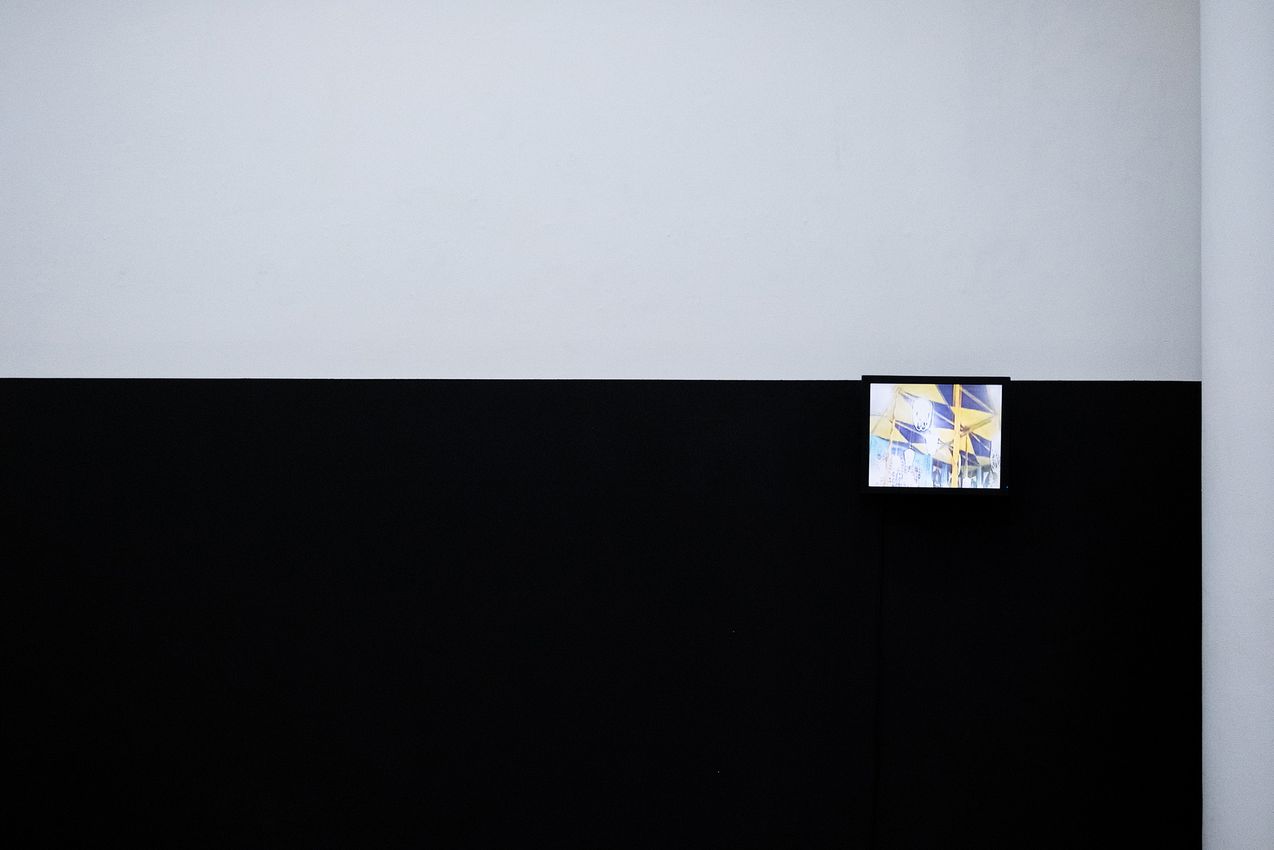
If Hàn conjures an imaginary space through text, Touloub presents images emptied even of language. In End Credits (2011), the artist erases all names from the familiar cinematic sequence that lists the labor behind a film’s production. As the term ‘credit’ suggests—a debt to be acknowledged—this black screen is a moment for exposing the labor hidden behind images. Yet, as streaming platforms like Netflix or Watcha accelerate content consumption through functions like ‘skip intro’ or ‘autoplay next episode,’ the context surrounding a film is increasingly effaced. If a ‘name’ is the language by which one is addressed and recognised within a social structure, then it is also the condition for distinguishing the self within a community. Touloub captures the fleeting moment when erased names, obscured by market and capital, nonetheless briefly reemerge.
In today’s digital environment, our bodies are increasingly fragmented. Consider the example of platform-based labor: the rider’s body is reduced to a dot on a map; our hands and eyes become units of engagement calibrated to the needs of algorithms. The body, once whole, is disassembled into functional parts—fragments validated by their usefulness within systems of capital. Though digital platforms monitor and archive everything visible, what remains unrecorded are the body’s sensations: exhaustion, emotion, tension, and the affective residue of anxiety. The body becomes a data point—measurable, extractable, and reproducible.The most troubling aspect of this transformation is the dissolution of shared bodily space—the very basis for community. Where once bodies gathered, collided, and laboured in collective environments of solidarity, today’s bodies function in isolated, individualised realms. The body, once a political site for building commonality, is increasingly displaced by the logic of platform capitalism.
Yet Hàn and Touloub do not merely critique these conditions. Rather, they seek to ask: If the technological landscape cannot be reversed, how might we imagine new forms of community on its very terrain? How might bodies and actions be reorganised within this evolving framework? From the choreographed encounters designed by the artists to the archival traces that defer loss, the exhibition interrogates shifting configurations of the body. It tracks the gradual, imperceptible transformations of sensation occurring within the digital platform economy. This is not a lament, but a proposition—an attempt to map what remains, and what might still emerge.
Text by Lee Minjoo (Art Critic) | Gallery Chosun
Gallery Chosun was established in 2004 in Bukchon, an area in Seoul known for its vibrant art scene comprising prominent art galleries and the National Museum of Modern and Contemporary Art. With a reputation for providing a versatile environment for its forward-thinking exhibitions, Gallery Chosun is committed to becoming an ultimate paradigm for Korean contemporary art.

A respected voice in contemporary art discourse.
Focusing on ambitious storytelling and insightful art-world commentary. Ocula Magazine publishes in-depth interviews, critical essays and timely analysis on the artists, exhibitions and ideas driving the global art world.
Learn more about Ocula Magazine
Showcasing the best of the art world.
Ocula partners with galleries from around the world to highlight their artists, artworks and exhibitions. Gallery membership is by application and invitation, with each member vetted by an independent panel.
Learn more about Ocula Membership

Specialises in the sale of major artworks.
Led by a team with deep ties to the world’s leading auction houses, galleries and collectors. Ocula’s advisory team offers bespoke services to high-net-worth clients from around the world who are looking to acquire the best of contemporary and modern art.
Learn more about our team and services