Press Release

AI Then & Now is a new exhibition about the relationship between human creativity and artificial intelligence. Conceived by Jasia Reichardt, co-curated with Alex Estorick and Peter Bauman, and developed in close collaboration with Gazelli Art House, the exhibition is about machines learning from humans and humans learning from machines.The project follows the legacy of Reichardt’s Cybernetic Serendipity at the ICA London in 1968, a radical exhibition that sought to ‘explore and demonstrate’ the emerging relationship between the arts and computer technology.

Our new exhibition, almost 60 years later, addresses AI in the same spirit. It considers AI’s history, what it is, what it does, and some of its consequences. It consists of three parts: 1. We start with the history of AI, and its development.

2. Then we find out what artists today are doing with this new technology.

3. And finally, we ask AI whether it wants to, or already does, make its own images, compose its own music, or write its own poetry.

On the ground floor is a new timeline charting the development of AI since the 1940s, authored by Peter Bauman, Editor-in-Chief at Le Random. Printed as a large wall graphic it sets out the parallel lines of innovation pioneered by scientists and engineers over the last 80 years—computer breakthroughs that have been hardfought and contested, and that are now shaping many aspects of our lives.

At the reading tables visitors are invited to browse through folders of original press ephemera from Reichardt’s archive, that chart the ebb and flow of public debate on robotics and AI, from the 1960s to the present.

The table also hosts a robot. A soft prosthetic hand, produced by Professor Kaspar Althoefer, Dr Jan Fras and team at the Centre for Advanced Robotics at Queen Mary University(ARQ), is an example of ‘embodied intelligence’. Representing a new and emerging philosophy of robotics, this pneumatic hand, designed for a child, departs from the notion of artificial intelligence as primarily computational towards an intelligence that is distributed between brain, body and environment.

On the first floor is the ‘AI Now’ section comprising a collection of digital works by 50 leading international artists working with machine learning. Curated with Alex Estorick, Founding Editor of Right Click Save, this new archive, also presented online as a new website, responds to questions about creativity, autonomy and non-human agency.

Artworks come from the last decade and include milestone pieces alongside new productions made specifically for the exhibition. Artists making new work include Kevin Abosch, Nouf Aljowaysir, Casey Reas, Gretchen Andrew, Saeko Ehara, Brendan Dawes, Primavera De Filippi, Auriea Harvey, Emi Kusano, Parag K. Mital and Wen New Atelier.

A number of pioneering artists are included, such as Mario Klingemann, Memo Akten, Gene Kogan and Pindar Van Arman. They were among the first to explore the possibilities for the production of images (and meaning) offered by neural networks.

Pindar Van Arman will present a piece from his landmark Emerging Faces (2017) series. This concept followed in the lineage of Harold Cohen’s innovations in robot-made pictures with his AARON project, but rather than systematic code Van Arman instead utilised GANs (generative adversarial networks). Two AI agents were given complementary roles: one attempted to imagine human faces and paint them onto canvas, while the other watched, stopping the painting the instant it recognised a face.

GANs were a pivotal step forward in the potential of neural networks and were developed by Ian Goodfellow and his colleagues at the University of Montreal. In a world premiere, on display in this exhibition is the first-ever GAN output (a 10×10 grid of MNIST digit generations) from 26 May 2014, the night Goodfellow invented them.

Language as well as images is central to AI Then & Now. The work of K Allado- McDowell, Sasha Stiles, and Ana María Caballero expands the possibilities of literature beyond the human voice. Artists are also leading the way in critiquing the ways in which AI is impacting our lives and the planet. The practices of artists such as Stephanie Dinkins, Anna Ridler, and Hito Steyerl ask searching questions while actively initiating new possibilities.

Central to Reichardt’s concept for the exhibition is the question of the creative potential of AI. Does it want to make its own art? Can it? Could it? Should it? During the exhibition, Botto and Abraham, two autonomous artists, will make a new work together, starting from the question Reichardt’s show puts to them.

AI Then & Now will be a space in which audiences can experience the latest in research on AI creativity. Throughout the exhibition there will be public workshops and talks by engineers and artists from partners such as the School of Computing at Goldsmiths, University of London; CitAI at City St George’s, University of London; Creative Computing Institute (CCI) at UAL; and the Computer Arts Society, an organisation which grew from the legacy of Cybernetic Serendipity in 1968. Other organisations and universities are welcome to join.

PARTICIPATING ARTISTS Abraham, Kevin Abosch, K Allado-McDowell, Morehshin Allahyari, Nora Al-Badri, Nouf Aljowaysir, Memo Akten, Gretchen Andrew, Pindar Van Arman, Janet Biggs, Botto, Tega Brain, Ana María Caballero, Sougwen Chung, Ben Cullen Williams, Sofia Crespo, Brendan Dawes, Simon Denny & Guile Twardowski, Primavera De Filippi, Stephanie Dinkins, DOKU, Saeko Ehara, Ahmed Elgammal, Jake Elwes, Ganbrood, Auriea Harvey, Danielle King, Yuma Kishi, Gene Kogan, Emi Kusano, William Latham, Lawrence Lek, Roman Lipski, Lauren Lee McCarthy, Kyle McDonald, Parag K. Mital, Karyn Nakamura, Casey Reas, Anna Ridler, Damien Roach, Rachel Rossin, Helena Sarin, Solienne, Sasha Stiles, Hito Steyerl, Nye Thompson, Mike Tyka, Patrick Tresset, Wen New Atelier, David Young.

ABOUT JASIA REICHARDT Jasia Reichardt is a writer on art and exhibition organiser interested in art that touches other subjects, including technology, typography, play, architecture, and poetry. She has worked at the ICA London and the Whitechapel Art Gallery, lectured at various colleges, and written some books, including The Computer in Art (1971) and Robots: Fact, Fiction and Prediction (1978). Her best-known exhibition is Cybernetic Serendipity (1968).

Graphic Design: Pedro Cid Proença and Oliver Long Media partners: Right Click Save and Le Random

Read More

Installation Views

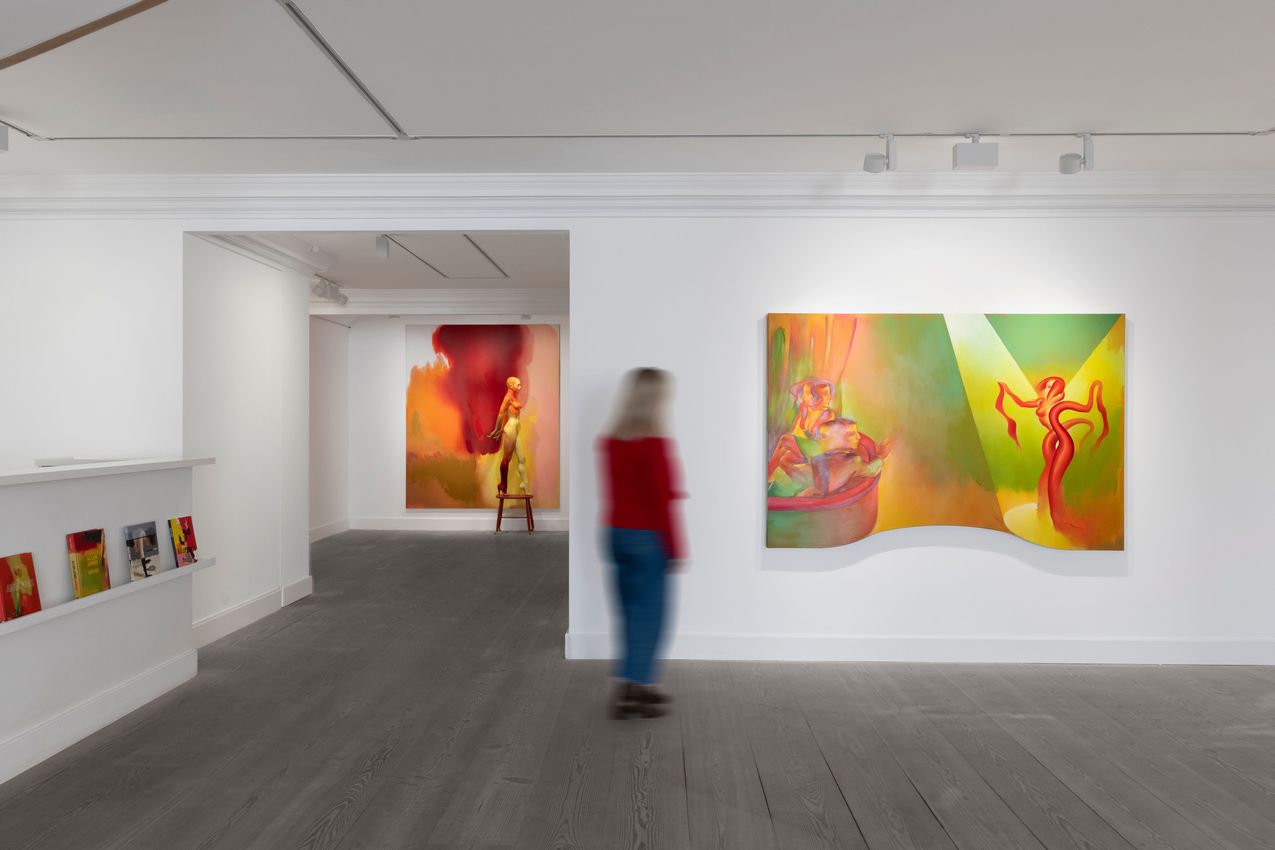
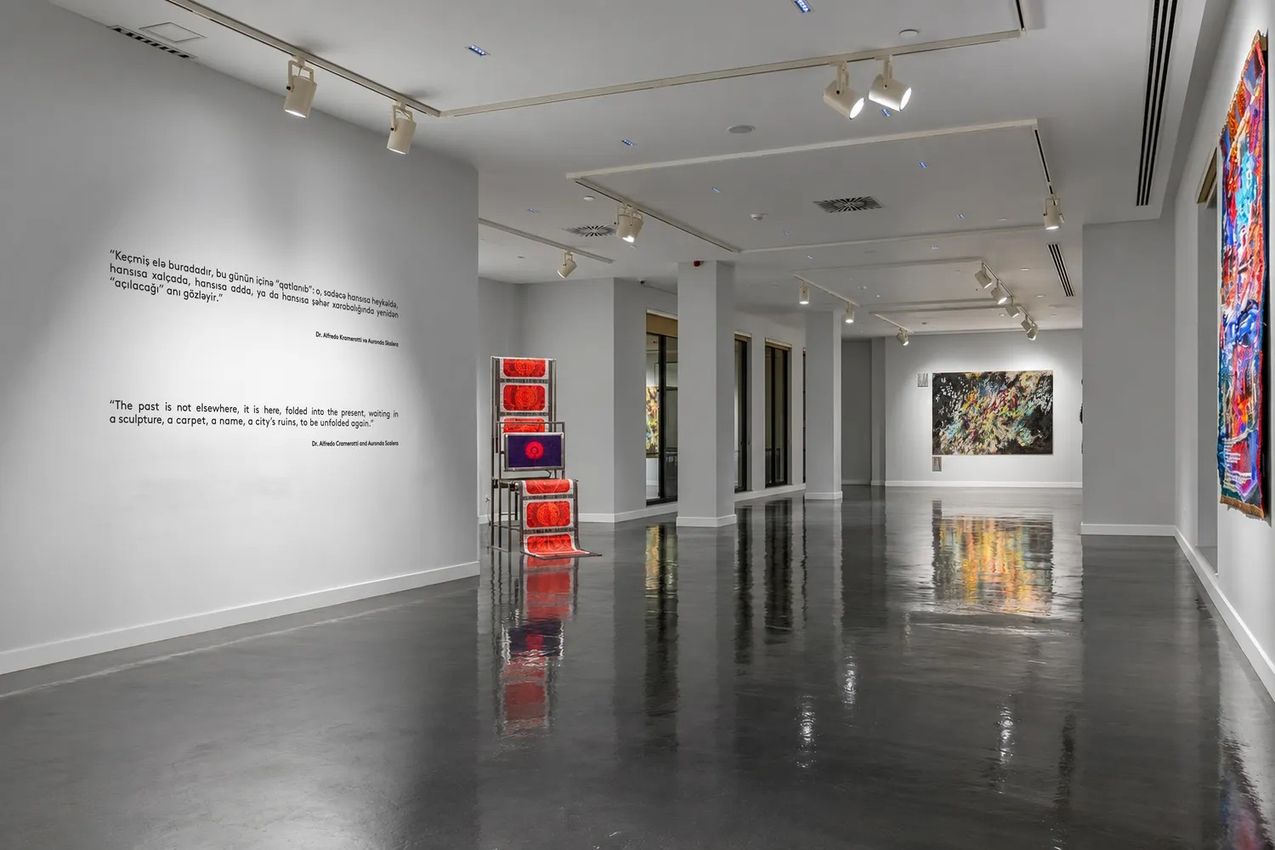
Exhibition view: AI Then & Now, Gazelli Art House (15 January - 27 February 2027). Courtesy Gazelli Art House.

Also Exhibiting at Gazelli Art House

About the Gallery

With spaces in London, New York and Baku, Gazelli Art House presents a cross-generational programme spanning Post-War, modern and contemporary art. Representing an international roster of artists and estates, the gallery brings together historically sinificant figures alongside contemporary practitioners working across painting, sculpture, photography, installation, performance, moving image and digital media.

View Gallery Profile
Address
39 Dover Street
London
United Kingdom
Opening Hours
Monday – Friday
10am – 6pm
Saturday
11am – 6pm
(1)
London 39 Dover Street
Gazelli Art House
39 Dover Street, London, United Kingdom

Opening hours
Monday – Friday
10am – 6pm
Saturday
11am – 6pm
The art world in focus