



Press Release

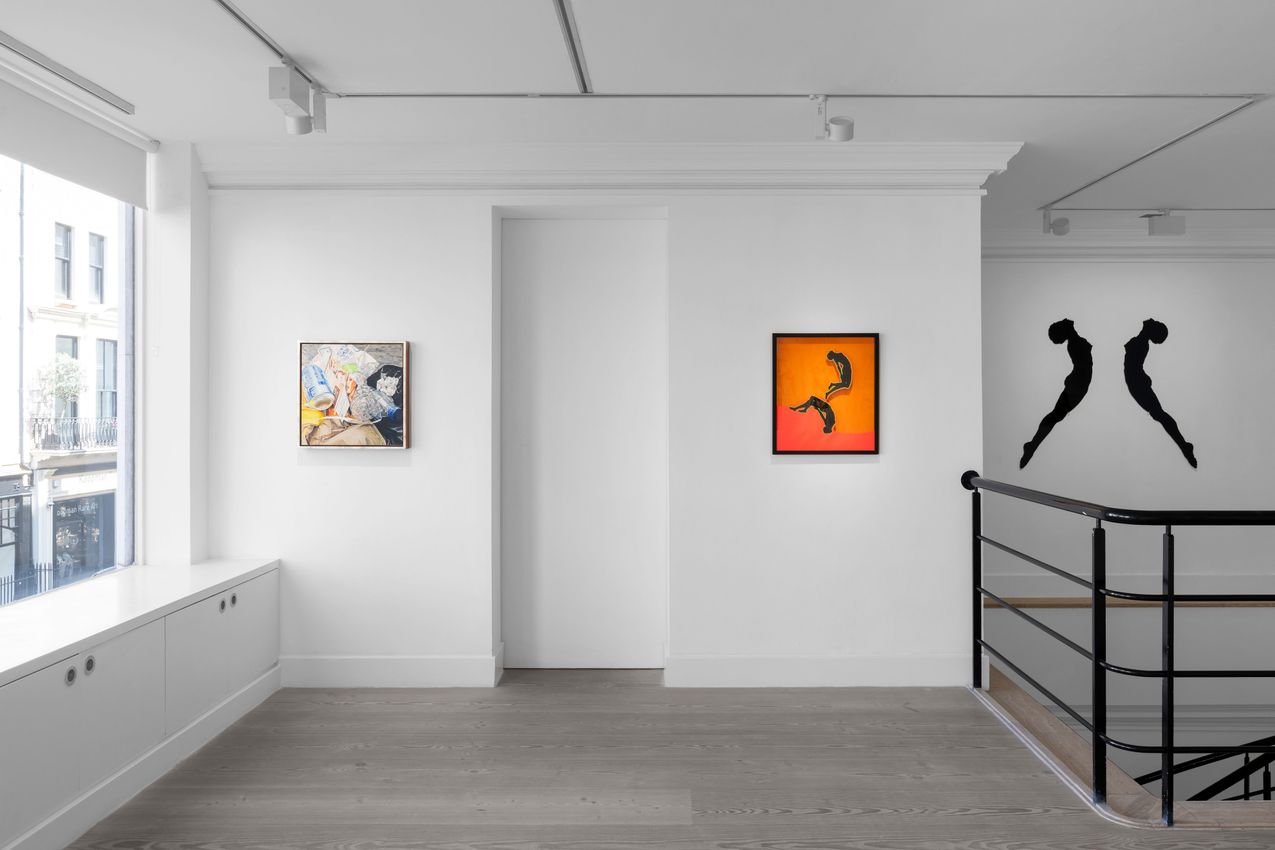
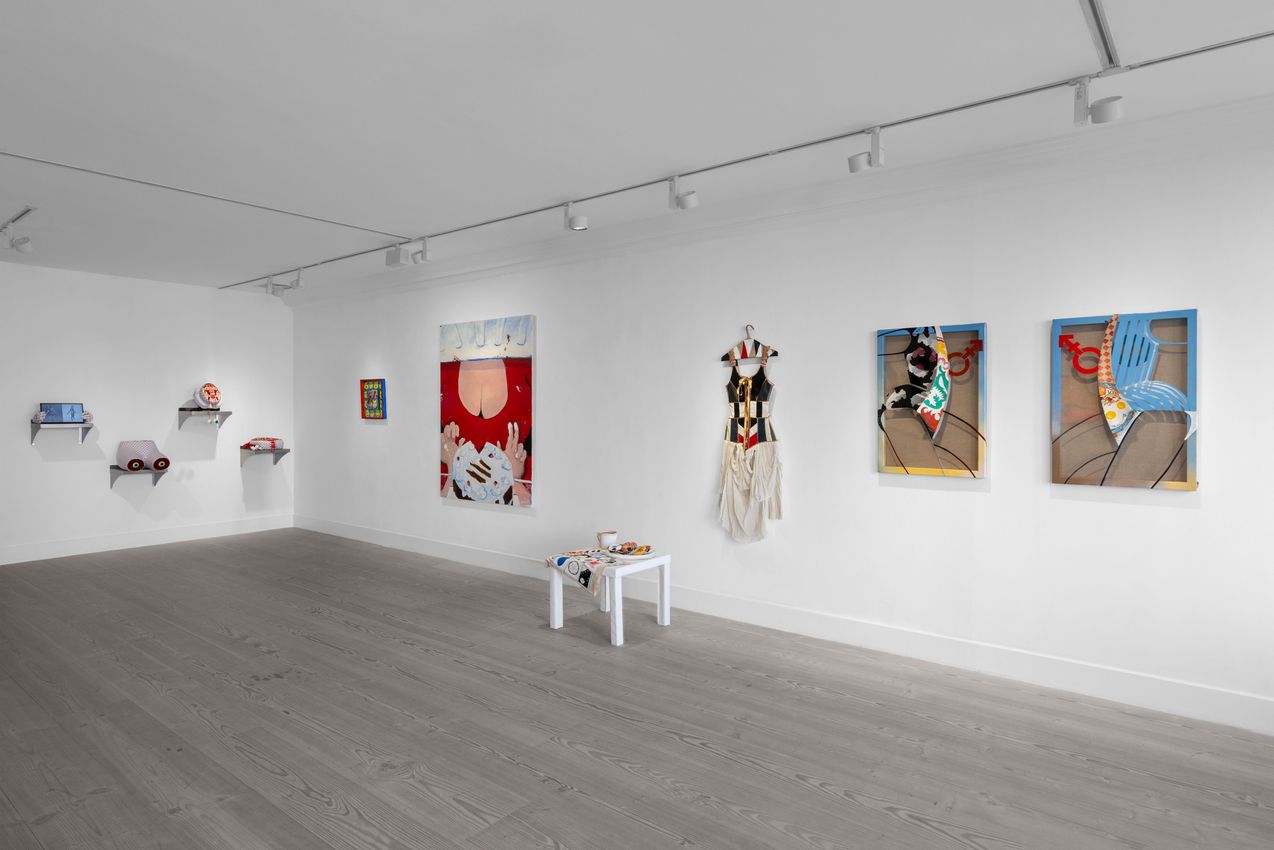
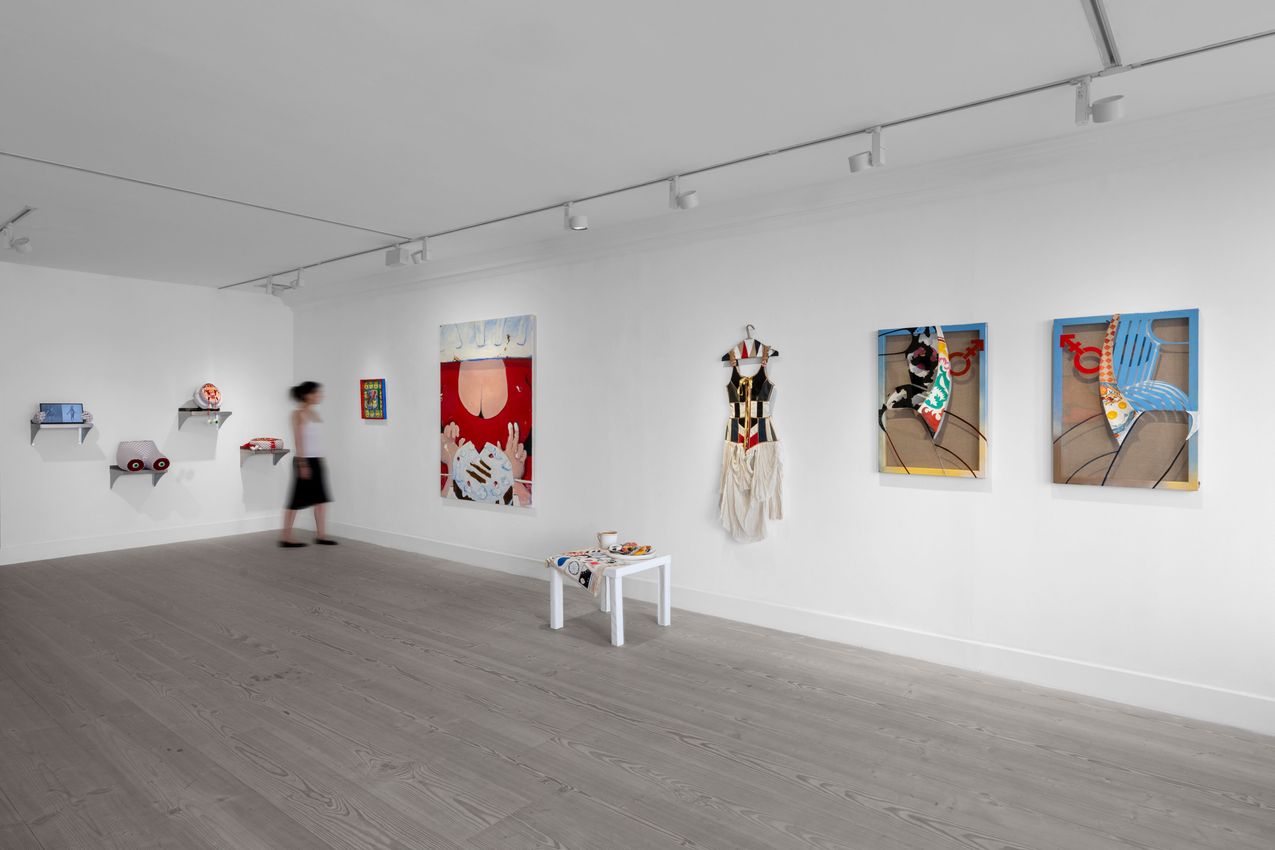
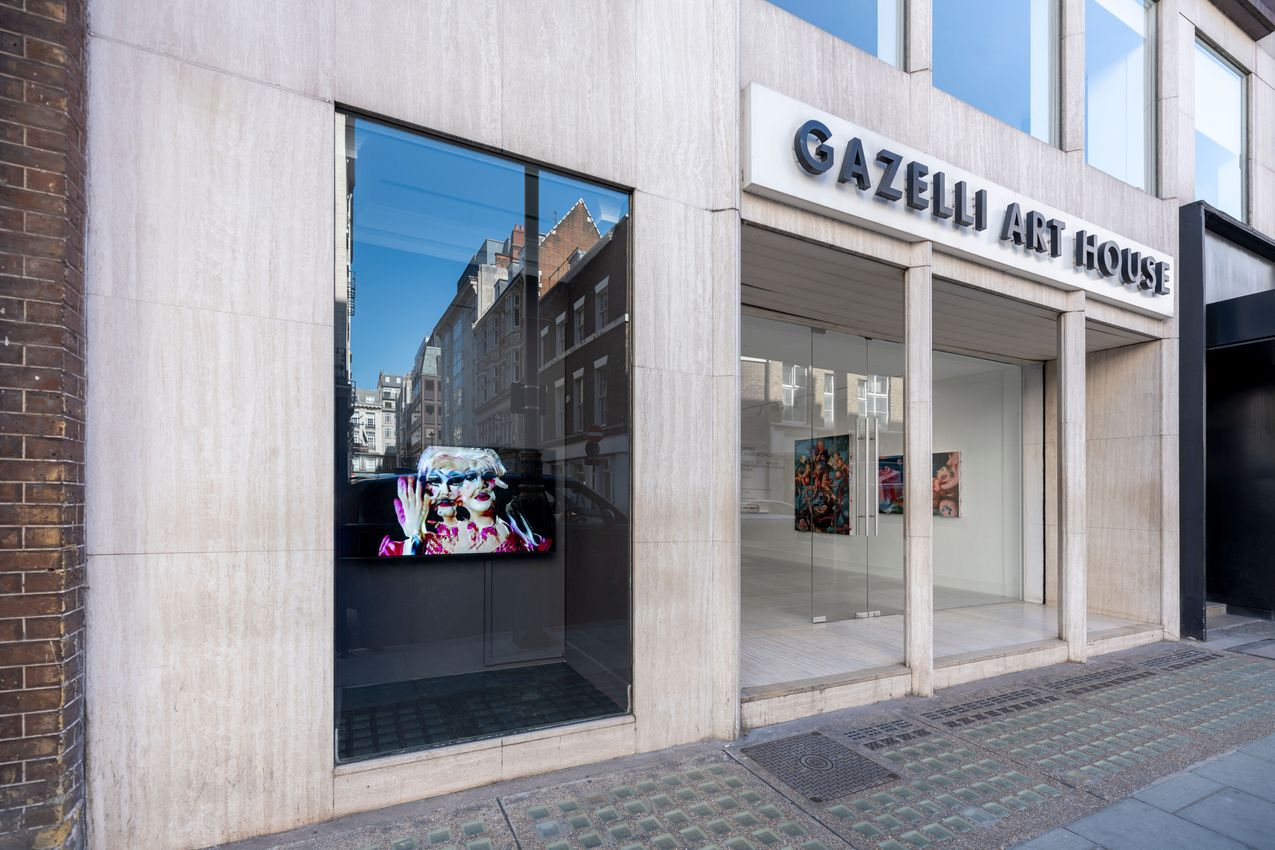
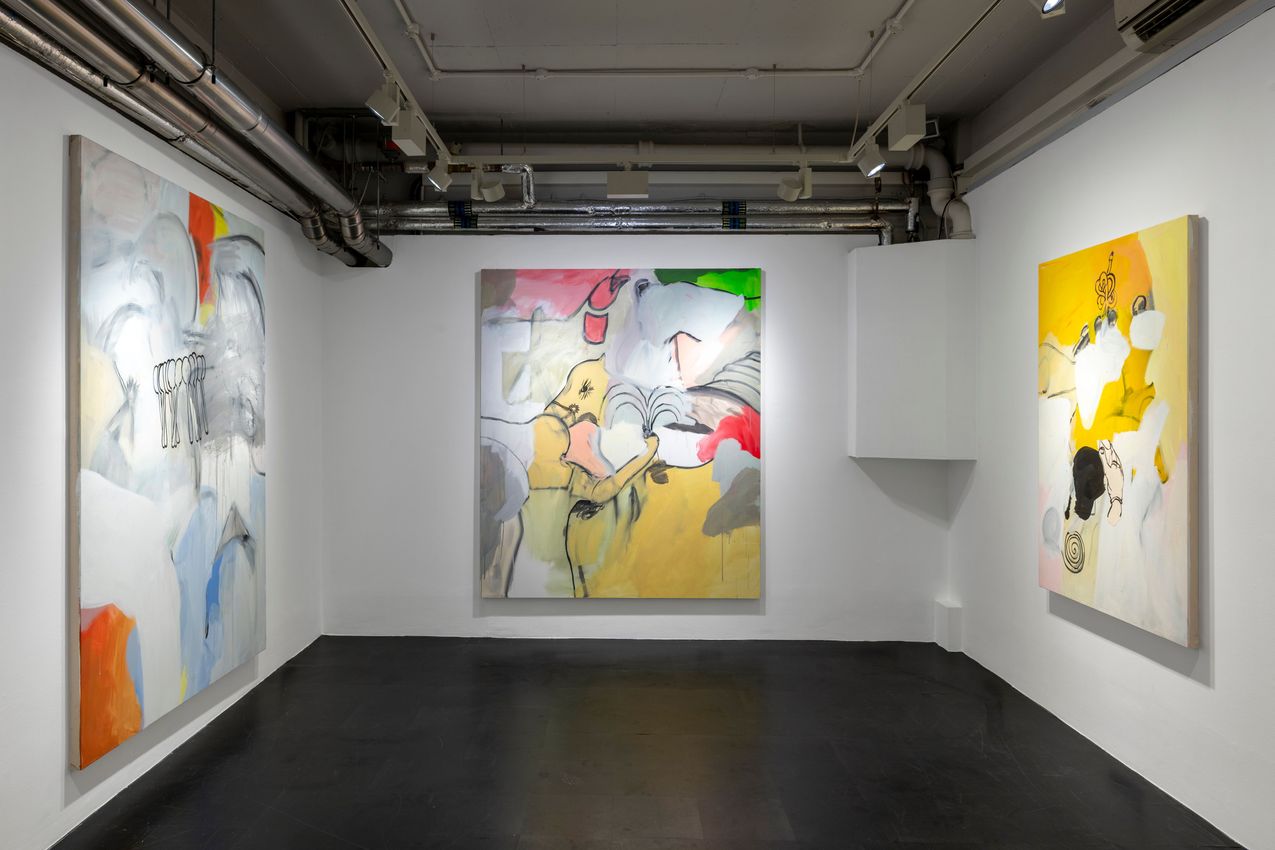
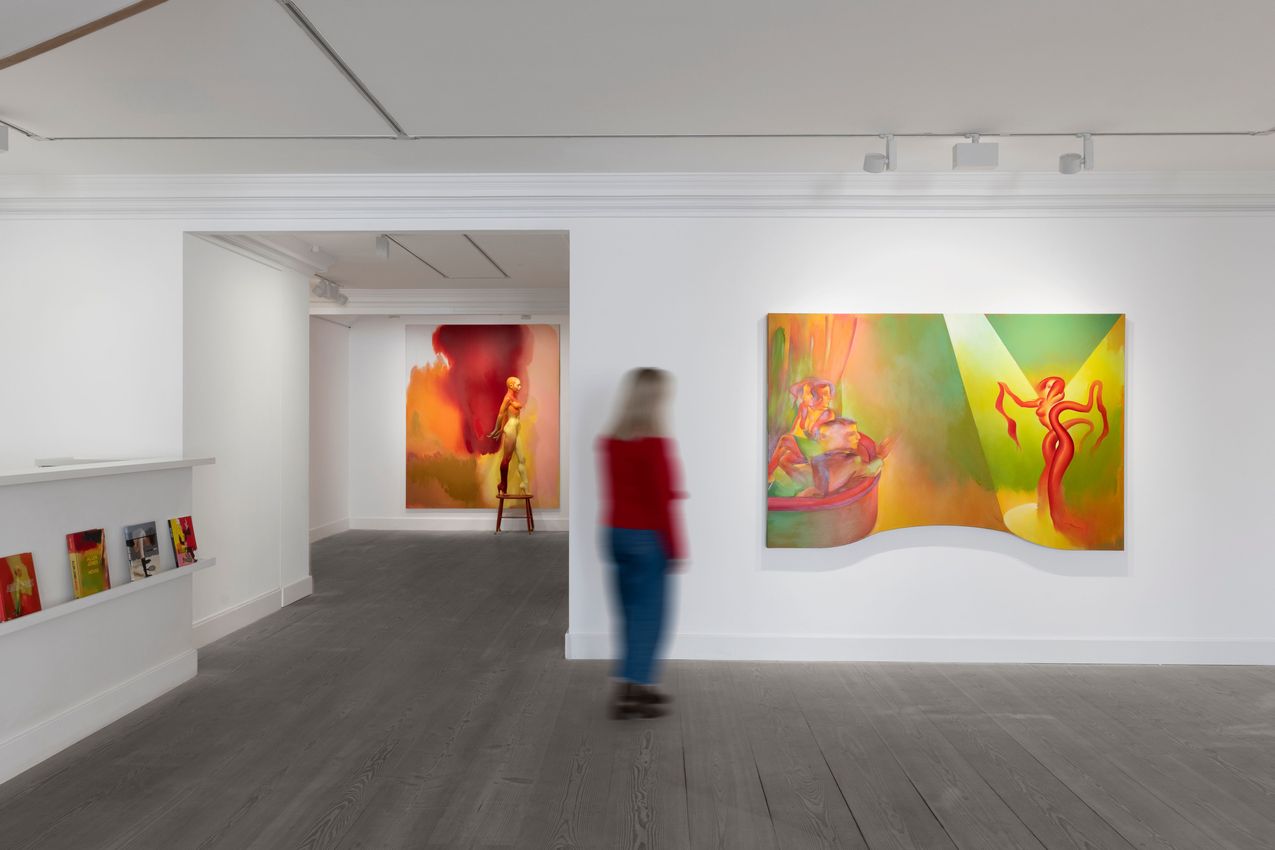
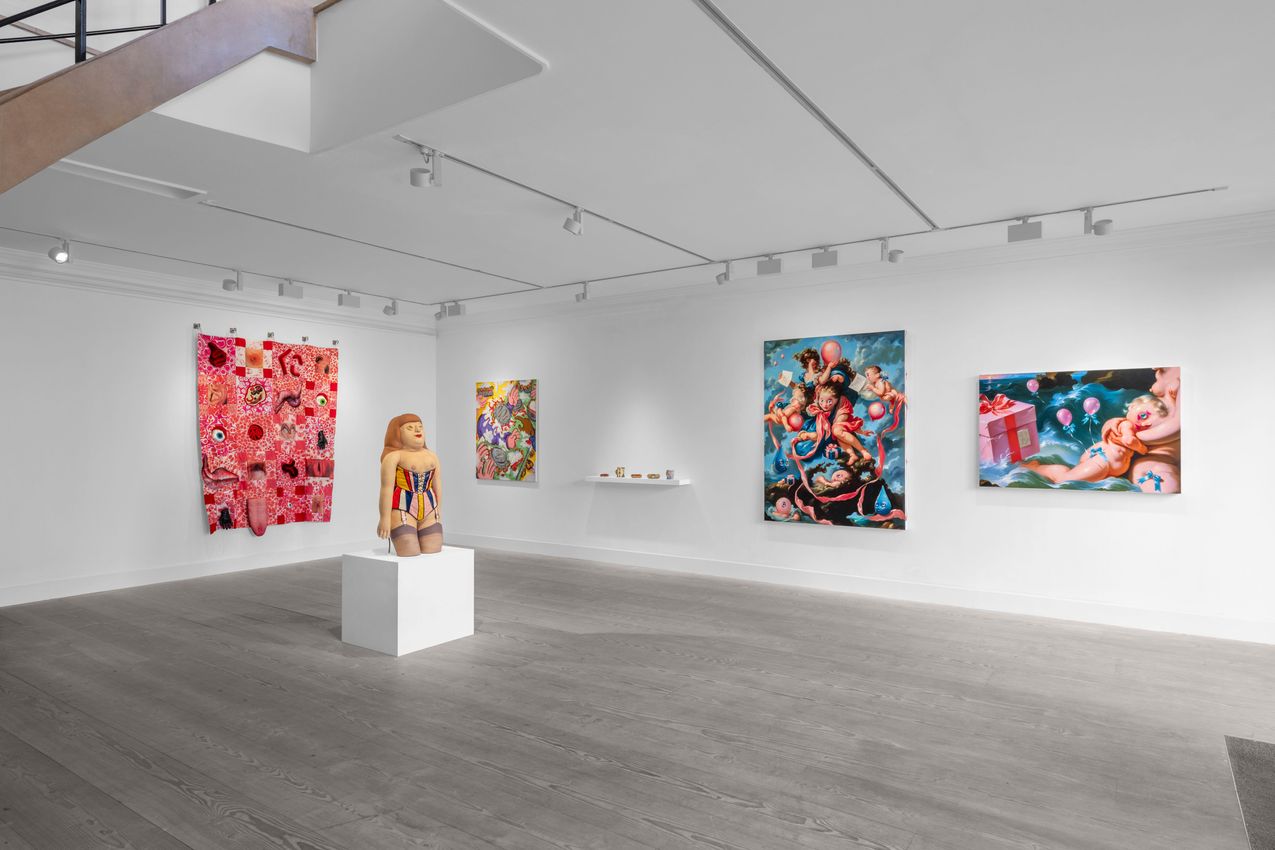
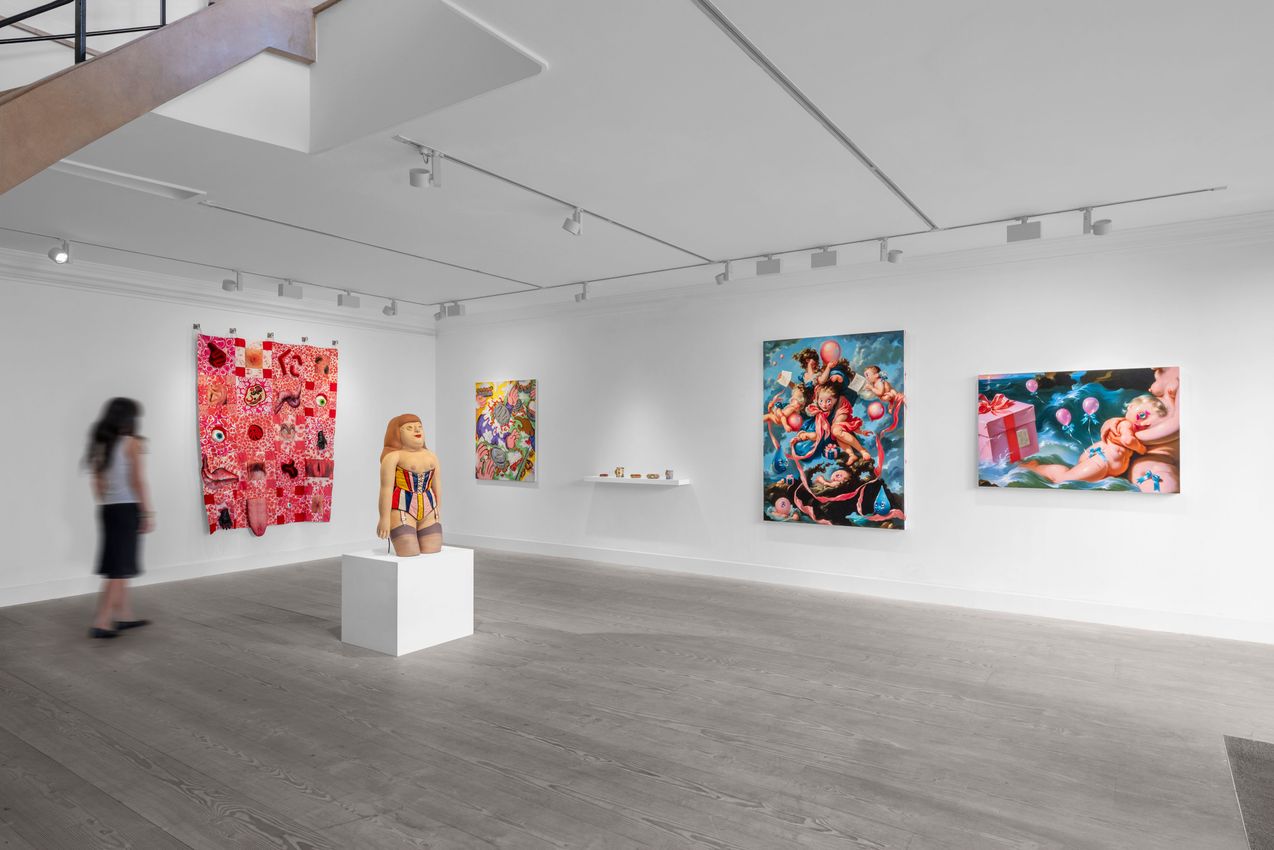
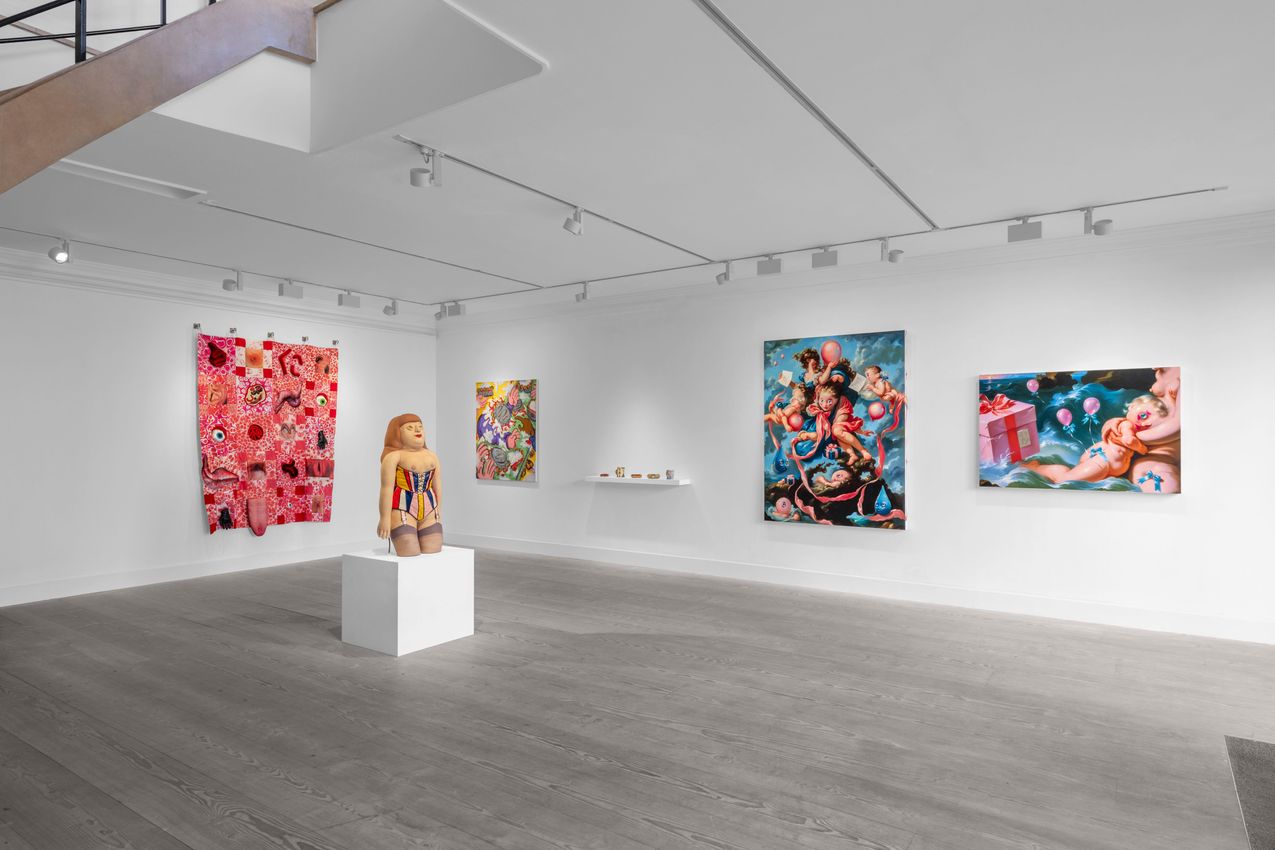
Gazelli Art House presents Taste and Decency, a group exhibition that brings into dialogue pioneering figures of Pop with a younger generation of artists to examine how consumption, sexuality, and social behaviour are staged and contested. From the rise of mass advertising and consumer culture in the 1960s to today’s environment of self-advertising, digital performance, and constant image circulation, the exhibition traces a continuity in how bodies and desires are shaped for public view. What once appeared in the glossy surfaces of print media and television now unfolds across social platforms and algorithmic feeds, where the boundaries between private and public, acceptable and inappropriate, are continually negotiated.

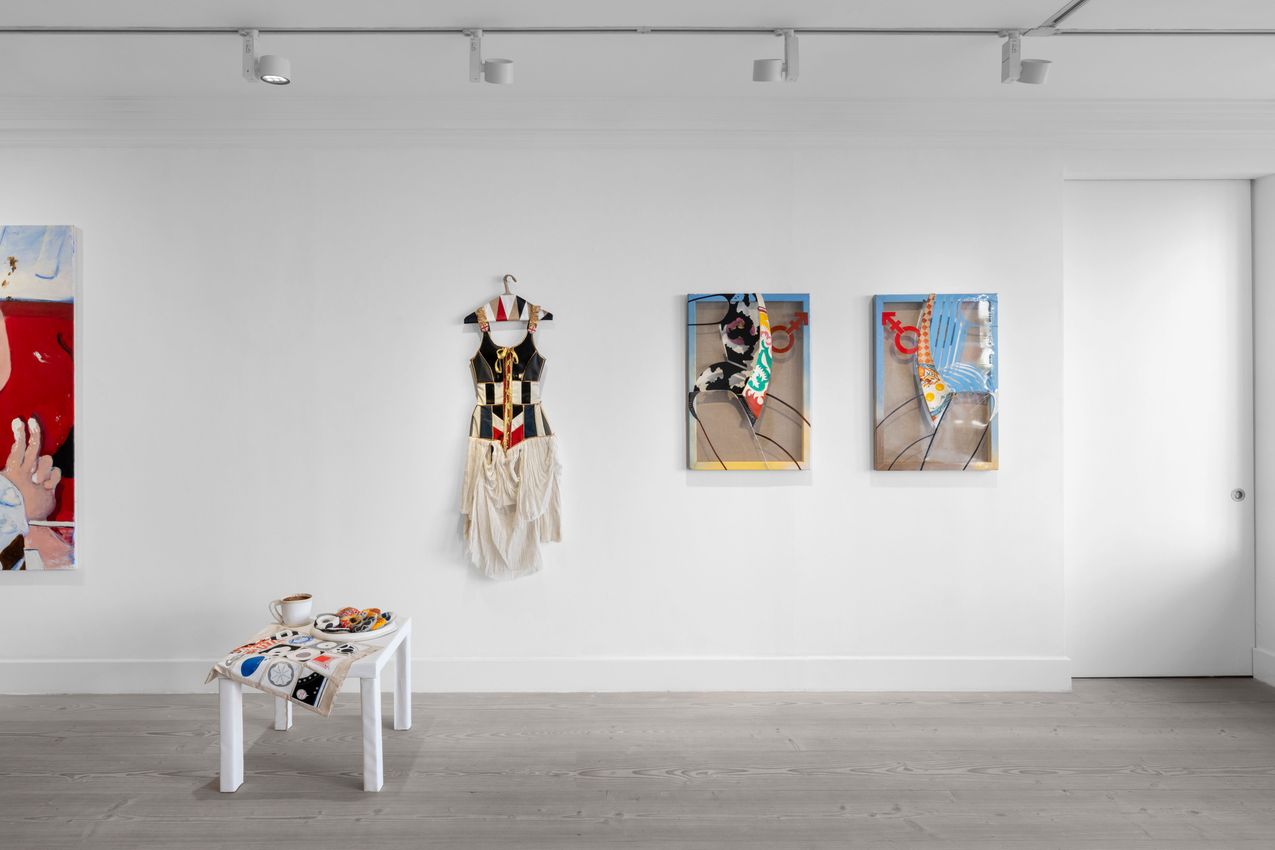
Through humour, exaggeration, and material transformation, the artists test the limits of decorum. Foregrounding the loud and the impolite, they question who defines “taste” and “decency” in a culture structured by visibility and consumption. Working across sculpture, painting, performance, and installation, the artists engage with the aesthetics of artifice. Materials associated with softness, surface, and decoration are pushed into exaggerated or unstable forms. References to fashion, food, and the body are heightened to the point of excess. Rather than simply reflecting visual culture, the works operate from within it, adopting and subverting its codes to reveal how value, appeal, and acceptability are constructed at the level of form and image.

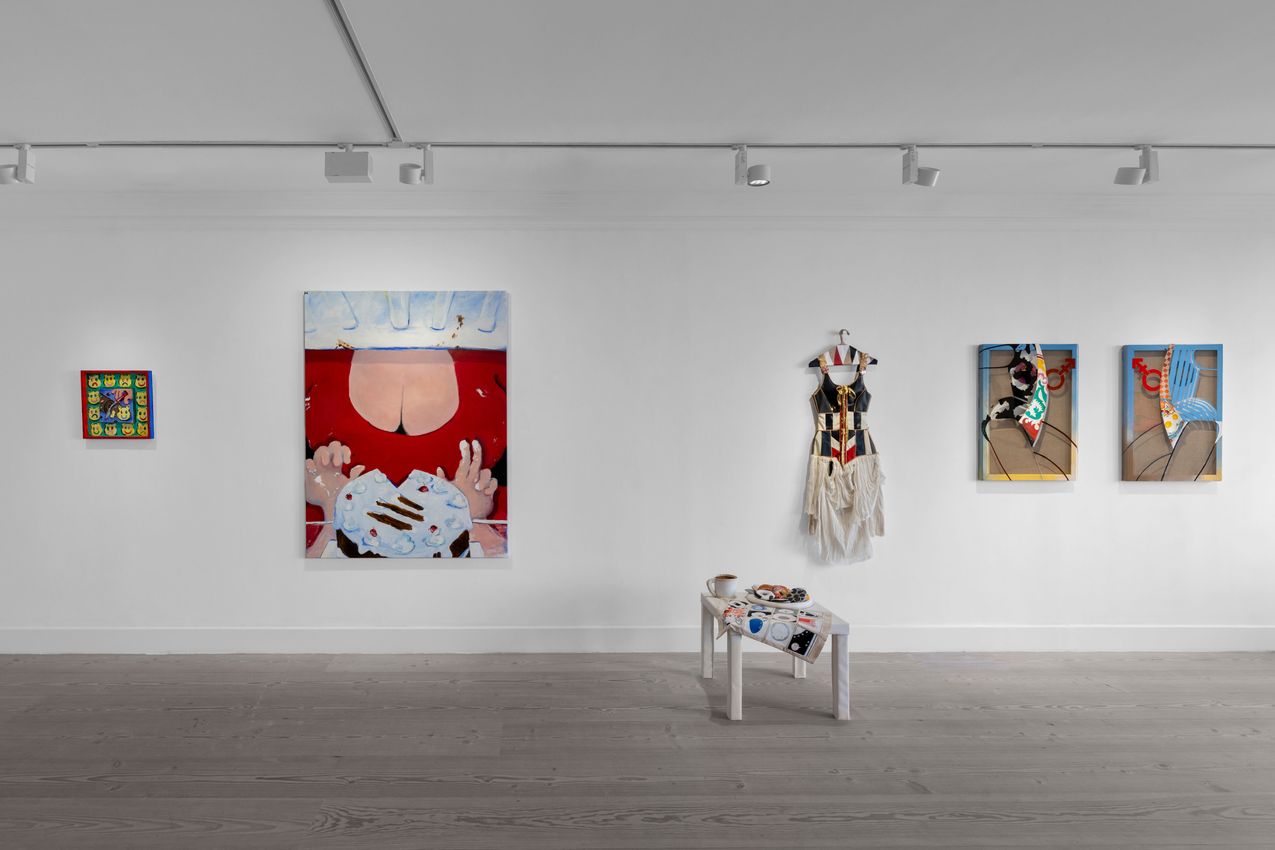
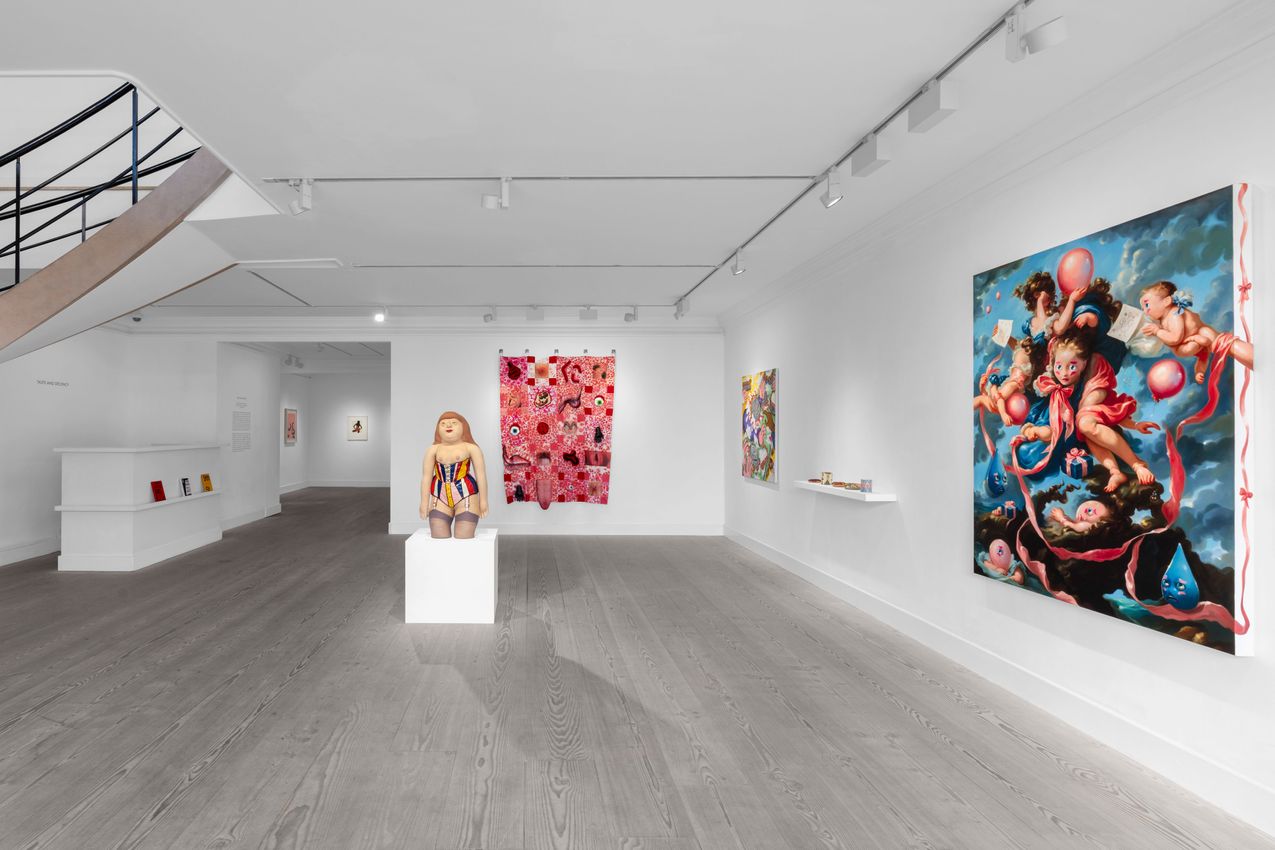
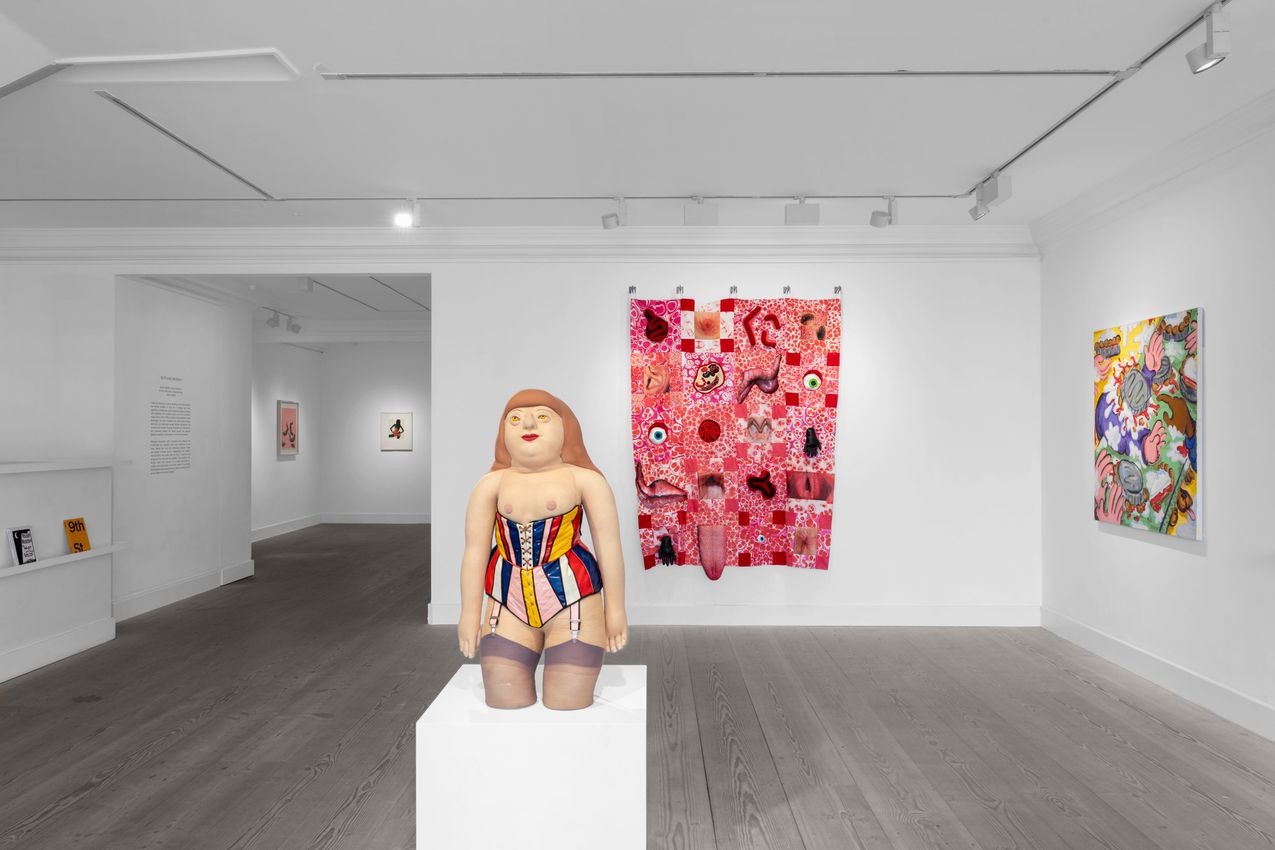
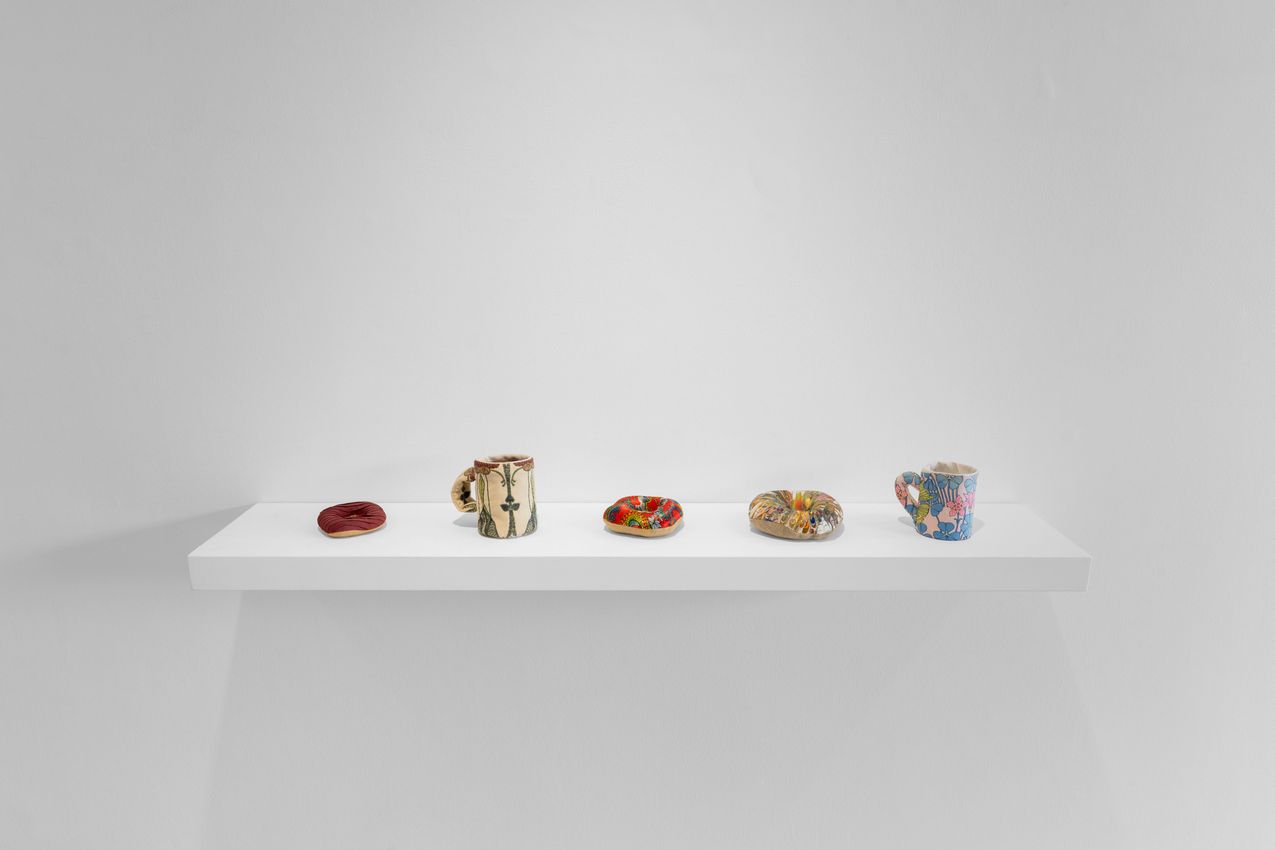
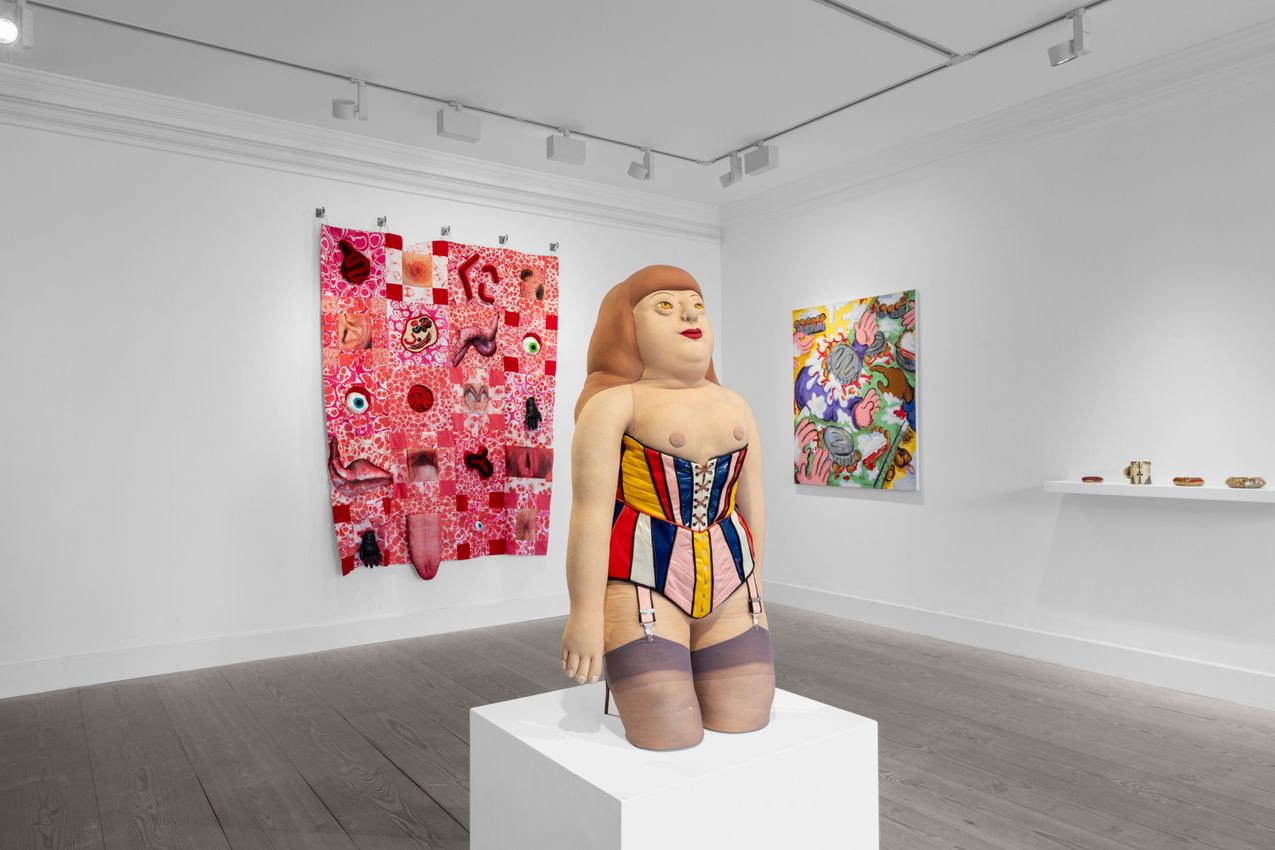
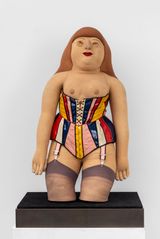
A key work is Lindner Doll (1965) by Jann Haworth, a soft, hand-stitched figure made in response to the stylised bodies in the paintings of German-American artist Richard Lindner (1901–1978). Where Lindner’s figures appear rigid and mechanised, Haworth’s introduces vulnerability and tactility. Also in the exhibition are a series of her sculptures of doughnuts, developed from the early 1960s onwards. Rendered in textiles, these forms move between playful ornament and suggestive object, evoking indulgence, repetition, and the sugar- hit of consumption. Taste and Decency coincides with the forthcoming exhibition Pop and the Figure (2026) at Pallant House Gallery, which will feature key works by Haworth from the museum’s permanent collection, including Mae West Dressing Table (1965) and Cowboy (1964), reflecting renewed institutional recognition of her pioneering contribution to Pop Art.

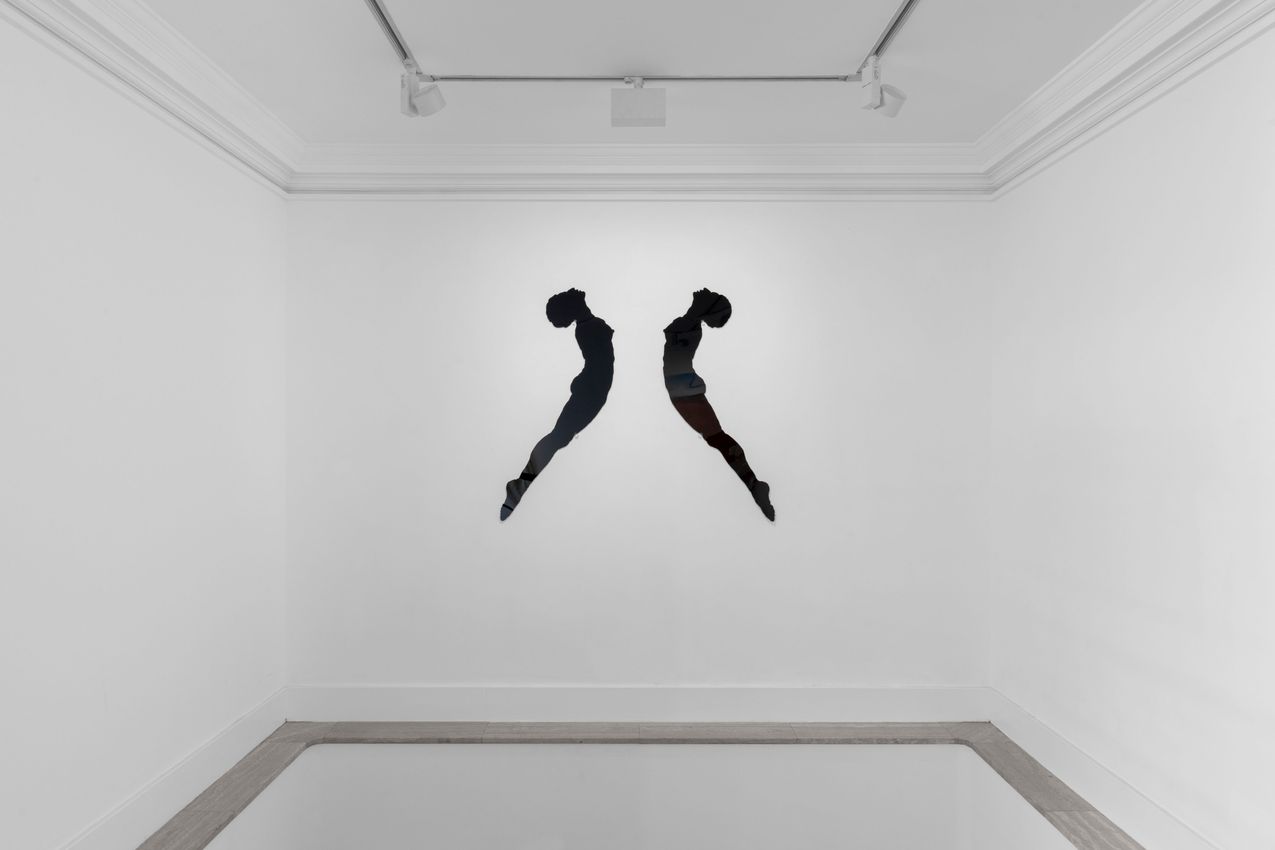
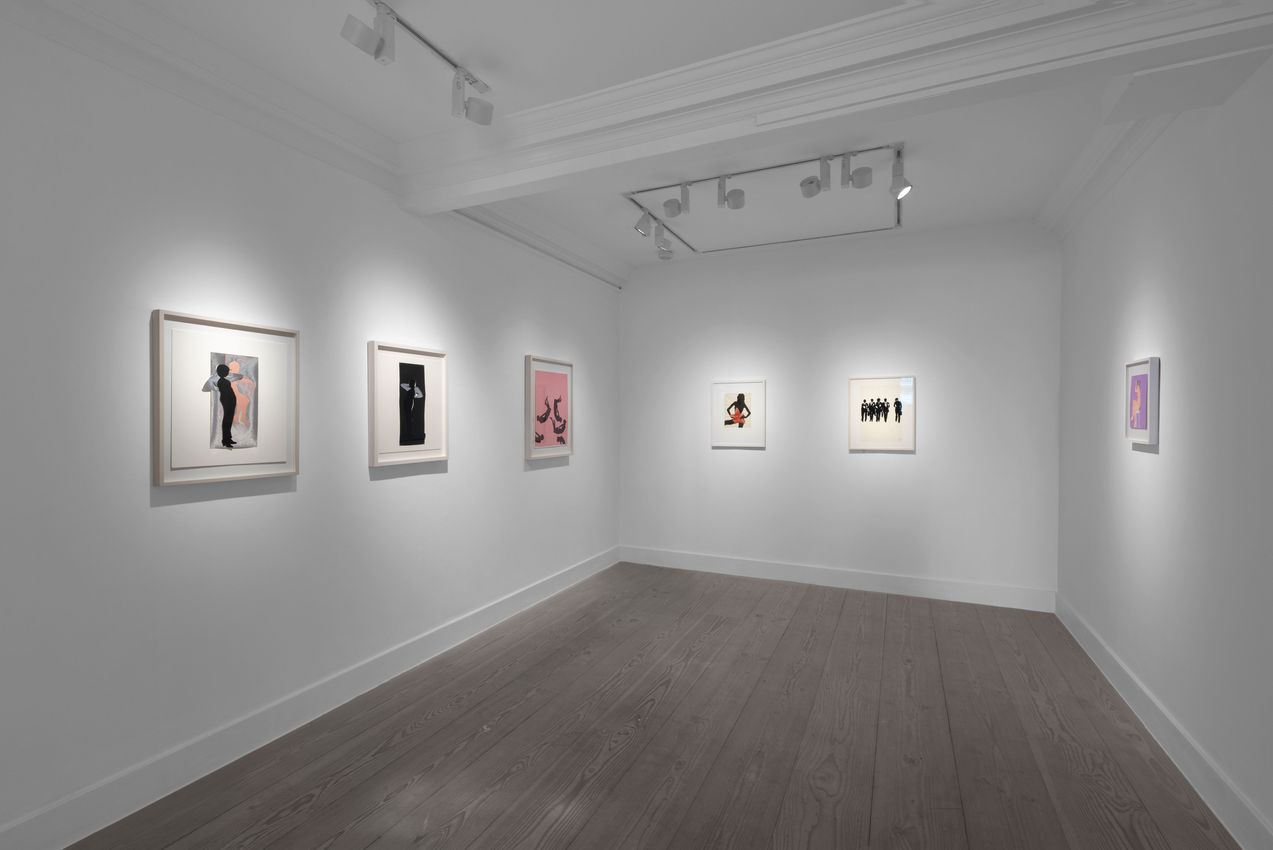
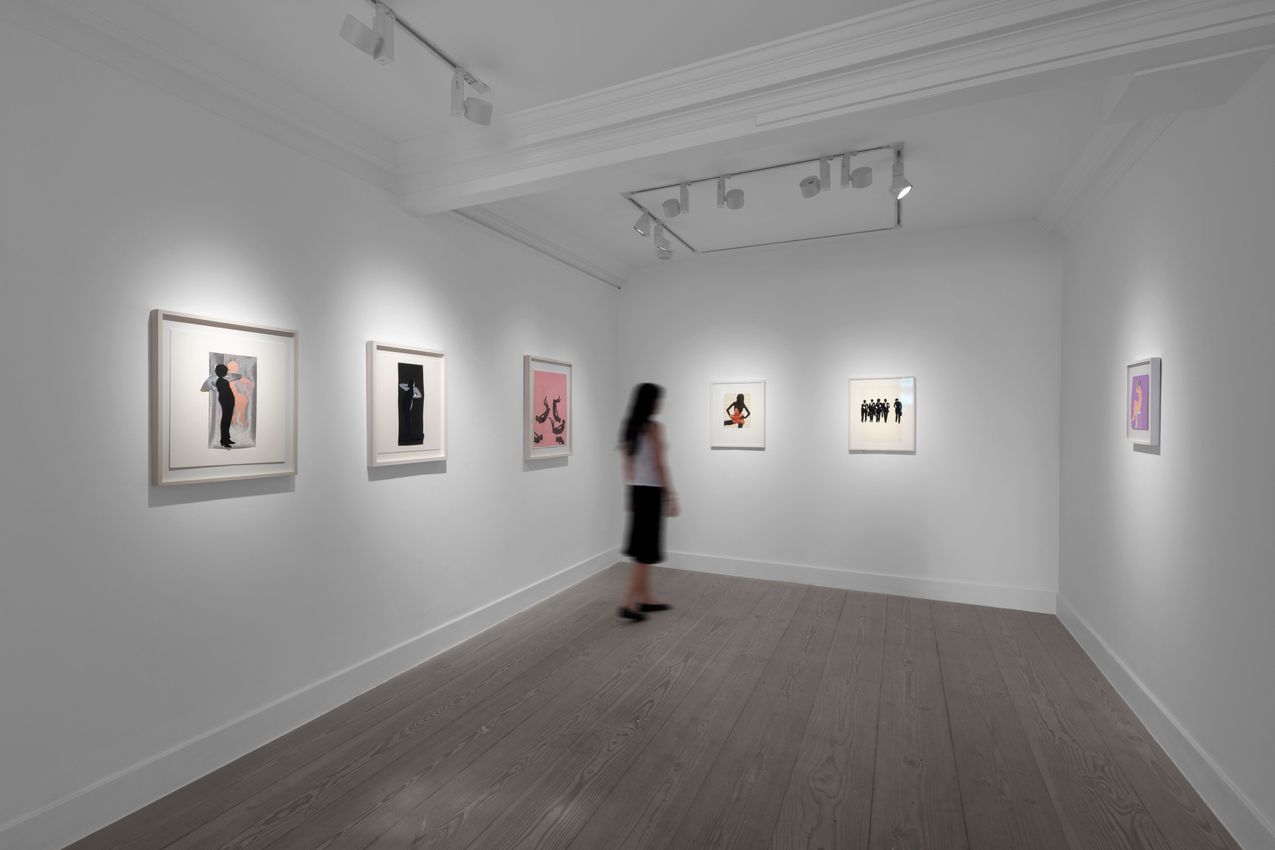
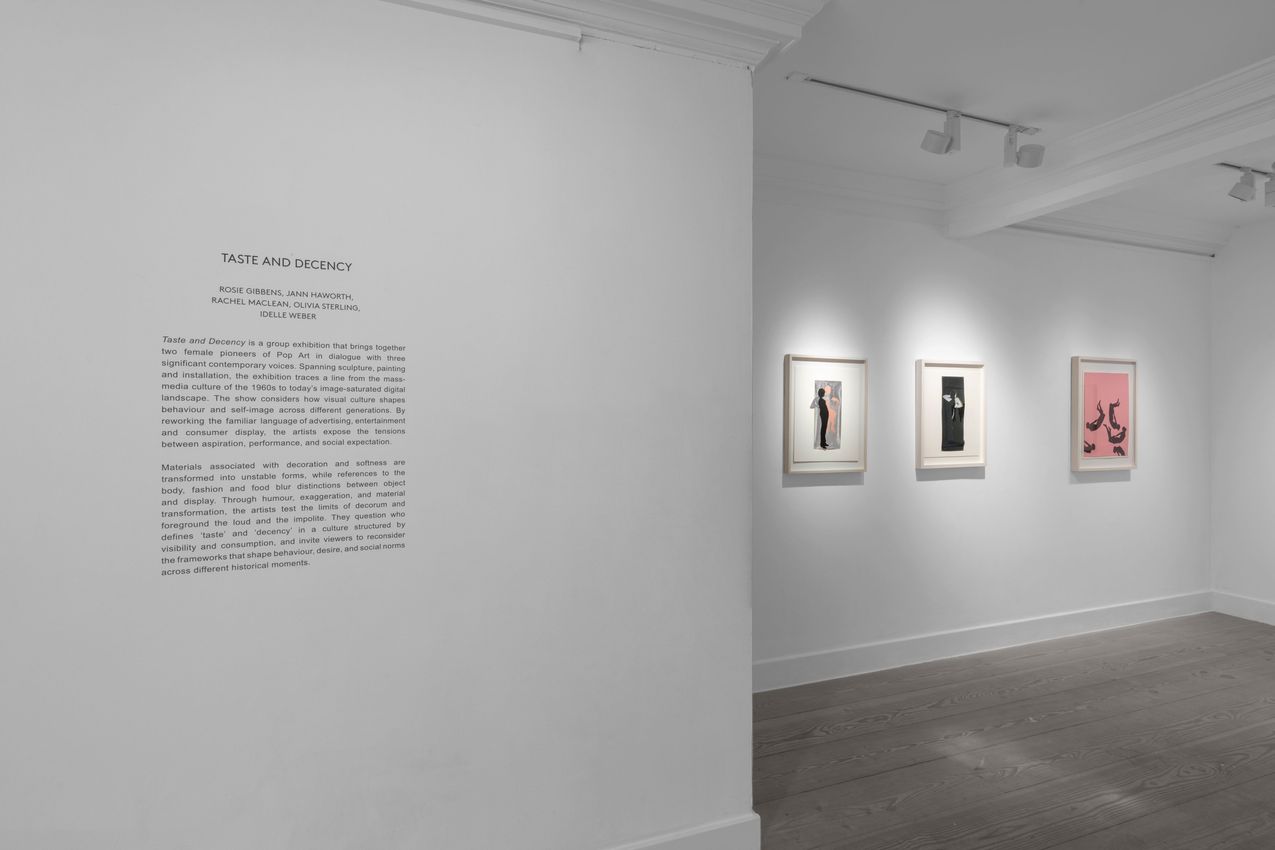
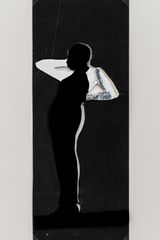
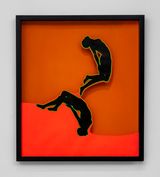
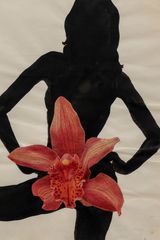
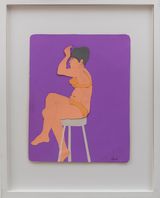
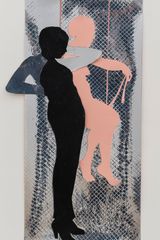
Idelle Weber’s works from the 1960s offer a prescient examination of visibility and the dynamics of looking within an emerging consumer society. Her silhouetted figures capture both the energy and alienation of post-war urban life. In works such as Flower Girl (1960) and Falling Figures (1966), bodies are reduced to graphic forms – stylish and sexual but also exposed and hovering between motion and collapse. Weber’s later photorealist paintings shift attention to storefronts and urban detritus, foregrounding the material residue of daily routines. Despite exhibiting alongside figures such as Andy Warhol and Roy Lichtenstein, Weber’s work remained under-recognised during her lifetime.

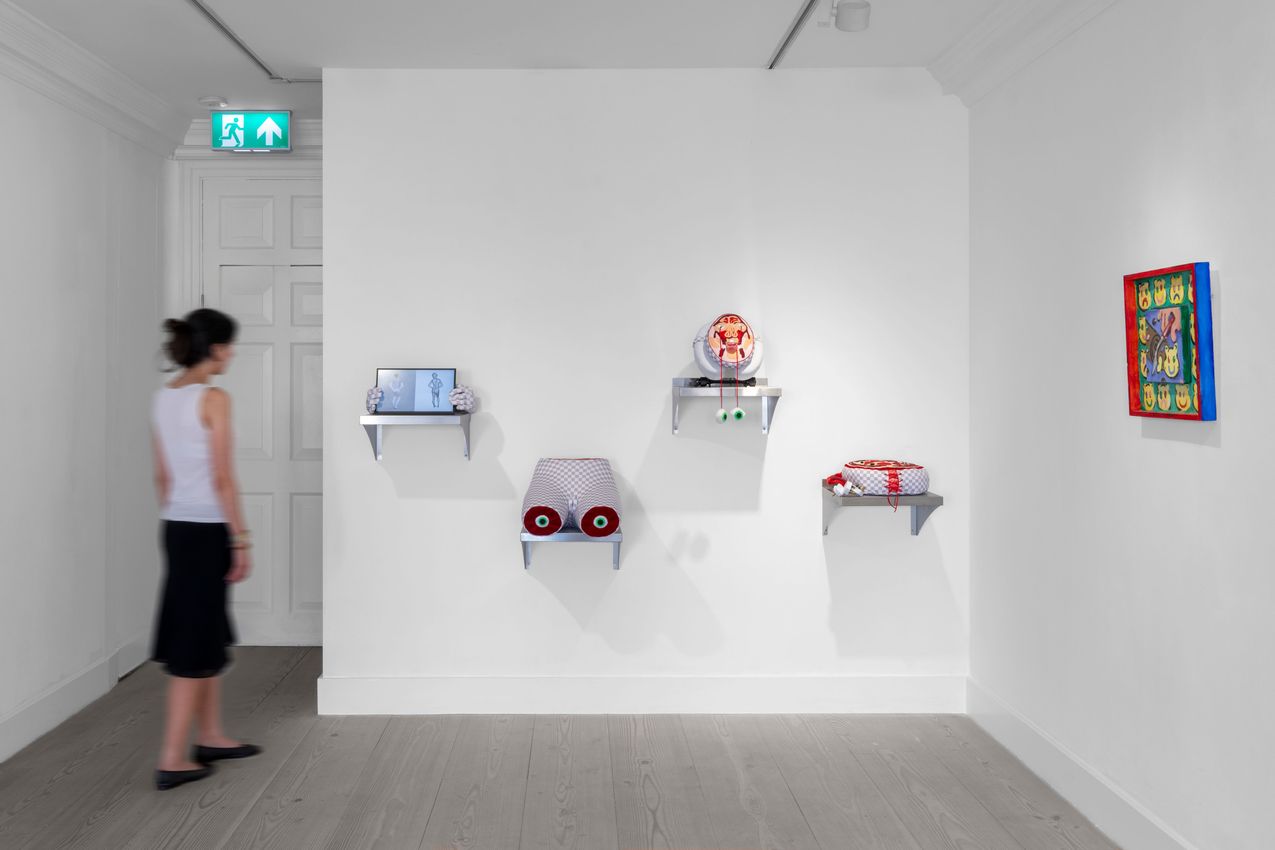
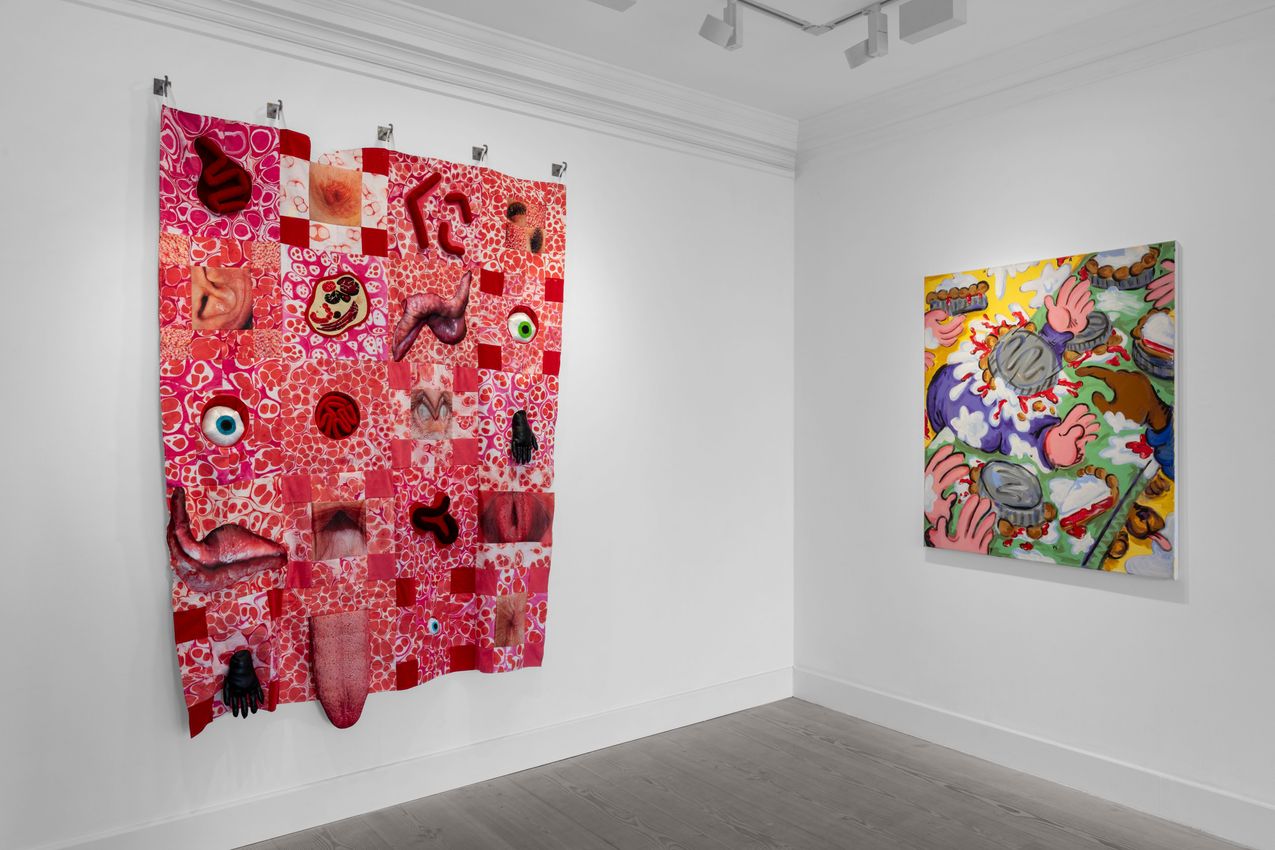
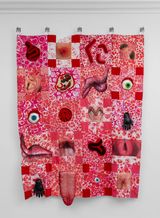
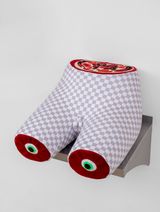
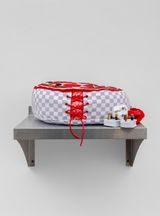
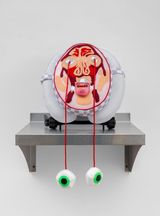
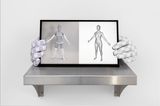
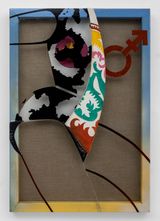
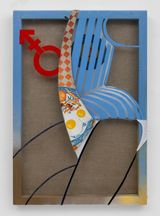
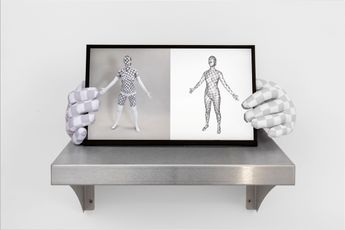
Rosie Gibbens approaches the body as a site shaped by systems of labour, technology, and desire. Combining performance, video, and sculpture, she stages absurd interactions between her own body and modified domestic tools. Sculptures and video from the Planned Obsolescence series (2023) and the large wall-hanging Demodex Quilt (2024) examine the boundaries between interior and exterior, the intimate and the abject, drawing attention to the pressures of optimisation and control in contemporary life.

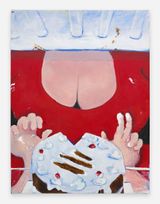
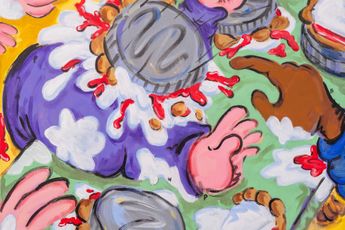
Olivia Sterling’s paintings depict tightly cropped scenes in which fragmented bodies, food, and gestures carry social and cultural weight. In works such as Accidents Will Happen (2021) and Let Me Down Gently (2024), humour and stylisation are used to address the intersections of race, class, and representation within British culture. Beneath their vivid surfaces, these compositions register unease, exposing the tensions that underpin seemingly ordinary interactions.

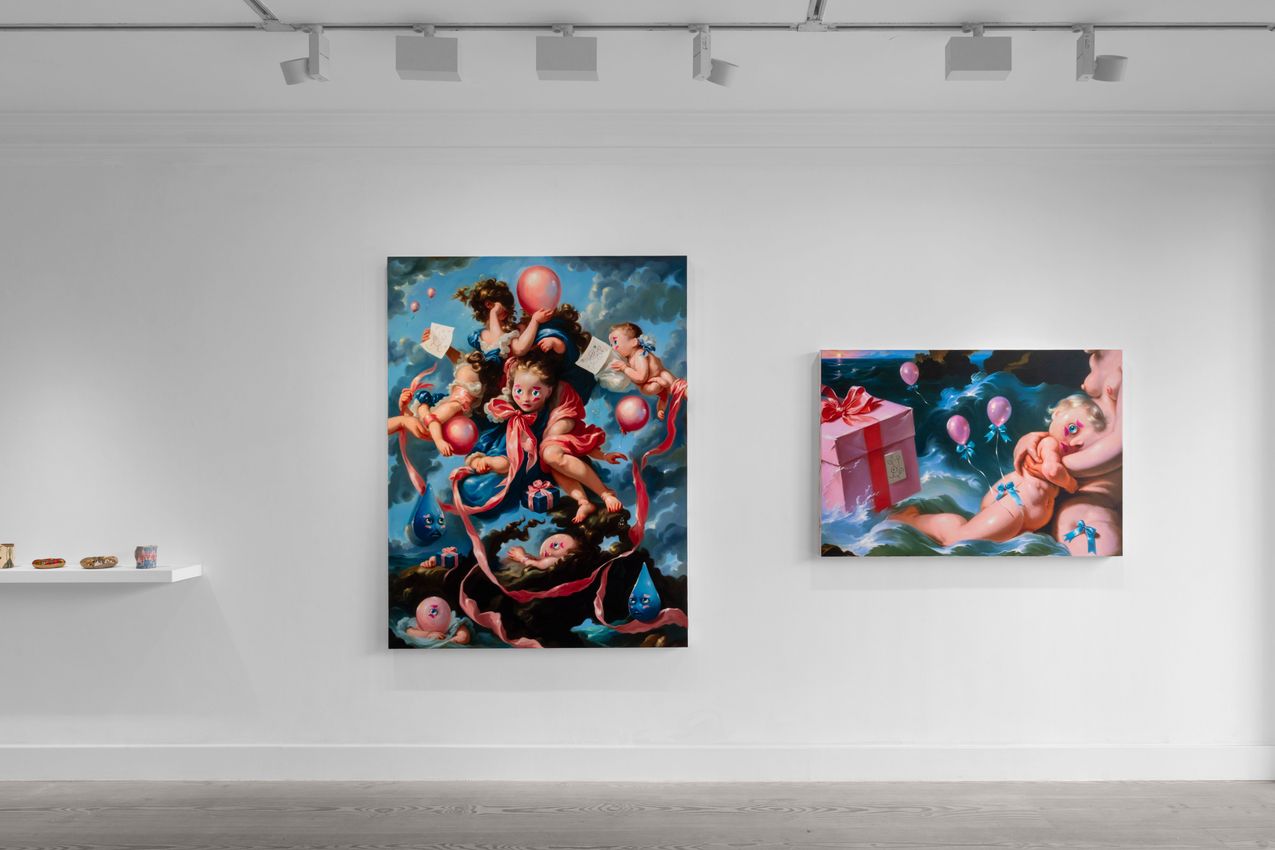
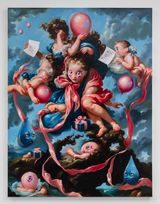
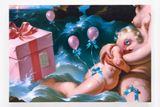
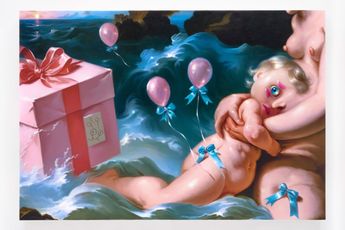
Rachel Maclean’s work extends the exhibition’s exploration of constructed identity into the realm of digital culture and fantasy. Drawing from the visual language of advertising, gaming, children’s television, and social media, Maclean creates immersive worlds populated by exaggerated characters and hyper-saturated imagery. Her recent series MAMA (2024), developed through a combination of generative AI and painting while caring for her new-born daughter, reimagines the idealised iconography of motherhood through glitchy, unsettling, and excessive compositions. Combining Rococo aesthetics with the visual codes of baby showers, gender reveals, and algorithmically generated imagery, the works collapse distinctions between intimacy and spectacle, sincerity and performance. Through humour and distortion, Maclean exposes how femininity and domestic life are continually staged and commodified within contemporary image culture.

Across the exhibition, surfaces associated with advertising and consumer goods are translated into materials that are soft, excessive, or unstable. Objects take on bodily qualities, while bodies are treated as objects of display. By rendering the familiar unfamiliar, the artists draw attention to the conventions that shape behaviour, desire, and representation. Taste and Decency invites a reconsideration of how these frameworks continue to operate across different historical and cultural contexts.

Read More

Installation Views

Selected Works

Loading...

Artists Exhibiting

About the Gallery
Contemporary art gallery Gazelli Art House supports and presents a wide range of international artists, presenting a broad and critically acclaimed program of exhibitions to a diverse audience through international exhibition spaces in London and Baku. Gazelli Art House was founded in 2003 in Baku, Azerbaijan where it held exhibitions with Azeri artists. After hosting conceptually interlinked off-site exhibitions across London, founder and Director of Gazelli Art House, Mila Askarova, opened a permanent space on Dover Street, London in March 2012. As part of Gazelli Art House’s on-going commitment to art education, the gallery hosts a series of events and talks to run alongside each exhibition.
View Gallery Profile
Address
39 Dover Street
London
United Kingdom
Opening Hours
Monday – Friday
10am – 6pm
Saturday
11am – 7pm
(1)
London 39 Dover Street
Gazelli Art House
39 Dover Street, London, United Kingdom

Opening hours
Monday – Friday
10am – 6pm
Saturday
11am – 7pm
The art world in focus