




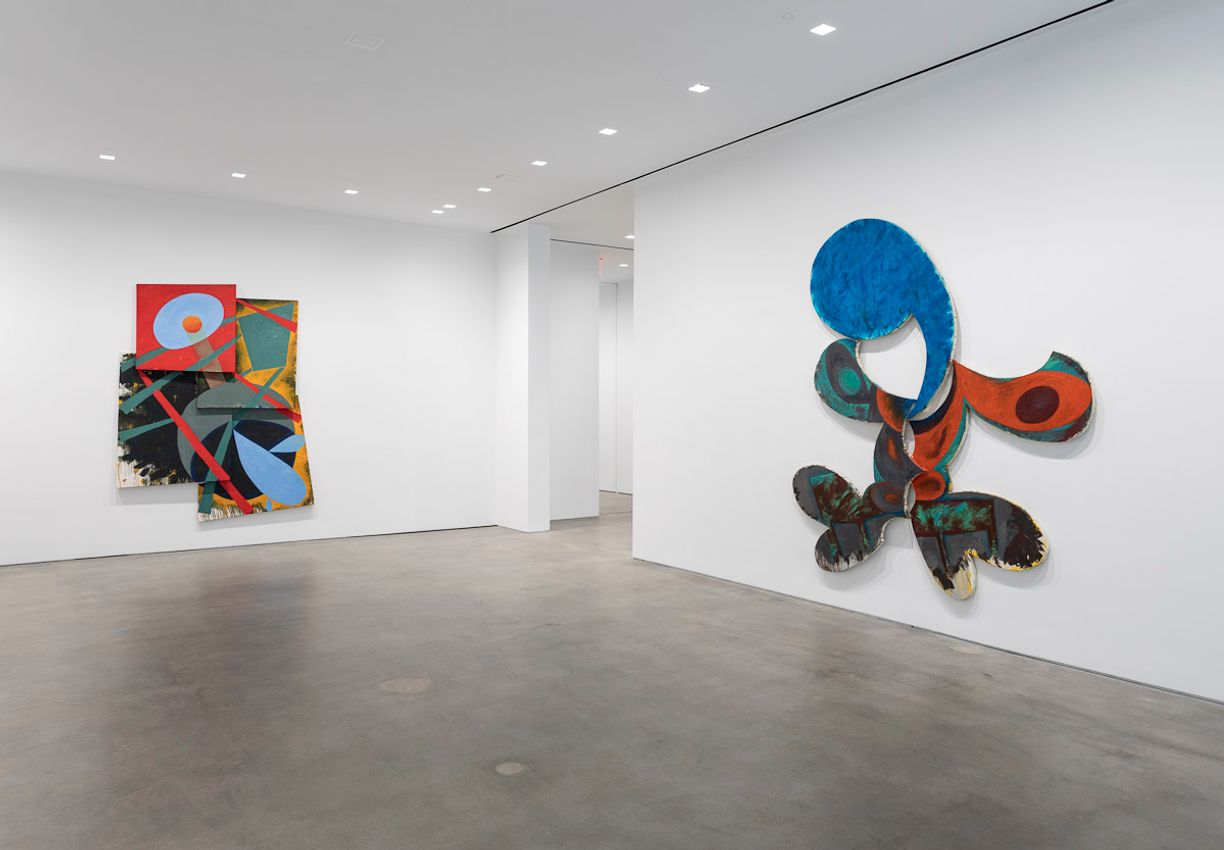
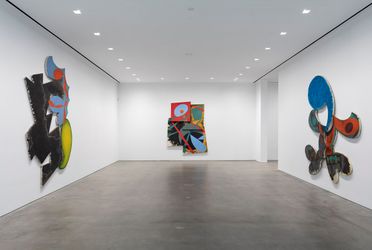
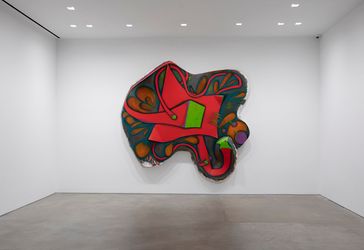
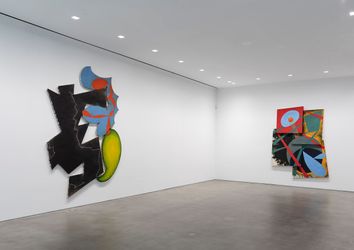
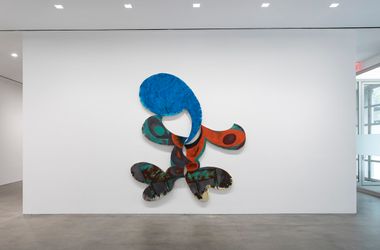
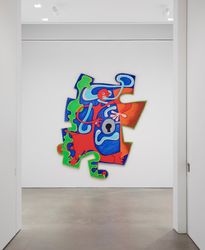
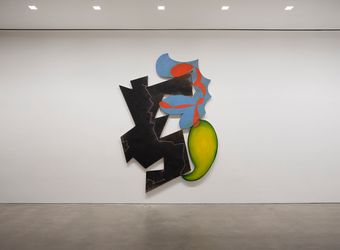
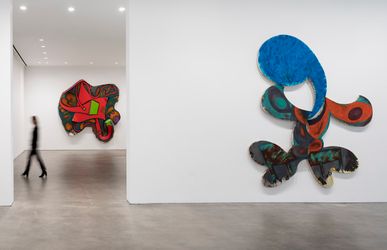
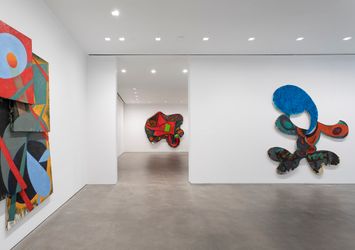
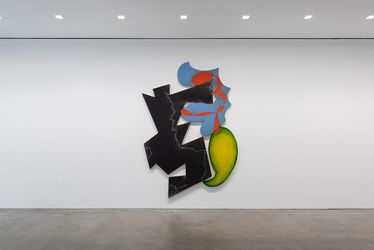
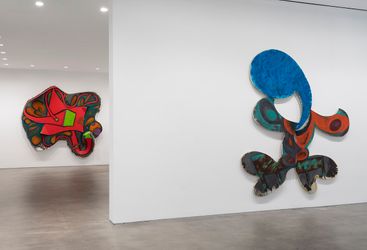
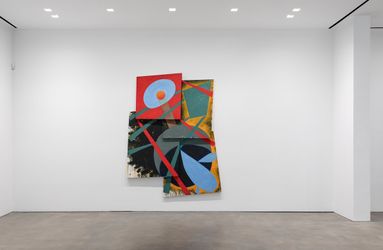
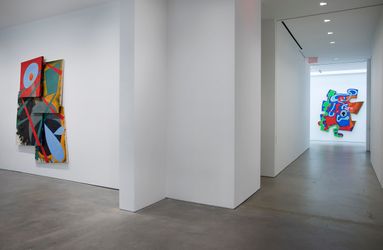
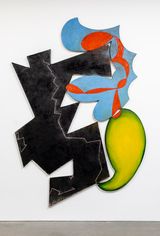
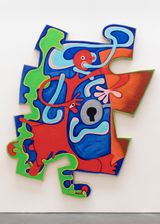
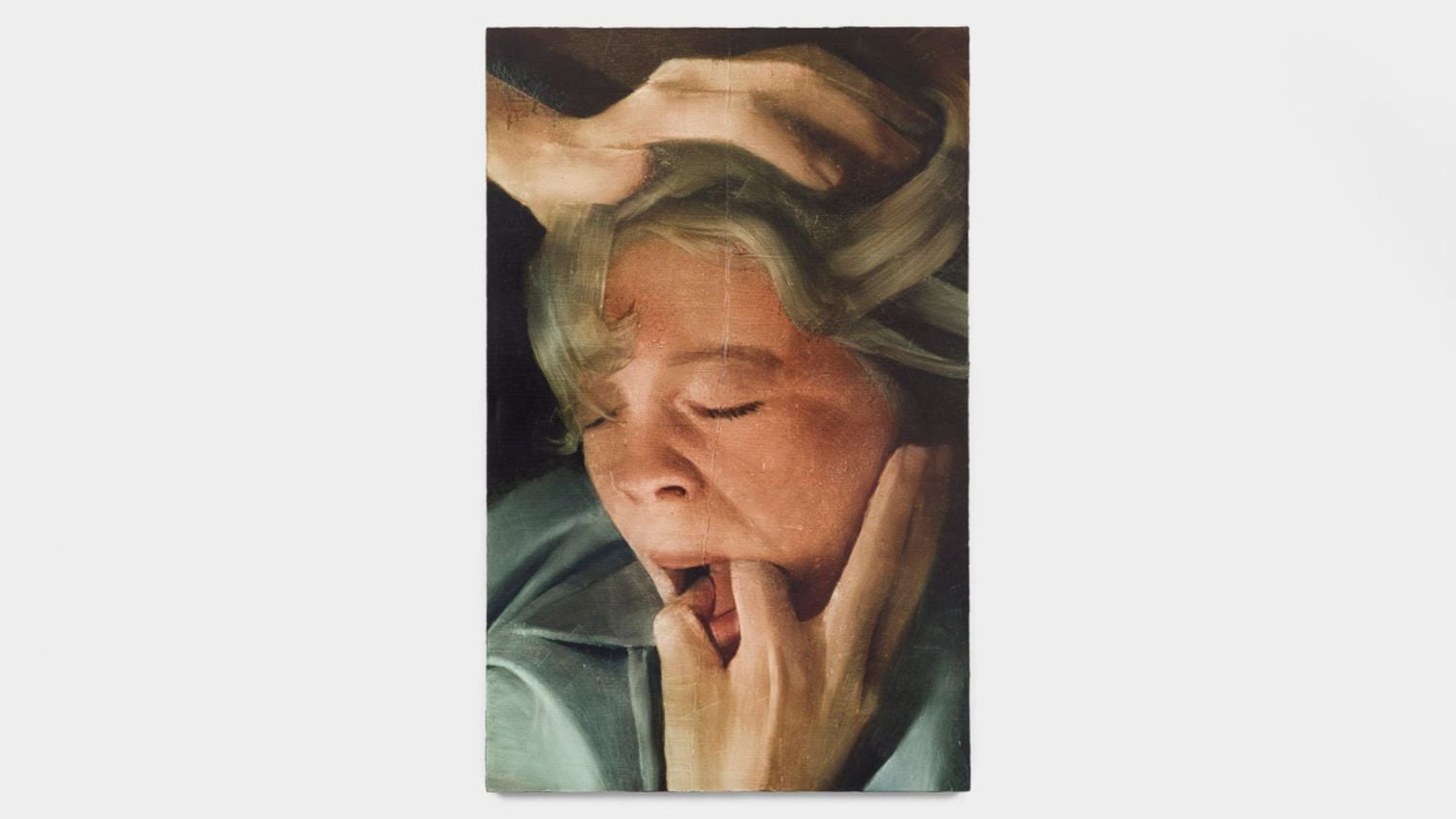
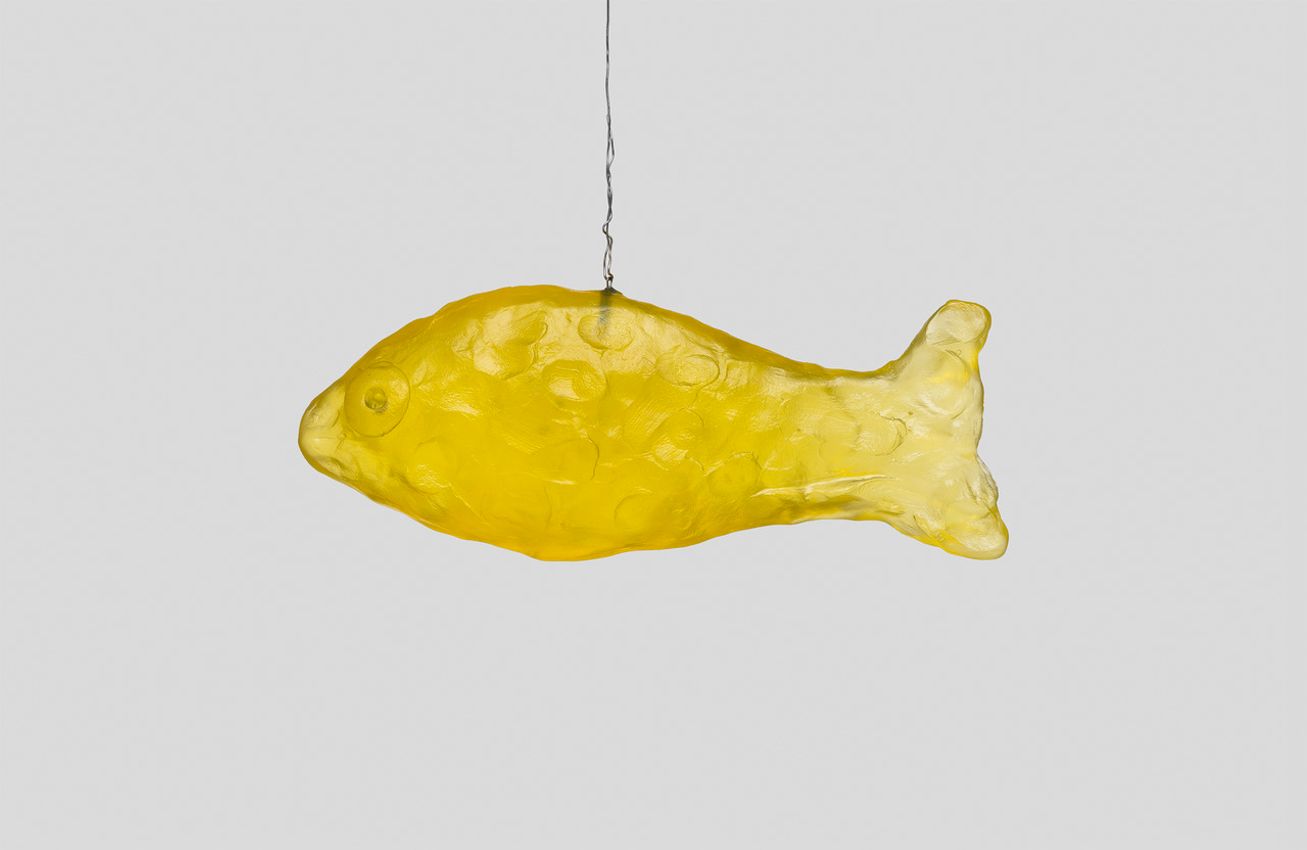
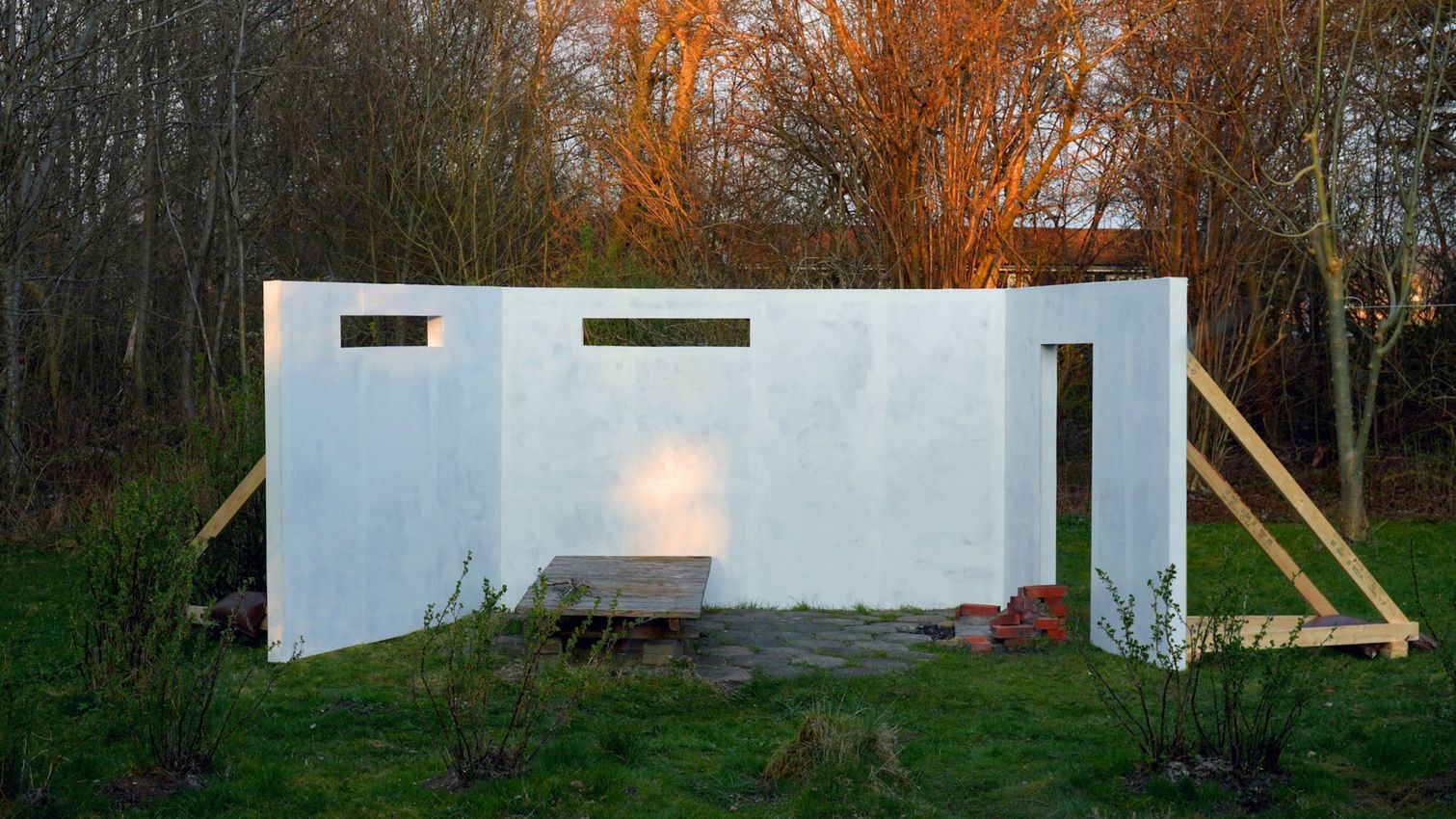
Gladstone Gallery is pleased to announce its first exhibition with the Estate of Elizabeth Murray after announcing representation in the summer of 2020. This show presents a selection of the artist’smonumental canvases that helped define her career and singular place in art history.
Murray was born in Chicago in 1940 and had an early interest in making and studying art. While attending the School of the Art Institute of Chicago, she was deeply influenced by the work of PaulCézanne, which inspired her to pursue a degree in painting. Following her education, Murray moved toNew York, where she developed a unique approach to artmaking and honed her intuitive ability tomasterfully combine shapes and colours in both two- and three-dimensional realms. With a fascinationfor the plastic qualities of paint, she spent the decade of the 1960s experimenting with soft sculpture.Her compositions from the 1970s, in which rhythmic symbols play across thickly-layered rectangularplanes of colour, demonstrate Murray’s astuteness at crafting and understanding form, and highlight theartist’s hand during a period when Minimalism was the predominant movement in New York’s art scene.Her radical and trailblazing approach to art making evolved with the introduction of massive sized, multi-panel works in relief configurations. These complex canvases, which began in the early 1980s andcontinued until her death in 2007, challenged the very definition of painting. When her spirals andpregnant commas began to suggest recognisable forms—cups, tables, chairs—the narrative of the workwas labeled ‘domestic.’ To this she replied, ‘Cézanne painted cups and saucers and apples, and no oneassumed he spent a lot of time in the kitchen.’
With a pioneering practice that has bridged Cubism, Surrealism, Abstract Expressionism, and Minimalism, Murray was instrumental in reawakening the power of painting, and her expansive body ofwork continues to influence and inspire artists, writers, and curators in long-lasting, profound ways.
Murray’s work has been the subject of major exhibitions around the world since her New York City debut in the 1972 Annual Exhibition, Contemporary American Painting at the Whitney Museum ofAmerican Art. Solo exhibition highlights include: Camden Arts Centre, Camden, UK (2019); AndersonCollection at Stanford University, CA (2018); Musée d’art modern et contemporaine, Geneva (2016); BAM, Brooklyn, NY (2016); Cantor Arts Center, Stanford University, CA (2014); Arts Club of Chicago(2009); University Art Gallery, Staller Center for the Arts, Stony Brook University, NY (2008); NermanMuseum of Contemporary Art, Overland Park, KS (1993); Newark Museum, NJ (1992); Wexner Centerfor the Arts, Columbus, OH (1991); and San Francisco Museum of Modern Art, CA (1988). In 1987, amid-career retrospective, Elizabeth Murray: Paintings and Drawings, organised by Sue Graze and KathyHalbriech, originated at the Dallas Museum of Art, and later traveled to the Albert and Vera List VisualArts Center, MIT, Cambridge and Museum of Fine Arts, Boston; The Museum of Contemporary Art, LosAngeles; Des Moines Art Center, Des Moines; Walker Art Center, Minneapolis; and the Whitney Museumof American Art, New York. In 2005, The Museum of Modern Art, New York, opened a careerretrospective, which traveled to Intitut Valencia d’Art Modern, Valencia Spain. Murray was recently thesubject of two major museum exhibitions at the Contemporary Arts Museum Houston, Wild Life:Elizabeth Murray & Jessi Reaves, curated by Rebecca Matalon, which is currently on view at theCarnegie Museum of Art through January 9, 2022, and the University at Buffalo Art Galleries, ElizabethMurray: Back in Town, curated by Robert Scalise.


Elizabeth Murray was an American abstract painter best known for her large-scale, shaped canvas works and cartoonish drawing style. A pioneer in painting, Murray’s distinctively shaped canvases break with the art-historical tradition of illusionistic space in two-dimensions. Jutting out from the wall and sculptural in form, Murray’s paintings and watercolours playfully blur the line between the painting as an object and the painting as a space for depicting objects.


Gladstone is known for its commitment to artists whose prescient approaches and experimental practices have defined the contours of contemporary art. The gallery has long been an active partner in the cultivation of iconoclastic careers, fostering a roster of artists recognied for their ground-breaking contributions. Headquartered in New York and including outposts in both Brussels and Seoul, Gladstone’s impact extends globally, enabling both the presentation of new bodies of work, and an amplification of the international reach of its artists. Alongside its work with contemporary artists, the gallery is steward to the legacies of pivotal historical artists and serves as an advocate for the enduring power of art. Gladstone is led by a team of partners who spearhead its long-term vision and program, building on the values of its founder Barbara Gladstone.

A respected voice in contemporary art discourse.
Focusing on ambitious storytelling and insightful art-world commentary. Ocula Magazine publishes in-depth interviews, critical essays and timely analysis on the artists, exhibitions and ideas driving the global art world.
Learn more about Ocula Magazine
Showcasing the best of the art world.
Ocula partners with galleries from around the world to highlight their artists, artworks and exhibitions. Gallery membership is by application and invitation, with each member vetted by an independent panel.
Learn more about Ocula Membership

Specialises in the sale of major artworks.
Led by a team with deep ties to the world’s leading auction houses, galleries and collectors. Ocula’s advisory team offers bespoke services to high-net-worth clients from around the world who are looking to acquire the best of contemporary and modern art.
Learn more about our team and services