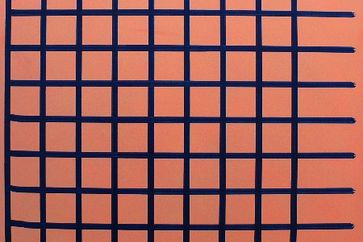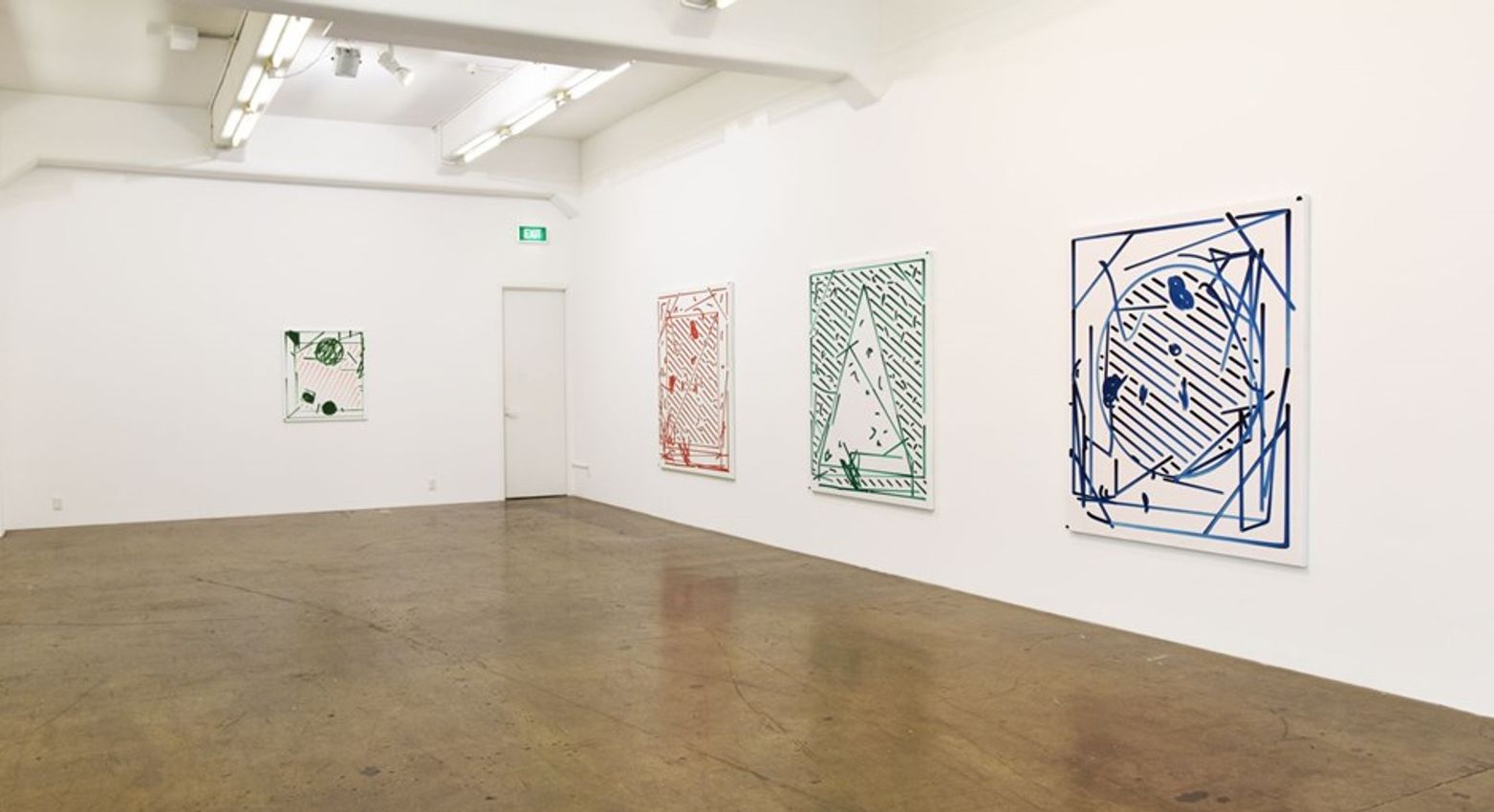
All of the works in Simon Ingram’s Digital Plastique began as drawings made on an Android phone. These drawings are made by Ingram in-between times, while he is waiting or when gaps open up in a day. Untitled (Waterview Skatepark), is one example of a composition made by swiping and scrubbing across a screen while simultaneously occupying a social space. This leads to paintings made wet on wet by a painting robot in a collaborative way. Ingram works back into the painting, adding a new layer with this machine or by editing an area by repainting in the ground by hand and then having the machine work back into this in turn. The drawings are opened up and re-worked, sometimes, elements within the drawing are copied and repeated. What starts in a series of at times distracted gestures inevitably resolves in hours of negotiation with the machine and its errant capacities.
Plastique is a French colloquialism for plastic explosive and this term touches on the notion that Ingram wanted to up-end the conceptual and data-driven logics of his Radio Paintings (2011) by making a series of compositions that are un-thought and wandering. At the same time, the compositions borrow from the language of the sketch, tree maps, the Venn diagramme, and geometry. The quality of plasticity played in Ingram’s mind; the changeability of our brains, the practice of painting, and of the digital tools used to do so.
Simon Ingram’s work interprets the modernist practice of the autonomous, self-made artwork in relation to painting as a constructional and computationally based self-organising system. His practice articulates itself in three distinct lines of work: machines made from Lego robotics and generic constructional materials that paint autonomously in oil paint with a brush; paintings made by the artist that use artificial life systems as a method to govern composition and decision making; and video work related to the production of self-making painting machines. Drawing on divergent strands of knowledge (artificial life, painting, critical theory, software), Ingram’s work re-stages and reinvents painting as a critical, contemporary project that explores painting’s conceptual signification while remaining resolutely fabricational.

Gow Langsford is a commercial art space committed to fostering and promoting the best contemporary art from New Zealand and abroad. Located directly opposite the Auckland Art Gallery, Gow Langsford Gallery represents over thirty established New Zealand and international artists. Gow Langsford is one of the country’s most established galleries and is widely regarded as its most influential dealer gallery. Alongside a regular and varied exhibition schedule, Gow Langsford is a market leader in works on the secondary market.

A respected voice in contemporary art discourse.
Focusing on ambitious storytelling and insightful art-world commentary. Ocula Magazine publishes in-depth interviews, critical essays and timely analysis on the artists, exhibitions and ideas driving the global art world.
Learn more about Ocula Magazine
Showcasing the best of the art world.
Ocula partners with galleries from around the world to highlight their artists, artworks and exhibitions. Gallery membership is by application and invitation, with each member vetted by an independent panel.
Learn more about Ocula Membership

Specialises in the sale of major artworks.
Led by a team with deep ties to the world’s leading auction houses, galleries and collectors. Ocula’s advisory team offers bespoke services to high-net-worth clients from around the world who are looking to acquire the best of contemporary and modern art.
Learn more about our team and services