My poems don’t distribute only images and metaphors. But landscapes, villages, fields... In fact, my poems distribute places. - Mahmoud Darwish
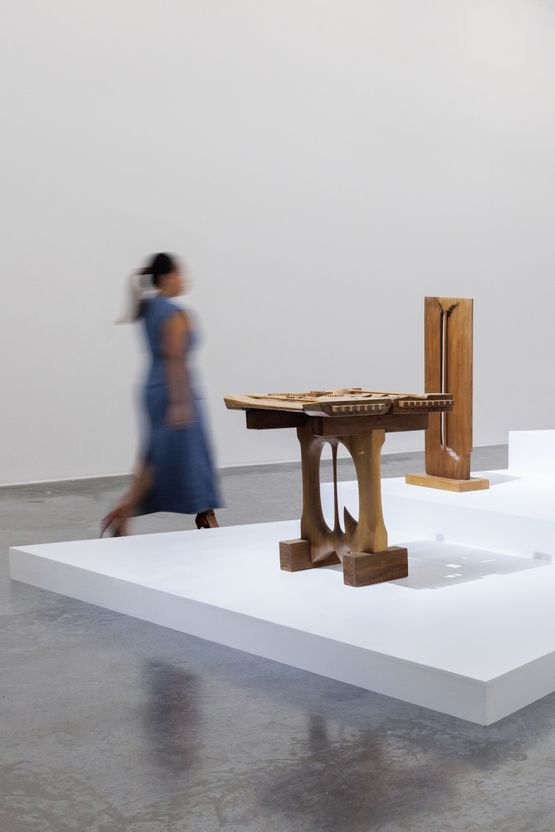
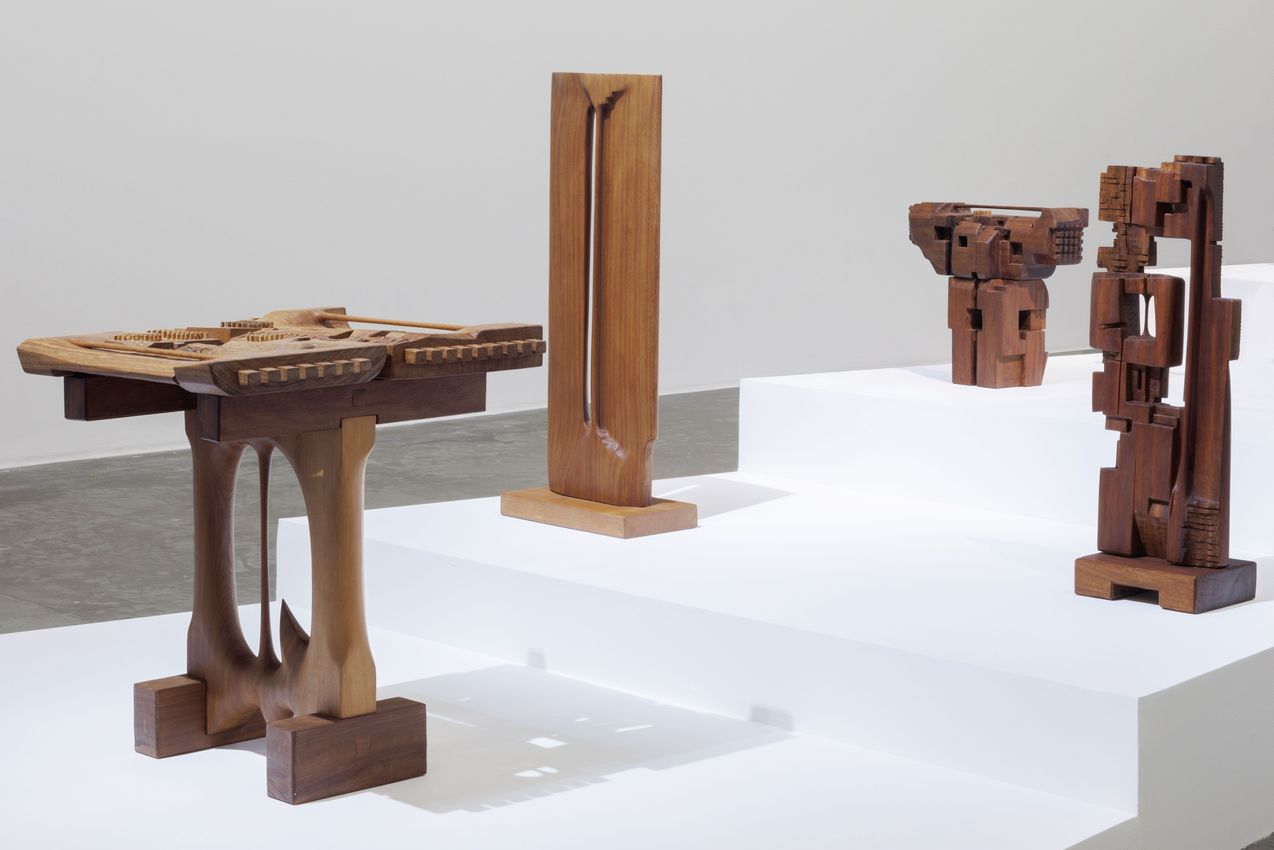
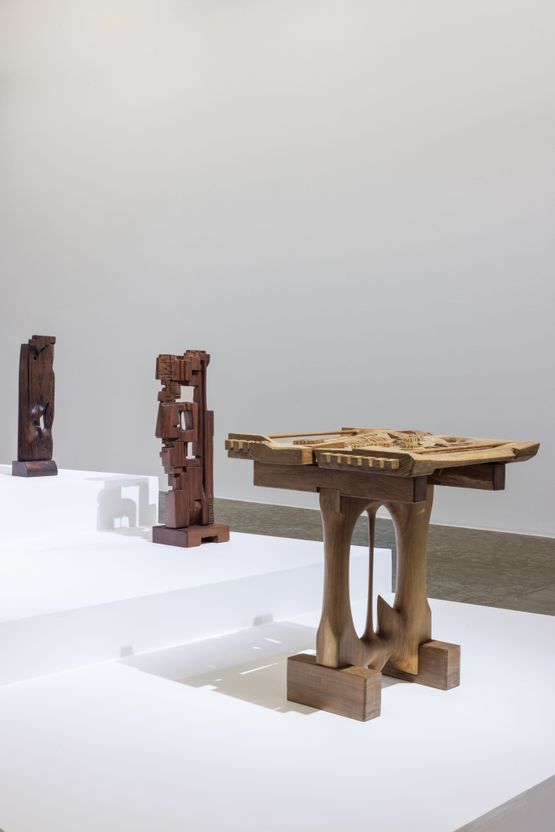
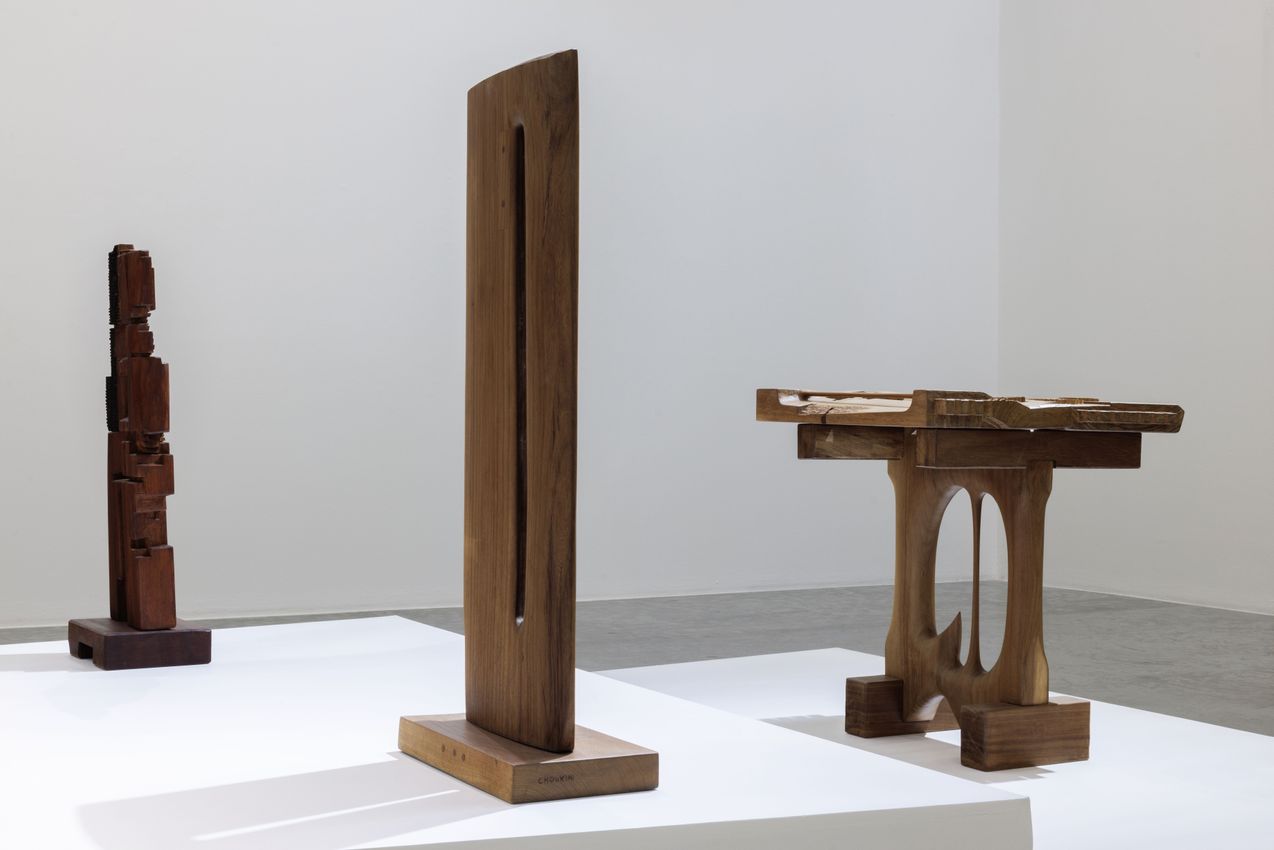
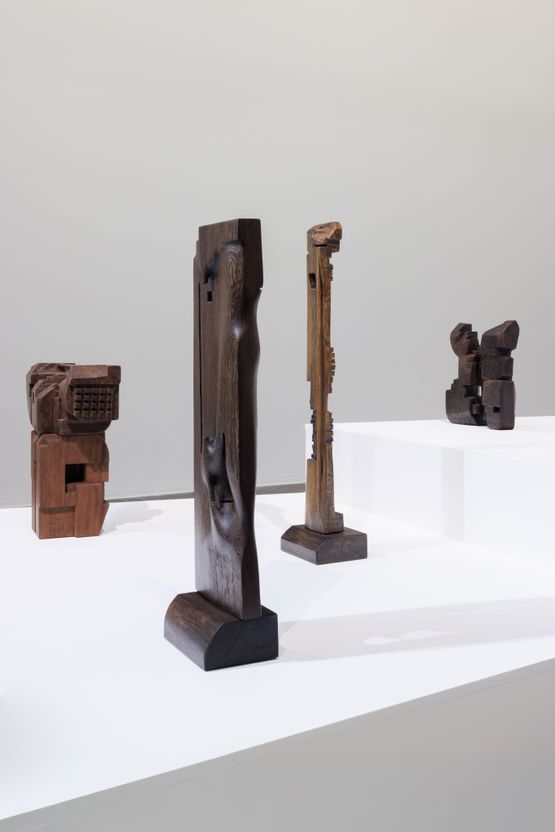
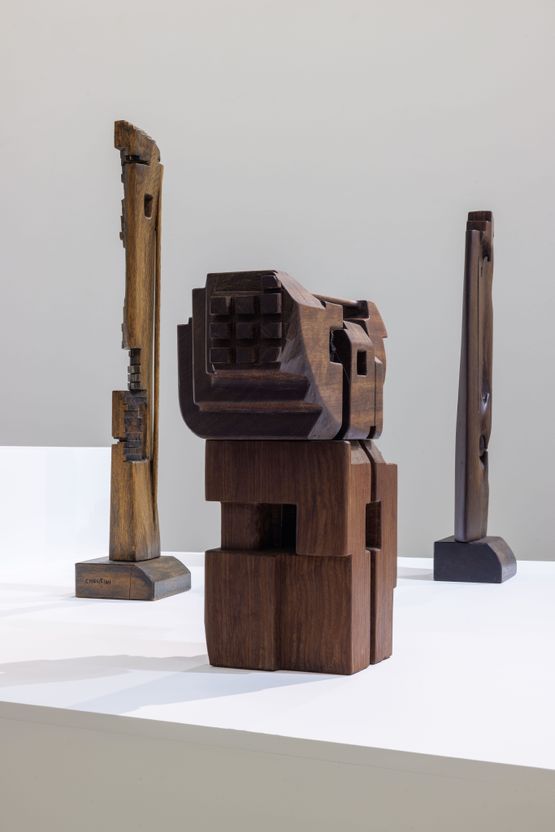
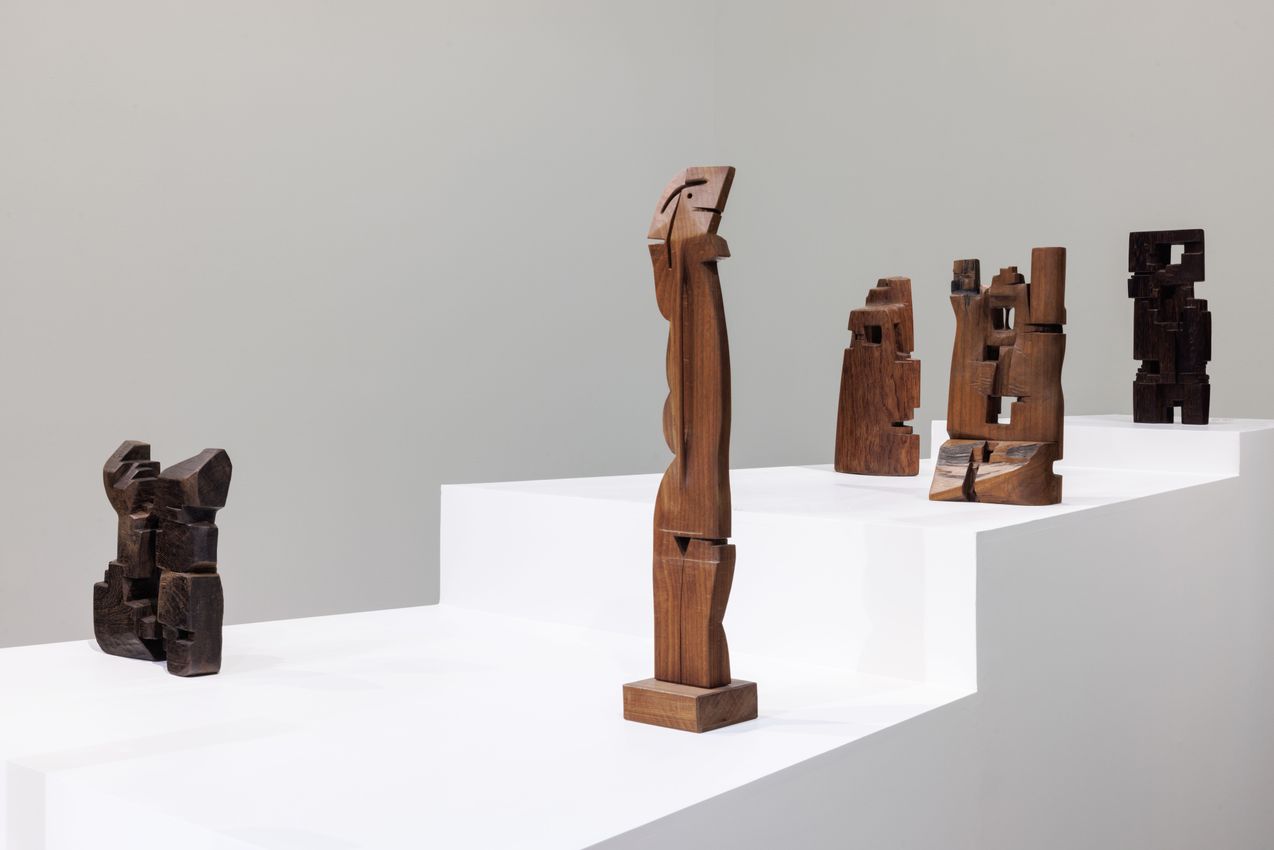
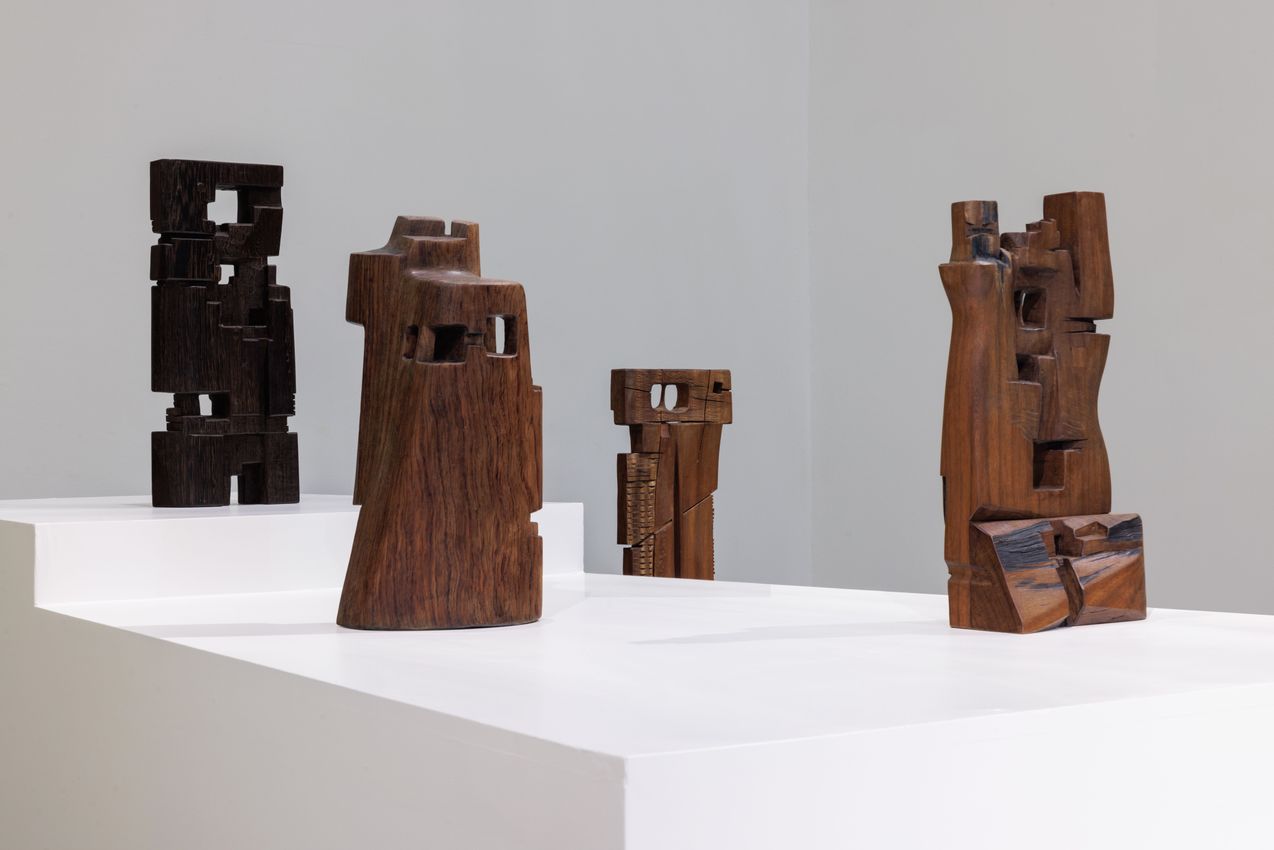
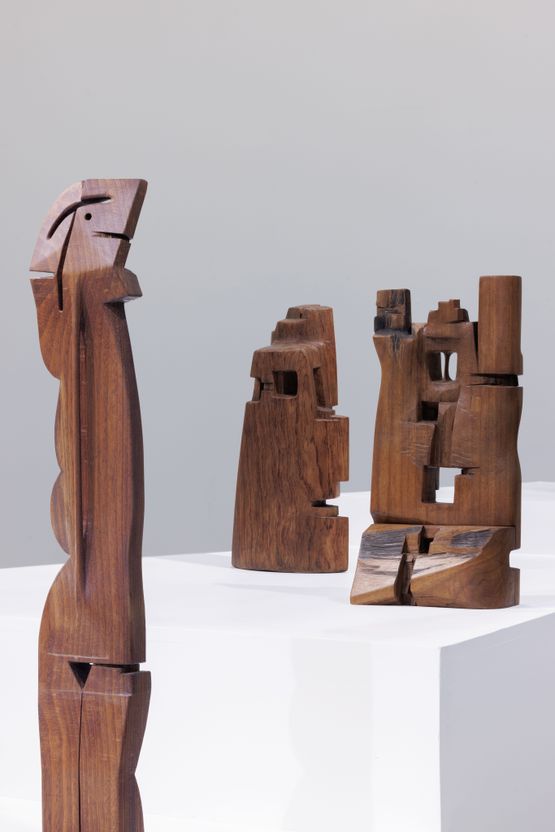
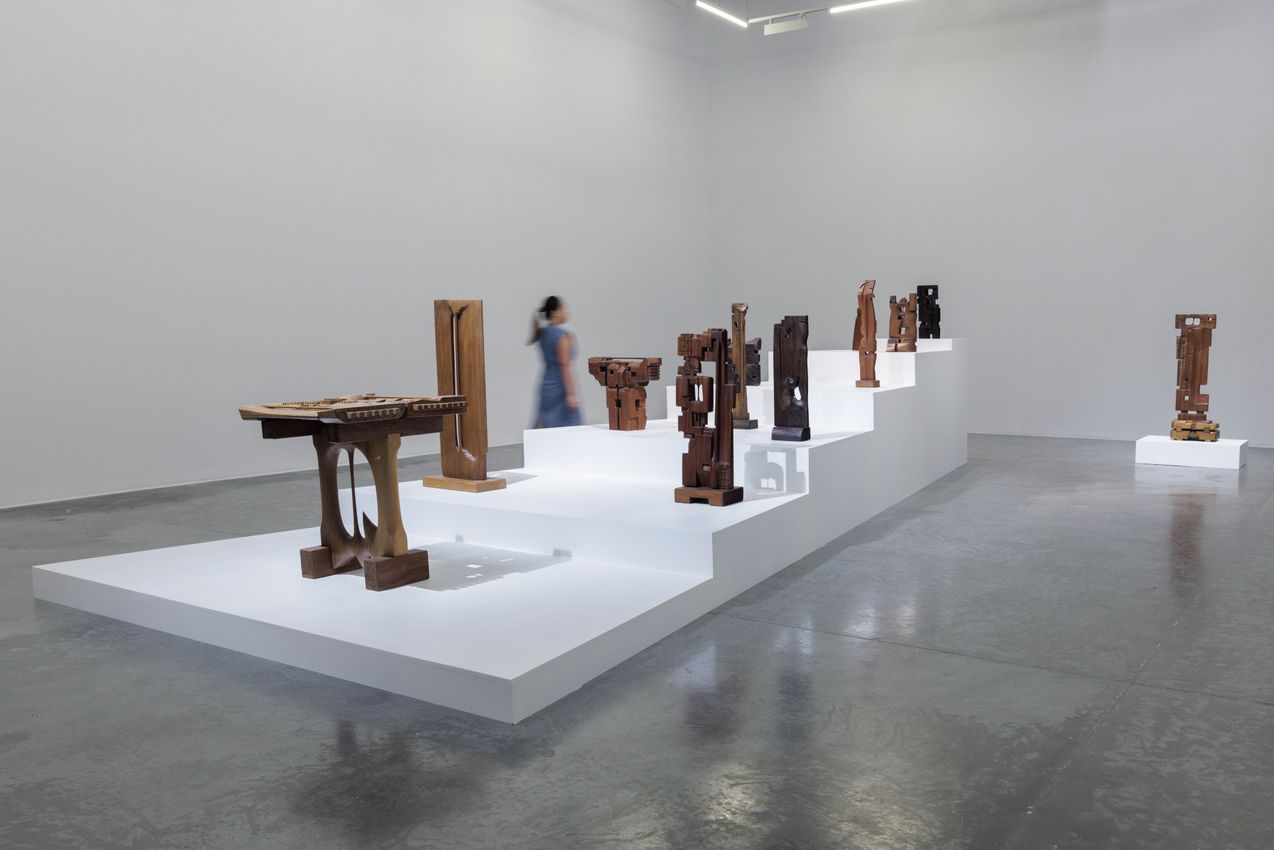
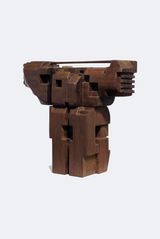
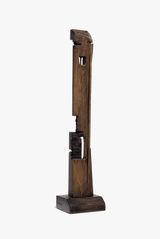
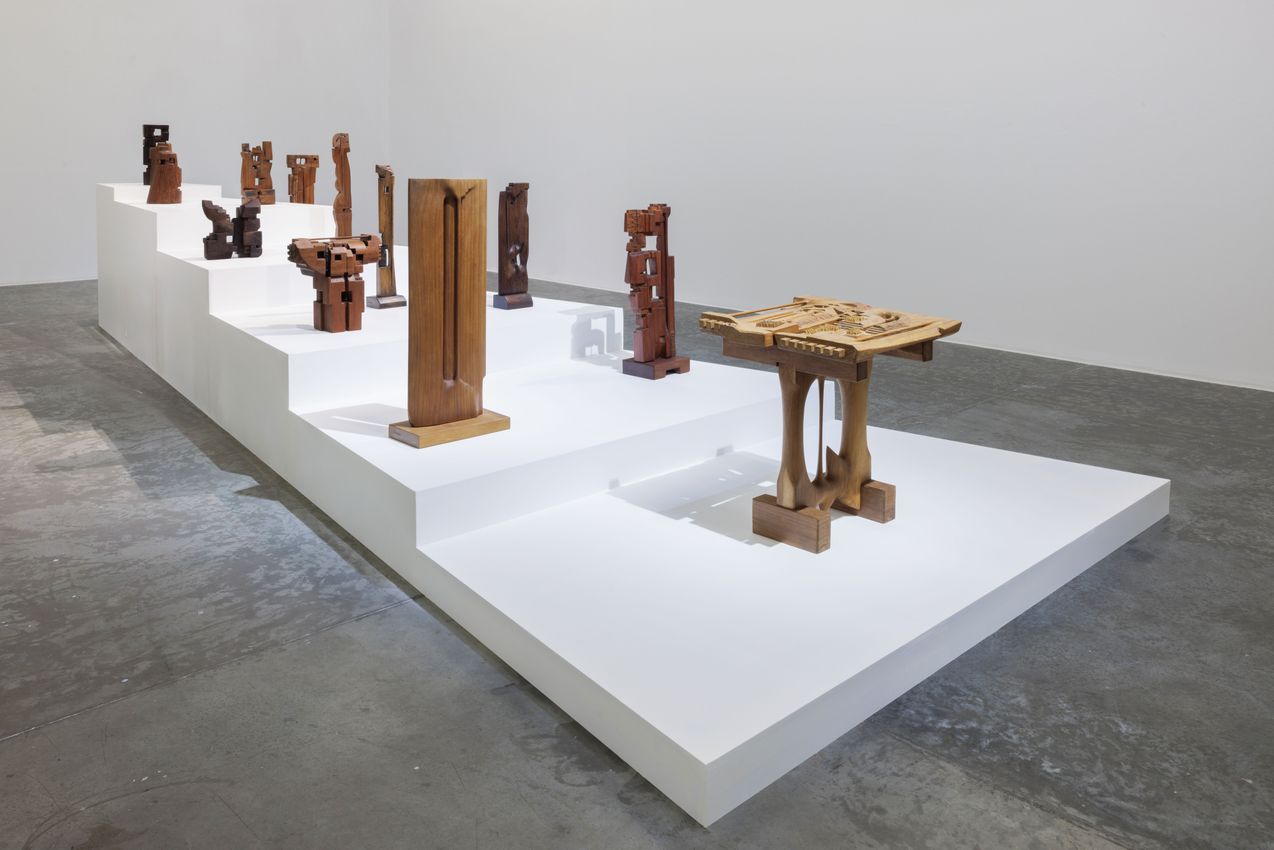
At the very least, one can say that Chaouki Choukini’s sculptures are complex objects, often described as sets of hybrid organic/mechanic, abstract/figurative, linear/non-linear shapes and volumes. They grab the attention of the viewer by making manifest multiple scales of surface in a kind of endless convergence of polarities—an open-ended experience, without a clear start or finish. Since the 1970s, rather than simply erecting a sculpture, Choukini has been mastering this way of displaying his plateau—a visual and conceptual horizon of accurately studied shapes and symbols—with a vibrant visual language that never feels outdated, expressing visual expansion, agility, and unrest.
One of the numerous innovations of this approach is the revival of a range of traditional techniques and skills (such as tile making, engraving, pottery, and weaving). The eye that follows the irregular veins of Choukini’s sculptures will be struck by the subtle visual metaphors of the various plateaus, rough zones, and soft zones. His works are conceptually founded on texture and density, bringing the sculptor’s task into the realm of the writer or poet; as they weave one word into another, so he weaves space.
The effectiveness of Choukini’s sculptures could be conceptualized as a textural maze through which our gaze walks, lost but for a few clues to guide it. In this way, Choukini’s work differs from the praxis of modernist or minimalist sculpture, as he is resistant to its supposedly self-reflective, self-explanatory, and monumentalist tendencies. Choukini’s style has evolved in a distinctly anti-formalist tradition, in the vein of artists as diverse as Fausto Melotti, Naum Gabo, and Isamu Noguchi, who despite their differences all envisioned sculpture as an organic, open-ended process. Furthermore, these artists—Choukini included—have a certain relationship with the kinetics of the hands and eyes, exploring biological principles of perception and motion above those that might be affected by a computer.
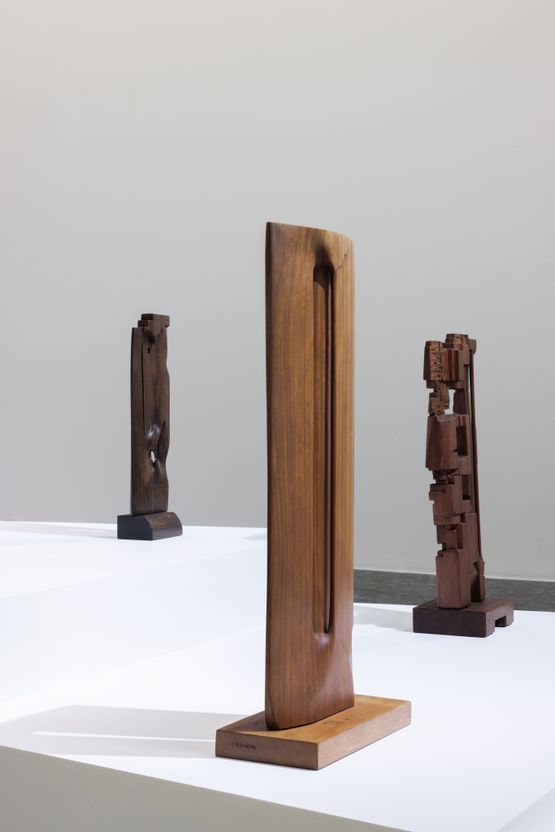
As a true engineer of wood, Choukini manipulates his material into sensuality and circularity, bridging the gap between order (softness) and disorder (roughness). As a result, his sculptures express very indirect but nonetheless vivid symbolic force that can only be deciphered from clues such as the titles of his works. They often allude to a certain physical action or function without explicitly depicting it with common codes or images; rather, they invite us to a new realm of communication.
Choukini’s art questions our vision—and the tactile, haptic sense—in a dialectic between sculptural, landscape, and architectural spaces. Where the sculpture ends, begins a fragment of landscape... where the landscape ends, begins a fragment of architecture... wherein lies a fragment of sculpture... over and over again in an open-ended and serendipitous organic process of mise en abîme and inverted/distorted shapes and scales. Hence the eloquent title for this exhibition: Citadelles of Today, in remembrance of West Asian landscapes and traditional architecture between Lebanon, Syria, and Iraq. These are what one could metaphorically call “cities of sand,” often made of ancient bricks and tiles, with an entropic root system in the earth. Both fragile, as they are subject to seismic frequencies, and anti-fragile, as everything comes from dust and to dust returns. Far from proposing closed and definitive patterns inspired from modernist architecture or any kind of bold symbolism, Chaouki Choukini’s artworks seem to follow an almost hidden program or secret battle plan, that of revealing from a buried blueprint, layer by layer, plateau after plateau, in search of spaces to heal.
Since the late 1960s, Chaouki Choukini has developed an astoundingly consistent aesthetic worldview. His sculptural works, mainly in wood but occasionally in marble or stone, range from horizontal Lieux and Paysages to upright, anthropomorphic, almost totemic figures. At first glance, the works may appear somewhat primitivist. A closer look, however, reveals a sophisticated interrogation of organic and mechanical worlds, where curvaceous mounds are punctuated by a regiment of pegs, or undulating bases bristle with teeth-like crags. Discursively, Choukini layers an eerie latency into his works: mazes of slits, recesses, and multi-level cavities evoke some vanished human presence on the tense horizon line; the ubiquitous “cord” is a taut yet silent marker of dormant sound.

Green Art Gallery is a contemporary art space featuring a multi-generational mix of artists whose practices are rigorously researched, idea-led, and representative of our current moment. The gallery now represents a multi-generational mix of artists from the Middle East, North Africa, South Asia and beyond, including Turkish artists Hale Tenger and Hera Büyüktaşcıyan; Iranian artists Kamrooz Aram and Nazgol Ansarinia; and Shadi Habib Allah, Seher Shah, and Alessandro Balteo-Yazbeck, who are Palestinian, Pakistani and Venezuelan respectively. In this geographic mix, the gallery reflects Dubai’s position as a cosmopolitan—as well as artistic—entrepôt, even as it boasts of a strong parallel Arab Modernist program.

A respected voice in contemporary art discourse.
Focusing on ambitious storytelling and insightful art-world commentary. Ocula Magazine publishes in-depth interviews, critical essays and timely analysis on the artists, exhibitions and ideas driving the global art world.
Learn more about Ocula Magazine
Showcasing the best of the art world.
Ocula partners with galleries from around the world to highlight their artists, artworks and exhibitions. Gallery membership is by application and invitation, with each member vetted by an independent panel.
Learn more about Ocula Membership

Specialises in the sale of major artworks.
Led by a team with deep ties to the world’s leading auction houses, galleries and collectors. Ocula’s advisory team offers bespoke services to high-net-worth clients from around the world who are looking to acquire the best of contemporary and modern art.
Learn more about our team and services