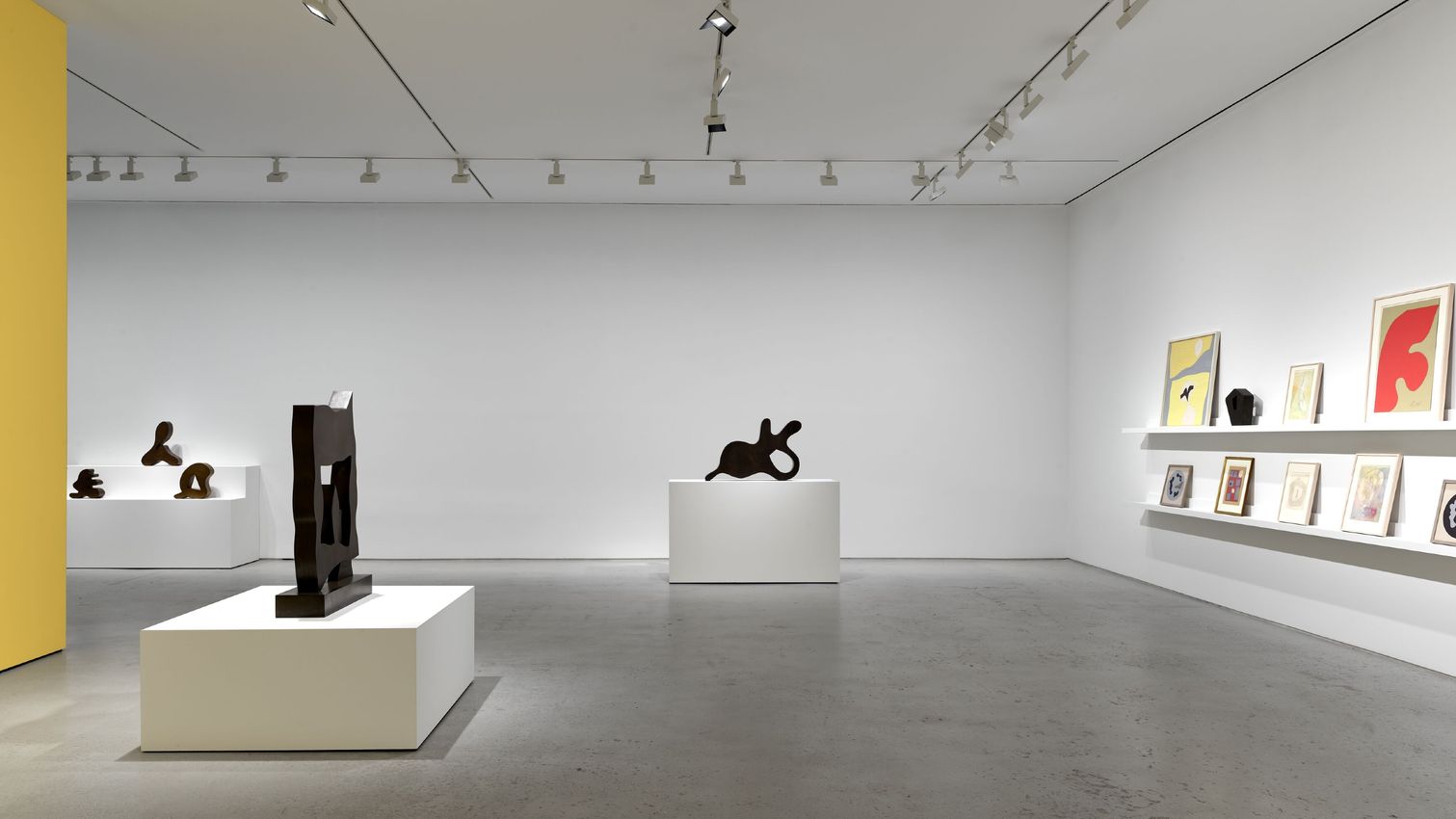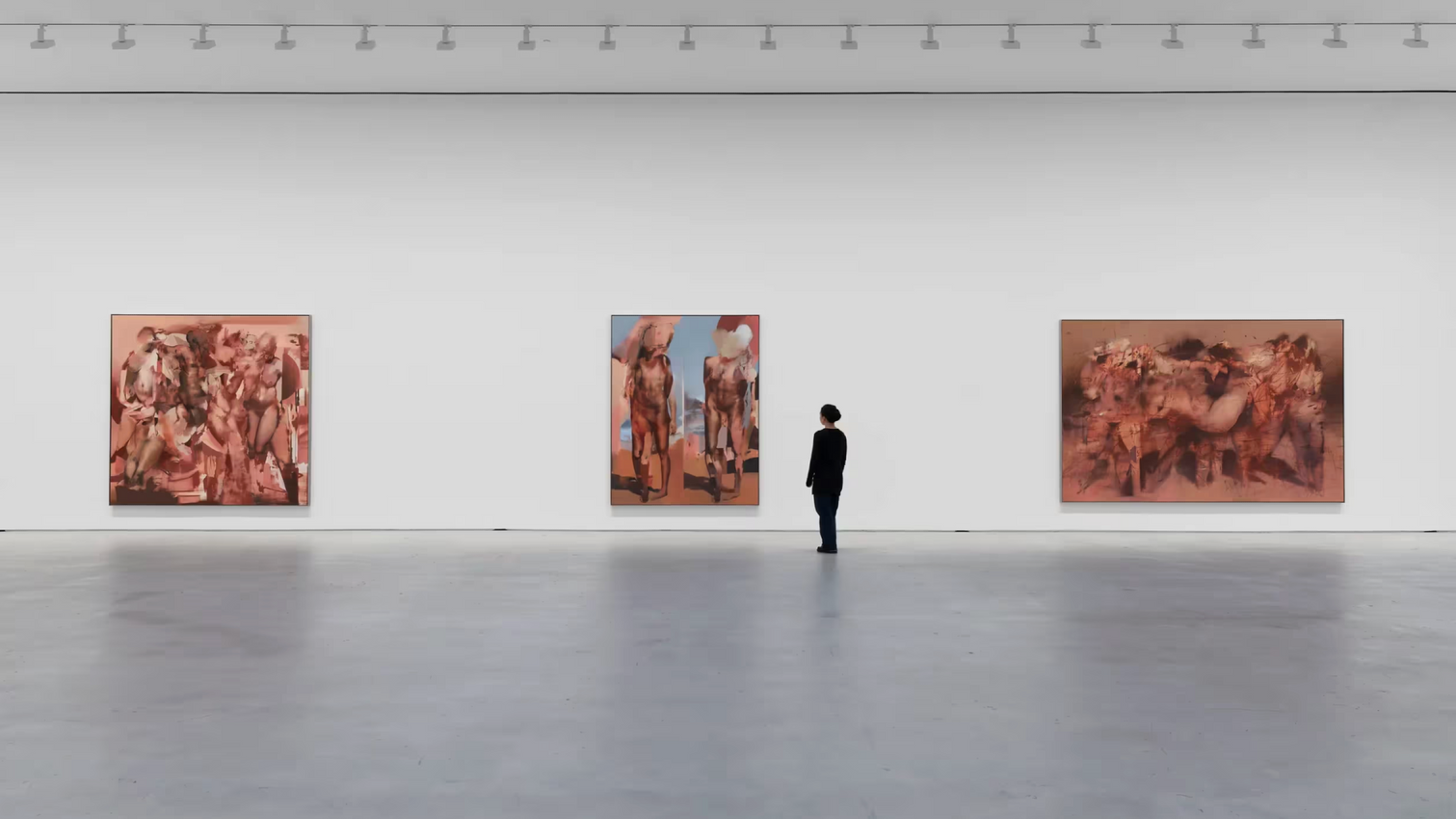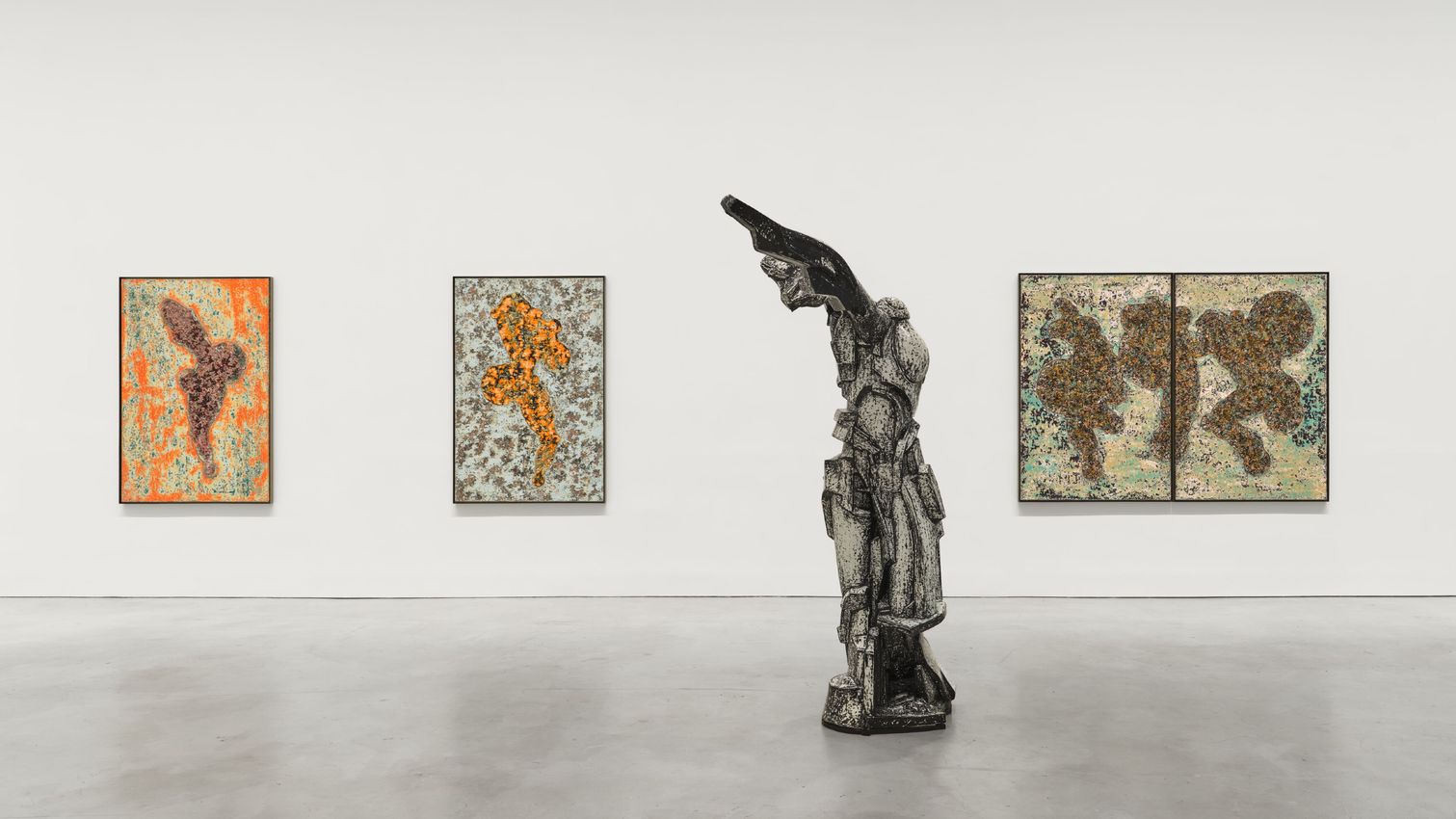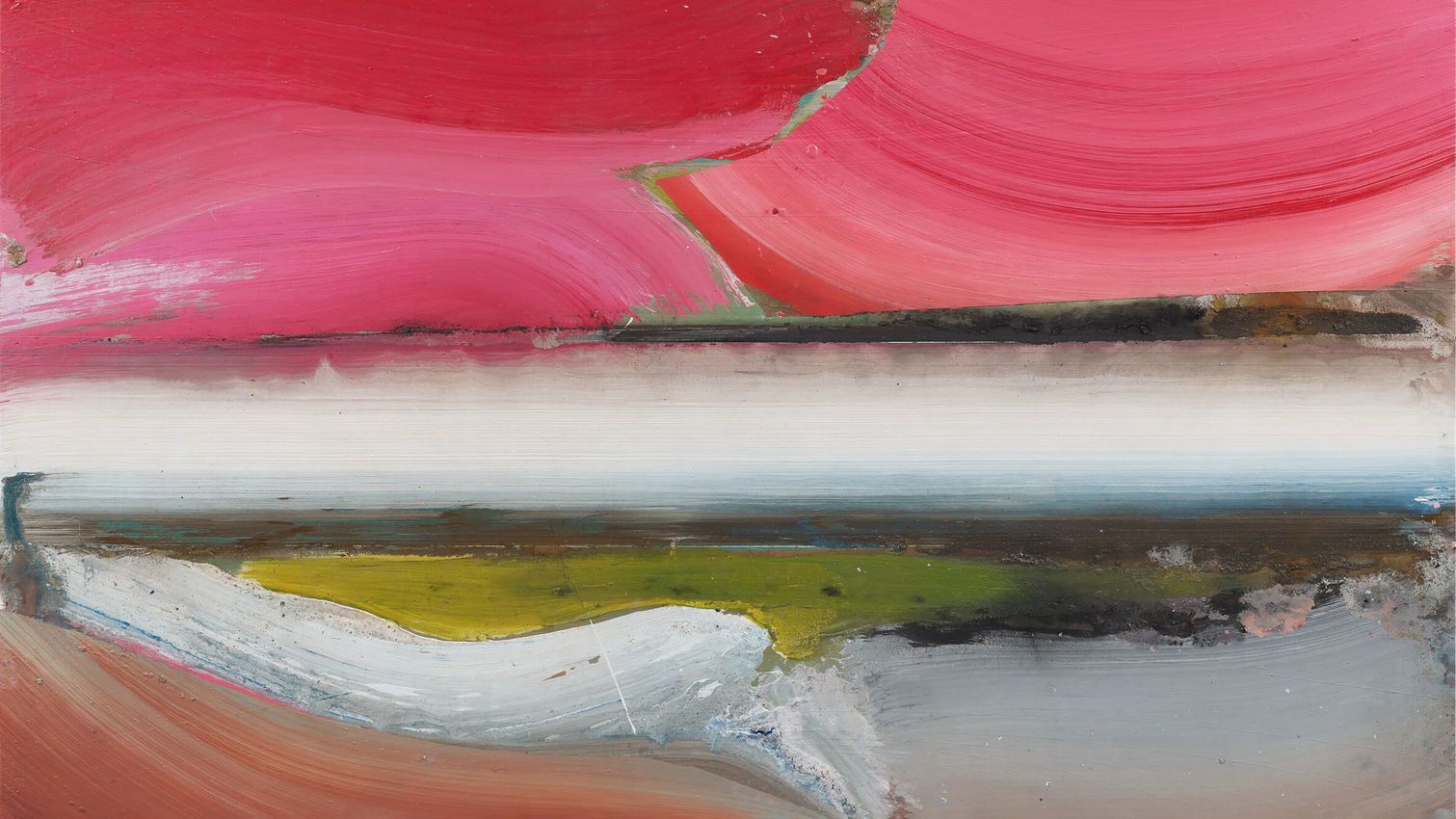
On view in Zurich this June, ‘Ed Clark. Paint is the Subject’ is the first solo exhibition in Switzerland dedicated to this pioneering American abstractionist. Curated by Tanya Barson in close collaboration with the artist’s estate, the exhibition at our Limmatstrasse gallery brings together key works spanning seven decades, offering a comprehensive overview of Clark’s groundbreaking practice.
The exhibition will feature a broad selection of his dynamic large-scale paintings and works on paper, as well as early works and an example of his use of the shaped canvas. The presentation will be complemented by archival photographs and documents that provide biographical and historical context, tracing the evolution of his innovative approach and lasting impact on modern painting.
Clark remained under-acknowledged for much of his career, but he received late recognition in his lifetime, a recognition that continues to grow. A member of the New York School, Ed Clark contributed towards redefining abstraction in the 1950s with two characteristic features—the deployment of the shaped canvas, and his unconventional use of a household broom to create sweeping, gestural compositions—the show’s title coming from a quote by the artist indicating the centrality of his medium to his work. Stylistically, his work bridges the physicality and spontaneity of Abstract Expressionism with the structured clarity of hard-edged abstraction, cementing his significance in postwar painting.
Born in New Orleans in 1926 and educated in Chicago and Paris, he travelled widely throughout his career, each location, its light and palette, impacting his work. Clark maintained close ties to Europe, living between New York and Paris from the 1960s onward. His aesthetic was shaped by the influence of European artists such as Nicolas de Staël and Pierre Soulages, while his artistic and intellectual circles included Joan Mitchell, Barbara Chase-Riboud, Beauford Delaney, Jack Whitten and James Baldwin, among others.
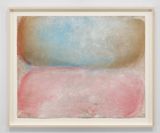
Ed Clark’s early work was figurative, exemplified in the Zurich exhibition by ‘Standing Woman at the Chair’ (1949–50), before shifting toward abstraction in the early 1950s. During his time in Paris, he explored abstract form. His painting ‘Untitled’ (1954) encapsulates this early period. Immersed in the French contemporary art scene, Clark came to believe that the true essence of painting lies not in realistic representation, but in the expressive application of paint, explored for its own sake: ‘I began to believe [...] that the real truth is in the stroke. For me, it is large, bold strokes that do not refer distinctly to seen nature. The paint is the subject. The motions of the strokes give the work life. This began to enter into my paintings in a very personal way.’
Back in New York, Clark continued to innovate. In 1956, he began exploring shaped canvases and supports, which can be considered one of the earliest investigations within American abstract modernism, predating the shaped works of Frank Stella, Ellsworth Kelly, Al Loving and Sam Gilliam. He later experimented with oval canvases, first conceived during a stay at Joan Mitchell’s house in Vétheuil, France, in 1968. Works on view in Zurich such as ‘Untitled’ (1970) and ‘Silver Stripes’ (1972) reflect this development, the ellipse motif and the oval support in his work aimed at expanding the field of vision, enhancing the immersive qualities of the canvas.
Clark’s use of the broom began in Paris and evolved significantly in New York. By the mid-1960s, he was laying his canvases on the floor and using large brooms to deliver sweeping horizontal strokes that captured speed and motion. His gestural language and ever greater emphasis on the brushstroke became central to his practice. A key highlight of the show is ‘Untitled (Acrylic #1 from the series Louisiana)’ (1978), where Clark uses acrylics to capture the palette of the landscape of the Southern United States. Dividing the canvas into three sections—evoking earth, air, and water—he applied paint with broom, brush, and by hand, translating these environmental elements into abstract form. His choice of colours, ranging through pinks, blues, and beiges, deepens the specific sense of atmosphere evoking the landscape of his early childhood, and his return there to teach at Louisiana State University in the late 1970s.
As the 1980s progressed, Clark began exploring a new compositional approach he termed his tubular paintings, first seen in the series of ‘Broken Rainbow’ works. These supplanted the structures of narrow horizontal lines he employed in the previous decade, with curved strokes that introduced a suggestion of rotation as in ‘Untitled’ (ca. 1990s). In later works such as ‘Untitled’ (2002), Clark continues this exploration through broad, sweeping gestures and a looser, more fluid structure that became characteristic of his later style.
The Zurich exhibition provides a rare opportunity to experience the full scope of Clark’s practice, placing him in relation to diverse histories of abstraction and highlighting the enduring relevance of his work. It emphasises how for Clark abstract art represented a greater truth than any realist depiction of the world and that for him ‘paint is the subject.’
Several works by Clark are also currently on view at the Centre Pompidou in Paris as part of the exhibition ‘Paris Noir: Artistic circulations and anti-colonial resistance, 1950 – 2000’ at the Centre Pompidou (19 March – 30 June 2025), which explores the presence of black artists in France. His inclusion highlights the important African American diaspora working in Paris and the long-standing influence of Europe on his practice, situating his work within broader transatlantic narratives.
Born in New Orleans in 1926 and raised in Chicago, Clark emerged in the 1950s as a pioneer of the New York School. Over the course of seven decades, his experimentations with pure colour, abstract form, and the seductive materiality of paint have yielded an oeuvre of remarkable originality, extending the language of American abstraction. Clark’s breakthroughs have an important place in the story of modern and contemporary art: In the late 1950s he was the first American artist credited with exhibiting a shaped canvas, an innovation that continues to reverberate today. His search for a means to breach the limitations of the conventional paintbrush led him to use a push broom to apply pigment to canvas laid out on the floor. Defying the discreet categories of gestural and hard-edged abstraction, Clark has masterfully interwoven both into a unique form of expressionism–literally sweeping his medium into an atmospheric, emotive, and ultimately exuberant art.


Hauser & Wirth was founded in 1992 in Zurich by Iwan Wirth, Manuela Wirth and Ursula Hauser, who were joined in 2000 by Partner and Vice President Marc Payot. A family business with a global outlook, Hauser & Wirth has expanded over the past 26 years to include outposts in Hong Kong, London, New York, Los Angeles, Somerset and Gstaad. The gallery represents over 70 artists and estates who have been instrumental in shaping its identity over the past quarter century, and who are the inspiration for Hauser & Wirth’s diverse range of activities that engage with art, education, conservation and sustainability.

A respected voice in contemporary art discourse.
Focusing on ambitious storytelling and insightful art-world commentary. Ocula Magazine publishes in-depth interviews, critical essays and timely analysis on the artists, exhibitions and ideas driving the global art world.
Learn more about Ocula Magazine
Showcasing the best of the art world.
Ocula partners with galleries from around the world to highlight their artists, artworks and exhibitions. Gallery membership is by application and invitation, with each member vetted by an independent panel.
Learn more about Ocula Membership

Specialises in the sale of major artworks.
Led by a team with deep ties to the world’s leading auction houses, galleries and collectors. Ocula’s advisory team offers bespoke services to high-net-worth clients from around the world who are looking to acquire the best of contemporary and modern art.
Learn more about our team and services