



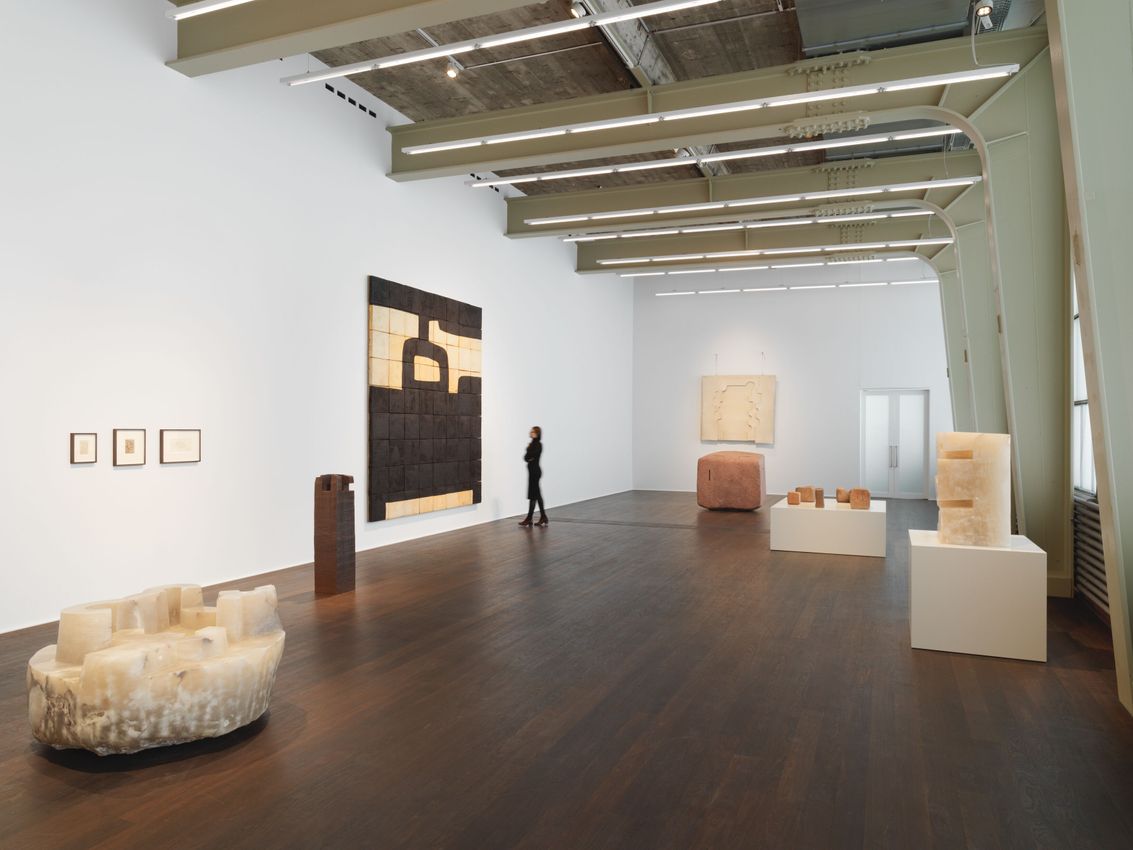
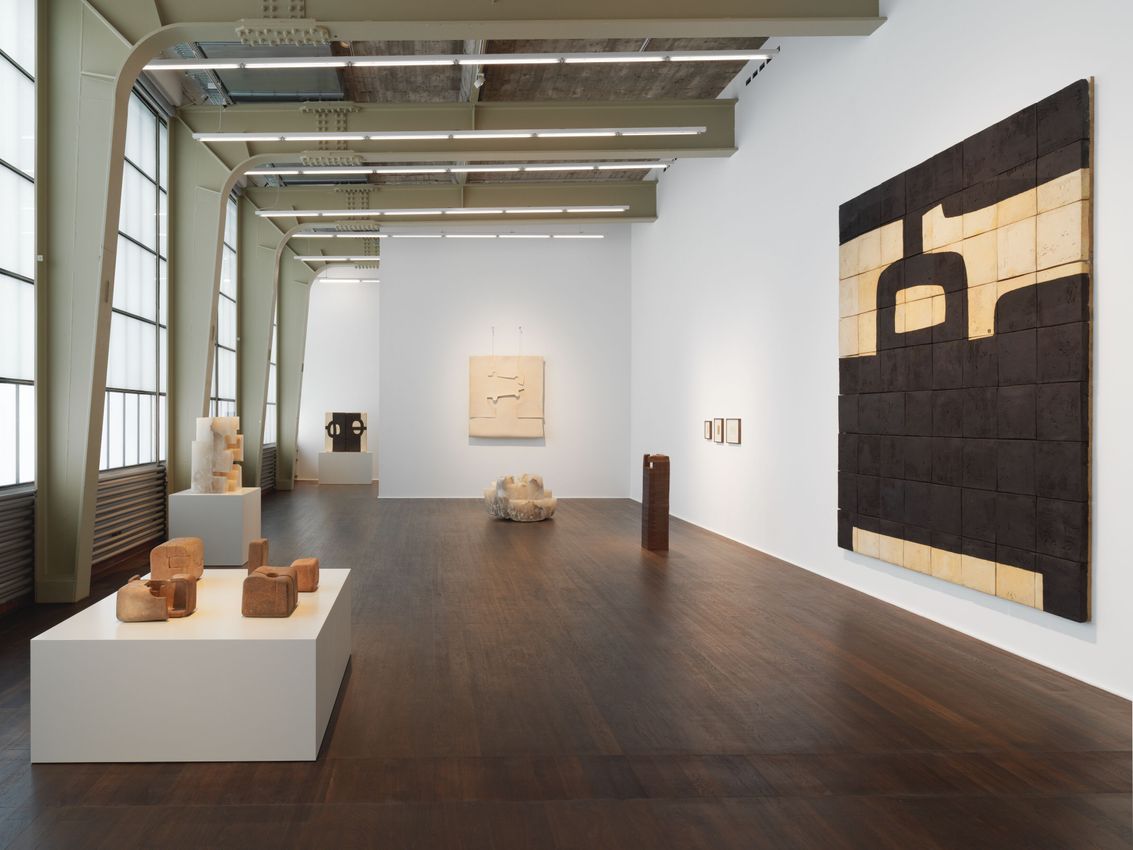
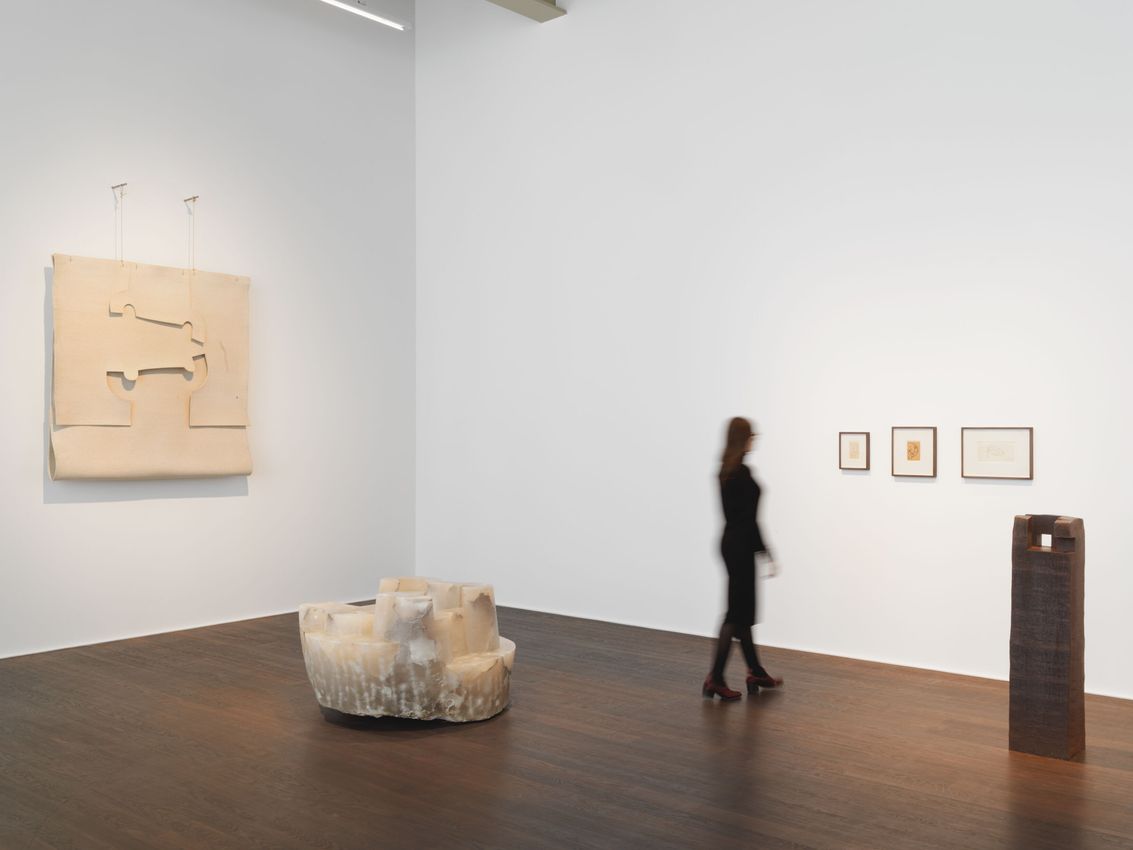
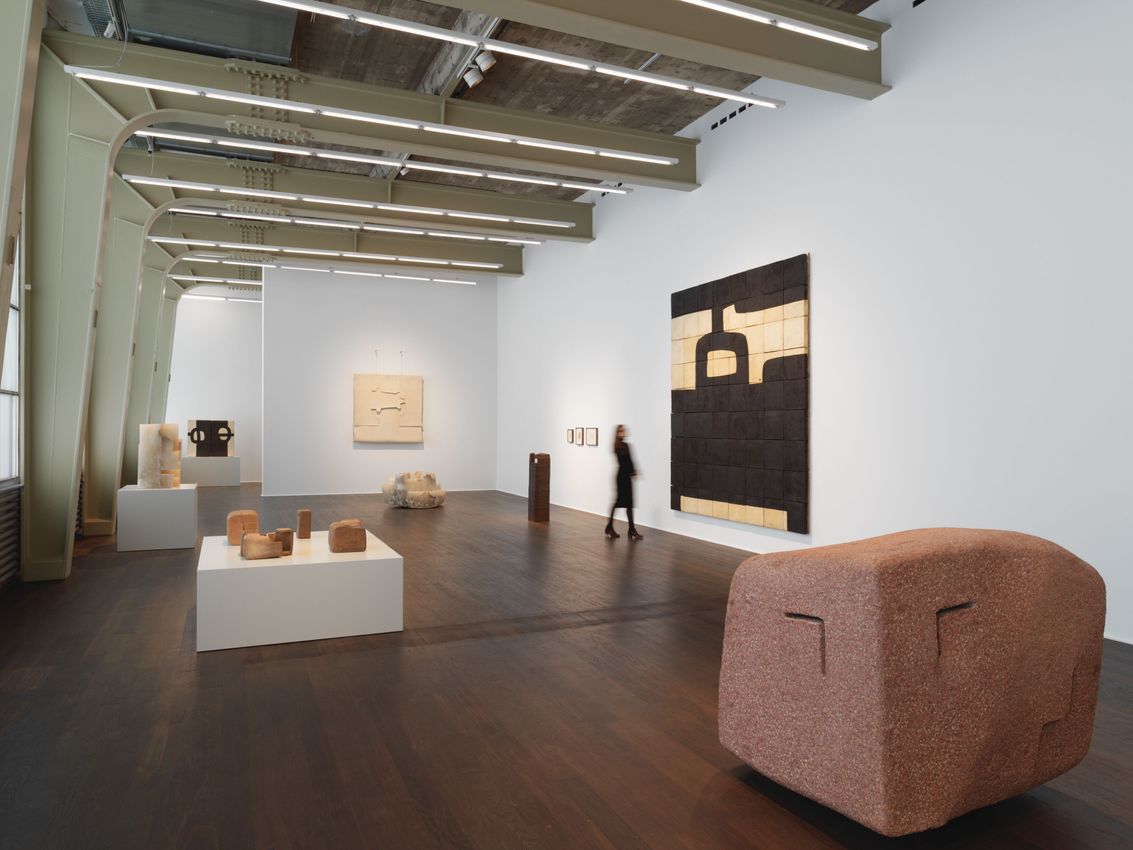
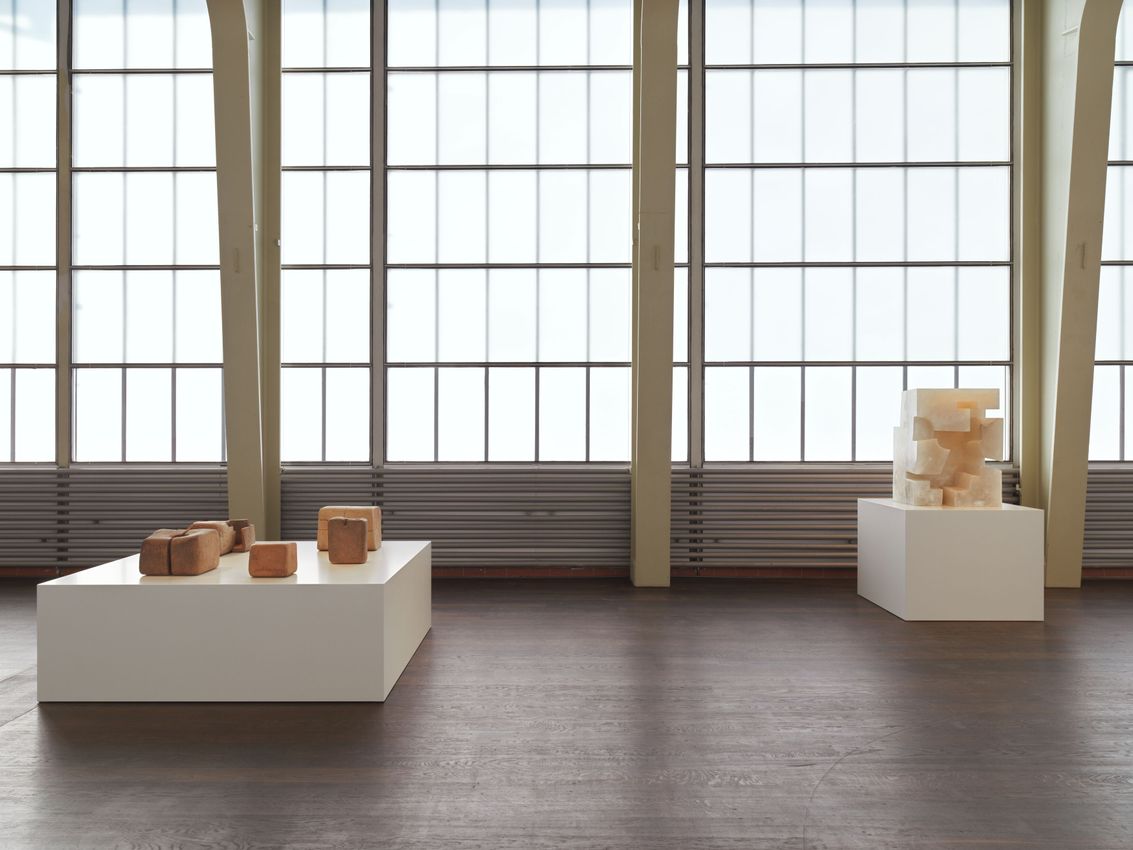
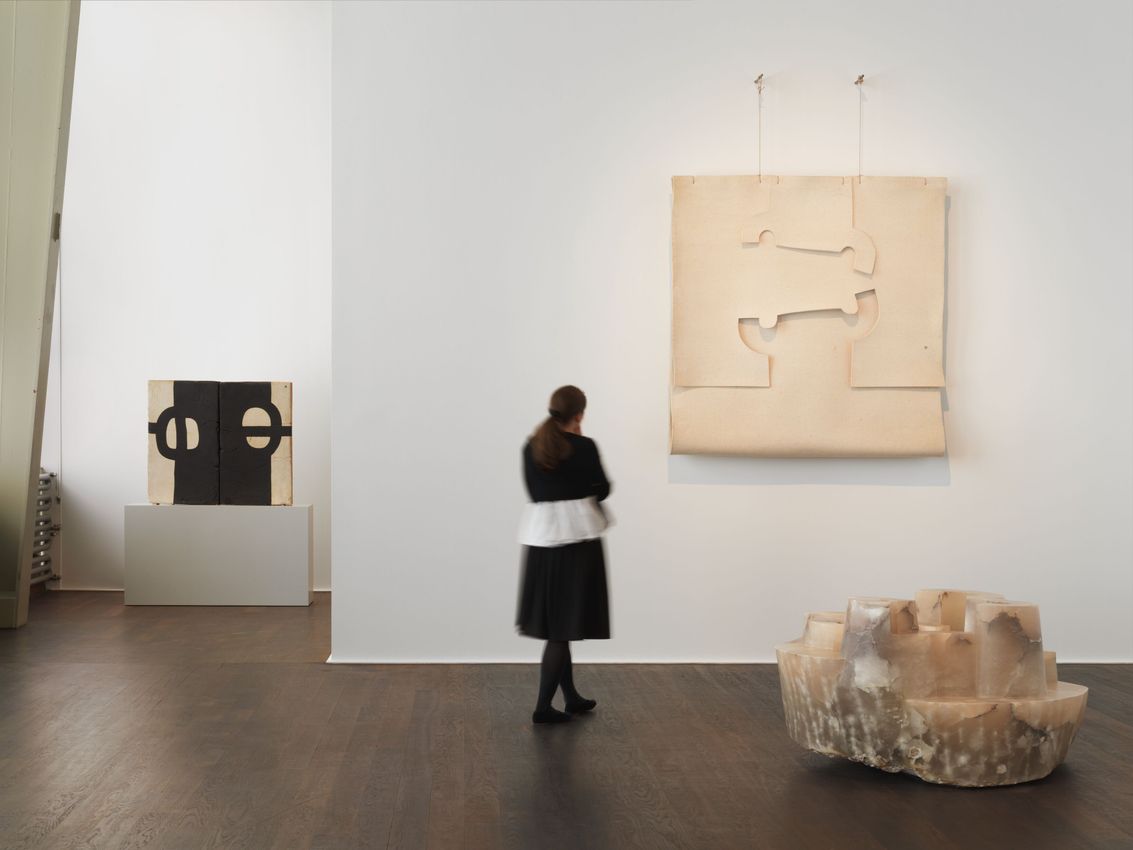
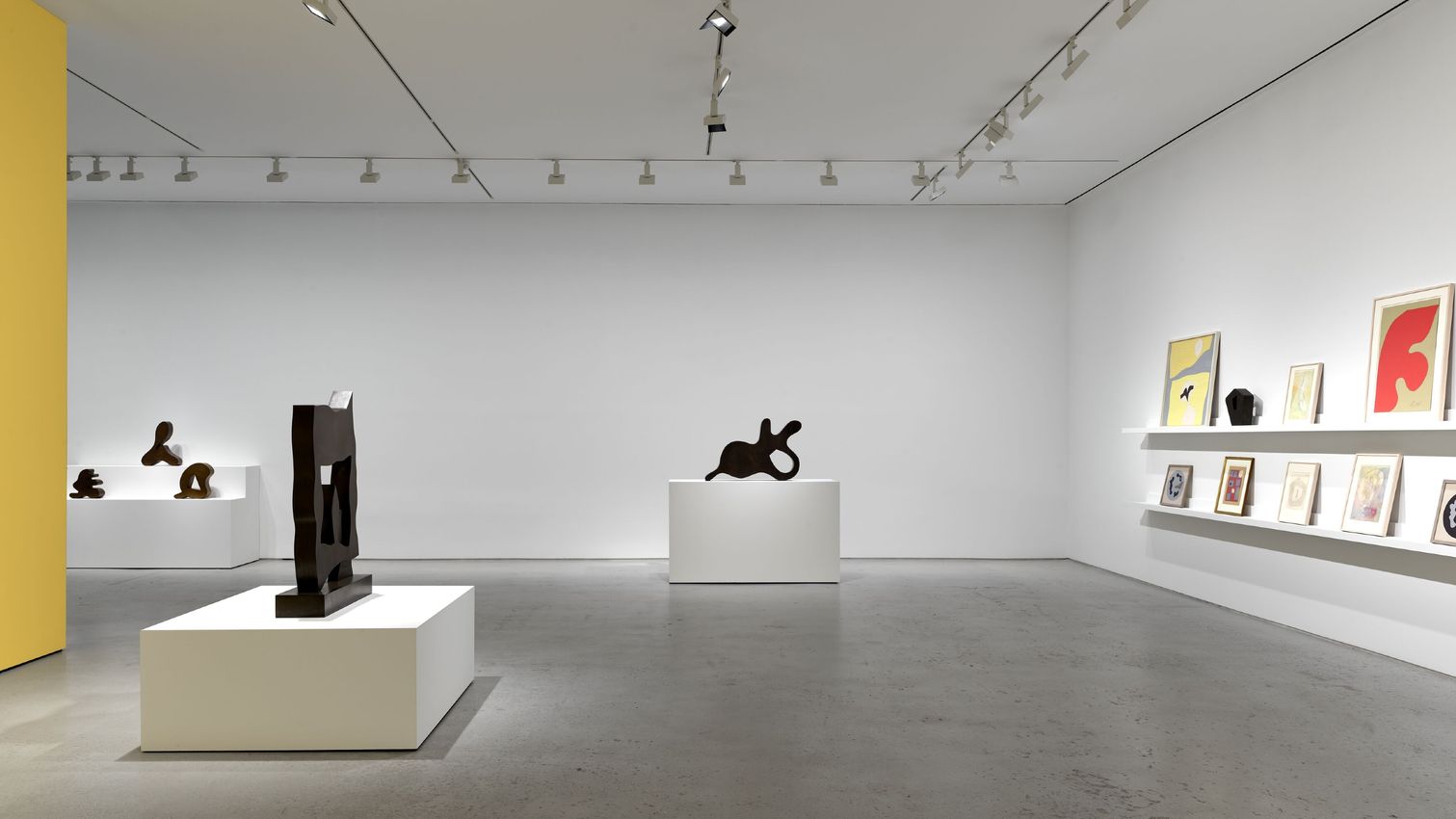
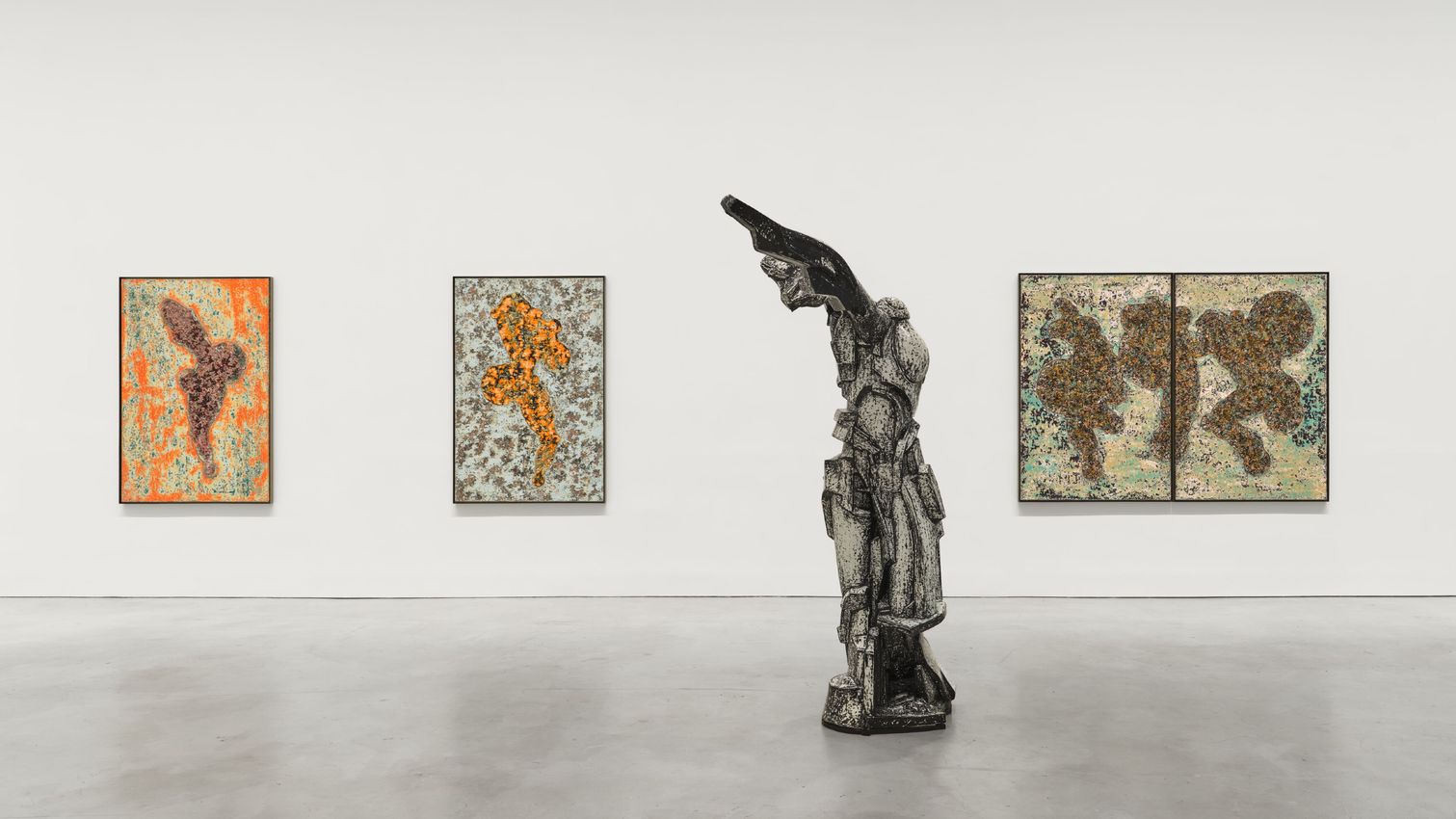
Hauser & Wirth is delighted to present an exhibition devoted to the artist Eduardo Chillida, Spain’s foremost sculptor of the 20th century. Chillida is highly revered as a relentless innovator who challenged the conventions of sculpture through a questioning of form, material and space. Conceived as a celebration of the artist’s mastery of materials, the presentation is the first of its kind in the Zurich gallery and showcases Chillida’s wide-ranging and pioneering practice through a presentation of rarely exhibited works. The selection of significant artworks, which spans over a timeline of 50 years, includes small–and large–scale sculptures in steel, chamotte clay, granite and alabaster, as well as drawings, engravings and his Gravitaciones (Gravitations). With a number of Chillida’s sculptures included in the permanent collections of prominent Swiss institutions, the works in the exhibition contextualise the presence of the artist within the Swiss cultural landscape.
Born in San Sebastián in 1924, Chillida was continually inspired by the natural and industrial environment of the Basque Region, reflected in his diverse choice of materials including steel, iron and wood. Combined with a deep understanding and respect for these media, the artist’s interests in the possibilities of defining space and light through form were principles at the core of his practice. These lasting ideas originated from his time studying architecture in Madrid during the early 1940s, a field which had a long-standing impact on his career. Chillida often drew upon influences from European and Eastern philosophies, poetry, and history, and his experiments with abstract forms encompass both physical and metaphysical concerns.
Chillida first began to experiment with local materials after returning to the Basque Country from Paris in 1951, where he had moved to study drawing and later sculpture. During his time in Paris, the artist produced a number of figurative works in materials such as plaster, inspired by the Ancient Greek sculptures he encountered in the Louvre. As the centre of gravity of the art world shifted from Paris to New York, Chillida returned to San Sebastián, determined to delve into the artistic possibilities of the region.
During this period, the artist learnt techniques from a local blacksmith, understanding the unique properties of iron and steel–two metals that had a particular traditional importance for Basque industry. By coaxing layers into complex structures with his hands, Chillida was able to familiarise himself with the underlying essence of such resistant materials, directly experiencing their transformation. As philosopher Gaston Bachelard noted, the artist understood the ‘complicated soul’ of these metals. At once conceptual and architectural, Chillida’s steel and iron works became pivotal in his understanding of the intersections of geometric and organic forms.
A major steel work in the exhibition, Enparantza (Square) (1990), takes its title from the Basque word for ‘square’, an open public space for people to gather. Stretching upwards, the work’s rectangular form is softened by slight indentations and irregularities along its sides. The topmost section of the totem features castellated geometric cut-outs that emphasise a relationship between the physicality of the material and the modulation of the space surrounding it. Not only is Enparantza an example of Chillida’s expertise in thoughtfully moulding space and volume, it is also a manifestation of a sense of community that permeates much of his work.
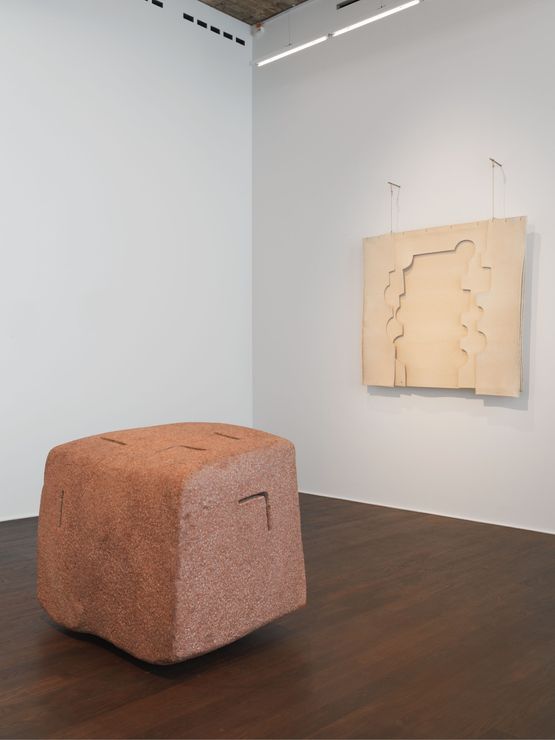
Chillida’s approach to stone however was grounded in a belief that the geometric forms of the sculpture had to come from its intrinsic qualities, rather than through a complete transformation. His granite sculpture, Harri II (Stone) II (1991), exhibited here in an interior space for the first time in almost twenty years, is exemplary of his consideration of the stone’s impenetrable nature. The granite’s smooth, rhythmic curves delicately transfigure the space in which it sits. The artist’s hand is traceable via indentations made within the stone, creating empty voids that penetrate its exterior.
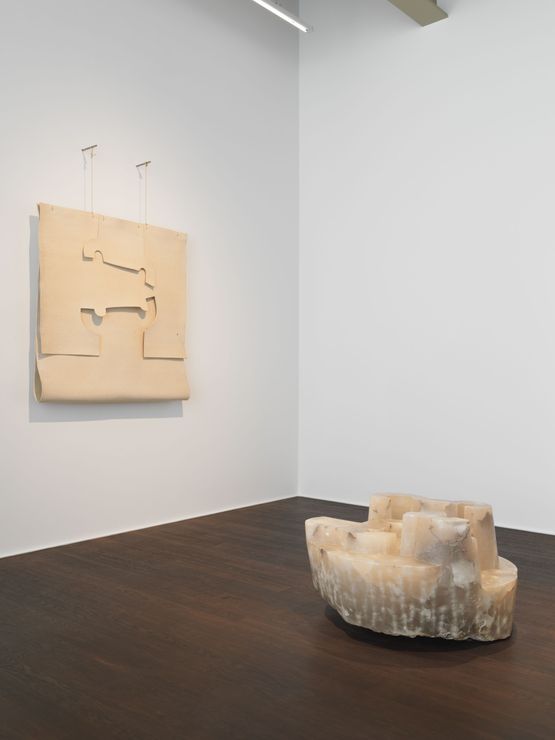
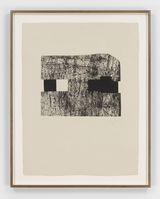
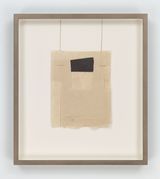
While experimenting with these materials, Chillida began to make engravings, drawings and collages-a core practice that would continue throughout his career and would bring his work to a wider audience. Notable works on paper in the exhibition include Chillida’s line-drawings of hands. These two-dimensional works explore concepts key to Chillida’s practice, such as the limits of space and the relationship between the artwork and its surroundings–ideas that echoed and influenced his three-dimensional pieces. For his Gravitación (Gravitation) series, Chillida layered cut felt or paper to play with ideas of gravity, light and tension. He stitched these works together with thread and suspended them, illuminating a subtle contrast between negative and positive space.
Chillida’s sensitivity to light and space also extended to his pieces made from alabaster. The artist embraced this historic material, after travelling extensively through Greece, Umbria, Tuscany, Rome, and Provence in the early 1960s. The density of the alabaster is counteracted by its translucency–a paradoxical relationship that often characterises Chillida’s work. Fascinated by its weight and materiality, Chillida believed that the luminosity of this stone could dynamically reconfigure space. The exhibition presents a number of these remarkable alabaster sculptures, including Chillida’s late Homenaje a Pili (Homage to Pili) (2000). Throughout his career, Chillida paid tribute to various cultural figures he respected and admired. These often fell into three broad groups: works dedicated to artists, including Constantin Brâncuși, Alexander Calder, Katsushika Hokusai and Joan Miró; musicians like Johann Sebastian Bach and Antonio Vivaldi; and philosophers or poets such as Gaston Bachelard, Martin Heidegger, Emil Cioran, and Pablo Neruda.
Made just two years before his death, Homenaje a Pili (Homage to Pili) is an homage not to a creative figure, but to his beloved wife, Pilar ‘Pili’ Belzunce. This particular alabaster was chosen for its precise grey colour and imperfect form to mirror the grey light of the Basque Country and Cantabrian Sea. Carving this luminous stone with a preternatural sense for the material, Chillida immortalised his adoration for his wife and partner. A smooth carved interior within a rough stone exterior, the artist’s alabaster sculptures are a prime example of his ability to progressively adapt form in a continuous search for the truth of the material in question.
About the artist
With a varied and pioneering practice that spans small-scale sculpture, plaster work, drawing, engraving and collage, Spanish artist Eduardo Chillida is best known for his prominent public sculptures displayed across Europe and the USA. The work of Eduardo Chillida has been the subject of numerous international exhibitions and retrospectives, most recently at Les Abattoirs, Toulouse (2018); The Rijksmuseum, Amsterdam (2018) and Wiesbaden Museum (2018–2019). Other significant international exhibitions and retrospectives include t he Museum of Fine Arts, Houston (1966); Carnegie Institute, Pittsburgh (1979); National Gallery of Art, Washington, D.C. (1979); Guggenheim Museum (1980); Martin-Gropius Bau, Berlin, Germany (1991); Palacio de Miramar, San Sebastián (1992) and Museo nacional centro de arte Reina Sofía, Madrid (1999).
Chillida was the recipient of many awards including the Grand International Sculpture Prize at the Venice Biennale (1958), Kandinsky Prize (1960), Carnegie Prize for Sculpture (1964), Goe-the Foundation’s Rembrandt Prize (1975), Andrew Mellon Prize (1978, with Willem de Kooning), Grand Award for Arts in France (1984), the Order Pour le Mérite für Wissenschaft und Kunst (1987), Praemium Imperiale from the Japan Art Association (1991), and Jack Goldhill Award from the Royal Academy of Arts in London (1996).
Museo Chillida Leku, founded by Eduardo Chillida in Hernani, Northern Spain, will reopen in April 2019.
With a varied and pioneering practice that spans small-scale sculpture, plaster work, drawing, engraving and collage, Spanish artist Eduardo Chillida is best known for his prominent monumental public sculptures, mostly displayed in Spain, Germany, France and the USA. Throughout his career, Chillida drew on his Spanish heritage combined with a fascination for organic form, as well as influences from European and Eastern philosophies, poetry and history, to develop an artistic voice that communicated and resonated with a continent undergoing rapid transformation.


Hauser & Wirth was founded in 1992 in Zurich by Iwan Wirth, Manuela Wirth and Ursula Hauser, who were joined in 2000 by Partner and Vice President Marc Payot. A family business with a global outlook, Hauser & Wirth has expanded over the past 26 years to include outposts in Hong Kong, London, New York, Los Angeles, Somerset and Gstaad. The gallery represents over 70 artists and estates who have been instrumental in shaping its identity over the past quarter century, and who are the inspiration for Hauser & Wirth’s diverse range of activities that engage with art, education, conservation and sustainability.

A respected voice in contemporary art discourse.
Focusing on ambitious storytelling and insightful art-world commentary. Ocula Magazine publishes in-depth interviews, critical essays and timely analysis on the artists, exhibitions and ideas driving the global art world.
Learn more about Ocula Magazine
Showcasing the best of the art world.
Ocula partners with galleries from around the world to highlight their artists, artworks and exhibitions. Gallery membership is by application and invitation, with each member vetted by an independent panel.
Learn more about Ocula Membership

Specialises in the sale of major artworks.
Led by a team with deep ties to the world’s leading auction houses, galleries and collectors. Ocula’s advisory team offers bespoke services to high-net-worth clients from around the world who are looking to acquire the best of contemporary and modern art.
Learn more about our team and services