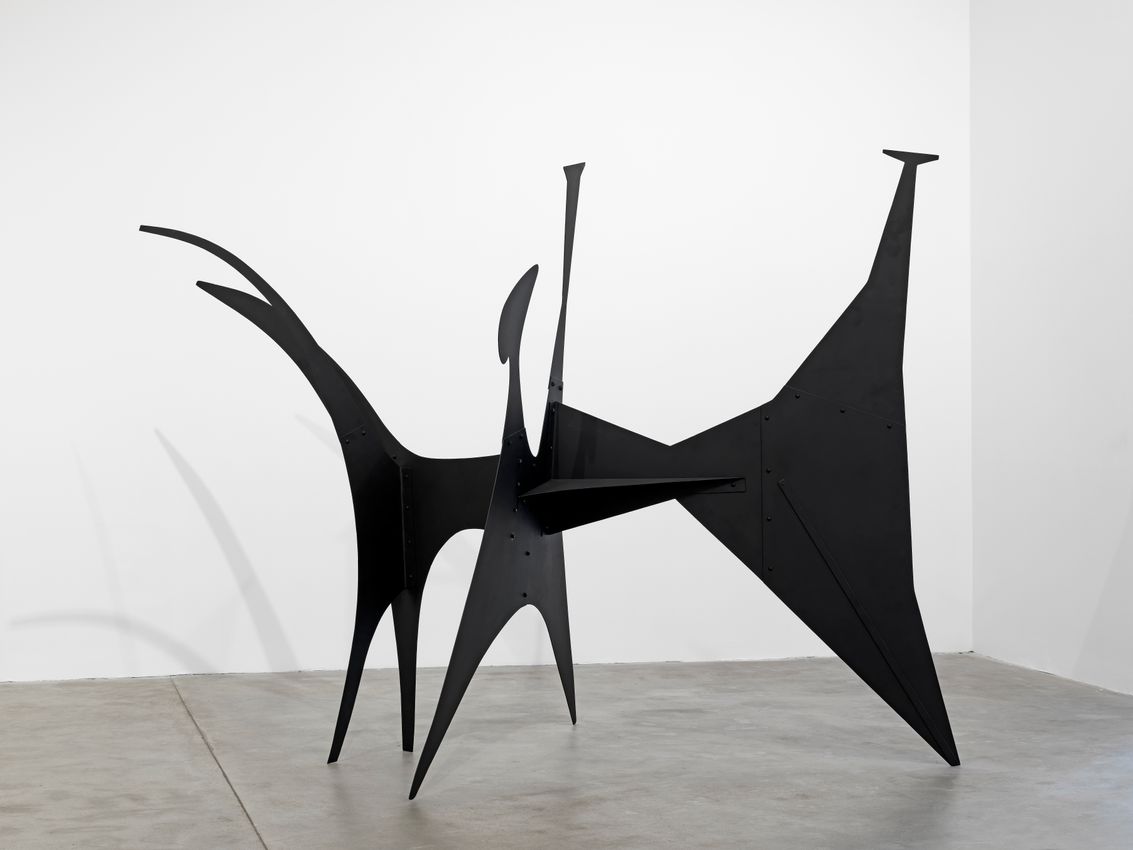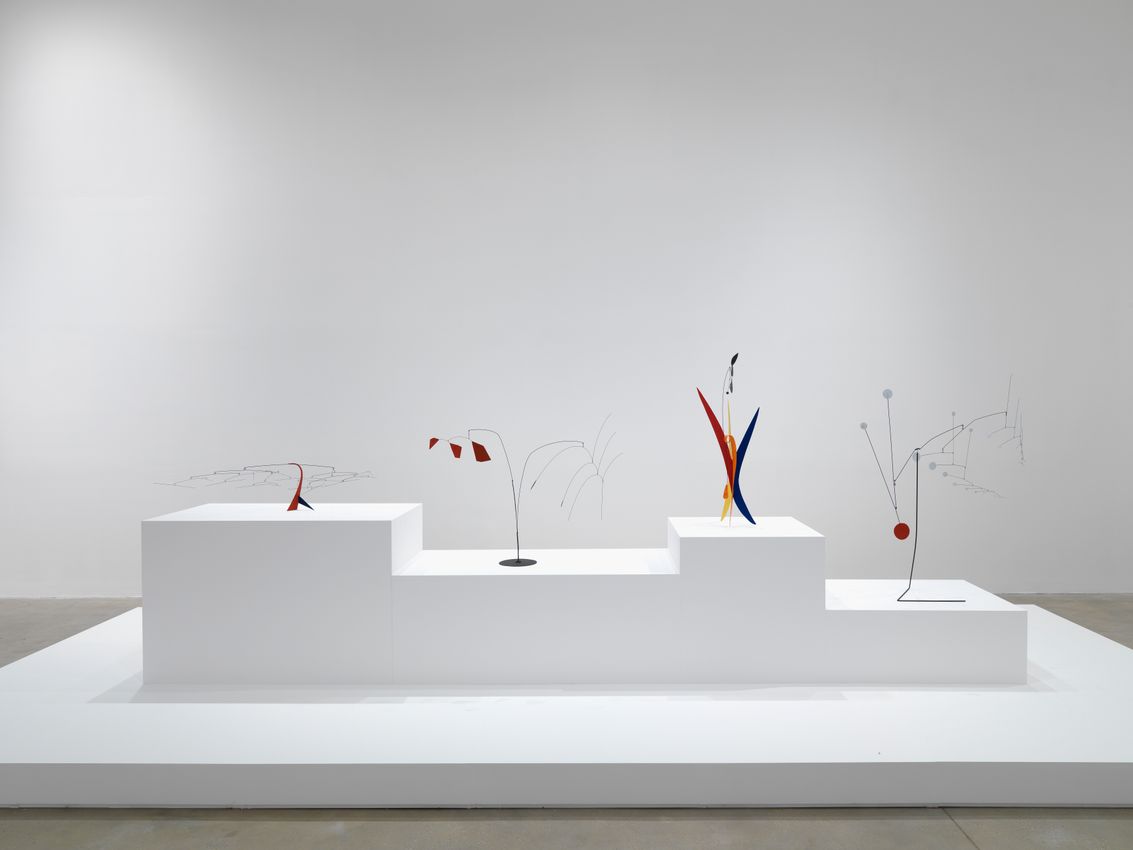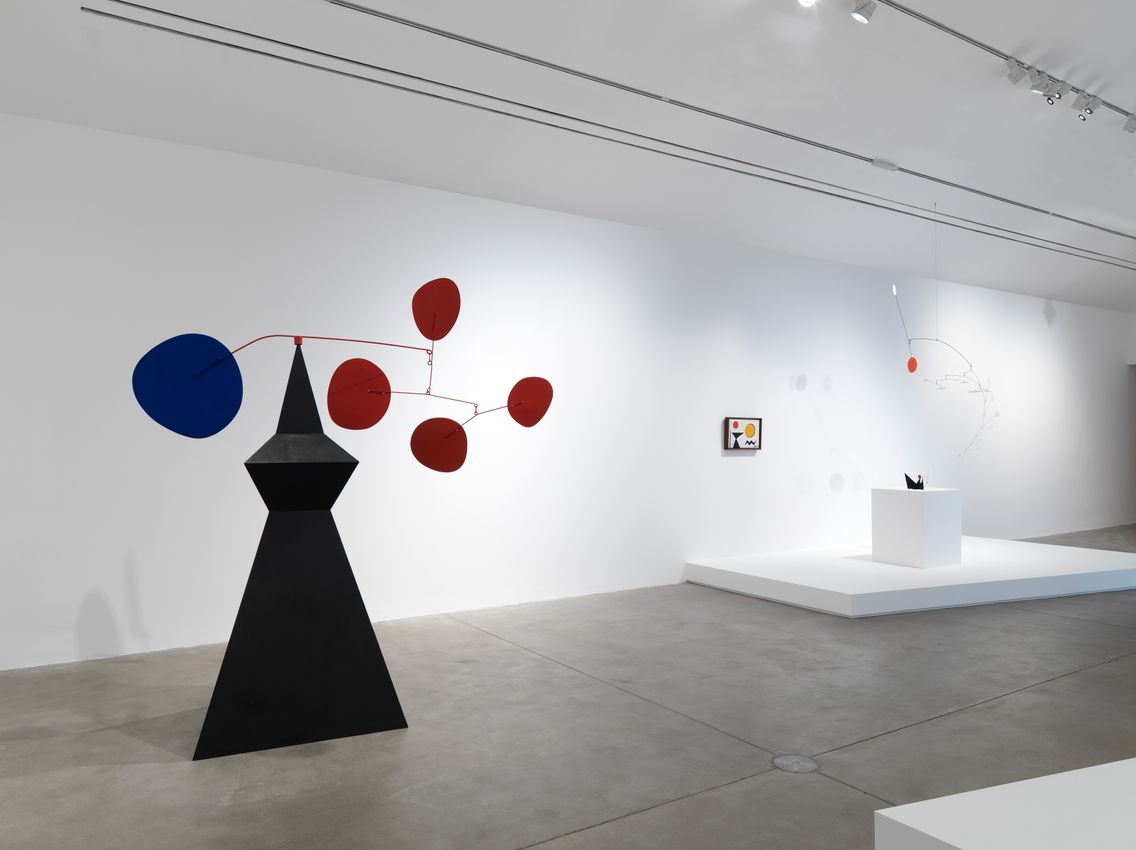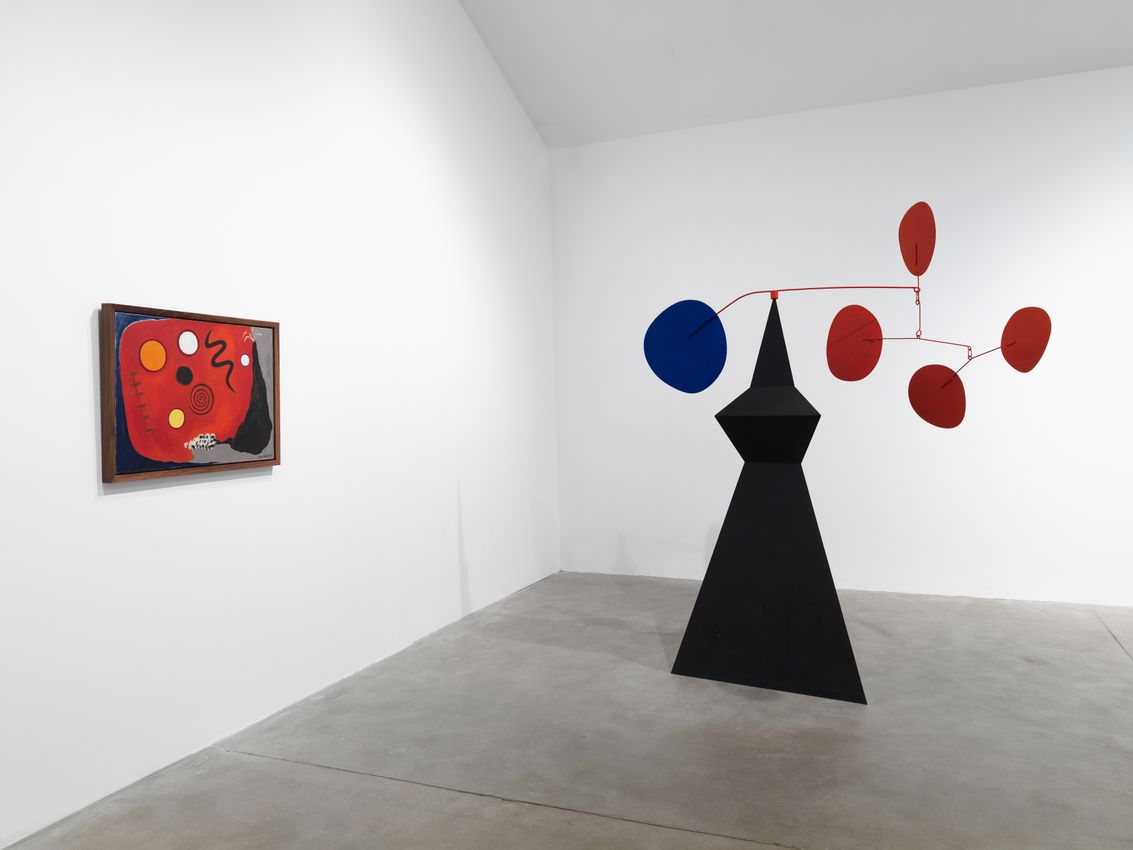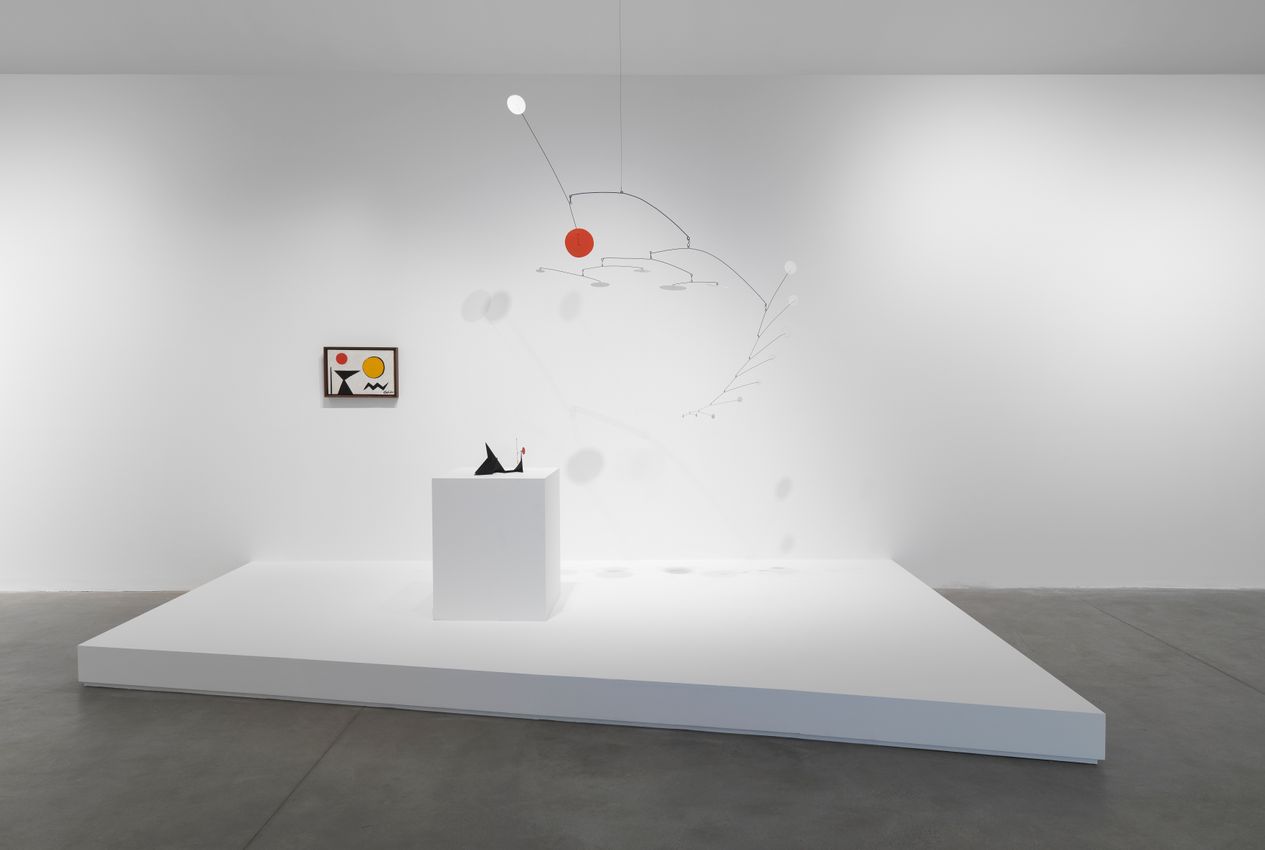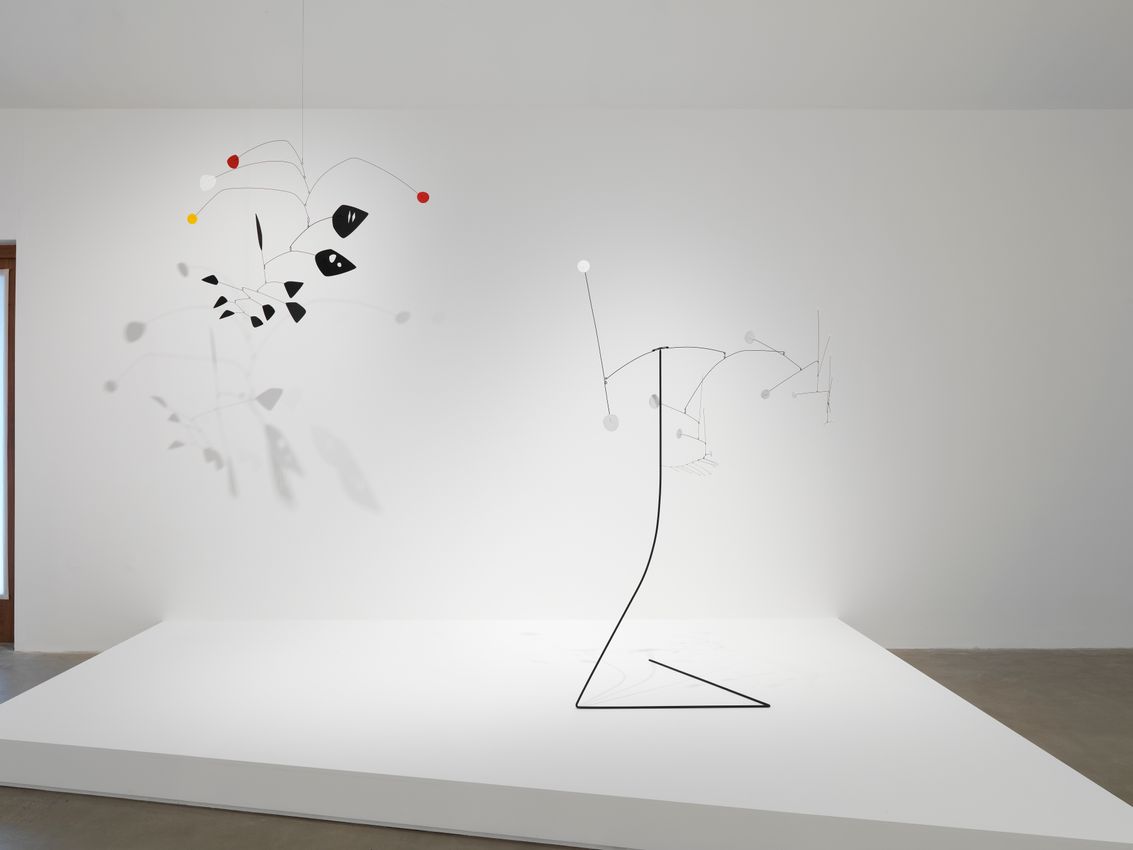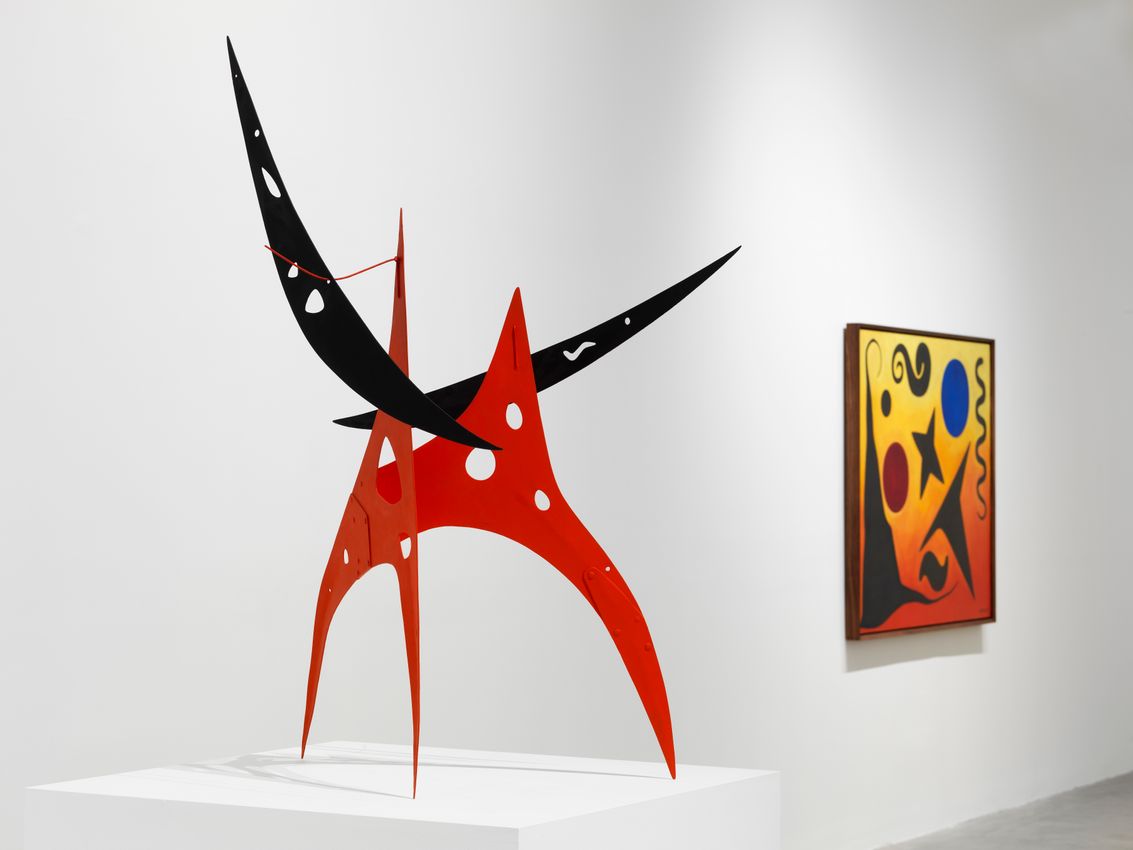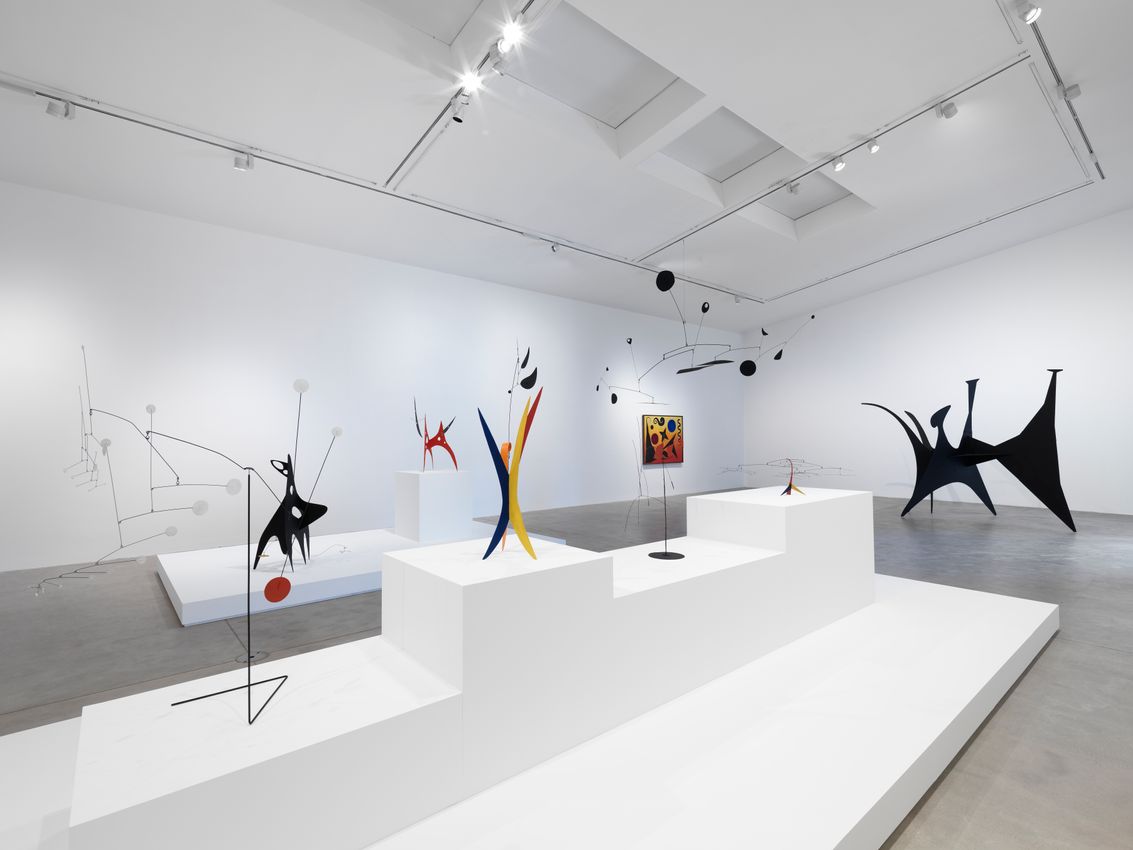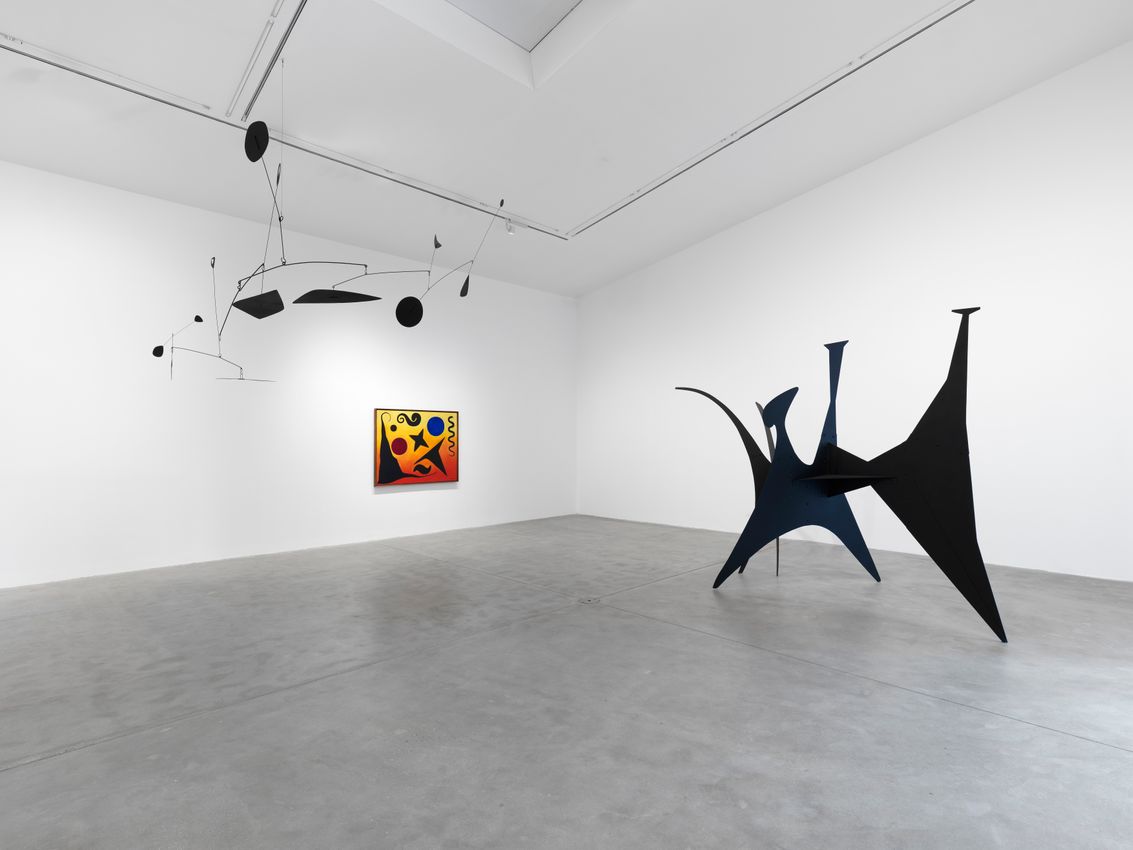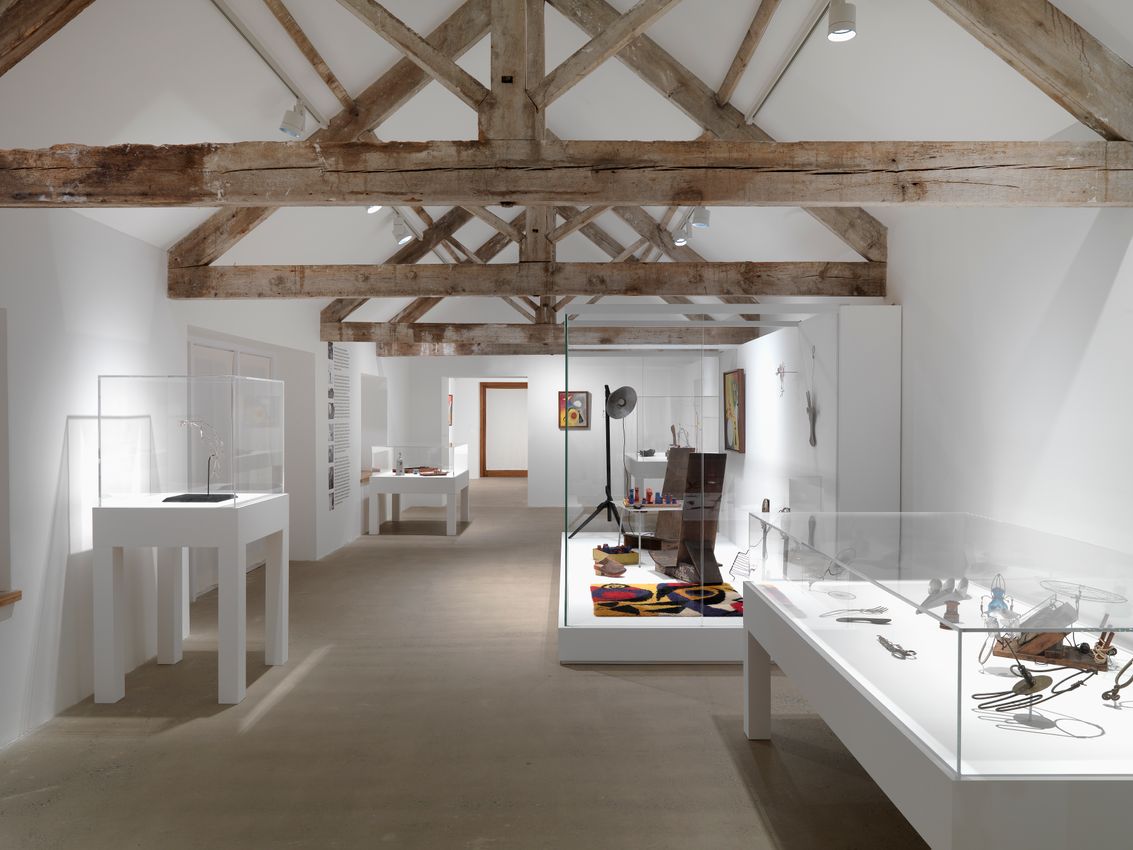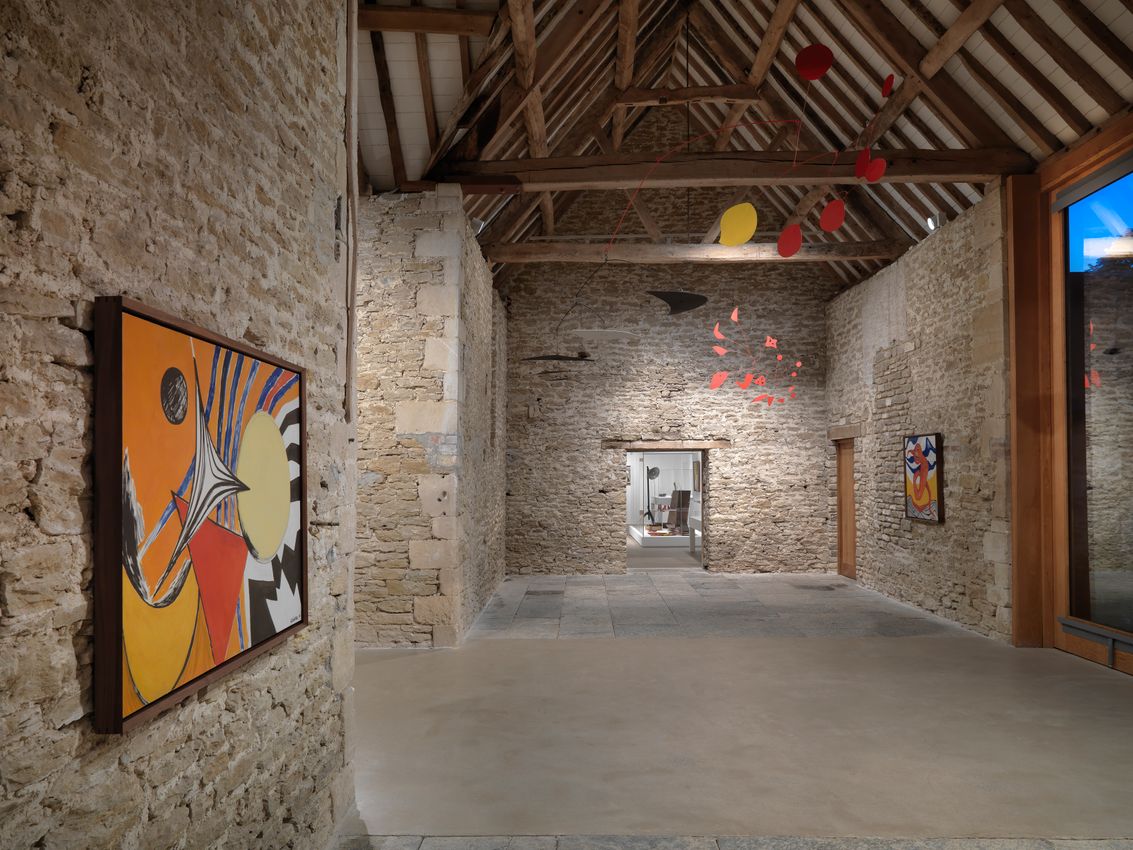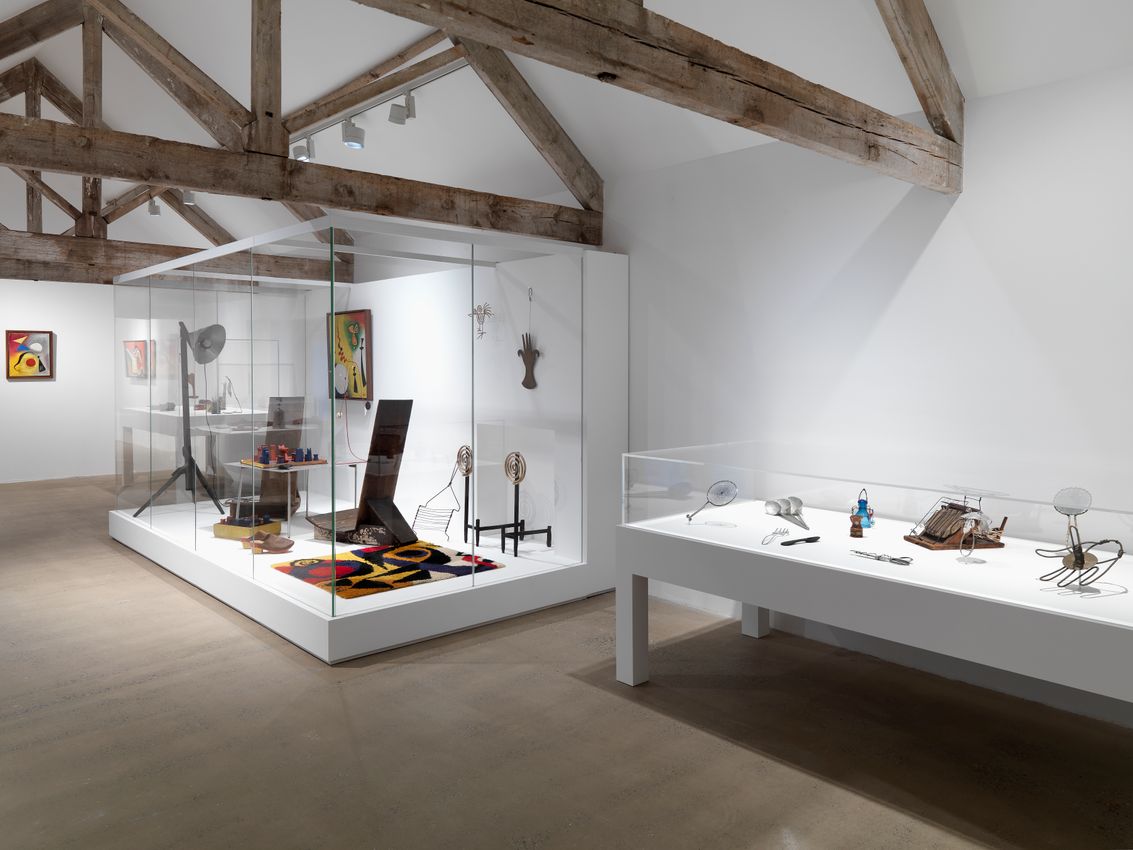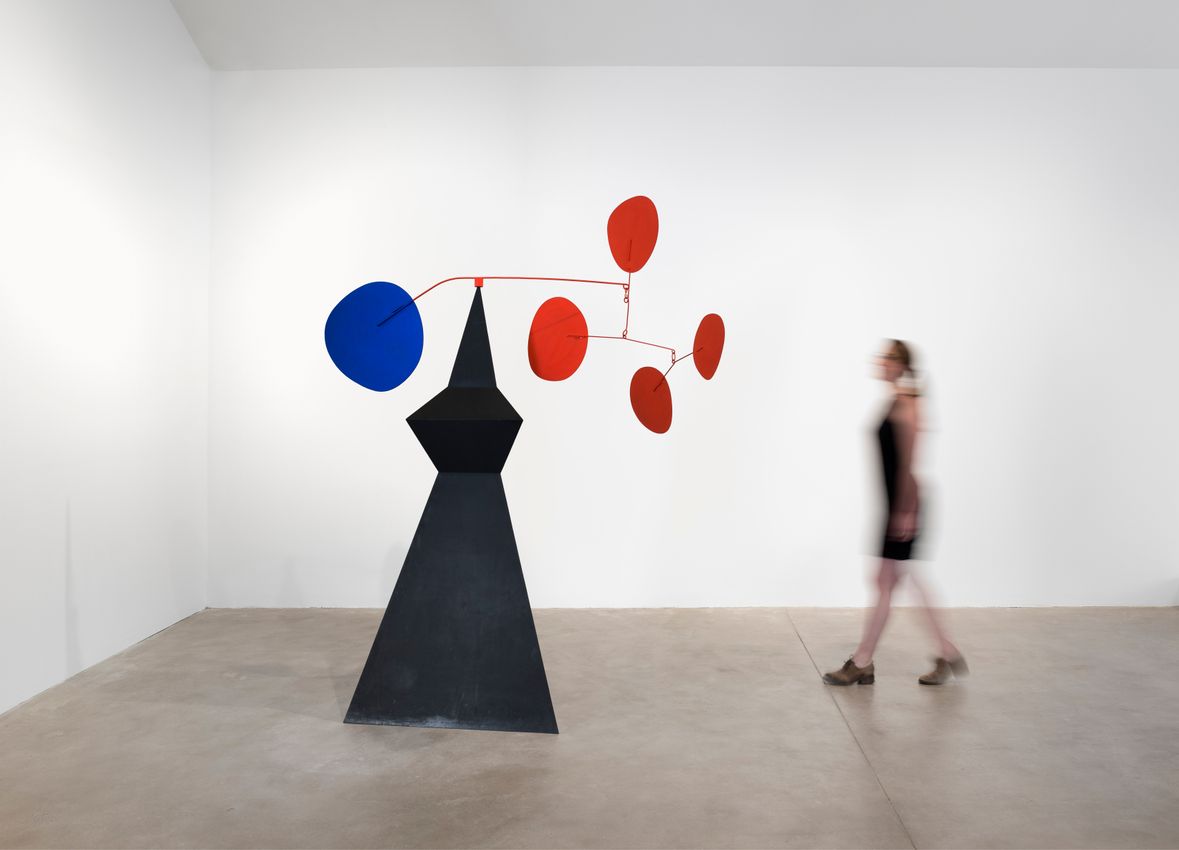




Hauser & Wirth Somerset is proud to present a major solo exhibition of works by Alexander Calder (1898 –1976), the majority of which have never before been exhibited in the UK. Calder was one of the most influential and pioneering artists of the twentieth century, transforming the very nature of sculpture by introducing the fourth dimension and the actuality of real-time experience into his work. Known primarily for his invention of the mobile, Calder created a prolific oeuvre that extended to wire sculpture, carved figures, stabiles, standing mobiles, oil paintings, works on paper, jewellery, furniture and domestic objects, and monumental public commissions across the globe.
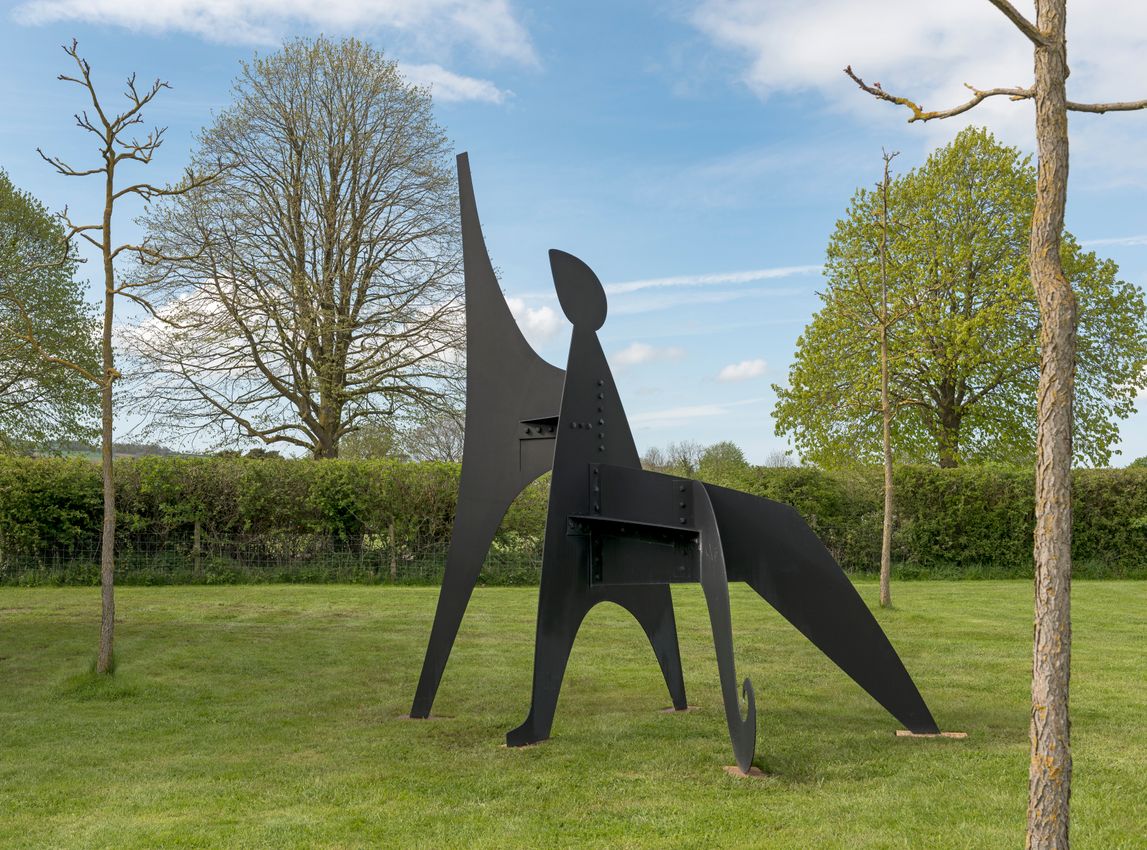
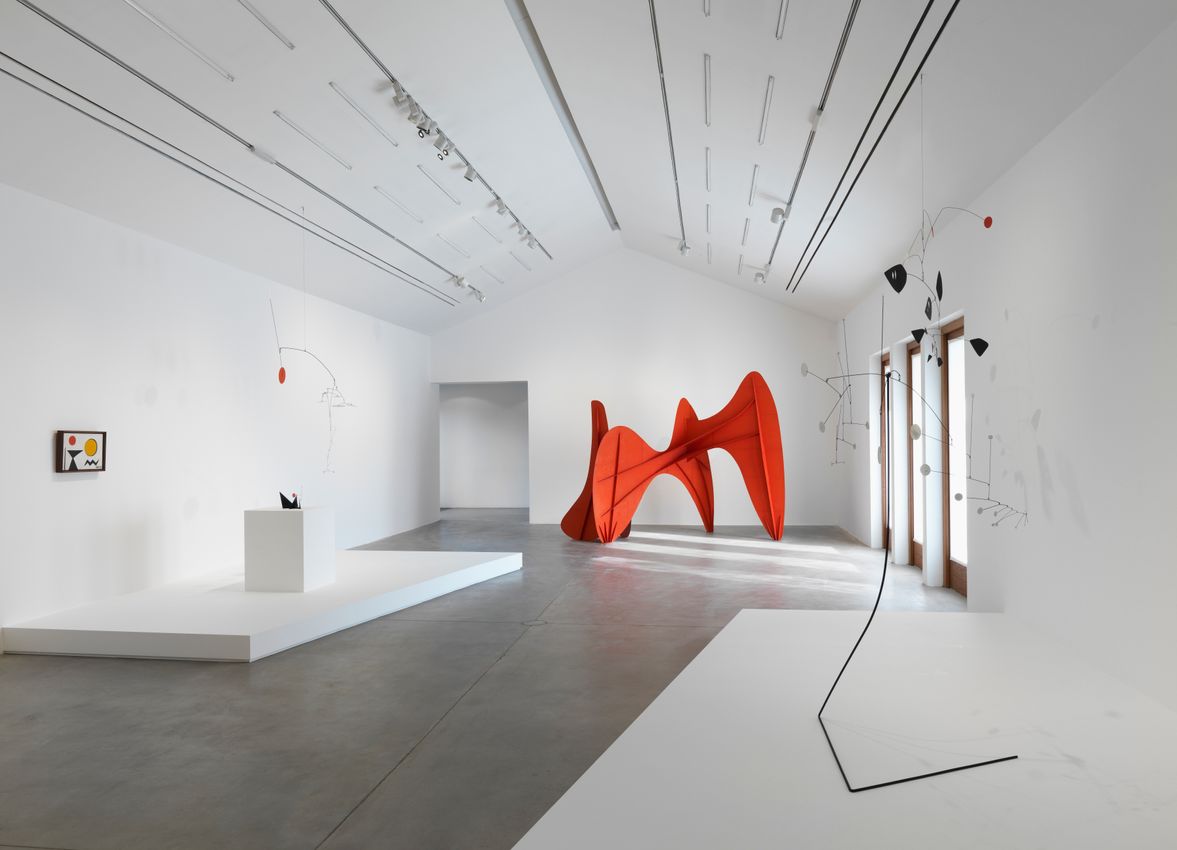
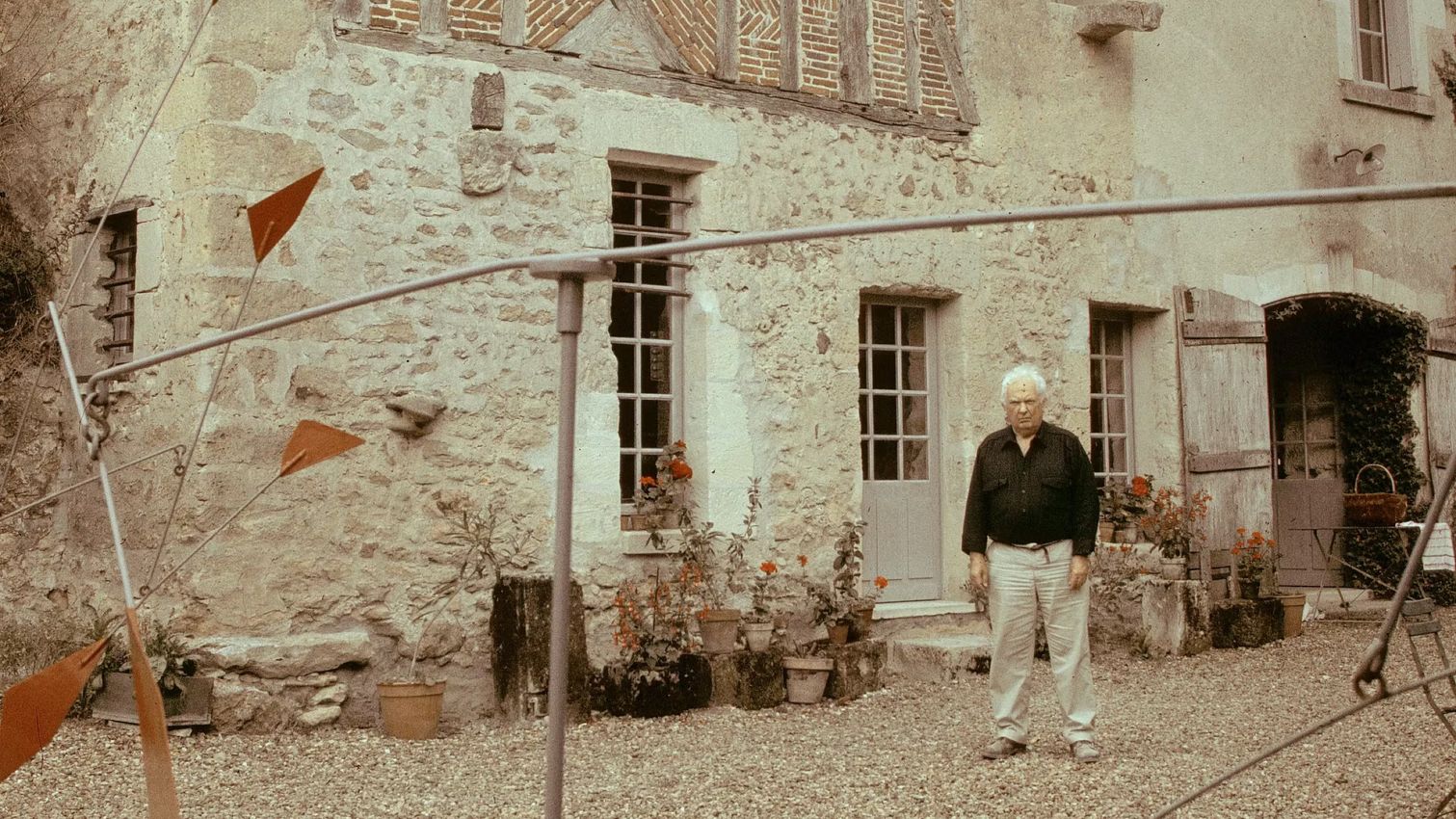
The exhibition From the Stony River to the Sky runs through all five gallery spaces at Hauser & Wirth Somerset with over 80 pieces, including large-scale outdoor works set within the gardens at Durslade Farm. The exhibition takes its title from the etymology of the surname Calder in Celtic–meaning ‘from the stony river’–and its inspiration from Calder’s long-time home and studio in Roxbury, Connecticut. Purchasing the dilapidated farmhouse in 1933, Calder and his wife Louisa adapted it to fit their growing family, and Calder built three studios over the years to accommodate his burgeoning ambitions as an artist.
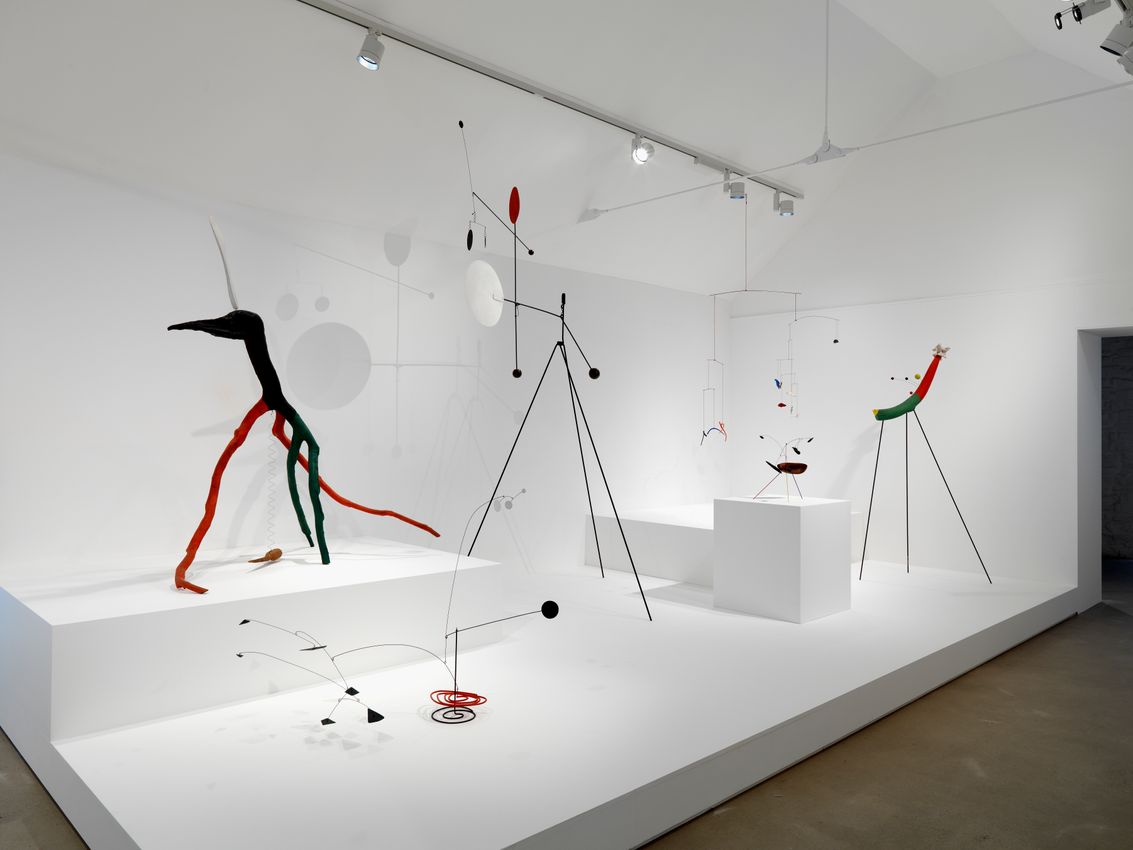
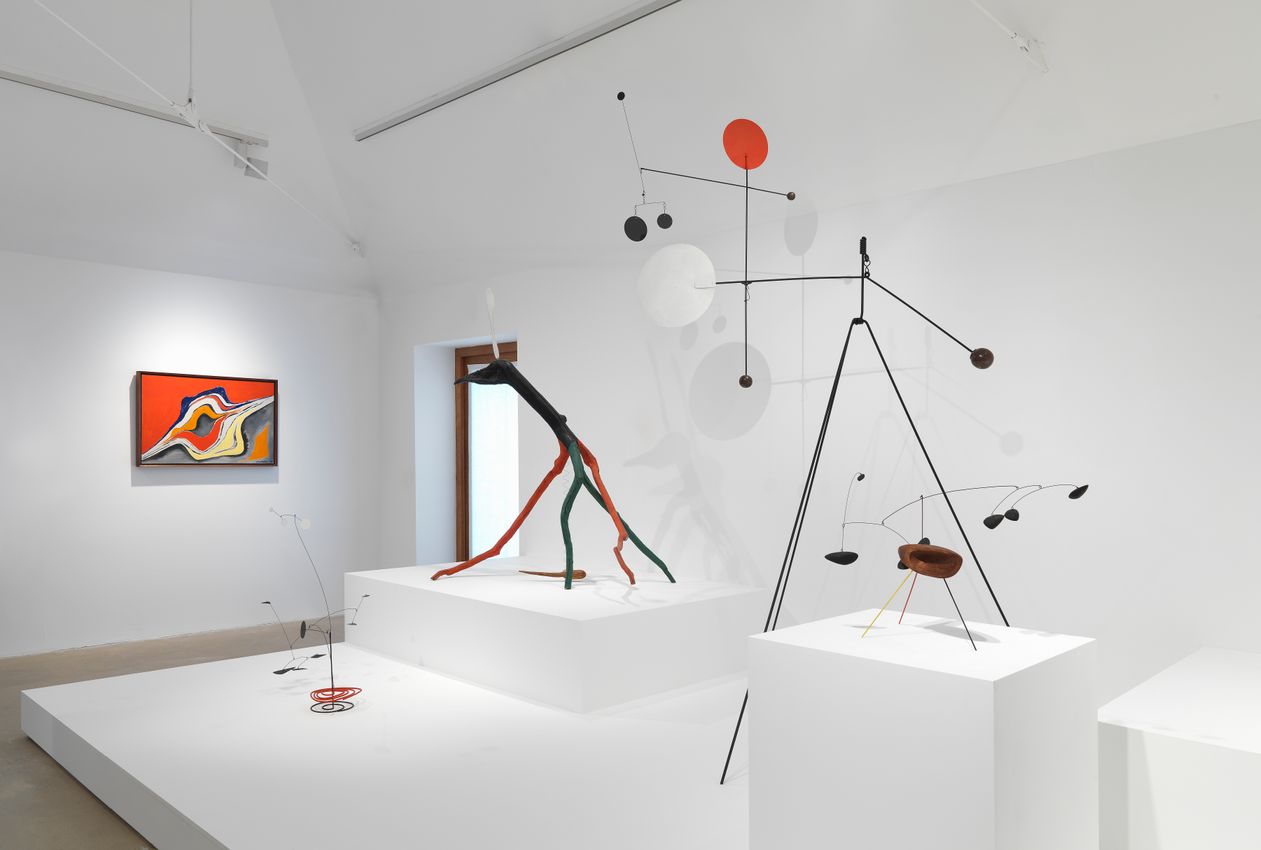
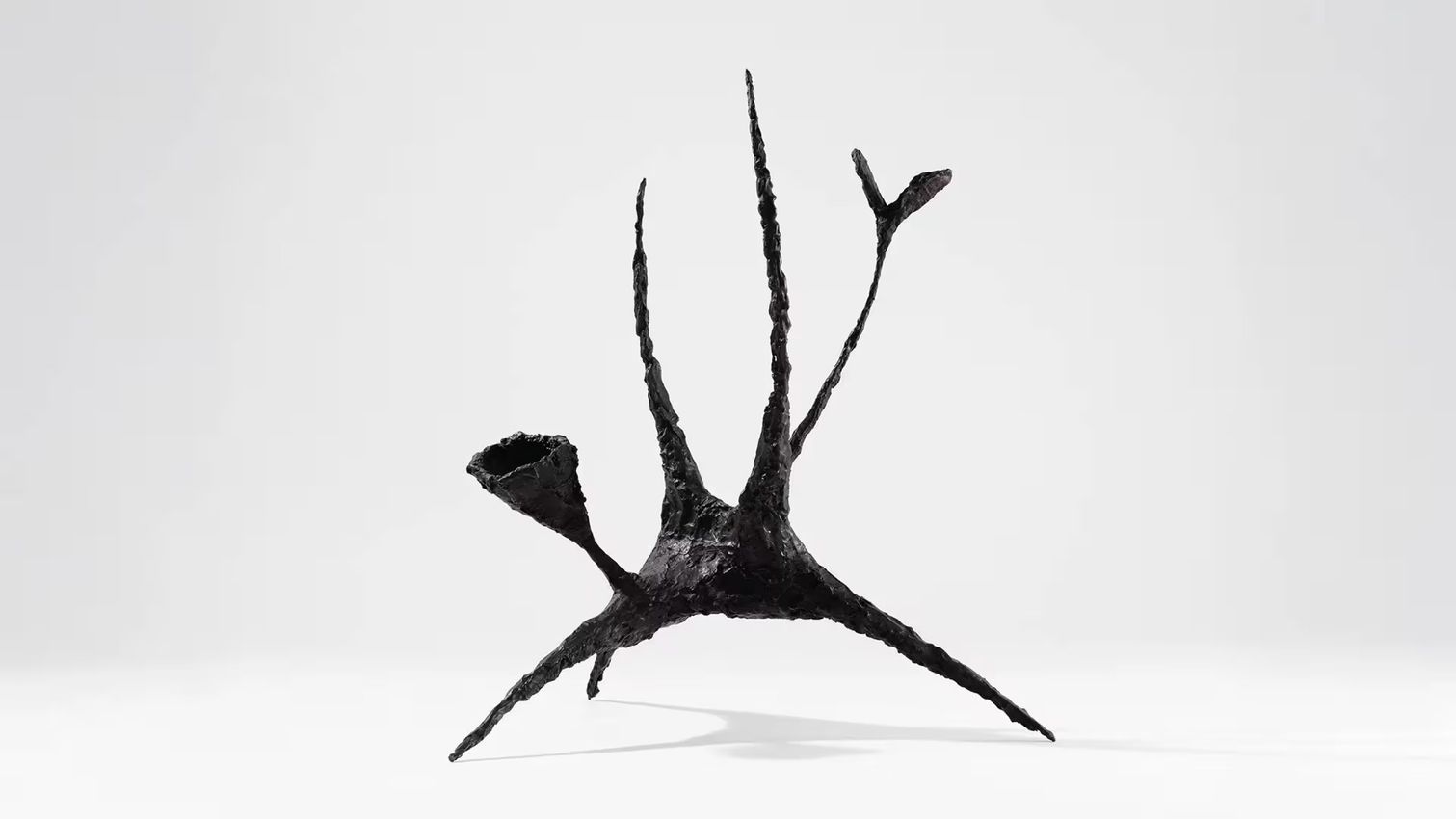
In 1934, the expanse of his Roxbury hills inspired Calder to make outdoor sculptures, among the first of which is exhibited here inside the galleries: Red, White, Black and Brass. Also on view are two important surrealist works from 1938: Apple Monster, made from a fallen branch of an ancient apple tree on the property, and an untitled sister sculpture, which features a found cow vertebra and spheres perched atop wires, expressing a range of vibratory qualities.
Alexander S. C. Rower, Calder Foundation president and grandson of the artist, states, ‘Roxbury had a direct impact on my grandfather’s work. He owned 18 acres and was inspired to bring sculpting outdoors for the first time. My grandparents thrived in the fresh air and lived close to the land. They also found relief from the rising fascism in Europe, and before long, they were directly assisting their artist friends to escape to the United States and to rural Connecticut in particular. In this way, they rebuilt their rich bohemian community that was a constant facet of their life, thereby making Roxbury home.’
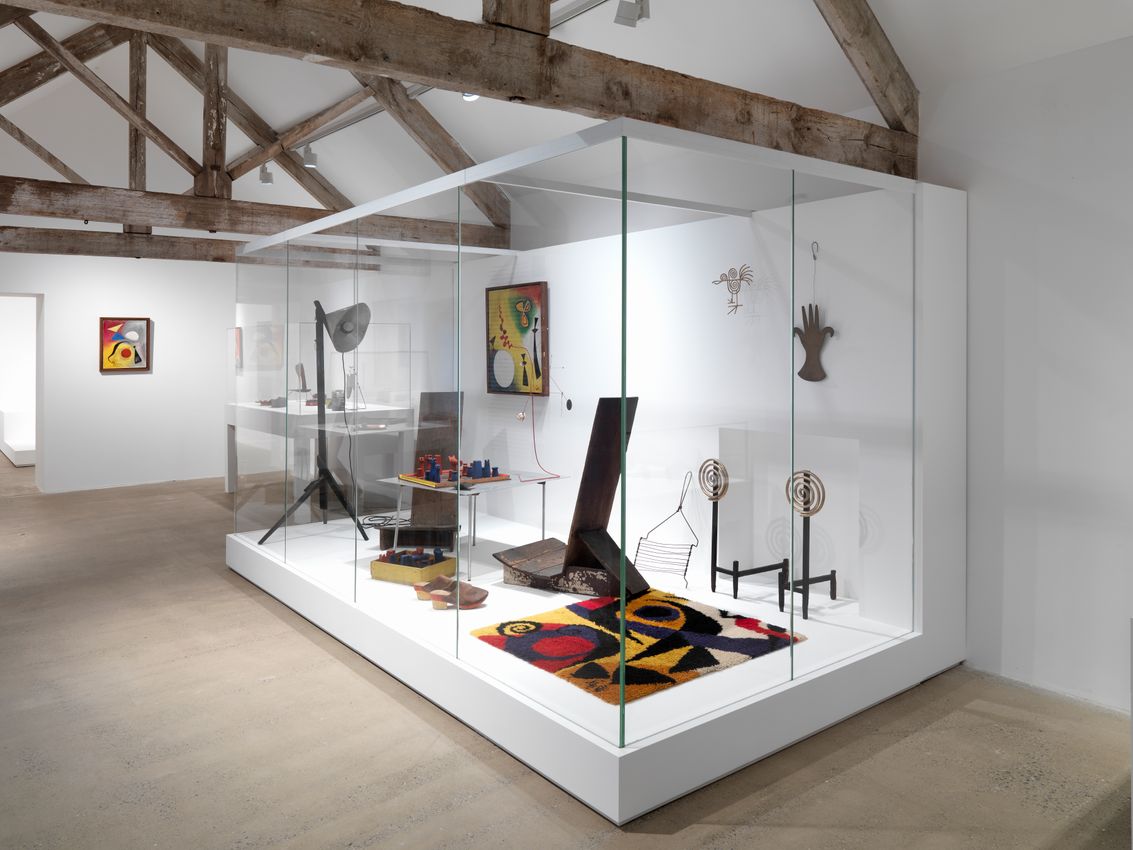
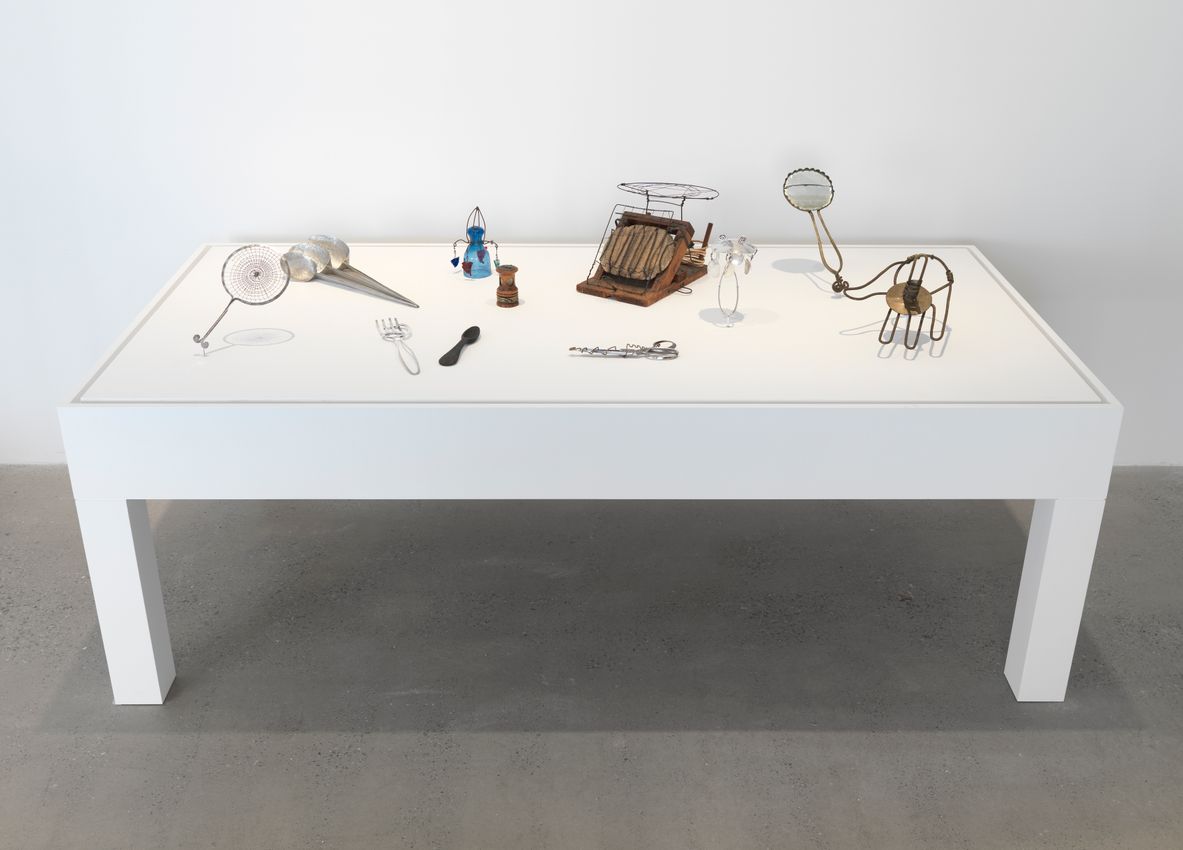
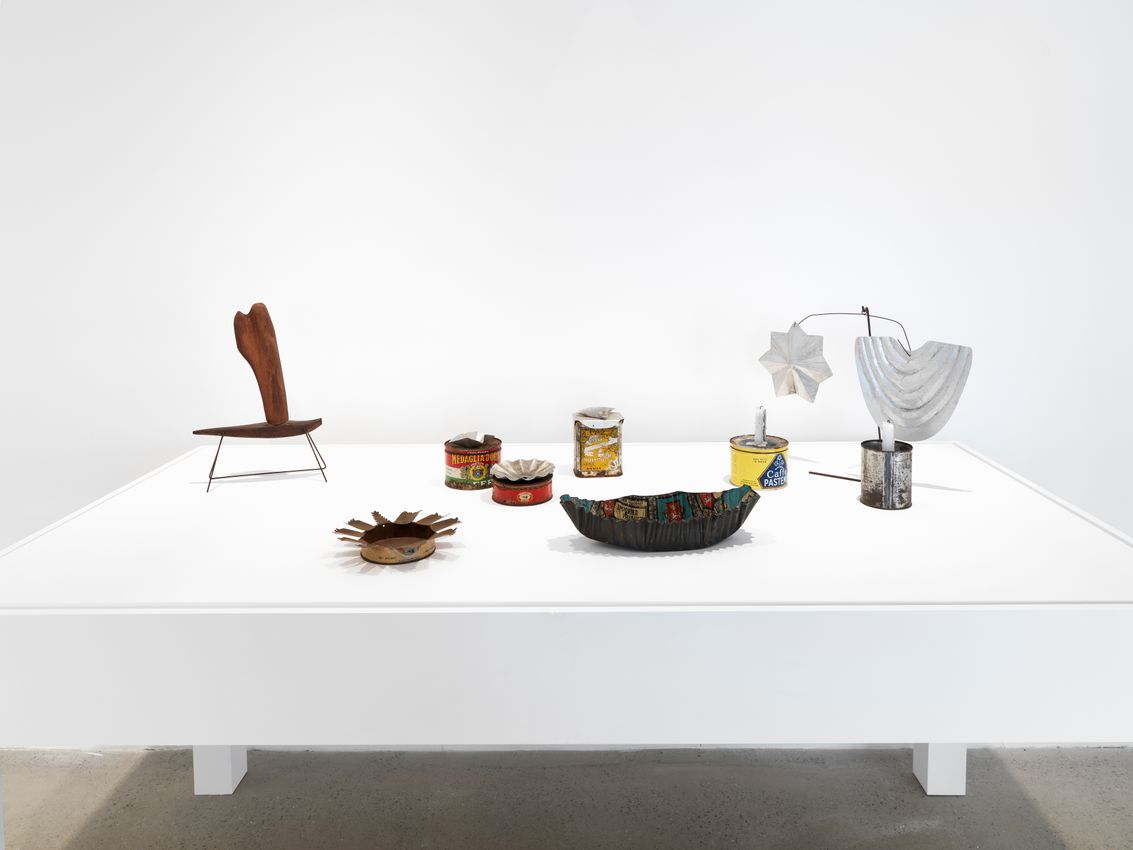
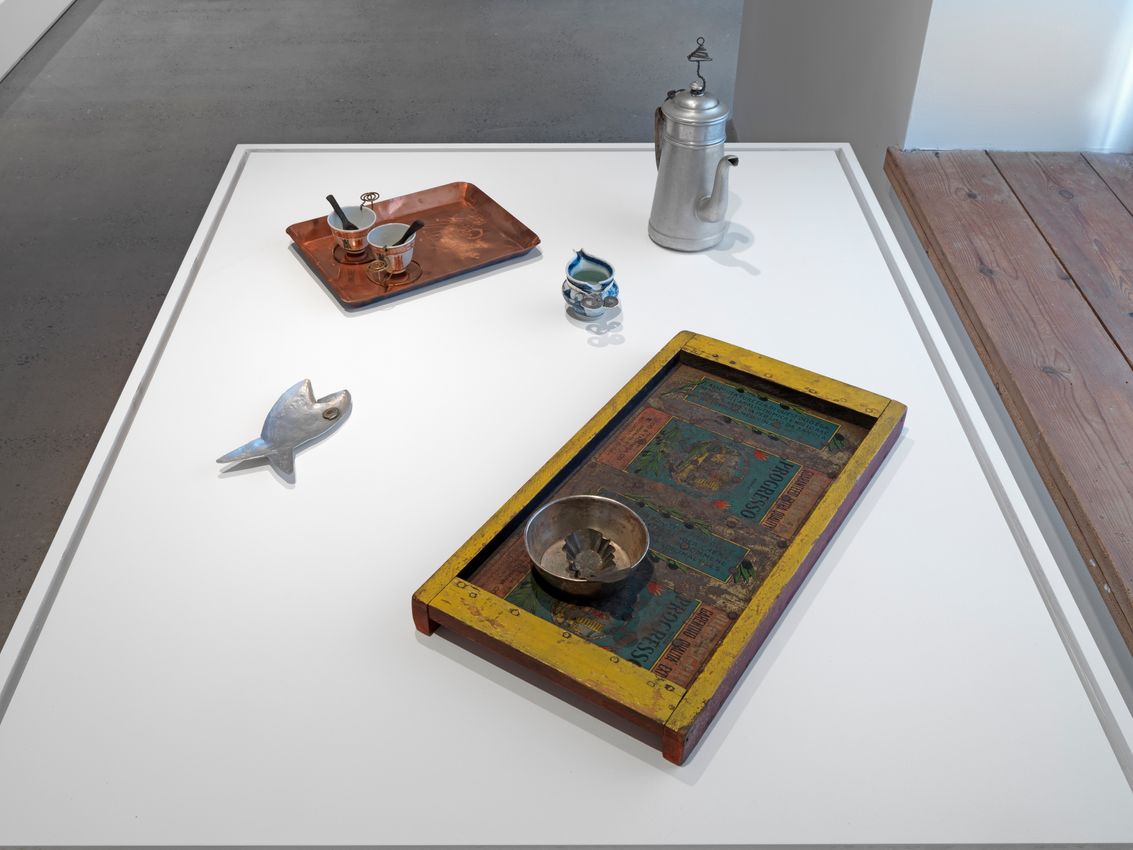
Calder’s direct and innovative approach runs through every aspect of his oeuvre, from the monumental to the intimate. Occupying two galleries within the exhibition is an extraordinary selection of the artist’s handcrafted domestic objects borrowed from the Calders’ Roxbury home, including a chess set, chairs, a coffee table, and a lamp, among a multitude of other ingenious yet functional devices. This will be the first time many of these objects have ever been on public view, not only offering insight into the artist’s life but also revealing the integration of his artistic practice. A selection of Louisa’s jewellery will also be shown, highlighting a body of work that Calder largely created to gift to his family and close friends.
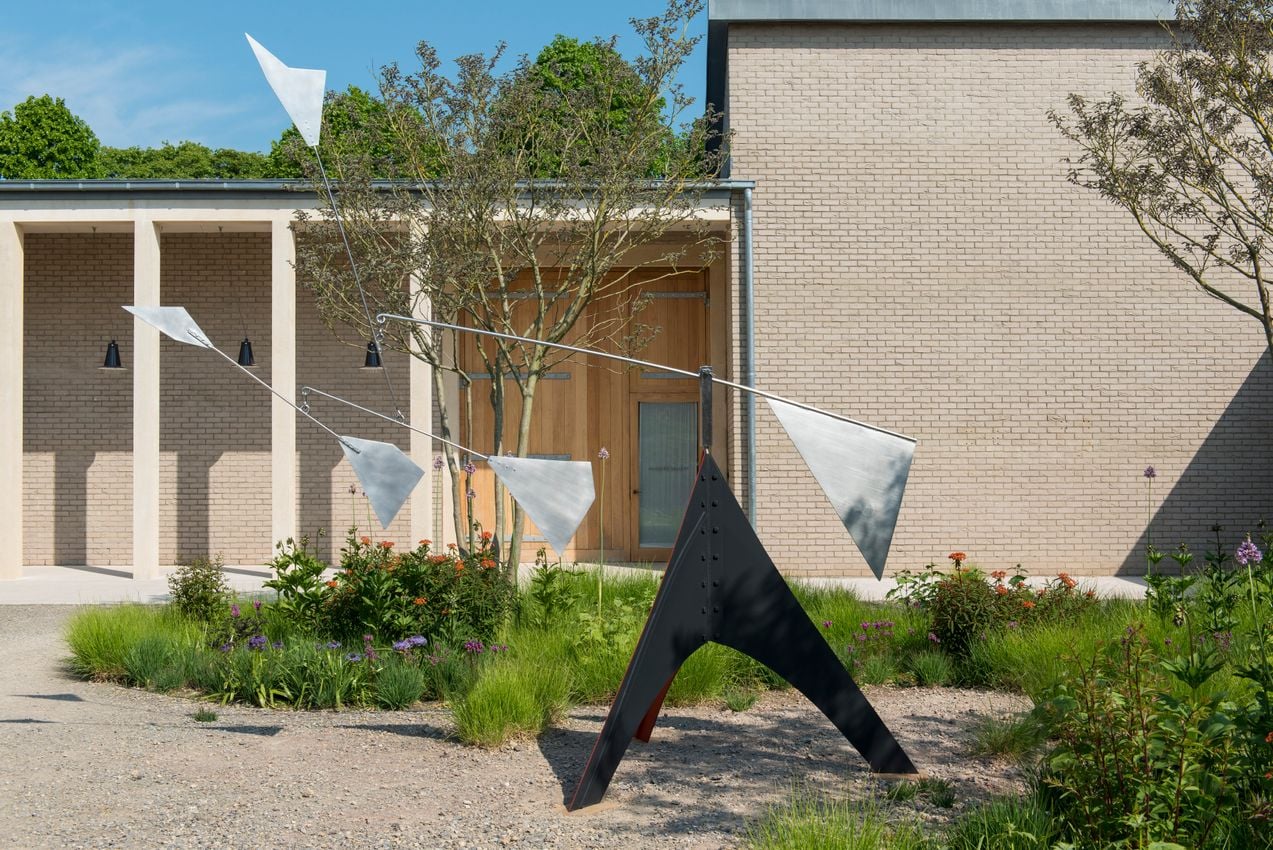
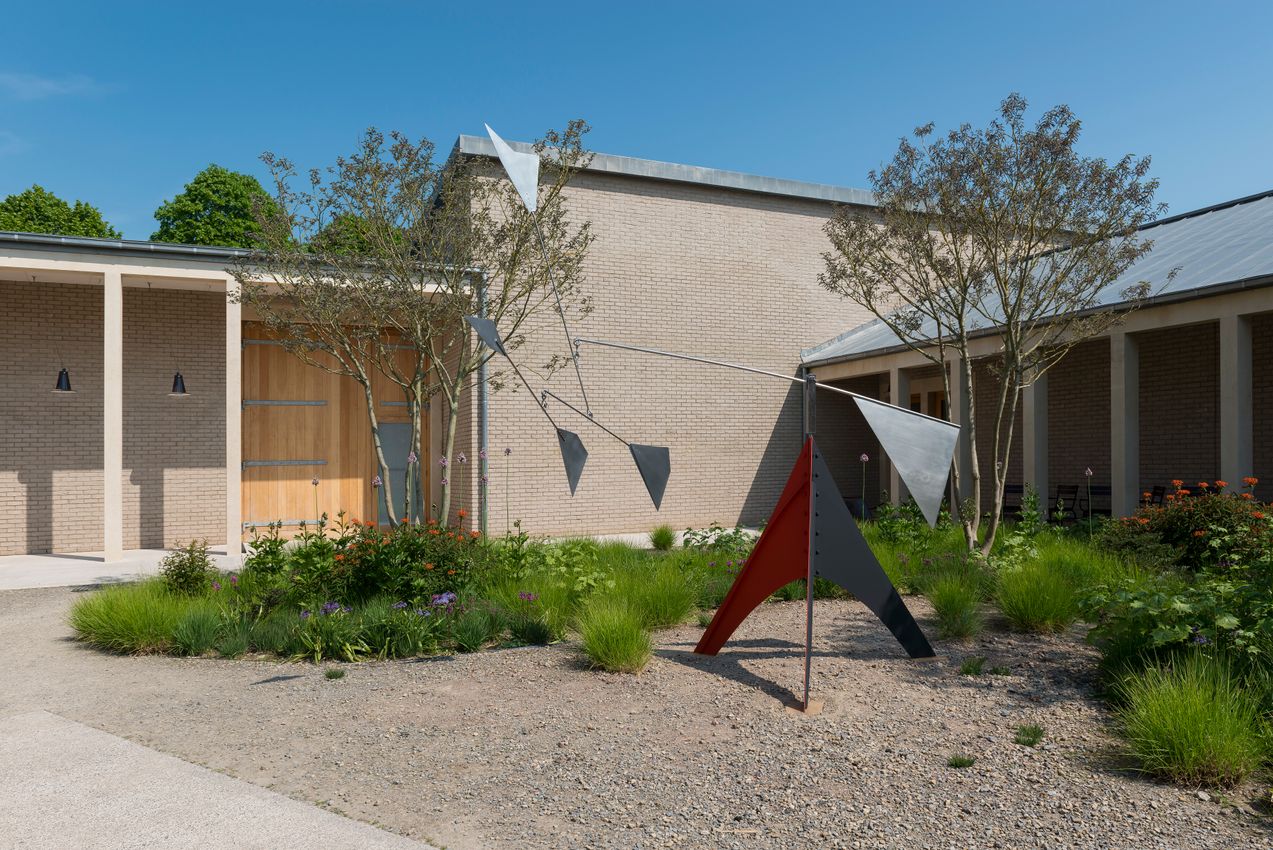
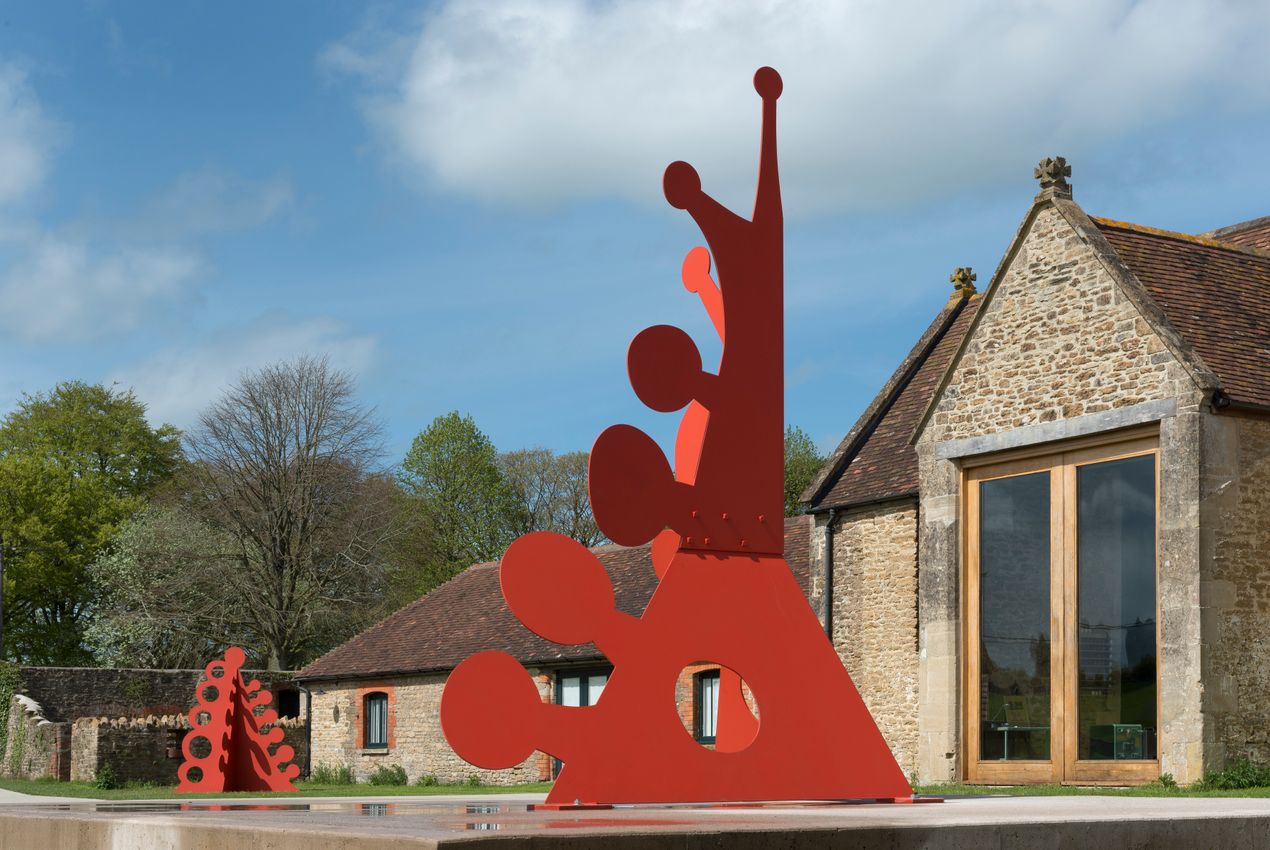
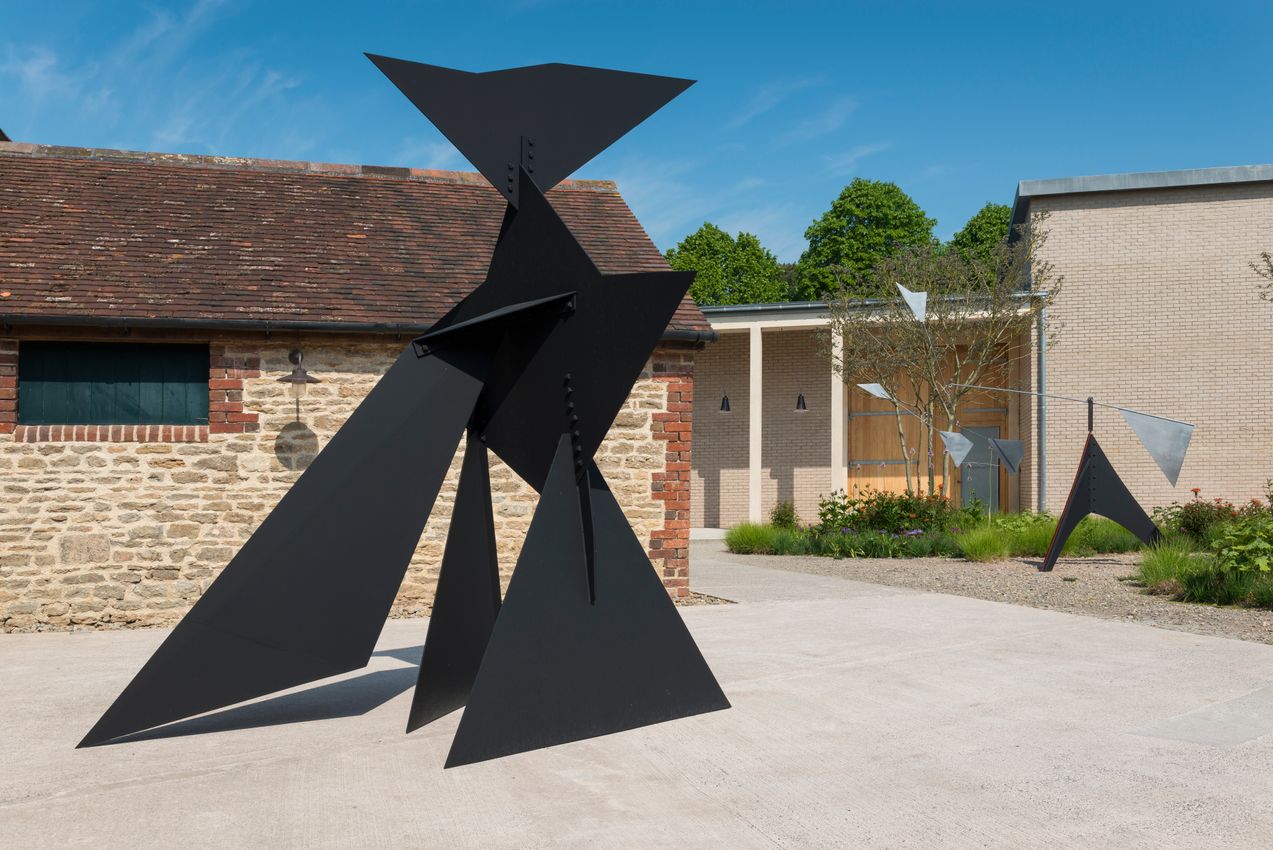
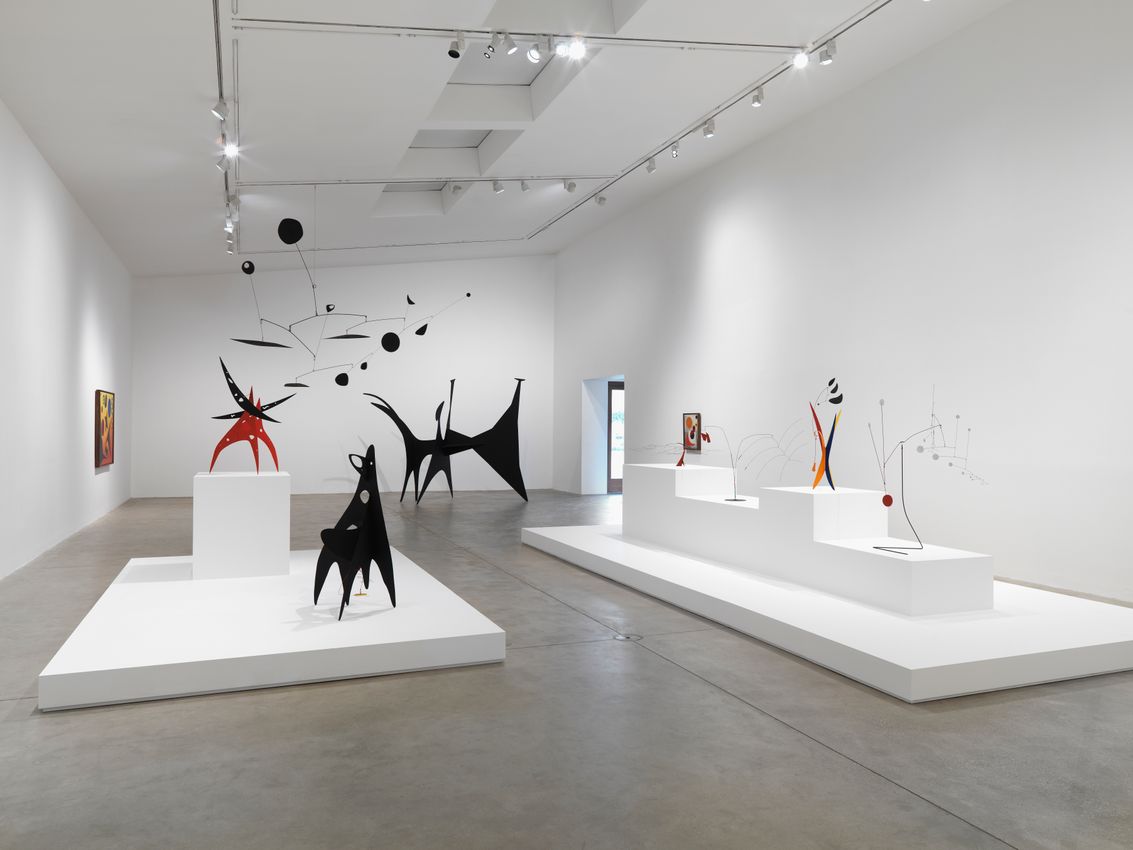
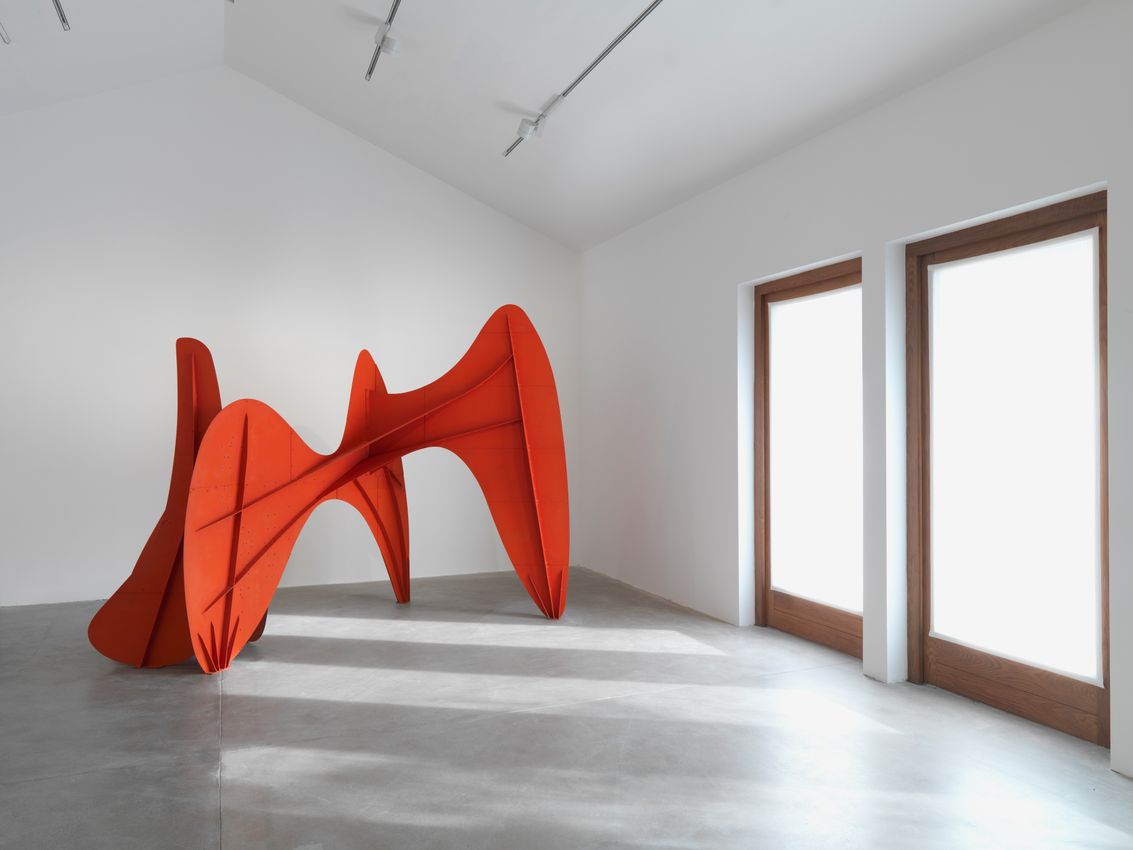
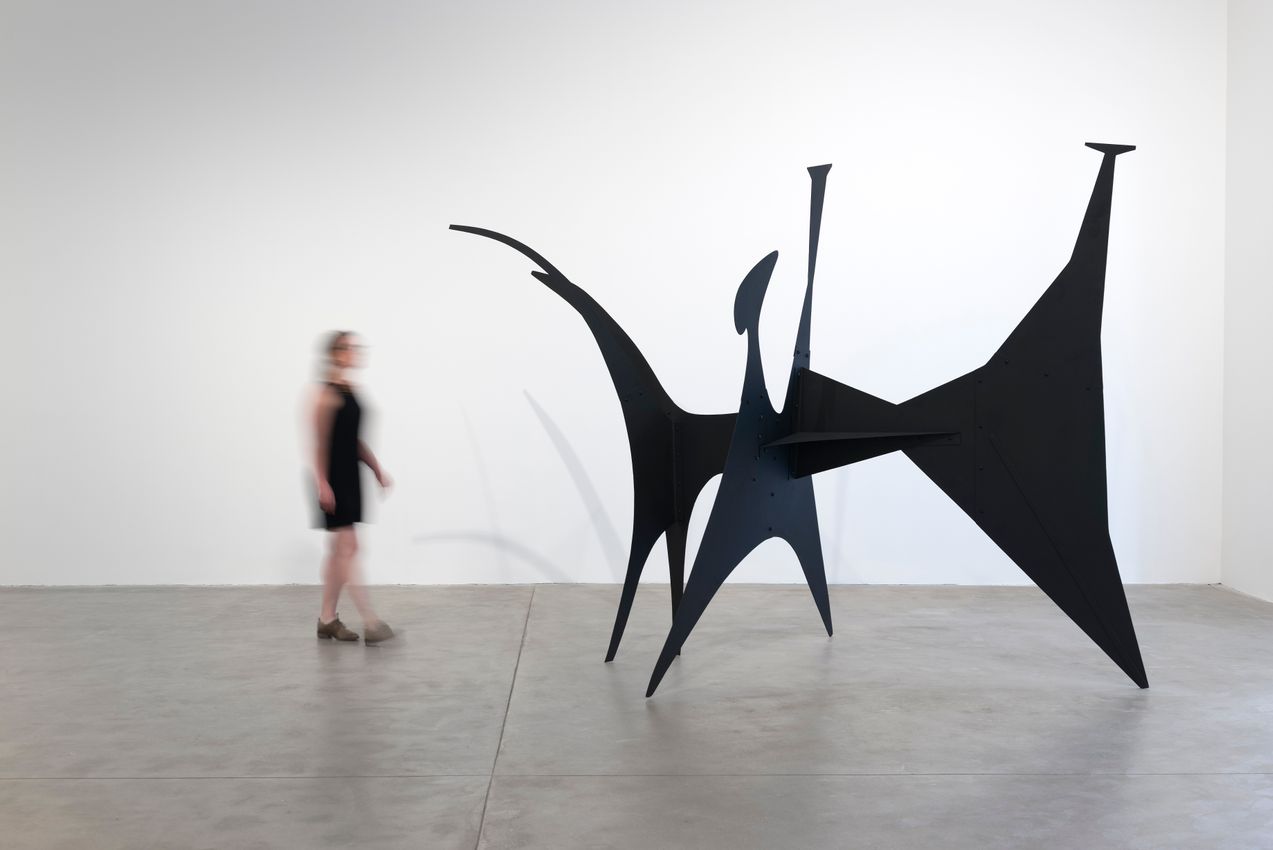
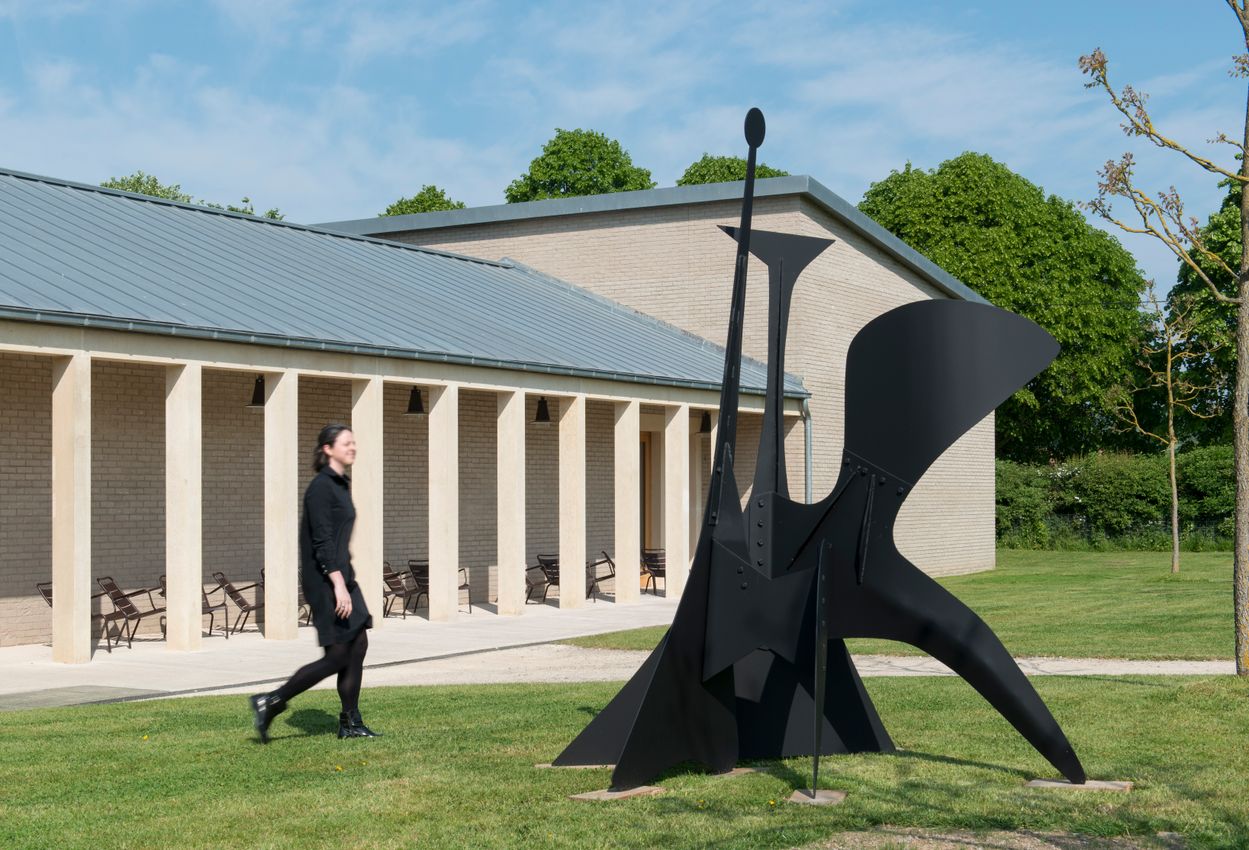
Among the most recognisable of the artist’s works in the exhibition are the mobiles, stabiles, and standing mobiles, as well as oil paintings from the 1940s and 1950s. The presentation culminates with several large- scale works installed indoors, including a huge intermediate maquette for La Grande vitesse, his famous commission for the city of Grand Rapids, Michigan, in 1969. These sculptures bridge a link to the surrounding gardens, where six stabiles and a standing mobile are on view, among them Funghi Neri, created for the XI Triennale di Milano in 1957, and Polygons on Triangles (1963), whose sheet metal planes slice through space and sculpt volumes out of voids.
Alexander Calder was born in 1898, the second child of artist parents—his father was a sculptor and his mother a painter. In his mid-twenties, Calder moved to New York City, where he studied at the Art Students League and worked at the National Police Gazette, illustrating sporting events and the Ringling Bros. and Barnum & Bailey Circus. Shortly after his move to Paris in 1926, Calder created his ‘Cirque Calder’ (1926–31), a complex and unique body of art. It wasn’t long before his performances of the ‘Cirque’ captured the attention of the Parisian avant-garde.


Hauser & Wirth was founded in 1992 in Zurich by Iwan Wirth, Manuela Wirth and Ursula Hauser, who were joined in 2000 by Partner and Vice President Marc Payot. A family business with a global outlook, Hauser & Wirth has expanded over the past 26 years to include outposts in Hong Kong, London, New York, Los Angeles, Somerset and Gstaad. The gallery represents over 70 artists and estates who have been instrumental in shaping its identity over the past quarter century, and who are the inspiration for Hauser & Wirth’s diverse range of activities that engage with art, education, conservation and sustainability.
A respected voice in contemporary art discourse.
Focusing on ambitious storytelling and insightful art-world commentary. Ocula Magazine publishes in-depth interviews, critical essays and timely analysis on the artists, exhibitions and ideas driving the global art world.
Learn more about Ocula Magazine
Showcasing the best of the art world.
Ocula partners with galleries from around the world to highlight their artists, artworks and exhibitions. Gallery membership is by application and invitation, with each member vetted by an independent panel.
Learn more about Ocula Membership

Specialises in the sale of major artworks.
Led by a team with deep ties to the world’s leading auction houses, galleries and collectors. Ocula’s advisory team offers bespoke services to high-net-worth clients from around the world who are looking to acquire the best of contemporary and modern art.
Learn more about our team and services