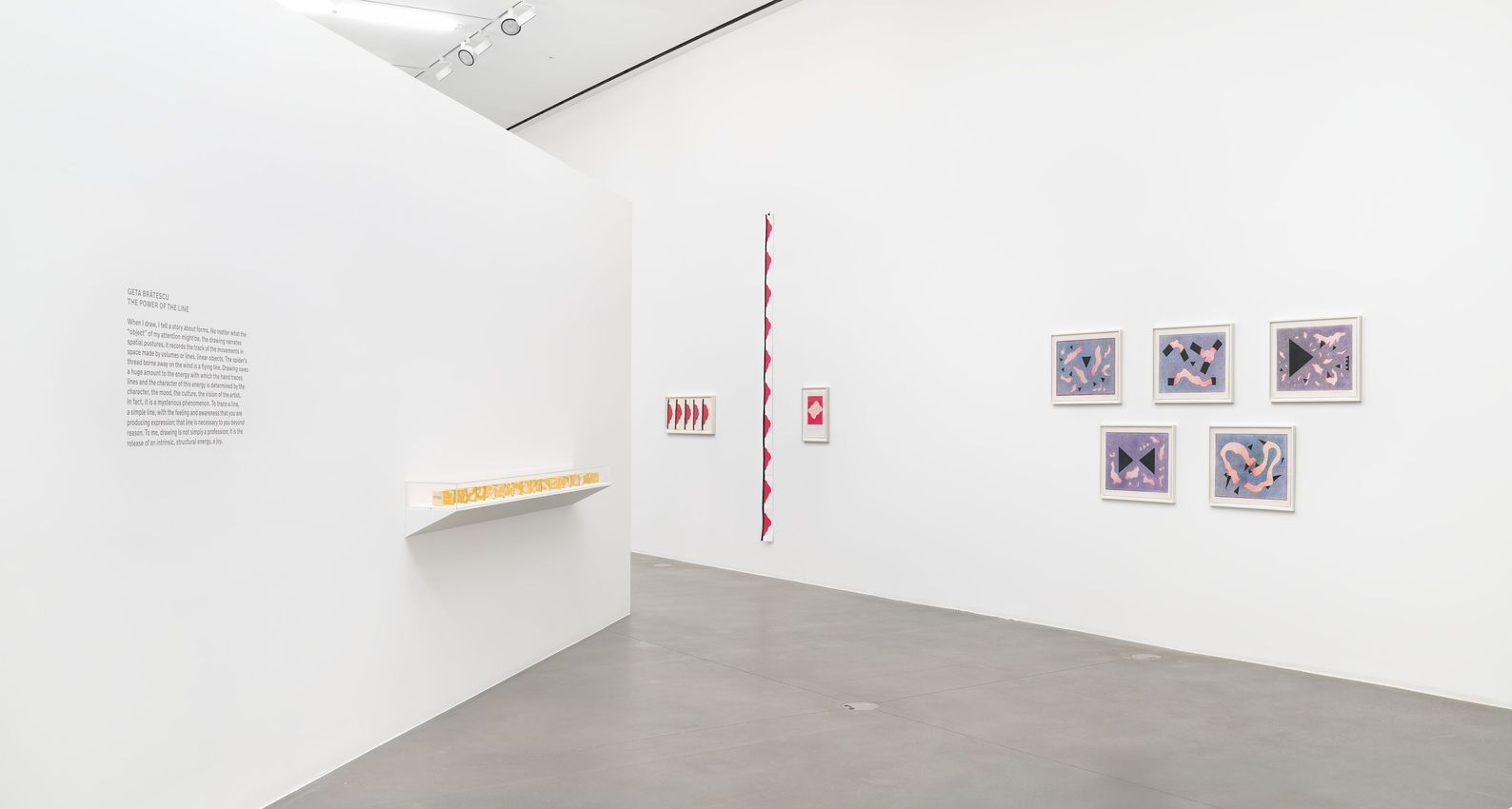




‘When I draw, I tell a story about forms. No matter what the ‘object’ of my attention might be, the drawing narrates spatial postures, it records the track of the movements in space made by volumes or lines, linear objects. The spider’s thread borne away on the wind is a flying line. Drawing owes a huge amount to the energy with which the hand traces lines and the character of this energy is determined by the character, the mood, the culture, the vision of the artist. In fact, it is a mysterious phenomenon. To trace a line, a simple line, with the feeling and awareness that you are producing expression; that line is necessary to you beyond reason. To me, drawing is not simply a profession; it is the release of an intrinsic, structural energy, a joy.’ - Geta Brătescu diary excerpt (2008)
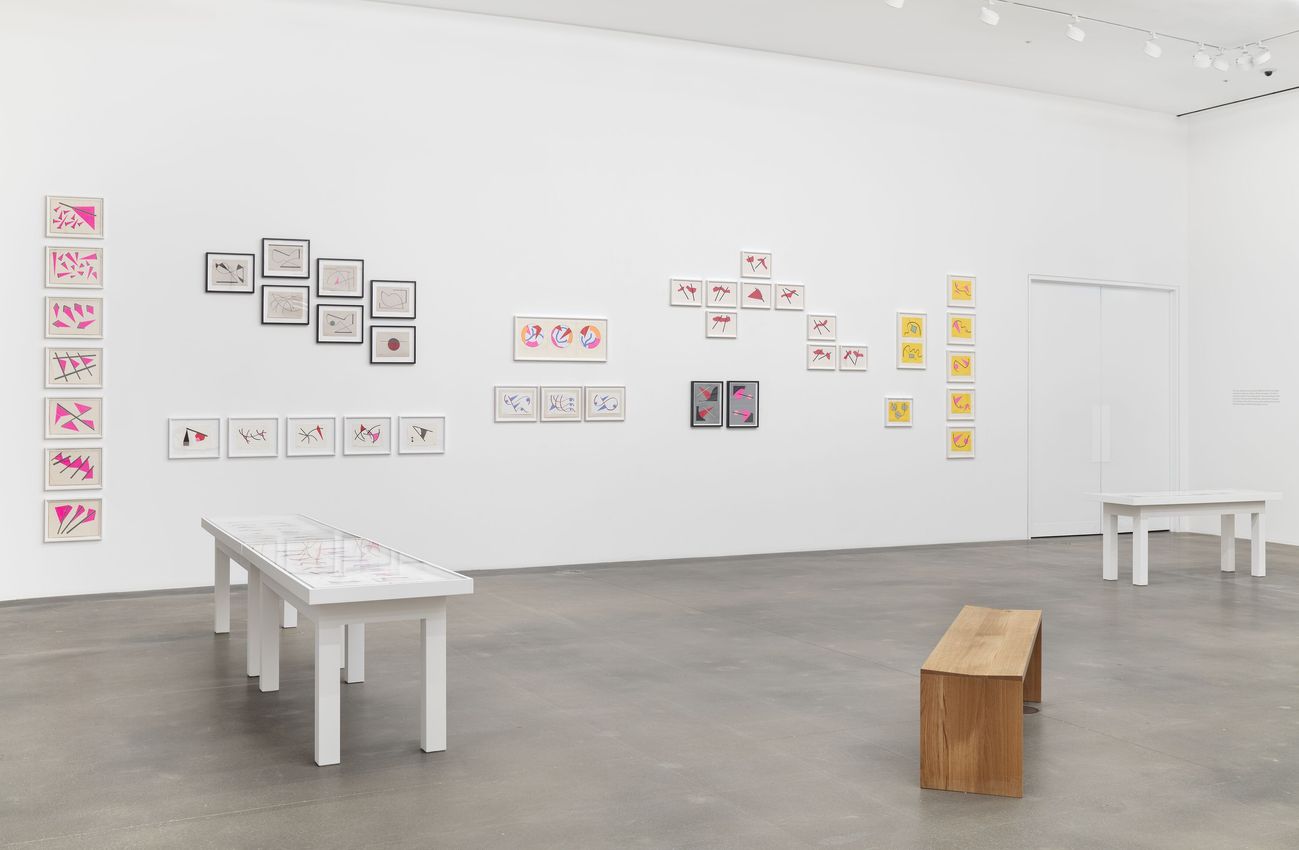
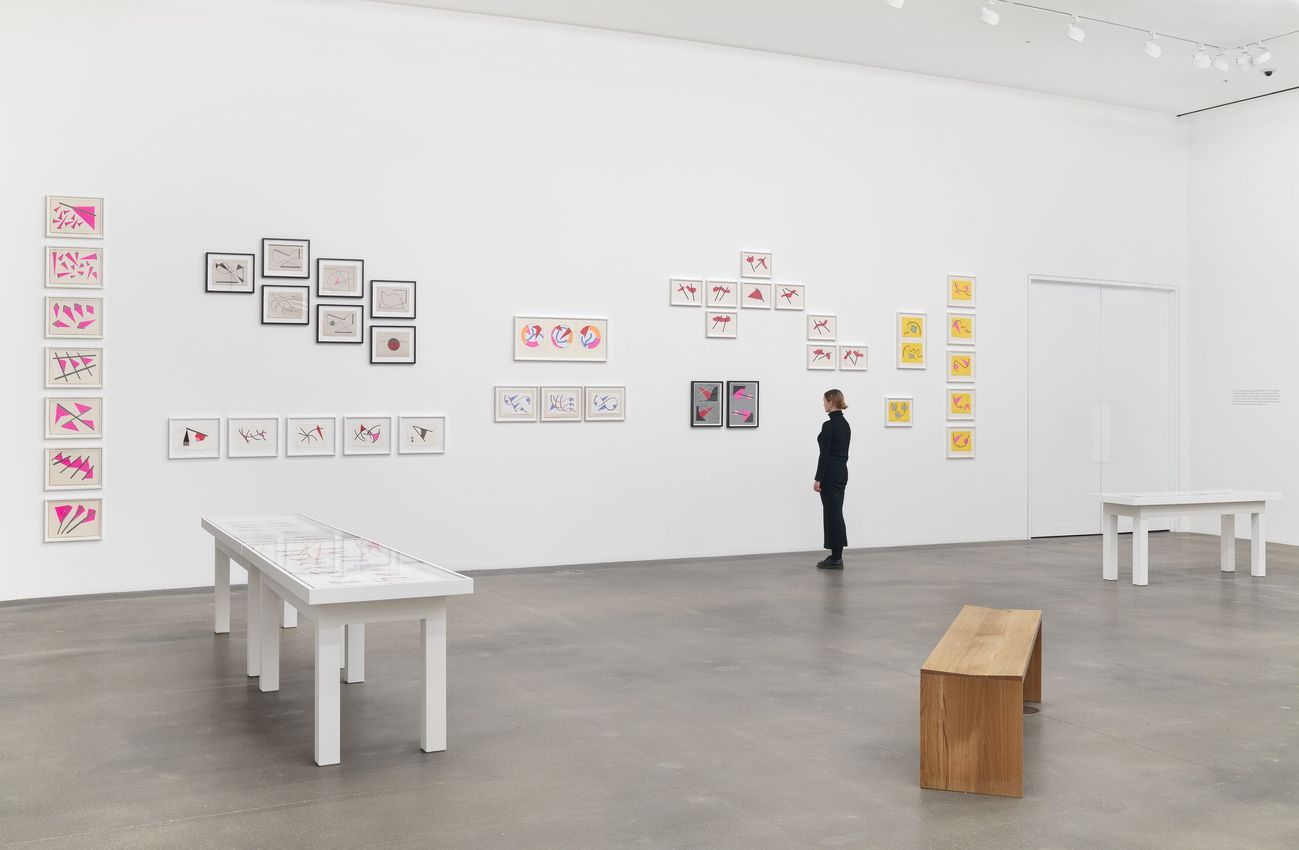
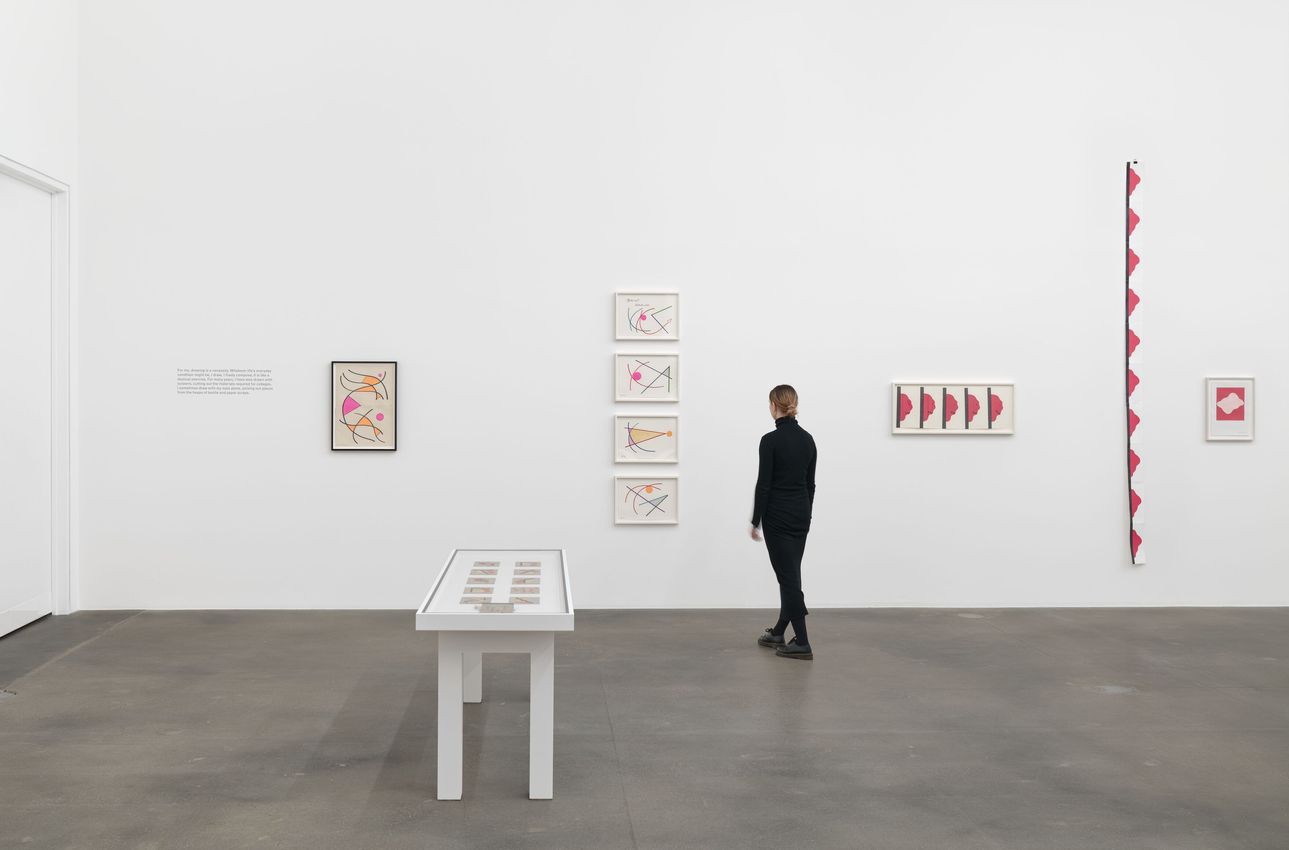
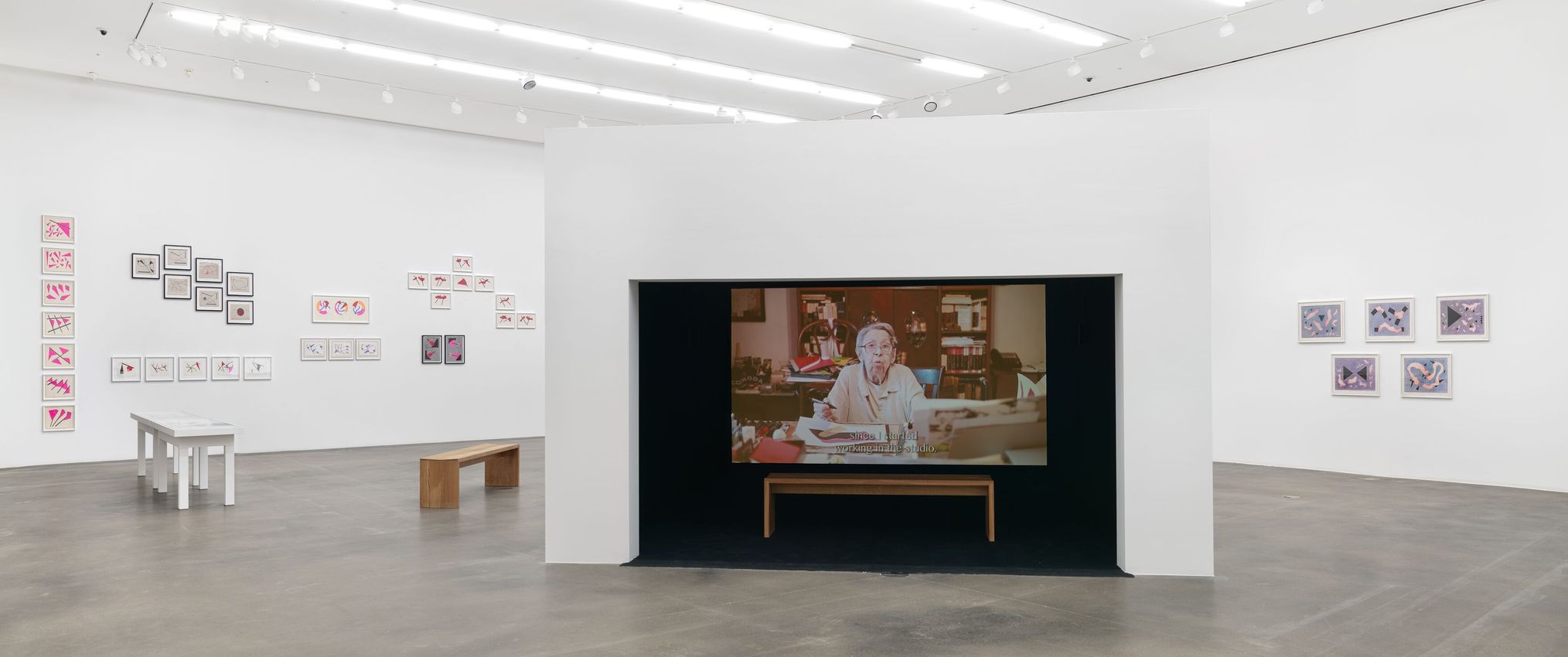
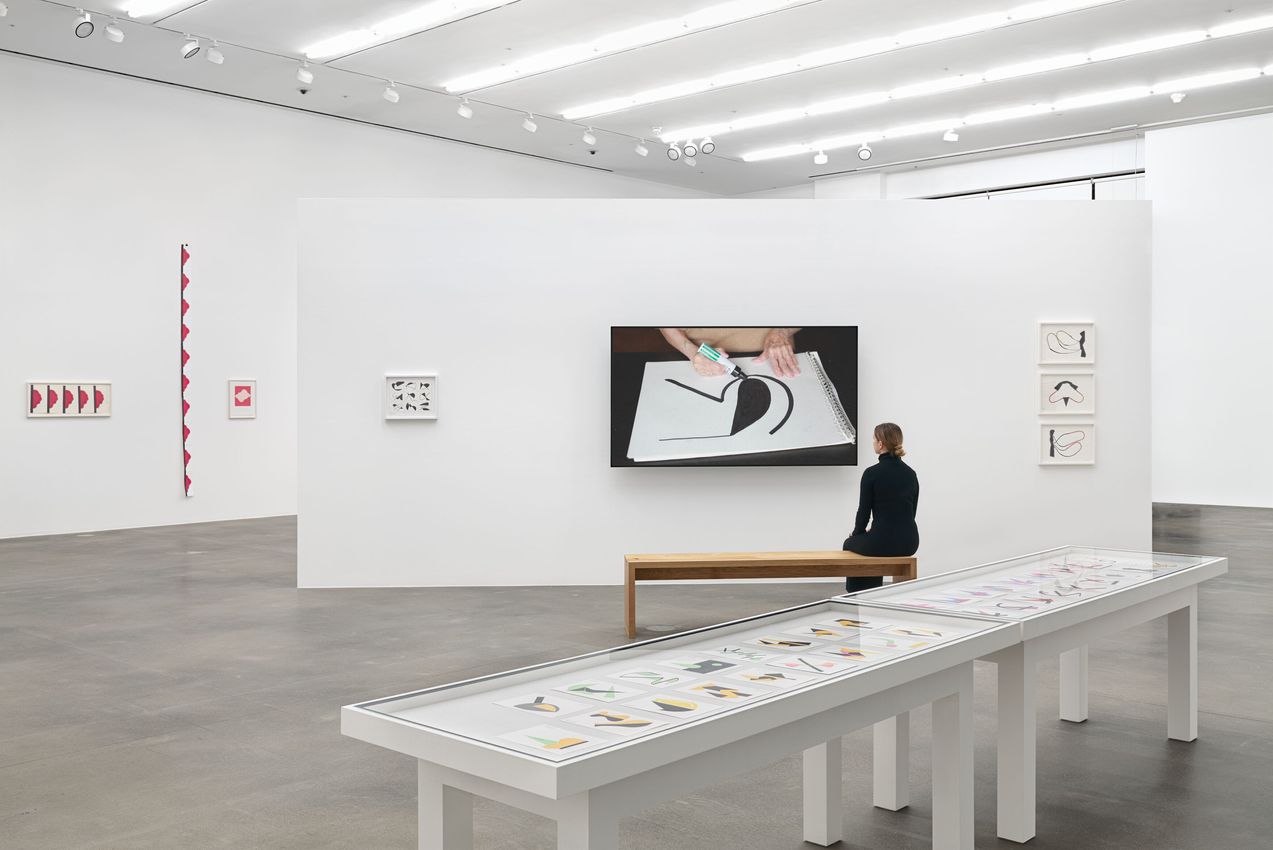
Hauser & Wirth is proud to present Geta Brătescu, The Power of the Line. The exhibition features an important body of works from the past decade, during which time Brătescu focused predominantly on working with the line as a structuring principle. The exhibition was conceived over the last year in conjunction with the artist and in close collaboration with Marian Ivan and Diana Ursan of Ivan Gallery. For the duration of the exhibition, two film works will be screened in the centre of the gallery space giving insights into the immersive creative process of this remarkable artist.
Brătescu originally studied at the Academy of Fine Arts, Bucharest, in the late 1940s but was expelled due to the Communist party’s objection to her parents’ middle class background. Over the course of a seven-decade career she went on to develop a deeply personal practice and was one of the first representatives of conceptualist approaches in Romania. Brătescu’s oeuvre comprises drawing, collage, textiles, photography, experimental film and performance which mines themes of identity, gender, and dematerialisation. Her more recent international recognition, including her Venice Biennale presentation in 2017, provided a basis for the re-evaluation of her experimental work within the framework of conceptual practices.
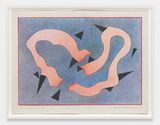
The carefully selected body of works in the exhibition render the different means in which Brătescu engaged the primordial unit of the line–in curved, hard-edged, contained or spread compositions. For Brătescu, the line is manifest in the movement of the artist’s hand in space as it handles the pencil, the marker or the scissors, creating a flow of shapes, forms and sometimes even silhouettes. By turns playful and purposeful, Brătescu’s inexhaustible creativity runs as a common thread throughout the exhibition and can be seen in the vibrant proliferation of ideas in the artist’s notebook Carnet (2014) and Linia (The Line) (2014), a series of drawings on post-it notes. Brătescu’s experiments with colour and line are developed further in Untitled (The Line – Game of Forms) (2013), an extraordinary 35-part work that combines abstract and representational elements, described by the artist as traces of her memories and experiences.
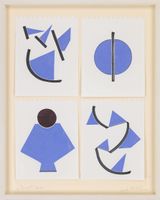
Brătescu’s approach to materials evolved from an attitude towards her studio as both a physical and psychological space, a safe environment of enclosure as well as a stage for creative invention. Her freedom paradoxically emerged from this contained space of the studio: the freedom to be able to continue ‘drawing with scissors’ and exploring the new ideas that came to her every day. These ideas were generated by the texture of the paper, for example, and by the simple, everyday materials and objects which surrounded her. She frequently used these lo-fi, inexpensive elements as a point of departure and an intimate aesthetic emerges in the works which incorporate torn paper, coffee sticks, and match boxes, such as Untitled (Fără titlu) (2013).
The films which feature in the exhibition, Linia (The Line) (2014) and The Gesture, The Drawing (2018)–the latter a collaboration with the artist Stefan Sava–reveal the inextricable link between Brătescu’s studio space and the creative process which can be likened to an act of performance, regardless of the medium. As Brătescu explained, ‘No matter what tool I might use, when I draw and then examine my work, I think that the musicality of the line is in my nature. I liked to dance. When I draw, I can say that my hand dances.’
The exhibition coincides with a book from Hauser & Wirth Publishers entitled Geta Brătescu: Game of Forms. This new publication features works from this series alongside excerpts from the artist’s diaries dating from 2008 to 2017. Brătescu studied both art and literature, and the duality of writing and drawing was central to her thought process and practice. During her lifetime, Brătescu published a number of books documenting her daily studio activities and personal experiences. Jeu de Formes is the title, originally in French, that she gave to the cycle of works that was the focus of the last decade of her career, consisting of collages and line drawings.
One of the first representatives of conceptualist approaches in Romania, Geta Brătescu’s oeuvre comprises drawing, collage, textiles, photography, experimental film and performance. In her seven-decade career, she has published a number of books documenting her daily studio activities and personal experiences of art and travel.


Hauser & Wirth was founded in 1992 in Zurich by Iwan Wirth, Manuela Wirth and Ursula Hauser, who were joined in 2000 by Partner and Vice President Marc Payot. A family business with a global outlook, Hauser & Wirth has expanded over the past 26 years to include outposts in Hong Kong, London, New York, Los Angeles, Somerset and Gstaad. The gallery represents over 70 artists and estates who have been instrumental in shaping its identity over the past quarter century, and who are the inspiration for Hauser & Wirth’s diverse range of activities that engage with art, education, conservation and sustainability.
A respected voice in contemporary art discourse.
Focusing on ambitious storytelling and insightful art-world commentary. Ocula Magazine publishes in-depth interviews, critical essays and timely analysis on the artists, exhibitions and ideas driving the global art world.
Learn more about Ocula Magazine
Showcasing the best of the art world.
Ocula partners with galleries from around the world to highlight their artists, artworks and exhibitions. Gallery membership is by application and invitation, with each member vetted by an independent panel.
Learn more about Ocula Membership

Specialises in the sale of major artworks.
Led by a team with deep ties to the world’s leading auction houses, galleries and collectors. Ocula’s advisory team offers bespoke services to high-net-worth clients from around the world who are looking to acquire the best of contemporary and modern art.
Learn more about our team and services