Press Release

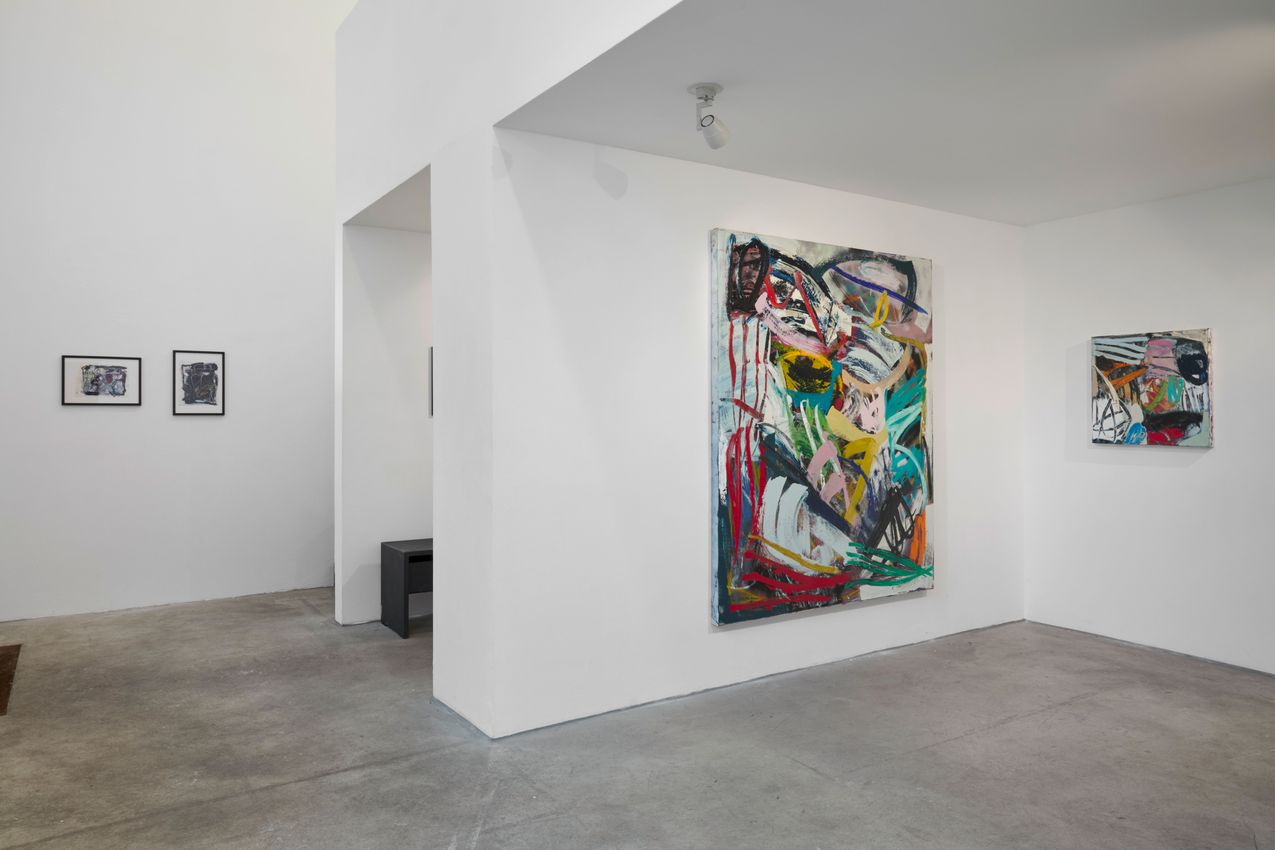
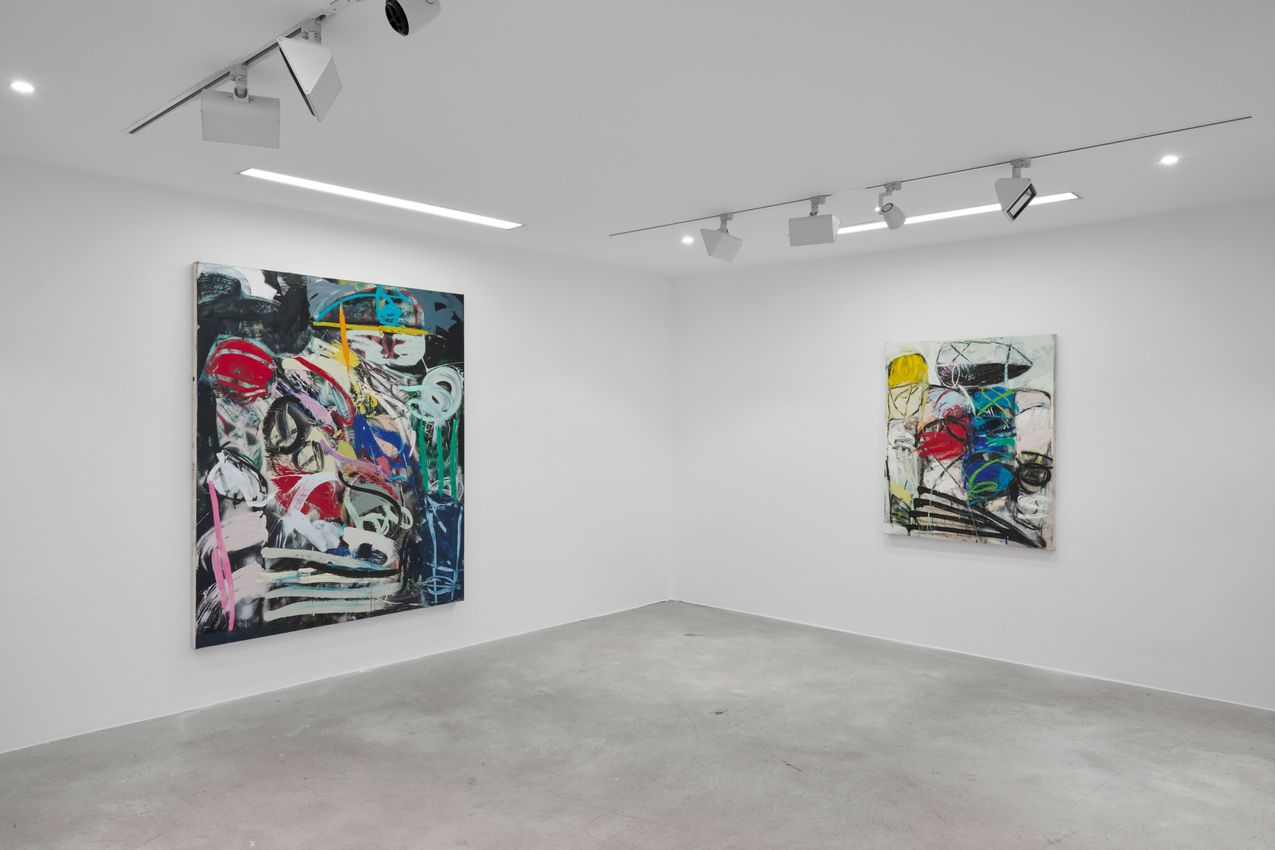
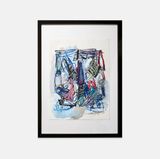
New York-based painter Xavier Baxter embodies several of the most romantic clichés about artists. Born in London in 1991 into a multigenerational family of painters and sculptors, he has the DNA of a fast-forward kid, the dandyish accent of an Englishman living in the US, and a refined yet restless sensibility: cultivated, self-indulgent, with a touch of turbulence and punk. Far from living in the shadow of his family’s legacy, he has, in true artist fashion, made the rules of his own game. Venturing into his solo career after completing a BA at City & Guilds of London Art School, he opted for a little anonymity, rechristening himself Xavier Baxter, the name his parents called him as a child. My name, my style – a stubborn declaration of autonomy that continues to shape his practice today. From his Instagram account, which first connected him to his audience, to his recent exhibitions across the UK, Germany, and Korea, Baxter’s past few years have been all upswing into visibility. He is now recognised for his distinctive painterly approach to the human figure – a fusion of classical expressive poses with abstract, contemporary surface processes.

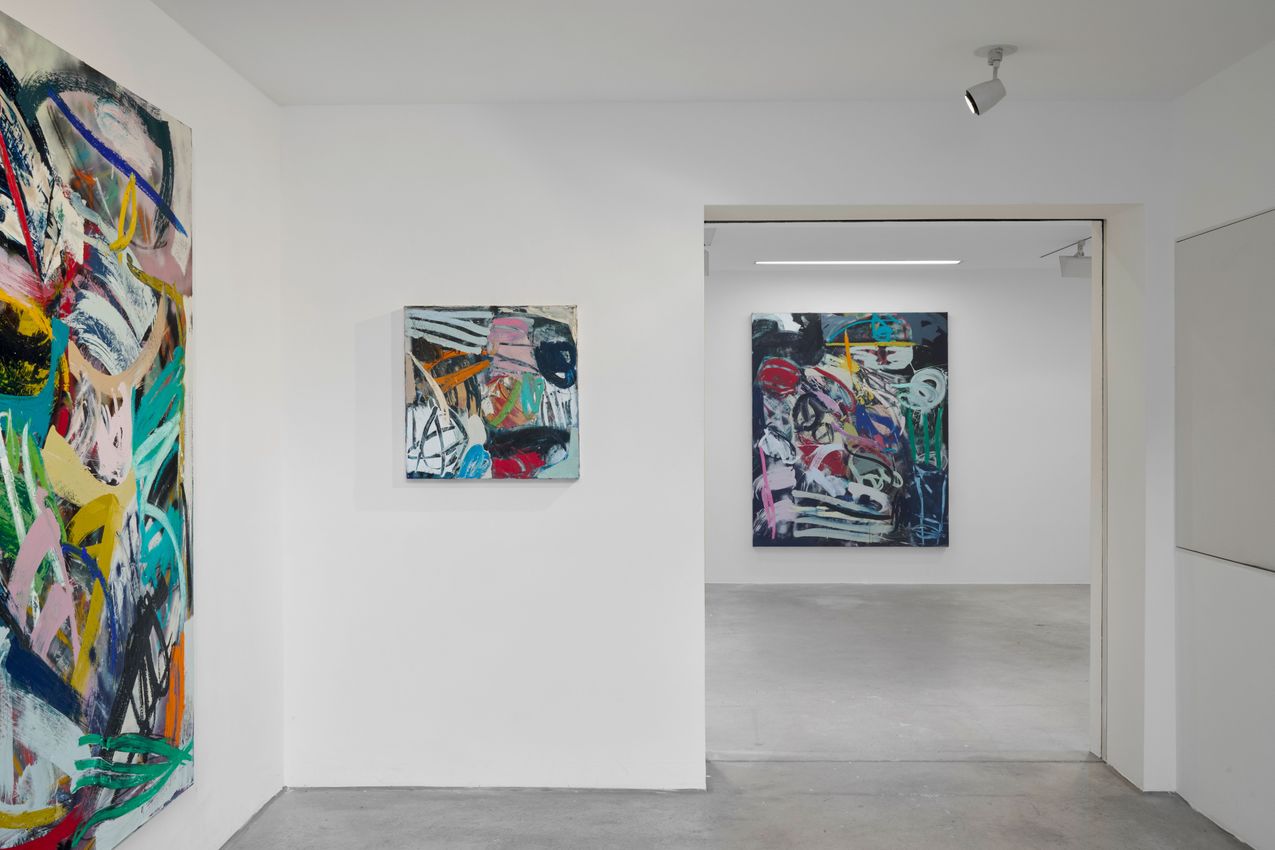
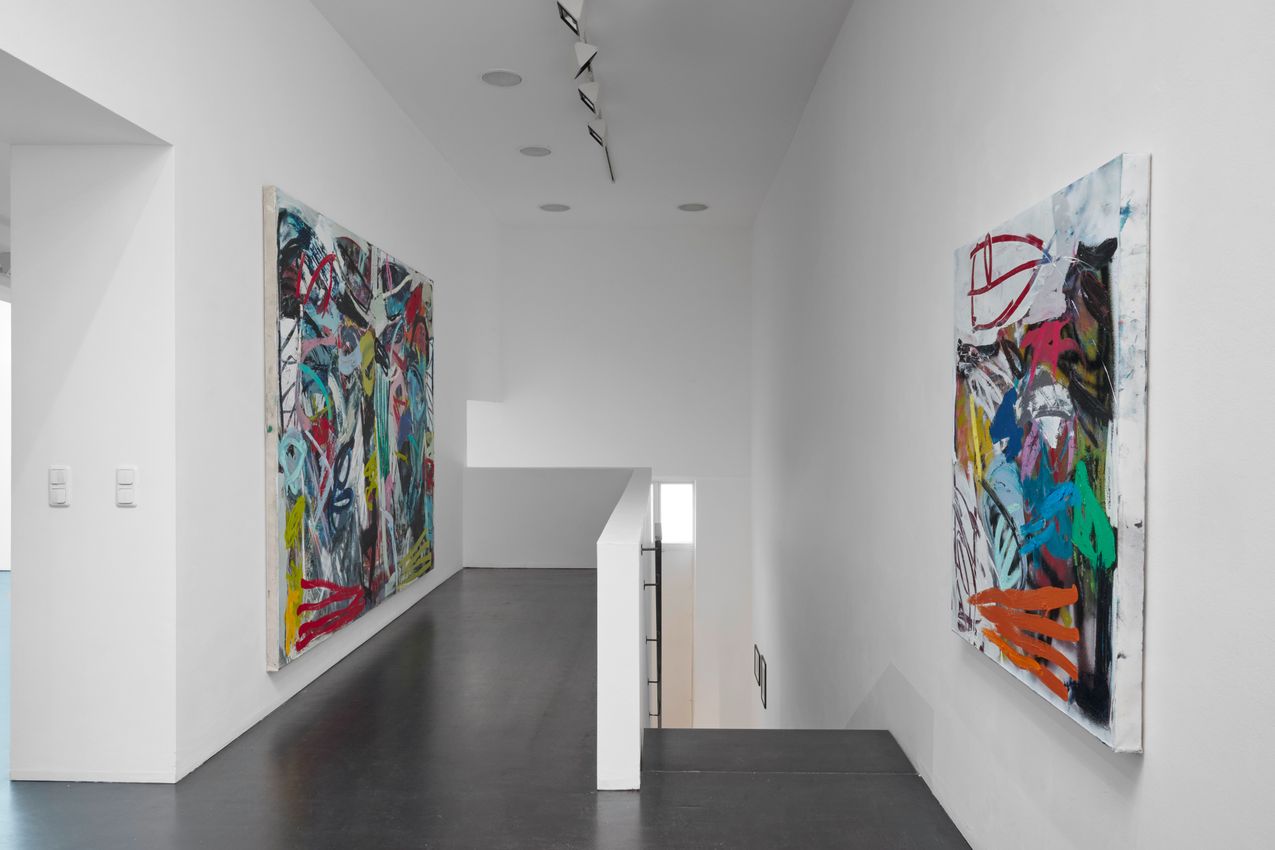
This exhibition marks a long-awaited comeback to JARILAGER Gallery Cologne. The exhibition title, Show me your soul, is both an imperative and the core of Baxter’s artistic credo.

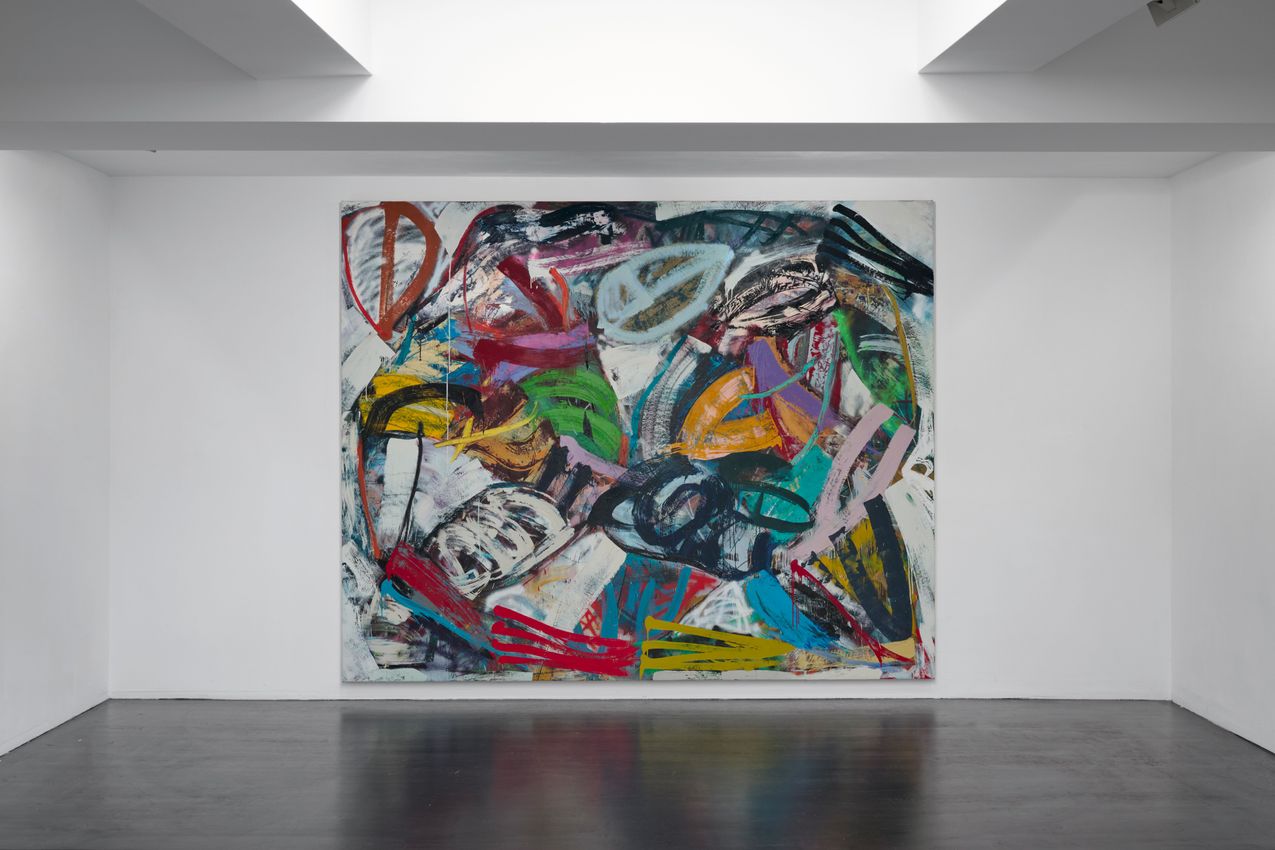
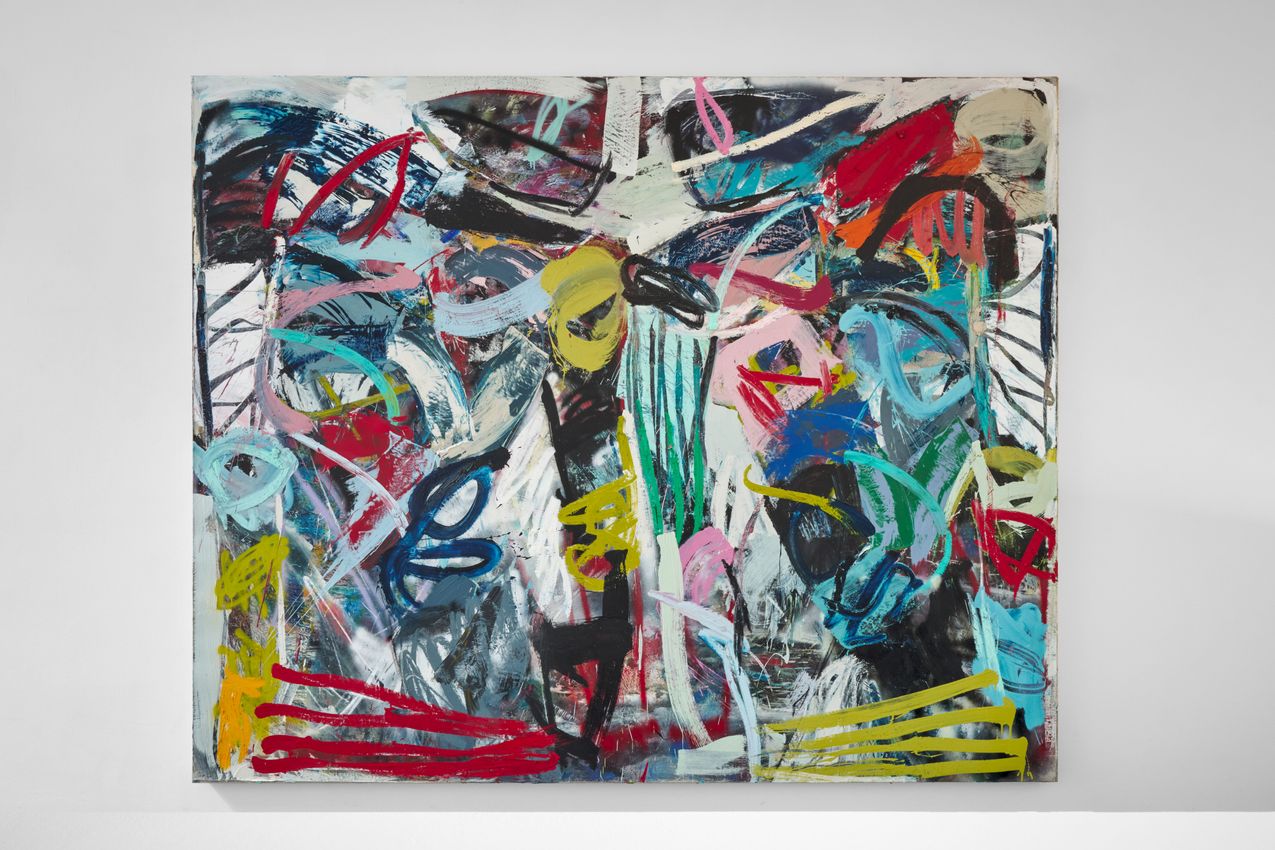
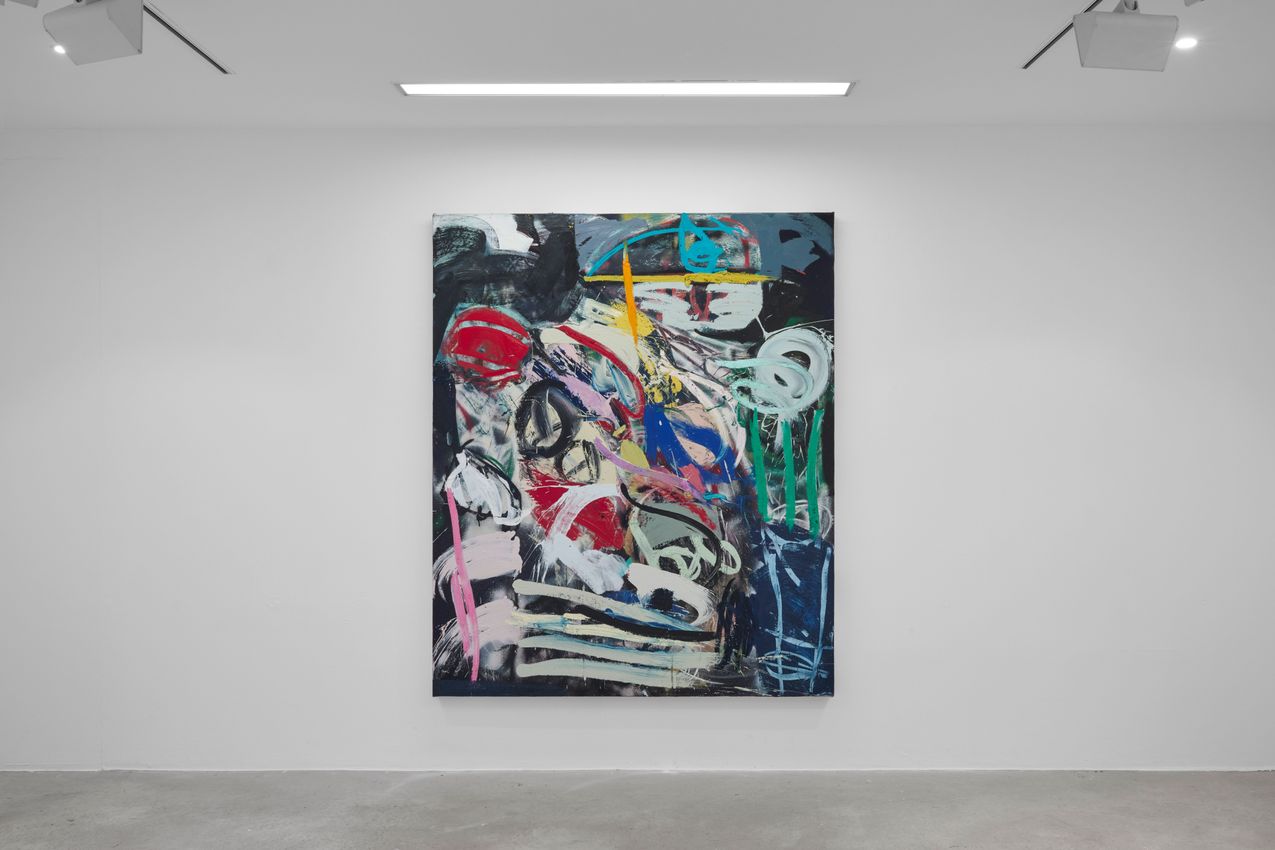
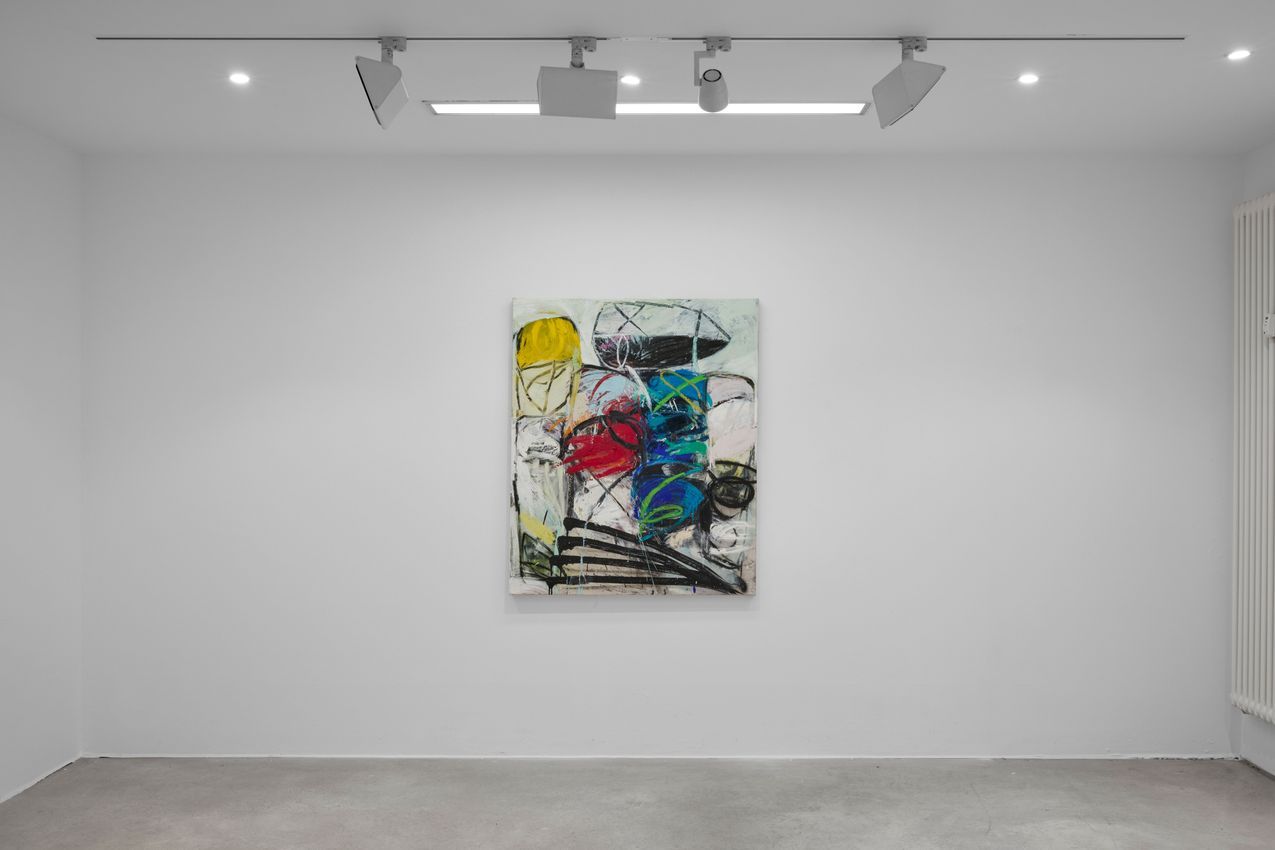
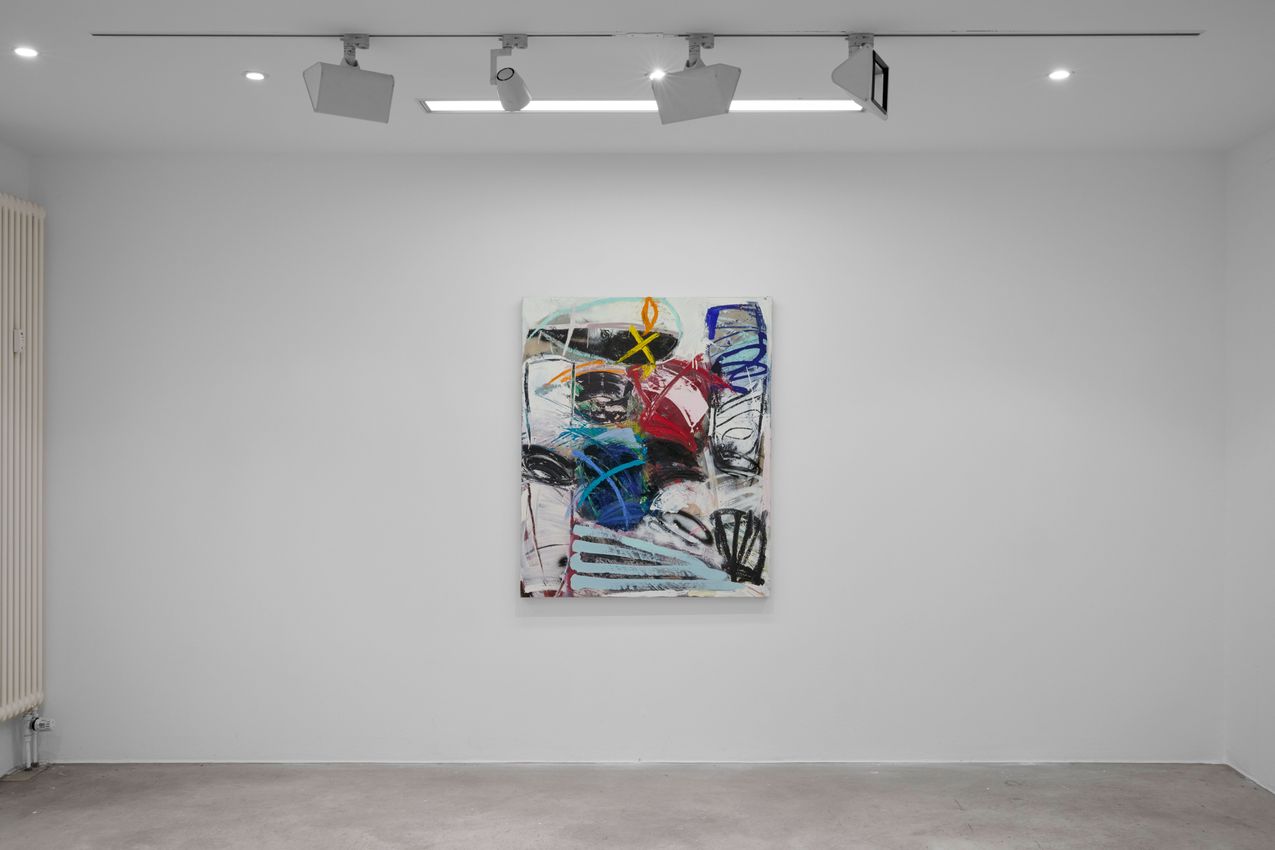
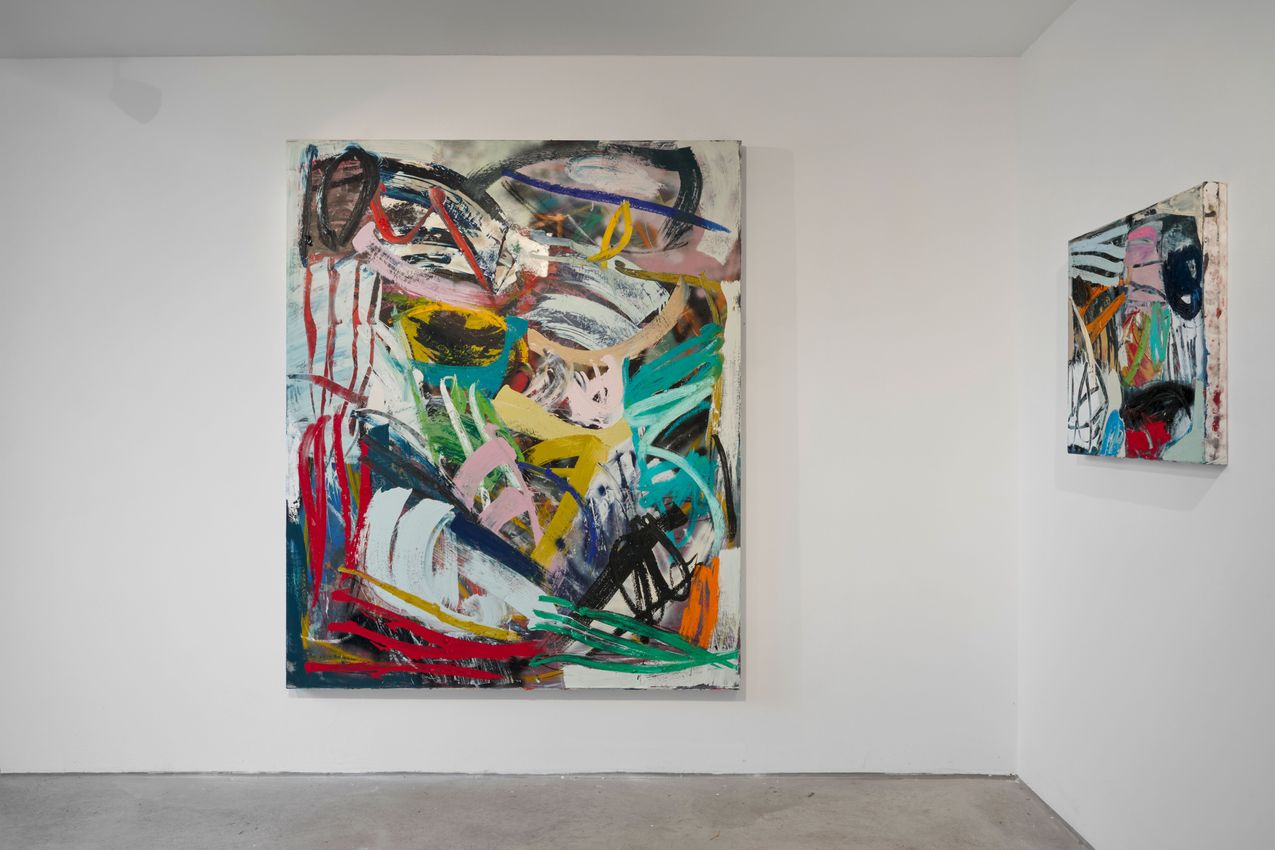
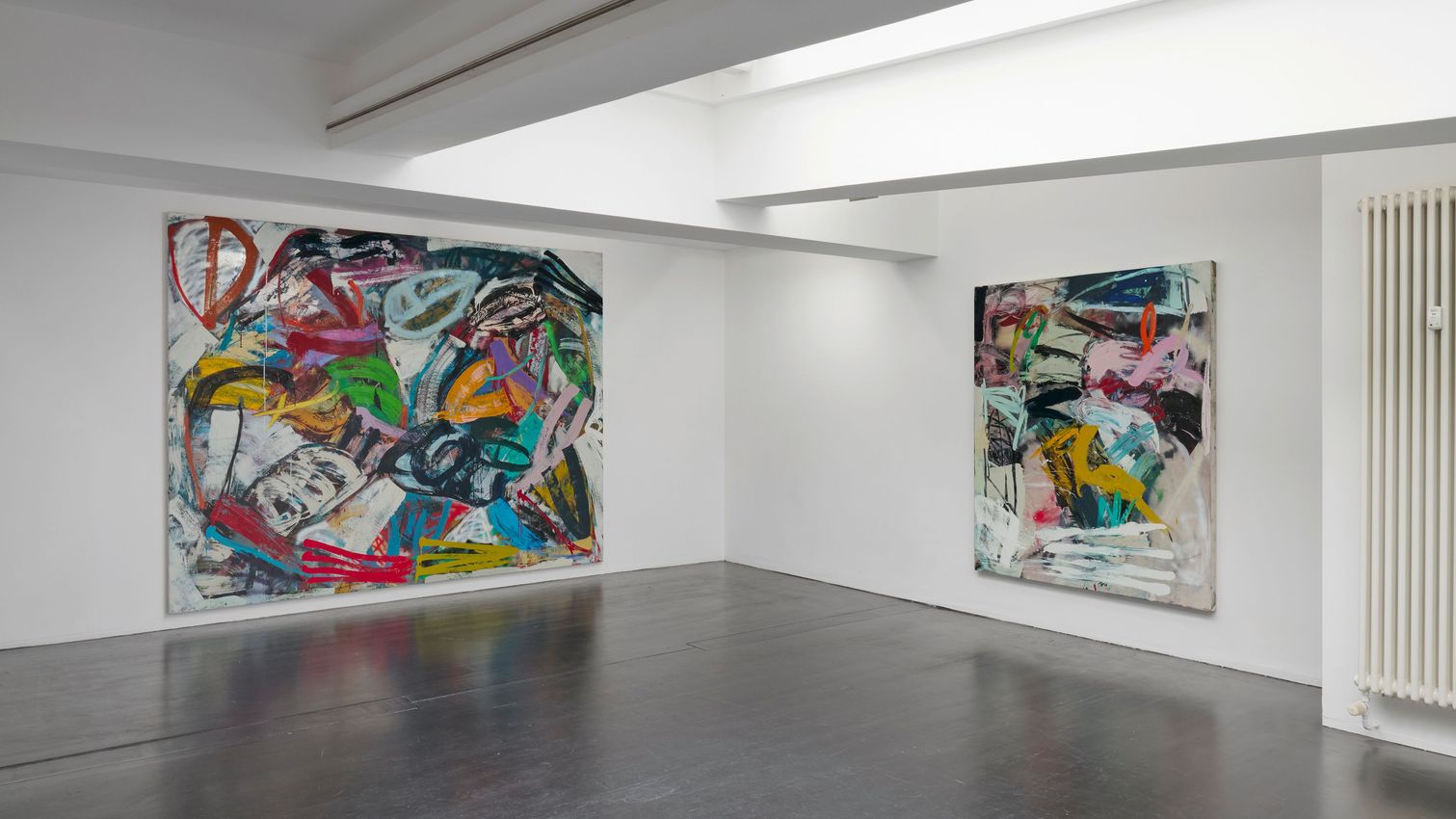
Every day in Baxter’s studio is a quest for the Holy Grail of the perfect mark at the perfect moment. Brushes clean, ready for war. It begins with three full days of preparatory work: he coats the canvas with acrylic gel, ensuring that colours can be scraped off with ease during their feverish application (sometimes, the artist must be ready to charge and retreat in an instant). Another two days are devoted to mixing colours, mostly oils. He never uses pigment straight from the tube; his alchemy must remain a mystery. Then, in a burst of no more than ten or eleven hours, he attacks the canvas with a full arsenal – thick and thin lines, smashing strokes and delicate touches, scrapers, palette knives, hands, and brushes of every size. Speed is paramount; paint must be worked while still wet. Every stroke matters, every move is a decision. Baxter thrives on the unpredictability of wet paint, its risky interactions, the imperfections, the ‘grimy bits,’ the constant push and pull. Letting it dry, layering too carefully, would sterilise the work, strip it of its energy. And destruction, of course, is essential to his crusade: ‘If something comes out too nice, too beautiful – if it stops moving – then it has to be removed.’

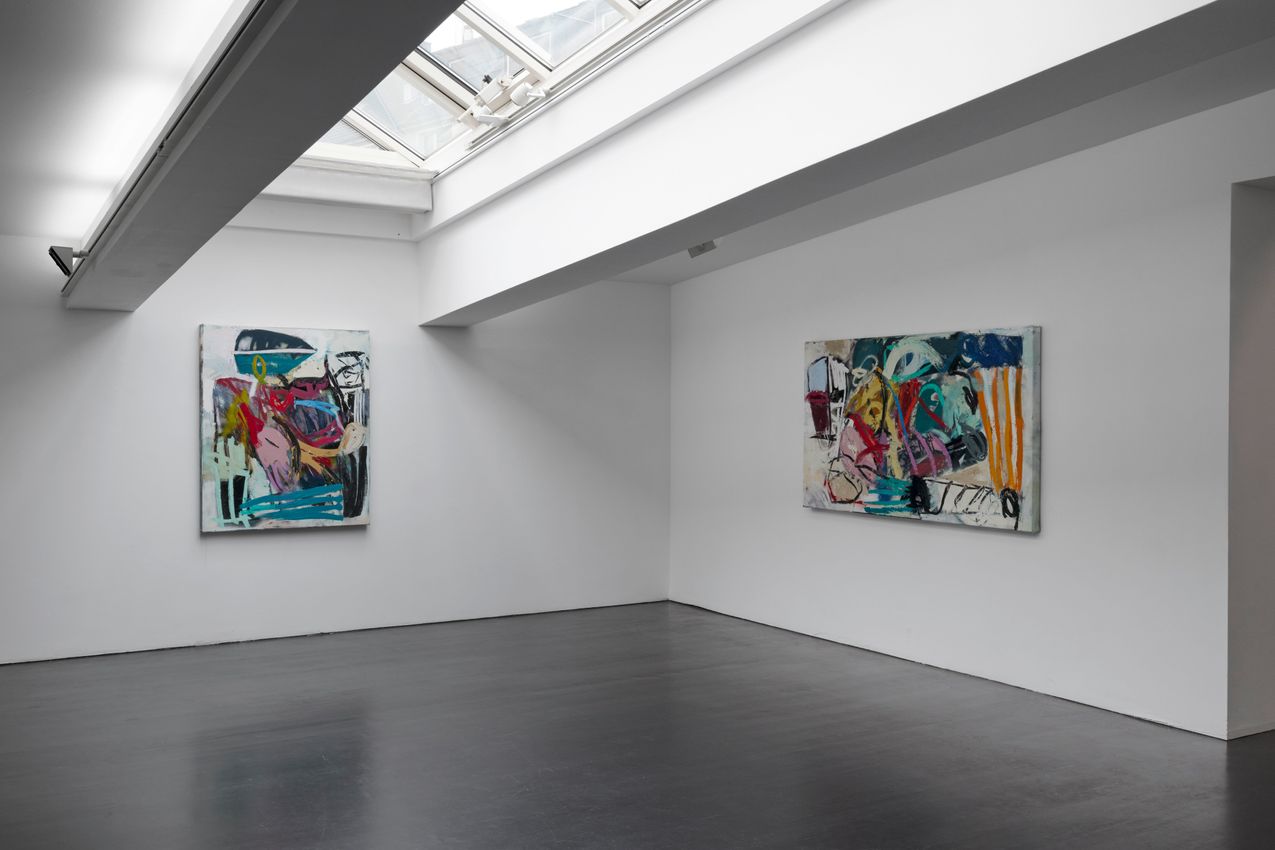
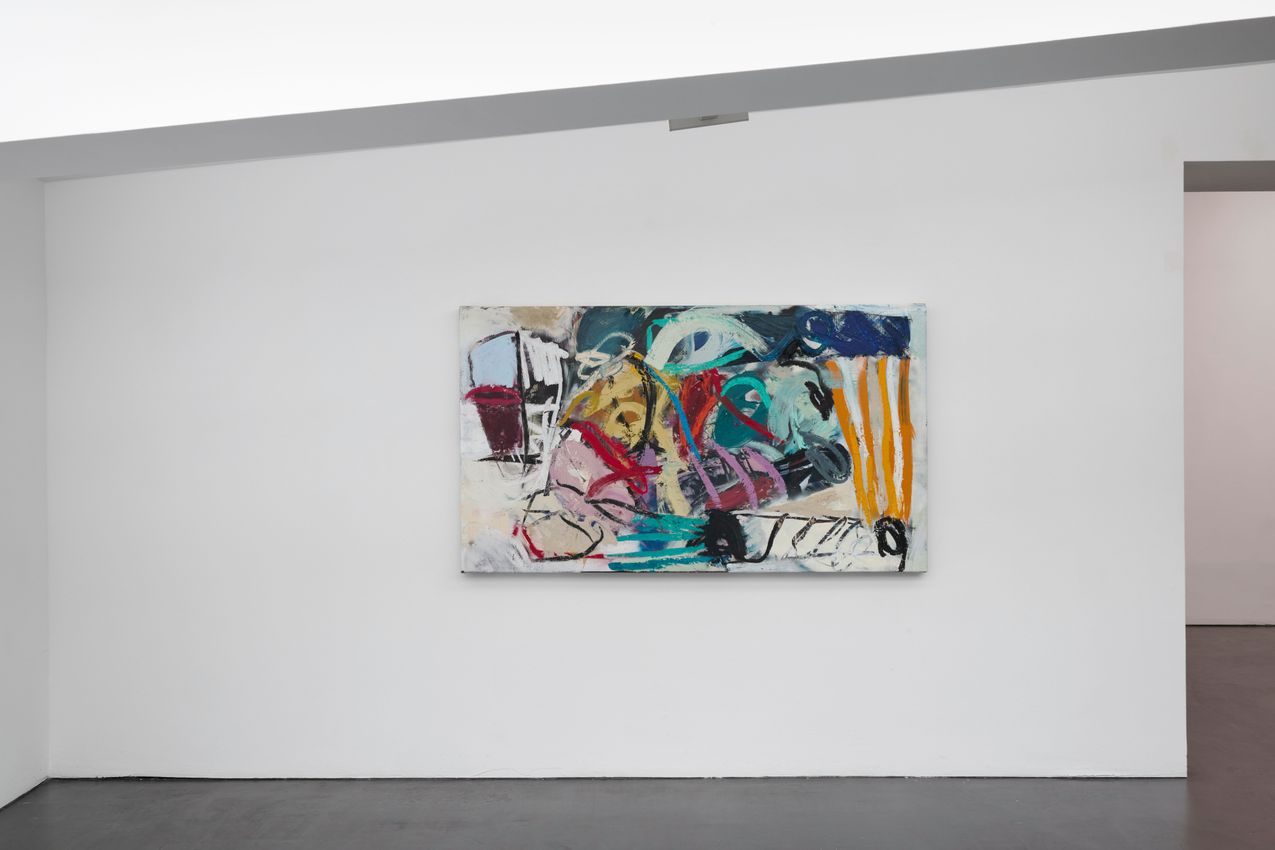
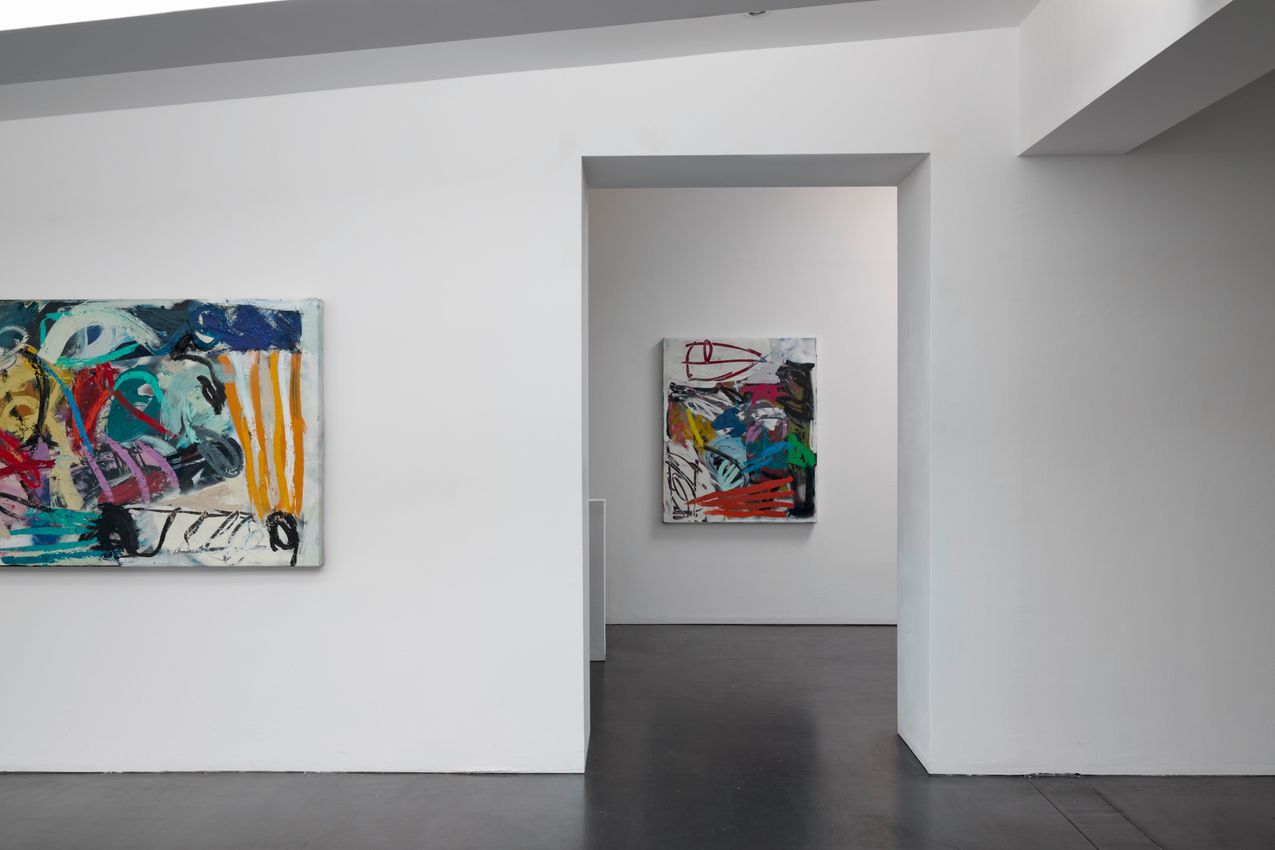
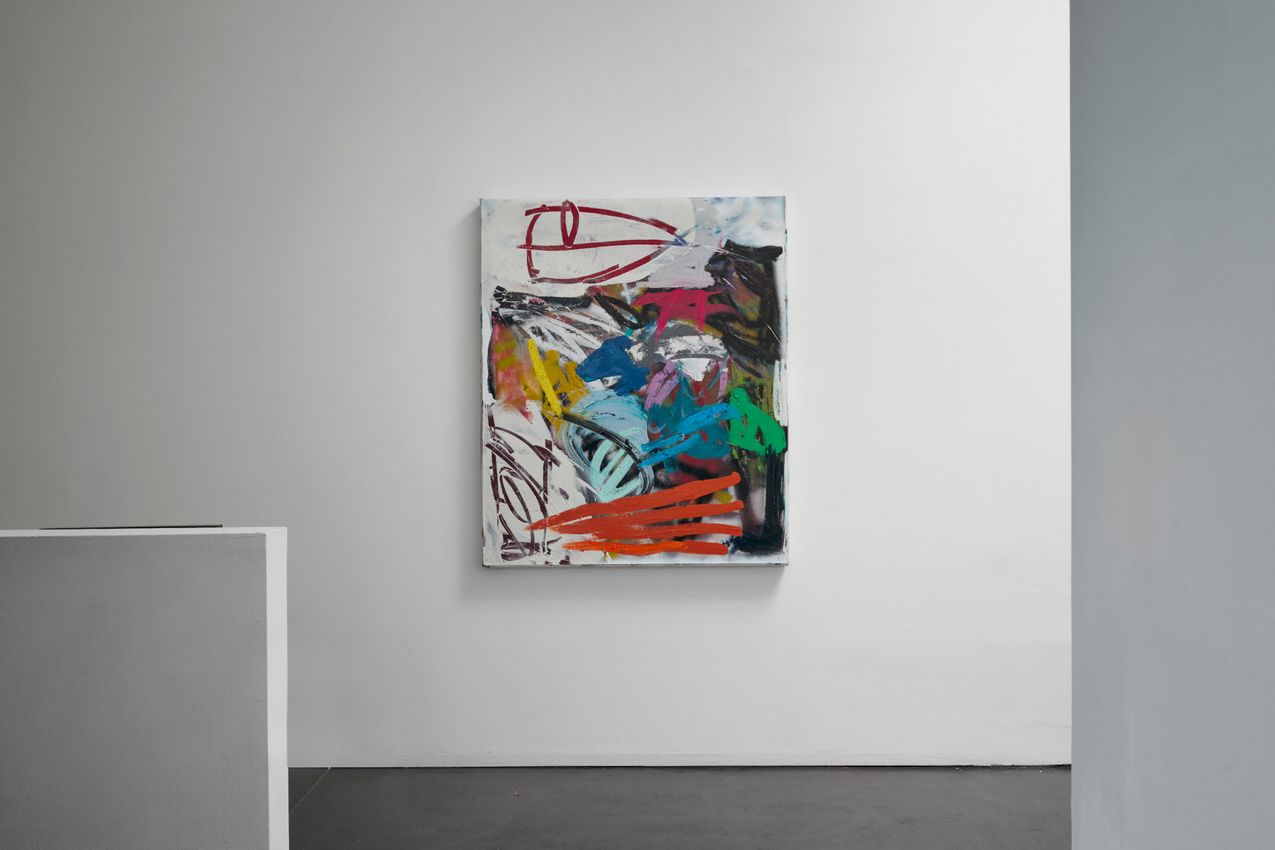
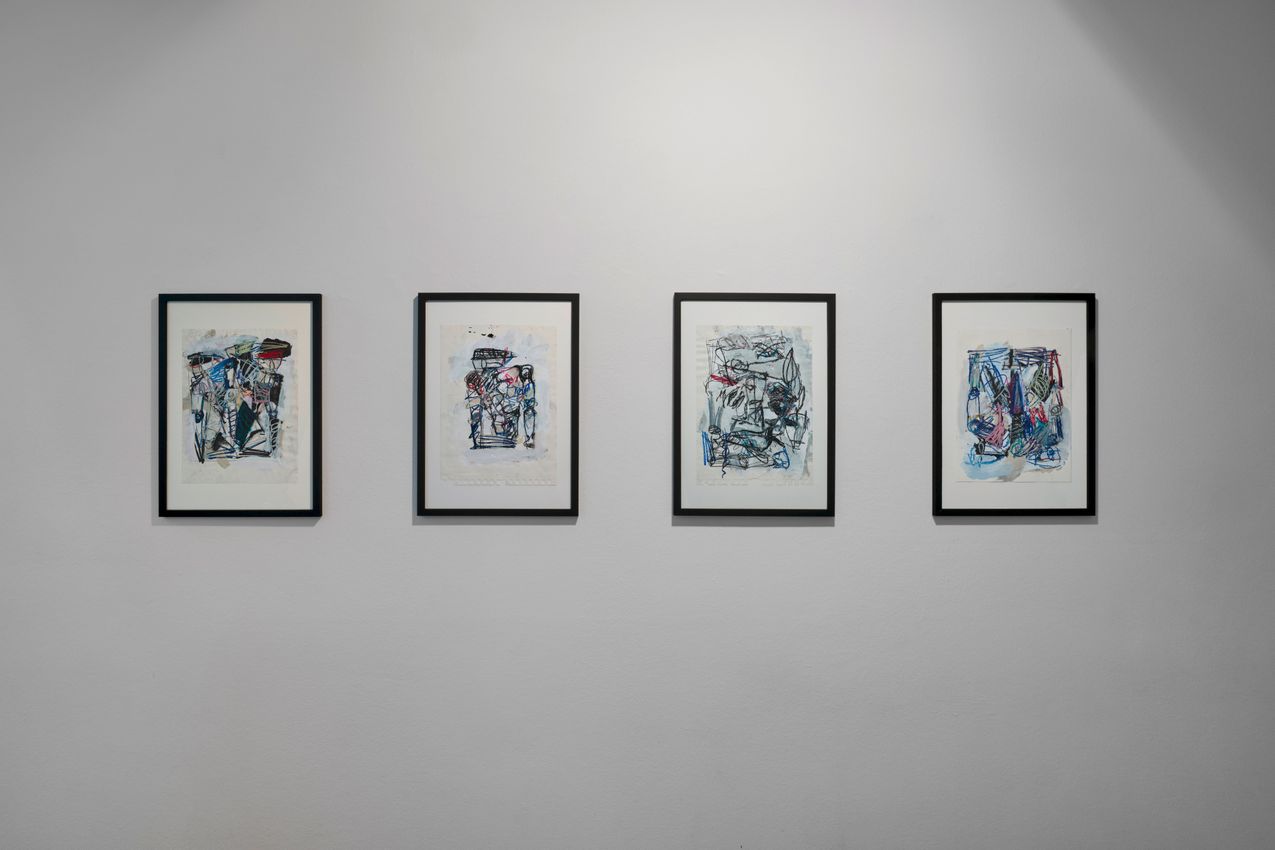
Since the earliest cave paintings in southern France, figures have drawn us in, because they create emotional bonds, they tell stories. For Baxter, portraiture is key to understanding the cultural and emotional power of art. In his paintings, figures are hidden in plain sight. They are there, but need to be extracted, as if they were fossils embedded in the canvas – an idea rooted in Baxter’s childhood fascination with fossil hunting. His compositions are loosely inspired from the Old Masters (Rubens, Delacroix, Dürer, Caravaggio). Baxter zooms in on the postures of their secondary characters, isolating and distorting them, pushing their gestures further into abstraction. Initial outlines are drawn and redrawn until they dissolve into ‘tornados of pure movement.’ A giant with one eye and four feet might first appear in a corner, then vanish, then resurface as canvas marks build up. Once you see them, you cannot unsee them – muscular titans, heads tilted, limbs tangled and pulled inward, as if wrestling against the edges of the canvas.

Despite the energy behind Baxter’s strokes, these figures are not aggressive. There is something raw yet gentle about them, a presence that feels both spiritual and ancient. Particular attention is given to the heads. ‘They must feel honest,’ says Baxter. ‘Once they emerge, you let them be, you stay quiet. The challenge lies in capturing them in one-go, without betraying the power of their own expression.’

Baxter never settles. His practice is a constant test of courage, where every mark feels like the first. ‘For me, it is important for the work to show my soul and emotion, to exude vitality. I want my paintings to hit you hard from a distance.’ Leaving a mark, just like the search for uniqueness in one’s craft, is one of the most primal and enduring instincts, both for the artist and humankind. The equation keeps shifting, but painting will never die. For Baxter, this is more than a belief; it is an absolute mission.

Read More

Installation Views

About the Gallery

The beginning of the JARILAGER Gallery traces back to 1998 when Jari Lager first opened his artist run space VTO in the East End of London, while also working at the LISSON Gallery, this was followed with the opening of UNION Gallery in 2003 on Union Street at Bankside near the Tate Gallery.

View Gallery Profile
Address
Wormserstrasse 23
Cologne
Germany
Opening Hours
Wednesday–Friday
1pm–6pm

Sunday
11am–2pm
And by appointment
(1)
Cologne Wormserstrasse 23
JARILAGER Gallery
Wormserstrasse 23, Cologne, Germany
+49 221 169 925 40
http://www.jarilagergallery.com

Opening hours
Wednesday–Friday
1pm–6pm

Sunday
11am–2pm
And by appointment
The art world in focus