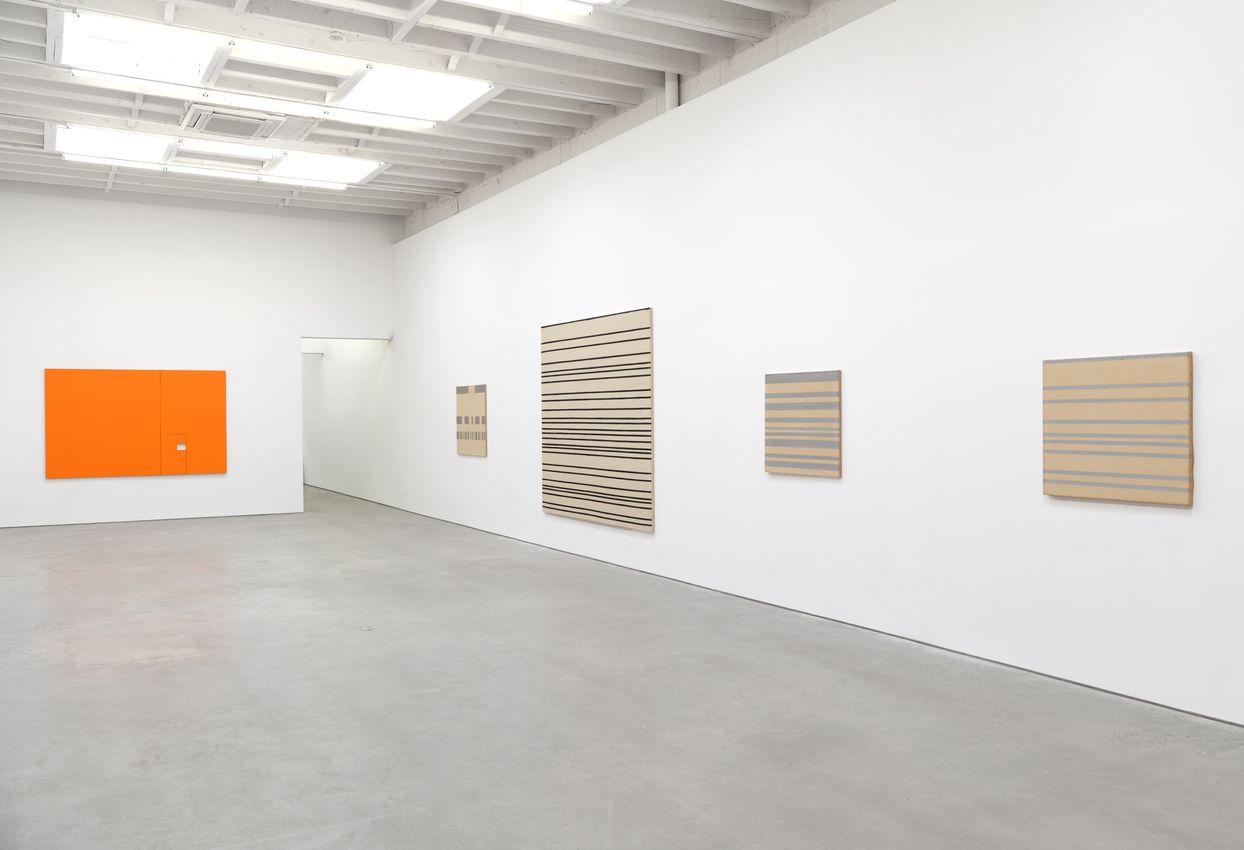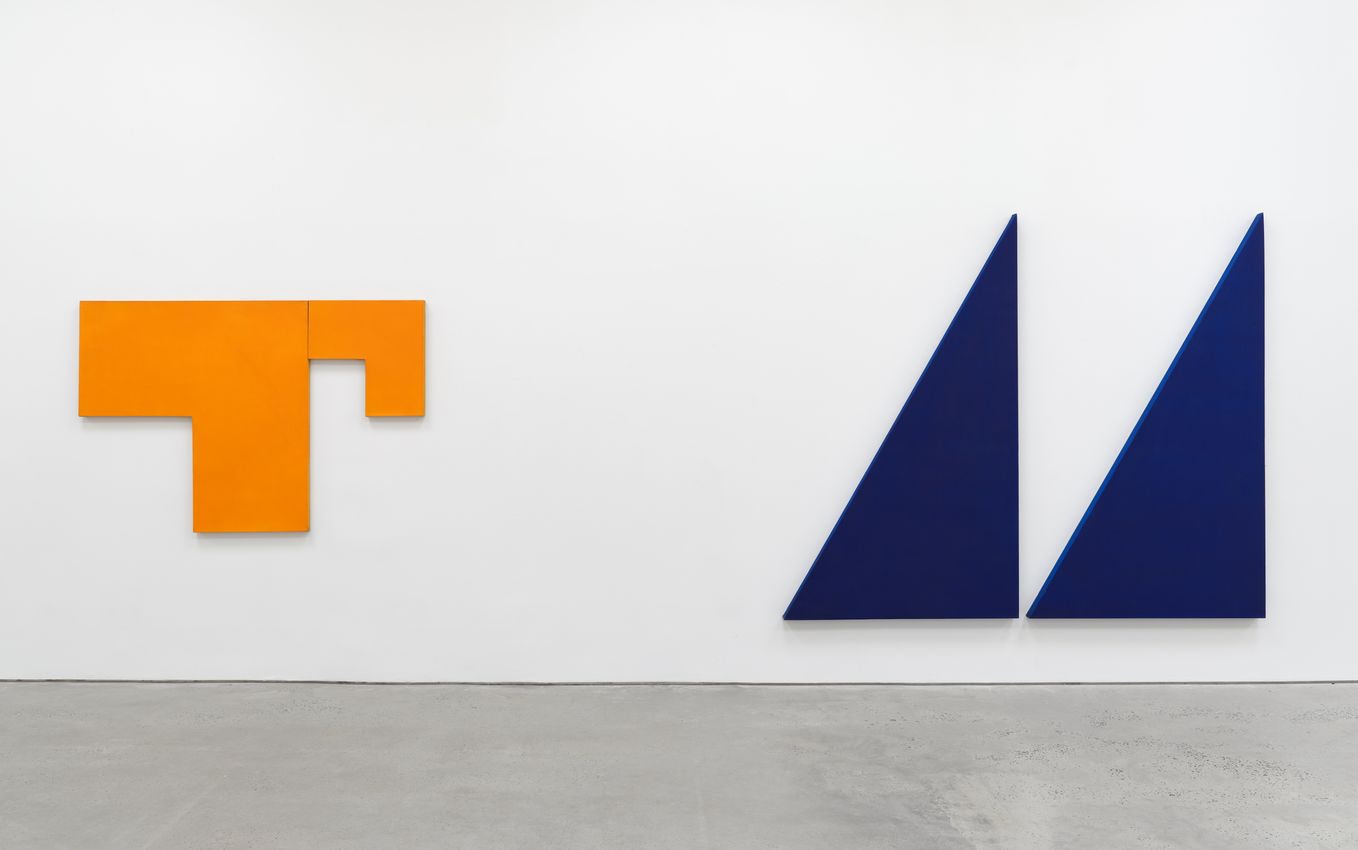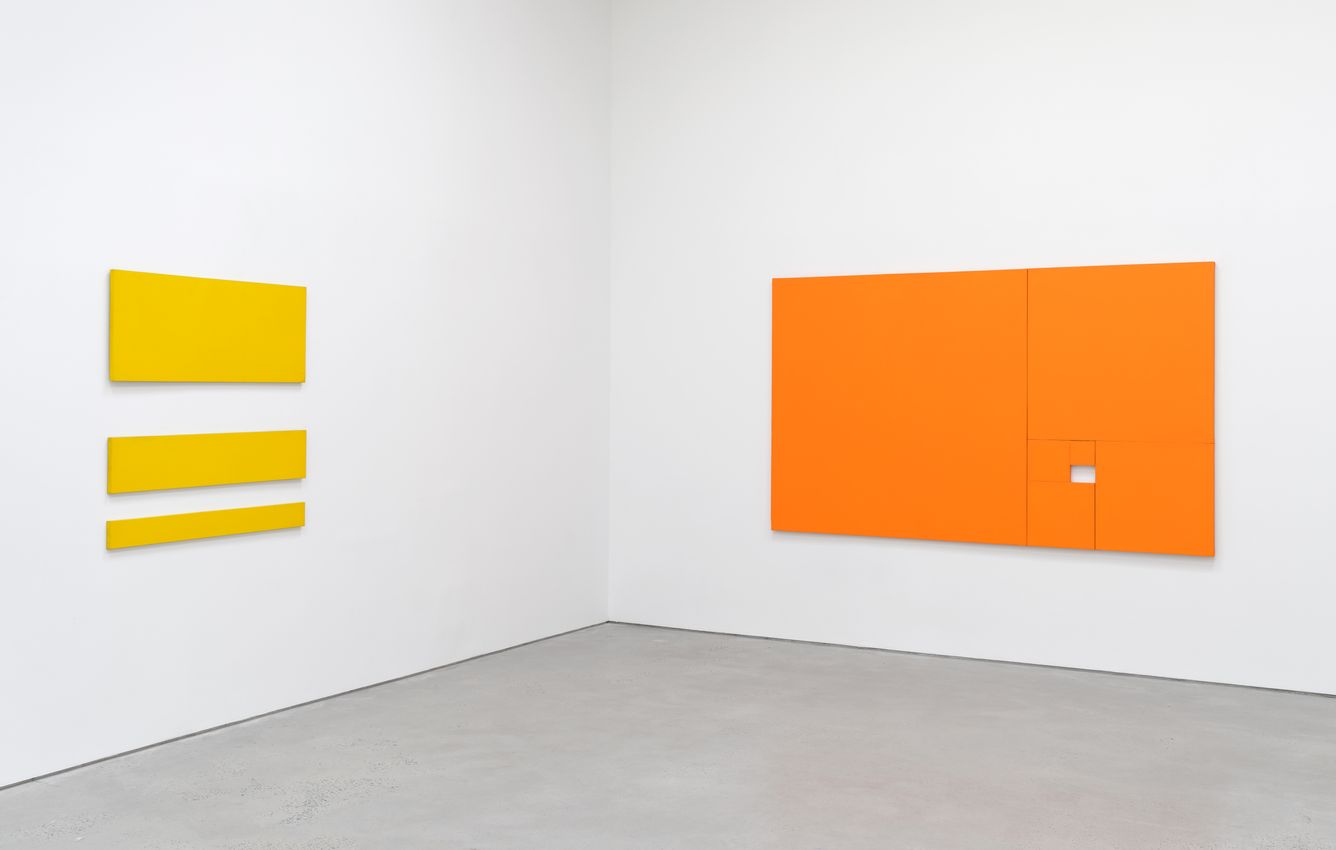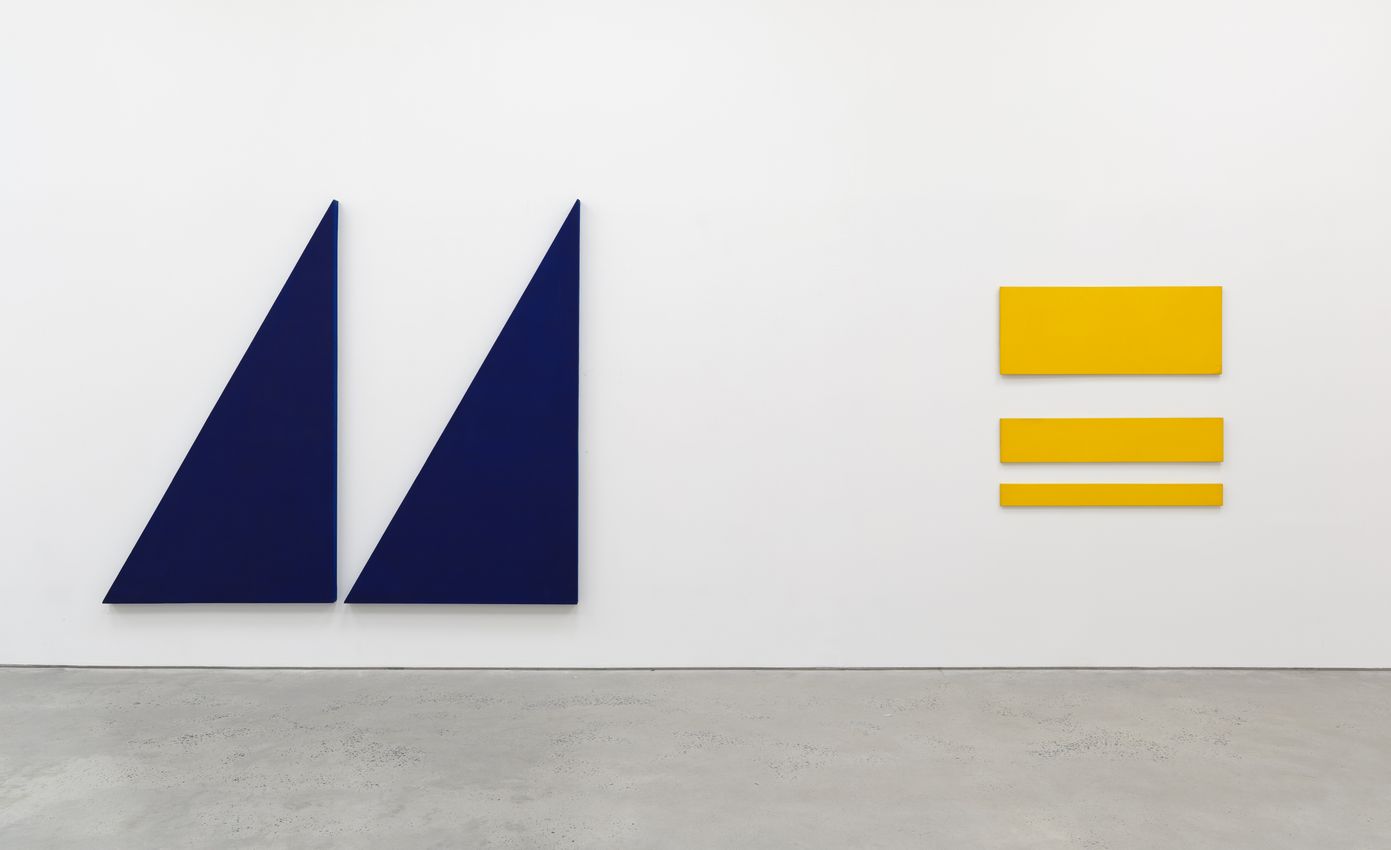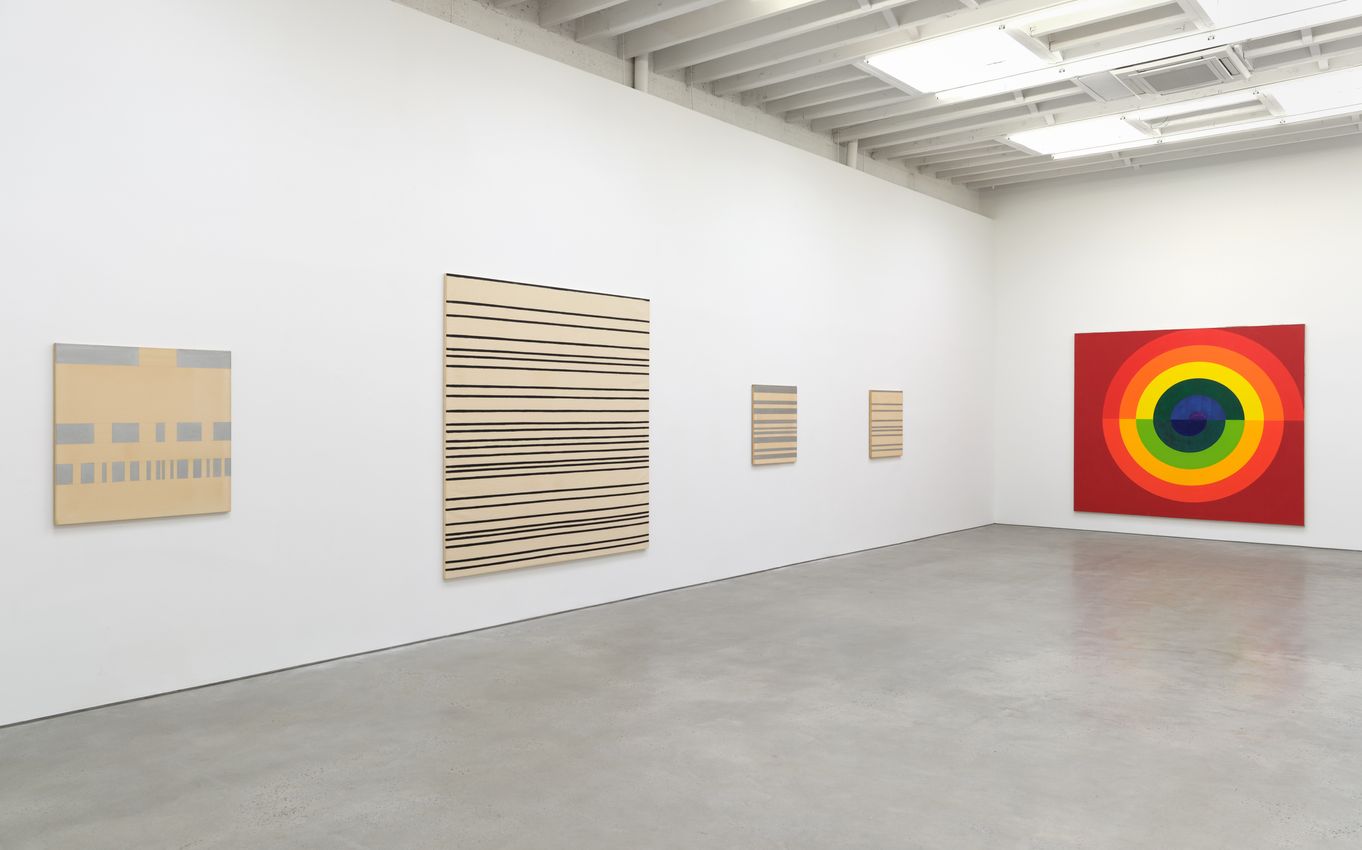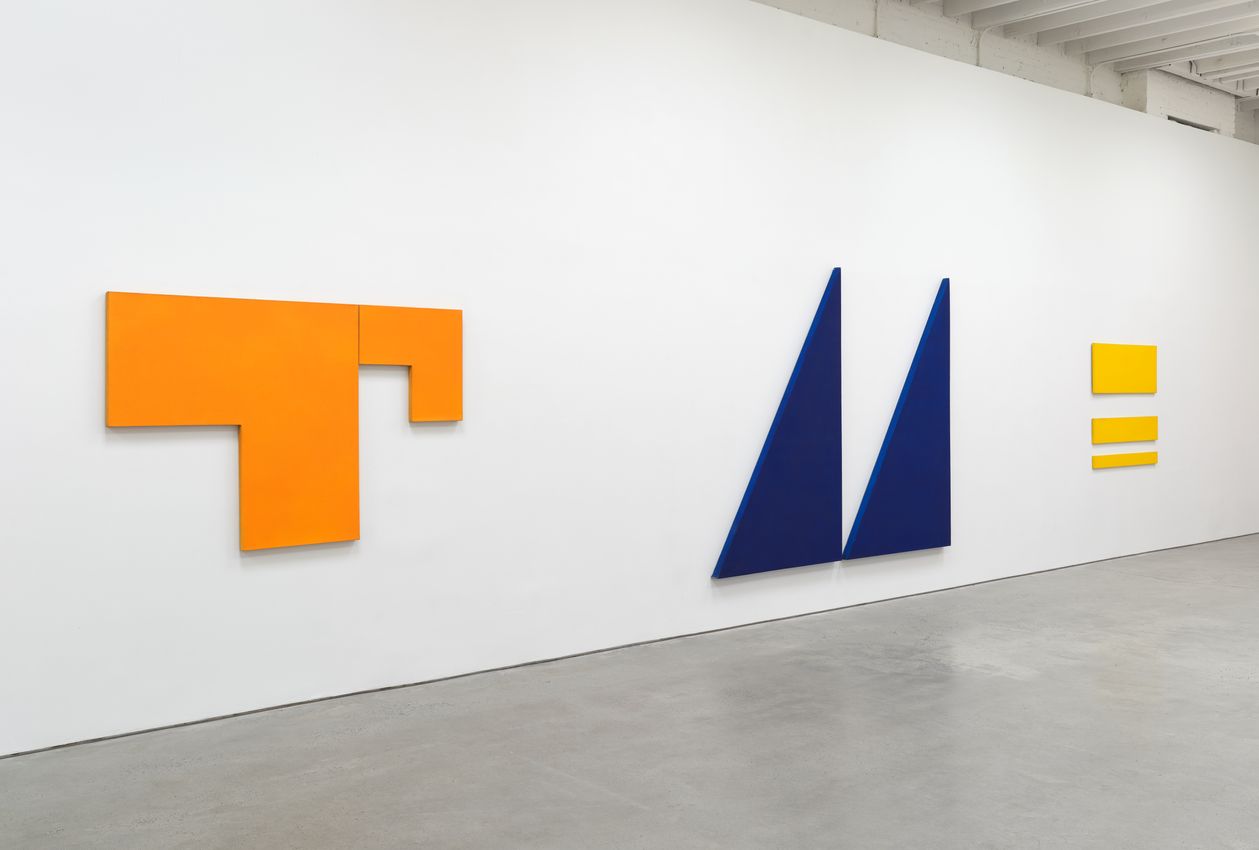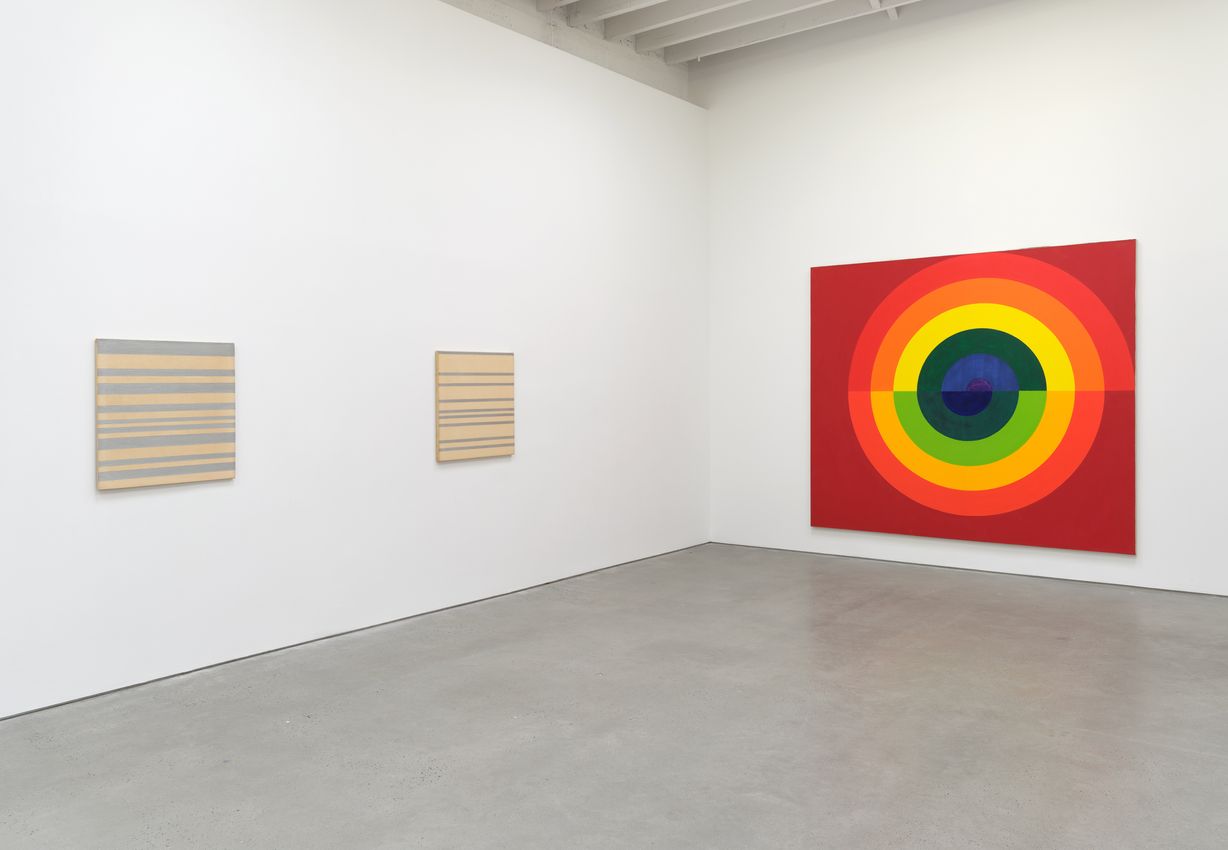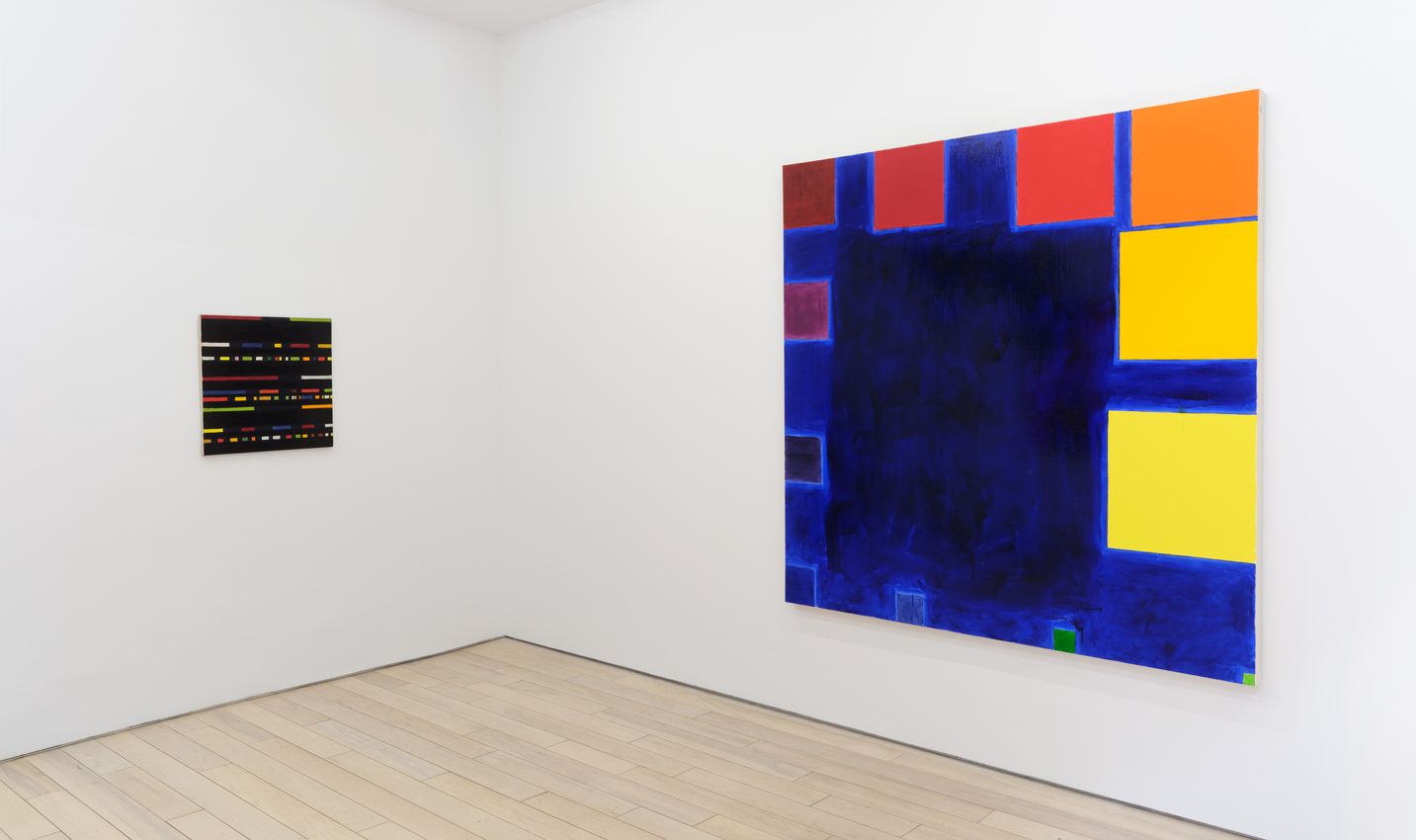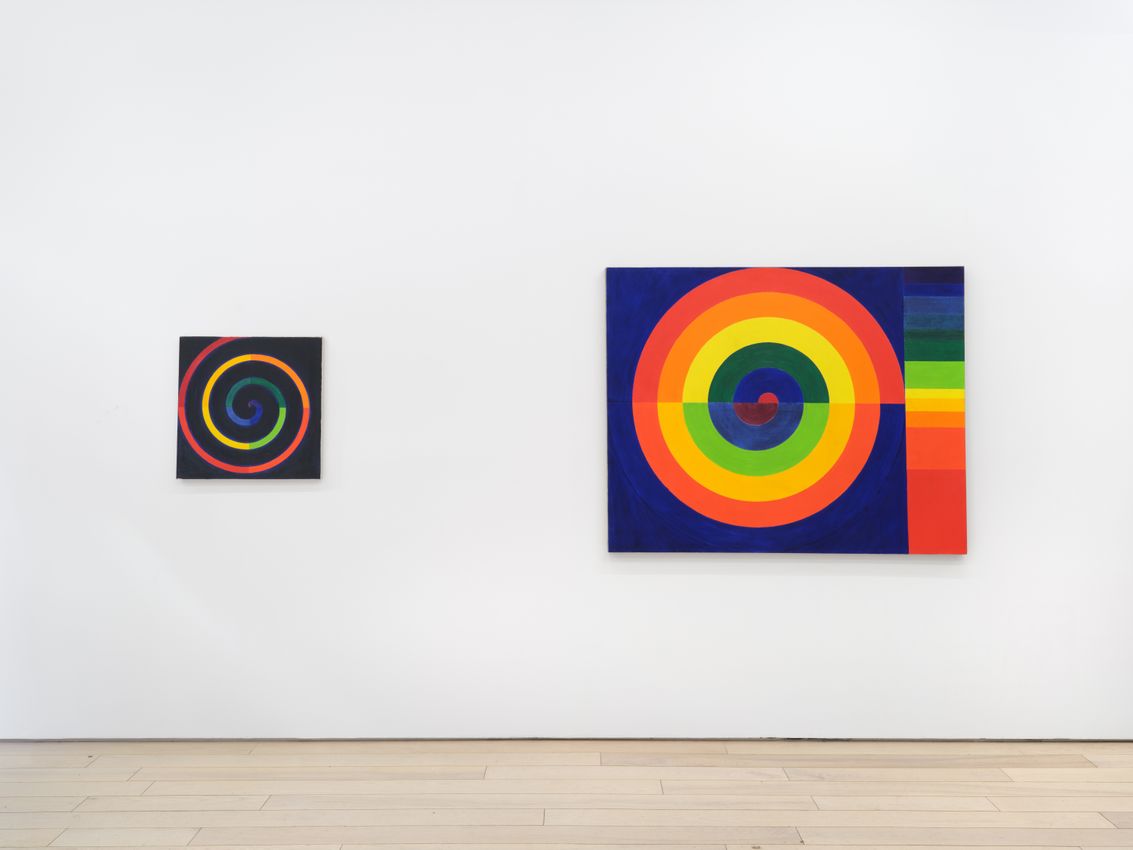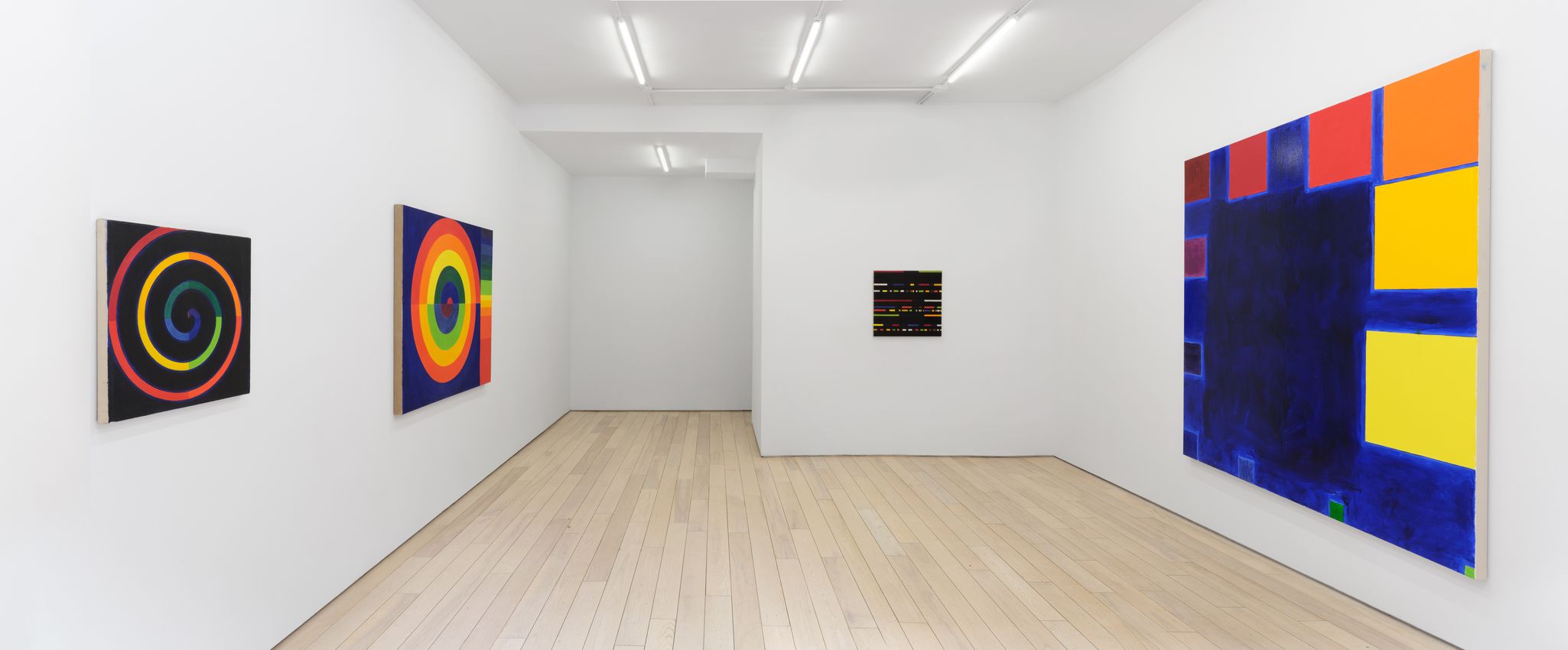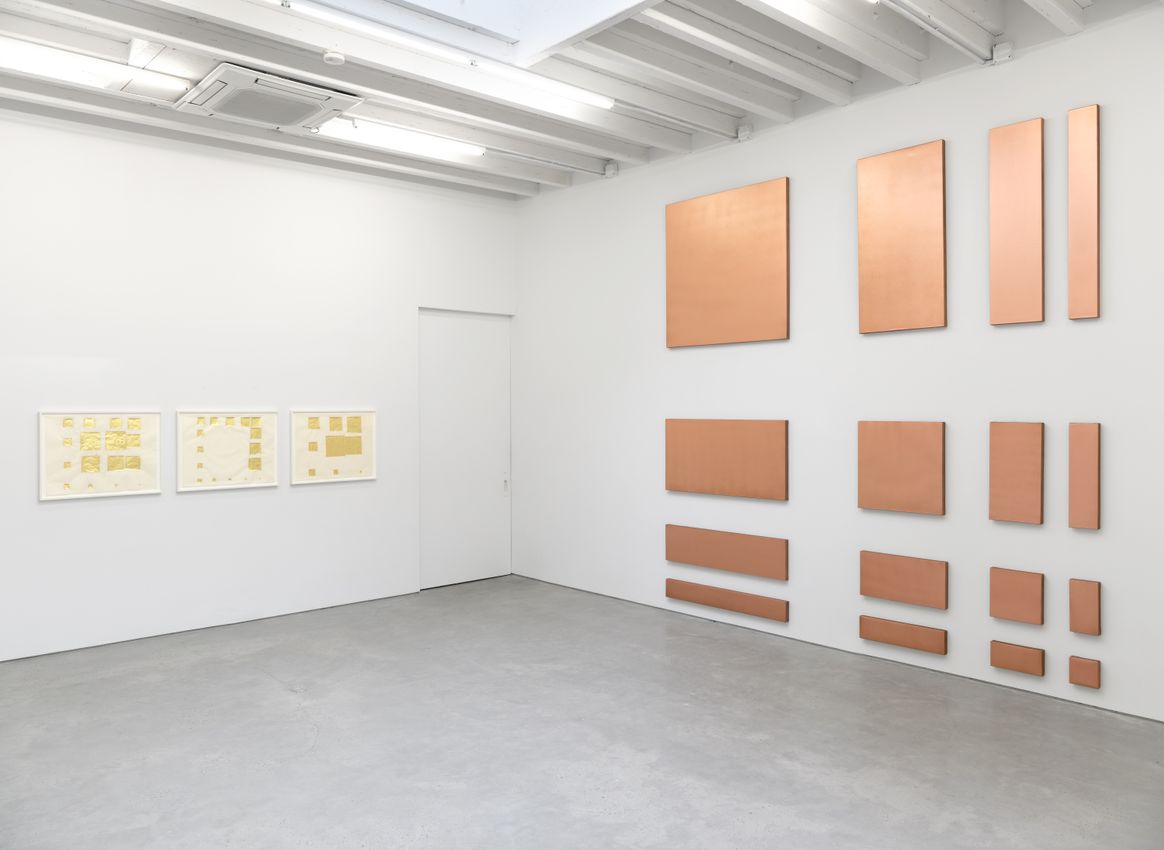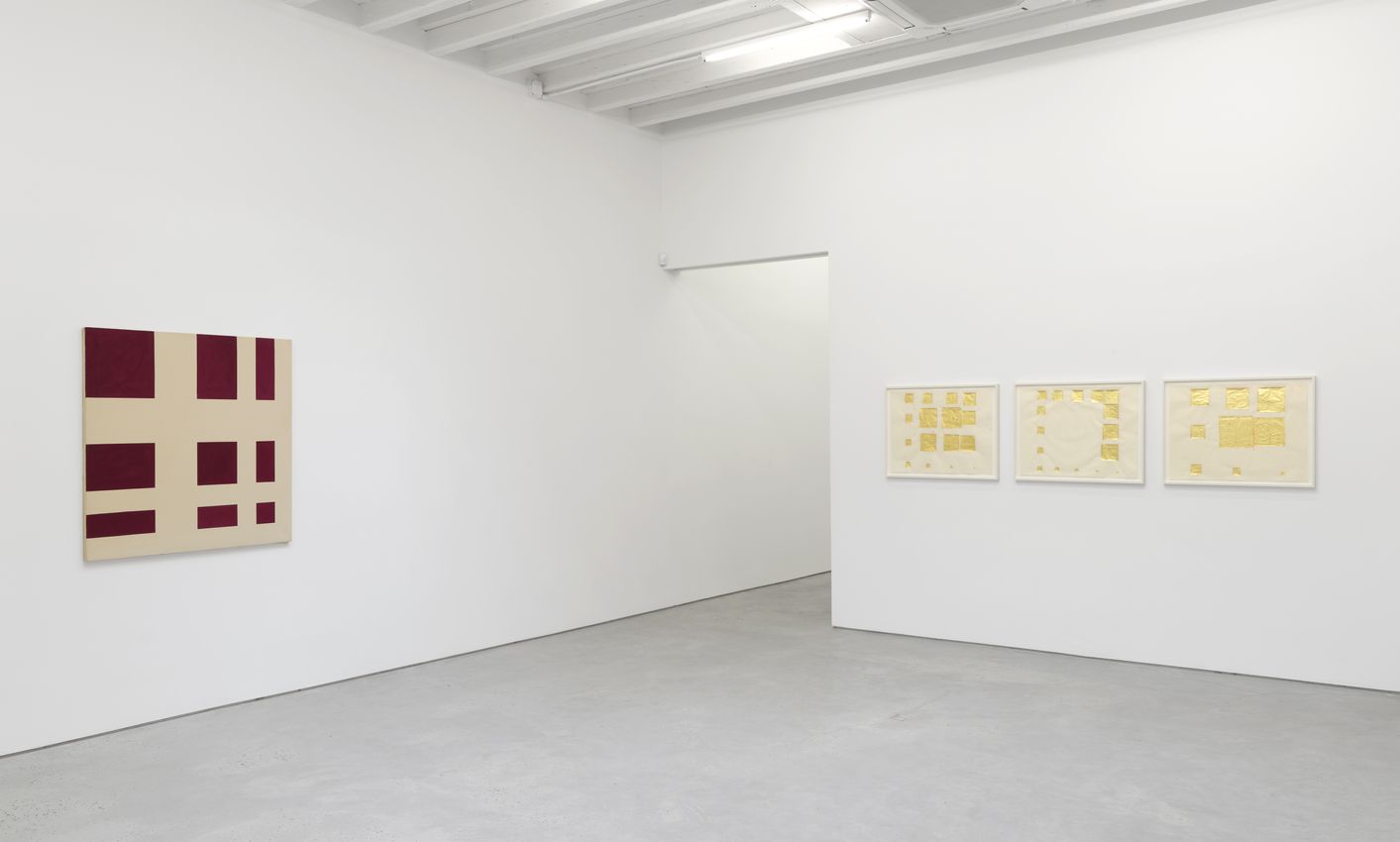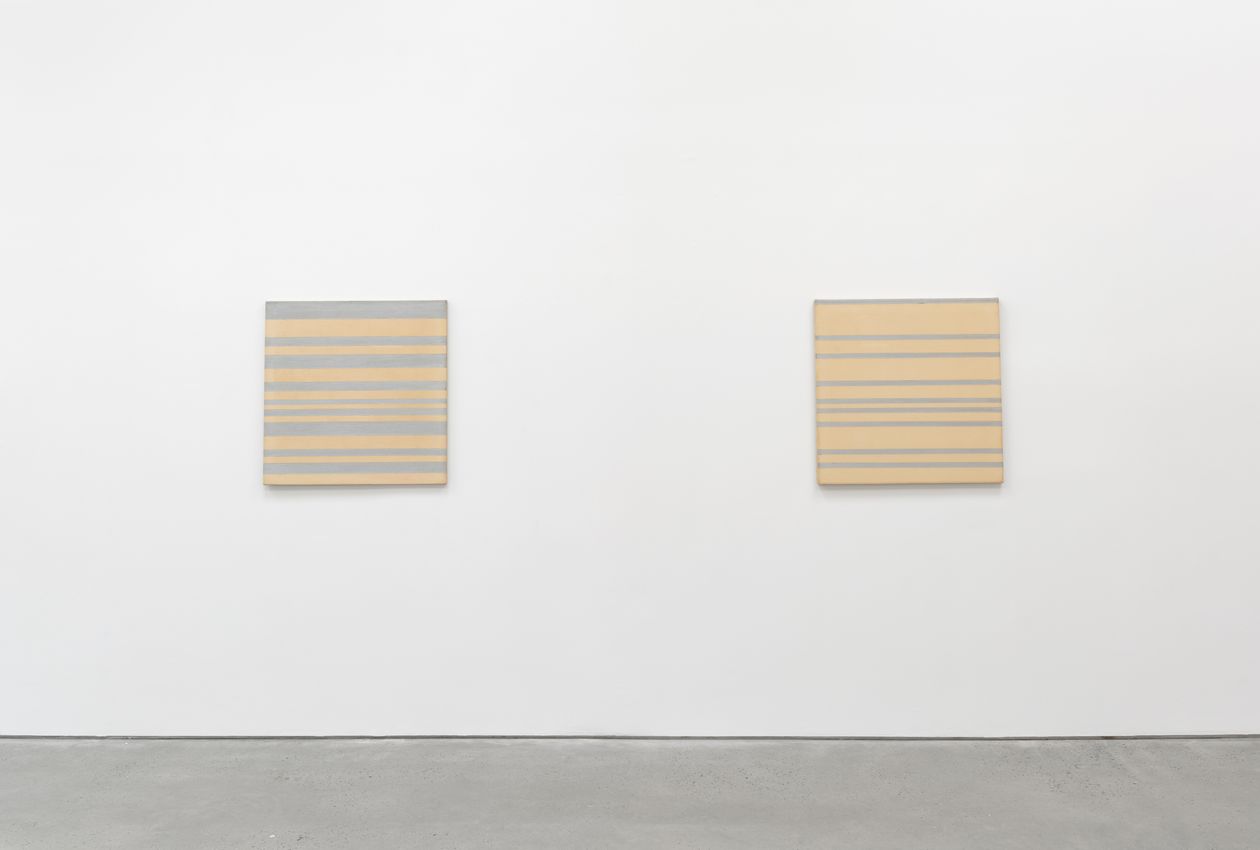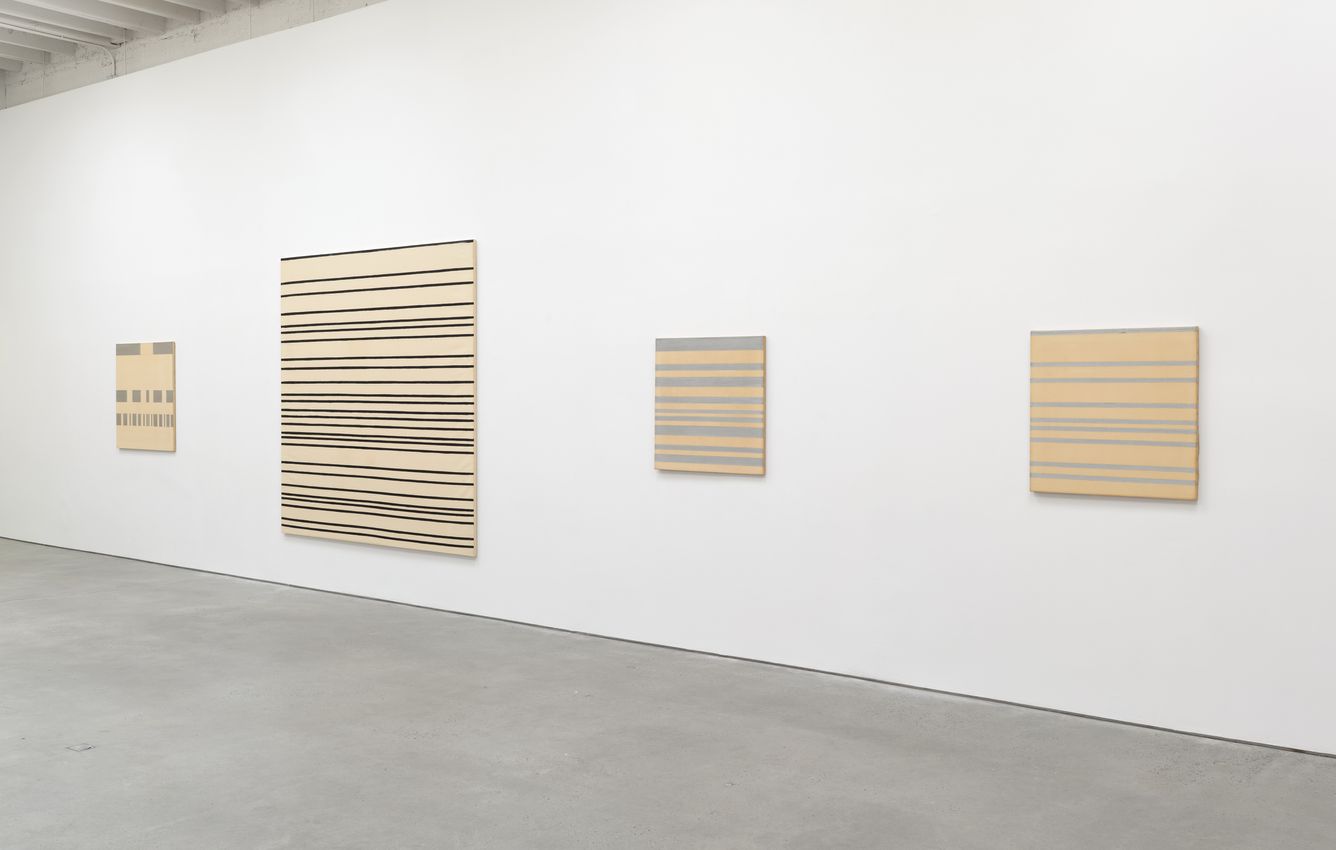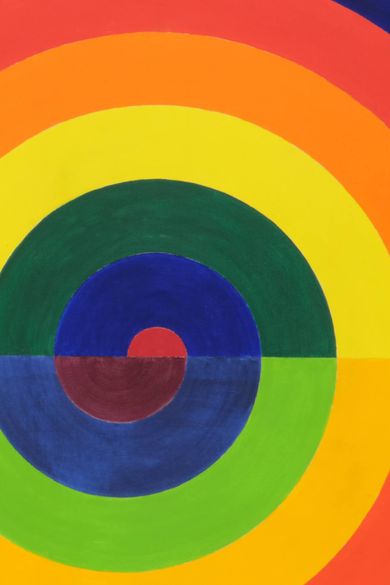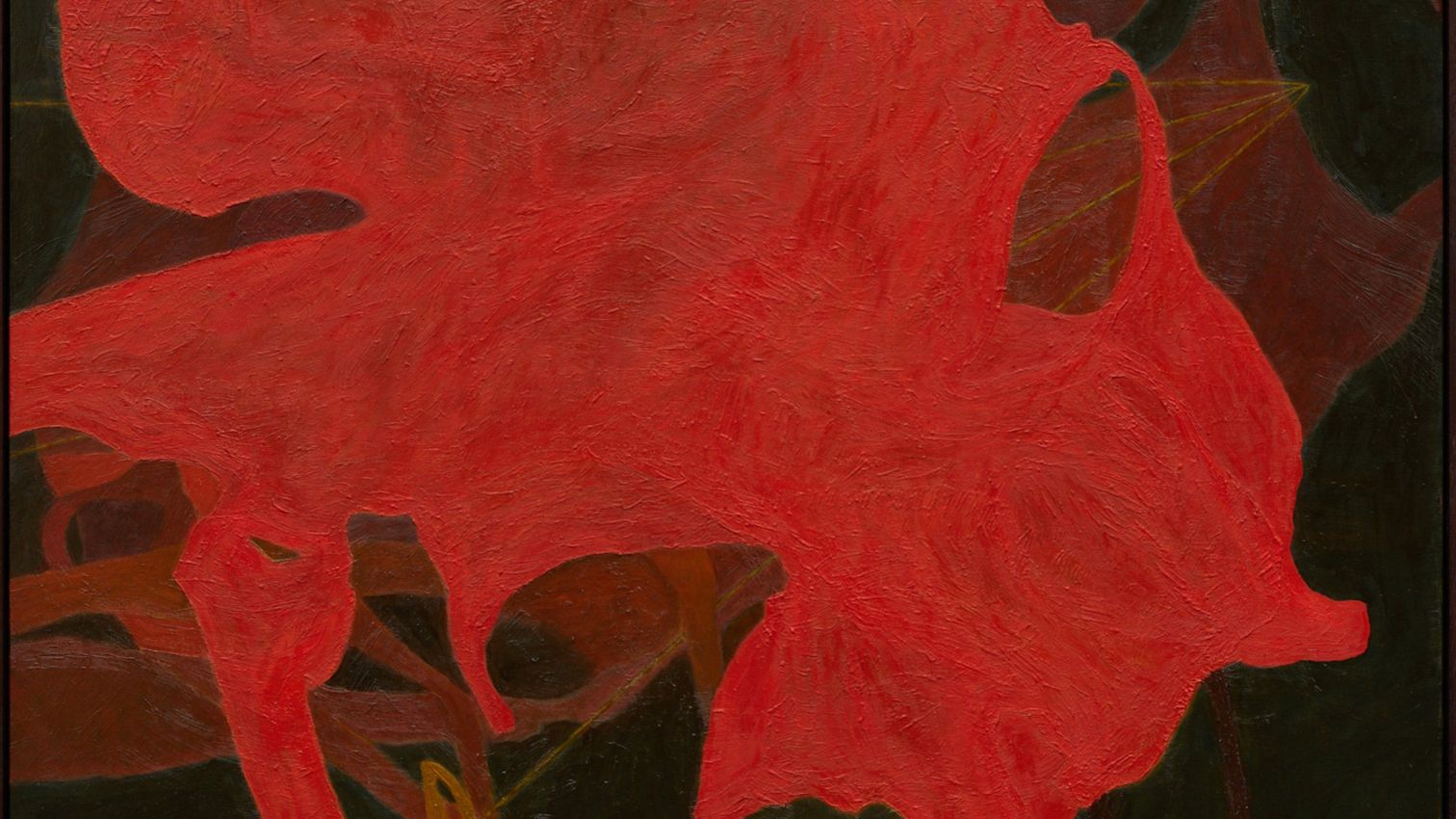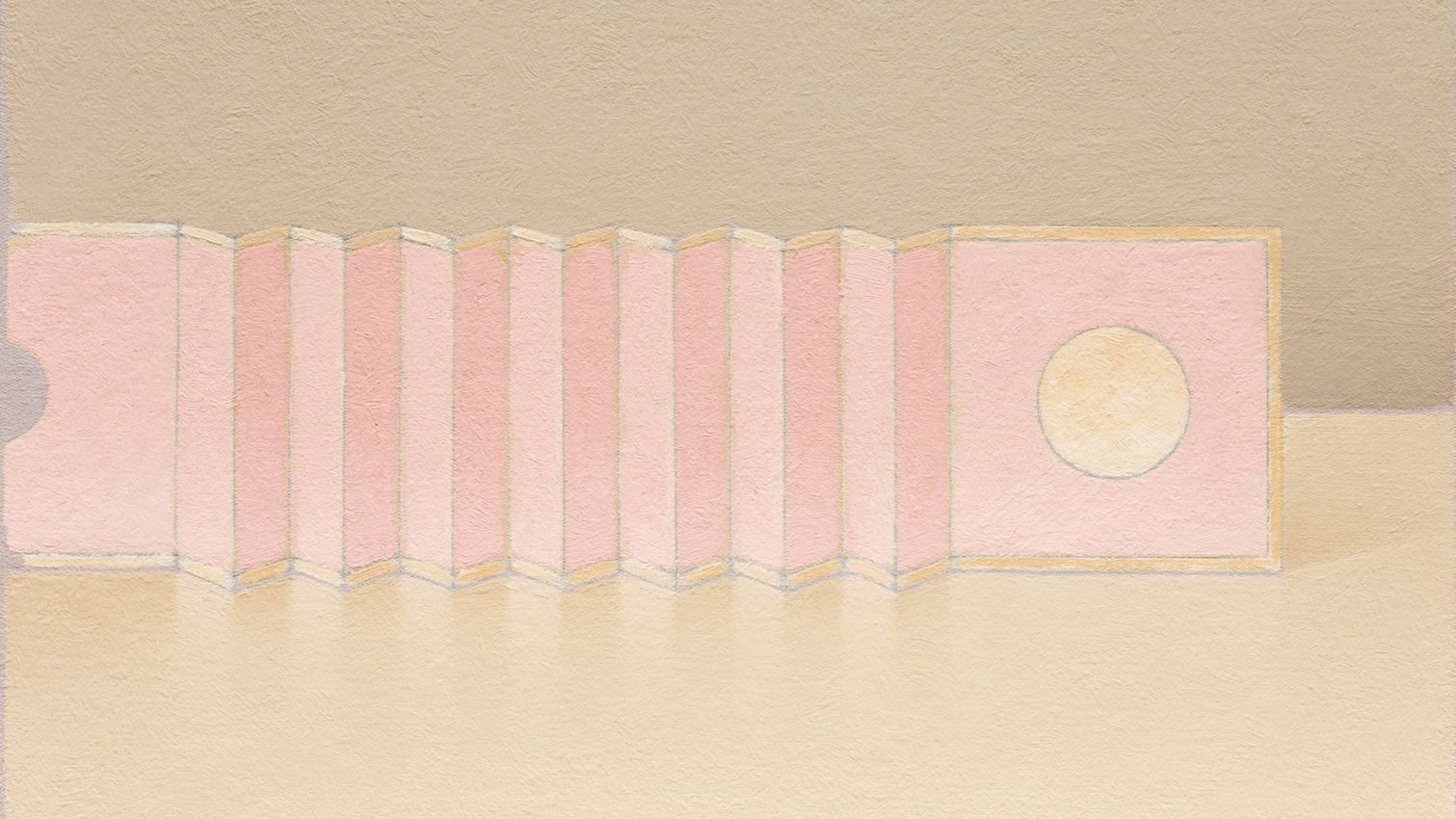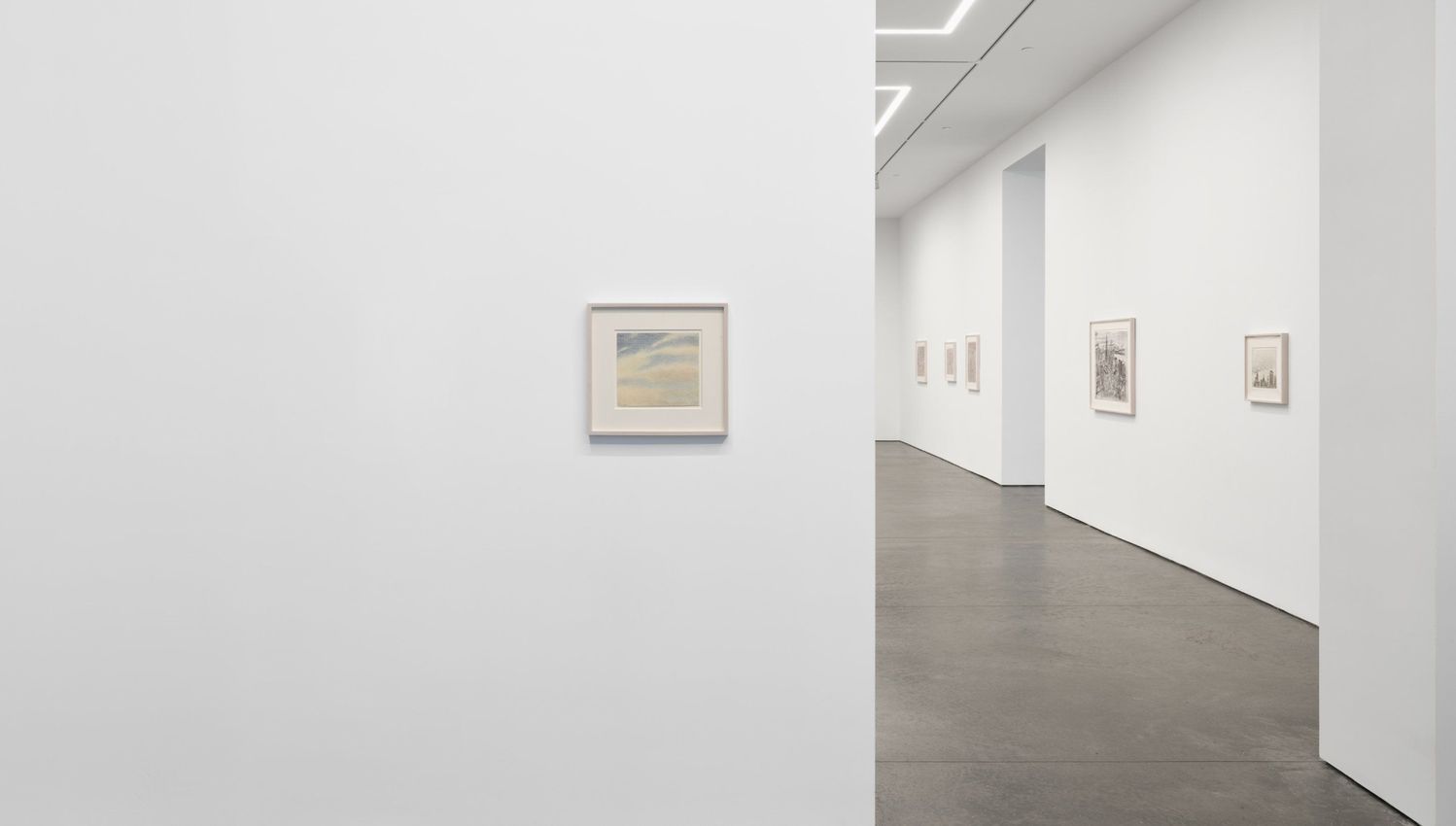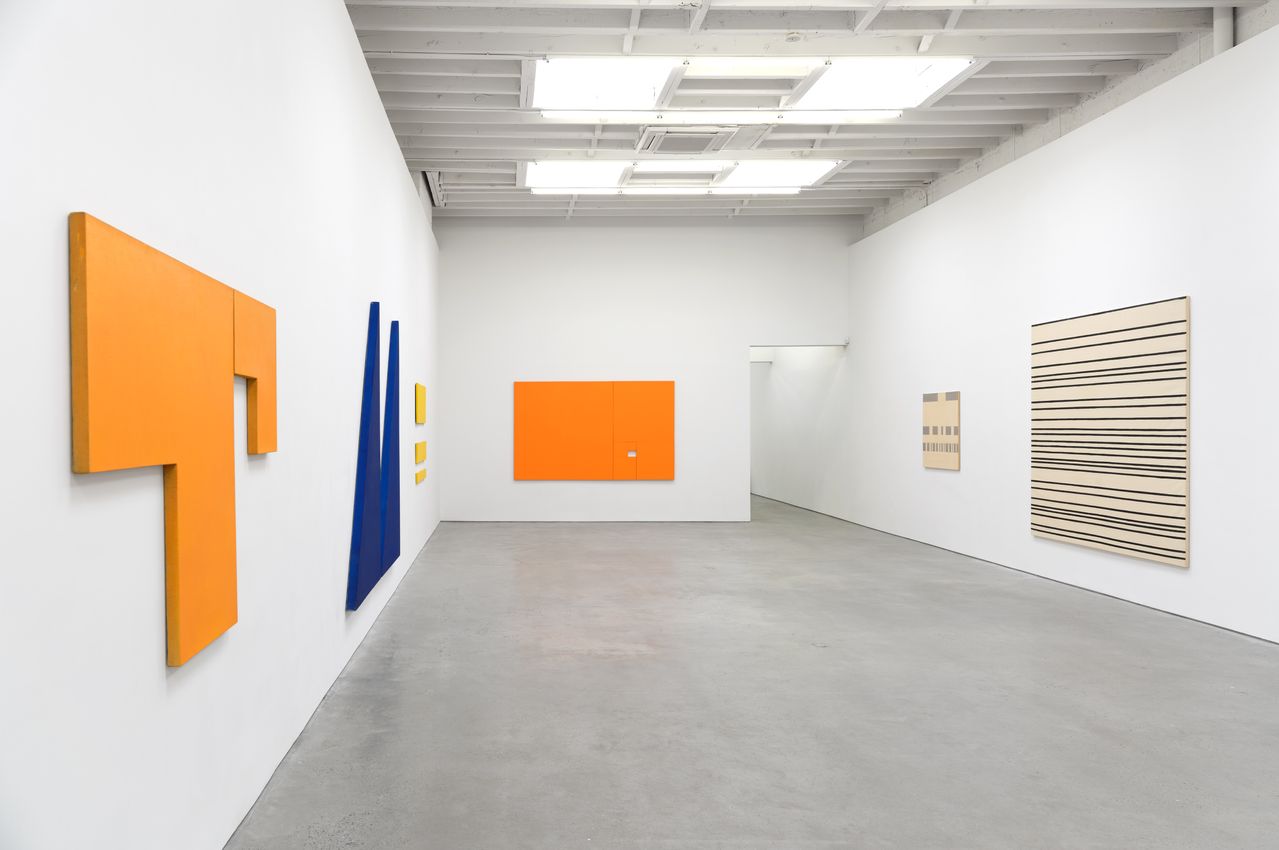
Karma is pleased to present Paintings: 1965-2022, a survey exhibition of work by Paul Mogensen. The exhibition will take place at 188 and 172 East 2nd Street, New York, from March 3rd to April 22nd, 2023.
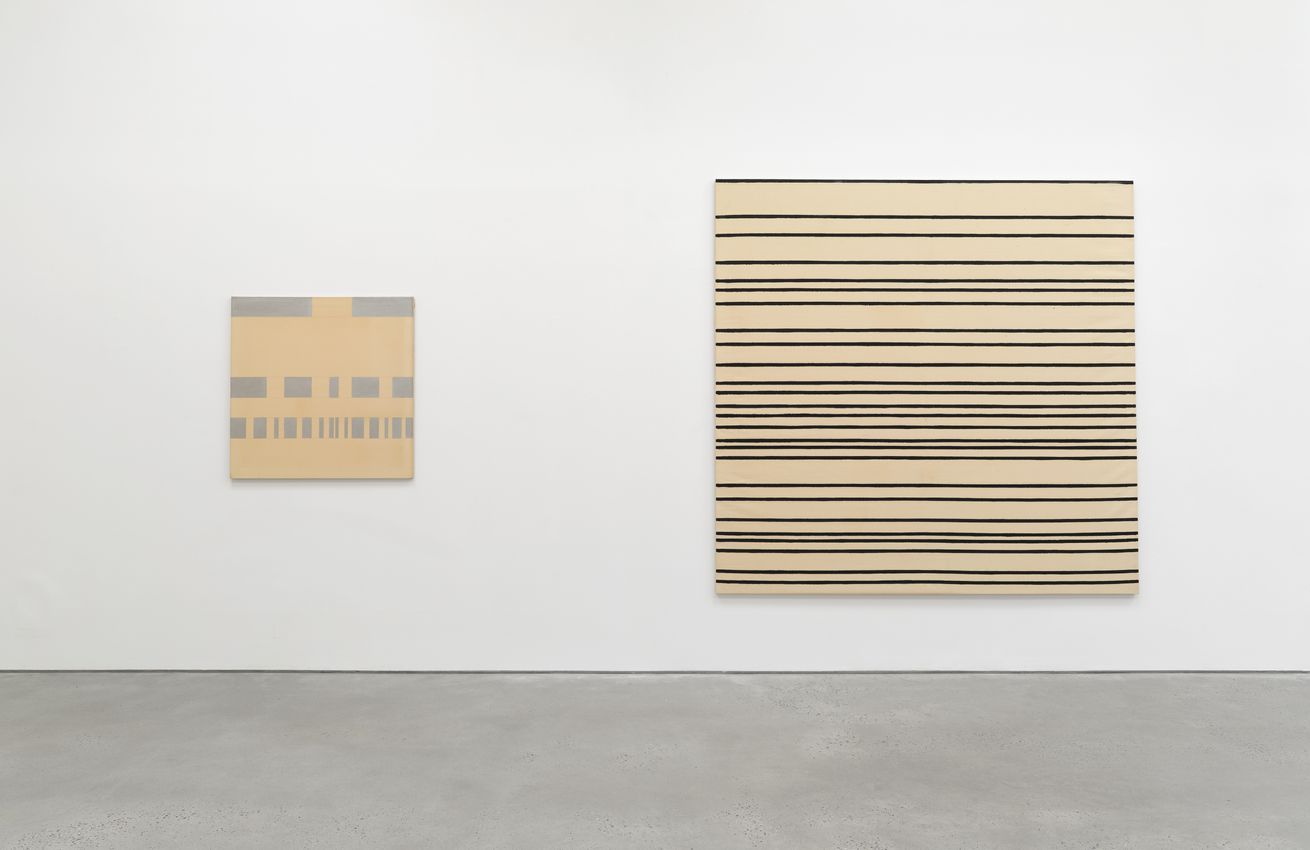
Paul Mogensen is a New York-based painter whose mathematical, progressional work resists categorisation. Throughout his practice, the proportions of his forms, and of the canvases themselves, are predetermined by expanding sets of progressional sequences. If these sequences were not bound to the limits of a canvas, they would radiate outward infinitely. Mogensen’s treatment of colour is elemental, quieting the subjective characteristics of paint by working in monochrome or in solitary applications of paint straight from the tube. For the majority of his career, Mogensen has elected to remove titles as well as dates from his pieces, allowing his geometric explorations to be seen without qualification.
Mogensen’s painting was developed through his training in mathematics and geometry, and born out of the influence of the Russian Constructivists like Kazimir Malevich, Vladimir Tatlin, and Alexander Rodchenko, who endeavoured to create art from basic principles. While at the University of Southern California, Mogensen met David Novros, who would later introduce him to Brice Marden and Klaus Kertess. Kertess ran Bykert Gallery, where all three artists would later exhibit their work in the 1960s. Mogensen arrived in New York in 1965 for his first solo exhibition at Bykert with plans to create an ambitious series of sectional paintings, among them Copperopolis (1966).
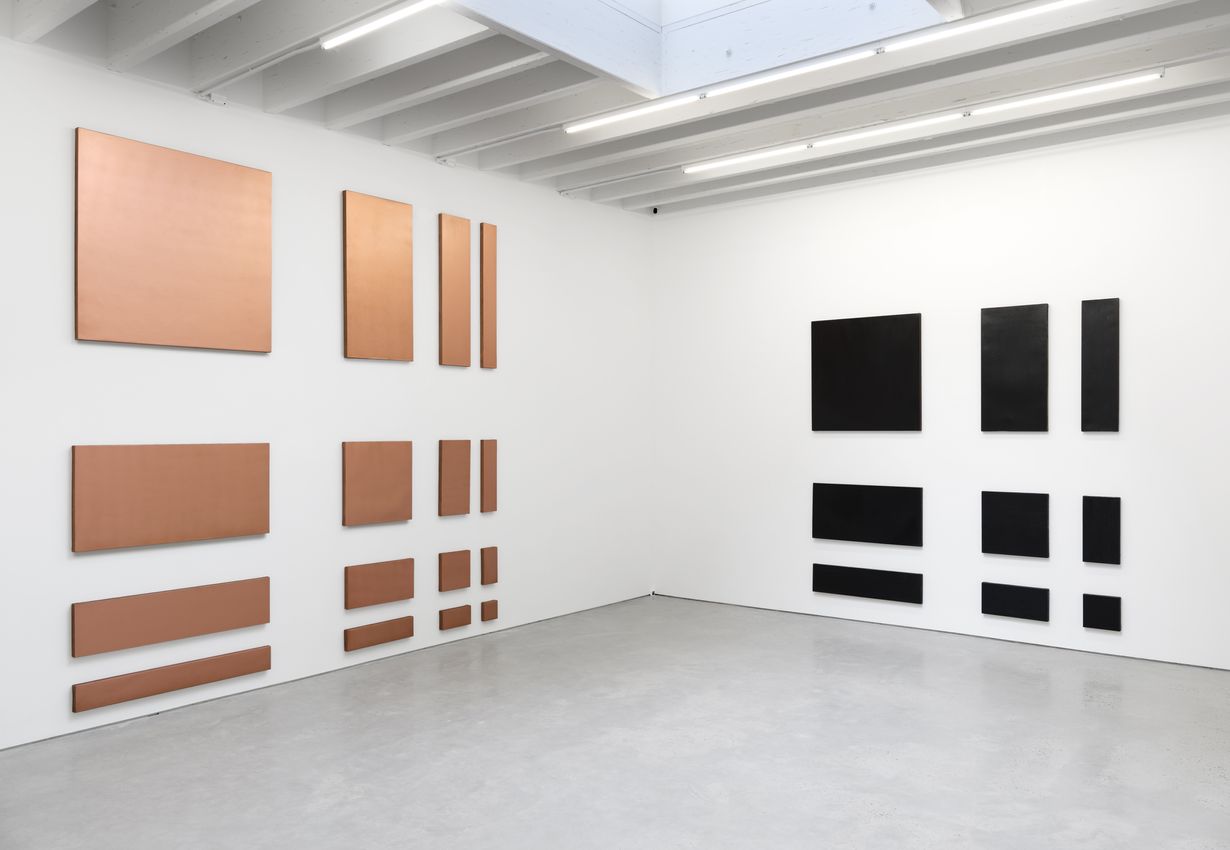
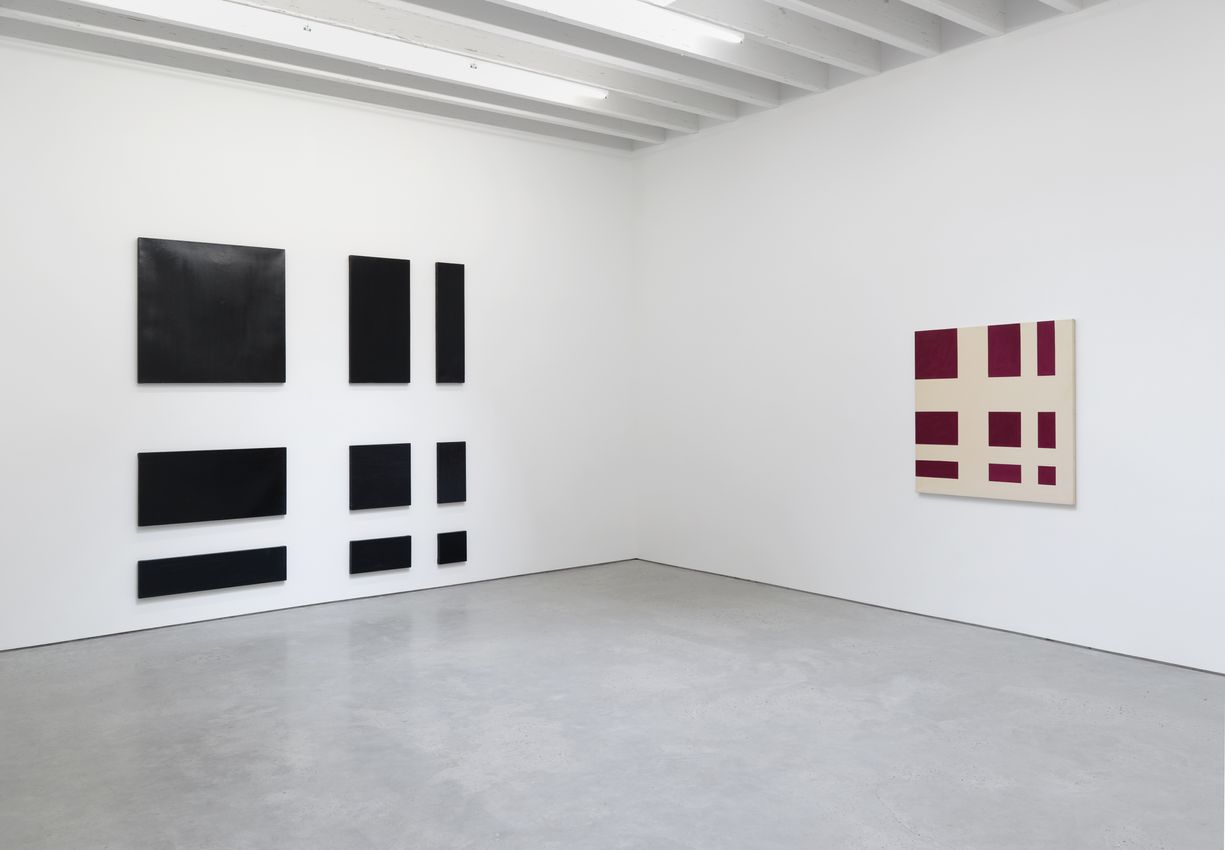
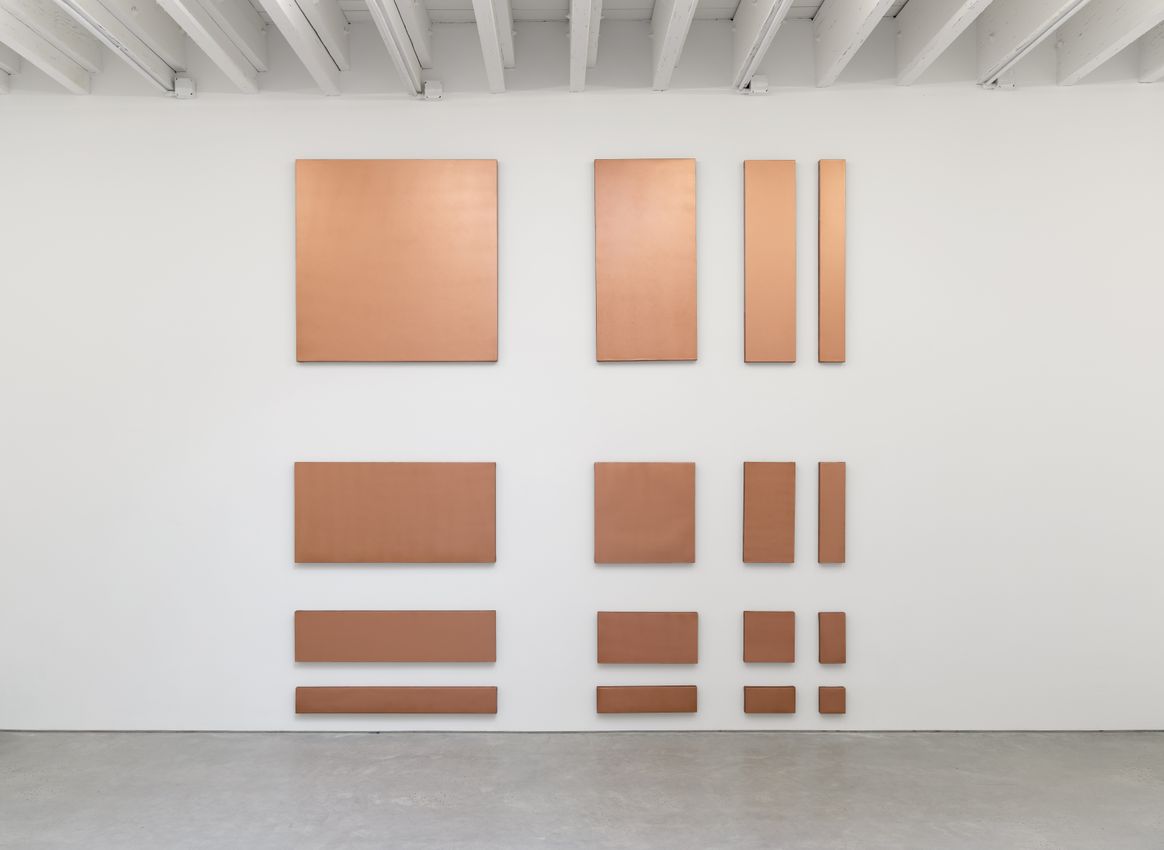
One of the few pieces by Mogensen with a title, Copperopolis (1966) consists of sixteen parts fixed to a wall. The separate sections are unified with an even, smooth layer of vibrant monochrome, an effect Mogensen achieved using copper medium and a sprayer. The work derives its order from an arithmetic progression in which height and width are doubled. Beginning with the smallest square in the bottom right, the work progresses vertically and horizontally, with the space between the units equal to the height (in the vertical) or width (in the horizontal) of the previous unit, until it achieves the overall dimensions of eleven by eleven feet.
Mogensen never plans out his paintings on paper, explaining that ‘once you decide on the arithmetic and then you just make it, it makes itself.’ The emphasis on such predetermined logic is furthered by his working in series, and through reduction and repetition, in which subtle changes can be observed with clarity and purpose. In Mogensen’s methodology, the phenomenological act of seeing is focused onto observable, measurable reality.
Sculptor Lynda Benglis describes Mogensen as ‘a painter with a philosopher’s disposition.’ By employing all of the original painter’s tools, yet stripping away everything except what is measurable, he orients the viewer toward the real. From the constraints of geometry and unmixed colour, Mogensen finds limitless possibilities in the realm of numbers and fixed formulas.
Paul Mogensen (b. 1941, Los Angeles) was presented with the 2019 Award in Art by the American Academy of Arts and Letters. His work is represented in the collections of major museums in the U.S. and abroad, including Kunstmuseum Winterthur, Switzerland; Hammer Museum, Los Angeles, California; Walker Art Center, Minneapolis, Minnesota; Fogg Museum, Cambridge, Massachusetts; High Museum of Art, Atlanta, Georgia; The Menil Collection, Houston, Texas; Museum of Fine Arts, Houston, Texas; Museum of Modern Art, New York; New York Public Library, New York; Wadsworth Atheneum Museum of Art, Hartford, Connecticut; and the Yale University Art Gallery, New Haven, Connecticut.

Paul Mogensen (b. 1941, Los Angeles, CA) is a New York-based painter who has often been associated with Minimalism, although his mathematical, progressional work resists categorization. Rather than reproducing the reductive geometric abstractions of his Minimalist contemporaries, Mogensen uses an iterative format to activate the picture plane. His paintings are meant to be deciphered rather than easily comprehended: often full of movement, they actively draw the eye across the canvas. Each painting is calibrated according to the rules of elemental mathematics, particularly those deriving from Renaissance and Ancient Egyptian theorems. Mogensen uses such arithmetic progressions to determine the sequence and size of each color form. The resultant morse-code-like arrays call to mind the universalist ideas of early 20th century Russian artists and poets admired by Mogensen, such as Mayakovsky, Rodchenko, and Tatlin.


A respected voice in contemporary art discourse.
Focusing on ambitious storytelling and insightful art-world commentary. Ocula Magazine publishes in-depth interviews, critical essays and timely analysis on the artists, exhibitions and ideas driving the global art world.
Learn more about Ocula Magazine
Showcasing the best of the art world.
Ocula partners with galleries from around the world to highlight their artists, artworks and exhibitions. Gallery membership is by application and invitation, with each member vetted by an independent panel.
Learn more about Ocula Membership

Specialises in the sale of major artworks.
Led by a team with deep ties to the world’s leading auction houses, galleries and collectors. Ocula’s advisory team offers bespoke services to high-net-worth clients from around the world who are looking to acquire the best of contemporary and modern art.
Learn more about our team and services