




KENJI IDE
b. 1981, JapanKenji Ide is a Japanese contemporary artist known for creating poetic objects that transform everyday materials into intimate explorations of memory, perception, and space. In 2025, Matthew Brown Gallery in Los Angeles announced the representation of Ide, marking his first gallery partnership in the United States.
Early Years
Ide was born in Yokosuka, Kanagawa Prefecture, in 1981. He completed his MFA at Tama Art University in Tokyo in 2006. He lives and works in Tokyo. Childhood experiences-such as discovering a labyrinth of cardboard boxes at his brother’s preschool showed his fascination with the emotional resonance of objects and spaces. Walking, especially at night, remains a key source of inspiration in his practice.
Kenji Ide Artworks
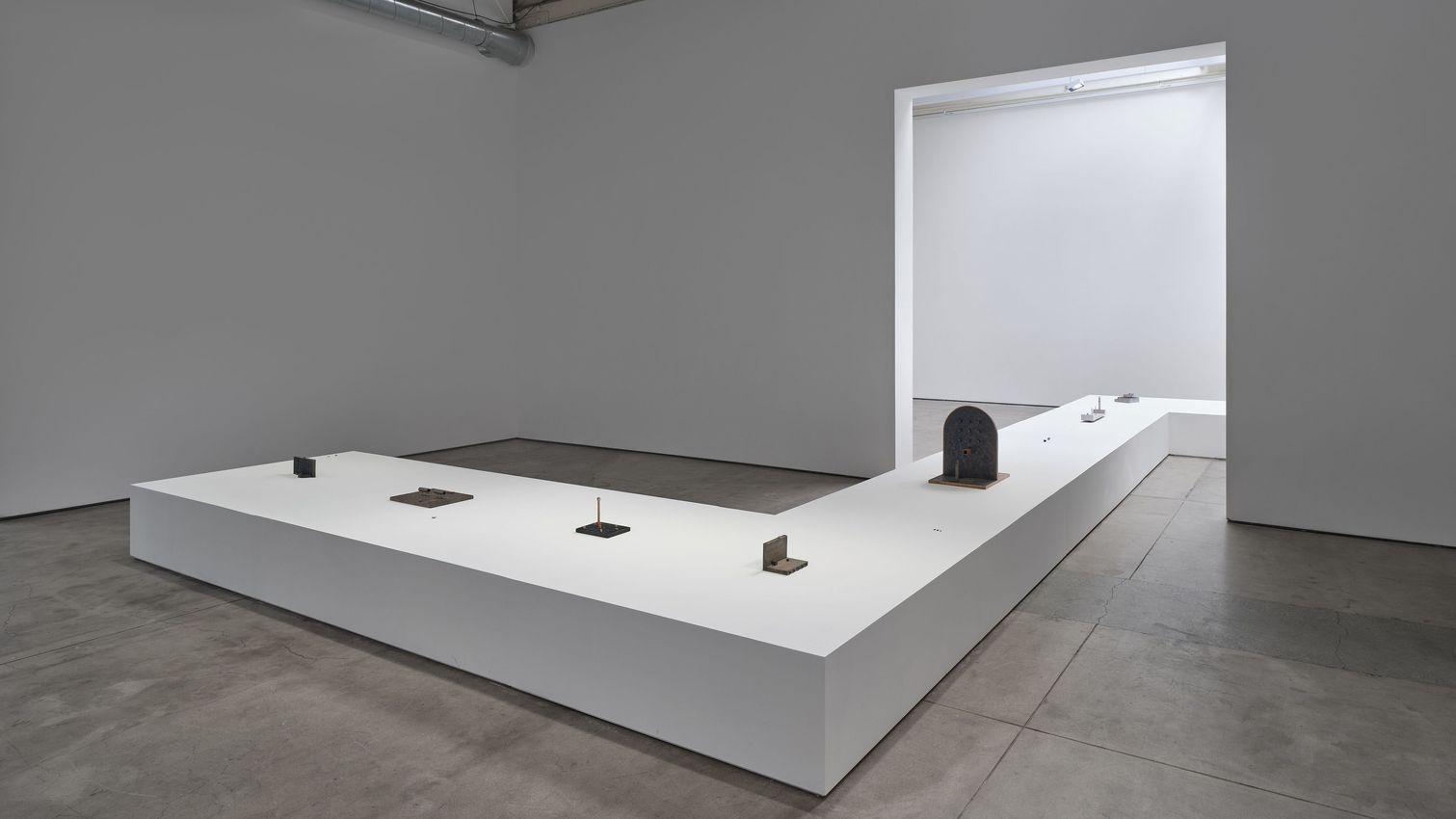
Ide’s contemporary art practice centres on the creation of small-scale objects, which he often refers to as ‘material poetry’. His works combine wood, paper, wax, stone, concrete, and found or personal items, arranged with precise care to evoke fleeting memories, ambiguous narratives, and the beauty of ordinary moments.
Material Poetry and Assemblage
Since the early 2010s, Ide has developed a distinctive approach to sculpture, using simple geometric forms—spheres, rods, and discs—and everyday ephemera to create objects that are at once abstract and deeply personal. His installations, such as “Some Other Times” (Museum of Literature, Warsaw, 2024), invite viewers to reflect on the physicality of memory and the passage of time, often referencing specific incidents or relationships.
Theatricality and Perception
Ide’s recent solo exhibition, The time of a shadow (Matthew Brown Gallery, Los Angeles, 2024), explored the dual nature of perception and the self, drawing inspiration from Japanese Noh theatre and the philosophical dimensions of seeing and being seen. His sculptures, arranged on low platforms, encourage a meditative engagement, with each object acting as a conceptual prompt or poetic fragment.
Memory, Place, and the Everyday
Ide’s works frequently reference childhood, walking, and the landscapes of his native Japan, imbuing his objects with nostalgia and a sense of place. His approach is rooted in Japanese aesthetics, natural forms, and a sensitivity to emptiness and silence, inviting viewers to project their memories onto his artworks.
Exhibitions
Kenji Ide has been the subject of both solo and group exhibitions at important institutions. A selection of important exhibitions is provided below.
Solo Exhibitions
- The time of a shadow, Matthew Brown Gallery, Los Angeles (2024)
- Some other times, Museum of Literature, Warsaw (2024)
- American Friend, Adams and Ollman, Portland (2024)
- A poem of Perception, Portland Japanese Garden (2022)
- Two persons, two times, KAYOKOYUKI, Tokyo (2023)
Group Exhibitions
- Seas, Night Skies, and Deserts, Wschód, New York (2024)
- In Search of the Miraculous, Wschód, Warsaw (2023)
- Social Life, KNULP, Sydney (2021)
- The Sentimental Organization of the World, Crevecoeur, Paris (2020)
- Kiss in Tears, Freedman Fitzpatrick, Los Angeles (2018)
Kenji Ide FAQs
What materials does Kenji Ide use in his artworks?
Ide works with wood, paper, wax, stone, concrete, and found objects, often incorporating personal ephemera to evoke memory and emotion.
How does Ide’s background influence his art?
His childhood experiences, particularly moments of discovery and exploration of landscapes, inform the emotional and spatial qualities of his sculptures.
Where can I see Kenji Ide’s work?
His artworks have been exhibited at the Museum of Literature in Warsaw, Matthew Brown Gallery in Los Angeles, Portland Japanese Garden, KAYOKOYUKI in Tokyo, and Wschód in New York and Warsaw.
What role does theatre play in Ide’s practice?
Ide’s exhibition The time of a shadow drew on the aesthetics of Japanese noh theatre, using spare, abstract forms to explore perception and the unseen aspects of the self.
Why does Ide call his works ‘objects’ rather than ‘sculptures’?
He prefers ‘objects’ to emphasise the intimate, personal connection with his creations, reflecting their roots in everyday life and memory.
Ocula | 2025




Explore and Follow Artists Shaping Contemporary Art
A respected voice in contemporary art discourse.
Focusing on ambitious storytelling and insightful art-world commentary. Ocula Magazine publishes in-depth interviews, critical essays and timely analysis on the artists, exhibitions and ideas driving the global art world.
Learn more about Ocula Magazine
Showcasing the best of the art world.
Ocula partners with galleries from around the world to highlight their artists, artworks and exhibitions. Gallery membership is by application and invitation, with each member vetted by an independent panel.
Learn more about Ocula Membership
Specialises in the sale of major artworks.
Led by a team with deep ties to the world’s leading auction houses, galleries and collectors. Ocula’s advisory team offers bespoke services to high-net-worth clients from around the world who are looking to acquire the best of contemporary and modern art.
Learn more about our team and services