





SIMON DENNY
b. 1982, New ZealandSimon Denny is a New Zealand artist based in Berlin whose installations, paintings, sculptures, videos, and digital works examine the social and political implications of technology, from startup culture and social media to blockchain and cryptocurrency.
Born in Auckland in 1982, Denny is best known for projects such as All You Need Is Data – The DLD 2012 Conference Redux (2013), The Personal Effects of Kim Dotcom (2013–14), TEDxVaduz (2013), Secret Power (2015), Products for Organising (2015–16), Blockchain Future States (2016), and Mine (2019–21), which variously address surveillance, platform culture, entrepreneurship, hacking, and blockchain through the visual languages of conferences, interfaces, logistics, and display. His work has been shown at institutions including MoMA PS1, New York; Serpentine Galleries, London; WIELS, Brussels; Hammer Museum, Los Angeles; MONA, Tasmania; and Auckland Art Gallery Toi o Tāmaki, and he represented New Zealand at the 56th Venice Biennale in 2015.
Early Life and Career
Denny studied at Elam School of Fine Arts at the University of Auckland, graduating in 2005, and later at the Städelschule in Frankfurt am Main, where he completed his studies in 2009. He has since developed an international practice between New Zealand and Europe, living and working in Berlin and teaching as Professor of Time-Based Media at HFBK Hamburg since 2018.
Works and Methods
Denny’s installations employ an assortment of materials, including text, corporate logos, graphic design, photographs, and parts of machinery, to interrogate the interrelated structures of technology and surveillance in the contemporary world. Across projects dealing with recent technological innovation, data extraction, and digital distribution, his work explores how technology shapes governmental organisations, culture, and the economy.
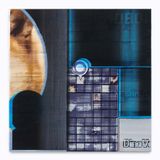
A number of Denny’s best-known works focus on distinct episodes in recent tech history. All You Need Is Data – The DLD 2012 Conference Redux (2013), first shown at Petzel, New York, comprised 89 inkjet-printed canvases designed to evoke Apple’s iOS interface and assembled from images and transcriptions drawn from footage of the 2012 Digital-Life-Design conference in Munich. By visually summarising an invitation-only gathering of figures from technology, design, science, art, and politics, the work offered a pointed view of the specialised and highly managed world of the tech industry.
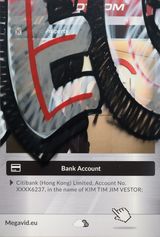
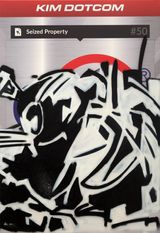
In The Personal Effects of Kim Dotcom (2013–14), Denny used canvas-based and sculptural installations to examine privacy, ownership, and the unstable status of digital property. Developed from the 2012 raid on the Megaupload founder’s New Zealand mansion, the project reconstructed both tangible and intangible possessions—from luxury goods to financial holdings—as substitutes for absent originals. Across presentations at MUMOK, Vienna (2013), Firstsite, Colchester (2014), Adam Art Gallery, Wellington (2014), and MoMA PS1, New York (2015), Denny adapted the work to each venue using locally sourced materials, producing what he described as a deliberately ‘low-res’ version of a dispersed collection.
An important strand within this trajectory began with TEDxVaduz (2013), a conference project Denny realised with Daniel Keller at Kunstmuseum Liechtenstein. Conceived in direct dialogue with TED’s model of idea-sharing, the event examined the rhetoric of innovation by staging the first officially licensed TEDx conference in Liechtenstein, a setting chosen for its close association with wealth, offshore finance, and corporate registration. Denny and Keller designed a stage with a backdrop combining a tag cloud of the most frequently used words in TED talks and an HD rendering of Liechtenstein as a tropical island, turning the conference itself into a critical image of tech culture.
From that project emerged the TEDxVaduz atmospheres series (2014), first shown in TEDxVaduz redux (2014) at T293, Rome, where stage elements, videos, slide presentations, and wall-mounted sculptural works condensed individual talks into discrete objects. TEDxVaduz Atmospheres: Out of the Valley (Fend) (2014), for example, comprised a digital print on Plexiglas with stage design images and a display cake iced with the successful TEDx application. By distilling Peter Fend‘s presentation into a compact sculptural vignette, the work shows how Denny transforms talks, branding, and event design into objects of analysis, situating Silicon Valley’s language of disruption within his wider practice of examining technology as performance, ideology, and display.
Denny extended these concerns in Products for Organising (2015–16), his solo exhibition at Serpentine Galleries, London, developed in collaboration with Matt Goerzen. Glass vitrines containing technological devices and everyday objects traced the history of hacking and its uptake within contemporary corporate culture, while works such as Formalised Org Chart/Architectural Model: GCHQ 3 Agile/Holacracy Workspace (2015) and Zappos 1 (2015) examined the management structures and visual rhetoric of large organisations. In the same year, Secret Power (2015), presented at the New Zealand Pavilion for the 56th Venice Biennale, addressed state surveillance and communication systems through installations based on the Snowden files, made in collaboration with designer David Bennewith.
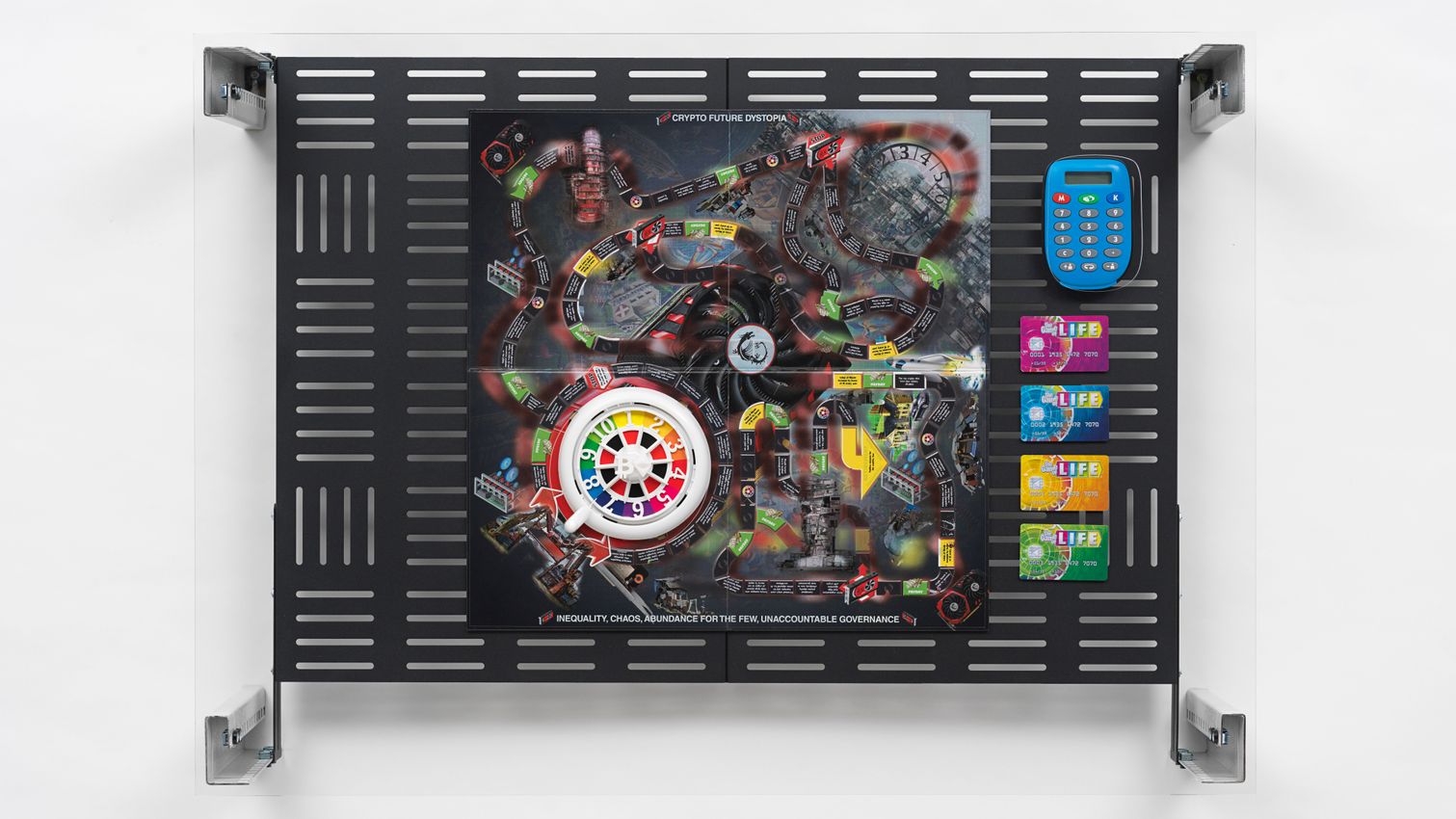
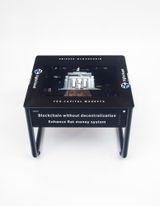
Later projects including Blockchain Future States (2016) and Mine (2019–21) extended Denny’s inquiry into cryptocurrency, extraction, and speculative economies. In Blockchain Future States (2016), shown at Petzel, he examined the blockchain strategies of Ethereum, 21 Inc., and Digital Asset through installations incorporating board games, Pokémon characters, and custom-made globes. Mine (2019), first presented at MONA, Tasmania, expanded this research into environmental, political, and technological extraction through works such as Extractor (2019), a functional board game about farming data, and O (2019), a device that collected visitor information while alerting audiences to the exploitative potential of data-mining systems; the exhibition later travelled to Kunstsammlung Nordrhein-Westfalen, Düsseldorf (2020), and Petzel, New York (2021). Denny has also addressed the environmental cost of blockchain in works such as Mine Offset: Ethereum Kryptowährung Mining-Rig (2021), his first NFT, which was tied to a commitment to retire a real-world mining rig used for blockchain transactions.
Themes and Context
Simon Denny’s work explores how technological systems are branded, narrated, and normalised. Often associated with post-internet art, his practice stands out for its sustained attention to infrastructure, governance, and the economic beliefs embedded in digital culture.
As Denny noted in a 2016 interview with Ocula, he is interested in reflecting ‘a wide spectrum of different frameworks of media and knowledge’, a position that helps explain the breadth of his references across corporate culture, security systems, entrepreneurial rhetoric, and journalistic research. In more recent projects, he has also turned to the visual language of virtual worlds and private space enterprise. Series such as Metaverse Landscapes (2023–) and the Auckland Art Gallery commission Optimism (2023) show how his work continues to track the changing imagery of innovation while remaining grounded in questions of ideology and power.
Exhibitions and Recognition
Denny has presented solo exhibitions at venues including Portikus, Frankfurt (2009); MoMA PS1, New York (The Innovator’s Dilemma, 2015); Serpentine Galleries, London (Products for Organising, 2015–16); WIELS, Brussels (The Maypole Dance, 2016); Museum of Contemporary Art Cleveland (The Founder’s Paradox, 2017); MONA, Tasmania (Mine, 2019); K21 Kunstsammlung Nordrhein-Westfalen, Düsseldorf (Mine, 2020); Kunstverein Hannover (Metaverse Landscapes, 2023); and Auckland Art Gallery Toi o Tāmaki (Optimism, 2023–24). He has participated in biennials including the Venice Biennale (2013, 2015), Berlin Biennale (2016), Gwangju Biennale (2018), Athens Biennale (2021), and Diriyah Biennale (2024), and his work is held in collections such as MoMA, New York; Walker Art Center, Minneapolis; Kunsthaus Zürich; Hamburger Kunsthalle; and Te Papa Tongarewa, Wellington. In 2025 he was appointed a Member of the New Zealand Order of Merit. In 2026, he showed Rules Based Order at Kraupa-Tuskany Zeidler in Munich.
Simon Denny FAQs
What is Simon Denny best known for?
Simon Denny is best known for installations and research-driven works about technology culture, surveillance, and blockchain. His most widely discussed projects include All You Need Is Data – The DLD 2012 Conference Redux (2013), The Personal Effects of Kim Dotcom (2013–14), TEDxVaduz (2013), Secret Power (2015), and Mine (2019–21).
What themes does Simon Denny explore?
Simon Denny’s work explores the political and economic narratives built around digital systems. Recurring themes include startup ideology, state surveillance, interface culture, cryptocurrency, data extraction, and the ways innovation is framed through design, logistics, and corporate storytelling.
What was the ‘TEDxVaduz ‘project (2013)?
TEDxVaduz (2013) was a conference Simon Denny realised with Daniel Keller at Kunstmuseum Liechtenstein, and the first officially licensed TEDx event in the country. By adopting TED’s familiar format while placing it in Liechtenstein, the project examined how ideas about innovation, wealth, branding, and governance are staged and circulated through conference culture.
What is the ‘TEDxVaduz atmospheres’ series (2014)?
The TEDxVaduz atmospheres series (2014) by Simon Denny emerged from the conference and was first presented in TEDxVaduz redux (2014) at T293, Rome. Works such as TEDxVaduz Atmospheres: Out of the Valley (Fend) (2014) condense individual talks into sculptural displays, showing how Denny turns presentation formats and event branding into objects of critical analysis.
Why is ‘Secret Power’ (2015) important?
Secret Power (2015) is significant because it brought Simon Denny’s research into surveillance and intelligence networks to the 56th Venice Biennale, where he represented New Zealand. The project helped define his reputation as an artist examining the structures behind contemporary information systems.
Where can I see Simon Denny’s work?
Simon Denny’s work has been shown internationally at museums and kunstvereins including MoMA PS1, Serpentine Galleries, WIELS, MONA, K21 Kunstsammlung Nordrhein-Westfalen, and Auckland Art Gallery Toi o Tāmaki. It is also held in major public collections including MoMA and Te Papa Tongarewa.
Ocula | 2026

View Simon Denny's Artworks



















Explore Simon Denny's Exhibitions




Simon Denny in Ocula Magazine







Explore and Follow Artists Shaping Contemporary Art
A respected voice in contemporary art discourse.
Focusing on ambitious storytelling and insightful art-world commentary. Ocula Magazine publishes in-depth interviews, critical essays and timely analysis on the artists, exhibitions and ideas driving the global art world.
Learn more about Ocula Magazine
Showcasing the best of the art world.
Ocula partners with galleries from around the world to highlight their artists, artworks and exhibitions. Gallery membership is by application and invitation, with each member vetted by an independent panel.
Learn more about Ocula Membership
Specialises in the sale of major artworks.
Led by a team with deep ties to the world’s leading auction houses, galleries and collectors. Ocula’s advisory team offers bespoke services to high-net-worth clients from around the world who are looking to acquire the best of contemporary and modern art.
Learn more about our team and services