Press Release

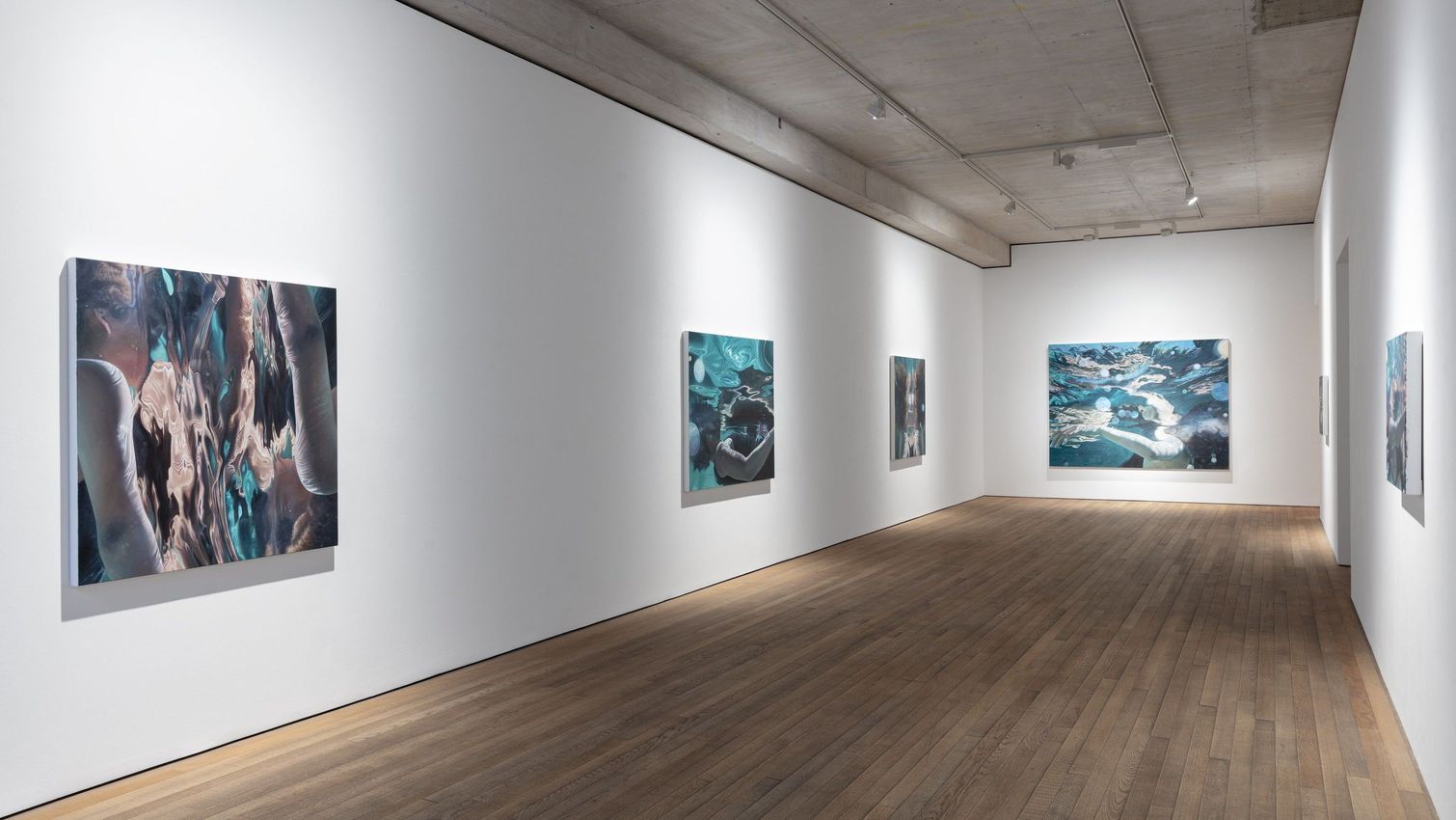
In her first solo exhibition in London, This Time Before Tomorrow, internationally recognized painter Calida Rawles presents a new body of work that explores cycles of time and human experience. In her signature, hyperrealist paintings, serenely-composed figures wade and float in water. The liquid element, for Rawles, is a charged substance that reflects and refracts issues of race, power, and access. Often dressed in solid-colored garments that fold and billow in response to water’s force and movement, her figures flourish in imperceptible moments of submersion and release. Alternately, the face acts as a window into the subject’s soul. In this new suite of six paintings, water is a container for the ebbs and flows that define contemporary global life. The detailed faces typical of Rawles are absent, and the moments of suspension that have become hallmarks of the artist’s work take on deeper meaning. This Time Before Tomorrow comes on the heels of Rawles’ first solo museum exhibition, Away with the Tides, which debuted at the Pérez Art Museum Miami in late 2024 before traveling to the Memphis Brooks Museum of Art in 2025, as well as her inclusion in the 12th Berlin Biennale in 2022.

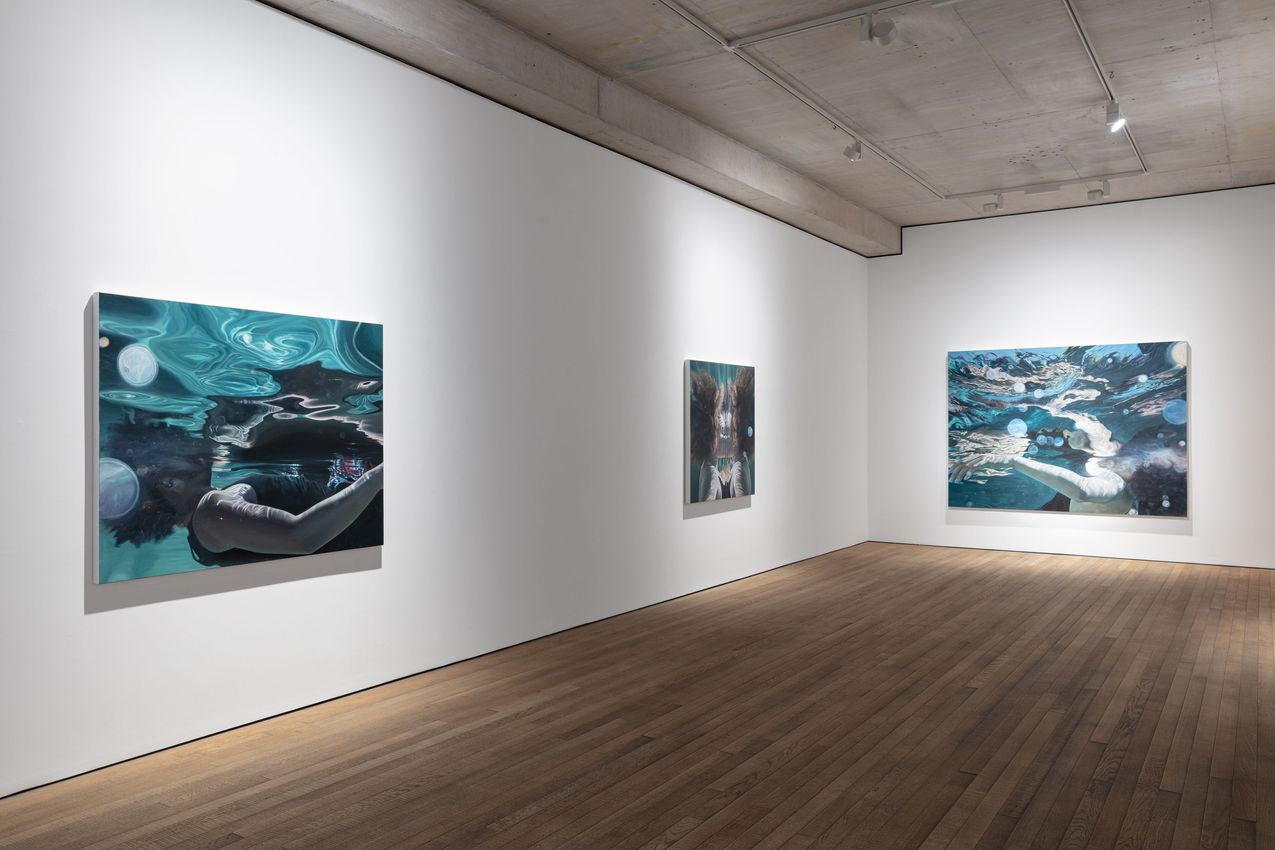
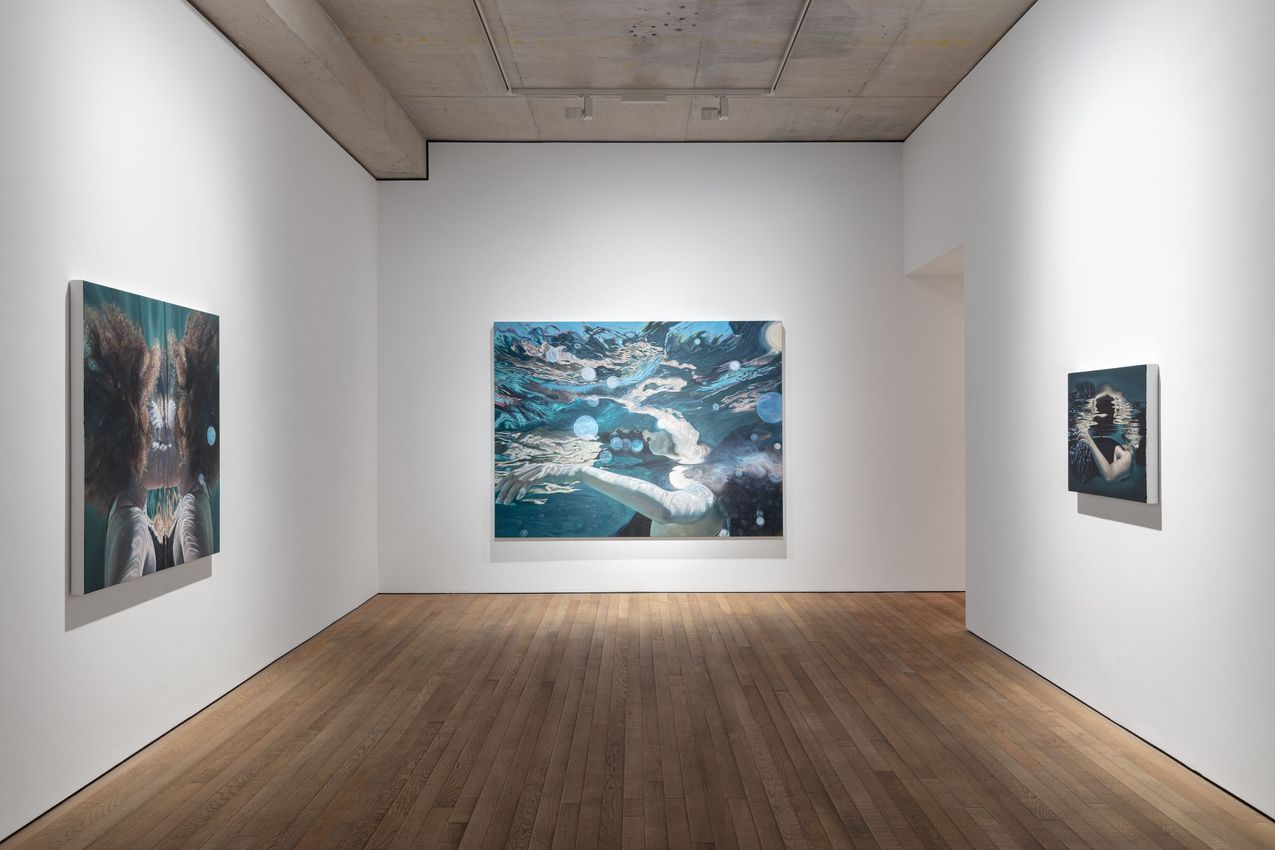
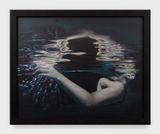
In This Time Before Tomorrow, there are no identifiable figures and time does not travel in one direction. Broken, disjointed, murky, upside-down bodies represent the feeling of being knocked off one’s axis, and hyperrealist representation dissolves into fabulism. The paintings picture the liquid and solid contours of the ‘in-between,’ muddying the boundaries between the mundane and the extraordinary by enfolding fantastical, supernatural elements into everyday life. Where and how do we locate ourselves and each other in times of unease and upheaval? What are the consequences of totalising neglect and frenzy? How much is too much? Rawles answers these questions with play and speculation. Her new works dive more deeply into colour theory, asserting her expertise as a colourist; her experiments with both colour and chiaroscuro define the buoyancy and stagnation that imbibe the bodies that float, sink, and fold into one another. Strong contrasts of dark and light color, largely within a tertiary palette, create atmospheric volume, depth, and drama. Gestural brushstrokes and depictions of movement mirror states of matter as well as liquid and solid states of being. Blurring the line between hyperrealist figuration and surrealist abstraction, the darkness of the palette personifies the weight of the present while the veil of the water becomes a prism and conduit for other worlds and galaxies.

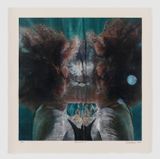
Reference images of fire, lungs, a Bodhi tree, a living snake plant, and other natural elements inform the artist’s conceptual and formal thinking. In All is One, twin subjects turn inward to face each other at the center of the canvas. Rather than a mirror image, the two sides fuse into one another. The artist’s daughter served as the model for the painting, and resemblance—twin subjects, likeness, similitude, generational transfer, and the past facing the present—forms its core. All four elements are present—fire, earth, water, air—gesturing toward balance. And yet, this is not a picture of symmetry. The subject on the right is slightly higher than its twin, while two otherworldly bubbles draw the eye into another space and time punctuated by flames, lung tissue, tree branches, and shadows.

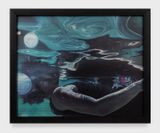
Abstraction and figuration blend and blur, just as the flesh of Rawles’ subjects diffuse into each other and into aquatic expanses of primordial liquid. Aspects from philosophy texts, speculative fiction novels, ancient and indigenous mythologies, and Black feminist poetry collections and memoirs she read while preparing for the show—including the texts The Hero with a Thousand Faces, Survival Is a Promise, The Myth of Sisyphus, and The Alchemist—are also present. What is the artist’s role in moments of crisis? In When Time Carries, the certainty of time, location, and direction dissolve. Clarity and resolution give way to intermission and surrender as her subject appears to submit to water’s ability to hold, carry, and resist. Is the body floating or drowning? Ripples and bubbles obscure the figure’s face, camouflaging and hiding its identity and actions as it interacts with and is changed by its environment.

Bubbles, shadows, and stars recur in This Time Before Tomorrow as symbols of energy’s transformative potential. Both bubbles and stars are composed of gas. The result of nuclear fusion, air bubbles in this new suite of paintings double as stars and planets on the brink of transformation—an alternate state of matter and being. Once fully formed, a star releases excess fuel to create new stars. Here, stored energy and exhaustion become life forces that catalyse new entities constituted by movement, energy renewal, and subject-object relations that meet disequilibrium and disorientation with lightness and effervescence. Asymmetrical bodies of flesh, water, and gas become ciphers for power, weariness, and hope, while natural elements and processes accumulate energy waiting to be released and recycled.

Beyond water’s function as a vital force and historically charged site of memory, Rawles’ choices in colour and pose, as well as how she renders space and the environment, are connected to broader questions of race, representation, and ethics within art history and everyday life. Each artwork is based on a photograph or series of photographs that the artist takes herself, and the tertiary colours of her palate signify the liminal space of transformation and existential angst that her figures tread. This alchemical focus on change, disillusionment, and the potential for renewal in This Time Before Tomorrow is a blueprint for the future. Reflection thus emerges not only as a surface element but also as a character in its own right and a method of making. At a time when chaos of all types—political, economic, environmental—proliferates, Rawles’ new paintings prompt viewers to embrace the threshold between past and present as well as the feeling of being in transition. What results is a vibrant wellspring for inner and outer worldmaking.

Read More

Installation Views

About the Artist

The paintings of Calida Rawles (b. 1976, Wilmington, DE; lives and works in Los Angeles, CA) merge hyper-realism with poetic abstraction. Situating her subjects in dynamic spaces, her recent work employs water as a vital, organic, multifaceted material, and historically charged space. Ranging from buoyant and ebullient to submerged and mysterious, Black bodies float in exquisitely rendered submarine landscapes of bubbles, ripples, refracted light and expanses of blue. For Rawles, water signifies both physical and spiritual healing as well as historical trauma and racial exclusion. She uses this complicated duality as a means to envision a new space for Black healing, and to reimagine her subjects beyond racialised tropes. Enhancing the seductive nature of water, the work tempers heavier subjects with aquatic serenity and geographic and temporal ambiguities, inviting multiple readings. Embedded in her titles and topographical notations in the compositions, Rawles’ canvases represent an expansive vision of strength and tranquility during today’s turbulent times, while insisting on the triumph of humanity.

View Artist Profile

Also Exhibiting at Lehmann Maupin

About the Gallery

Rachel Lehmann and David Maupin founded Lehmann Maupin in 1996. The gallery represents a diverse range of American artists, as well as artists and estates from across Europe, Asia, Africa, South America, and the Middle East. It has been instrumental in introducing numerous artists from around the world in their first New York exhibitions.

View Gallery Profile
Address
No. 9 Cork Street
London
United Kingdom
Opening Hours
Tuesday – Saturday
10am – 6pm
(1)
London No. 9 Cork Street
Lehmann Maupin
No. 9 Cork Street, London, United Kingdom

Opening hours
Tuesday – Saturday
10am – 6pm
The art world in focus