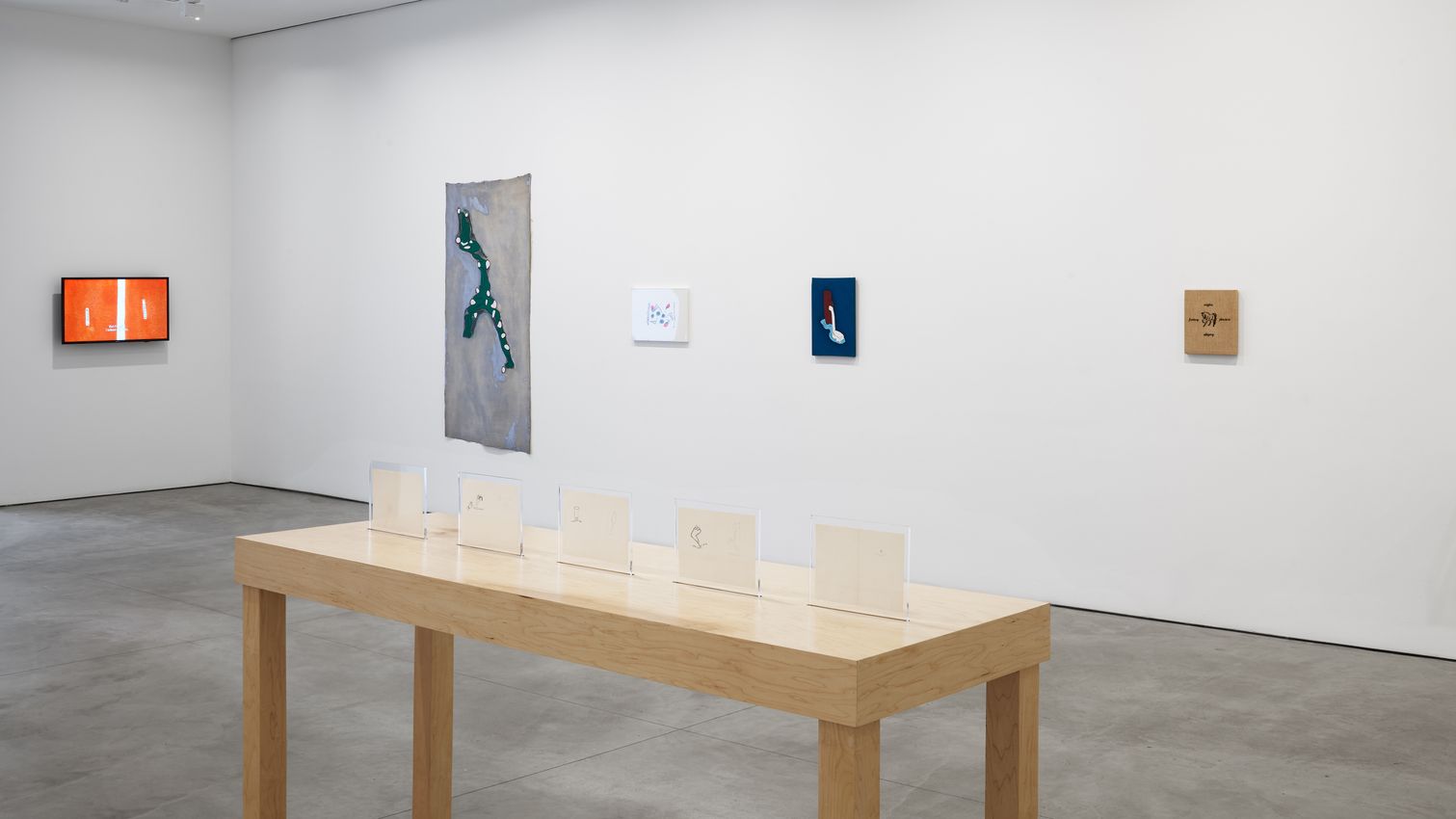
Lisson Gallery presents its inaugural exhibition with Elaine Cameron-Weir. Entitled A WAY OF LIFE, the show features floor-based and suspended sculptures, as well as wall-hung objects, that explore themes around tradition and subculture, conformity and self-definition, repeatable gesture and singular occurrence. Among the central subjects of the exhibition is the concept of end-times, as seenthrough personal mortality and revelation as well as the larger theater of historical change.
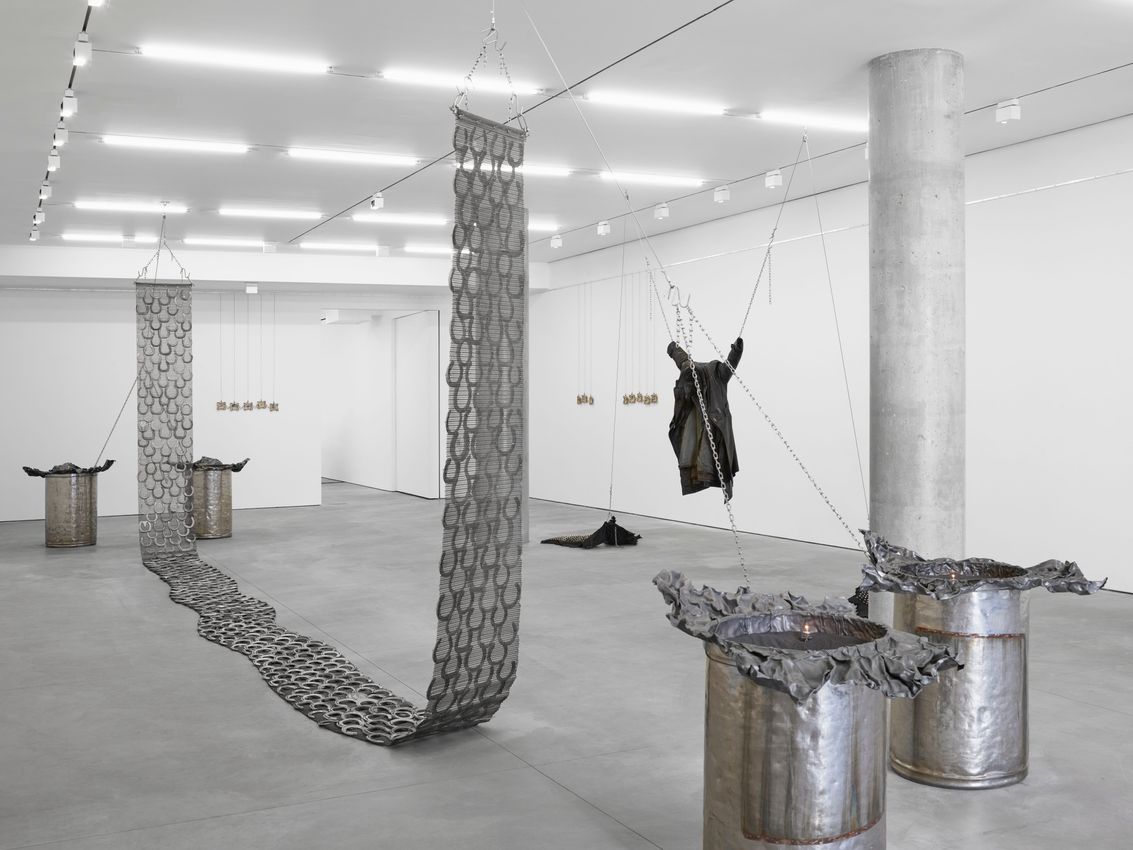
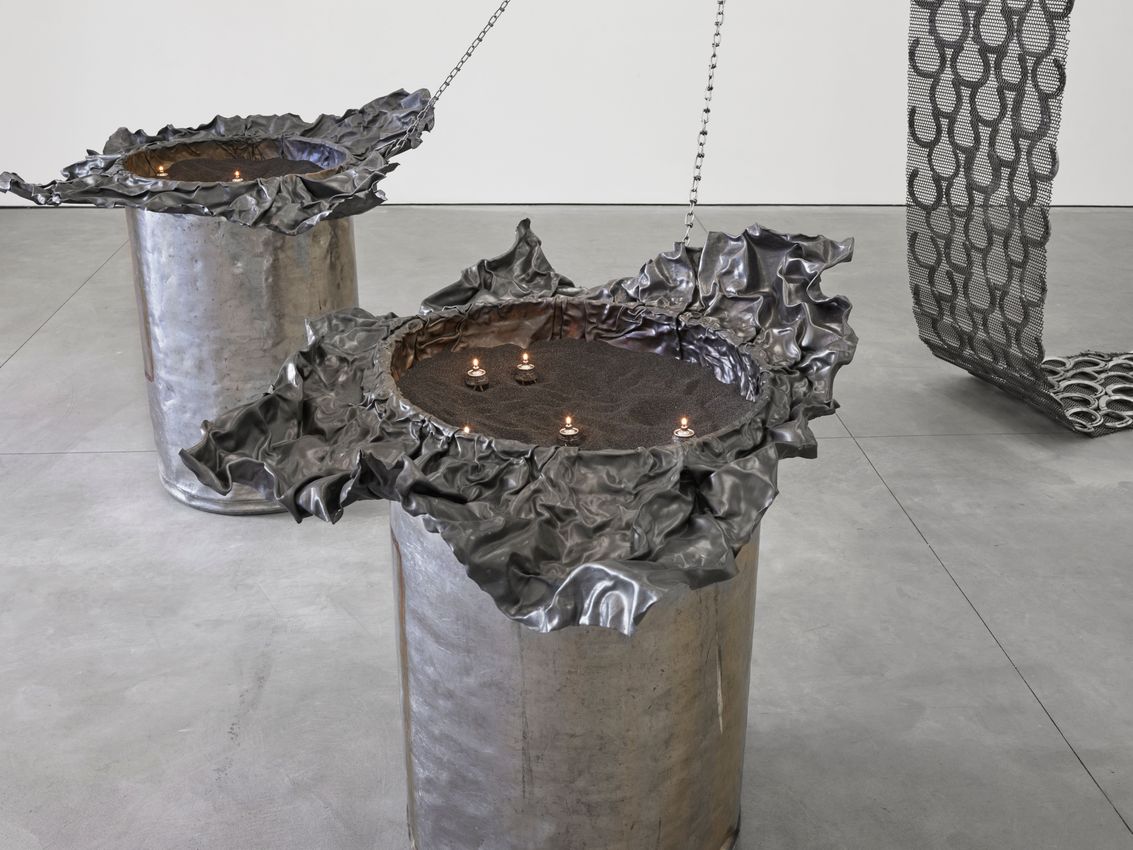
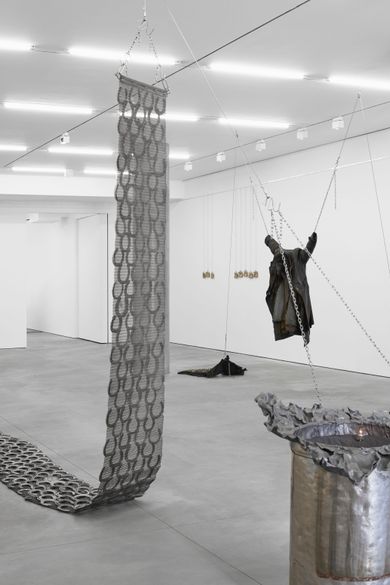
In a work titled western procession of my oldest wounds (hit parade) wrecked high altar of buying tears, Cameron-Weir has adorned a long factory conveyor belt that divides the main space with rows of used aluminum horseshoes. Each end of the conveyor belt is suspended from pulleys fixed in the ceiling while two pairs of metal drums draped by battered lead and containing flickering candles set in steel grit, act as counterweights. Horseshoe nails and horse-leather military garments have also been utilized in other works, together suggesting the worlds of horseracing, gambling or frontiersmen, but could also refer to an impending change in politics according to the ‘horseshoe theory’ – in which both the far-left and far-right are drawn inexorably closer to each other and their extremes.
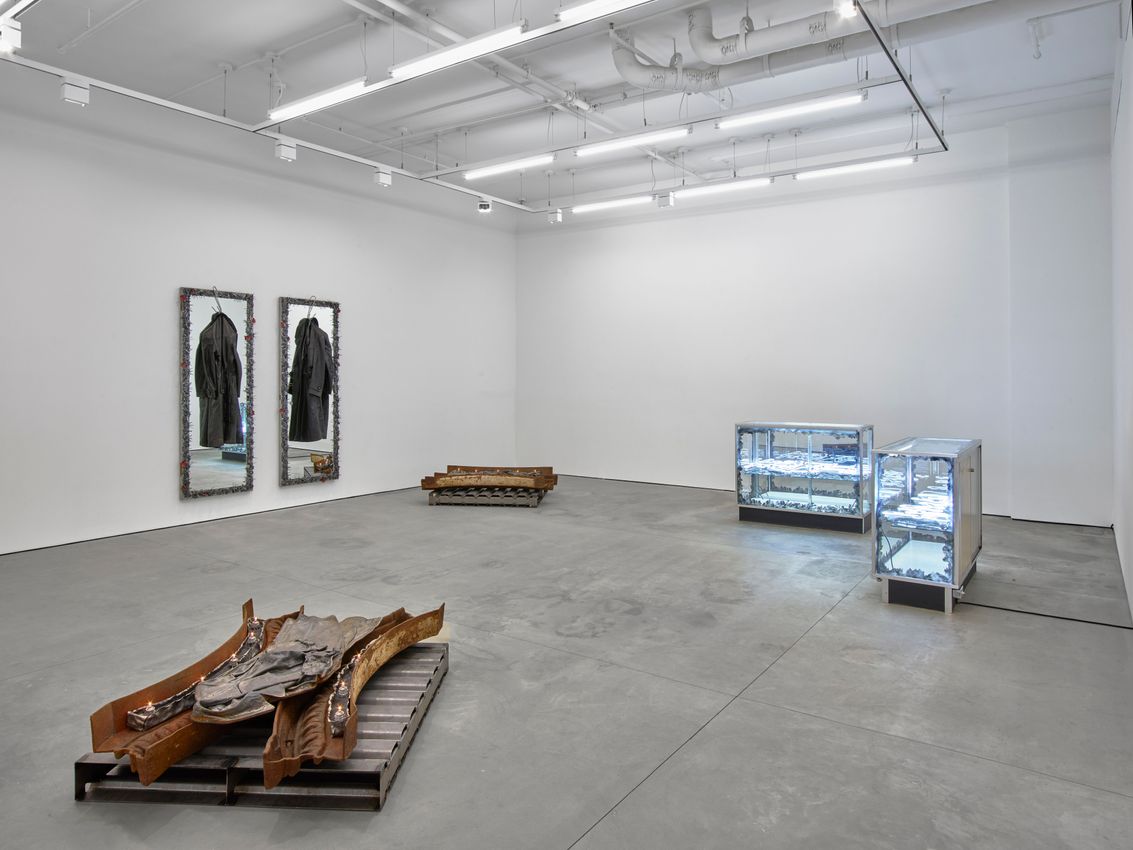
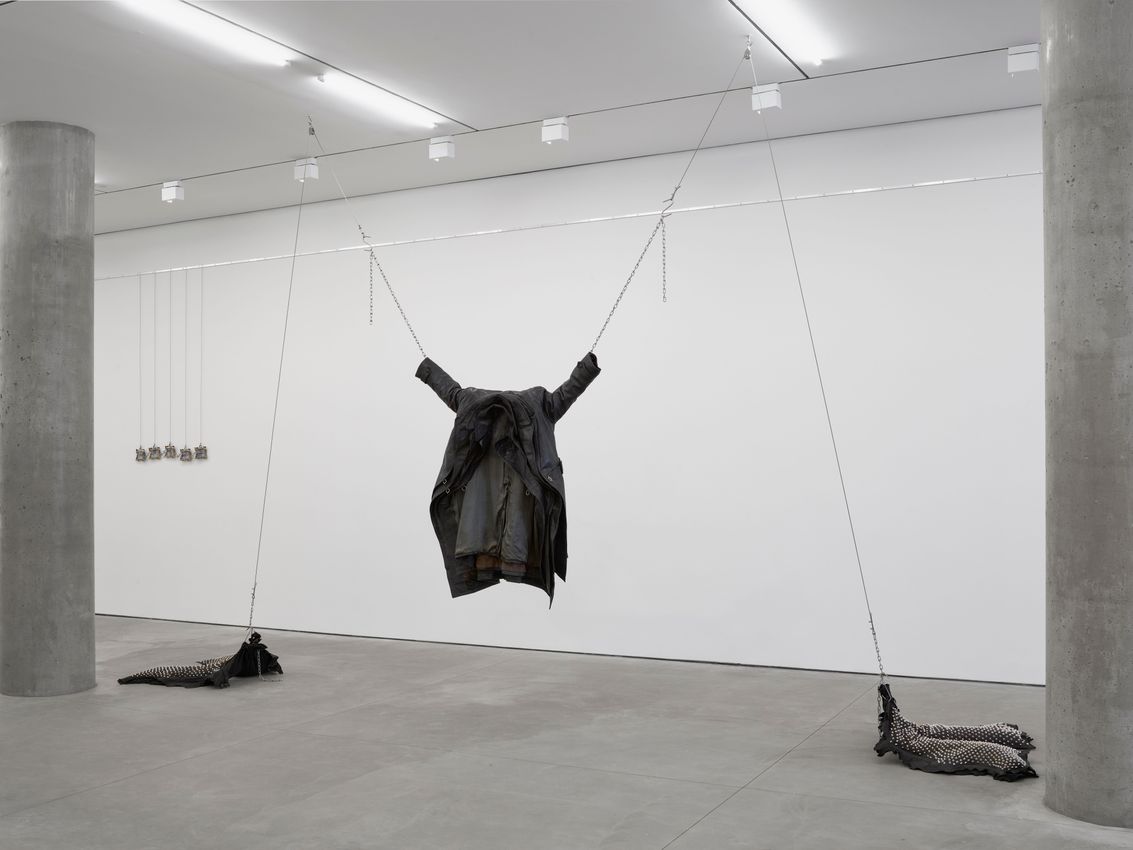
A work titled pupil of couture / 4horsemen hairshirt (SS 2024 apocalypse collection) features four horsehide jackets, similar to those used by soldiers in WWII trenches (hence the name trench coat), nested inside one another, outspread like a crucifix and similarly being held in limbo above the gallery floor by two pairs of studded leather sacks. These resemble stylized saddle bags or chaps used by ranchers or cowboys when herding animals, as well as the kind of spiked jackets worn by punks from the 1970s onwards, long since subsumed into mainstream fashion items. The four jackets also reference the Four Horsemen of the Apocalypse, foretold in The Book of Revelations as harbingers of the End of Days, representing and carrying famine, pestilence, disease and death. The ominous arrival of the four horses was said to precede the Second Coming of Christ, often depicted as an open-armed descent from heaven, although some theologians believe this to be a moment of reckoning, rather than rapture. What, if anything, might be held up for worship here is not entirely clear, but the show’s title, A WAY OF LIFE, infers that these objects carry with them evidence of work, leisure and purpose- ways to spend time, and quantify or judge a life.
Lining the walls of the gallery are a series of groupings of small grisaille sgraffito enamel plates that are each suspended in an undulating white bronze frame. Cartoon-like images of barbed wire knots are etched into the surface of the enamel, resembling wounds, penitence and obstacle. These depictions of knots are connected to one another by twisted wires, as if this imagined fence had been cut apart and strung back together. Here the iconography extends back to the original Crown of Thorns (one relic of which is purported to be in the Louvre) and forwards to the modern-day patents used to fence off huge swathes of America’s Great Plains in the late 1800s.
A further pair of sculptural works in commercial display cabinets spell out the words, MY LIFE, MY WAY, using bones roughly cast in aluminum and outlined in neon light. This fragment of text reads like a familiar slogan, motto or song lyric. Its presentation appears as a kind of signage made from bodily remains suggesting an evidentiary approach to biography, in which relics of the self are put on view for all to see.

Elaine Cameron-Weir’s work is informed by the array of systems and structures that humans have created to deal with the unknown–be that through scientific inquiry, religion, modes of governance or creative practices. Her sculptures incorporate part-objects repurposed from their scientific, medical, military or faith-giving functions into reliquaries or representations of larger systems of belief and power.


Established in 1967 in London, Lisson Gallery is one of the most well-known galleries operating globally. Boasting an influential and continuing legacy, including playing a pivotal role in the careers of many pioneers of historically important art movements, the gallery works with some of the most significant contemporary artists today.

A respected voice in contemporary art discourse.
Focusing on ambitious storytelling and insightful art-world commentary. Ocula Magazine publishes in-depth interviews, critical essays and timely analysis on the artists, exhibitions and ideas driving the global art world.
Learn more about Ocula Magazine
Showcasing the best of the art world.
Ocula partners with galleries from around the world to highlight their artists, artworks and exhibitions. Gallery membership is by application and invitation, with each member vetted by an independent panel.
Learn more about Ocula Membership

Specialises in the sale of major artworks.
Led by a team with deep ties to the world’s leading auction houses, galleries and collectors. Ocula’s advisory team offers bespoke services to high-net-worth clients from around the world who are looking to acquire the best of contemporary and modern art.
Learn more about our team and services