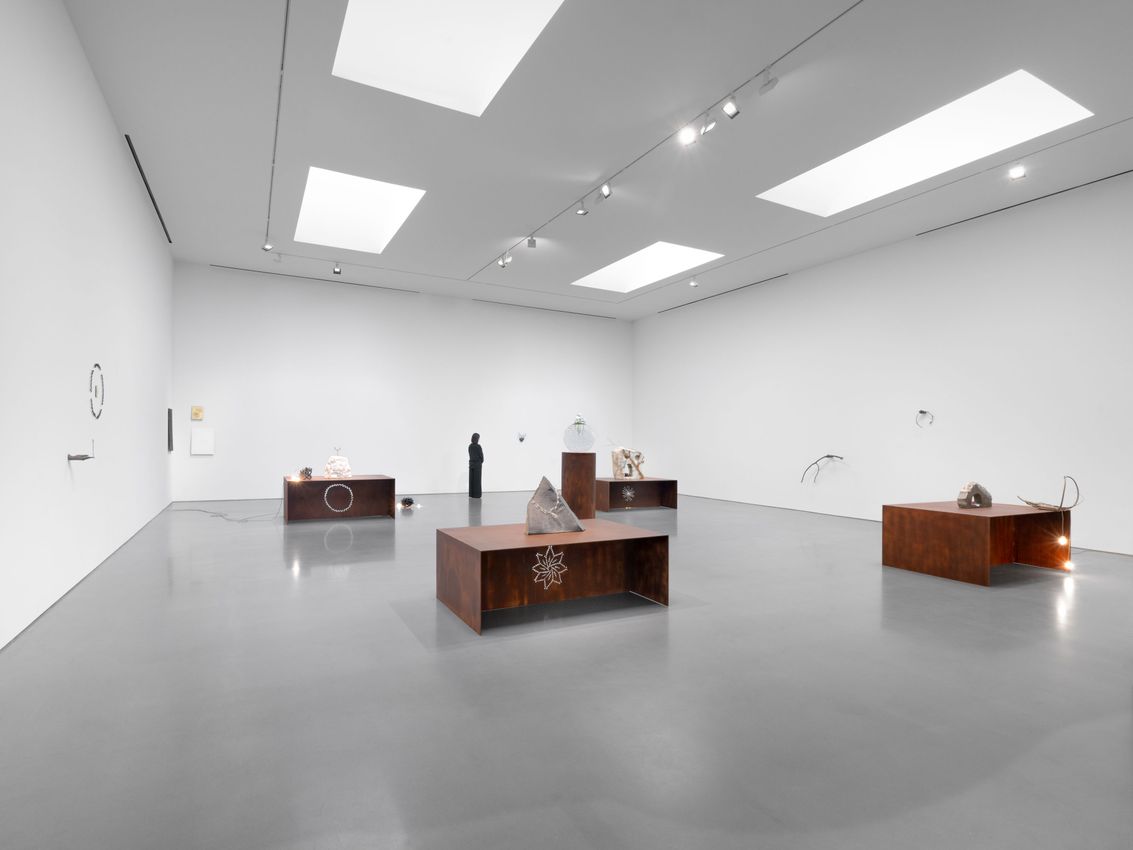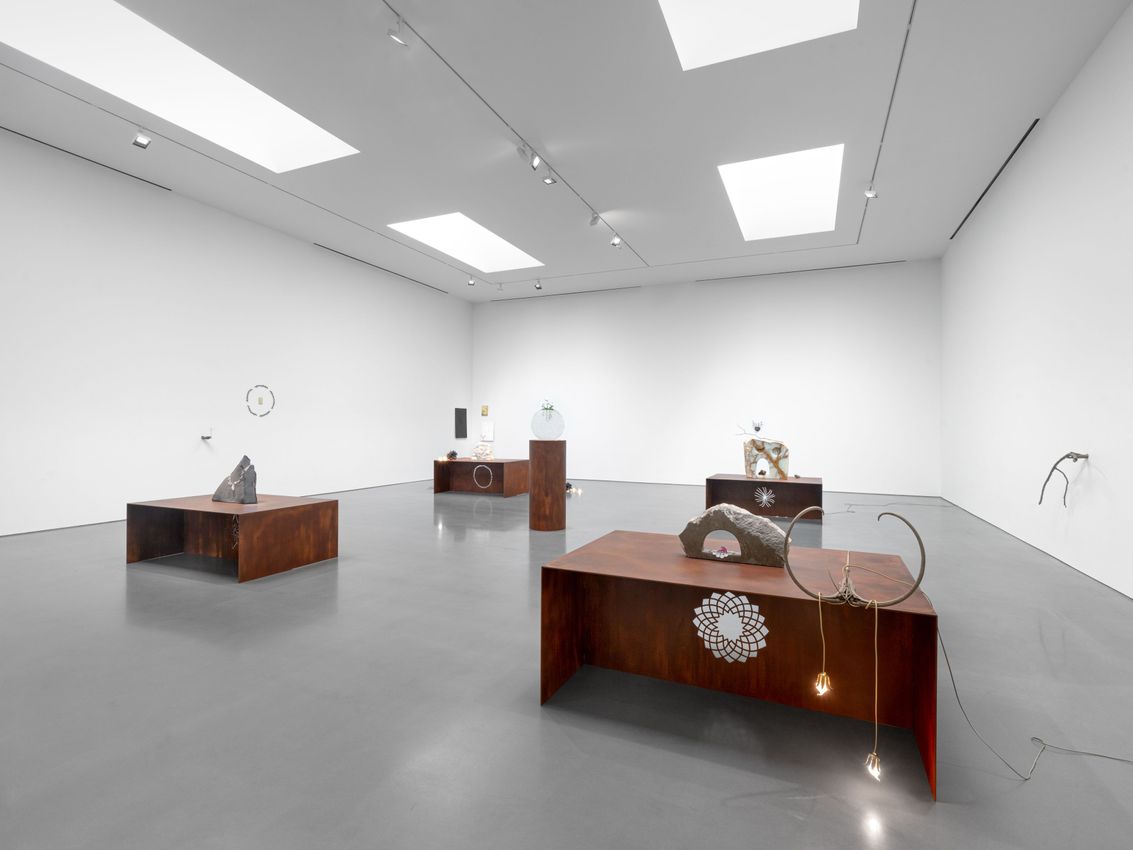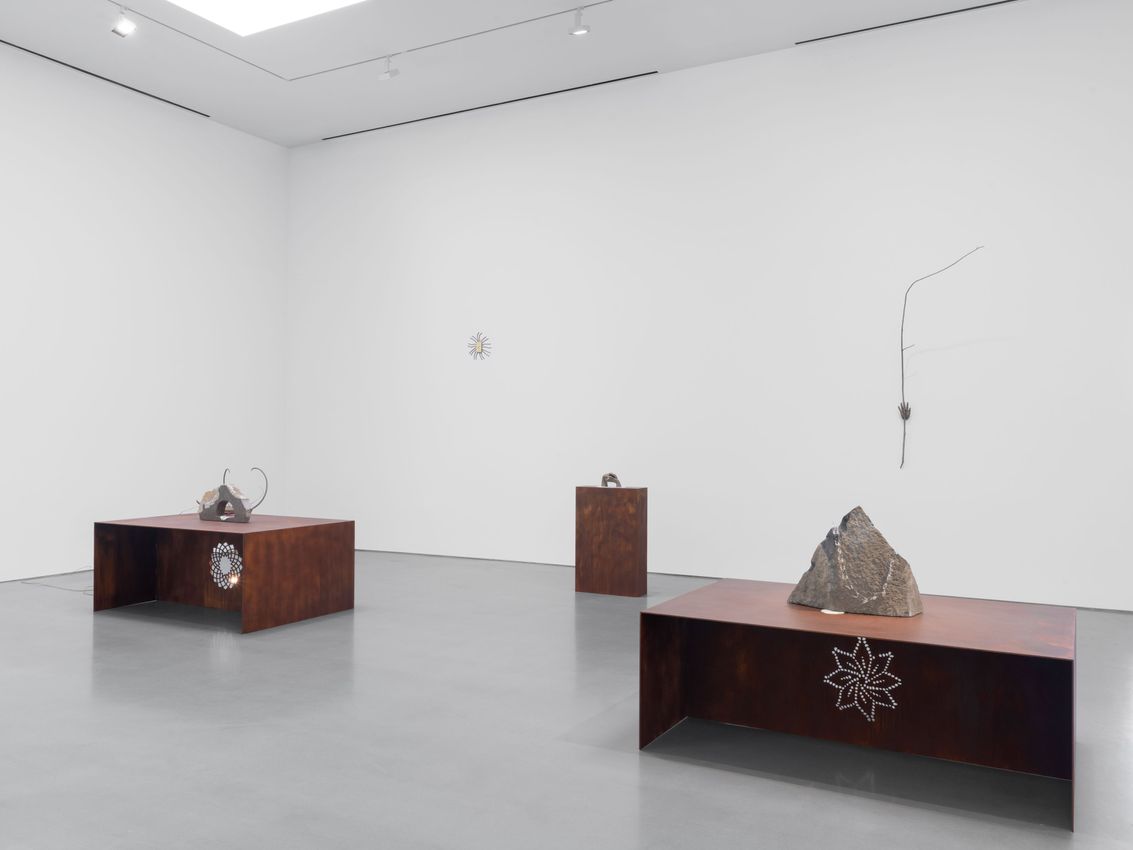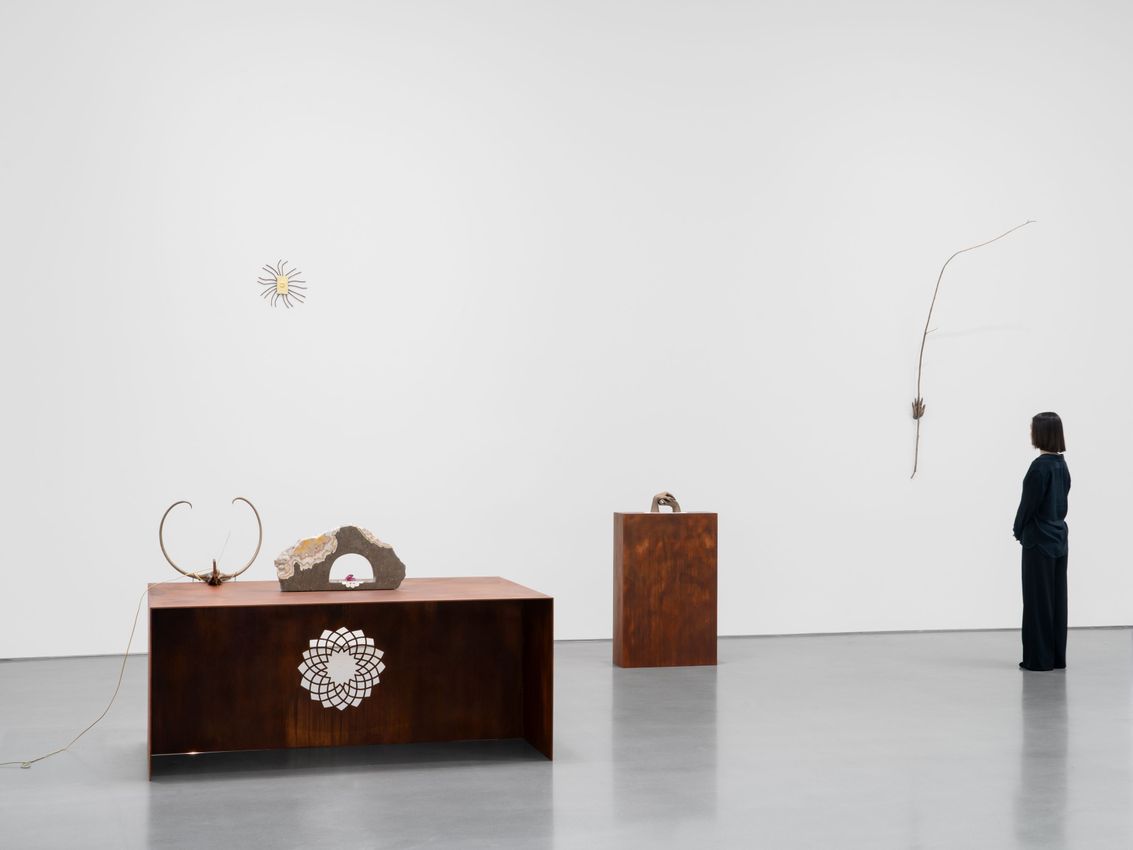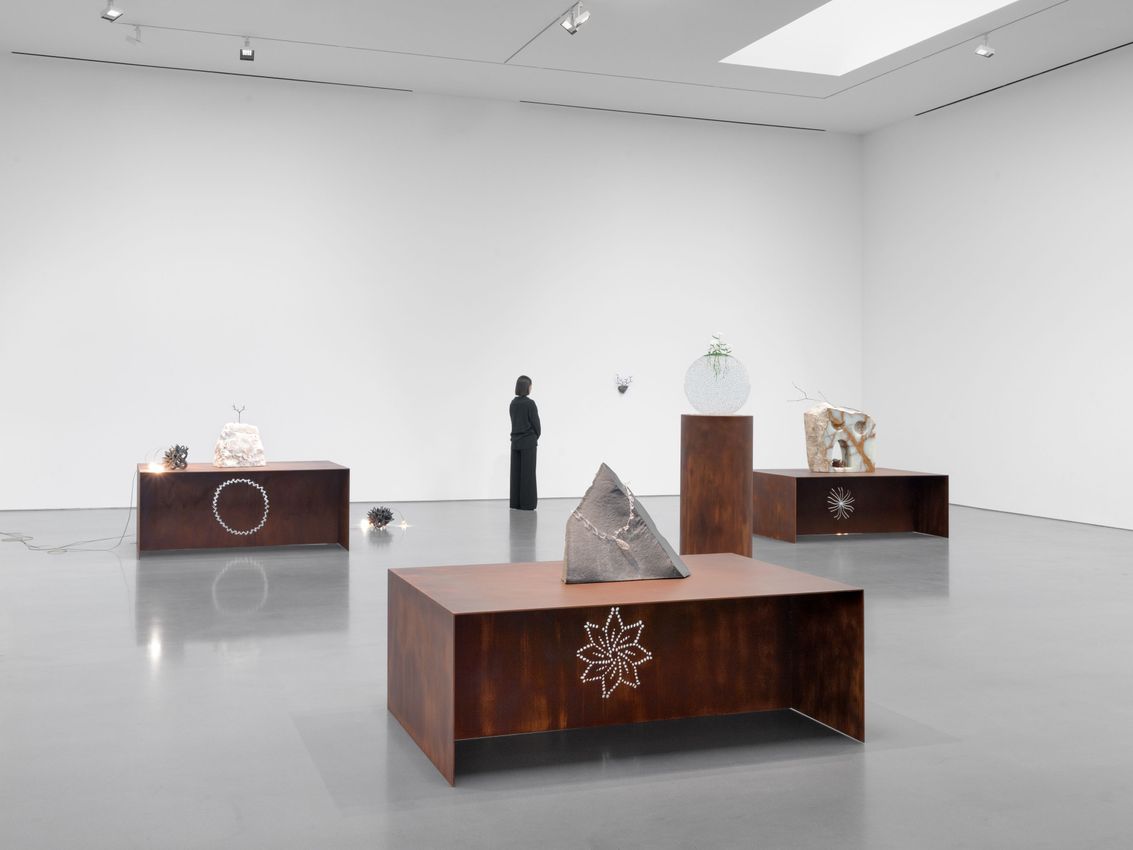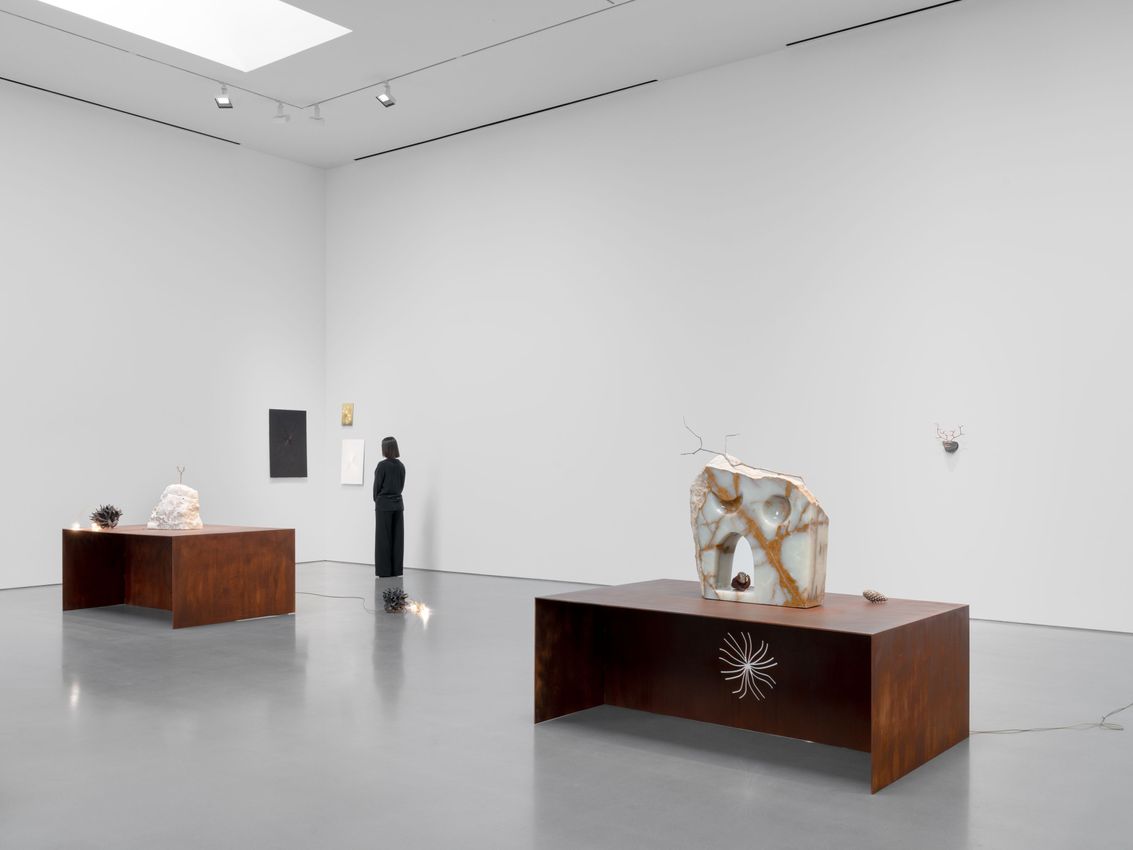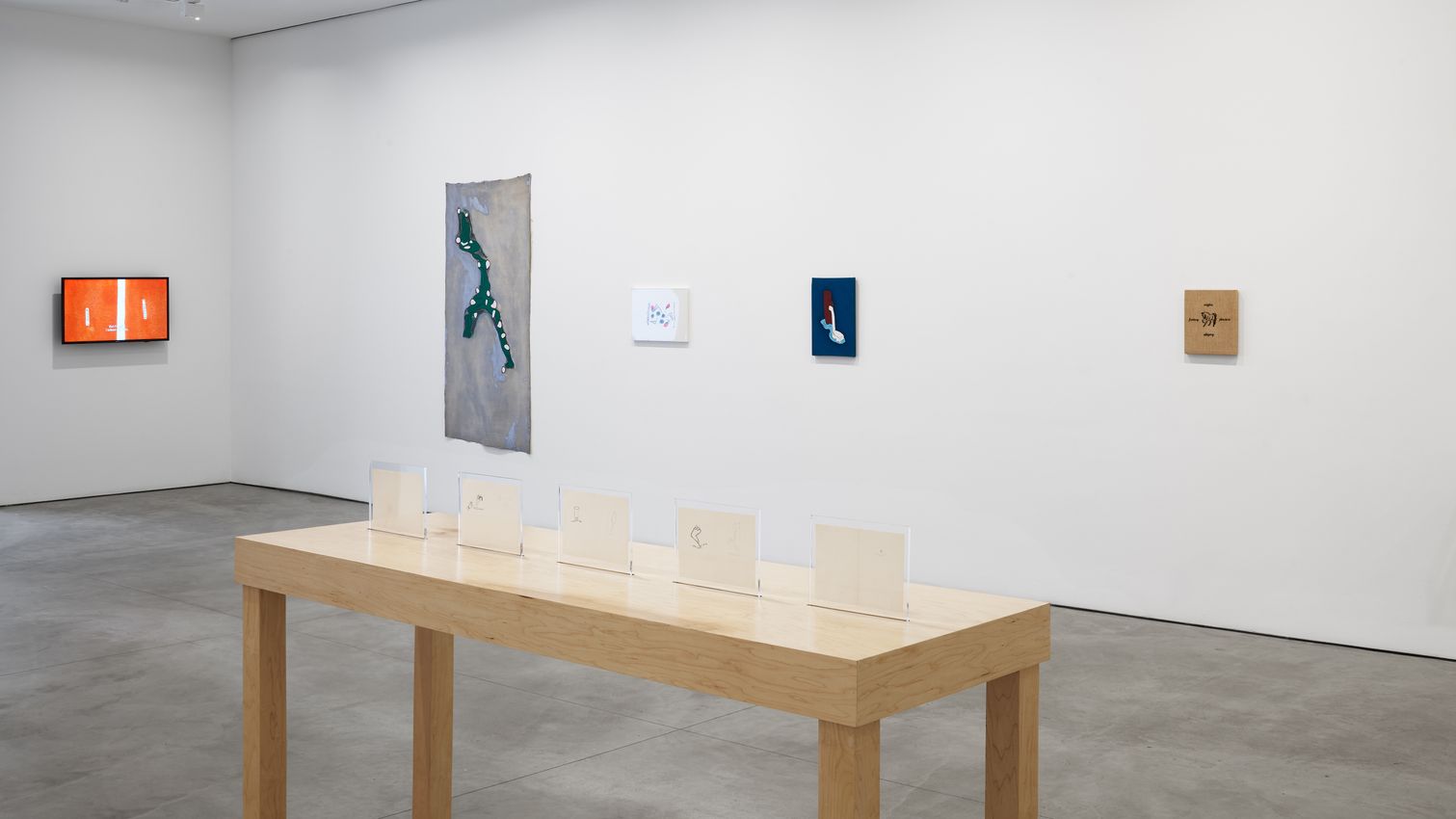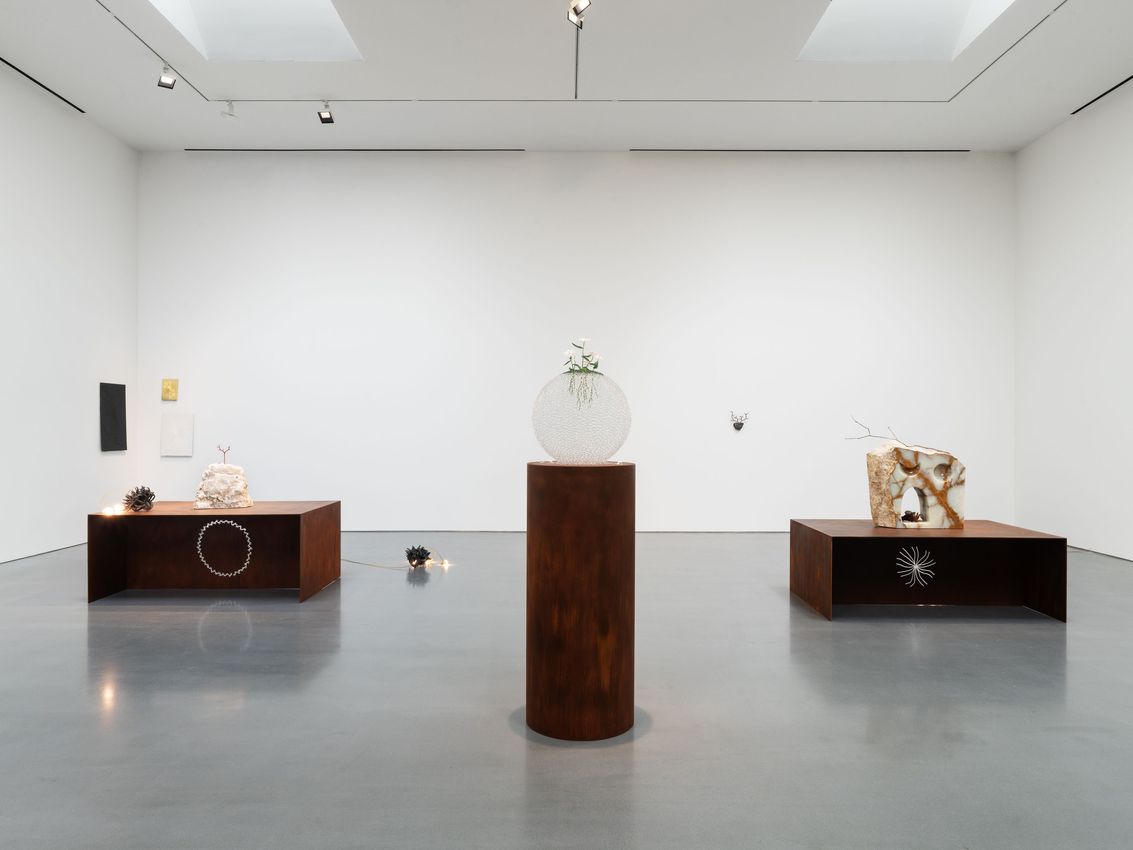
For her first exhibition with Lisson Gallery, Kelly Akashi presents a number of new bodies of work featuring glass, earth, stone and bronze elements, incorporating both found and uniquely processed materials. These are variously hung from the ceiling and lit from below, or else installed among a landscape of stone and marble sculptures mounted on Corten steel pedestals, creating a singular and associative environment with its own circular ecosystem, rich with the possibilities of making, remaking and unmaking.
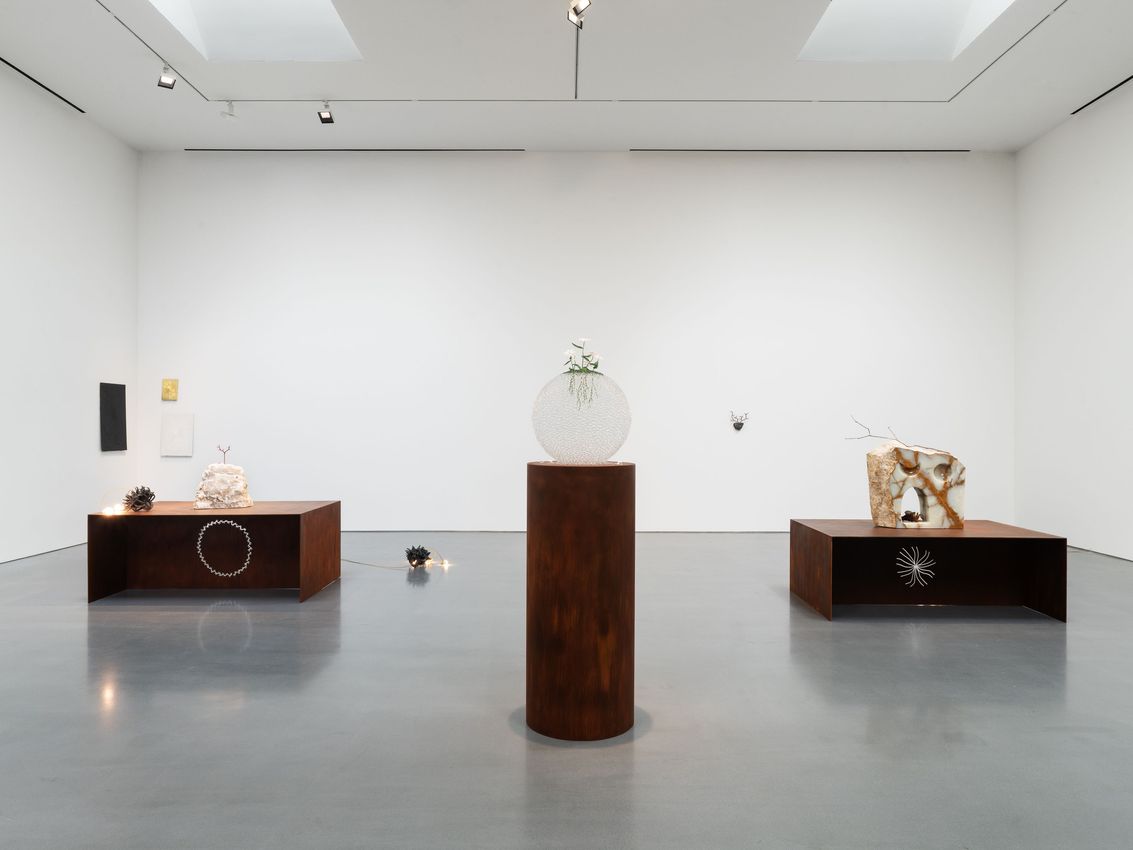
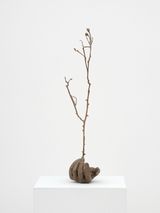
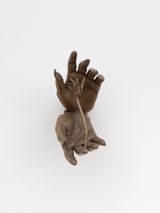
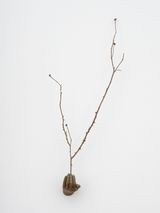
Intimate groupings of objects are dispersed across several Corten steel plinths and tables, some seemingly placed at random, others forming concatenating configurations between carved and rough-hewn pillars and wedges of marble, as well as cast body parts and delicately hand-blown glass flowers. This mode of display mimics natural occurrences, perhaps of hands touching rock or plants growing out of cracks in the ground. Yet nearly every other object has somehow undergone an intense, perhaps labor-intensive transformation. This could have been through the cutting and shaping of many strata of alabaster, soapstone or onyx, or perhaps through an uncanny material alteration – changing skin for metal or stem for crystal – while other pieces invoke curious juxtapositions, say, an organic entity sprouting from a bronze cast of the lower part of the artist’s face.
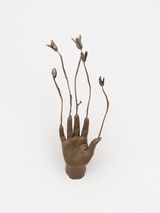
Grid-like holes have been meticulously drilled into the surface of partially polished fragments of marble that serve as substructures for gardens of protruding glass rods topped with flowers, leaves and other organic forms. But here, Akashi nods to the artifice of their own making, in some cases keeping the miniature scaffolding she employs to construct such delicate glass forms. The geometric armature encasing each formal object becomes an integral part of the composition itself. Further proof of her virtuosic skill in glassmaking, Akashi presents an exceptionally elaborate glass sphere made from finely latticed borosilicate glasswork, its detailed and delicate structure seemingly impossible in its complexity and ethereal nature.
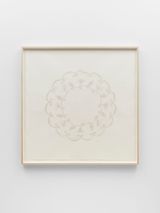
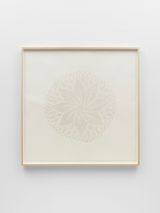
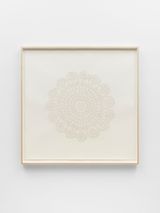
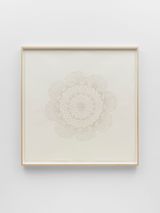
Draped over the oxidised Corten steel surfaces are a number of Akashi’s grandmother’s lace doilies, which recently came into her possession. While these might suggest traces of the personal, domestic and emotional narratives attached to such heirlooms, something the artist is known to do, they also contain the universal truth of familial lineage, of the passing down of knowledge and the unavoidable, constant inheritance of history. From recent exhibitions centring on the fragility and complexity of the figure and especially her own body, Akashi now turns to the resilient and regenerative properties of mother nature, through a series of scanned, sculpted and drawn seed pods. Beginning with initial CT scans of the seedpods of Devil’s Claw, Sweet Gum and Datura, among other species, these are blown up to triffid-like proportions, 3D-printed and cast in bronze. Whether hanging like ornamental, ceremonial lights or scored into surfaces with silverpoint like cave paintings, these pods offer up their secrets to life more or less readily, some seeds lying dormant but still filled with potential while others have long ago scattered and sprouted new growths – all have the potential to change the world. Akashi’s alchemical transformation of matter enacts the continuous life cycle begun by the seed, revealing how all of existence is already in front of us, even if what was once made of one substance may now appear in a different form and might yet soon become something else anew.
Executed with deft manual skill and astute material knowledge, Kelly Akashi’s visual language emphasises the impermanence of the natural world, recording and indexing fragmented moments in time. Her singular practice is characterised by a rigorous conceptual approach, yet the work is distinguished by a deep reverence for process. Always a student, Akashi is perpetually studying new practices and physical techniques such as glass-blowing, casting, candle-making and stone carving. The repeated use of the hand as motif serves as a symbol for Akashi’s ongoing investigation into the temporality of the human experience. Often cast in bronze or crystal, her hands bear the mark of time on her body, her growing fingernails, and aging flesh. Towering sculpted weeds, delicately glass-blown flowers, a to-scale depiction of her body in polished travertine, enlarged casts of extinct species of shells; Akashi poetically and objectively encapsulates the notion of mortality in a ritualistic gathering of objects. However, her take on her own practice is not a morbid one. Akashi references the phrase mono no aware. ‘It refers to a wistful awareness of impermanence—the ‘pathos of things.’ It’s central to hanami, the Japanese custom of venturing out to enjoy the brief season of cherry blossoms.’
A respected voice in contemporary art discourse.
Focusing on ambitious storytelling and insightful art-world commentary. Ocula Magazine publishes in-depth interviews, critical essays and timely analysis on the artists, exhibitions and ideas driving the global art world.
Learn more about Ocula Magazine
Showcasing the best of the art world.
Ocula partners with galleries from around the world to highlight their artists, artworks and exhibitions. Gallery membership is by application and invitation, with each member vetted by an independent panel.
Learn more about Ocula Membership

Specialises in the sale of major artworks.
Led by a team with deep ties to the world’s leading auction houses, galleries and collectors. Ocula’s advisory team offers bespoke services to high-net-worth clients from around the world who are looking to acquire the best of contemporary and modern art.
Learn more about our team and services