



Press Release

‘I find that the knot is the beginning of everything. Everything is accidental to me. An accident becomes a work.’

The renowned Colombian artist Olga de Amaral opens her first solo show in London for almost a decade, following her inaugural exhibitions with Lisson Gallery in New York last year. This display of cascading, layered textiles and numinous clouds of hanging strands, among a range of other historic and recent pieces, reveals Amaral’s mastery of the loom and the woven language, but also the ways in which her practice crosses over into painting, sculpture and installation–being as much fine art as fibre art. While a recent touring museum exhibition in the US, entitled To Weave a Rock, introduced her to many new audiences, her work is seldom seen in such great depth in Europe, despite many of her earliest influences emanating from her travels and influences encountered here and elsewhere, between the 1950s and ‘70s.

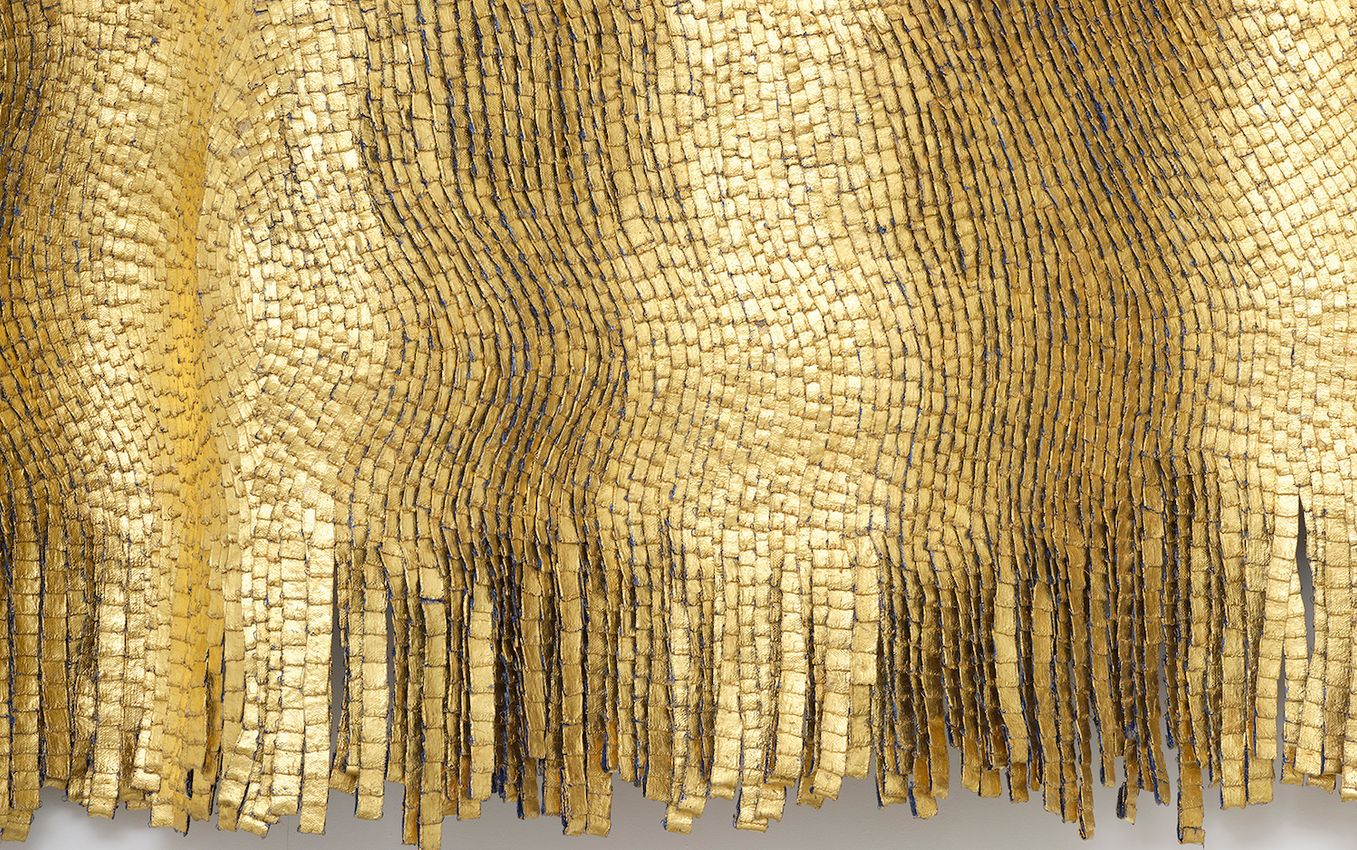
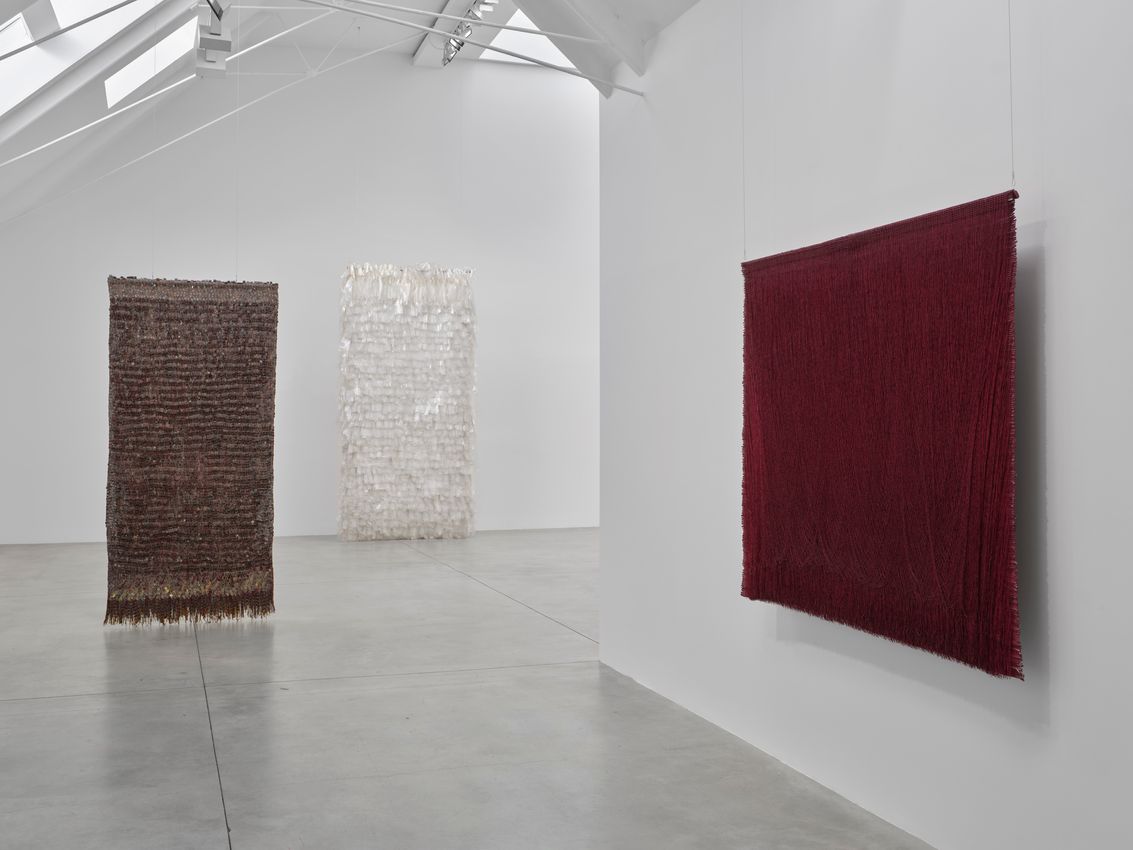
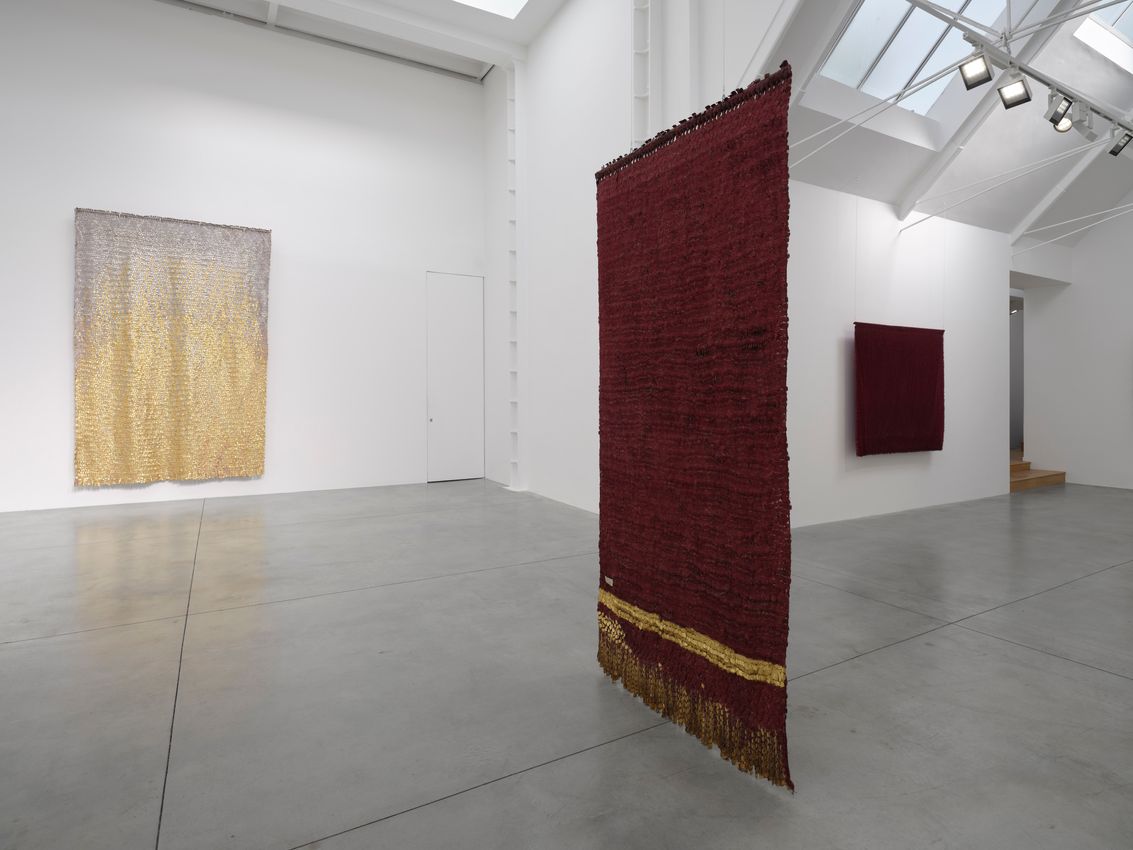
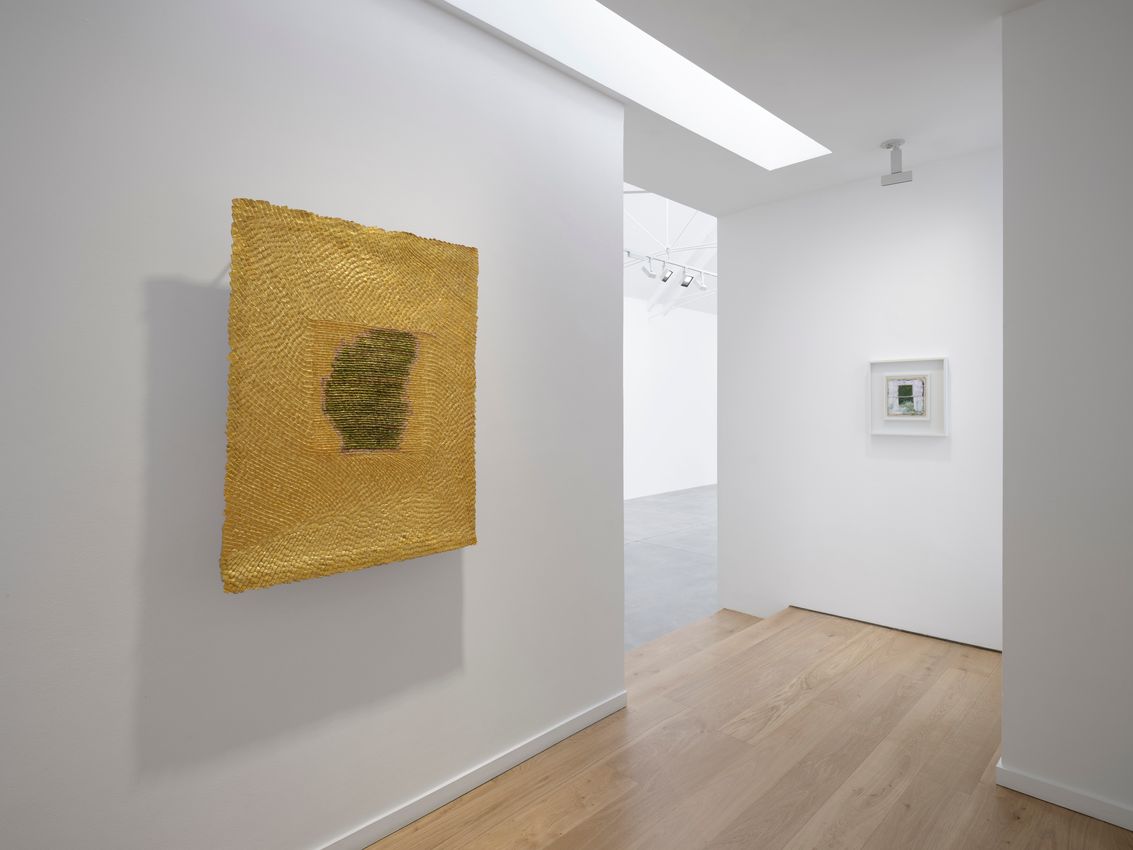
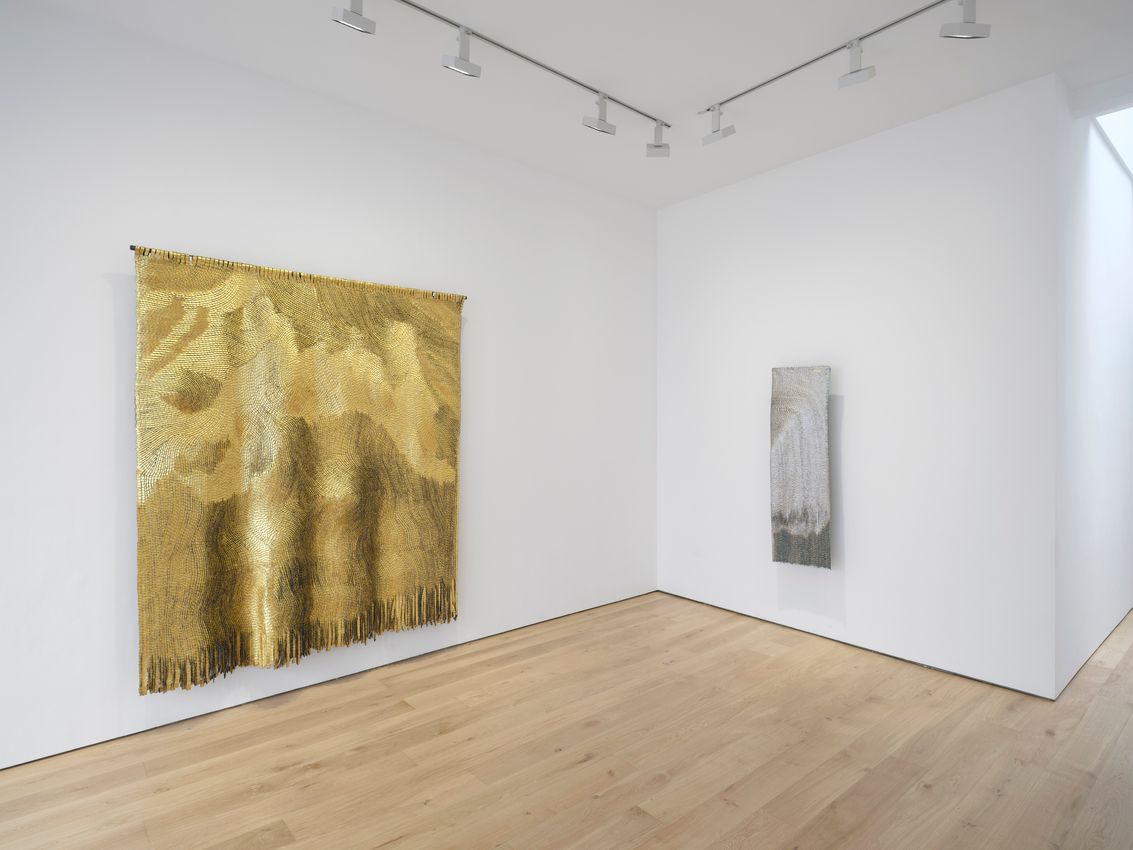
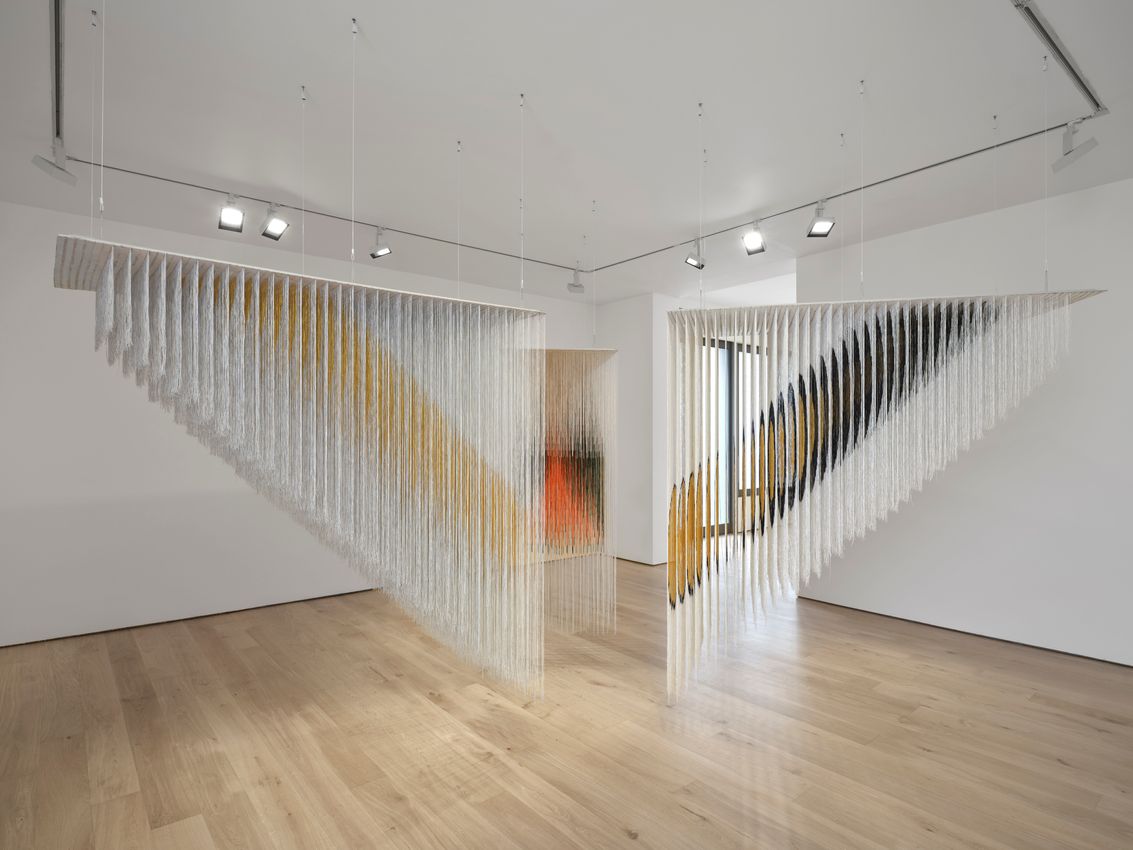
Most of the works in this show hail from the past two decades, featuring her characteristic intertwined surfaces of linen or another base material warp, which is then encrusted in gesso and even adorned with gold leaf or palladium, transforming the simplest of supports into shimmering walls of indeterminate, alchemical matter. A centrepiece of the presentation is a cascading installation of layered polyurethane entitled Luz Blanca (White Light, 1969), an early work in which Amaral experimented with sheets of plastic, being drawn to its flexible and contemporary nature, as well as the iridescent surface reflections. Similarly experiential in nature are her cloud-like Brumas (Mists, 2014), in which three-dimensional coloured forms seem to appear within gathered skeins of thread, a technique Amaral has likened to ‘painting in space’. While resolutely handmade objects, Amaral’s works do often seem to contain or conjure natural motifs from within themselves, perhaps recalling waterfalls (in Umbra Verde, 2006), or geological cross-sections of earth (Strata, 2009), while other works seem to refute description altogether, existing instead as pure abstractions (Imagen Perdida or Lost Image, 1992).

Rather than striving to elevate craft beyond itself, Amaral regarded her art as existing in continuum with the functional aspects of her working studio, with her female collaborators and fellow weavers in Colombia at least as important as any notions of transcending her medium. Indeed, she described each of the constituent fragments or slivers of fabric as words, which would then be combined with others to help articulate her ‘landscapes of surfaces, textures, emotion, memories, meanings and connections.’ In the catalogue accompanying this exhibition, curator and professor at Bard College, Susan Aberth discusses gilded Colombian churches, Byzantine mosaics and stained-glass windows as possible spiritual and aesthetic touchstones for her art, referring to Amaral’s works as: “roving chapels of meditative and solemn beauty.’

Read More

Installation Views

About the Artist

Olga de Amaral spins base matter into fields of colour and weaves tectonic lines through space, unselfconsciously testing the borders between crafted object and the work of art. From the flat surfaces of tapestry through to resolutely three-dimensional sculptural forms made from fibre, the Colombian artist’s work spans more than 60 years, in turn reaching even further back to the spiritual qualities and ancient craquelure of medieval icon paintings or else the rigour and simplicity of the modernist grid, as if run through a loom. Developing her own tools and techniques, while relying on the hand for her strip-woven expanses of wool, linen and cotton, Amaral has also knotted reams of horsehair together and bolstered her fabric works through a painterly application of gesso or stucco, often highlighting the reverse, or foregrounding the edges. Working not only on the floor or the wall, Amaral carves up interiors with her hanging tapestries, creates floating formations from yarn or plastic, while following nature’s lead for outdoor works such as Hojarascas (Dried Leaves), begun in the 1970s, or working at architectural scale, for the creation of the six-story façade commission, El Gran Muro (The Great Wall), in 1976.

View Artist Profile

Also Exhibiting at Lisson Gallery

About the Gallery

Established in 1967 in London, Lisson Gallery is one of the most well-known galleries operating globally. Boasting an influential and continuing legacy, including playing a pivotal role in the careers of many pioneers of historically important art movements, the gallery works with some of the most significant contemporary artists today.

View Gallery Profile
Address
67 Lisson Street
London
United Kingdom
Opening Hours
Tuesday – Saturday
11am – 6pm
(1)
London 67 Lisson Street
Lisson Gallery
67 Lisson Street, London, United Kingdom
+ 44 207 724 2739
http://www.lissongallery.com

Opening hours
Tuesday – Saturday
11am – 6pm
The art world in focus
