



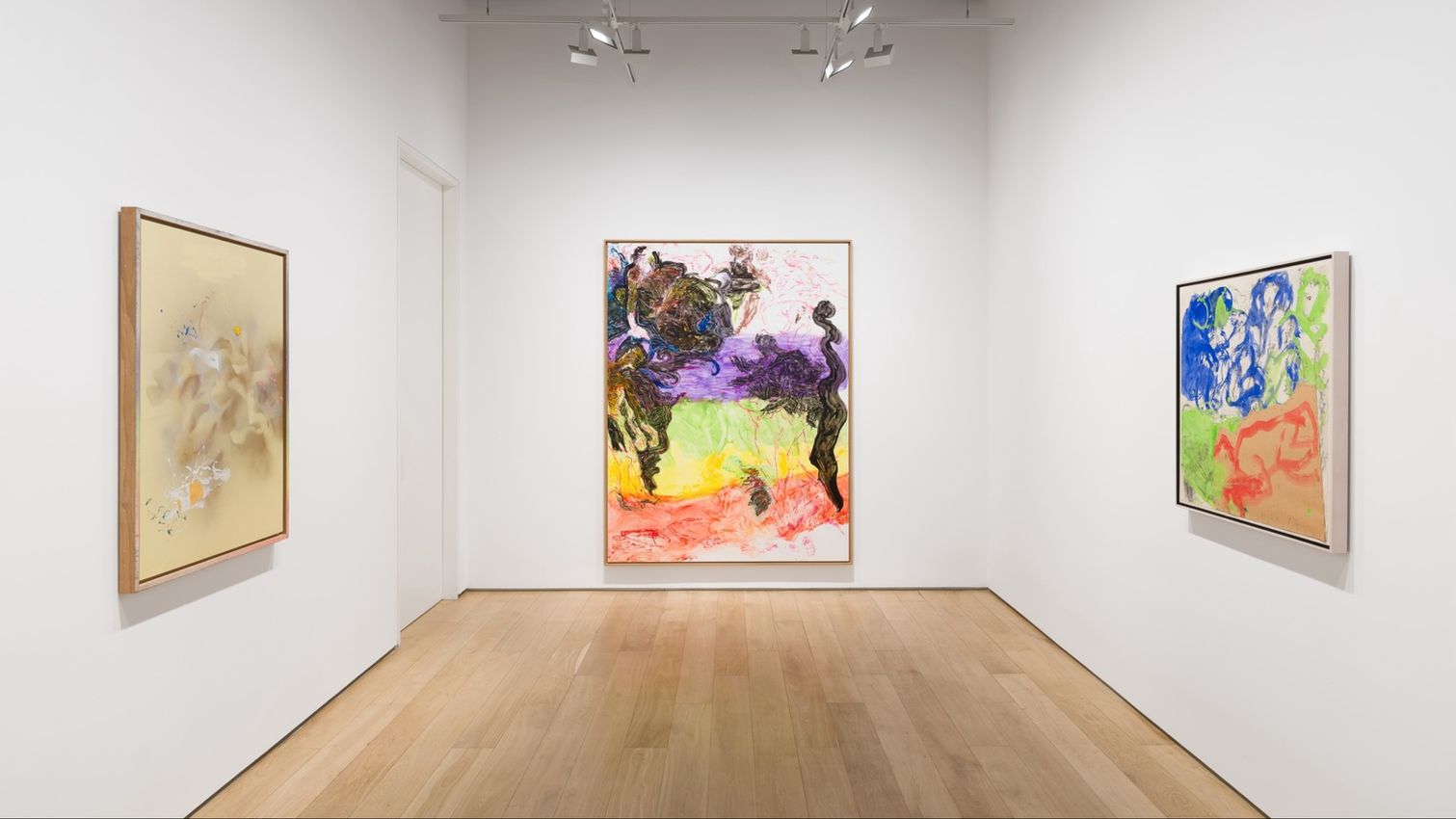
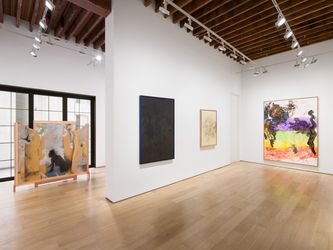
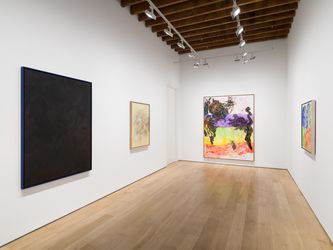
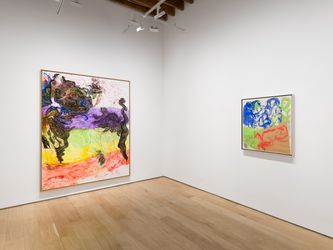
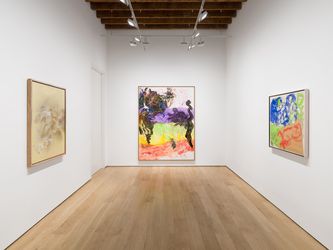
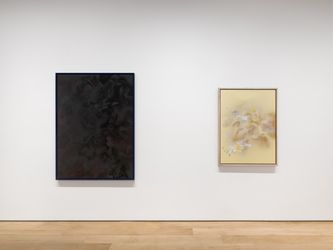
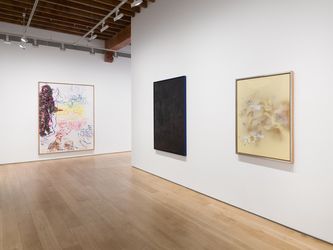
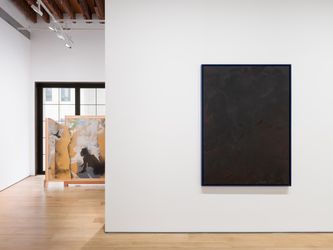
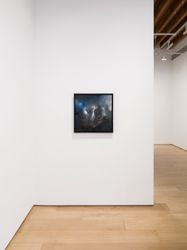
American artist Oliver Lee Jackson presents his first solo exhibition in Asia and his second with Lisson Gallery, showcasing new and recent paintings that challenge the viewer’s intrinsic urge to delineate between figuration and abstraction. The presentation brings together a series of paintings from the past three decades along with a never before exhibited, multi-panel screen. Every work presents a self-contained spatial universe, opening avenues for contemplation and multiple interpretation.
Jackson’s artistic signature lies in constructing intricate, stratified compositions where figurative forms, often termed ‘paint people’, emerge within dynamic fields of paint. Though based in figuration, his works are not narrative, but instead they hold the possibility for a profound experience in looking. At 90 years of age, his creative approach draws from comprehensive, lifetime engagement with diverse art historical traditions, from ancient Egypt to classical and modern Europe, to the richness of African visual cultures. The coherence of Jackson’s oeuvre is achieved through six decades of disciplined studio practice. When painting, he circumambulates the panel or canvas, which is laid flat on trestles or stretched on the studio floor. This orientation circumvents compositional hierarchies imposed by gravitational orientation, giving the artist more control of the paints and allowing him to approach the composition from all sides to generate a churning visual field in which figuration and abstraction coexist with equal agency.
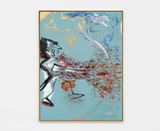
Jackson’s paintings, often rich in colour, are charged with what the artist refers to as ‘fields of energy’, with the figure as an entry point, whether a simple line drawing of a crouching figure or a serpentine representation of the human form rendered through the use of materials like chalk, oil paint and spray painted stencils. Through layered forms and visual gestures, his evocative paintings lead viewers through complex compositions that gradually reveal figural elements and connective passages, creating a world within each work. In the paintings exhibited in the Shanghai gallery, these ‘paint people’ are shown gathered in groups, or in isolation in various poses—squatting, drawing, pointing, embracing or reclining—often accompanied by hints of flowers, birds, or other forms.
Jackson’s works lead the eye through a world of forms and gestures, coaxing viewers to take in the overall effect through the lens of their own personal experience. Jackson says that the nature of painting is simultaneity, which may lead to a sense of ambiguity in the viewer. It is this that makes the experience of viewing an artwork a personal one, between the viewer and the work.
Anchoring the presentation is a dynamic tripartite screen that can be positioned in multiple ways to present different pictorial scenarios. Painted on both sides, each panel operates as a reversible element, allowing divergent and interchangeable arrangements, generating novel spatial orientations and compositional relationships. When closed, the ensemble displays layered human silhouettes on the combined surfaces; when expanded, the configuration opens the central panel, introducing landscape motifs and formal elements that shift toward abstraction. The work thus exists in a dialectical state, maintaining its essential two-dimensionality while simultaneously asserting a sculptural presence.
The presentation is complemented by a playlist of saxophone quartets composed by the late jazz musician Julius Hemphill, a longtime friend of Jackson. This sonic environment resonates with the improvisational nature of Jackson’s practice, reflecting his passion for spontaneity and expressive freedom inherent in various musical forms.
Courtesy Lisson Gallery.


Oliver Lee Jackson is a painter, sculptor and printmaker whose creations open up spaces for contemplation and interpretation, as well as encounters with seen and unseen worlds. He has long engaged in freeing form and matter from the strictures and false oppositions between figuration and abstraction, preferring hybridity, ambiguity and improvisation with his materials over fixed meanings and didacticism.


Established in 1967 in London, Lisson Gallery is one of the most well-known galleries operating globally. Boasting an influential and continuing legacy, including playing a pivotal role in the careers of many pioneers of historically important art movements, the gallery works with some of the most significant contemporary artists today.

A respected voice in contemporary art discourse.
Focusing on ambitious storytelling and insightful art-world commentary. Ocula Magazine publishes in-depth interviews, critical essays and timely analysis on the artists, exhibitions and ideas driving the global art world.
Learn more about Ocula Magazine
Showcasing the best of the art world.
Ocula partners with galleries from around the world to highlight their artists, artworks and exhibitions. Gallery membership is by application and invitation, with each member vetted by an independent panel.
Learn more about Ocula Membership

Specialises in the sale of major artworks.
Led by a team with deep ties to the world’s leading auction houses, galleries and collectors. Ocula’s advisory team offers bespoke services to high-net-worth clients from around the world who are looking to acquire the best of contemporary and modern art.
Learn more about our team and services